

Artificial Grass Estimate Cost: Top Insights for 2025
Understanding the Cost of Synthetic Turf
Artificial grass estimate cost typically depends on several key factors that affect your total project price:
- Material quality and type – Different grass types range from basic to premium
- Installation area size – Larger areas may have lower per-square-foot costs
- Yard shape complexity – Curved areas or slopes increase installation difficulty
- Labor and preparation – Professional installation includes site prep and finishing
- Additional features – Drainage systems, infill materials, and edging add costs
Are you tired of mowing, watering, and maintaining a natural lawn? You’re not alone. Thousands of homeowners are switching to artificial grass for its low maintenance, year-round greenery, and long-term cost benefits.
Before diving into an artificial turf project, understanding the cost factors is essential for proper budgeting. While the upfront investment might seem high compared to natural grass, the long-term savings on water, fertilizer, equipment, and maintenance often make artificial grass a smart financial decision.
“Artificial grass might be worth having if you want to cut down on lawn care costs,” notes many industry experts. In fact, many homeowners find their investment pays for itself within 3-5 years through reduced maintenance expenses.
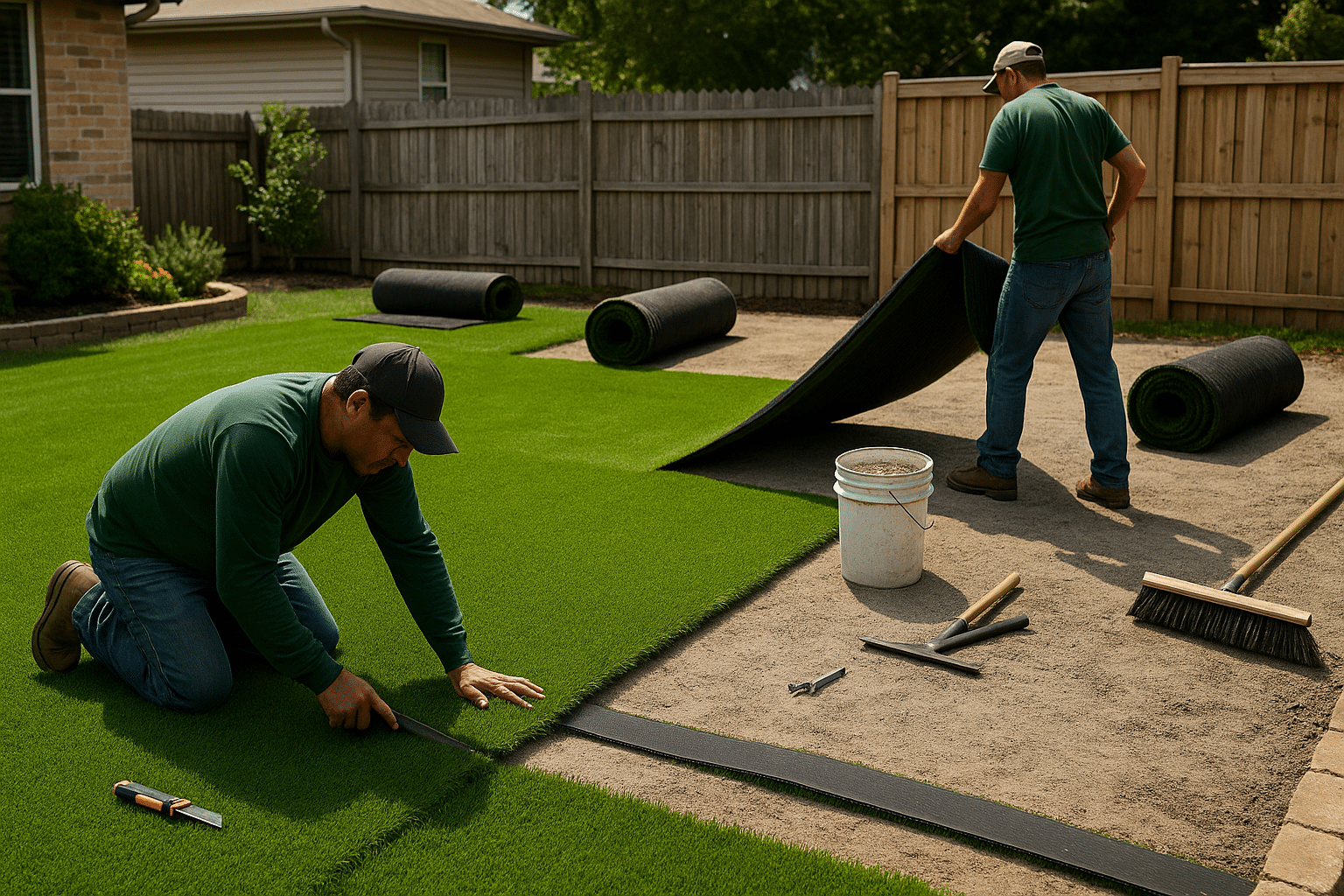
The installation process involves multiple steps, from removing existing grass to adding proper drainage, laying the turf, and applying infill materials. Each of these components contributes to the total cost estimate you’ll receive.
For homeowners in the Greater Boston area considering this upgrade, getting an accurate estimate is the crucial first step in your project planning process.
Terms related to artificial grass estimate cost:
– artificial grass cost per square metre installed
– artificial turf installation cost per square foot
– outdoor turf cost
Factors Influencing Artificial Grass Estimate Costs
Ever wonder why your neighbor got a different quote for their artificial lawn than you did? When it comes to figuring out your artificial grass estimate cost, several key factors come into play. At MAS Landscaping and Snow Removal, we consider all these elements when creating personalized quotes for our clients in Everett, Lynnfield, Malden, and throughout our Massachusetts service area.
Material Costs Impact on Artificial Grass Estimate Cost
The type of artificial grass you choose makes a huge difference in your final price tag. Think of it like shopping for carpet – there’s the budget option, the mid-range, and the premium choice.
Polyethylene (PE) is the Goldilocks of artificial grass – not too expensive, not too cheap, just right for most homeowners. It feels soft underfoot, looks remarkably natural, and holds up well to regular use. This middle-ground option gives you good bang for your buck, typically costing between $2.20 and $4.10 per square foot.
Polypropylene (PP) is your budget-friendly option, coming in at around $2 to $6.35 per square foot. While it looks nice initially, it’s a bit like buying the cheaper pair of shoes – they’ll start to show wear faster, especially in high-traffic areas. It’s perfect for that side yard that rarely sees footsteps but still needs to look green.
Nylon is the premium choice for those who want top-tier durability. At $5 to $6.40 per square foot, it’s the most expensive option, but it stands up to heavy use, high temperatures, and keeps its shape even when your kids, pets, and weekend gatherings put it to the test.
Beyond just the material type, the pile height (fancy talk for how long the grass blades are) affects both the look and cost. Longer blades create that lush, just-mowed-the-lawn look, but they require more material, which increases your costs.
The backing material is like the foundation of a house – you don’t see it, but it’s incredibly important. Quality backing provides stability and proper drainage. Premium options cost more upfront but typically last longer and often come with better warranties.
When we talk about face weight, we’re referring to how dense the grass fibers are. Higher face weight means more fibers per square yard, creating a fuller, more realistic appearance – but yes, at a higher cost. Think of it like thread count in sheets – the higher the count, the more luxurious the feel.
For more detailed information about artificial grass materials and their properties, you can check out this helpful resource from the Synthetic Turf Council.
Labor Costs Impact on Artificial Grass Estimate Cost
When you get your artificial grass estimate cost, about half to 60% of that total will be for professional installation. This substantial chunk isn’t just for rolling out some green carpet – it covers several critical phases that ensure your lawn looks great and performs well for years to come.
First, our team handles site preparation, removing your existing grass or vegetation, properly grading the area, and addressing any drainage concerns. Then comes base installation, where we lay and compact the proper materials to create a stable foundation with good drainage. The turf installation phase involves precisely cutting, positioning, and securing your chosen artificial grass. Finally, our finishing work includes adding infill, brushing the fibers to make them stand upright, and ensuring all edges are properly secured.
Labor rates vary based on several factors. In the Greater Boston area, you’ll typically pay different rates than the national average. The complexity of your project also plays a role – a simple rectangular yard is much easier to work with than one with curved edges, slopes, or obstacles like trees and garden beds. If your yard has limited access points, that can increase labor time as well.
When we provide estimates to our clients in Saugus, Malden, and surrounding communities, we break down the labor costs in detail so you know exactly what you’re paying for.
Installation Area Considerations
The specific characteristics of your yard significantly impact your artificial grass estimate cost. Here’s the inside scoop on how different aspects affect pricing:
The size of your space matters – but not always in the way you might think. While larger areas need more materials, they often benefit from economies of scale. Think of it like buying in bulk – the per-square-foot cost tends to be lower for bigger jobs. Small areas (under 500 square feet) typically have higher per-square-foot costs because the fixed setup expenses get spread over a smaller area.
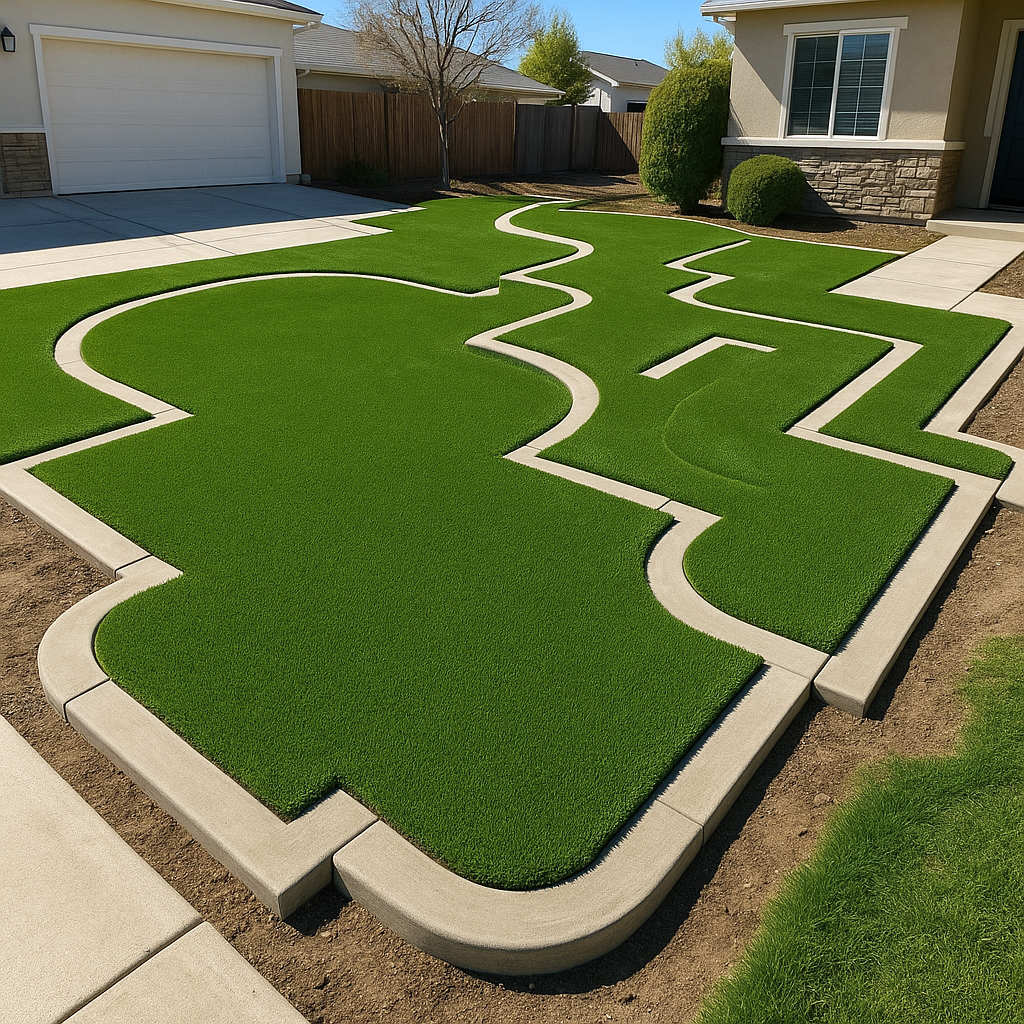
Shape complexity is a major factor. A nice, rectangular yard is the installation equivalent of a straight highway drive. Curved edges, irregular shapes, or areas with multiple corners? Those are like navigating a winding mountain road – they require more precise cutting, additional seaming, and generate more waste material.
Slopes and elevation changes in your yard can increase costs by 50-60% compared to flat installations. Installing turf on slopes requires additional preparation to ensure proper drainage and prevent shifting. It’s like the difference between hanging a picture on a flat wall versus a staircase – the second scenario requires more effort and expertise.
The condition of your existing space greatly impacts preparation costs. If your yard has poor drainage, existing concrete that needs removal, or significant grading requirements, your overall estimate will reflect the additional work needed. It’s similar to remodeling an old house – sometimes you don’t know what issues you’ll find until you start the work.
Drainage considerations are essential for a successful installation. Depending on your property’s existing conditions, we might need to install drainage membranes, French drain systems, permeable base materials, or make slope adjustments. Proper drainage is like good insurance – it might seem like an extra expense upfront, but it prevents costly problems down the road.
At MAS Landscaping, we conduct a thorough evaluation during our initial site visit to provide the most accurate estimate possible for our clients in Everett, Lynnfield, and throughout our Massachusetts service area. We want you to understand exactly what factors influence your artificial grass estimate cost so you can make the best decision for your home and budget.
Average Costs of Artificial Grass Installation in 2025
Thinking about changing your yard with artificial grass? Let’s talk about what you might expect to pay in 2025. Having a realistic budget in mind helps prevent sticker shock and allows for better planning. The figures I’m sharing here represent industry averages from internet research data – not actual pricing from MAS Landscaping and Snow Removal services.
National Averages and Cost Ranges
The world of artificial grass estimate costs is quite varied, with prices reflecting everything from basic installations to premium custom work. In 2025, most homeowners across the United States can expect to pay between $6.50 and $18 per square foot for professional installation. For truly high-end applications with premium materials, that figure can climb up to $25 per square foot.
What does this mean for your total project? Let’s break it down by yard size:
For a cozy 300 square foot space (perhaps a small side yard or play area), you might invest between $1,950 and $5,400. A standard residential yard around 500 square feet typically costs between $3,250 and $9,000. Larger installations covering 1,000 square feet generally run from $6,500 to $18,000, while extensive properties needing 2,000+ square feet of coverage could cost anywhere from $13,000 to $36,000 or more.
Most homeowners report spending in the $3,015 to $7,698 range, with the national average hovering around $6,375 for a typical installation. For a standard 500 square foot project using mid-quality turf, expect to pay approximately $7,400 to $9,350.
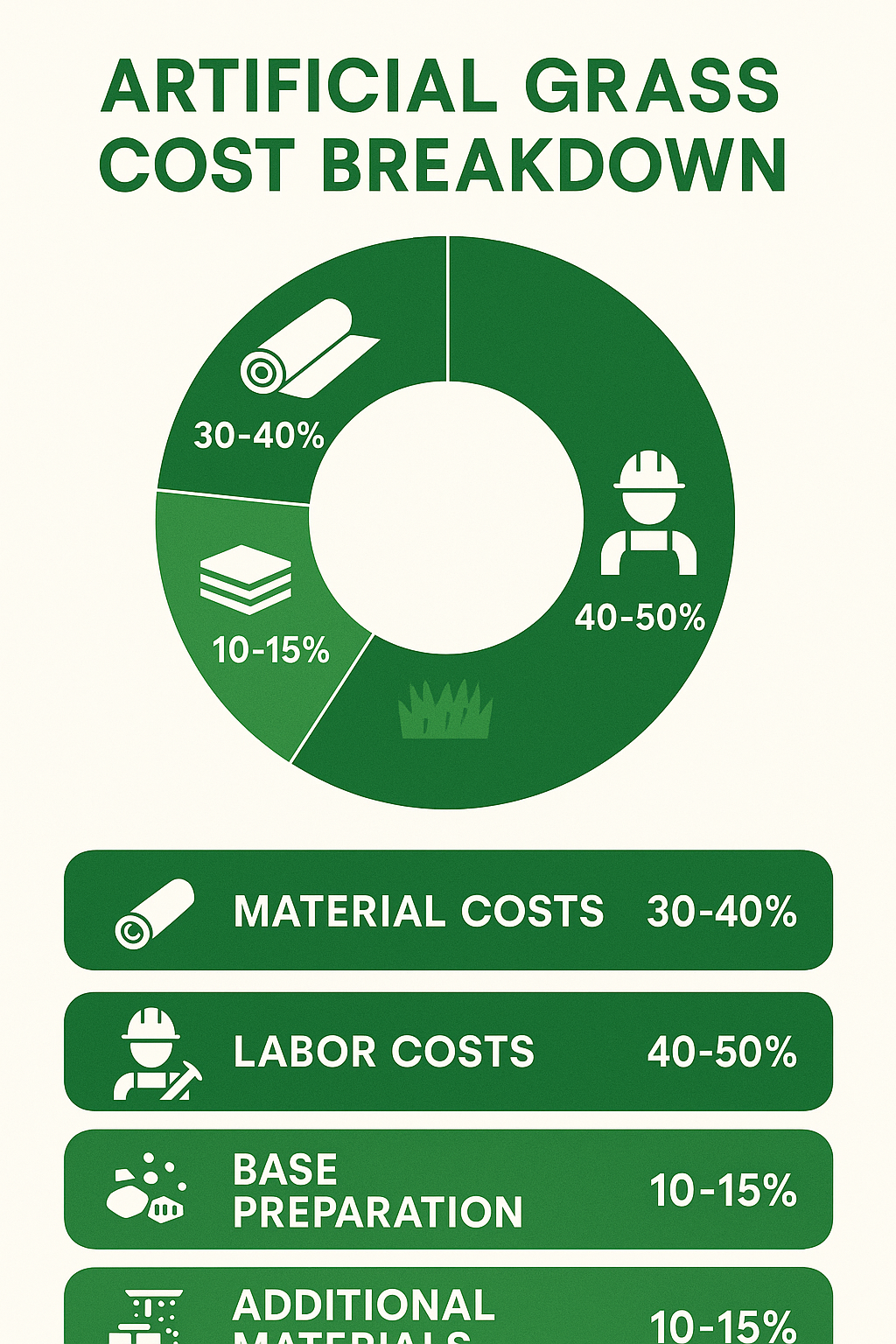
Your total investment typically breaks down into several components: materials account for 30-40% of costs, labor represents the largest chunk at 40-50%, site preparation takes about 10-15%, and additional components like infill and edging make up the remaining 10-15%.
Regional Cost Variations
Where you live significantly impacts your artificial grass estimate cost. Here in the Northeast, particularly in Massachusetts where we operate, prices tend to run about 10-20% higher than national averages. This premium reflects our region’s higher labor rates, increased material transportation costs, and the specialized installation techniques our climate demands.
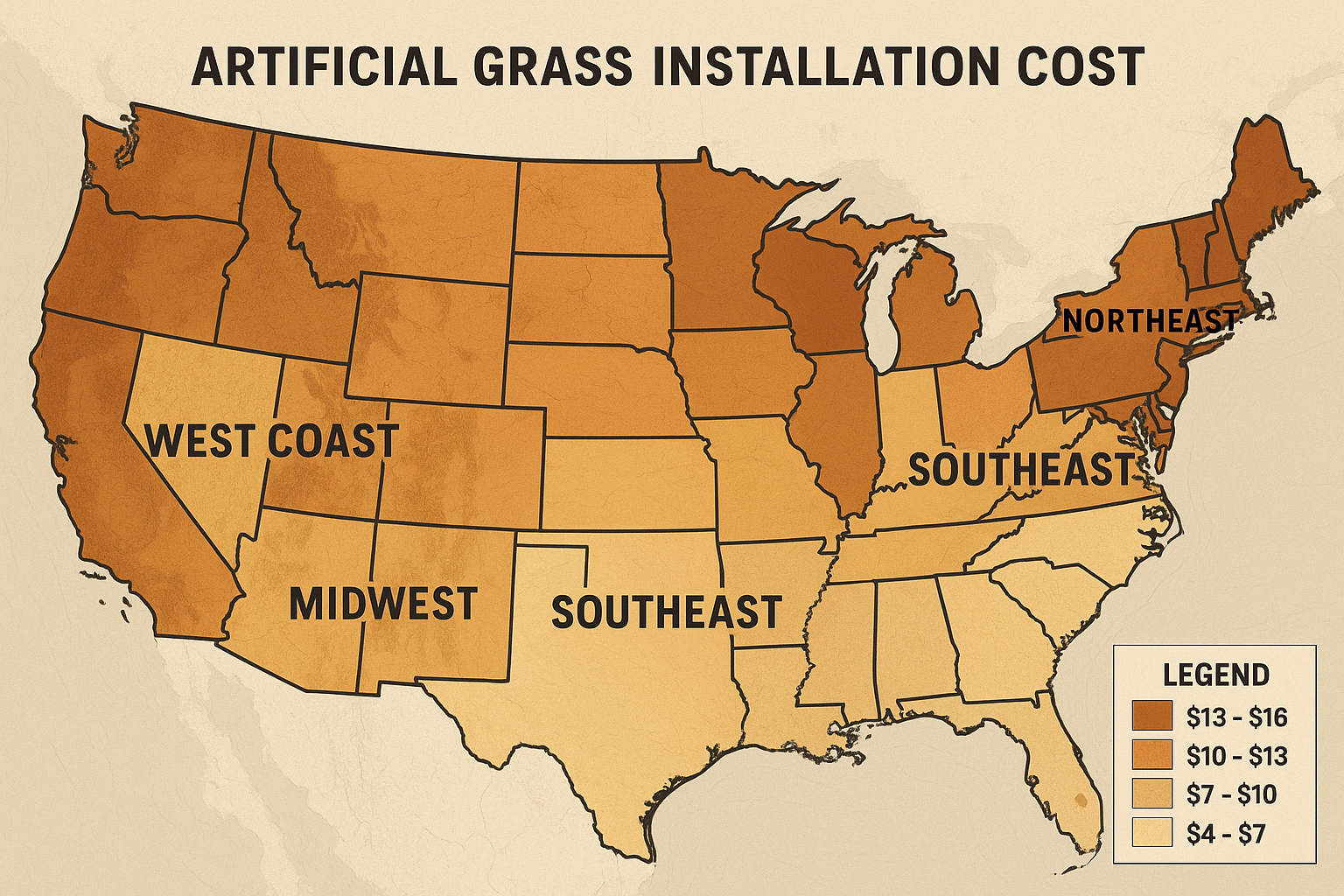
The geographic price differences across the country are quite striking. West Coast homeowners, especially in drought-prone areas, often pay premium prices due to high demand and stricter installation requirements. Midwest installations typically align more closely with national averages, while Southeast homeowners benefit from generally lower labor costs that bring their totals below the national average.
For our friends here in Everett, Lynnfield, Malden, and other Massachusetts communities we serve, several regional factors influence your costs. Our shorter New England installation season creates higher demand (and sometimes higher prices) during prime months. Our freeze-thaw cycles require additional preparation to ensure your turf stays put and drains properly through our seasonal changes. Local municipal regulations may add specific requirements, particularly for drainage solutions. And let’s be honest – many of our charming New England properties have challenging access points that can increase labor time and costs.
The investment in artificial grass makes particular sense in our region, where maintaining a natural lawn through our varied seasons can be both expensive and time-consuming. While the upfront cost may seem substantial, many of our clients find the long-term benefits well worth it.
For specific information about our installation services in your neighborhood, check out our Artificial Grass Outdoor Installation page. We’re happy to provide a personalized estimate that takes into account your property’s unique characteristics.
Comparing Artificial Grass to Natural Grass Costs
When you’re weighing whether artificial turf makes sense for your property, it helps to look at the complete financial picture compared to traditional grass. This isn’t just about what you’ll pay upfront – it’s about understanding what your lawn will cost you over its entire lifetime.
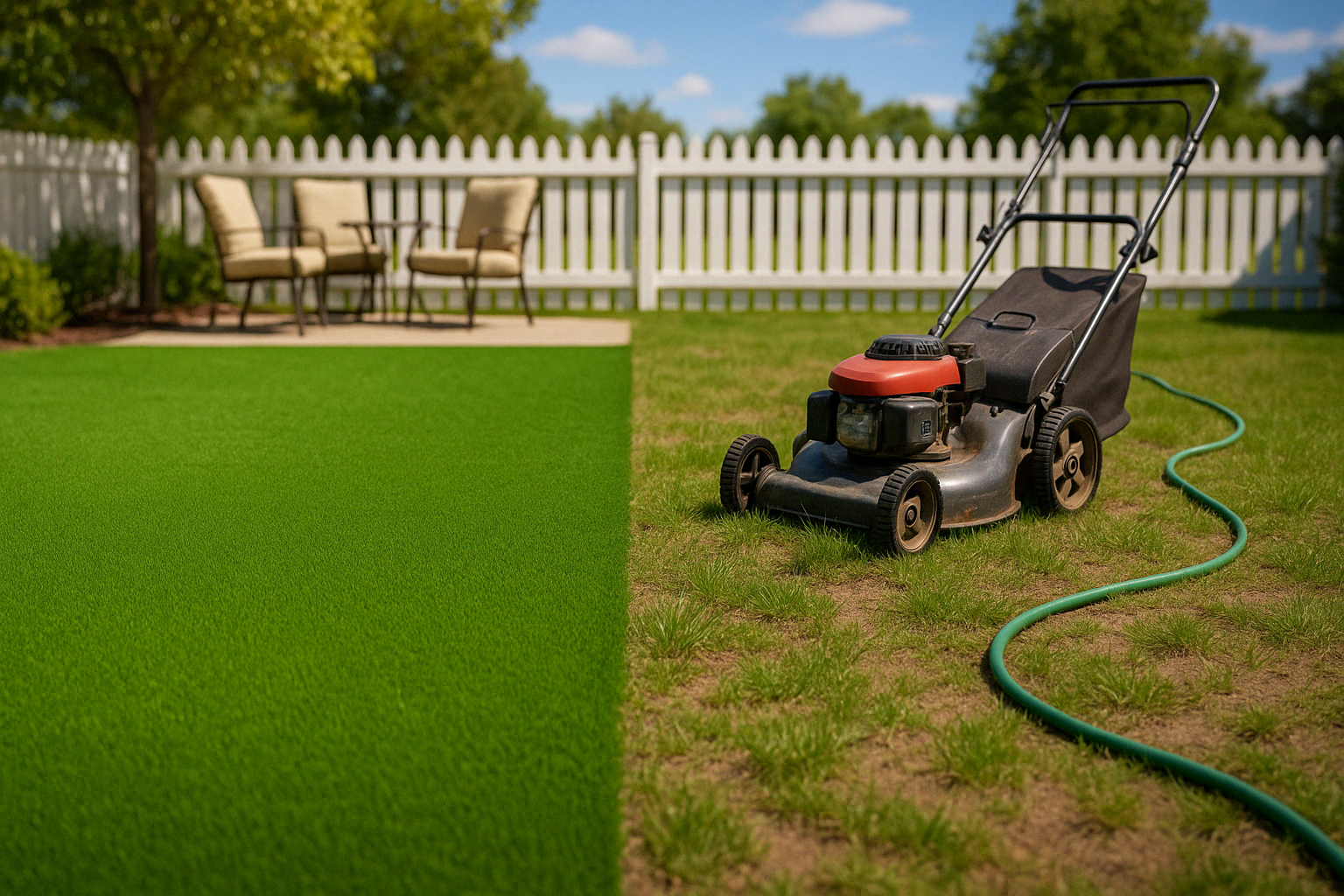
That first glance at the price tag can be a bit shocking. Natural sod costs around $1-2 per square foot, while seed is even cheaper at just $0.10-0.30 per square foot plus labor. Meanwhile, the artificial grass estimate cost typically runs between $6.50-$18 per square foot all-inclusive. That’s quite a difference!
But here’s where things get interesting. A typical 500 square foot natural lawn might cost you anywhere from $800 to $2,500 every single year in maintenance. That includes water bills, fertilizer, mowing services (or equipment), and various treatments to keep it looking good. Your artificial lawn? Just $50-$100 annually for an occasional rinse and brush.
When you do the math over time, a 2,500 square foot natural grass lawn can run you approximately $39,475 over 15 years. That’s a lot of money spent on keeping real grass green and healthy! Between water bills (which keep climbing every year), fertilizers, weed killers, mowing equipment, and periodic services like aeration, the costs really add up.
Long-Term Savings and Maintenance
The financial picture changes dramatically when you consider that quality artificial grass typically lasts 15-20 years, with premium products sometimes stretching to 25 years with proper care. That long lifespan is where the savings really kick in.
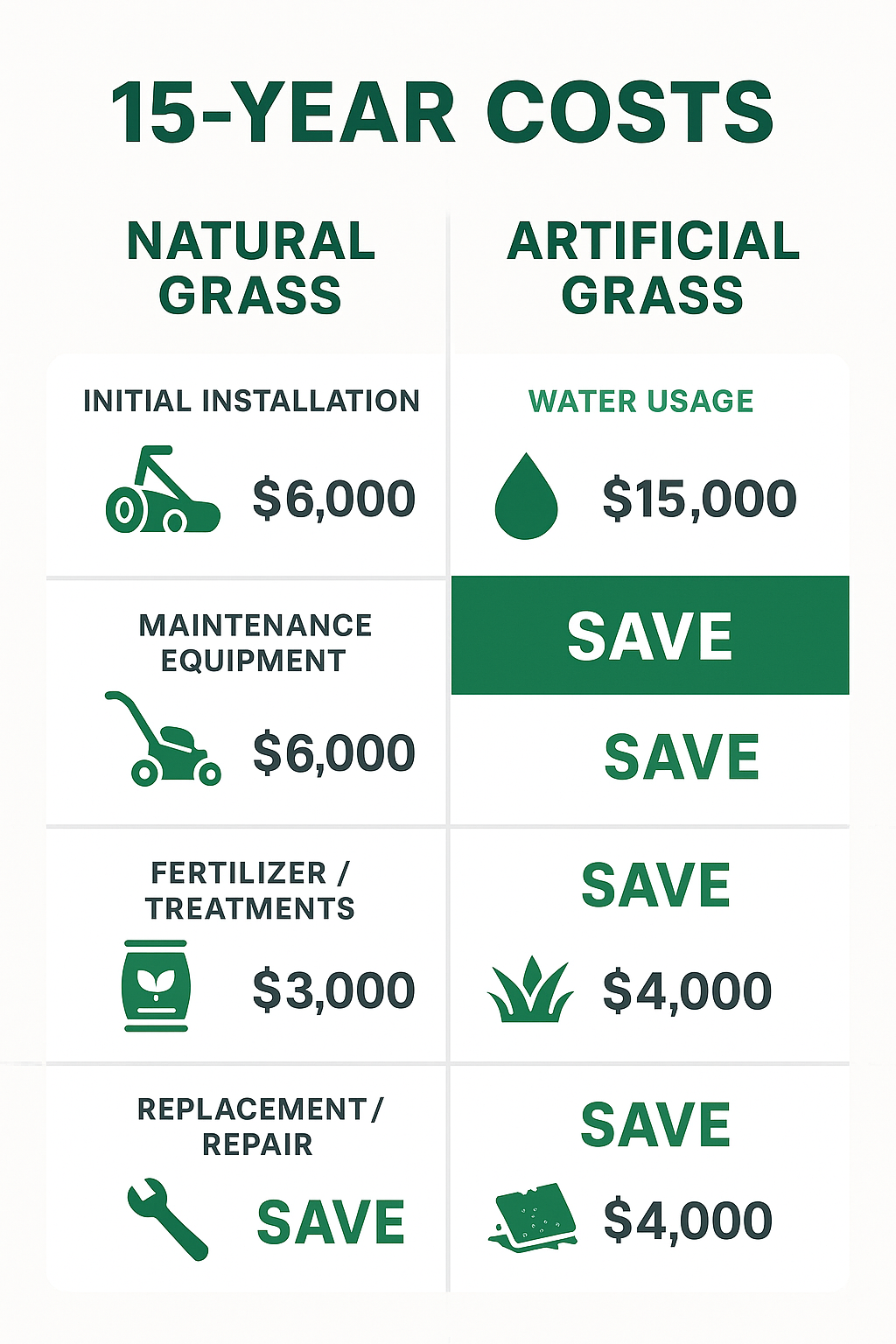
Water savings alone make a compelling case. Here in the Northeast, including communities like Everett and Malden where we serve, water costs continue to climb. A natural lawn typically needs 1-1.5 inches of water weekly during growing seasons. For a modest 500 square foot lawn, you’re looking at roughly 300 gallons per week, or 7,800 gallons during a typical 26-week growing season.
With Massachusetts water rates averaging about $0.01 per gallon, that’s around $78 yearly just for water. Over 15 years, switching to artificial grass could save you more than $1,170 in water costs alone – and substantially more during drought years when restrictions and higher rates come into play.
Perhaps even more valuable is the time savings. The average homeowner spends about 70 hours every year on lawn maintenance. If you value your time (as you should!) at even a conservative $25 per hour, that’s $1,750 annually or a whopping $26,250 over 15 years. That’s a lot of weekends you could get back!
You’ll also save on equipment costs. No more purchasing lawn mowers ($300-$600 every 5-7 years), trimmers ($100-$200), or paying for annual maintenance and fuel ($50-$100). These savings add up to approximately $1,500-$3,000 over 15 years.
While artificial grass will eventually need replacement, its extended lifespan typically results in a much lower total cost of ownership compared to maintaining natural grass. For many of our clients in Saugus, Chelsea, and surrounding towns, the combination of financial savings and dramatically reduced maintenance makes artificial grass an attractive long-term investment.
After all, wouldn’t you rather spend your weekends enjoying your yard instead of working on it?
How to Get an Accurate Artificial Grass Cost Estimate
Getting a reliable artificial grass estimate cost is essential before diving into your lawn change project. After all, you wouldn’t buy a car without knowing the price tag, right? The same principle applies to your artificial grass investment.
Using Online Cost Calculators
Online calculators can be a helpful first step in your research journey. These digital tools ask for basic information like your yard’s square footage, the type of grass you’re considering, and your location to generate a ballpark figure.
These calculators are convenient—available whenever inspiration strikes at 2 AM while you’re browsing home improvement ideas. They provide privacy during your initial research phase and let you play around with different scenarios without any pressure.
However, think of these tools as rough guides rather than gospel truth. They simply can’t account for the quirks of your specific property. That sloped section in your backyard? The calculator doesn’t know about it. The massive oak tree roots that need special consideration? Not in the algorithm.
Most online calculators should be viewed as educational starting points that help you understand the major cost factors, but they’re no substitute for professional eyes on your actual property. For more specific information about pricing factors, check out our Synthetic Grass Price Per Square Foot page.
Consulting with Professionals
For a truly accurate artificial grass estimate cost, nothing beats having experienced professionals visit your property in person. It’s like the difference between diagnosing a medical condition via WebMD versus seeing an actual doctor.

At MAS Landscaping, we start with a comprehensive site evaluation where we measure your exact installation area (not just eyeball it), assess your current ground conditions, identify drainage patterns, note any access challenges, and evaluate sun exposure. These details matter tremendously in determining your final cost.
We’ll also have a heart-to-heart about what you actually need. Are you creating a pet paradise? A kid-friendly play zone? A low-maintenance front yard showcase? Each use case might require different materials and installation approaches.
During our consultation, we’ll bring samples of different artificial grass options so you can feel the difference between them. There’s nothing like running your fingers through the options to help you decide which texture and appearance is right for your space.
The result of this process is a transparent, itemized estimate that breaks down exactly what you’re paying for—materials, labor, site preparation, and any additional components like drainage systems or decorative edging.
When meeting with any professional installer, be prepared with questions. Ask what’s included in the base estimate, whether there might be additional costs that could arise, what type of warranty is provided, how long installation will take, and what maintenance will be required afterward. A reputable company will welcome these questions and provide clear, straightforward answers.
For our Massachusetts clients in Everett, Lynnfield, Malden and surrounding communities, we provide detailed written estimates that spell out every aspect of your project. We believe surprises are for birthdays, not for your landscaping invoice.
Getting multiple estimates is always wise, but be cautious of quotes that seem suspiciously low—they often exclude crucial components that you’ll end up paying for later. Investing in quality installation pays dividends in longevity and appearance for years to come.
Frequently Asked Questions about Artificial Grass Estimate Costs
How Much Does Artificial Grass Installation Typically Cost?
When homeowners ask us about artificial grass estimate cost, we often explain that pricing varies considerably based on your specific project needs. Based on industry data (not MAS Landscaping specific pricing), most residential installations range from $6.50 to $18 per square foot for a complete professional installation.
For a typical backyard project of around 500 square feet, this translates to approximately $3,250 to $9,000 total. The national average hovers around $6,375, though many factors can push your project higher or lower within this range. These figures represent industry averages based on internet research, not actual costs for MAS Landscaping services.
Your total project investment typically covers everything from start to finish: removing your existing lawn, preparing the site with proper grading, installing crushed stone base materials for drainage, laying the artificial turf itself, adding infill materials like sand or rubber, securing all edges professionally, and the skilled labor to make it all happen seamlessly.
Special applications tend to fall at different points in the price spectrum. Pet-friendly installations might require additional drainage components, while putting greens need specialized turf and more intricate installation techniques. Complex yard shapes with numerous obstacles will naturally require more material and labor time than simple rectangular spaces.
Is Artificial Grass Worth the Investment?
“Is it really worth it?” This is perhaps the most common question we hear from homeowners in Saugus, Malden, and throughout our Massachusetts service area. While the initial artificial grass estimate cost might cause some sticker shock compared to seeding or sodding, the long-term value proposition becomes clear when you consider the bigger picture.
From a purely financial perspective, most artificial lawns pay for themselves within 3-5 years through eliminated maintenance costs. Think about what you currently spend on water, fertilizer, weed control products, lawn equipment maintenance, and possibly professional lawn services. When you add it all up—and factor in the 15-20 year lifespan of quality artificial grass—the investment often makes solid financial sense.
Beyond the dollars and cents, the practical benefits win over many of our clients. Imagine never again dealing with mud tracked into your home after rain, or brown patches during dry spells. Your lawn looks perfectly manicured year-round without a minute of your time spent mowing, edging, or weeding. For busy professionals and families, that reclaimed time is incredibly valuable.
The environmental advantages also matter to many homeowners we work with. Modern artificial grass eliminates the need for water-intensive lawn maintenance, reduces the use of gas-powered equipment, and stops fertilizer runoff from entering our local waterways. For environmentally-conscious homeowners, these benefits hold significant value.
Artificial grass proves especially worthwhile for:
– Homeowners with hectic schedules who want beautiful outdoor spaces without the maintenance
– Properties with challenging lawn conditions like heavy shade, poor soil, or drainage issues
– Families with children and pets who need durable, clean outdoor play surfaces
– Those concerned about water conservation and reducing their environmental footprint
– Homeowners wanting to improve curb appeal and potentially increase property value
Can I Install Artificial Grass Myself to Save Money?
The DIY approach to artificial grass installation certainly tempts many budget-conscious homeowners. After all, labor typically represents 40-50% of the total artificial grass estimate cost, meaning potential savings of $1,725 to $6,000 on a 500-square-foot project. That’s significant money that could stay in your pocket!
But before you rush to tackle this project yourself, let’s have an honest conversation about what you’re getting into. DIY installation requires specialized equipment that most homeowners don’t have lying around: turf cutters, power brooms, plate compactors, seam rollers, and infill spreaders. Renting this equipment adds costs and comes with its own learning curve.
Beyond the tools, successful installation demands technical knowledge about proper drainage design, base preparation techniques, and seaming methods that typically come from experience. Many first-time installers struggle with getting the base perfectly level, creating invisible seams, and achieving the right infill density for natural performance.
The physical demands shouldn’t be underestimated either. Artificial grass and its base materials are heavy! We’ve seen many DIY projects start enthusiastically on Saturday morning only to hit exhaustion by midday as homeowners realize the sheer physical effort involved in properly preparing the ground and handling the materials.
We’ve unfortunately been called to repair or completely replace numerous DIY installations where things didn’t go as planned. Common issues include poor drainage leading to water pooling, visible seams that separate over time, uneven surfaces that feel awkward underfoot, and edges that lift away from the ground. Fixing these problems often costs more than professional installation would have in the first place.
That said, if you have construction experience, access to the right equipment, and are working with a simple, smaller area on level ground, DIY installation might be reasonable. Just be realistic about your skills and the complexity of your particular project.
For most homeowners we work with in the Greater Boston area, professional installation provides significant advantages through warranty protection, proper drainage engineering, access to professional-grade equipment, and the expertise to handle unexpected site conditions. The peace of mind knowing your investment will perform beautifully for years to come is worth considering in your decision.
Conclusion
Understanding what goes into your artificial grass estimate cost is like having a roadmap for your landscape investment. Yes, that initial price tag might make you pause – it’s definitely higher than rolling out some sod or sprinkling grass seed. But when you consider the whole picture, artificial turf often becomes the smarter financial choice for many homeowners in the long run.
Think about it: no more weekends spent mowing, no more water bills that spike during dry summer months, no more patchy brown spots that make your yard look neglected. These benefits add up over time, both financially and in terms of your quality of life.
For our neighbors in Everett, Lynnfield, Malden, Melrose, Medford, Revere, Saugus, and Chelsea, we at MAS Landscaping bring something special to the table – we understand Massachusetts weather and soil conditions. We know what works here in New England, where freeze-thaw cycles and unique drainage challenges require specialized installation techniques that generic approaches just can’t address.
When you’re weighing your options, remember these essential points:
The quality of materials you choose doesn’t just affect how much you’ll pay now – it determines how your lawn will look and perform for years to come. That premium turf might cost more upfront, but it could also mean the difference between a lawn that looks artificial and one that has neighbors doing double-takes.
Professional installation isn’t just a luxury – it’s what ensures proper drainage (crucial in our New England climate), prevents rippling or buckling, and guarantees your investment lasts. We’ve seen too many DIY projects that ended up costing more to fix than they would have to install properly the first time.
The shape and features of your yard play a huge role in determining costs. That perfectly rectangular space will be more straightforward than a yard with curves, slopes, and obstacles – but we can handle both beautifully.
While you might experience some sticker shock initially, most of our customers find their artificial grass pays for itself within 3-5 years through eliminated maintenance costs, water savings, and increased property enjoyment.
When you receive estimates, look beyond just the bottom line. A detailed quote that breaks down materials, labor, and site preparation gives you valuable information about what you’re actually getting. The cheapest option rarely delivers the best value – something that becomes painfully obvious a few years down the road.
Whether you’re tired of pushing that mower every weekend, want a clean play space for kids and pets that stays mud-free after rain, or simply want a consistently beautiful yard without the constant upkeep, artificial grass delivers compelling advantages for Massachusetts homeowners.
Ready to explore how artificial grass might transform your outdoor living space? At MAS Landscaping and Snow Removal, we take pride in providing thorough site evaluations, clear detailed estimates, and professional installation throughout the Greater Boston area. Our team’s dedication to quality craftsmanship ensures your new artificial lawn will provide years of enjoyment with minimal care.
For more information about our complete landscape change services, visit our Full Service Landscape Installation page.