


hardscape and design: 10 Powerful Ways to Boost Value 2025
Creating Structure and Function in Your Outdoor Space
Ever walked into a backyard that just felt right? Where everything had its place, and the space invited you to linger? That’s the magic of thoughtful hardscape and design at work!
When we talk about hardscape and design, we’re referring to all those non-living elements that give your landscape its backbone. Think of it as the architectural framework of your outdoor space – the sturdy, permanent features that stay beautiful season after season while your plants come and go.
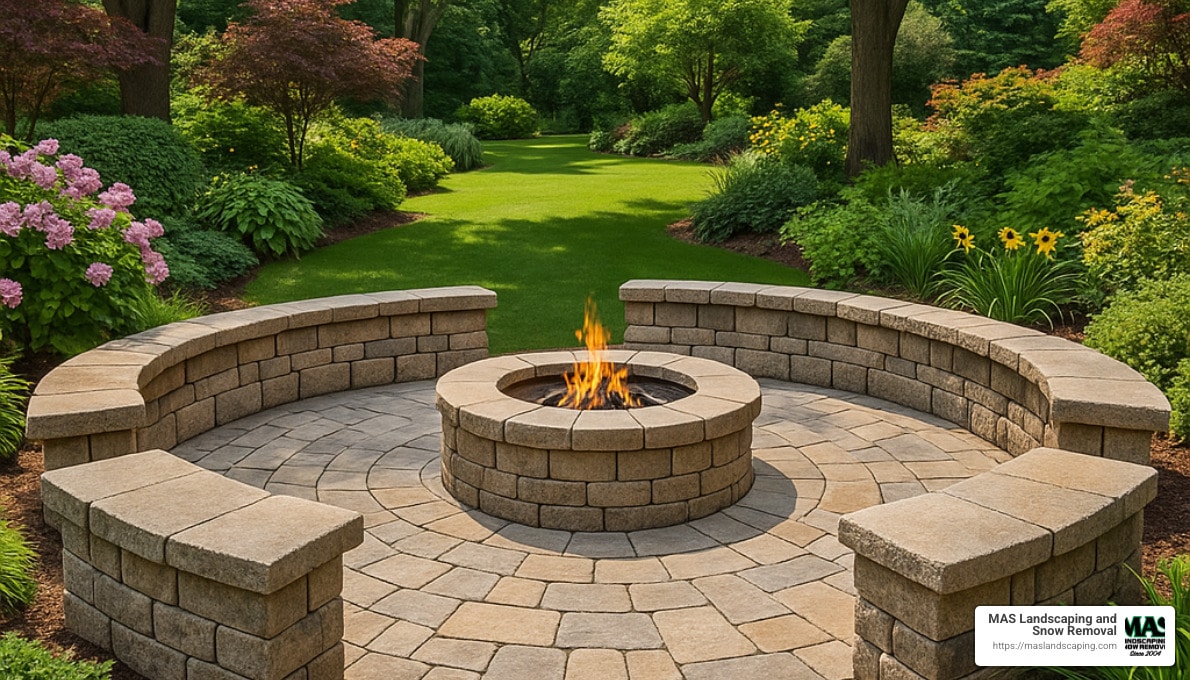
So what exactly counts as hardscaping? Your patio where summer barbecues happen, the winding stone path that guides visitors through your garden, the retaining wall that tames a tricky slope, or that dreamy fire pit where family memories are made. These elements aren’t just pretty – they solve problems and create opportunities in your outdoor space.
Materials like natural stone, concrete, pavers, brick, gravel, wood, and metal come together to create these permanent features that make up approximately 50% of your overall landscape. Unlike your flower beds that need constant attention, these hardscape elements provide structure year-round with minimal maintenance.
As one landscape design expert beautifully put it, “Hardscape design is the garden construct that makes moving about and being in the garden more comfortable.” It’s about creating spaces that work for how you actually live.
Think about that sloped area of your yard that’s always been unusable – a thoughtfully designed retaining wall could transform it into a beautiful multi-level garden. Or that muddy path everyone avoids after rain – imagine it as an inviting paver walkway that stays dry and welcoming in any weather.
The real magic happens when your hardscape and design elements work in harmony with your softscape (all your living plants and greenery). This balance creates an outdoor environment that’s not just stunning to look at, but practical to use. Good hardscaping improves drainage, prevents erosion, reduces weekly maintenance, and can significantly boost your property’s value.
Whether you’re considering hardscaping around an inground pool to create a safer, more attractive pool deck, planning a stunning paver patio with retaining wall to maximize a sloped yard, or exploring natural options like hardscaping with river rock for a low-maintenance landscape with natural drainage, these permanent elements will transform how you experience your outdoor space.
The best part? While your flowers may fade in winter, your beautiful stone walkway and cozy fire pit area will continue providing structure, function, and enjoyment all year long – even during those New England winters. That’s the lasting value of investing in quality hardscape and design.
Hardscape and Design 101: Hardscape vs. Softscape
When you step into a beautiful outdoor space, you’re experiencing the perfect harmony between two essential elements: hardscape and softscape. Understanding this balance is the foundation of successful hardscape and design.
Hardscape encompasses all the non-living elements in your landscape—those permanent structures crafted from stone, concrete, wood, and metal that give your outdoor space its backbone. Softscape, by contrast, includes all the living elements—your trees, shrubs, flowers, grass, and other plants that grow, bloom, and change with the seasons.
As landscape designer Scott Fellman cleverly puts it, “If you’ve ever done an African Cichlid tank filled with just rocks, you’ve done a hardscape.” This aquarium analogy helps visualize how hardscape elements create structure and definition in your outdoor areas, just as rocks provide the framework in a fish tank.
Your hardscape typically makes up about half of your overall landscape design, yet its impact on both functionality and aesthetics is enormous. Unlike your garden plants that need regular attention and change appearance throughout the year, hardscape features remain steadfast through all seasons, providing reliable structure and function whether it’s snowing in January or blooming in May.
Hardscape and design elements serve several crucial purposes in your outdoor space:
- They create clear structure and define different areas for specific activities
- They provide safe, accessible pathways throughout your property
- They control erosion on sloped areas, protecting your investment
- They manage water drainage to prevent flooding and property damage
- They add usable living spaces for gathering, cooking, and relaxing
- They significantly reduce the ongoing maintenance your yard requires
Understanding hardscape and design benefits
A thoughtfully executed hardscape and design plan transforms your outdoor space in ways that improve both your daily life and your property’s value.
Picture stepping out onto a beautiful paver patio on a summer evening instead of trudging across a muddy lawn. Imagine entertaining friends around a crackling fire pit as the autumn air turns crisp. These experiences become possible through smart hardscaping.
The benefits extend far beyond enjoyment. According to real estate professionals, quality hardscaping can boost your property’s value by 20-30%. Features like well-designed patios, outdoor kitchens, and fire pits are particularly attractive to potential buyers who can immediately envision themselves using these spaces.
There’s also the practical side—hardscaped areas require dramatically less maintenance than lawns and garden beds. No more endless mowing, weeding, and watering. Once installed, most hardscape elements need only occasional cleaning and minor upkeep.
Properly designed hardscapes also protect your property by directing water away from structures and preventing soil erosion. This is especially important in our New England climate, where water management can make or break a landscape’s longevity.
One of our Lynnfield clients recently shared: “After adding a paver patio and stone fire pit, we spend more evenings outdoors than we ever did before. It’s like we added an entire room to our home without the cost of a full addition.”
Softscape’s complementary role in hardscape and design
While hardscape and design provides the framework, your softscape elements breathe life into your outdoor space. Think of hardscape as the canvas and softscape as the colorful paint that brings it to life.
Plants soften the rigid lines of stone walls and concrete patios, creating a more natural, inviting feel. A perfectly placed ornamental tree can transform a plain patio into a shaded retreat. Flowering perennials add bursts of seasonal color alongside walkways and seating areas.
Strategic plantings offer practical benefits too. Privacy screens of arborvitae or viburnum create natural boundaries while enhancing the beauty of your hardscape features. Climbing vines can transform a plain pergola into a living canopy of green.
The environmental benefits of integrating softscape with hardscape are substantial. Plants attract birds, butterflies, and beneficial insects, adding life and movement to your outdoor space. Trees and shrubs provide shade that cools hardscape areas during hot summer months—particularly important for patios and seating areas that might otherwise become uncomfortably warm.
Here in the Saugus and Everett areas, we often recommend native New England plants that naturally thrive in our climate. These require less maintenance while providing maximum beauty alongside your hardscape elements. A stone patio surrounded by native black-eyed Susans, coneflowers, and ornamental grasses creates a space that’s both functional and naturally beautiful through multiple seasons.
The key to successful hardscape and design is finding the perfect balance between hard and soft elements. Too much hardscape can feel stark and uninviting, while too much softscape can become overwhelming to maintain. The ideal balance depends on your specific needs, lifestyle, preferences, and property characteristics.
For more in-depth information about how these elements work together, check out our detailed guide about Hardscaping and Softscaping.
Essential Hardscape Elements Every Landscape Needs
Creating a functional and beautiful outdoor space requires thoughtful consideration of which hardscape and design elements will best serve your needs. Let’s explore the essential components that form the foundation of most successful landscape designs—the building blocks that turn an ordinary yard into an extraordinary outdoor living space.
Patios & seating areas
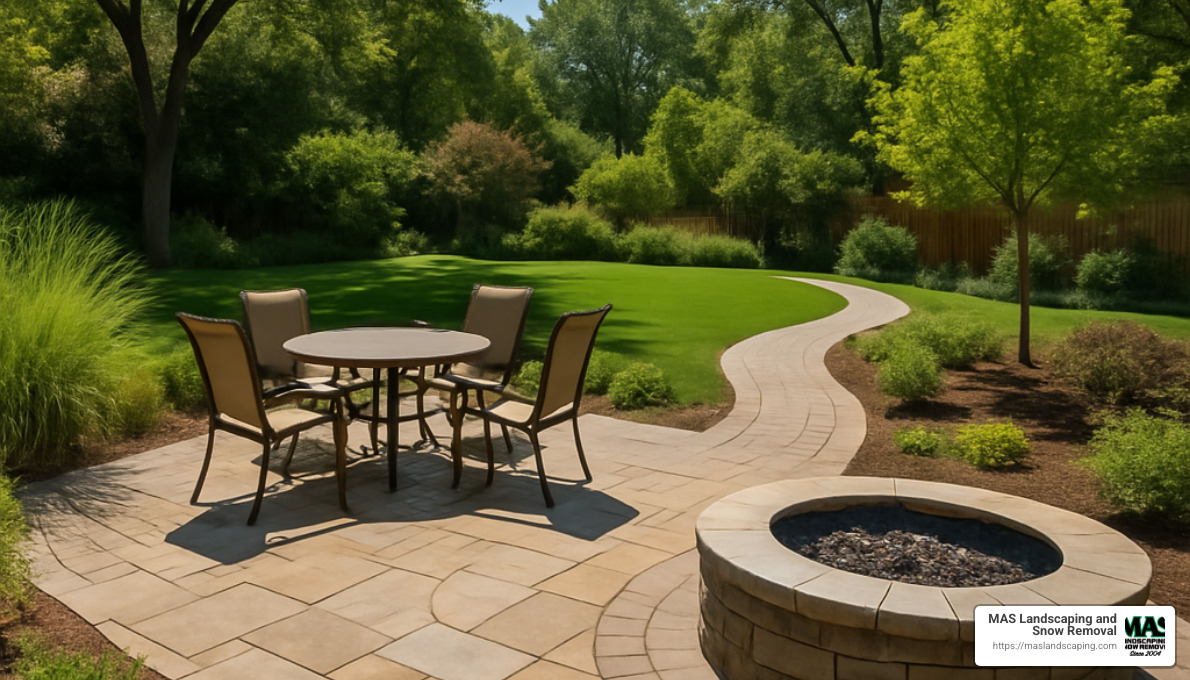
Patios are the heart of outdoor living—your open-air living room where memories are made. Think of a well-designed patio as the stage where your outdoor lifestyle plays out, whether that’s morning coffee, family dinners, or weekend gatherings with friends.
The secret to a perfect patio is proper sizing. We’ve seen too many homeowners regret installing patios that were just too small for their needs. For comfortable dining, you’ll need at least 10-12 feet in each direction, while lounging areas require even more space to feel generous rather than cramped.
Material selection sets the tone for your entire outdoor space. A classic brick patio brings timeless warmth, while natural stone offers organic beauty with endless variation. Modern concrete pavers provide versatility with countless color and pattern options at a more accessible price point.
In our Massachusetts climate, shade is essential for summer comfort. When we design patios for clients in Malden and Melrose, we incorporate pergolas, strategically placed trees, or retractable awnings to create cooling shade during hot summer days while maintaining sunny spots for cooler seasons.
“Our patio has become our favorite ‘room’ in the house,” shared one Saugus homeowner after we completed their bluestone patio with a built-in fire pit. “We’re out here from April through November now.”
More info about Hardscape Patio Designs
Walkways & pathways
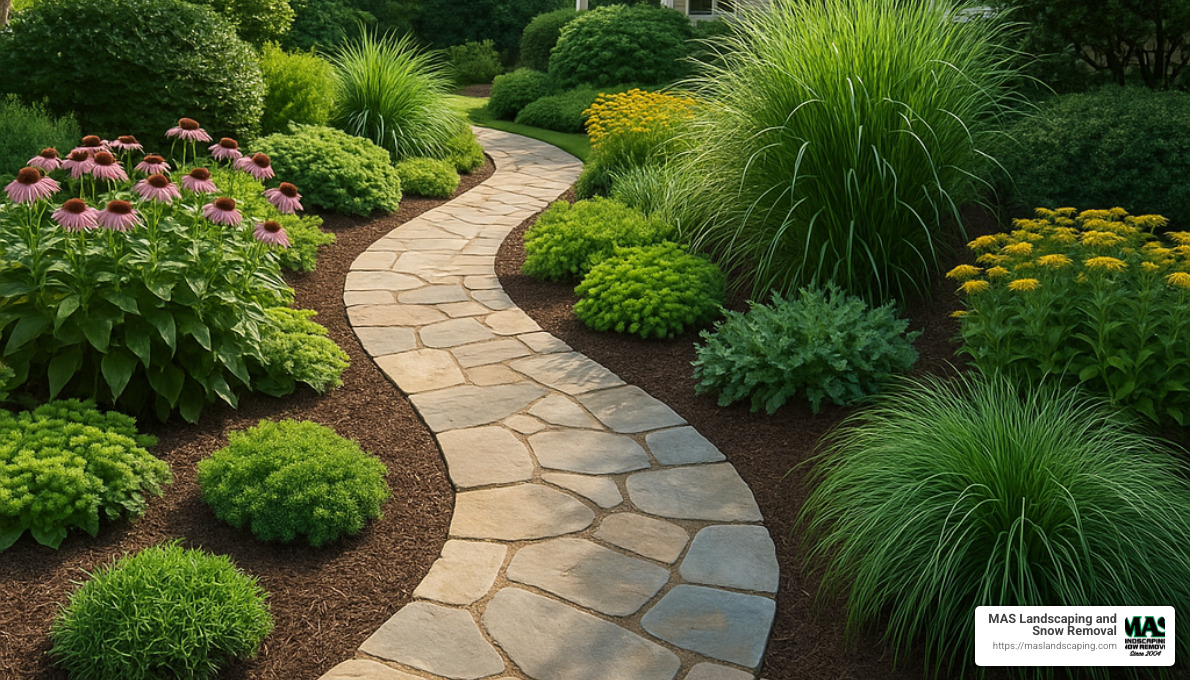
Walkways do far more than just get you from point A to point B—they guide the entire experience of your landscape, revealing views and creating moments of findy. Well-designed paths invite exploration and connect different outdoor “rooms” in a way that feels natural and intuitive.
Width matters tremendously in pathway design. Main walkways to your front door should be at least 4-5 feet wide to allow two people to walk comfortably side-by-side, while garden paths can be narrower at 2-3 feet. The path to your front door deserves special attention as it’s a visitor’s first impression of your home.
Safety becomes particularly important in New England, where icy conditions are a winter reality. We carefully select materials with slip-resistant textures and install them with proper drainage to prevent standing water that could freeze. Subtle lighting along pathways not only improves their beauty but dramatically improves safety after dark.
Curved pathways add a sense of journey and findy that straight paths simply can’t match. As one Chelsea client told us after we installed their gently winding bluestone walkway: “Walking to the front door used to be just walking to the front door. Now it’s an experience—the way the path reveals different plants and views makes even a simple trip to get the mail more enjoyable.”
Retaining walls
Retaining walls might seem purely functional, but these hardworking elements can be among the most visually striking features in your landscape. Beyond simply holding back soil, they create dramatic level changes, define spaces, and add architectural interest.
In the hilly terrain of Revere and parts of Saugus, retaining walls transform challenging slopes into usable outdoor living space. Terracing steep yards with a series of lower walls (typically 3-4 feet high) creates flat areas for patios, gardens, or play spaces while being more visually appealing than a single tall wall.
Smart designers maximize the functionality of retaining walls. We often incorporate built-in seating along the top of walls—creating what we call “seat walls” that provide casual perching spots during gatherings. Integrated planters soften the appearance of walls with cascading plants that bring life and color to what might otherwise be imposing structures.
Material selection dramatically affects both appearance and longevity. Natural stone walls bring timeless character but require skilled masons and higher investment. Manufactured concrete blocks offer excellent structural integrity with more accessible pricing, while modern systems mimic the look of natural stone surprisingly well.
“Our sloped backyard was basically unusable before,” shared a Lynnfield client. “Now with the terraced retaining walls, we have a flat patio area, level lawn space for the kids, and beautiful plantings on each tier. It’s like we tripled our usable outdoor space.”
More info about Hardscape Retaining Wall
Fire features & outdoor kitchens
Nothing draws people together quite like fire. Fire features create an almost magnetic gathering spot in your outdoor space while extending your outdoor living season well beyond summer in our New England climate.
Fire pits offer versatile, 360-degree seating where conversation flows naturally as people gather around the flames. For a more dramatic focal point, outdoor fireplaces create a stunning architectural element while providing more directed heat and often better smoke control. Both options transform ordinary evenings into memorable experiences.
Outdoor kitchens have evolved from simple grills to complete cooking environments that let the chef remain part of the party. Even modest cooking stations with a quality grill, small counter space, and storage dramatically change how you entertain. More elaborate kitchens might include pizza ovens, refrigerators, sinks with running water, and dedicated dining areas.
The return on investment for these features is impressive. According to industry data, well-designed outdoor kitchens can return 100-200% of their cost when selling your home. More importantly, they provide years of enjoyment before you ever think about selling.
“Our fire pit has completely changed our family routine,” a Medford homeowner told us. “Instead of everyone disappearing to separate rooms with their devices after dinner, we find ourselves naturally gathering around the fire, actually talking to each other. It’s been wonderful for our family connection.”
Beyond these core elements, several other hardscape features round out a complete outdoor living space:
Driveways do far more than park cars—they frame your home and set the tone for your entire property. Materials like stamped concrete, pavers, or exposed aggregate offer dramatic curb appeal upgrades compared to plain asphalt.
Decks bridge the transition between indoor and outdoor living, especially for homes with liftd first floors. Modern composite materials have revolutionized deck ownership with minimal maintenance requirements compared to traditional wood.
Water features add a sensory dimension that plants and hardscaping alone can’t provide. The sound of moving water masks street noise while creating a peaceful atmosphere that transforms ordinary spaces into retreats.
Pergolas and gazebos provide partial shelter while adding vertical interest to your landscape. Pergolas can be fitted with retractable canopies or growing vines for increased shade, while gazebos offer more complete protection from sun and light rain.
Fences and gates define your outdoor space while adding security and privacy. Far beyond basic wood pickets, today’s fencing options include architectural panels, decorative metal, and mixed-material designs that become features rather than just boundaries.
The magic happens when these elements work together in harmony, creating a natural flow between spaces while maintaining distinct “rooms” for different activities. A thoughtfully designed landscape incorporates zones for cooking, dining, conversation, play, and quiet relaxation—all connected by intuitive pathways and unified by consistent materials and style.
Choosing the Right Materials & Budgeting Wisely
Selecting the perfect materials for your hardscape and design project might feel overwhelming, but it’s actually one of the most creative and important decisions you’ll make. The materials you choose do more than just look pretty—they determine how long your outdoor space will last, how much maintenance you’ll need to do, and of course, how much you’ll spend.
Material Options and Considerations
When I walk clients through their options in the Saugus and surrounding areas, I always start by helping them understand the personality of each material.
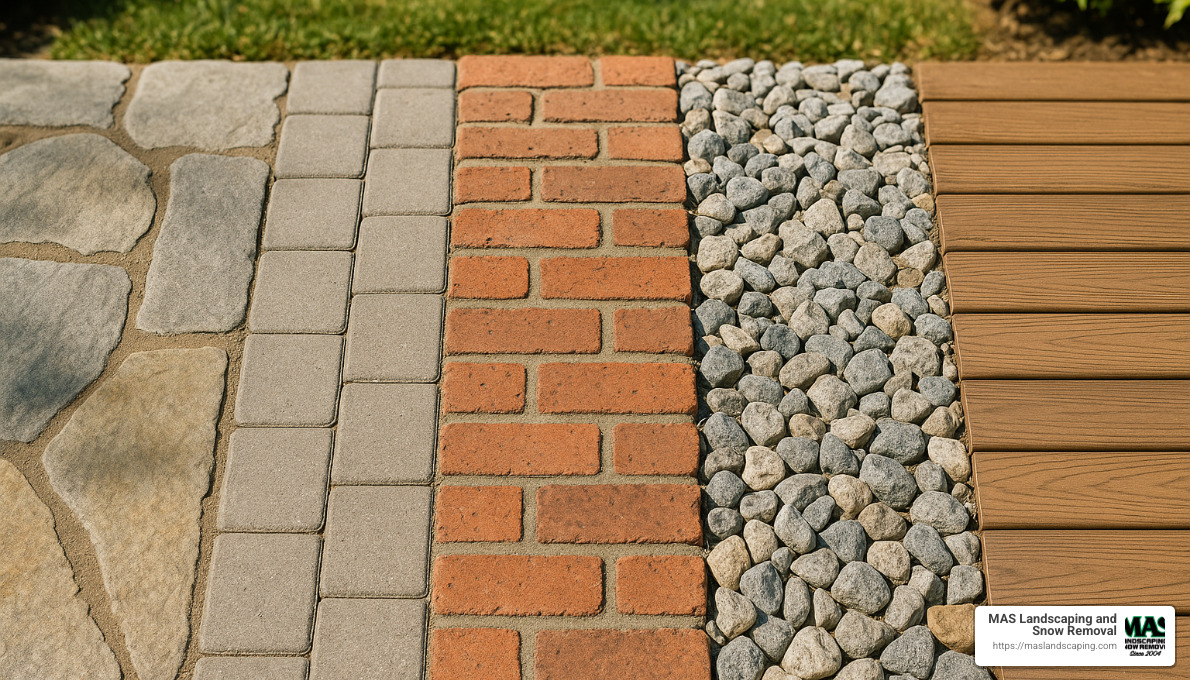
Natural stone is the showstopper of hardscaping materials. Each piece tells its own geological story, with unique patterns and colors that can’t be replicated. Bluestone has become something of a New England classic with its rich blue-gray tones that seem right at home alongside colonial architecture. Granite offers incredible durability (there’s a reason they make monuments from it!), while limestone brings a softer, warmer feel to spaces. Flagstone, with its irregular shapes, creates that charming, meandering garden path feel that many homeowners love.
Yes, natural stone typically costs more upfront, but as one of our Lynnfield clients put it, “We installed our bluestone patio fifteen years ago, and it still looks as beautiful as the day it was finished.” That kind of longevity often makes the investment worthwhile, especially with our Massachusetts freeze-thaw cycles that can be tough on lesser materials.
Concrete products offer remarkable versatility and value. From simple poured concrete that can be stamped or stained to look like much pricier materials, to the endless variety of concrete pavers available in practically any color and shape imaginable. Many of our Malden homeowners are surprised by how sophisticated modern concrete products can look—these aren’t your grandmother’s concrete slabs!
One Everett client chose stamped concrete for their pool deck that mimics natural travertine at about half the cost. “Our neighbors can’t believe it’s not real stone,” they told us with a smile.
Brick brings that timeless, classic charm that complements so many New England homes. There’s something about a well-laid brick walkway that feels instantly established and welcoming. While brick does require some maintenance of the mortar joints over time, its traditional appeal makes it a perennial favorite, especially for front walkways and formal garden paths.
Gravel is the budget-friendly option that doesn’t have to look budget. Angular gravel locks together to create stable surfaces for driveways and walkways, while rounded pebbles offer decorative appeal in garden beds and around water features. Decomposed granite, which compacts into a semi-solid surface, has become increasingly popular for more natural-looking pathways that still provide solid footing.
A Revere client recently used crushed stone as a budget-friendly patio material, adding larger flat stones as stepping areas. “It gives us the outdoor space we wanted while we save for the full stone patio down the road,” they explained. Smart phasing like this can help make your landscape dreams possible even on a tight budget.
Wood brings warmth and natural beauty that stone and concrete simply can’t match. While pressure-treated pine offers the most economical option, cedar and redwood provide better natural resistance to decay without chemical treatments. For those looking for the wood look without the maintenance, composite materials have come a long way in mimicking real wood grain while offering decades of low-maintenance performance.
Average pricing guidelines*
Let’s talk money—always an important consideration! Here’s what you might expect to invest in various hardscape materials:
- Gravel: $1-$15 per square foot (including proper base preparation and installation)
- Concrete: $6-$30 per square foot (with decorative finishes at the higher end)
- Pavers: $12-$45 per square foot (varies widely based on material quality and installation complexity)
- Natural stone: $25-$80 per square foot (depends on stone type, thickness, and installation challenges)
- Wood decking: $15-$45 per square foot (with exotic hardwoods and complex designs at the premium end)
*These figures represent internet averages and can vary significantly based on your specific site conditions, design complexity, material availability, and other factors. They are not quotes from MAS Landscaping.
“Stone is a popular choice for hardscapes because it’s durable, long-lasting, and can withstand the elements,” notes industry experts. This durability often justifies the higher initial investment for many homeowners in our service areas.
I always remind clients that the lowest price isn’t always the best value. As one Chelsea homeowner finded, “We tried saving money with a cheaper contractor and thinner pavers. Three years later, we had MAS redo the entire patio because it was failing. Doing it right the first time would have been cheaper in the long run.”
Material selection checklist
When helping you select materials for your hardscape and design project, I consider several important factors:
Home Architectural Style matters tremendously. Your hardscaping should complement your home, not fight with it. Traditional homes often pair beautifully with brick, natural stone, or classic pavers. More contemporary homes can handle sleeker concrete, large-format pavers, or even metal accents. Those charming Colonial New England homes that dot our service area typically look their best with traditional materials like brick or bluestone that honor their historical character.
Color Palette coordination makes everything feel intentional and cohesive. We’ll look at your home’s exterior colors, any existing landscape features that will remain, and discuss the overall mood you want to create. Warmer tones tend to feel more inviting and casual, while cooler tones can create a more formal, sophisticated atmosphere.
Texture Mix adds depth and visual interest to your outdoor spaces. Balancing rough and smooth surfaces creates pleasant contrasts—think smooth patio pavers bordered by a rough-cut stone wall. We also consider how textures will feel underfoot, especially important for pool decks and heavily trafficked walkways.
Long-Term Care requirements should match your lifestyle and maintenance preferences. Some of our busiest Everett professionals specifically request low-maintenance materials, while other clients enjoy the ritual of maintaining natural materials like wood or certain types of stone. Our Massachusetts climate, with its significant freeze-thaw cycles, also impacts material performance and maintenance needs.
Budget Considerations don’t have to limit your dreams—they just shape how we achieve them. We can balance upfront costs with long-term durability, phase projects over time, or strategically mix high-end and economical materials to maximize impact where it matters most.
In our experience serving communities throughout the North Shore, the most successful hardscape projects strike that perfect balance between beauty and practicality. As one satisfied Saugus client told us: “We splurged on the natural stone for our front walkway where everyone sees it, but used high-quality pavers for the backyard patio. The combination gave us the look we wanted while staying within our budget.”
This thoughtful approach to material selection ensures that your hardscape elements will not only look beautiful today but continue to improve your property for years to come. After all, the best hardscaping investment is one that brings you joy every time you see it.
Design Principles & Planning Steps for Successful Projects
Creating exceptional hardscape and design requires more than just selecting beautiful materials—it demands thoughtful planning and adherence to fundamental design principles. Here’s how to ensure your hardscape project succeeds from concept to completion:
Core Design Principles
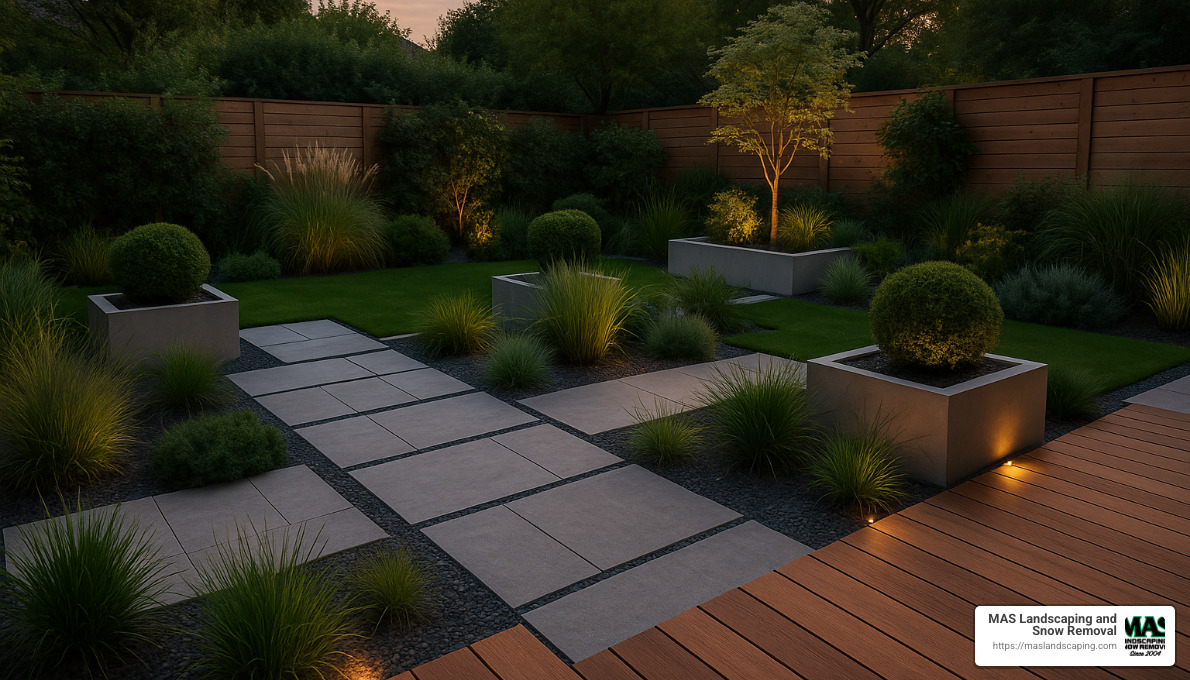
When we work with homeowners in Malden or Melrose, we always start by focusing on functionality. Every beautiful patio or walkway must first serve a practical purpose. Ask yourself how the space will be used, how many people need to be accommodated, and what activities will take place there. A stunning fire pit area loses its charm quickly if it’s too small for your family to gather around comfortably!
Balance and proportion play crucial roles too. I’ve seen many projects where homeowners fell in love with massive features that simply overwhelmed their property. Your hardscape elements should complement—not dominate—your home and yard. Think of it as creating a visual harmony where nothing feels out of place.
Every successful design needs focal points that naturally draw the eye. These might be a cozy fire feature on your patio, a bubbling water element that adds soothing sounds, or even a dramatic boulder or sculpture. These focal points create visual interest and give your outdoor space personality and character.
The way people move through your space—what designers call “flow and circulation”—matters tremendously. We always plan pathways that guide movement naturally between different areas. There’s nothing more frustrating than a beautiful patio that forces guests to awkwardly steer around furniture or step over plantings to reach the grill!
All these elements should work together in unity and harmony. Try repeating certain materials, colors, or patterns throughout your landscape to create a sense of cohesion. Your hardscape should feel like a natural extension of your home’s architecture, not a disconnected afterthought.
Planning Process for Hardscape Projects
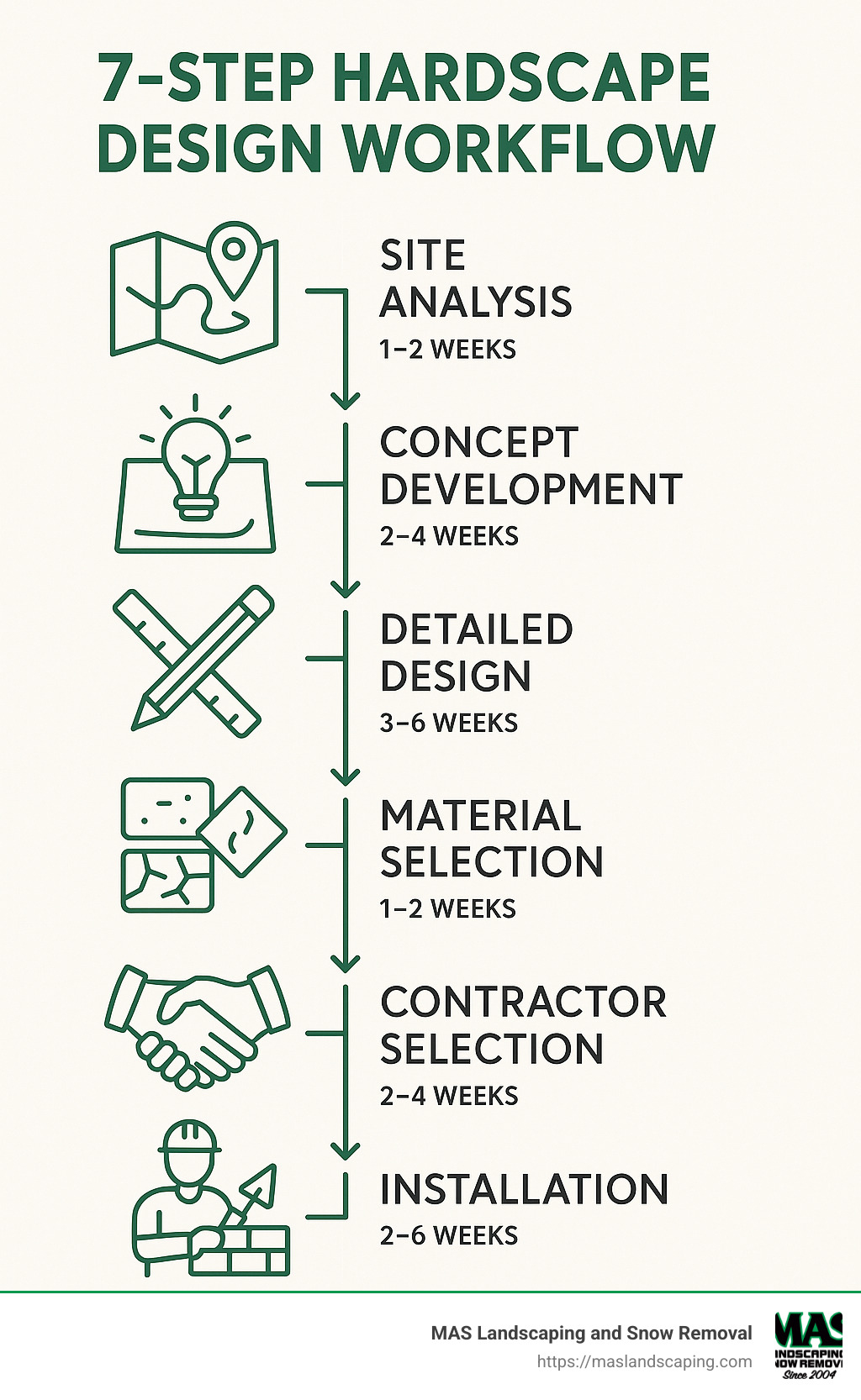
Successful hardscape and design follows a systematic approach that helps avoid costly mistakes and ensures your vision becomes reality.
The journey begins with a thorough site analysis. We evaluate existing conditions like slopes and drainage patterns, identify views worth highlighting (or screening), and note which existing features should stay or go. This step is particularly important in places like Saugus, where properties often have unique characteristics that require customized solutions.
Next comes creating your needs and wishes list. We help clients distinguish between must-have elements and nice-to-have features, always keeping budget realities in mind. I always tell homeowners that it’s better to do fewer elements extremely well than to spread your budget too thin across too many features.
Once we understand your site and goals, we develop initial concepts. This exploratory phase is where creativity shines! We’ll sketch preliminary ideas, explore different layouts, and discuss material options. We’ll also check municipal regulations to ensure your dream project won’t face permitting roadblocks later.
The detailed design phase transforms those concepts into concrete plans. We create scaled drawings or 3D renderings that show exactly how your finished space will look. We specify materials down to the last detail and develop comprehensive drainage and lighting plans. This is also when we finalize plant selections that will complement your hardscape beautifully.
With designs in hand, we move to material selection and sourcing. There’s simply no substitute for seeing and touching actual material samples in your own outdoor setting. The stone that looked perfect in a showroom might tell a different story when viewed alongside your home’s exterior in natural light.
Choosing the right contractor is arguably the most critical step. Always verify experience with similar projects, check references thoroughly, and ensure proper licensing and insurance. Compare detailed proposals—not just bottom-line prices—to understand exactly what you’re getting.
Finally, during installation, maintain clear communication channels, establish realistic timeline expectations, and plan for site access and material staging. Regular progress reviews help ensure the finished project matches your vision.
Site analysis & drainage
I can’t emphasize enough how critical proper drainage is to hardscape and design. Without it, even the most beautiful installation can fail prematurely. This is especially true in New England, where our freeze-thaw cycles can quickly turn a minor drainage issue into a major headache.
Always ensure all hardscape surfaces slope away from buildings—we typically recommend a minimum of 1/4″ per foot. This seemingly small detail makes an enormous difference in protecting your home’s foundation from water damage. Think beyond just the immediate project area to consider the entire water flow path across your property.
Permeable solutions have become increasingly popular among our clients in Everett and Revere. Incorporating gravel or crushed stone in joints between pavers allows water to penetrate rather than run off. For larger areas, specially designed permeable pavers or permeable concrete can dramatically reduce runoff while still providing a stable, attractive surface.
For more challenging sites, especially in areas like Medford where we often encounter clay soils with poor natural drainage, we might recommend installing French drains, catch basins at low points, or even rain gardens that capture and use runoff. These water management systems not only protect your hardscape investment but can also become attractive landscape features in their own right.
Hardscape and design planning mistakes to avoid
Even well-intentioned hardscape and design projects can go awry without proper planning. Here are the pitfalls we most often help clients avoid:
Ignoring proper scale is perhaps the most common mistake I see. A patio that’s too small for your furniture and proper circulation quickly becomes frustrating. I always recommend placing your actual outdoor furniture (or stand-ins of the same size) on the marked area before installation to ensure comfortable fit.
Drainage negligence can ruin even the most beautiful hardscape. I’ve seen countless DIY projects fail because homeowners directed runoff toward foundations or neighboring properties, creating serious problems and potential liability. Proper base materials for drainage aren’t places to cut corners—they’re essential investments.
Poor material combinations can create jarring visual disconnects. I recommend limiting your palette to 2-3 complementary materials that harmonize with your home’s architecture. What works for a contemporary home in Lynnfield might look completely out of place alongside a colonial in Malden.
Inadequate lighting is often an afterthought, but it should be part of your initial design. Thoughtful lighting improves both safety and ambiance, extending your enjoyment of outdoor spaces well into the evening hours. Planning for electrical needs during construction saves significant headaches later.
One Saugus client learned a valuable lesson about maintenance requirements: “We initially wanted to save money by reducing the base preparation for our patio. Thankfully, MAS Landscaping explained why that would be a costly mistake long-term. Five years later, while our neighbor’s DIY patio is heaving and cracking, ours still looks perfect.”
Budget misallocation is another common pitfall. Spending too much on decorative accents while skimping on essential elements like proper base preparation is a recipe for disappointment. Always include a 10-15% contingency for unexpected challenges—they’re almost guaranteed to arise, especially on older properties throughout our service area.
By following these design principles and planning steps, your hardscape project will not only look beautiful upon completion but will continue to improve your property and lifestyle for many years to come.
Trends & Creative Ideas to Inspire Your Hardscape and Design
The world of hardscape and design is constantly evolving, bringing fresh ideas and exciting innovations to outdoor living spaces. Whether you’re planning a complete backyard change or just looking to add a few eye-catching elements, today’s trends offer plenty of inspiration to make your outdoor space both beautiful and functional.
Contemporary Trends in Hardscaping
Sustainable hardscaping has moved from niche to mainstream as more homeowners accept eco-friendly approaches to outdoor design. Permeable pavers are leading this charge, allowing rainwater to seep through rather than run off, replenishing groundwater and reducing storm drainage issues. In Saugus and surrounding communities, we’re seeing increased interest in recycled and reclaimed materials that give projects character while reducing environmental impact.
“Our clients are increasingly asking about sustainable options,” notes one of our designers. “They want beautiful spaces that also reflect their environmental values.”
Mixed-material designs create visual interest and depth in modern hardscapes. The combination of smooth concrete with textured stone, or warm wood paired with cool metal accents, creates dynamic spaces that feel thoughtfully designed rather than cookie-cutter. These material combinations allow for personalization while maintaining design coherence.
Smart technology has firmly established itself in outdoor living, with integrated lighting systems, outdoor audio, and even app-controlled fire features becoming increasingly common. These technological touches extend the usability of outdoor spaces well into the evening hours and throughout more of the year in our New England climate.
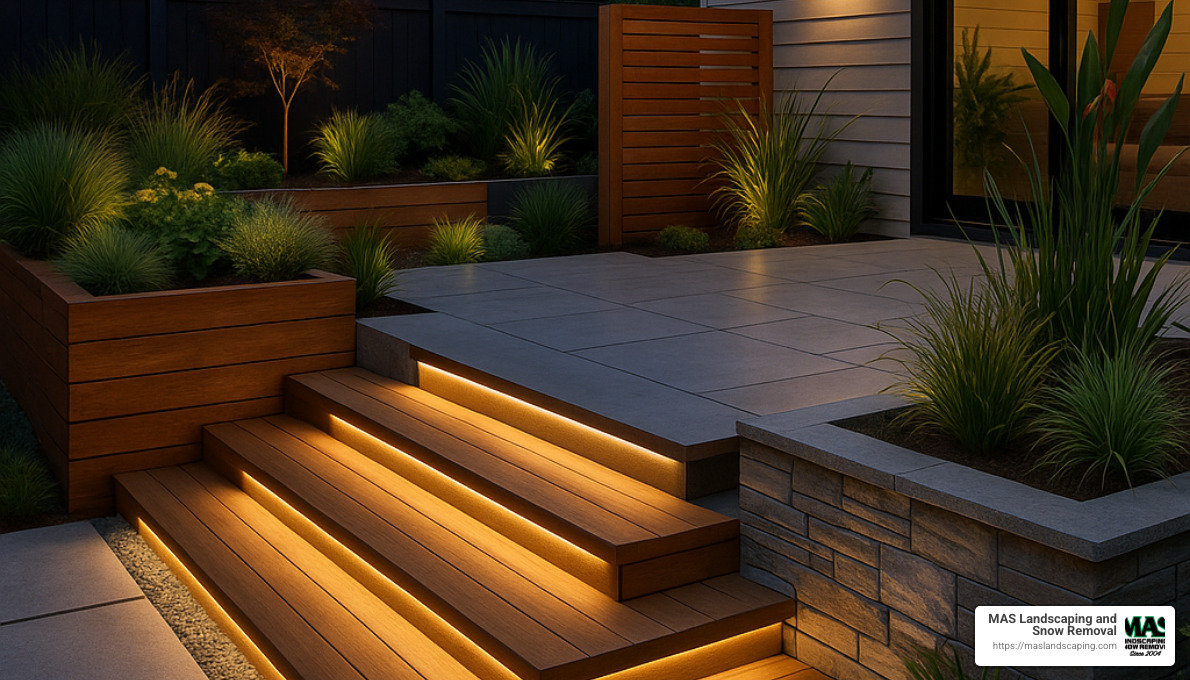
One particularly striking trend we’ve implemented for several clients in Melrose and Malden is the use of LED-integrated steps. These create a floating visual effect while improving safety—a perfect blend of form and function that exemplifies modern hardscape and design.
The concept of outdoor rooms continues to gain momentum, with homeowners essentially extending their living space beyond the walls of their homes. These aren’t just patios anymore—they’re fully realized outdoor kitchens, dining areas, and living rooms with weather-resistant furnishings and permanent shelter options. Some forward-thinking homeowners in Lynnfield and Everett are even creating outdoor work spaces, perfect for remote work flexibility while enjoying fresh air.
Artistic elements are changing hardscapes from purely functional to truly expressive. Decorative inlays and mosaics in paving, custom metal screens, and sculptural water features all add personality and create memorable spaces. These artistic touches don’t have to be elaborate or expensive—even simple patterns in paver layouts or thoughtfully placed lighting can create dramatic effects.
Integrating hardscape with lush softscape
The most beautiful outdoor spaces achieve a harmonious balance between hardscape elements and plantings. This integration creates environments that feel both structured and natural, organized yet organic.
Built-in planters along walls or steps offer perfect opportunities to bring greenery directly into hardscaped areas. We often design “islands” of plantings within paved areas to break up large expanses and add seasonal interest. For decks, strategic cutouts for trees or large plantings create shade and vertical elements that make the space feel more intimate and established.
Softening the edges between hardscape and landscape creates a more natural flow throughout your property. Groundcovers that spill over the edges of walkways, ornamental grasses that sway alongside retaining walls, and climbing vines that adorn pergolas all help blur these boundaries in pleasing ways.
“The magic happens at the edges,” explains one of our designers. “When plants interact with hardscape elements, the whole space comes alive.”
Plant selection can dramatically improve your hardscape materials. Silver-leaved plants create a stunning contrast against bluestone, while warm-toned foliage complements brick or red-toned pavers beautifully. In contemporary designs, architectural plants with strong forms echo the geometry of hardscape elements for a cohesive look.
Native and adaptive plants are ideal companions for sustainable hardscapes. In our New England setting, selecting native species ensures your plants will thrive with minimal intervention while supporting local pollinators and wildlife. For areas with limited irrigation or near roadways, drought-tolerant and salt-resistant varieties provide beauty without excessive maintenance.
A Lynnfield client’s project perfectly demonstrates this integration: “We wanted a contemporary look but were concerned it might feel too stark. MAS Landscaping designed a bluestone patio with integrated planters filled with ornamental grasses and flowering perennials. The combination of clean lines and flowing plants creates exactly the feel we wanted.”
Small-space and budget adaptations
You don’t need a sprawling property or unlimited budget to enjoy beautiful hardscape and design. Smart planning and strategic choices can create impressive outdoor spaces regardless of size or budget constraints.
Space-efficient solutions are essential for smaller properties in areas like Malden or Chelsea. Multi-purpose features like seating walls that double as planters maximize functionality without consuming extra square footage. Vertical elements—trellises, narrow pergolas, or wall-mounted planters—create interest and define spaces without sacrificing precious floor area. Built-in storage for cushions, garden tools, or firewood keeps smaller spaces uncluttered and usable.
Phased implementation makes larger visions achievable for budget-conscious homeowners. Starting with essential elements like a patio and basic walkways provides immediate enjoyment while future phases can add features like pergolas, fire pits, or outdoor kitchens. The key is designing with the complete vision in mind, ensuring proper infrastructure like drainage and electrical conduits are installed during initial phases, and choosing materials that will remain available for future matching.
Value-oriented materials can deliver impressive results without breaking the bank. Gravel patios offer an affordable alternative to paver or stone installations while providing excellent drainage and a distinctive crunching sound underfoot. Concrete pavers have come a long way in mimicking the look of natural stone at a fraction of the cost. Even pressure-treated wood, when properly stained and maintained, can create beautiful decks and pergolas at significantly lower cost than exotic hardwoods.
Some components might be suitable for DIY installation for handy homeowners looking to stretch their budget. Simple gravel paths, wood raised planters, or portable fire bowls rather than built-in fire pits can all be manageable weekend projects that complement professionally installed hardscape elements.
A Chelsea homeowner shared this experience: “We couldn’t afford to do everything at once, so MAS Landscaping helped us create a three-year plan. We started with the patio and walkways, added the pergola the following year, and finished with the fire pit and lighting in year three. The approach made it affordable, and each phase gave us something new to enjoy.”
More info about Hardscaping Your Yard
Installation, Maintenance & Professional Support
The beauty of hardscape and design extends far beyond the initial wow factor. To ensure your outdoor elements remain stunning for years to come, proper installation and ongoing maintenance are absolutely essential. Think of it like buying a luxury car—the initial investment deserves proper care to maintain its value and performance.
Installation Fundamentals
Behind every gorgeous patio and flawless walkway lies careful preparation that most people never see. This hidden foundation work makes all the difference in how your hardscape performs over time.
The process begins with thorough excavation, typically digging 8-12 inches deep for walkways and patios. This might seem excessive, but in New England’s freeze-thaw climate, skimping here leads to disaster. All organic material and unsuitable soils must be removed completely—leaving even small amounts of topsoil under your hardscape is like building on quicksand.
Next comes the installation of geotextile fabric in many applications. This unsung hero prevents different layers from mixing over time, maintaining the structural integrity of your base. The base material itself—usually crushed stone—needs to be added in layers, with each layer properly compacted before adding the next. This compaction is critical; without it, settling will occur unevenly.
When it comes to setting the visible materials, precision is everything. Whether it’s the careful cutting of natural stone, the perfect spacing of pavers, or the proper mixing of mortar, these details determine both appearance and longevity. Proper slope for drainage (typically ¼-inch per foot minimum) might be nearly invisible to the casual observer but prevents water issues down the road.
The finishing touches complete the installation—edge restraints to prevent shifting, joint sand or grout application, appropriate sealing, and thorough cleanup. These final steps are what transform a construction site back into your beautiful yard, now improved with new hardscape elements.
A client in Revere learned the hard way about proper installation: “We hired the lowest bidder for our patio, and they skimped on the base preparation. After just one winter, the whole thing was heaving and uneven. We ended up paying MAS Landscaping to tear it out and do it right—which cost far more than doing it correctly the first time would have.”
When to hire pros vs. DIY
While the do-it-yourself approach can be tempting for hardscape projects, knowing when to call in professionals can save you time, money, and frustration in the long run.
Projects that typically require professional expertise include structural retaining walls over 2-3 feet tall, anything requiring significant grading or drainage solutions, and installations involving gas or electrical components. Complex masonry work that demands precise cutting and fitting is also best left to experienced hands. These projects require technical knowledge, specialized equipment, and sometimes permits that most homeowners don’t have.
On the other hand, motivated DIYers might successfully tackle simpler projects like basic gravel paths, low decorative walls using modular blocks, or straightforward paver patios on relatively level ground. Simple wood decks can also be DIY-friendly, though proper permitting and code compliance remain essential.
Beyond technical expertise, professional installers bring other significant benefits. They have specialized equipment that makes excavation and material handling more efficient. They can access contractor-grade materials and often get better pricing through established supplier relationships. Many offer warranty protection for both labor and sometimes materials. And perhaps most importantly, they carry insurance coverage that protects you from liability if something goes wrong.
A homeowner in Malden shared this perspective: “I’m pretty handy and seriously considered installing our patio myself. After talking with MAS Landscaping about all the steps involved—especially the base preparation and drainage work—I realized hiring professionals was actually more economical when I factored in the value of my time and the potential for expensive mistakes.”
More info about Hardscape Patio Contractors Near Me
Maintenance requirements by material
Different hardscape materials have varying maintenance needs, and understanding these requirements helps you protect your investment for years to come.
Natural stone is generally low-maintenance but still benefits from some regular care. Most stone patios and walkways should be cleaned periodically with appropriate cleaners—avoiding acidic solutions on limestone that can cause etching. Some more porous stone varieties benefit from sealing every 2-3 years to prevent staining and water absorption. Joint maintenance is important to prevent weed growth, and prompt attention to spills helps prevent staining, especially on lighter-colored stones.
Concrete and pavers require moderate maintenance to keep them looking their best. Annual cleaning removes dirt and prevents staining, while sealing every 1-2 years maintains color and prevents deterioration from water penetration and freeze-thaw cycles. The sand in paver joints may need replenishment over time as it can wash away or settle. Any cracked or settled areas should be repaired promptly to prevent further damage.
Wood elements like decks and pergolas have higher maintenance needs compared to stone or concrete. They typically require annual cleaning to remove dirt and prevent mildew growth. Depending on exposure, staining or sealing every 1-3 years protects the wood from moisture and UV damage. Regular inspection for loose fasteners or damaged boards prevents safety issues, and eventually, some components may need replacement as natural decay occurs.
Gravel areas may seem maintenance-free but actually require simple, regular attention. Periodic raking maintains even distribution as material inevitably shifts with use. You’ll need to add new material occasionally to replace what migrates or compacts over time. Weed control is an ongoing need, though fabric underlayment helps minimize this task. Maintaining defined edges keeps gravel areas looking neat and contained.
In New England’s challenging climate, winter maintenance deserves special consideration. Careful snow removal prevents damage to hardscape surfaces—plastic shovels and brushes are gentler than metal tools. Choosing appropriate ice melt products based on your specific hardscape material prevents damage (avoid rock salt on concrete less than a year old, for instance). When spring arrives, a thorough cleaning removes winter debris and salt residue, followed by inspection for any freeze-thaw damage that needs repair.
As landscape experts note, “Hardscaping is a low maintenance tool that keeps the lawn from creeping into planting beds and provides order to the garden.” While “low maintenance” certainly doesn’t mean “no maintenance,” the care requirements are generally much less demanding than those for lawns and plantings.
For our clients in Saugus, Everett, and surrounding communities, we often provide customized maintenance schedules custom to their specific hardscape materials and site conditions. These simple care routines help homeowners enjoy their outdoor spaces with minimal effort while protecting their investment for decades to come.
Frequently Asked Questions about Hardscape and Design
What is the difference between hardscape and softscape?
When planning your outdoor space, understanding the distinction between hardscape and design elements and softscape features is essential to creating a balanced landscape.
Hardscape encompasses all the non-living elements in your landscape—the permanent structures and features crafted from materials like stone, concrete, wood, and metal. Your patio where you host summer barbecues, the winding walkway that guides visitors to your front door, the retaining wall that tames a sloping yard, and that cozy fire pit where family memories are made—these are all hardscape elements.
On the flip side, softscape refers to all the living components of your landscape—your shade trees, flowering shrubs, colorful perennials, seasonal annuals, lush groundcovers, and green lawns. These natural elements bring life, movement, and ever-changing beauty to your outdoor spaces.
The differences between these two landscape components run deeper than just living versus non-living:
Hardscape features provide the permanent framework of your landscape, remaining relatively constant through seasons and years, while softscape elements are dynamic—growing, blooming, and changing with the seasons and over time.
In the construction sequence, hardscape typically comes first. As one of our Malden clients learned, “Installing our stone patio before planting saved us headaches. The excavation would have damaged our new plants if we’d done it the other way around.”
Maintenance needs differ significantly too. Your plants require regular attention—watering during dry spells, seasonal pruning, and occasional fertilizing. Hardscape elements generally need less frequent care, though they’re not entirely maintenance-free.
Water management considerations also differ. Most hardscape materials don’t absorb water naturally and may require thoughtful drainage solutions, while softscape elements help manage rainwater through natural absorption.
A truly successful landscape strikes a harmonious balance between hard and soft elements. As one landscape architect beautifully put it, “At times, a particularly neat tree or flower arrangement may outshine even a dramatic hardscape feature.” It’s this interplay between structure and nature that creates both visual interest and functional outdoor living spaces.
How long does a typical hardscape project take from design to completion?
One of the most common questions we hear from homeowners in Everett, Saugus, and surrounding communities is about timing. The reality is that hardscape and design projects vary significantly in duration based on several factors, but understanding the typical timeline helps set realistic expectations.
Most hardscape projects unfold through three distinct phases:
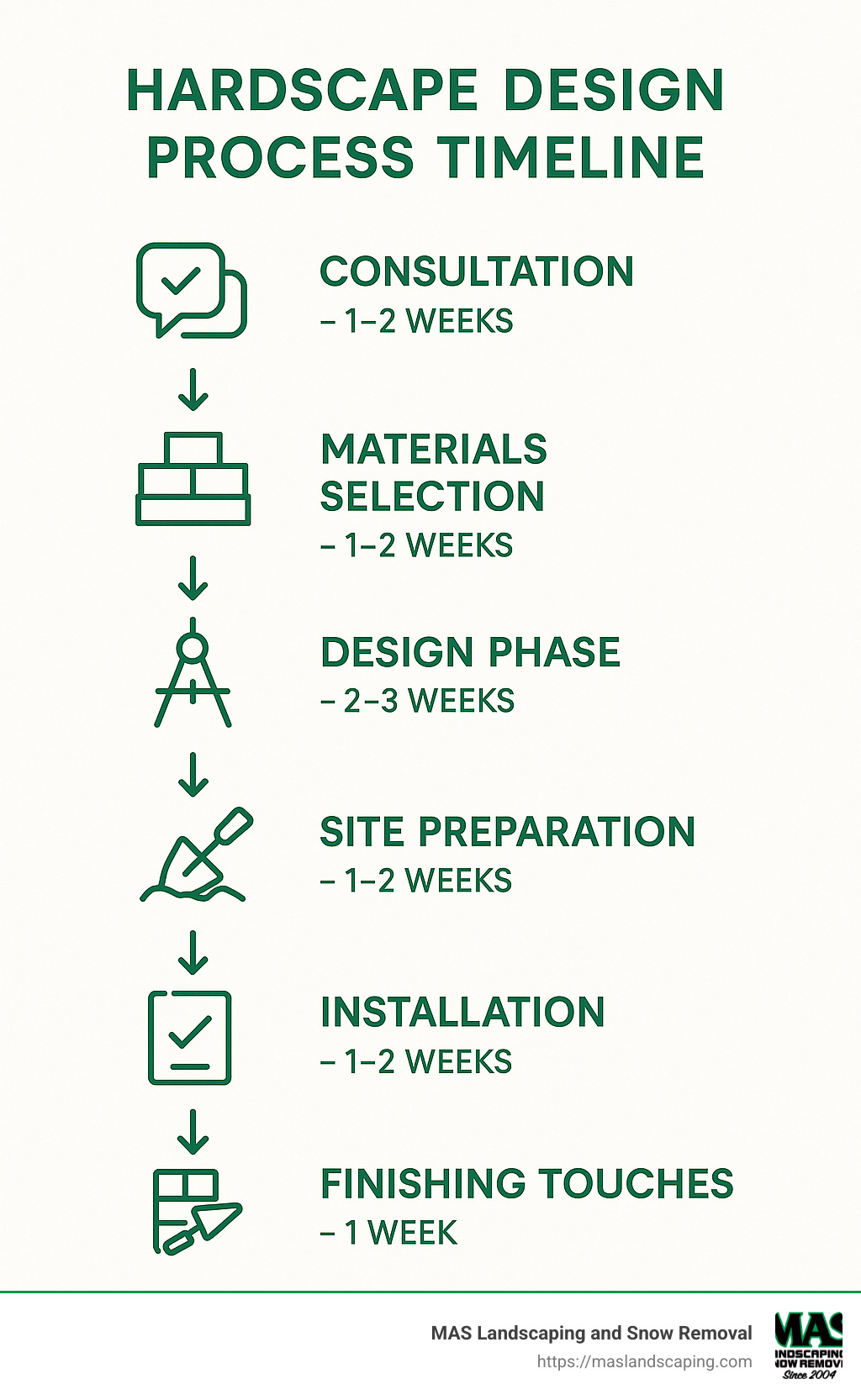
The design phase typically spans 2-6 weeks, beginning with an initial consultation (usually just an hour or two) where we discuss your vision, needs, and budget. Next comes site analysis and measurements, which might take a day or two. Developing the initial concept design usually requires 1-2 weeks, followed by another 1-2 weeks for revisions and material selection. Final design approval generally takes about a week as you consider all the options.
The pre-construction phase can take 2-6 weeks and includes several important steps. If your project requires permits (common for structures like decks or large retaining walls), allow 2-6 weeks for municipal approval. Material ordering and delivery typically takes 1-4 weeks, though some specialty items may require longer lead times. Finally, scheduling and coordination usually requires 1-2 weeks to align all the necessary resources.
The actual construction phase varies most dramatically based on project scope:
– A simple walkway or small patio might be completed in just 1-5 days
– A standard residential patio typically takes 1-2 weeks
– More complex projects with multiple features (patio, walkway, and fire pit) often require 3-8 weeks
– Large-scale changes with extensive hardscaping can extend beyond 8 weeks
Several factors can affect these timeframes. In New England, weather conditions and seasonal constraints are significant considerations—our prime construction season runs from April through November. Other variables include property access challenges, unexpected site conditions finded during excavation, material availability, and project complexity.
A Medford client recently shared their experience with us: “From our first meeting with MAS Landscaping to the completion of our patio, fire pit, and lighting project, the process took about 8 weeks. The actual construction was completed in 10 working days, but the planning and material selection took time—and it was worth it to get everything exactly right.”
Which hardscape material offers the best balance of cost and durability?
Finding the sweet spot between upfront investment and long-term performance is a key consideration for most homeowners planning hardscape and design projects. While there’s no one-size-fits-all answer, several materials stand out for offering excellent value.
Concrete pavers have become increasingly popular in our Massachusetts service areas for good reason. With moderate installed costs ranging from $12-$25 per square foot, they offer impressive durability lasting 25-50+ years when properly installed. Their maintenance needs are reasonable—occasional sealing and joint sand replenishment keep them looking fresh. What many homeowners appreciate most is their versatility—available in countless shapes, colors, and textures, they can mimic more expensive materials like natural stone. Plus, if a single paver becomes damaged, it can be replaced without disturbing the entire installation.
For budget-conscious projects, gravel provides remarkable value. With low installed costs of just $1-$5 per square foot, this material can last indefinitely with periodic replenishment. While it does require more regular maintenance like raking, weed control, and occasional topping up, many homeowners appreciate its excellent drainage properties and natural, relaxed appearance. A Lynnfield client told us, “Our gravel patio has been perfect for our casual entertaining style, and the cost savings allowed us to splurge on nicer outdoor furniture.”
When it comes to raised structures like decks, pressure-treated wood offers a good balance. Moderate costs of $15-$25 per square foot installed deliver 15-25 years of service with proper care. While wood does require more maintenance than stone or concrete—annual cleaning and periodic sealing or staining—many find it worth the effort for its natural warmth and comfortable feel underfoot.
For vertical surfaces like walls, manufactured stone veneer presents an attractive middle ground. With moderate to high installed costs of $20-$45 per square foot, it provides the look of natural stone at a lower price point. Its durability is impressive at 20-50+ years, and maintenance requirements are minimal—just occasional cleaning to keep it looking fresh.
As one industry expert notes, “Concrete and gravel are the least expensive hardscape materials, often used to build affordable retaining walls, patios, driveways, and other outdoor structures.” While natural stone offers ultimate beauty and potential longevity, its higher cost may not be justified for every project or budget.
The “best” material ultimately depends on your specific needs, local climate conditions, and personal preferences. In our experience serving communities like Everett, Malden, and Saugus, we often recommend concrete pavers for many applications due to their excellent performance in our challenging freeze-thaw conditions, design versatility, and reasonable cost-to-longevity ratio.
Conclusion
Creating beautiful and functional outdoor spaces through thoughtful hardscape and design is both an art and a science. When you step back and look at your completed project, you’ll see how each decision has shaped not just the look of your outdoor space, but how you’ll enjoy it for years to come.
Throughout this guide, we’ve walked together through the essential elements of successful hardscaping. We’ve seen how proper planning prevents costly mistakes, how material choices affect both aesthetics and longevity, and how the right balance between hardscape and softscape creates truly harmonious outdoor environments.
Great hardscaping doesn’t happen by accident. It requires understanding the unique characteristics of your property, selecting materials that complement your home’s architecture, and implementing designs that solve practical problems while creating beautiful spaces for living and entertaining.
The best outdoor spaces tell your story. They reflect how you live, what you value, and how you connect with the natural world around you. Whether it’s a cozy fire pit for family gatherings, a stunning front walkway that welcomes guests, or a peaceful patio retreat, your hardscape elements should improve your lifestyle in meaningful ways.
At MAS Landscaping and Snow Removal, we’re passionate about helping homeowners throughout Everett, Lynnfield, Malden, Melrose, Medford, Revere, Saugus, and Chelsea create outdoor spaces they’ll love for years to come. Our team brings deep local knowledge of New England’s unique climate challenges and opportunities, ensuring your hardscape not only looks beautiful but stands up to our seasonal extremes.
We believe your outdoor space should feel like a natural extension of your home—a place where memories are made, nature is enjoyed, and your property’s beauty and value are improved. Whether you’re considering a simple walkway renovation or a complete landscape change, we’re here to guide you through every step with personalized attention and professional expertise.
As one landscape design expert beautifully puts it: “Start by dreaming big—you can rein in your wildest ideas later, if need be.” We encourage you to imagine what your ideal outdoor space might look like, then partner with professionals who can help bring that vision to life within your budget and timeline.
Ready to transform your outdoor space with beautiful, functional hardscaping that stands the test of time? We’d love to help. Contact MAS Landscaping and Snow Removal today for a friendly, no-pressure consultation. Let’s create an outdoor environment that makes you smile every time you see it—one that improves your lifestyle, complements your home, and becomes a source of pride and enjoyment for years to come.
More info about our Hardscape Design Services