


Natural Rock Retaining Wall: 4 Easy Steps
Why Natural Rock Retaining Walls Are the Smart Choice for Your Property
A natural rock retaining wall is a sturdy stone structure that holds back soil to prevent erosion and create usable outdoor space on sloped properties. These walls combine essential function with timeless beauty, making them one of the most valuable landscaping investments you can make.
Key purposes of natural rock retaining walls:
- Prevent soil erosion from rain and runoff
- Create level areas for patios, gardens, or lawns on slopes
- Add structural support to hillsides and liftd areas
- Improve property value with durable, attractive stonework
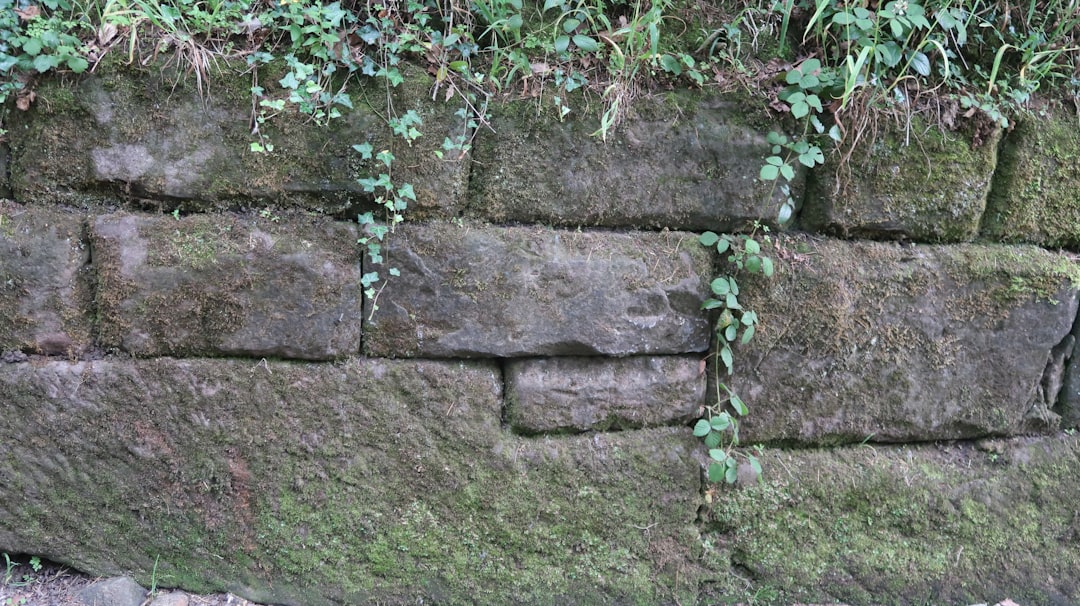
Natural stone offers significant advantages over other retaining wall materials. These walls can last for decades with minimal maintenance, thanks to the inherent durability of stone. Unlike concrete blocks or timber, natural rock develops character over time as it weathers and attracts moss or lichen growth.
The aesthetic appeal is best – no two stones are identical, creating unique texture and visual interest that complements any landscape style. From rustic fieldstone to neat cut granite, natural rock walls blend seamlessly with their surroundings while providing the structural integrity needed to manage challenging terrain.
Natural rock retaining walls also boost property values by changing unusable slopes into functional outdoor living spaces. They create opportunities for terraced gardens, expanded patios, and dramatic landscape features that make your property stand out.
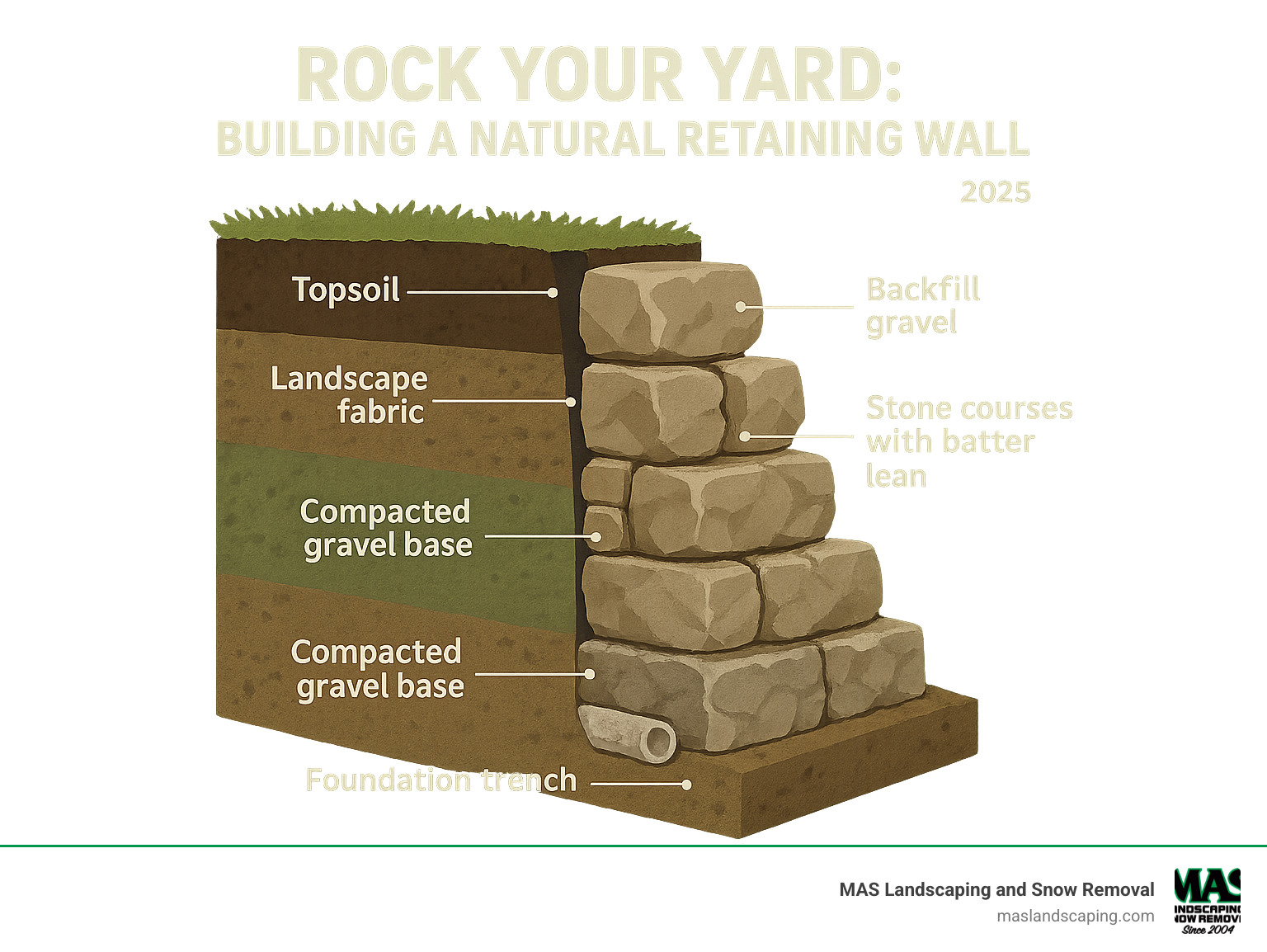
Key natural rock retaining wall vocabulary:
Planning Your Project: Design and Material Selection
This section covers the crucial first steps before you start building, from design and legal considerations to choosing the right stone for your landscape.
Key Design Considerations
Before you fall in love with the idea of stacking beautiful stones, let’s talk about the not-so-glamorous but absolutely essential planning phase. A successful natural rock retaining wall starts with understanding your site, your local rules, and what you’re trying to achieve.
Wall height and length are your starting points, and they’re not just aesthetic choices. These dimensions determine everything from structural requirements to whether you’ll need to chat with your local building department. In most areas around Massachusetts, including communities like Everett, Lynnfield, and Malden, walls over three to four feet tall typically require building permits. This often means bringing in an engineer to ensure your wall won’t become an expensive pile of rubble.
Soil type plays a huge role in your wall’s success. Think of it this way: your wall needs to push back against all that dirt trying to slide downhill. The rule of thumb for calculating base width is simple but crucial – plan for one foot of width for every vertical foot of height. So if you’re building a four-foot-tall wall, you’ll need a base that extends four feet back into the slope.
Don’t forget about local building codes. Every municipality has its own quirks, and what flies in one town might not work in another. For walls over four feet, or combined retaining heights around 20 feet, you’re likely looking at engineered reinforced concrete rather than natural stone.
Understanding your soil type and ensuring structural stability aren’t just technical requirements – they’re what keep your beautiful wall standing for decades instead of becoming a cautionary tale. For more insights on how we approach these design challenges, check out our Hardscape and Design services.
Choosing the Best Types of Natural Rock
Here’s where the fun begins! Selecting stone for your natural rock retaining wall is like choosing the personality of your landscape. Each type brings its own character, strengths, and price tag.
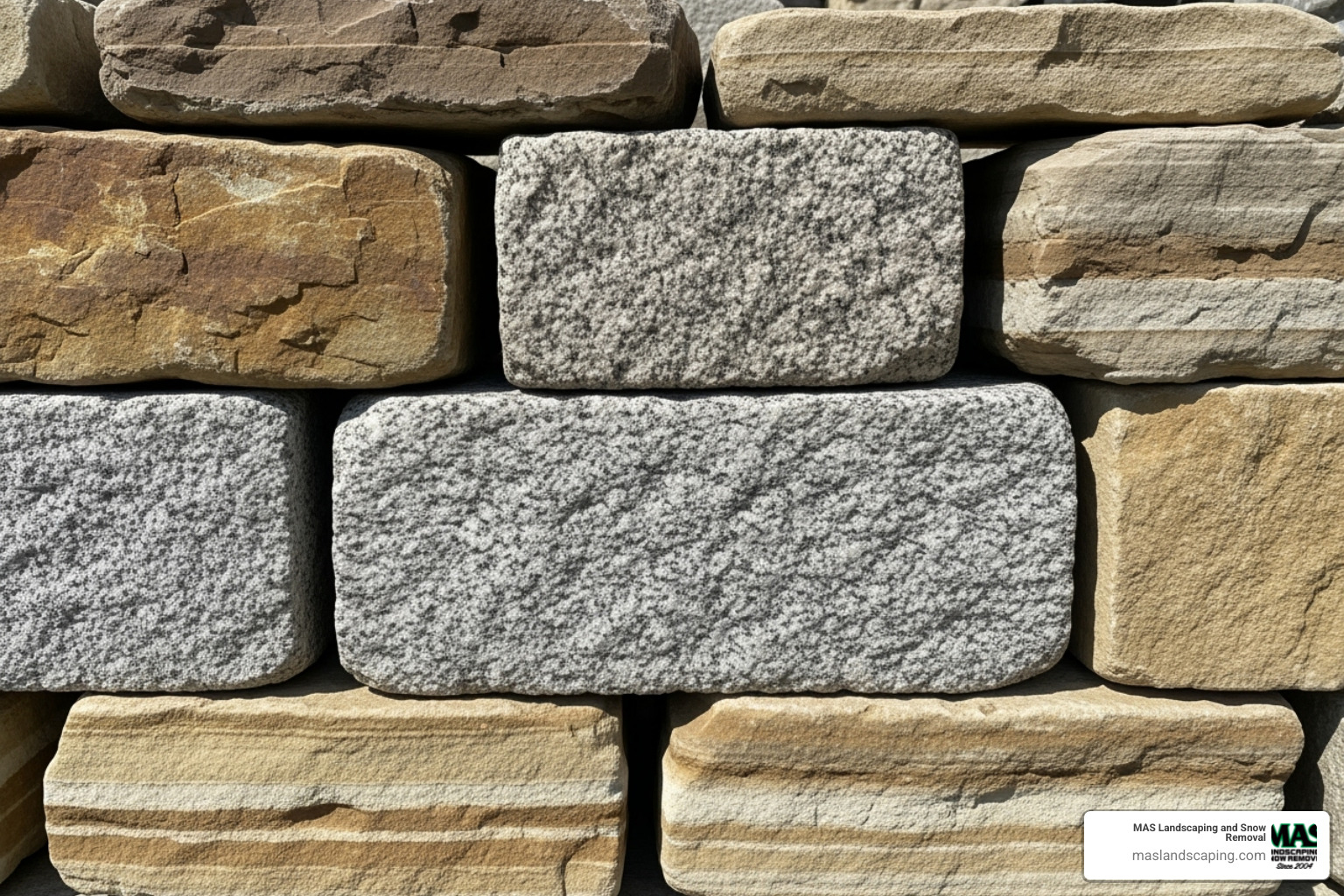
Fieldstone gives you that authentic, “been here forever” look with its irregular, naturally weathered shapes. These stones practically tell stories, but they can be like solving a puzzle when you’re trying to fit them together. The result? Pure rustic charm that looks like nature built it herself.
Granite is the overachiever of the stone world – incredibly durable and available in colors ranging from soft grays to dramatic reds. You can find it as rugged boulders for that wild, natural look or as cut blocks for something more formal and structured.
Sandstone brings warmth to your landscape with its earthy tones and friendly workability. It’s tough enough to handle our New England weather while being soft enough that you won’t curse its name when you need to make adjustments. Some varieties are softer than others, so choose wisely.
Limestone offers a clean, bright appearance that can make your whole landscape feel more open. It’s relatively easy to work with, though it might not be the best choice if you’re dealing with acidic soil conditions.
Boulders make a statement – period. If you want drama and natural drainage rolled into one impressive package, boulders deliver. They’re often surprisingly affordable for certain applications, especially when you consider how much visual impact they create.
When making your selection, think about durability in our freeze-thaw climate, aesthetics that complement your home’s style, cost considerations, and local availability. Choosing locally sourced stone often saves money and gives you materials that naturally belong in your landscape. For detailed information about larger stone options, our Boulder Retaining Wall Cost guide covers the specifics.
Estimating Costs and Materials
Let’s talk numbers – the part that makes or breaks many retaining wall dreams. Understanding costs helps you make smart decisions about DIY versus professional installation and ensures you’re not caught off guard by expenses.
Cost factors include stone type, wall size, site accessibility, and labor complexity. Taller walls often require additional structural elements like frost footings and reinforcement, which adds to both complexity and cost. While DIY projects can save on labor, walls over three feet high often benefit from professional expertise and specialized equipment.
Always order 10-20% extra stone beyond your calculations. Trust us on this one – stones break, measurements aren’t perfect, and having extras means you won’t be scrambling to match stone from a different batch halfway through your project.
Here’s a general comparison of material costs to help with your planning:
| Stone Type | Material Cost per sq. ft. |
|---|---|
| Fieldstone (irregular) | $25 – $50+ |
| Sandstone | $30 – $60+ |
| Limestone | $35 – $70+ |
| Granite (cut) | $40 – $75+ |
| Gabion (wire cage + stone fill) | $20 – $45+ |
Please note: These are estimated costs based on national averages and do not reflect actual pricing for MAS Landscaping. Costs can range from $25 to over $75 per square foot depending on materials and complexity.
Gabion walls – those wire cages filled with stones – often represent the most budget-friendly option while still delivering durability and attractive results. They’re also surprisingly DIY-friendly if you’re up for the challenge.
How to Build a Natural Rock Retaining Wall: A Step-by-Step Guide
Follow these essential steps to ensure your wall is not only beautiful but also strong and long-lasting.
Step 1: Site Preparation and Excavation
Building a stunning natural rock retaining wall starts long before you touch your first stone. Think of this phase as laying the groundwork for success – quite literally!
Before we dive in, let’s gather the right tools for the job. You’ll want a square-point shovel for precise digging, a hand tamper to compact your base, and a level (preferably four feet long) to keep everything true. Don’t forget your tape measure, string line, and wooden stakes for layout, plus a rubber mallet for gentle stone adjustments. Most importantly, gear up with proper safety equipment – sturdy gloves, eye protection, and boots that can handle rough terrain.
Now comes the exciting part: marking your wall layout. Using wooden stakes and string line, we’ll map out exactly where your wall will run. This step might seem simple, but it’s crucial for creating clean, straight lines that will make your finished wall look professionally built.
The real work begins with excavating a level trench. This trench serves as your wall’s foundation, and it needs to be about a foot deep and at least as wide as your planned wall base. Golden rule: one foot of base width for every vertical foot of wall height. So if you’re planning a four-foot wall, your base should extend four feet back into the slope.
Getting this trench perfectly level is absolutely critical. Any unevenness here will haunt you through every subsequent course of stones. Take your time with this step – your future self will thank you! If you’re curious about different approaches to wall construction, our guide on How to Build a Landscaping Wall with Blocks offers some helpful insights.
Step 2: Laying a Stable Foundation
Here’s where we build the invisible hero of your natural rock retaining wall – the foundation that will quietly do its job for decades to come. This step might not be glamorous, but it’s absolutely essential for long-term success.
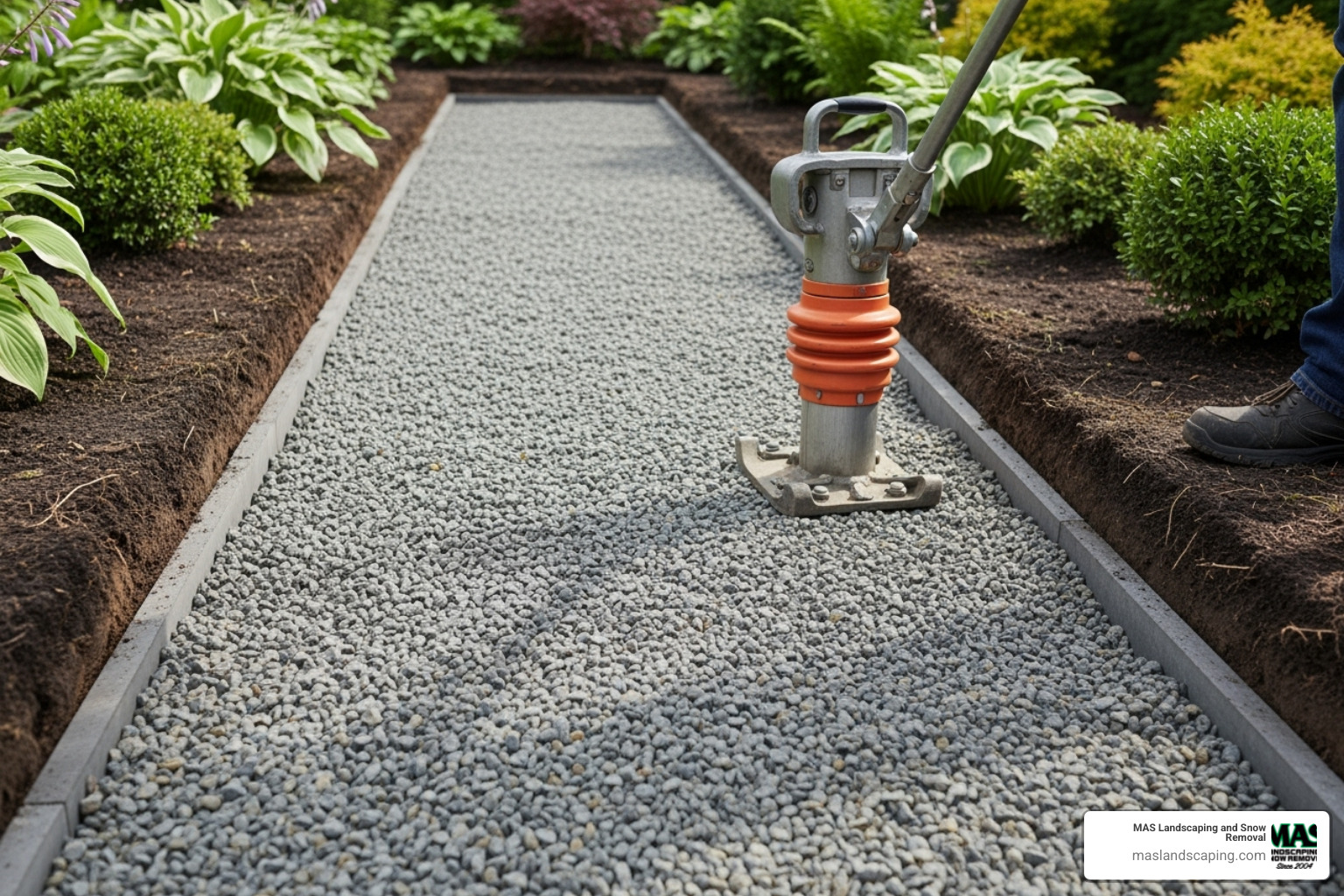
We’ll start by adding a 6-inch layer of ¾” crushed drain rock to your excavated trench. This isn’t just any gravel – the crushed edges allow the pieces to lock together when compacted, creating a solid, stable base that also drains beautifully.
Compacting the gravel base is where patience pays off. We’ll work in thin layers, spreading about two inches of gravel at a time, then tamping it down firmly before adding the next layer. This methodical approach prevents future settling that could turn your beautiful wall into a wobbly disappointment.
The final step is ensuring the foundation is perfectly level. Break out that four-foot level and check every section carefully. A level foundation means your first course of stones will sit properly, making every subsequent course easier to build straight and stable.
This foundational work is at the heart of what we do in our Hardscaping Services – creating structures that stand the test of time through proper preparation and attention to detail.
Step 3: Building the Wall, Course by Course
Now we get to the really satisfying part – watching your natural rock retaining wall rise from the ground! This is where engineering meets artistry, and every stone placement matters.
Laying the first course requires your best stones – the largest, flattest, and most stable pieces in your collection. These foundation stones will carry the weight of everything above them, so choose wisely. Set them carefully on your compacted base, checking that each one sits solidly without wobbling.
As we build upward, staggering vertical joints becomes crucial for strength. Just like a brick mason, we never want a vertical crack running straight up through multiple courses. Each stone should bridge the joint between two stones below it, creating a strong, interlocking pattern that distributes weight evenly.
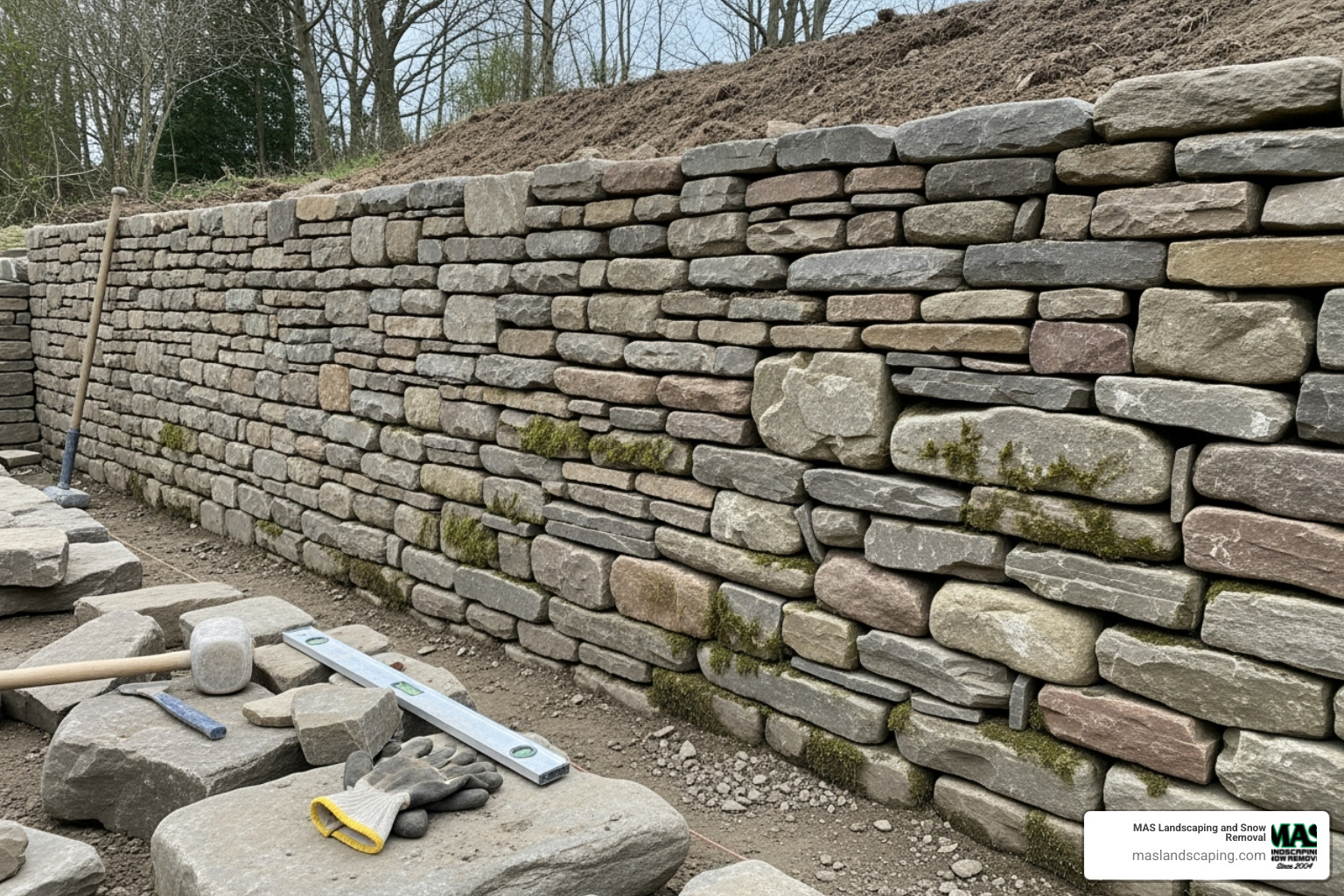
Here’s where we introduce the “batter” – that subtle backward lean that makes all the difference. Setting each course back slightly (about 1-2 inches per foot of height) helps your wall resist the outward pressure from the soil behind it. This isn’t just good practice; it’s essential physics that keeps your wall standing strong.
Don’t forget about using smaller stones as shims! These little pieces are like the secret ingredients in a great recipe. Tuck them into any gaps or wobbles to ensure every stone sits perfectly stable. Think of it as building a giant, beautiful puzzle where every piece contributes to the overall strength and beauty of the finished wall.
Step 4: Installing Drainage and Backfilling Your Natural Rock Retaining Wall
This step might not look like much, but it’s absolutely critical for your natural rock retaining wall’s long-term survival. Poor drainage is the number one enemy of retaining walls, so we’re going to get this right.
Preventing hydrostatic pressure is our main goal here. When water builds up behind your wall, it creates enormous outward force – enough to bow, crack, or even topple a wall that took weeks to build. The solution? Give that water an easy way out.
We’ll start by laying a perforated drainage pipe right at the base of the wall, behind your first course of stones. This pipe acts like a collection system for any water that seeps through the soil above.
Next comes backfilling with pea gravel behind the wall. This creates a permeable zone that allows water to flow freely down to your drainage pipe instead of building pressure against your beautiful stonework. We’ll add this gravel as we build up, compacting it gently to keep everything stable.
Placing landscape fabric between the gravel and topsoil might seem like an extra step, but it’s insurance for your drainage system. This fabric lets water through while keeping soil particles from clogging up your carefully planned drainage over time.
Finally, we’ll complete the project by backfilling with native soil – the same earth we excavated earlier. Gentle compaction as we fill ensures a smooth transition from wall to landscape.
Proper drainage isn’t optional – it’s what separates a wall that lasts decades from one that fails in a few years. For more insights into effective drainage techniques, the American Society of Landscape Architects offers excellent resources on landscape drainage principles.
Finishing Touches and Creative Ideas
A natural rock retaining wall is more than a structure; it’s a landscape feature. Here’s how to make it a stunning focal point.
Inspiring Ideas for Your Natural Rock Retaining Wall
Once the structural work is complete, the creative possibilities for your natural rock retaining wall truly open up. This is where your wall transforms from a functional necessity into a breathtaking centerpiece that defines your outdoor space.
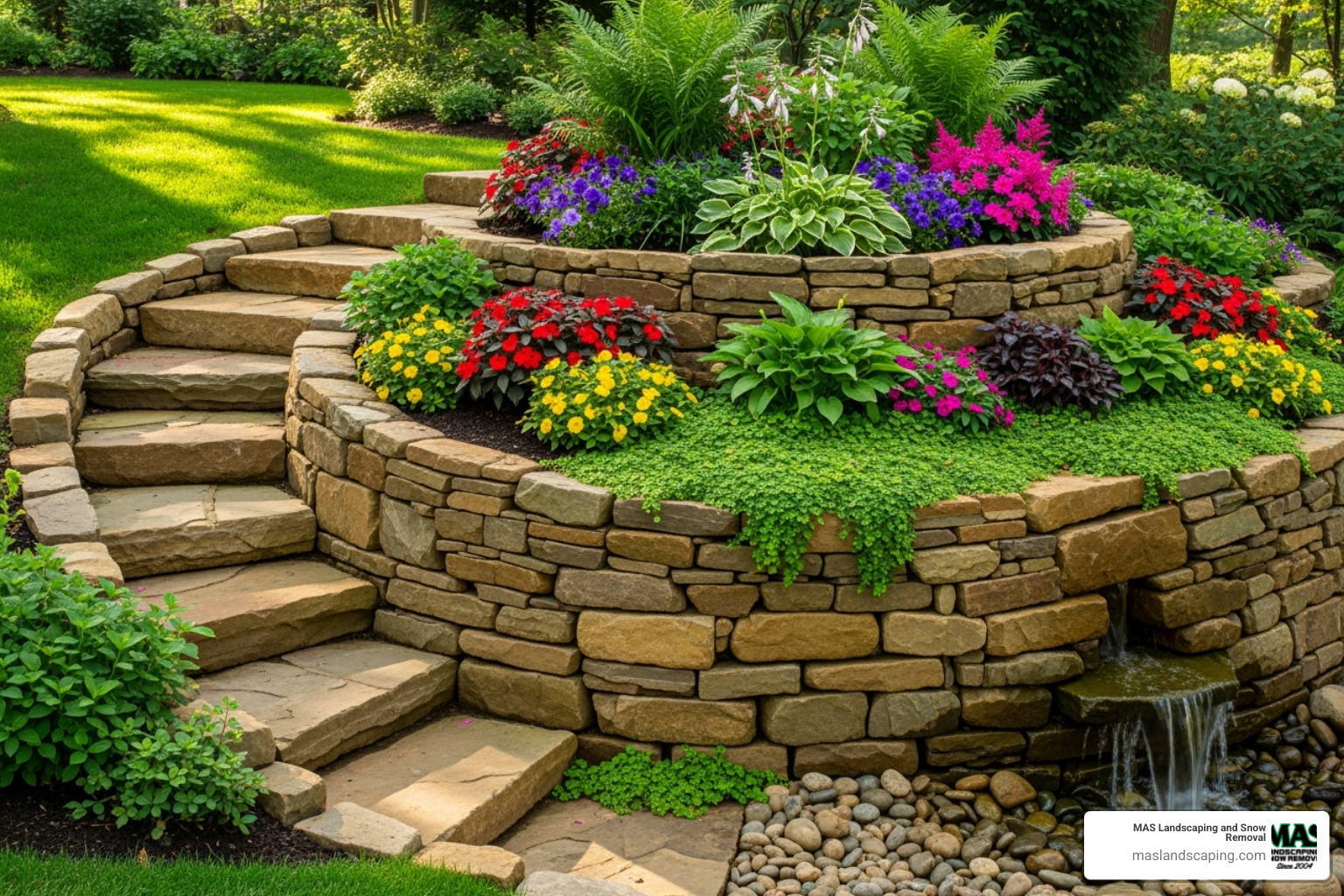
If you’re dealing with a significant slope, tiered walls for terraced gardens offer an neat solution. Instead of one towering wall, multiple shorter walls create beautiful stepped levels that turn unusable hillsides into stunning garden terraces. Each level becomes its own planting opportunity, and the visual impact is far more dramatic than a single structure. Plus, shorter walls are easier to build and often don’t require permits.
The shape of your wall makes a huge difference in its overall feel. While straight walls provide clean, formal lines that work beautifully with modern homes, curved walls add a softer, more organic touch that feels like it grew naturally from the landscape. Curves also have a structural advantage – they’re inherently stronger than straight walls because the curve helps distribute pressure.
Consider building stone steps or seating directly into your wall design. Wide, inviting stone steps can flow seamlessly from the wall itself, creating natural pathways between different levels of your yard. Or imagine a section of wall with a broad, flat capstone that serves as built-in garden seating – perfect for morning coffee or evening conversations.
For those who love the sound of water, adding a small water feature or cascade can transform your wall into a true focal point. The gentle trickle of water over natural stone creates an incredibly peaceful atmosphere and adds movement to your landscape. It’s like having your own private mountain stream right in your backyard.
For more inspiration and creative approaches to wall design, explore our collection of Outdoor Retaining Wall Ideas.
Integrating with Your Landscape
A natural rock retaining wall should never feel like an afterthought – it needs to weave seamlessly into your overall landscape story. The magic happens when the wall becomes part of a larger design that flows naturally from one element to the next.
Planting in the wall’s crevices is one of the most charming ways to soften a dry stack wall. Those small gaps between stones are perfect homes for cascading flowers like creeping phlox or sweet alyssum, hardy succulents, or tough groundcovers. As these plants spill over the wall’s face, they blur the line between structure and nature, creating a living wall that changes with the seasons.
Extending this plant-focused approach, you might create a rock garden that feels like a natural extension of your wall. Alpine plants, sedums, and other drought-tolerant beauties thrive in rocky environments and can make your backyard feel like a mountain retreat. This approach works especially well when you choose plants that echo the colors in your stone. Our experience with Garden Wall Construction often incorporates these naturalistic planting schemes.
Connecting your wall to a patio or walkway creates a seamless flow that invites exploration of your outdoor space. Picture a beautifully paved patio that seems to grow right out of your retaining wall, with stone steps leading to upper garden levels. This integration makes your entire landscape feel purposeful and connected. Our Paver Patio with Retaining Wall projects showcase how powerful this seamless connection can be.
Don’t forget about installing low-voltage lighting to highlight your wall’s natural beauty after dark. Strategically placed lights can emphasize the unique textures and warm colors of your stone, creating dramatic shadows and a welcoming glow. Up-lighting from the base of the wall creates particularly stunning effects, turning your landscape into an evening showpiece that you’ll enjoy year-round.
When all these elements work together – the thoughtful stone selection, the integrated plantings, the connected hardscaping, and the evening lighting – your natural rock retaining wall becomes far more than a solution to a slope problem. It becomes the foundation of an outdoor space that truly reflects your style and improves your daily life.
Frequently Asked Questions about Natural Rock Walls
Building a natural rock retaining wall raises plenty of questions, and we’ve heard them all! Here are the most common concerns homeowners share with us, along with straightforward answers to help you make informed decisions about your project.
What is the most affordable type of natural rock for a retaining wall?
When you’re working with a budget, fieldstone and other locally sourced stones are typically your best friends. The biggest reason? Transportation costs can eat up a surprising chunk of your budget, so choosing stone that doesn’t have to travel far keeps expenses down.
Fieldstone has another advantage beyond cost – its varied, irregular shapes work beautifully for dry stack construction. This means less precise cutting and fitting, which can save on labor whether you’re doing it yourself or hiring professionals.
Here’s a money-saving tip that many homeowners don’t know about: gabion walls are often the most affordable option of all. These are essentially wire cages filled with less-uniform stones, and they offer excellent durability while maintaining a natural look. They’re also fantastic for DIY projects because they’re more forgiving than traditional stacked stone walls.
The key is to think locally and practically. Your most affordable option is usually whatever stone is abundant in your area, combined with a construction method that matches your skill level and timeline.
Do I need a permit to build a retaining wall?
The short answer? It depends on height and location, but it’s always better to ask than assume! In our service areas around Saugus, MA, including Everett, Lynnfield, Malden, and Melrose, most municipalities require building permits for walls over three or four feet tall. The exact height varies by town, which is why checking locally is so important.
When permits are required, you’ll typically need an engineered design too. This isn’t just bureaucratic red tape – it’s genuinely about safety. Local regulations exist to prevent serious problems like wall failure, soil instability, or damage to neighboring properties.
We always recommend starting with a quick call to your local municipal office or building department. Their staff can tell you exactly what’s required for your specific project and location. Trust us, a five-minute phone call upfront can save you from costly headaches later if you need to rebuild or modify an unpermitted wall.
Can I build a natural rock retaining wall myself?
Absolutely! A smaller decorative wall under three feet high can be a wonderfully rewarding DIY project. If you have basic tools, some patience, and don’t mind getting your hands dirty, these shorter walls are quite manageable. They’re often focused more on aesthetics and light soil retention rather than heavy structural work.
However, taller walls over 3-4 feet are a different story entirely. These walls bear significant loads and require precise engineering, proper drainage systems, and often specialized equipment. The stakes are higher too – a failure in a tall retaining wall can cause property damage or safety hazards.
The honest truth is that substantial natural rock retaining walls benefit enormously from professional expertise. We’ve seen too many well-intentioned DIY projects that needed complete rebuilding because drainage wasn’t properly addressed or the foundation wasn’t adequate for the load.
If you’re unsure about your project’s complexity, or if it’s critical for protecting structures or preventing major erosion, our team at MAS Landscaping and Snow Removal has the experience for professional Retaining Wall Installation. We’ll make sure it’s built right the first time, so you can enjoy your beautiful wall for decades to come.
Conclusion
A natural rock retaining wall is more than just a functional structure – it’s a powerful investment that brings together durability, timeless beauty, and essential functionality in one stunning package. Whether you’re dreaming of a small garden wall to create a cozy flower bed or planning an ambitious large-scale terracing project to transform a challenging slope, success always comes down to proper planning and construction.
From the very first step of selecting the right stone that complements your landscape to ensuring robust drainage that will protect your investment for decades, every detail matters. The beauty of natural rock is that it only gets more attractive with age, developing character as it weathers and settles into your landscape.
The process might seem daunting at first, but breaking it down into manageable steps – from site preparation and foundation work to the satisfying process of placing each stone – makes even complex projects achievable. Proper drainage can’t be emphasized enough. It’s the difference between a wall that lasts a few years and one that becomes a permanent, beautiful feature of your property.
For homeowners throughout the Saugus, MA area, including Everett, Lynnfield, Malden, Medford, Revere, and Chelsea, MAS Landscaping and Snow Removal combines local expertise with a commitment to craftsmanship that ensures your natural rock retaining wall will improve your landscape for generations to come. We understand the unique challenges of New England weather and soil conditions, and we pride ourselves on delivering both professionalism and that personalized touch that makes all the difference.
Your outdoor space has incredible potential, and a well-built natural rock wall can be the key that open ups it. Ready to transform your yard into something truly special? Contact us to discuss your retaining wall installation today!