

Why Every Patio Owner Should Know How to Seal Patio Pavers
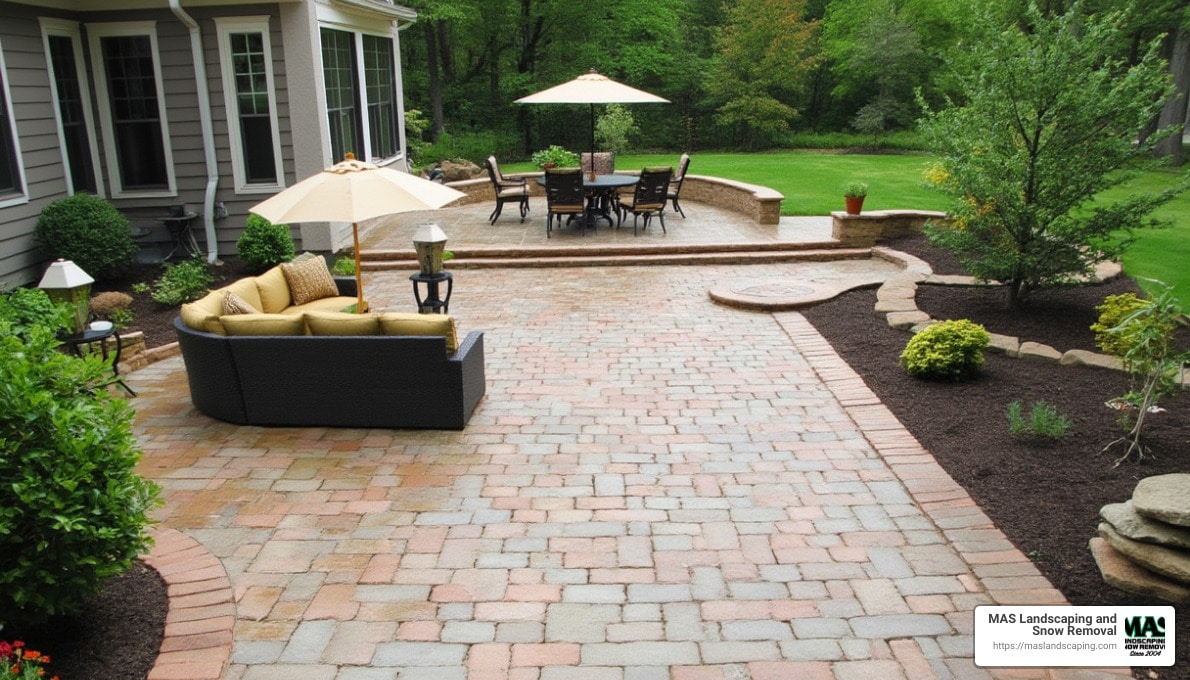
How to seal patio pavers is one of the most important skills for maintaining a beautiful outdoor space. Whether you’re protecting a brand-new installation or revitalizing a weathered patio, sealing extends the life of your investment and keeps it looking great for years to come.
Here’s the quick answer:
- Clean thoroughly – Remove all dirt, stains, and debris with a pressure washer
- Let dry completely – Wait 24-48 hours for pavers to dry fully
- Fill joints – Apply polymeric sand between pavers if needed
- Apply sealer – Use a sprayer or roller to apply thin, even coats
- Allow to cure – Wait 24-72 hours before using the patio
When you picture your ideal outdoor living area, you probably don’t imagine faded pavers, stubborn oil stains, or weeds growing between every stone. Yet that’s exactly what happens to unsealed patios over time.
The good news? Sealing your patio pavers is a manageable DIY project that delivers professional-looking results. Most paver sealers last three to five years, protecting your investment from UV damage, stains, weed growth, and freeze-thaw cycles that can crack and shift your stones.
This guide walks you through everything you need to know – from choosing the right sealer type to avoiding common mistakes that can leave your patio looking worse instead of better. Whether you’re a first-time DIYer or looking to improve your technique, you’ll learn the proven process professionals use to achieve that showroom finish.
How to seal patio pavers further reading:
Why Sealing Your Patio Pavers is a Smart Investment
Investing in a beautiful paver patio for your Saugus, MA home is a significant decision. To protect that investment, knowing how to seal patio pavers is essential. Sealing isn’t just for looks; it’s about protecting your patio from the harsh New England elements and daily wear.
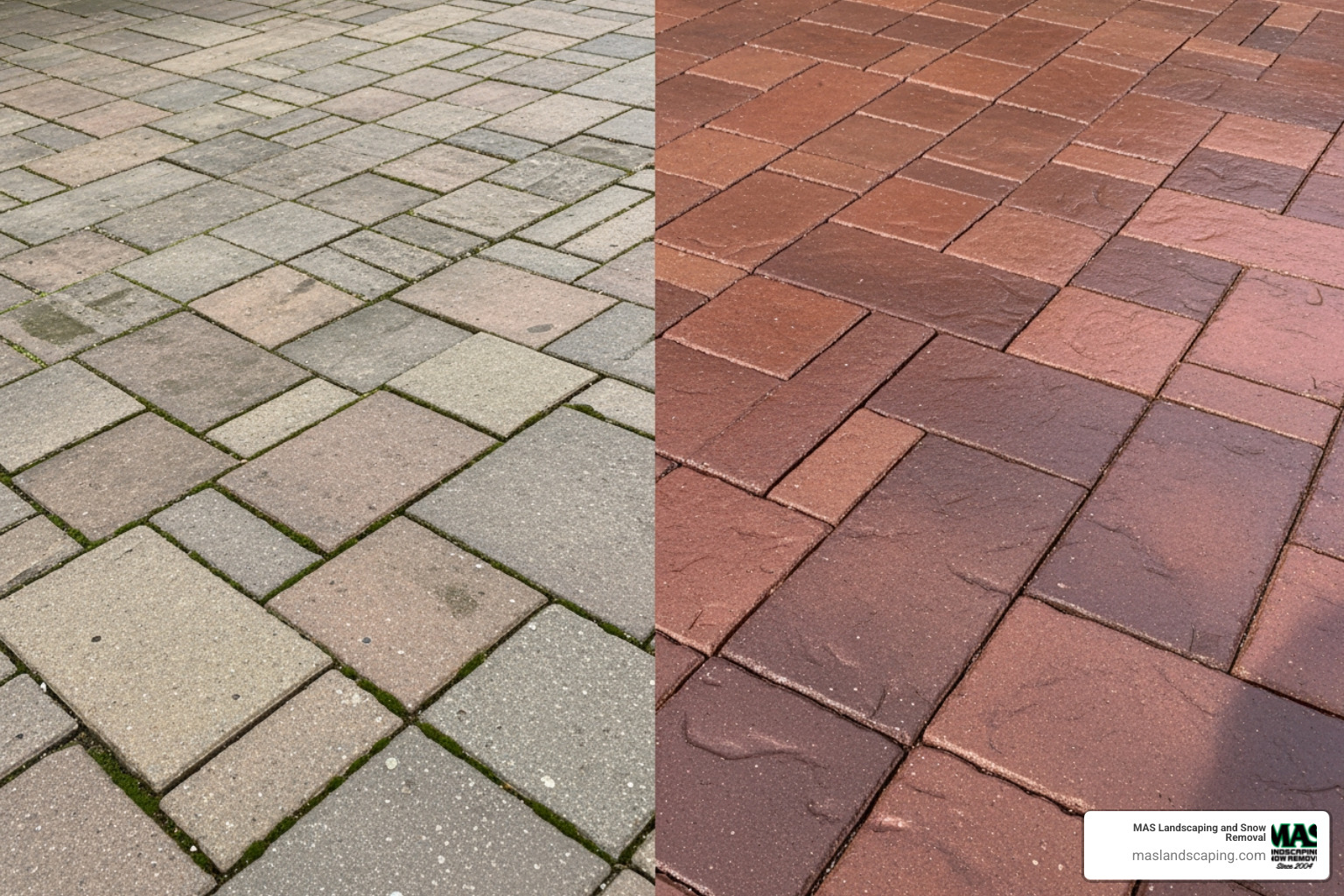
The Protective Benefits of Paver Sealer
Think of paver sealer as a shield for your outdoor surfaces. It offers numerous protective benefits:
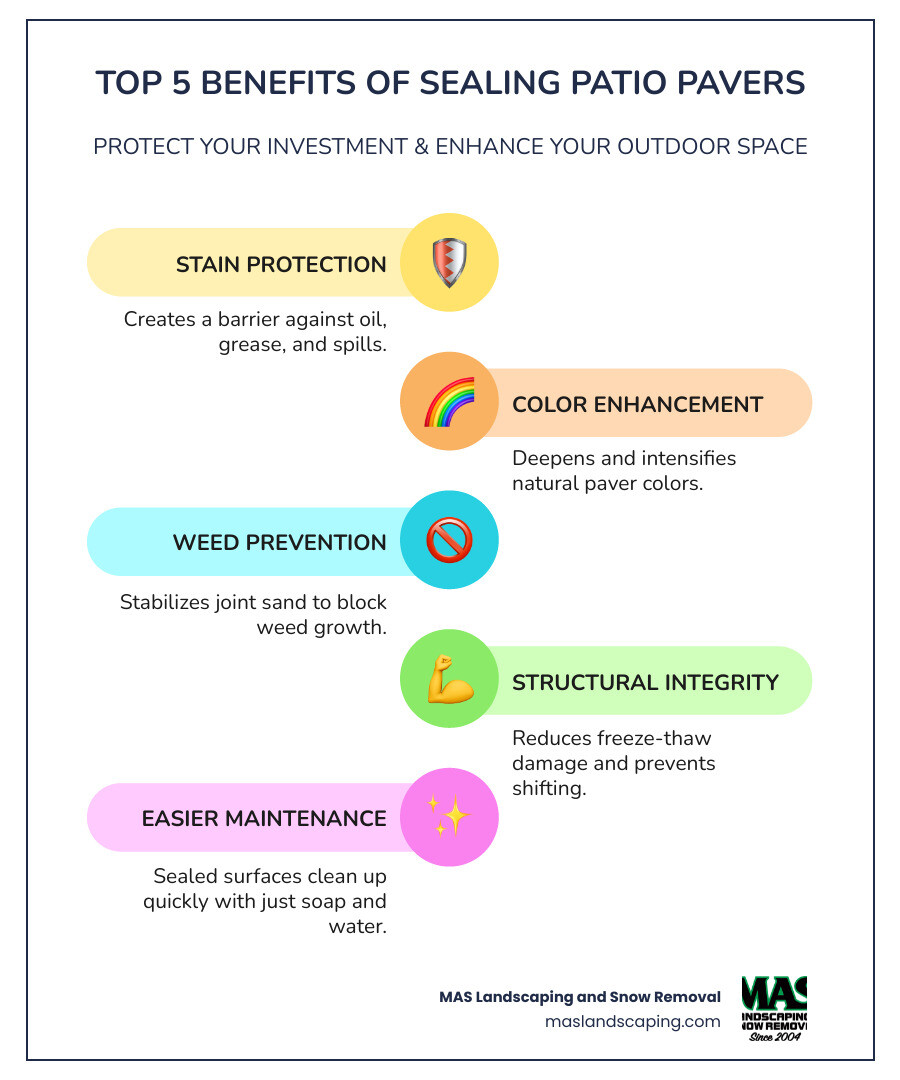
- Protection from the Elements: Sealer guards against UV rays that cause fading and discoloration. It also protects against harsh freeze-thaw cycles that can lead to spalling, cracking, and shifting.
- Prevents Stains: Concrete pavers are porous and absorb spills. A sealer creates a protective barrier, making pavers more resistant to stains from oil, grease, rust, and leaves.
- Inhibits Weed and Moss Growth: When combined with polymeric sand, sealer hardens the joints, preventing weed seeds from taking root. This significantly reduces maintenance.
- Reduces Freeze-Thaw Cycle Damage: By reducing water absorption, sealing minimizes the risk of water freezing and expanding within the pavers, which causes surface and structural damage.
- Stabilizes Joint Sand: Sealer binds joint sand, preventing washout from rain or power washing. This ensures pavers stay firmly in place and helps prevent shifting.
The Aesthetic Benefits of Paver Sealer
Beyond protection, sealing dramatically improves your patio’s appearance:
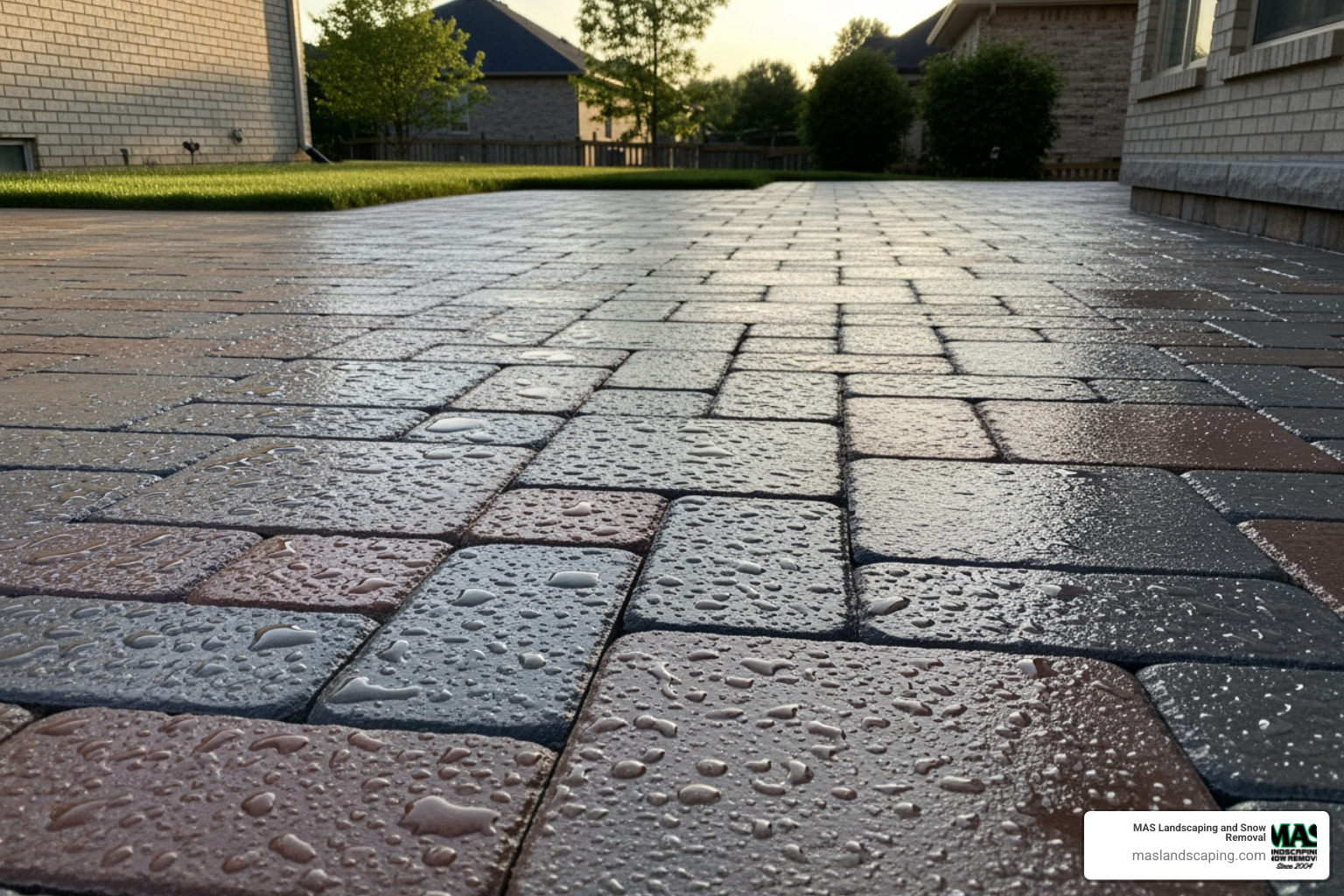
- Improves and Deepens Paver Colors: Sealer brings out the natural vibrancy of your pavers, making their colors richer and more intense, especially on older, weathered stones.
- Revitalizes Old, Weathered Pavers: A good sealer can act like a facelift for a tired, faded patio, restoring much of its original luster and beauty.
- Choice of Finish: Paver sealers come in various finishes, allowing you to customize your patio’s look, from a subtle, natural appearance to a dramatic “wet look” with a high-gloss sheen.
- Increases Curb Appeal: A well-maintained, beautifully sealed paver patio adds significant curb appeal and value to your home, creating an inviting space for relaxation and entertainment.
Choosing the Right Paver Sealant for Your Project
Selecting the perfect paver sealant is crucial for achieving the desired look and protection. The best choice depends on your paver material, preferred finish, and maintenance willingness.
Types of Paver Sealants
There are several primary types of paver sealants, each with its own characteristics:
| Factor | Water-Based Sealers | Solvent-Based Sealers |
|---|---|---|
| Finish | Natural look, matte, or subtle sheen | High-gloss, “wet look,” color-enhancing |
| Durability | Good, but may require more frequent reapplication | Typically more durable, can last 4-5 years |
| VOC Level | Low VOCs, safer for indoor and enclosed spaces | Higher VOCs, strong fumes, requires good ventilation |
| Cleanup | Easy cleanup with water | Requires solvents (e.g., lacquer thinner) for cleanup |
| Cost | Generally $80-$150 per gallon (covers 100-150 sq ft) | Generally $80-$150 per gallon (covers 80-120 sq ft) |
| Application | Better for joint sand, penetrates well | Can be applied with sprayer; may not harden sand as effectively |
| Efflorescence | Allows pavers to “breathe,” reducing moisture trapping | Can trap moisture if applied too thickly, leading to blushing |
- Water-Based Sealers: Often recommended for DIYers for their ease of use and low VOCs (Volatile Organic Compounds). They provide a natural look, are great for stabilizing joint sand, and allow pavers to “breathe,” which helps prevent moisture issues.
- Solvent-Based Sealers: Known for creating a durable, high-gloss or “wet look” that dramatically improves paver color. They generally last longer but have higher VOCs and require solvents for cleanup.
- Acrylic Sealers: A popular, cost-effective choice available in both water- and solvent-based formulas. They are UV resistant, non-yellowing, and easy to apply.
- Penetrating Sealers: These seep deep into the paver instead of forming a surface film. They offer excellent protection against moisture while maintaining a completely natural look with no added sheen.
Selecting a Finish: From Natural to High-Gloss
The finish dramatically impacts your patio’s final appearance:
- Matte Finish / Natural Look: Offers protection without altering the paver’s original color or texture. Ideal for those who love their pavers’ current look.
- Satin or Semi-Gloss: Provides a subtle sheen that slightly improves color without being overly reflective. A popular middle-ground option.
- High-Gloss or Wet Look: Intensifies colors and provides a noticeable shine. Be aware that high-gloss sealers can be slippery when wet. For high-traffic areas around your Everett, MA property, consider anti-skid additives.
Special Considerations for Different Paver Materials
Your paver material influences your sealant choice:
- Concrete Pavers: Highly porous, they benefit greatly from sealing to prevent stains and fading. Both acrylic and penetrating sealers work well.
- Brick Pavers: Sealing protects against staining and weathering. A matte or low-gloss sealer often complements brick’s classic look.
- Natural Stone Pavers: Sealing improves their natural beauty and protects against moisture. Penetrating sealers are a great choice for a natural look and breathability.
- Porosity: Denser pavers absorb less sealer, while more porous ones soak up more. Always test a small area first.
- Pre-Sealed Paver Options: Some manufacturers, like Unilock with their EasyClean™ technology, offer factory-sealed pavers with integral stain resistance, reducing the need for immediate post-installation sealing.
Preparation is Key: Getting Your Pavers Ready for Sealing
The secret to a professional, long-lasting sealed patio lies in meticulous preparation. Skimping on prep work is the quickest way to ruin your project.
Gathering Your Tools and Materials
Before you begin, gather everything you’ll need:
- Pressure Washer: Essential for deep cleaning. You can rent one from a local hardware store.
- Stiff-Bristle Brush: For scrubbing stubborn stains.
- Leaf Blower: To quickly remove loose debris.
- Garden Sprayer: Ideal for even sealant application.
- Paint Roller (with appropriate nap): A foam or short pile roller is often recommended.
- Safety Gear: Gloves, safety goggles, and a respirator mask (especially for solvent-based sealers) are non-negotiable. Learn more about personal protective equipment (PPE) from OSHA.
- Paver Cleaner/Degreaser: For tough stains like oil or rust.
- Polymeric Sand: If your paver joints need refilling.
- Paver Sealant: Chosen based on your paver type and desired finish.
- Putty Knife/Concrete Repair Material: For minor repairs.
- Shop Vacuum: To remove standing water after cleaning.
The Best Time and Weather for Sealing
Timing is everything. Ideal conditions ensure proper adhesion and curing.
- Temperature: Aim for a dry day with temperatures between 50°F and 90°F. Avoid extreme heat, which can cause the sealer to dry too quickly.
- Dry Conditions: Pavers must be completely dry. Ensure no rain is in the forecast for at least 24-48 hours before, during, and after application.
- Low Humidity & Wind: High humidity slows curing, while wind can cause uneven application and overspray.
Cleaning, Repairing, and Prepping Your Paver Surface
This is the most critical step for a flawless finish.
- Remove Everything: Clear the patio of all furniture and planters.
- Sweep Thoroughly: Use a stiff broom or leaf blower to remove all loose debris.
- Pressure Wash: Deep clean with a pressure washer using a fanned nozzle at a 30° angle, about 12 inches from the surface to avoid dislodging joint sand.
- Spot-Treat Stains: Use a dedicated paver cleaner for tough stains. Apply, scrub with a stiff brush, and rinse.
- Level and Repair: Adjust any settled or shifted pavers by lifting them and adjusting the base material.
- Fill Paver Joints: If joints are low, sweep in new polymeric sand. Remove all excess from the paver surface. If using polymeric sand, you must activate it with water and let it dry completely (24+ hours).
- Dry Completely: Allow pavers to dry for 24 to 48 hours after all cleaning and joint work. If you place plastic on the pavers and condensation forms, they are still too wet.
When to Seal New Pavers
Don’t seal brand new pavers immediately. You must wait for efflorescence—a natural process where white mineral salts leach out of the concrete—to finish. Trapping it under a sealer creates a hazy look that is difficult to remove.
Most manufacturers recommend waiting 60 to 90 days, or even up to 6 to 12 months, before sealing new pavers. Always follow the paver manufacturer’s specific recommendations.
How to Seal Patio Pavers: A Step-by-Step Guide
Once your pavers are clean, dry, and the weather is right, you’re ready to seal. Follow these steps for a professional finish.
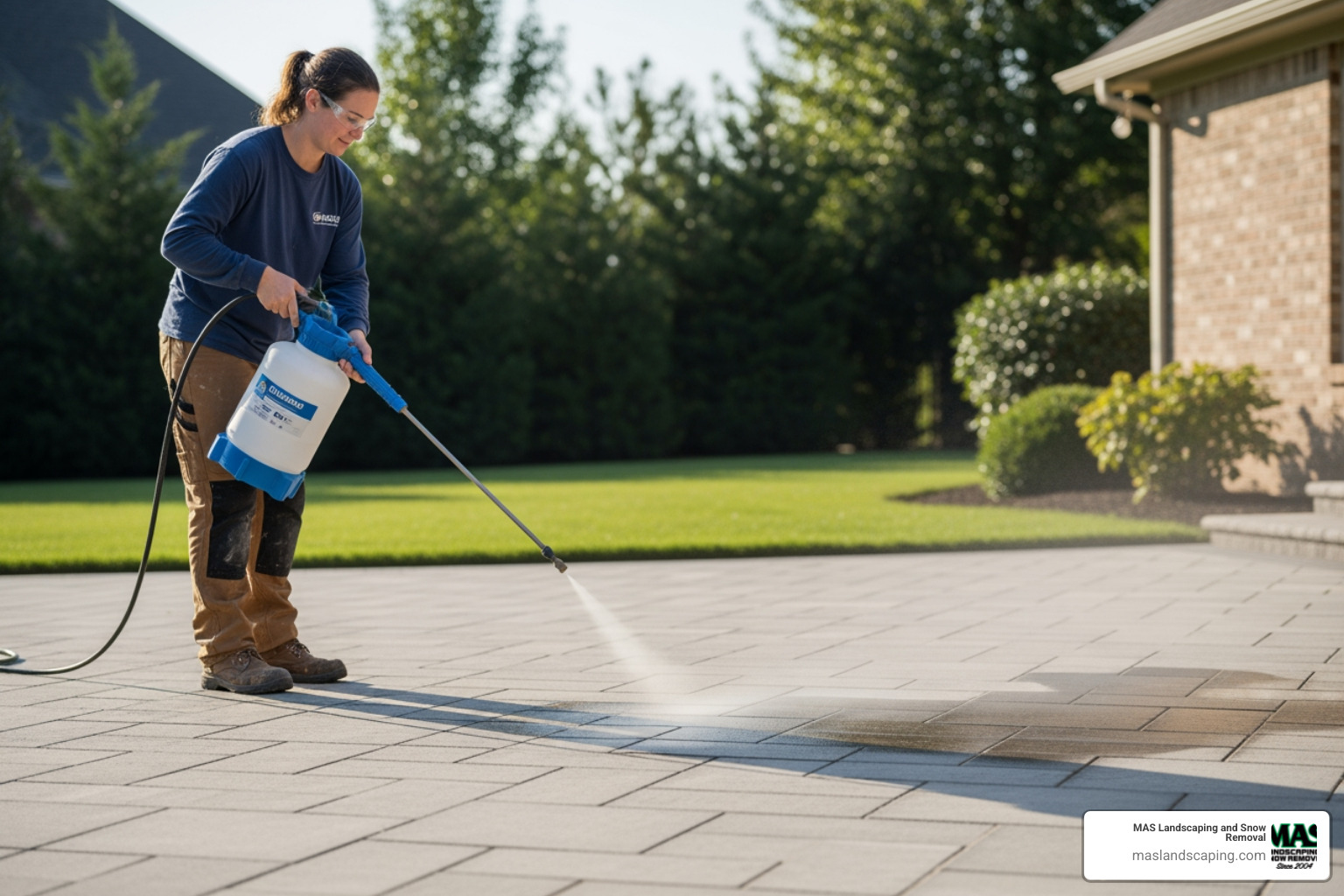
Step 1: Perform a Test Patch
This critical step is often overlooked. Apply sealer to a small, inconspicuous area to:
- Check the Appearance: Confirm the finish (matte, satin, wet look) is what you want.
- Ensure Compatibility: Make sure there are no adverse reactions with the paver.
- Confirm Coverage: Estimate how much sealer your pavers will absorb.
Wait for the test patch to dry completely before proceeding.
Step 2: Applying the First Coat of Sealer
- Application Method: A garden sprayer is efficient for large areas, while a roller offers good control for smaller spaces.
- Work in Sections: Start at a corner and work in manageable sections (e.g., 60 sq. ft.) to maintain a “wet edge” and prevent lap marks.
- Apply Thin, Even Coats: Saturate the pavers thoroughly but avoid letting the sealer puddle. Use a circular motion with a sprayer or slow, consistent strokes with a roller.
- Remove Excess: Use a foam roller or squeegee to remove excess sealer from the surface and push it into the joints. This prevents a thick, peeling, or milky film.
Step 3: Applying the Second Coat (If Needed)
Most products recommend two thin coats for best results.
- Follow Instructions: Refer to the manufacturer’s instructions for the wait time between coats, typically at least two hours.
- Perpendicular Application: Apply the second coat at a right angle to the first coat’s direction to ensure complete coverage.
Step 4: Curing and Drying
Patience during the curing process is essential.
- Foot Traffic: Allow at least 24 hours before light foot traffic.
- Full Cure: Wait 48-72 hours before placing furniture or allowing vehicle traffic. Driving on a sealed surface too soon can cause tire marks.
- Keep Dry: The sealed surface must remain dry during the entire curing period. Turn off sprinklers and watch the weather.
Common Mistakes to Avoid When Learning how to seal patio pavers
Avoid these common pitfalls for a successful project:
- Sealing Dirty or Damp Pavers: Trapping dirt or moisture causes a poor bond, an uneven finish, and a milky white haze. Ensure pavers are perfectly clean and dry.
- Applying Sealer Too Thickly: More is not better. A thick coat can cause bubbling, peeling, and streaking. Thin, even coats are key.
- Ignoring the Weather Forecast: Sealing in the wrong conditions (too hot, cold, humid, or with pending rain) is a recipe for disaster.
- Using the Wrong Sealer Type: Ensure the sealer is compatible with your pavers and provides the desired finish. Mismatched products can lead to costly corrections.
- Skipping the Test Patch: This is a gamble with your patio’s appearance. Always test first!
- Not Removing Old Sealer: If pavers were previously sealed, you may need to strip the old layer, especially if switching sealer types, to avoid incompatibility issues.
Maintenance, Resealing, and Costs
Sealing isn’t a one-time task, but it makes long-term care much easier. Understanding maintenance and resealing schedules will keep your patio looking its best.
How to Maintain Your Sealed Pavers
Maintaining sealed pavers is significantly easier than unsealed ones:
- Regular Sweeping: Sweep regularly to remove leaves and debris that can stain.
- Rinsing with a Hose: A simple rinse is often enough for general grime.
- Promptly Cleaning Spills: Clean spills like oil or wine quickly to prevent potential staining.
- Gentle Cleaning Methods: For tougher spots, use a mild detergent (like dish soap) and a soft-bristle brush. Avoid harsh chemicals.
- Yard Clean-up Services: For homeowners in areas like Lynnfield or Malden, MAS Landscaping offers comprehensive yard clean-up services to help keep your sealed pavers pristine.
How Often Should You Reseal Your Patio?
Generally, pavers should be resealed every three to five years. This can vary based on:
- Climate: Harsh New England winters can shorten a sealer’s lifespan.
- Traffic: High-traffic areas require more frequent resealing.
- Sealer Quality: Higher-quality sealers offer longer protection.
- Exposure: Patios with heavy sun or rain exposure may need more attention.
A key sign it’s time to reseal is when water no longer beads on the surface but soaks in.
Average Cost of Sealing Pavers
The cost varies depending on whether you DIY or hire a professional.
- DIY Cost: Sealant can cost from $80 to over $150 per gallon, with coverage rates varying from 80 to 150 square feet per gallon. For a 500 sq ft patio, you might spend $320 to over $1050 on sealant alone, plus the cost of supplies.
- Professional Sealing Costs: Hiring a professional service like MAS Landscaping for your Revere or Medford, MA property includes labor, equipment, and expertise. Costs vary based on project size and paver condition. While you may see average prices online, high-end professional services can easily be at least 3x the average DIY material cost for a flawless, warrantied finish.
Disclaimer: These are average costs based on internet data and not actual costs for MAS Landscaping. For a precise estimate for your specific project, please contact us for a personalized quote.
Frequently Asked Questions About Sealing Pavers
Should I seal brand new pavers right away?
No. It is crucial to wait for efflorescence—a natural, white haze of mineral salts—to finish appearing on new concrete pavers. Most manufacturers recommend waiting at least 60-90 days, and sometimes up to a year, before sealing. Sealing too soon traps this haze, creating a cloudy look that is very difficult to remove.
Does sealing make pavers slippery?
Film-forming sealers, especially high-gloss or “wet look” types, can reduce traction and become slippery when wet. To avoid this, use a penetrating sealer that doesn’t form a surface film, or choose a matte finish. If you want a glossy look, ask about adding a non-slip additive to the sealer for better grip.
What happens if I don’t seal my pavers?
Unsealed pavers are more vulnerable to the elements. They will fade from UV exposure, absorb stains from spills, and are more prone to weed and moss growth in the joints. They are also more susceptible to cracking and shifting from freeze-thaw cycles. Not sealing shortens their lifespan, reduces their beauty, and increases maintenance.
Conclusion: Protect Your Investment and Enjoy Your Patio
Sealing your patio pavers is more than just a chore; it’s an investment in the longevity and beauty of your outdoor living space. By understanding how to seal patio pavers, you’re equipped to protect them from stains, fading, weeds, and the harsh New England weather, ensuring your patio remains a vibrant and inviting area for years to come.
Whether you choose to tackle this project yourself or opt for professional assistance, the benefits are clear: improved aesthetics, easier maintenance, and extended lifespan for your pavers. For homeowners in the Saugus, MA area, including Everett, Lynnfield, Malden, Melrose, Medford, Revere, and Chelsea, MAS Landscaping offers expert hardscaping and maintenance services to ensure a flawless, long-lasting finish. We specialize in creating functional, beautiful outdoor spaces that stand the test of time.
Ready to protect your patio or need help with a new hardscape project? Explore our professional patio paver sealer services near me to keep your outdoor space looking its best.