

Artificial Turf Installation Cost Per Square Foot: Top 2025 Guide
If you’re looking to find out the artificial turf installation cost per square foot, here’s the essential information:
- Costs vary widely, but generally range between $8 and $18 per square foot.
- Factors like turf type, project size, and location impact the price.
- Larger projects often benefit from bulk pricing, reducing the cost per square foot.
Artificial turf has gained popularity among homeowners and businesses in the Greater Boston area due to its durability and low maintenance. Unlike natural grass, it stays lush and green all year long without watering, mowing, or fertilizing. This makes it an attractive option for those who want a beautiful outdoor space without the hassle.
However, it’s important to understand the cost factors involved in artificial turf installation. These include the type of material you choose, the size and scope of your project, any additional features you might want, and the specific labor costs in your area. Additionally, regional factors such as local demand and cost of living can affect the overall pricing.
For those considering this investment, it’s crucial to think of artificial turf as more than just an expense. It’s an investment that improves property value and reduces long-term maintenance costs.
Basic artificial turf installation cost per square foot terms:
– synthetic grass price per square foot
– outdoor turf cost
– cost to astroturf garden
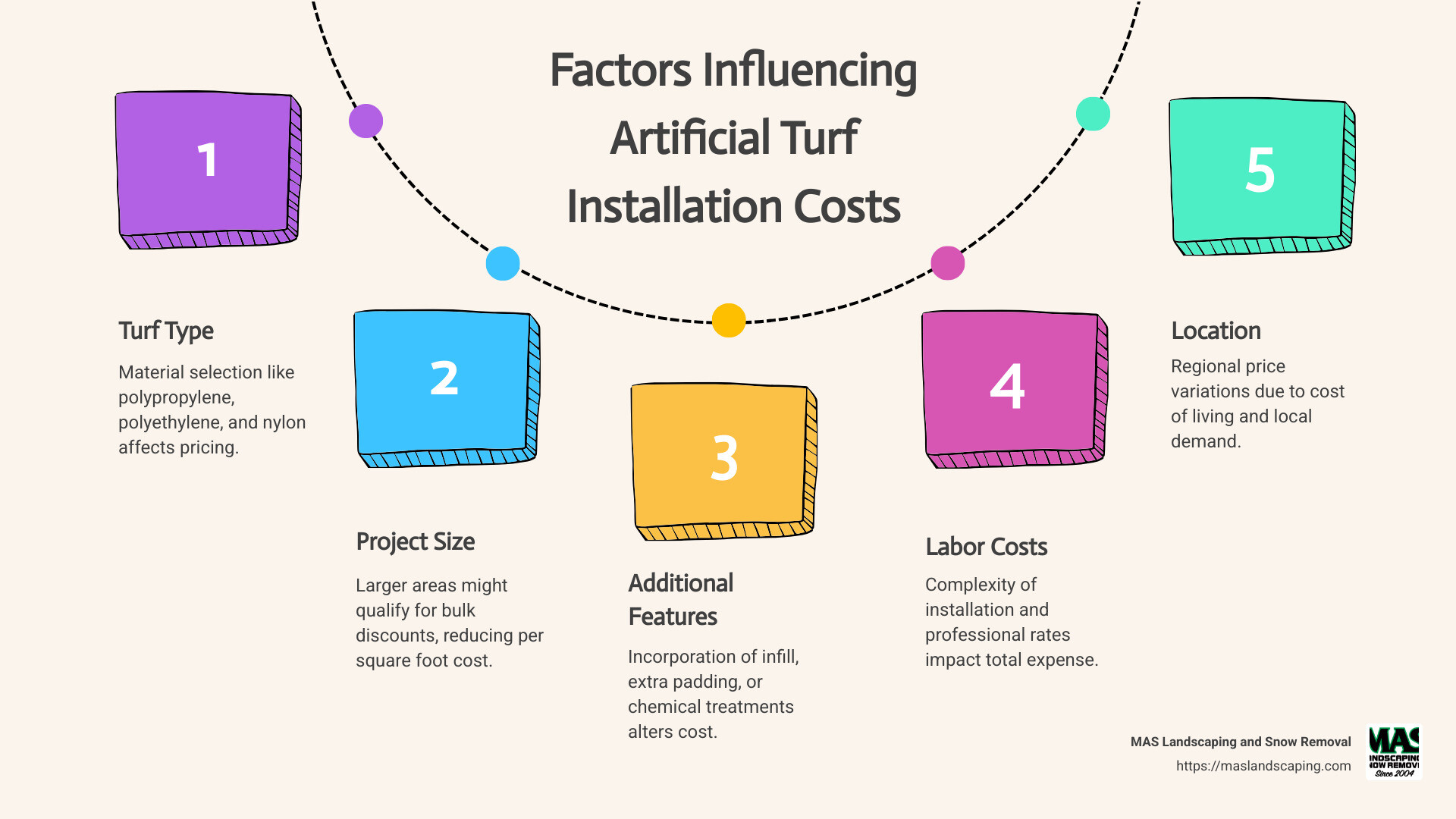
Factors Affecting Artificial Turf Installation Costs
When planning for artificial turf, several factors can impact the installation cost per square foot. Understanding these can help you make informed decisions and optimize your budget.
Material Type
The type of artificial turf material is a significant cost factor. There are three main types:
- Polypropylene: The least expensive option, priced between $2 and $6 per square foot. It’s less durable, making it suitable for areas with low foot traffic.
- Polyethylene: Offers a more natural appearance and softer feel. Costs range from $2.50 to $4 per square foot, making it a popular choice for residential lawns.
- Nylon: The most durable and expensive, ranging from $5 to $6 per square foot. Ideal for high-traffic areas and sports fields.
Choosing the right material depends on your budget and the intended use of the turf.
Project Size
The size of your project can significantly affect the cost per square foot. Larger installations often benefit from bulk discounts, reducing the overall cost. The larger the project, the lower the price per square foot typically becomes.
Additional Features
Adding extra features can improve the functionality and comfort of your artificial turf but will add to the cost:
- Infill: Helps keep the turf blades upright and adds cushioning.
- Extra Padding: Provides additional comfort, especially in play areas.
- Chemical Sprays: Protects against UV rays and bacteria, extending the turf’s lifespan.
These features can improve the longevity and performance of your turf but will increase the upfront investment.
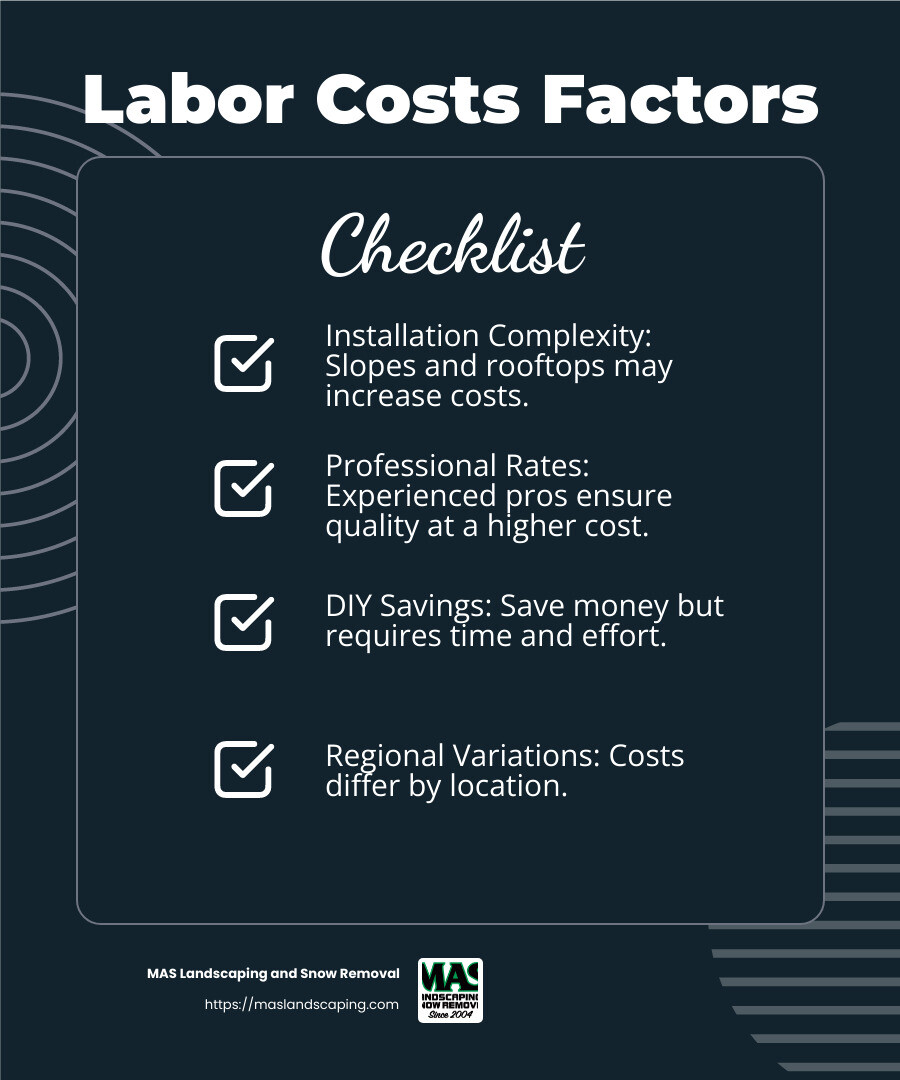
Labor Costs
Labor costs can vary based on the complexity of the installation:
- Installation Complexity: More complex installations, like those on slopes or rooftops, may cost more due to the additional work involved.
- Professional Rates: Hiring experienced professionals ensures quality but comes at a higher cost.
- DIY Savings: Opting for a DIY approach can save money but requires time and effort.
Location
Where you live can also impact the installation cost:
- Regional Cost Variations: Prices can vary based on local market conditions and demand.
- Cost of Living: Higher living costs in an area can lead to higher labor and material costs.
- Local Demand: Areas with high demand for artificial turf might have higher prices due to increased competition.
Understanding these factors can help you budget effectively and choose the best options for your artificial turf project.
Cost Breakdown by Artificial Grass Type
When choosing artificial turf, understanding the differences in material types is crucial. The three main types—polypropylene, polyethylene, and nylon—each offer unique benefits and costs. Let’s break them down.
Polypropylene
Polypropylene is the most budget-friendly option, with costs ranging from $2 to $6 per square foot. However, its affordability comes with trade-offs. This material is less durable compared to others, making it best suited for areas with minimal foot traffic, like decorative spaces or low-use gardens.
Despite its lower durability, polypropylene can still provide a lush, green appearance, especially in shaded areas where sunlight won’t cause it to wear down quickly. It’s a practical choice for homeowners looking to add greenery without a significant investment.
Polyethylene
Polyethylene turf strikes a balance between cost and quality. It ranges from $2.50 to $4 per square foot, offering a more natural look and softer feel than polypropylene. This makes it a popular choice for residential lawns where aesthetics and comfort are priorities.
Polyethylene is more durable than polypropylene, capable of handling moderate foot traffic. Its realistic appearance and soft texture make it ideal for family yards where children play, or for creating a welcoming, lush landscape.
Nylon
At the higher end of the spectrum, nylon costs between $5 and $6 per square foot. It is the most durable of the three types, able to withstand heavy foot traffic and extreme weather conditions. This makes it the preferred choice for high-traffic areas, such as sports fields and commercial spaces.
Nylon’s robust nature means it can handle the wear and tear of frequent use, maintaining its appearance and structure over time. While the initial investment is higher, its longevity and resilience can make it a cost-effective option in the long run for spaces that demand durability.
In summary, your choice of artificial turf material should align with your budget and the intended use of the space. Polypropylene suits decorative needs, polyethylene balances cost with comfort and appearance, and nylon offers best durability for high-traffic areas.
Cost Breakdown by Region
When it comes to artificial turf installation cost per square foot, location can significantly influence pricing. Let’s explore how regional variations, cost of living, and local demand impact turf costs across the U.S., focusing on key cities in each region.
Northeast U.S.
In cities like New York and Boston, the cost of living is high, which directly affects the price of artificial turf installation. These urban areas often have limited space, increasing demand for artificial turf as a low-maintenance alternative to natural grass. The higher demand, combined with the cost of living, can lead to increased installation prices.
Southeast U.S.
Atlanta and Knoxville present a different scenario. The cost of living is generally lower than in the Northeast, which can make artificial turf installations more affordable. However, local demand can fluctuate based on weather conditions. For instance, the hot and humid climate often leads homeowners to seek drought-resistant landscaping solutions, like artificial turf, which can drive prices up during dry seasons.
Midwest U.S.
In the Midwest, cities like Chicago and South Bend experience extreme weather variations. This can affect artificial turf installation costs, as materials need to withstand both hot summers and cold winters. The demand for durable turf solutions can lead to slightly higher prices, especially for materials like nylon, which offer greater resilience.
Northwest U.S.
Seattle and Beaverton are known for their rainy climates. Here, artificial turf offers a practical solution for maintaining green spaces without the hassle of mud and waterlogging. The consistent demand for turf that can handle wet conditions can impact installation costs, though the overall cost of living is moderate compared to other regions.
Southwest U.S.
In the Southwest, cities such as San Diego and Gilbert face water scarcity issues, making artificial turf an attractive option. The dry climate increases the demand for water-efficient landscaping solutions, which can influence turf pricing. Despite the high demand, the competitive market in these areas often keeps prices relatively stable.
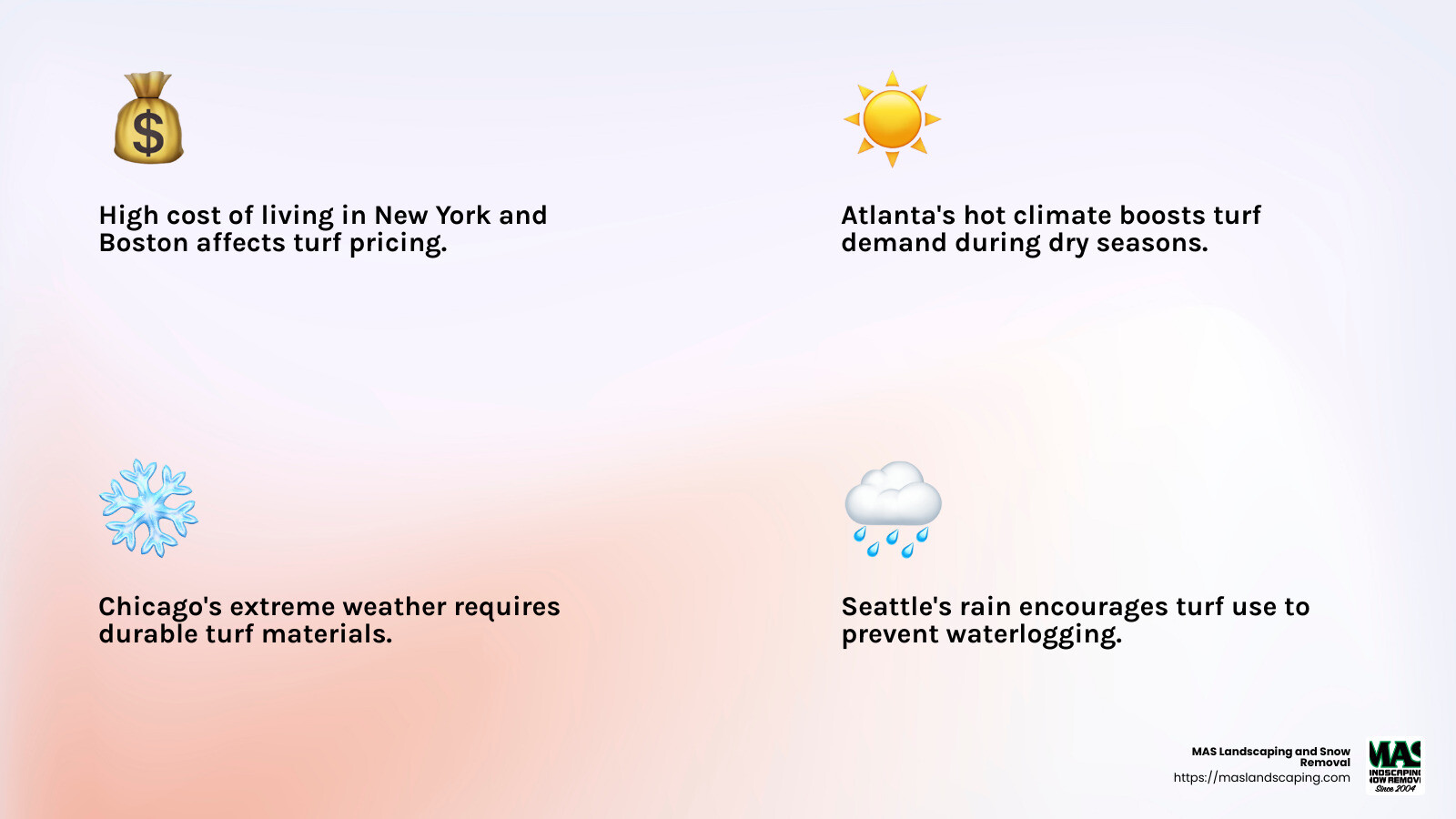
Understanding these regional variations helps in planning your artificial turf project. Prices can vary significantly based on local factors, so consider both the cost of living and the specific environmental demands of your region.
Installation Cost for Different Project Types
When considering artificial turf installation cost per square foot, the project type plays a crucial role in determining the overall expenses. Let’s explore how different areas like lawns, rooftops, stairways, decks, and patios affect installation costs.
Lawns
Installing artificial turf on lawns is common, but costs can vary based on the landscape’s complexity. Flat areas are the simplest and least expensive to cover, as they require minimal preparation. Curved areas add complexity, needing more precise cutting and fitting, which can increase labor costs by 15% to 20%. Slopes are even more challenging, as they require additional support to secure the turf, potentially raising costs by 50% to 60%.
Rooftops
Rooftop installations are unique and require special considerations. The installation complexity is higher due to the need for additional support structures to handle weight and drainage. This complexity can lead to increased labor and material costs. However, the benefits of converting unused rooftop space into a green oasis can be worth the investment.
Stairways and Decks
Covering stairways and decks with artificial turf involves intricate work to ensure safety and durability. The installation complexity is high because of the need to secure the turf on vertical and horizontal surfaces. Additional support may be necessary to prevent slipping or shifting, which can add to the overall cost. Despite these challenges, turf can provide a unique aesthetic and functional improvement to these areas.
Patios
Patios are versatile spaces that can benefit from artificial turf for a softer, more natural look. The installation complexity varies based on the existing patio surface and whether additional support is needed. For instance, concrete patios may require less preparation, while wooden decks might need extra reinforcement to ensure the turf lays flat and secure.
Each project type presents its own set of challenges and considerations, impacting the artificial turf installation cost per square foot. Understanding these factors can help you make informed decisions about your landscaping project, ensuring a beautiful and functional outcome.
Cost of Pre-Installation and Site Prep
Before diving into the artificial turf installation, prepare the site correctly. This step ensures a smooth and long-lasting installation. Let’s explore the key components of pre-installation and site prep: grass removal, landscape edging, and irrigation system adjustments.
Grass Removal
When replacing natural grass with artificial turf, the existing grass must be removed. The cost per square foot for grass removal ranges from $0.88 to $1.84, depending on the method used. Common removal methods include:
- Sod Cutting: Efficient for large areas, using a sod cutter to slice and roll up the grass.
- Chemical Removal: Involves applying herbicides, which may take longer to prepare the area.
- Manual Removal: Labor-intensive but effective for small patches.
Choosing the right method depends on your project’s size and budget. Proper grass removal ensures a clean slate for the new turf, preventing future issues like weed growth.
Landscape Edging
Landscape edging is crucial for keeping the artificial turf in place and separating it from other areas. The cost per linear foot varies between $2 and $11.50, influenced by materials and design complexity. Common edging materials include:
- Plastic or Metal Edging: Affordable and easy to install.
- Stone or Brick Edging: Offers a more natural look but is pricier.
- Wood Edging: Provides a rustic appearance but may require more maintenance.
Design complexity, such as intricate curves or patterns, can raise costs. Proper edging not only improves the appearance but also helps contain the base material, ensuring the turf stays secure.
Irrigation System Adjustments
If your site has an existing irrigation system, adjustments are necessary. This involves capping sprinkler heads and removing irrigation boxes to accommodate the new artificial turf. The complexity of these adjustments can vary, impacting costs. Key steps include:
- Capping Sprinkler Heads: Prevents water waste and potential turf damage.
- Removing Irrigation Boxes: Ensures a smooth surface for the turf.
These adjustments are vital to avoid unnecessary water use and to protect the integrity of the artificial grass.
By understanding the cost per square foot and the tasks involved in pre-installation and site prep, you can make informed decisions and prepare your site effectively for a successful artificial turf installation.
Frequently Asked Questions about Artificial Turf Installation Costs
How much does it cost to install 400 square feet of turf?
When considering the artificial turf installation cost per square foot, prices can vary widely based on several factors. For a 400 square foot area, the cost can range significantly due to differences in material quality, labor, and additional features. The average cost per square foot generally falls between $6 and $18, encompassing design, materials, and installation. That this is a broad estimate, and the final cost could be influenced by your specific location, the type of turf you choose, and any site-specific requirements.
Is it cheaper to lay turf or artificial grass?
Initially, laying natural turf might seem more economical. The cost for natural sod ranges from $0.90 to $2 per square foot, which is cheaper than installing artificial turf. However, consider long-term expenses. Natural grass requires regular maintenance, including watering, mowing, and fertilizing, which adds up over time. In contrast, artificial grass is a one-time investment with minimal maintenance costs. Over several years, artificial turf can prove to be more cost-effective, particularly in areas with high water costs or where lawn maintenance is challenging.
Why is artificial grass so expensive?
The higher cost of artificial grass installation is due to several factors:
- Material Quality: High-quality synthetic materials, like polyethylene and nylon, are durable and designed to mimic the look and feel of natural grass. These materials are more expensive to produce.
- Installation Complexity: Proper installation requires skilled labor to ensure the turf is laid correctly and securely. This includes site preparation, base installation, and precise cutting and fitting of the turf.
- Long-Term Savings: Although the upfront cost is higher, artificial grass provides long-term savings by eliminating the need for watering, mowing, and fertilizing. Over time, these savings can outweigh the initial expense.
- Durability and Lifespan: Artificial turf is built to withstand heavy use and harsh weather conditions, often lasting 15 years or more. This durability contributes to its cost but ensures a long-lasting investment.
In summary, while the initial cost of artificial grass is higher, its durability and low maintenance make it a worthwhile investment for many homeowners.
Conclusion
As we’ve explored throughout this guide, the artificial turf installation cost per square foot can vary based on several factors, including material type, project size, and location. While the upfront investment might seem substantial, the long-term benefits, such as reduced maintenance and water savings, make it an attractive option for many homeowners.
At MAS Landscaping and Snow Removal, we understand the significance of this investment and are committed to providing top-notch service custom to your specific needs. Our expertise in creating beautiful, functional outdoor spaces ensures that your artificial turf installation will not only improve the aesthetic appeal of your property but also offer practical benefits for years to come.
Whether you’re considering artificial grass for your lawn, rooftop, or patio, our team is here to guide you through the process. We pride ourselves on our professionalism and dedication to customer satisfaction, ensuring that your project is completed to the highest standards.
If you’re ready to transform your outdoor space with artificial turf, contact us today to discuss your project and receive a personalized quote. Let MAS Landscaping and Snow Removal help you create the perfect landscape that reflects your style and meets your needs.