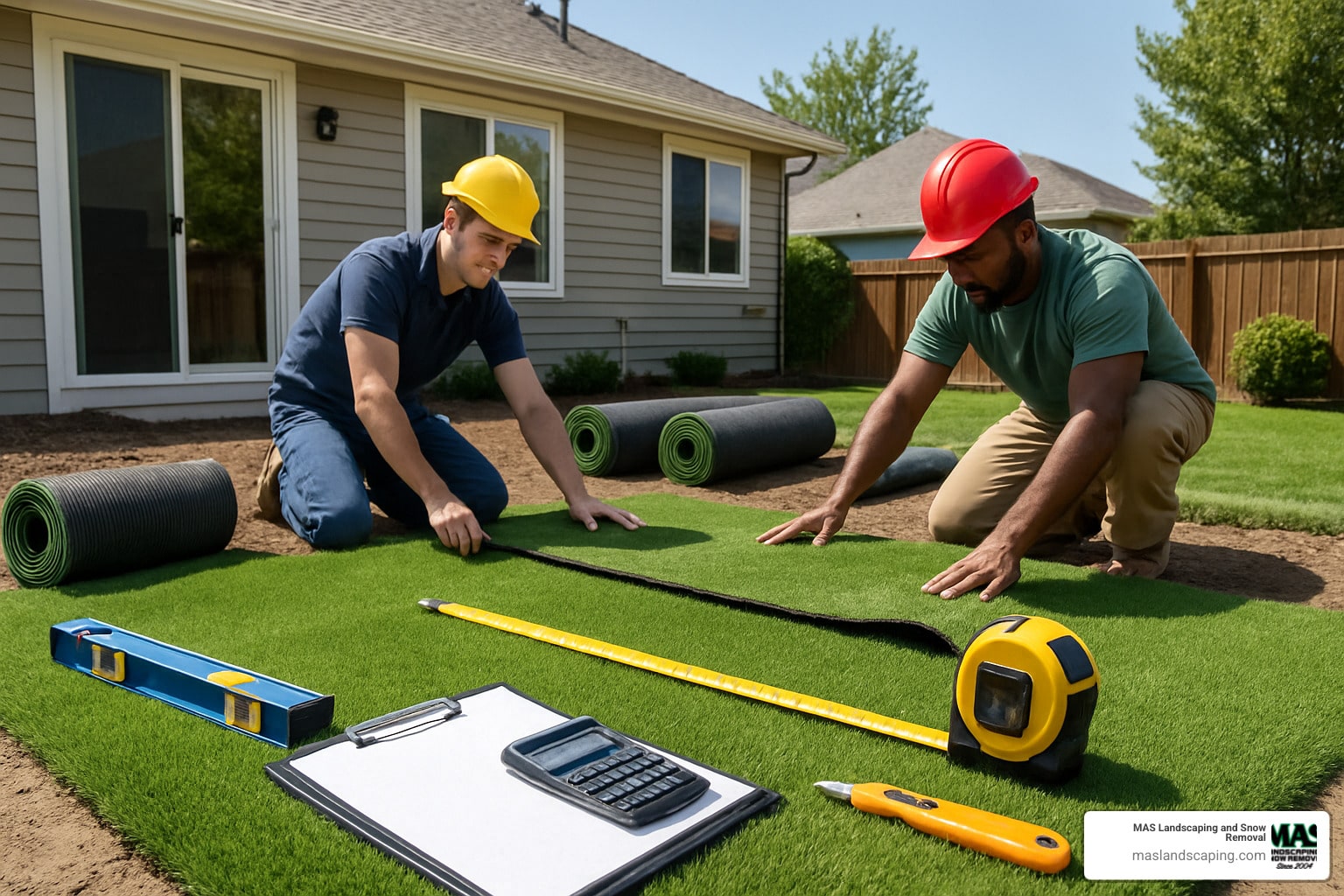


Artificial Turf Installation Estimate: 10 Powerful Cost-Saving Tips 2025
Budgeting for Your Green Dream: Artificial Turf Installation Costs
If you’re researching an artificial turf installation estimate, here’s what you need to know:
- Measure your area accurately – Length × width, plus 15% for waste
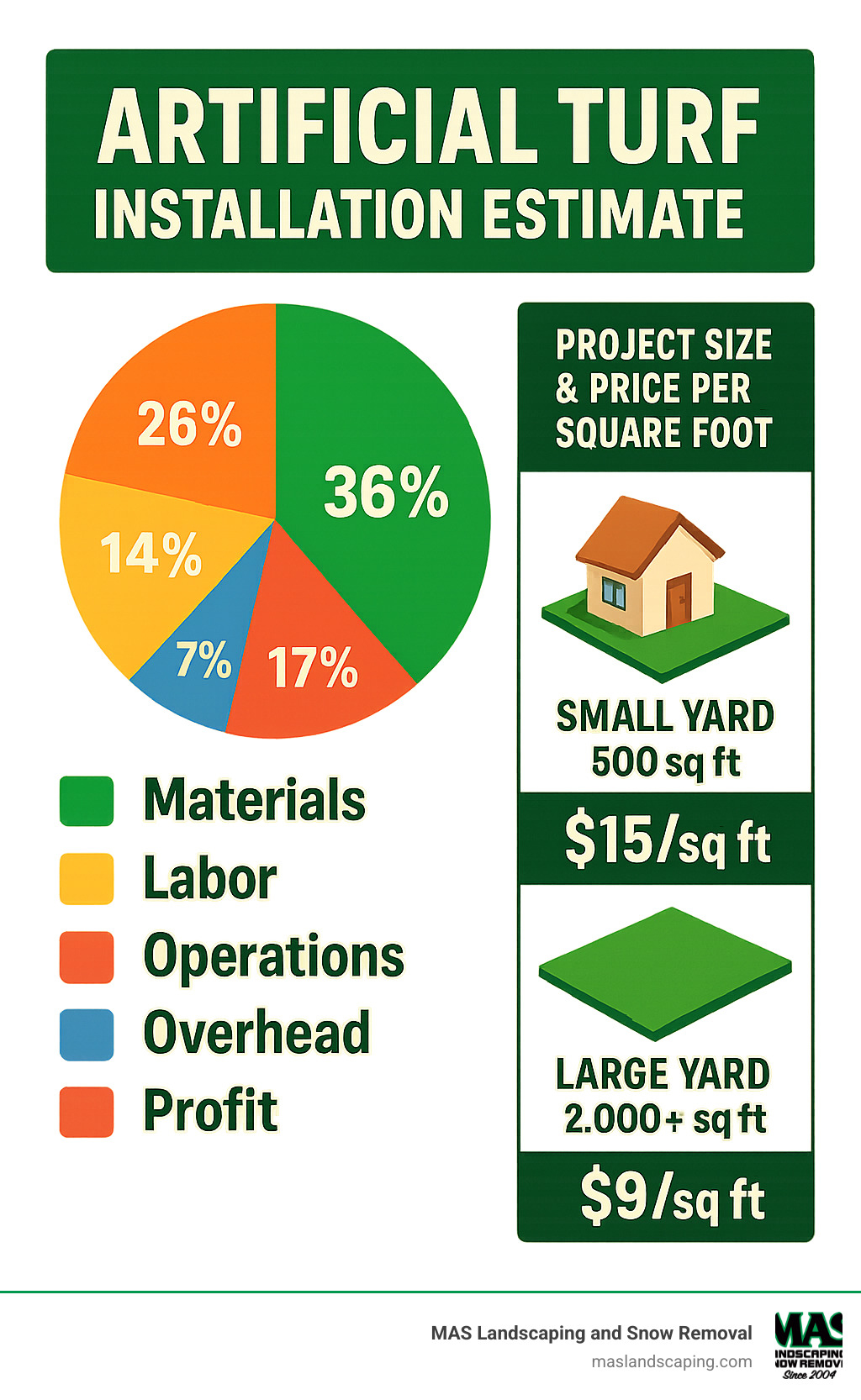
- Consider project size – Smaller yards ($17-25/sq ft) cost more per sq ft than larger areas ($9-12/sq ft)
- Factor in all components – Materials, labor, base preparation, edging, infill
- Request multiple quotes – Compare apples-to-apples from reputable installers
- Plan for operational fees – Delivery, hauling, equipment rental
The journey to a maintenance-free lawn starts with understanding what goes into your estimate. Artificial turf installation estimate calculations involve several factors that can significantly impact your final price.
Think of artificial turf as a long-term investment rather than a simple landscape upgrade. While the upfront costs might seem substantial, many homeowners find the investment pays for itself within 3-5 years through savings on water bills, mowing equipment, fertilizers, and maintenance time.
“The cost to install artificial grass is the most common question we’re asked,” notes one industry expert. And it’s no wonder – with so many variables affecting pricing, from turf quality to project size to site conditions, getting an accurate estimate requires careful consideration.
Unlike most home improvement projects, artificial turf installation pricing follows a sliding scale based on square footage. The larger your project, the lower your per-square-foot cost typically becomes. This happens because many fixed costs (like delivery fees and crew mobilization) are spread across more area.
For most homeowners, the biggest surprise isn’t the material cost – it’s understanding all the components that make up a professional installation: proper drainage, quality base materials, secure edging, and specialized infill that can dramatically affect both performance and longevity.
Quick look at artificial turf installation estimate:
- artificial grass cost per square metre installed
- garden artificial grass installation
- underlay for artificial grass on soil
Understanding Price Per Square Foot
When planning your dream lawn, understanding the artificial turf installation estimate basics is crucial. Across the country, most homeowners invest between $6 and $22 per square foot for a complete professional installation. This wide range isn’t random—it reflects the many factors that influence your final price tag.
Recent market data shows the average U.S. homeowner spends around $5,772 on artificial grass installation, though projects commonly range between $3,243 and $8,725. But these national averages only tell part of the story.
Where you live makes a big difference. Here in the Northeast, particularly in our service areas like Saugus, Everett, and Malden, MA, pricing often differs from what you’d find in Arizona or California. This regional variation stems from differences in labor costs, shipping expenses for materials, and local permitting requirements.
The quality of turf you select dramatically impacts your bottom line too. Economy options typically use polypropylene fibers—they’re more affordable upfront but may not stand the test of time. Premium turfs crafted from polyethylene or nylon offer improved durability and a more realistic look, though they represent a larger initial investment.
One of the biggest factors affecting your price per square foot is simply how much turf you’re installing:
| Project Size | Price Per Square Foot |
|---|---|
| Under 400 sq ft | $17-$25 |
| 400-700 sq ft | $14-$17 |
| 700-900 sq ft | $12-$14 |
| 900-2,000 sq ft | $9.50-$12 |
| Over 2,000 sq ft | $9 |
The pattern is clear—larger projects mean better value per square foot.
Why Small Yards Cost More
If you’re looking at a modest-sized project, you might be wondering why the artificial turf installation estimate seems disproportionately high. It’s not that smaller yards are being penalized—it’s simply the economics of installation work.
Projects under 500 square feet can cost nearly twice as much per square foot as larger installations. This price difference reflects several realities of the installation business.
First, there are fixed mobilization costs. Whether we’re installing turf in a tiny side yard or a sprawling backyard, we still need to transport our crew, equipment, and materials to your property. These costs don’t shrink just because your project is smaller.
Waste factor is another consideration. Artificial turf typically comes in 15-foot wide rolls, and smaller or irregularly shaped yards often create more unusable scraps. Unlike larger projects where these leftover pieces might find homes in other areas, small projects rarely have that flexibility.
Labor minimums also come into play. As one of our installation experts recently put it, “We have the same setup and breakdown time whether we’re doing a small garden patch or a full backyard.” Professional installation requires proper preparation regardless of size, and there’s a minimum amount of time needed to do the job right.
Delivery fees don’t scale down either. Many suppliers charge the same delivery fee whether you’re ordering turf for 300 or 3,000 square feet, and these costs need to be factored into your estimate.
How Large Projects Open up Savings
On the flip side, larger artificial turf projects open up significant economies of scale that can substantially reduce your per-square-foot cost. There are several reasons why bigger installations typically come with more favorable pricing:
Bulk material pricing is a major factor. When you’re ordering larger quantities of turf, base materials, and infill, suppliers often offer volume discounts that aren’t available for smaller orders. These savings get passed directly to you.
Crew efficiency improves dramatically on larger projects. Installation teams develop a rhythm when working on spacious, open areas where they can establish a consistent workflow without frequent repositioning or transitions between tight spaces.
Equipment utilization also becomes more cost-effective. The specialized tools used for professional installation—from power brushes to soil compactors—deliver better value when used across larger areas rather than being transported and set up for minimal use.
As one of our project managers notes, “For projects over 2,000 square feet, we can typically reduce our per-square-foot rate by 30-40% compared to small installations because our fixed costs are distributed across more area.”
This scaling advantage is why we sometimes see neighbors in communities like Lynnfield and Melrose coordinating their turf installations. By combining projects, everyone benefits from bulk pricing that wouldn’t be available for individual installations.
All pricing mentioned reflects average costs based on internet data and not actual costs for MAS Landscaping. Your specific artificial turf installation estimate will depend on your unique property conditions and requirements.
Getting an Accurate Artificial Turf Installation Estimate
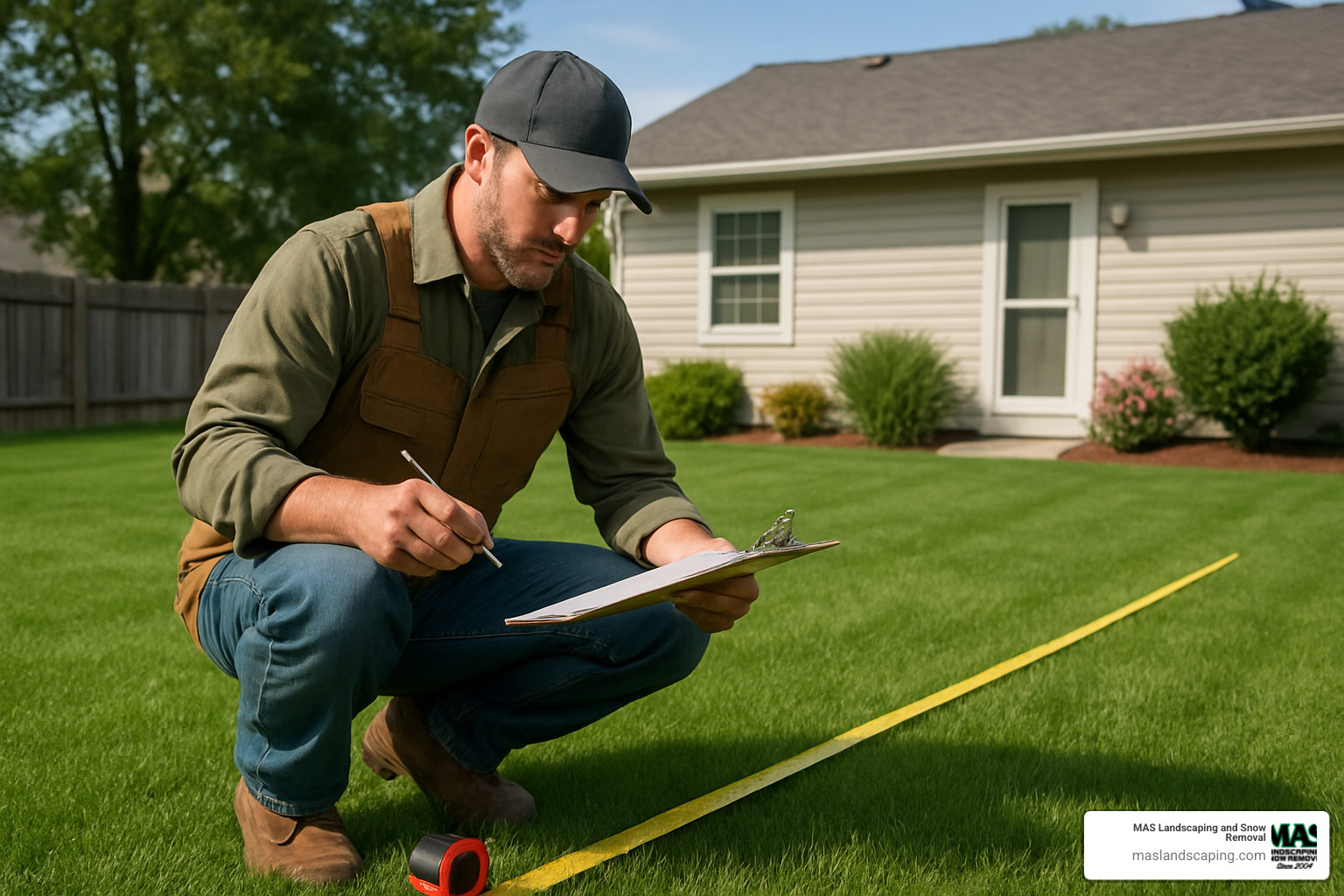
Nailing down a precise artificial turf installation estimate takes more than just a quick back-of-the-napkin calculation. While those online calculators might give you a ballpark figure to start with, the reality is that your unique property deserves a more thoughtful approach.
I always tell homeowners to begin with good measurements. For simple rectangular yards, it’s straightforward—just multiply length by width. But let’s be honest, how many of us actually have perfectly rectangular yards? For those irregular spaces (which is most of us!), try breaking your yard into manageable sections, calculate each one separately, and then add them together. And don’t forget to factor in that 10-15% extra for waste, especially if your yard has those beautiful curves that make it uniquely yours.
Those online calculators I mentioned? They’re a decent starting point. You can plug in your square footage, property type, and location to get a rough idea of costs. Recent industry data suggests that “for a 500 sq. ft. artificial turf project, the average total cost is $7,671.12, or $15.34 per square foot.” But remember, that’s just an average—your yard isn’t average, it’s yours!
Here’s where the magic happens: an in-person assessment. When we at MAS Landscaping visit a property, we’re looking at so much more than just square footage. We’re evaluating your soil composition, checking existing drainage patterns, figuring out how we’ll get our equipment to your backyard, noting any slopes or grade changes, and working around obstacles like your prized maple tree or that utility box that can’t be moved.
After a thorough inspection, you deserve a detailed written quote that spells out exactly what you’re paying for. This transparency not only helps you understand the investment but makes it much easier to compare quotes if you’re talking to multiple providers.
Want to dig deeper into pricing structures? Check out our comprehensive guide on Artificial Turf Installation Cost Per Square Foot.
DIY Calculator Basics
If you’re just dipping your toes into the planning pool, a DIY calculation can help you establish a starting budget. The process is pretty straightforward: measure each section’s length and width, multiply them together, add all sections, factor in that 10-15% waste allowance (lean toward 15% for yards with lots of curves), and then multiply by the average cost per square foot in our region.
One thing most homeowners don’t realize is that turf typically comes in standard 15-foot-wide rolls. This matters because if your space is 16 feet wide, you’ll need to purchase that full 15-foot roll plus an additional strip—which creates more potential waste. It’s like buying fabric for sewing; sometimes the standard dimensions just don’t quite match what you need.
For those tricky curved areas in your yard, try what I call the “slice method”—divide the curve into triangular pizza-like slices, calculate each slice, and add them together. It’s a bit more work than simple rectangular measurements, but it’ll give you a much more accurate estimate in the end.
Professional Estimate Checklist
When you’re ready for a professional artificial turf installation estimate, make sure it covers these essential bases:
A proper soil test is crucial because what’s underneath matters tremendously for drainage. A thorough drainage review should evaluate how water will flow through and around your new turf system. Before any digging happens, utility marking is an absolute must—we always contact Dig Safe (call 811) in Massachusetts to identify underground lines. This free service helps prevent those costly and dangerous accidents during excavation.
Your estimate should also include detailed line items that break down materials, labor, and any additional services. As one of our turf specialists often says, “When we provide an estimate, we’re not just quoting a price—we’re creating a roadmap for your installation.”
A quality estimate from MAS Landscaping will clearly distinguish between the must-haves and the nice-to-haves. This transparency helps you make smart decisions about where to invest and where you might be able to trim costs without compromising quality.
The goal isn’t just to get numbers on paper—it’s to develop a clear understanding of what your artificial turf journey will entail. The more detailed the estimate, the smoother your path to that gorgeous, low-maintenance lawn you’ve been dreaming about.
Breaking Down the Dollars: Materials, Labor & Beyond
Ever wonder what exactly you’re paying for when you get an artificial turf installation estimate? Understanding the cost components helps you make sense of quotes and spot potential savings. Your estimate typically breaks into five main categories – think of it as the anatomy of your turf project:
Materials take the biggest slice of the pie at about 36%, followed by labor (26%), profit (17%), operations (14%), and overhead (7%). Let’s peek behind the curtain at what each of these really means for your wallet.
Material Costs Explained
When you look at an artificial turf installation estimate, the largest chunk typically goes toward materials. The type of turf you select makes a big difference – it’s like choosing between economy, premium, or luxury options.
Polypropylene turf ($2-$6.35/sq ft) offers a budget-friendly entry point but won’t stand up to heavy traffic as well. Polyethylene ($2.20-$4.10/sq ft) hits that sweet spot of reasonable durability with a natural look and feel that many homeowners prefer. For maximum durability, nylon turf ($5-$6.40/sq ft) is the heavyweight champion, though it comes with a price tag to match.
“Face weight” might sound like a boxing term, but it actually refers to how dense the grass fibers are – measured in ounces per square yard. A higher face weight (60-90 oz) means a lusher, more natural-looking lawn that will maintain its appearance longer. Each 10 ounces of additional face weight typically adds about $1 per square foot, but many homeowners find the premium worth it for that plush feel underfoot.
The height of your grass blades (pile height) affects both look and performance. Most homes do well with 1.5″ to 2″ blades for that natural lawn appearance, while putting greens need shorter 0.5″ to 0.75″ blades for playability.
Don’t forget what lies beneath! A proper base is essential for drainage and stability. Most installations use Class II Road Base (about $0.32 per square foot), though decomposed granite makes an appearance in certain applications.
Infill materials support your turf fibers and prevent matting – from basic silica sand to premium antimicrobial options like Envirofill that prevent odors (especially important if you have four-legged family members).
For more details on turf materials and their costs, check out our page on the Cost of Turf Per Square Metre.
Labor Rates & Crew Size
The skilled hands that transform your yard typically account for about 26% of your artificial turf installation estimate, ranging from $4 to $9 per square foot depending on your project’s complexity and local wage rates.
Installing artificial turf isn’t just rolling out green carpet. It’s a multi-step process requiring expertise at every stage – from precise excavation to careful base preparation, secure edging installation, meticulous turf fitting and seaming, and finally, proper infill application. Each step demands attention to detail to ensure your turf performs well for years.
According to the Bureau of Labor Statistics, landscaping professionals in the Boston metro area (including our service areas like Everett and Malden) earn higher wages than the national average. This regional difference naturally affects the labor portion of your estimate.
Most residential installations require a crew of 3-4 skilled workers, with larger projects sometimes needing additional hands. A typical 500 square foot installation demands at least 8-10 labor hours to complete properly.
As one candid turf contractor shared with us, “Quality installation crews charge no less than $3.80 per square foot for proper labor. When you see quotes significantly lower, someone’s probably cutting corners on crucial steps like proper compaction or seaming.”
Hidden Operational Fees
The “operations” category often catches homeowners by surprise – these are the behind-the-scenes costs that make your installation possible but aren’t as visible as materials or labor.
That old grass and soil has to go somewhere! Dumpster rental typically runs $150-$600 depending on size. Material deliveries come with their own charges, usually $50-$100 per delivery regardless of order size. The specialized equipment needed – compactors, sod cutters, power brooms – all come with rental fees that get factored into your estimate.
Some local municipalities require permits for landscape modifications, especially if drainage patterns might be affected. These regulations vary across communities like Saugus and surrounding towns, and any required permit fees will appear in your estimate.
“Delivery fees alone can add $300-$400 to a project, regardless of size,” one contractor explained. “That’s why smaller projects have higher per-square-foot costs—these operational fees are spread across fewer square feet.” It’s like buying in bulk at the grocery store – the cost per unit goes down as quantity goes up.
Overhead & Fair Profit
The final pieces of your artificial turf installation estimate include overhead and profit – essential components that ensure you’re working with a sustainable, professional business.
Overhead costs (about 7-10% of your estimate) cover the business essentials: insurance protection (both liability and workers’ compensation), proper licensing, office expenses, marketing, vehicle maintenance, and professional training. While these might seem invisible, they’re your assurance that you’re working with a legitimate, properly insured contractor who can stand behind their work.
As for profit, reputable artificial turf companies typically operate on gross margins of 15-30% (before expenses), resulting in actual net profits around 10-15%. One business owner put it plainly: “Companies need at least $800 gross profit per crew-day just to keep the lights on.”
While it might be tempting to chase the lowest bid, established companies like MAS Landscaping need to include fair profit to provide quality service, honor warranties, and still be around years later when you might need them again. A transparent estimate will clearly outline these components, giving you confidence you’re receiving fair value for your investment.
Think of it this way – you wouldn’t want a surgeon who offers the lowest price by cutting corners on sterilization. Similarly, a quality turf installation requires proper compensation for those doing the work and running the business.
Site Conditions & Location Factors
Your property isn’t just a blank canvas when it comes to your artificial turf installation estimate. It’s more like a unique puzzle with its own set of challenges and quirks that directly impact your final costs.
Think about your soil first. Here in New England, particularly around Saugus and Everett, we often encounter that infamous rocky New England soil that loves to hide boulders precisely where you need to dig. Clay-heavy soils might need extra drainage work, while sandy soils could require less preparation. The difference can swing your estimate by hundreds of dollars.
“I once started what looked like a simple installation until we hit what felt like half of Plymouth Rock buried in the backyard,” jokes one of our installation specialists. These surprises matter when calculating costs.
The slope of your yard plays a huge role too. If your property resembles a ski hill rather than a bowling green, expect your estimate to increase by about 50-60%. Sloped installations require specialized techniques to secure the turf properly and prevent shifting, plus additional drainage considerations to manage water runoff.
Access to your installation area can make or break your budget. That gorgeous backyard oasis you’re envisioning might have a narrow garden gate as its only entry point. When materials need to be hand-carried through tight spaces instead of delivered directly by equipment, labor costs climb quickly. Those properties with driveway-to-installation-area access typically see more wallet-friendly estimates.
As locals serving Saugus, Malden, and the greater Boston area, we understand the specific challenges New England properties face – from frost heave concerns to ensuring proper drainage for snow melt and our famous spring downpours. Your estimate will reflect these regional factors to ensure your turf performs beautifully through all four of our distinct seasons.
Drainage & Irrigation Modifications
Water management might not be the most exciting part of your turf project, but it’s absolutely critical – especially here in New England where we can get everything from gentle spring showers to summer downpours to winter snow melt.
A properly designed artificial turf installation estimate should address drainage head-on. For properties with poor natural drainage, french drains might need to be installed beneath your turf. These gravel-filled trenches with perforated pipes direct water away from your installation area, preventing pooling that could damage both your turf and potentially your home’s foundation.
Your existing irrigation system will need attention too. Those valve boxes that control your current sprinkler system must be raised to sit flush with your new turf surface, typically costing about $20 per box. This ensures you’ll have easy access for maintenance without creating trip hazards or visual eyesores.
“We always recommend keeping at least one functional irrigation line to any garden beds or planters that will remain,” explains our installation team leader. “Planning ahead saves significant headaches later.” Sprinkler heads in the turf area will need to be properly capped at approximately $10 per head.
The base beneath your turf is engineered for water management too. A properly installed base layer allows water to percolate through at about 30 inches per hour – far more than even the heaviest Massachusetts rainfall. This permeability prevents water buildup that could otherwise lead to damage, odors, or bacterial growth, especially in areas where pets might use the turf.
Climate & Seasonal Timing
Timing isn’t everything when it comes to turf installation, but it certainly matters for both your wallet and the quality of installation.
Looking for a deal on your artificial turf installation estimate? Consider scheduling during the fall or winter months when you might save 10-15% compared to peak spring and summer pricing. Many homeowners are surprised to learn that artificial turf can be installed year-round in most New England conditions.
“The best-kept secret in turf installation is scheduling in November,” shares one contractor. “The ground hasn’t frozen yet, crews are more available, and you’ll be ready to enjoy your new yard the moment spring arrives.”
Supply chain realities affect turf materials just like everything else. Scheduling your installation during periods of good material availability can prevent unexpected delays and potential price increases. Your estimate may reflect these market conditions.
Temperature extremes matter too. On very hot summer days, turf material expands slightly, while freezing temperatures make it less flexible and harder to work with. Our team at MAS Landscaping schedules installations with these factors in mind to ensure optimal results for your property.
Frost line considerations are particularly important around Saugus, Malden, and neighboring communities. Our installations account for potential ground movement during those freeze-thaw cycles that New England is famous for, preventing shifting or buckling that could otherwise damage your investment.
By factoring in these seasonal considerations, we help you time your installation for the perfect balance of value and performance – ensuring your new turf looks beautiful regardless of what Mother Nature throws our way.
Add-Ons That Move the Needle
Beyond the basic installation, several add-ons can improve your artificial turf’s performance, appearance, and functionality. These upgrades will affect your artificial turf installation estimate but may provide valuable benefits for your specific needs.
Think of your turf installation like buying a car – the base model works just fine, but those extra features can transform your experience. If you’re dealing with poor drainage in areas like Revere or Chelsea, additional drainage solutions might be essential rather than optional. These systems ensure water moves efficiently through your turf instead of creating soggy spots that can damage your investment over time.
During those scorching summer days, specialized cooling infills like T°Cool® can be a game-changer. This technology can reduce surface temperatures by 30-50 degrees, making the difference between a turf area that’s too hot to enjoy and one that remains comfortable for barefoot walking or play.
Many homeowners also opt for decorative borders using pavers or stone to create visual definition. These borders not only look beautiful but also provide clean edges that make maintenance easier and improve the overall aesthetic of your outdoor space.
For families with active children, shock padding underlayment adds an extra layer of safety while creating a more natural feel underfoot. Though it adds roughly $1.75-$3.50 per square foot to your artificial turf installation estimate, many parents find this peace of mind well worth the investment.
Want to learn more about how artificial turf can transform your yard? Visit our detailed guide on Artificial Turf for Yards or Get Free Quotes to start planning your project.
Pet Turf Upgrades
For our four-legged friends, standard turf sometimes isn’t enough. Pet-friendly upgrades transform good turf into a durable, hygienic surface that can stand up to even the most energetic dogs.
Antimicrobial backing is a game-changer for pet owners. This specialized treatment prevents bacteria from colonizing the backing material, significantly reducing the likelihood of persistent odors developing over time. As one customer told us, “After adding the antimicrobial backing, that lingering ‘dog smell’ completely disappeared, even during humid summer days.”
Pair this with odor-blocking infill like Envirofill, and you’ve got serious protection against ammonia odors from pet urine. While this premium infill costs more than standard options, pet owners consistently report it’s worth every penny for the long-term odor control and peace of mind.
We also recommend improved drainage layers for households with multiple pets. These additional drainage components ensure that liquids move quickly through the system rather than pooling on the surface – essential for maintaining a clean, odor-free yard.
The turf fibers themselves matter too. Pet-specific varieties feature stronger, more resilient blades that resist the wear patterns created by running paws and playful digging. While these pet-friendly systems typically add about $2 per square foot to your installation cost, they dramatically improve both performance and longevity in homes where pets are part of the family.
Backyard Putting Greens
For golf enthusiasts in Saugus and beyond, a backyard putting green offers the ultimate convenience – year-round practice without leaving home. These specialized installations bring the golf course to your backyard but require specific components to perform properly.
Stimp speed options refer to how fast the ball rolls across your green, measured by a device called a Stimpmeter. We can create greens with different speeds to match your preferences, from a moderately paced municipal course feel to the lightning-fast surfaces of championship venues. Faster greens typically require premium materials with shorter, denser fibers that allow for smooth, consistent ball roll.
Adding custom undulations creates the realistic breaks and challenges that improve your putting skills. These subtle contours require additional base preparation and skilled installation but transform a flat practice area into a true game improvement tool. As one Lynnfield client shared, “Having those realistic breaks in my backyard green has actually improved my confidence on the course.”
Fringe areas around the putting surface use different turf types to simulate rough or fairway conditions, creating visual definition while allowing you to practice chip shots and approaches. These transition zones add both aesthetic appeal and practice versatility.
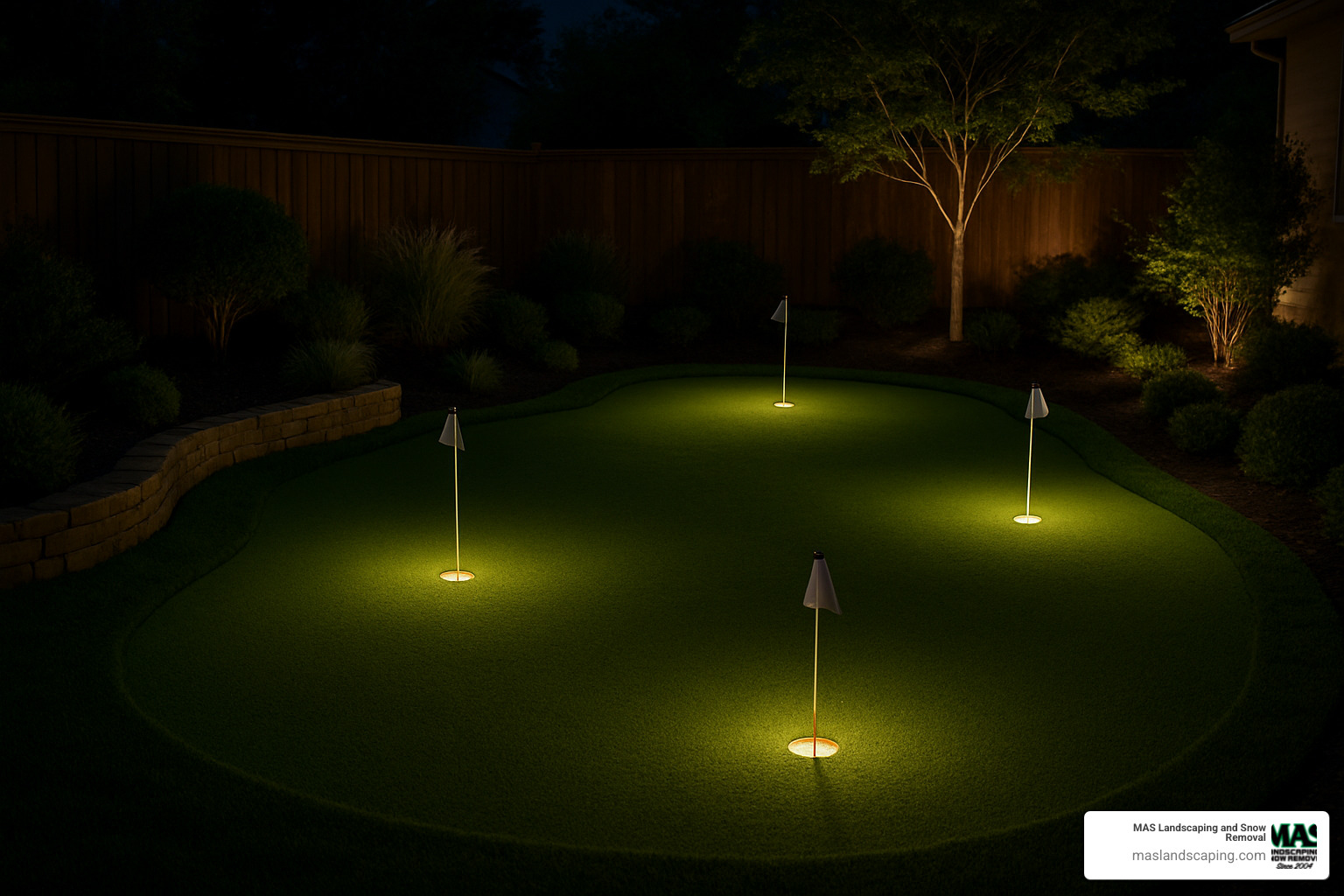
The finishing touch? Regulation cups with flags add authenticity and functionality. Our premium options include LED-illuminated cups that extend your putting sessions into the evening hours – perfect for unwinding after work.
According to industry data, backyard putting greens cost between $10 and $30 per square foot, depending on size, design, and features. While this represents a premium over standard turf installation, many golf enthusiasts find the convenience and practice benefits well worth the investment.
Safety & Comfort Extras
Creating a turf space that’s not just beautiful but comfortable and safe requires attention to the details that might not be immediately visible but make all the difference in daily use.
Playground padding provides crucial protection in areas where falls are possible. Similar to what’s used beneath commercial playgrounds, this specialized underlayment significantly reduces impact forces. For families in Malden and surrounding communities, this extra layer of safety gives parents peace of mind while children play freely.
Summer heat is a real consideration with any artificial surface. Temperature-reducing infill like T°Cool® uses evaporative cooling technology to make a noticeable difference in surface temperature. “Before we added the cooling infill, our turf would get too hot for the kids by midday,” explained one Everett homeowner. “Now they can play comfortably even during the hottest summer afternoons.”
Advanced turf products now incorporate UV-reflective blade technology that bounces ultraviolet rays away from the surface. This innovation serves a dual purpose – reducing heat buildup while also extending the turf’s color retention and lifespan. For long-term value, this feature offers significant benefits.
Beyond pet applications, antimicrobial treatments provide hygiene benefits for all users, making them particularly valuable in high-traffic areas or where children play frequently. These treatments inhibit the growth of bacteria, mold, and mildew, creating a cleaner surface for everyone to enjoy.
While these safety and comfort features typically add 15-30% to your base installation cost, they provide improved usability and peace of mind that many families find invaluable, especially in our New England climate where comfort in all seasons matters.
Saving Money Without Cutting Corners
Let’s face it—quality artificial turf isn’t cheap. But that doesn’t mean you can’t find legitimate ways to trim your artificial turf installation estimate without sacrificing the quality you deserve.
Think of it like buying a car—there are smart ways to save (like shopping during end-of-year sales) and risky shortcuts (like skipping oil changes) that’ll cost you more in the long run. The same principle applies to your turf project.
“I tell homeowners there are good corners to cut and bad corners to cut,” explains one installer with 15 years of experience. “The trick is knowing the difference.”
Many of our Saugus and Lynnfield customers have successfully reduced their costs with these smart strategies:
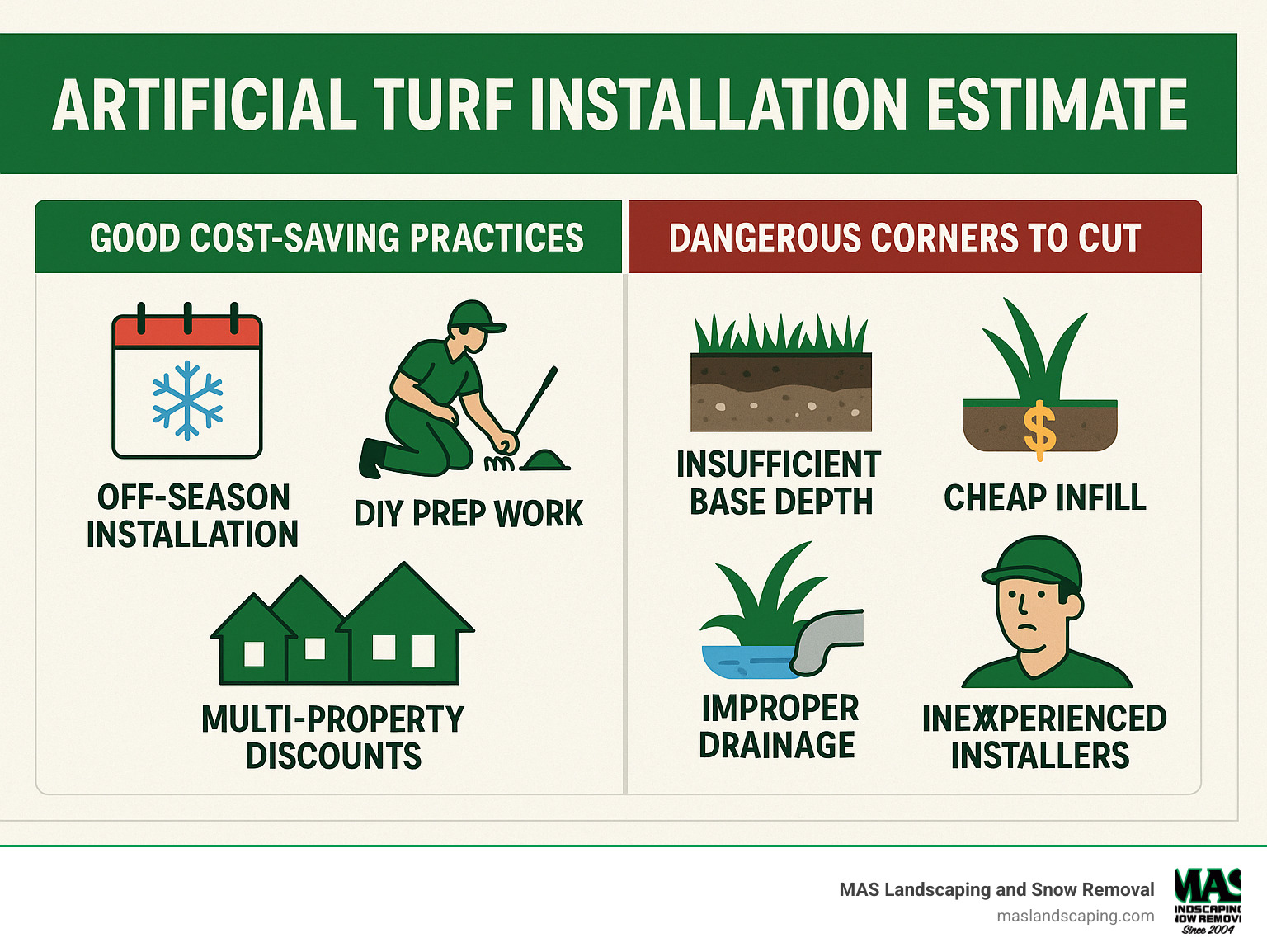
Bulk purchasing can lead to significant savings. If your neighbors in Melrose or Everett are also considering turf, why not coordinate your purchases? Suppliers often offer volume discounts that can save everyone 10-15% on materials. We’ve seen entire cul-de-sacs in Lynnfield transform their yards this way, with everyone benefiting from group buying power.
DIY prep work puts some sweat equity into your project. While the technical aspects of installation require professional expertise, many homeowners can handle preliminary tasks like removing existing grass, basic excavation, and clearing debris. Just be sure to get clear guidance on proper depths and measurements—your installer should be happy to provide this.
Off-cut bargains can be golden for smaller projects. Those remnants from larger jobs—perfectly good turf that would otherwise go to waste—can be perfect for dog runs, side yards, or small play areas. Ask us about available remnants when you request your artificial turf installation estimate.
Fall/winter scheduling is perhaps the easiest way to save. Between November and March, our installation calendar in New England typically has more openings, and we’re often able to offer off-season rates. The bonus? Your turf will be ready to enjoy the moment spring arrives.
Rebate programs are worth investigating. Some water districts offer financial incentives for replacing water-hungry lawns with artificial turf. While less common in Massachusetts than in drought-prone states, it’s always worth checking with your local water authority about available programs.
Red Flags in Low-Ball Bids
When you receive an artificial turf installation estimate that seems too good to be true, your instincts are probably right. We’ve seen too many homeowners learn this lesson the hard way.
“There’s no magic in the turf business—cheap quotes mean corners cut,” admits one industry veteran. “The materials cost what they cost, and proper installation takes time.”
Watch for these warning signs that someone’s cutting corners:
Thin base layer proposals should raise immediate concerns. Professional installations require 3-4 inches of properly compacted base material. Some contractors slash costs by installing just 1-2 inches, leading to inevitable drainage problems, settling, and an uneven surface within months.
Skipped weed barrier is another common shortcut. While there’s some debate about fabric versus liquid herbicide approaches, eliminating weed prevention entirely is asking for trouble. Those persistent little weeds will find a way through eventually.
Cheap infill might not be obvious on your estimate, but it makes a huge difference in performance. Basic silica sand costs far less than specialized products like Envirofill, but lacks the antimicrobial properties crucial for pet areas and can compact over time, reducing drainage efficiency.
Minimal seaming materials lead to visible seams and separation. Proper installation requires generous application of seam tape and adhesive—skimping here saves a contractor money but creates headaches for you down the road.
Unpaid or unlicensed crews represent perhaps the most problematic corner-cutting of all. Some companies use day laborers without proper insurance or training, creating significant liability risks for homeowners and often delivering subpar workmanship.
At MAS Landscaping, we believe in transparent pricing that accounts for all necessary components of a proper, long-lasting installation.
Smart Budget Hacks
Beyond the obvious savings strategies, these insider approaches can help manage costs while maintaining quality:
Reuse existing base materials when possible. If you’re converting a patio or hardscape area to turf, the existing base may need only minor modifications rather than complete replacement. This can save substantially on excavation and material costs.
Phased installation makes larger projects more manageable. Breaking your project into logical segments allows you to spread costs over time while still working toward your complete landscape vision. Perhaps start with the backyard this year and add the front yard next season.
Strategic material selection optimizes your budget without compromising appearance. Using premium turf in high-visibility areas while selecting more economical options for less visible sections gives you the best of both worlds. We can help you identify where to invest and where to economize.
Simplified edges reduce waste and labor time. While curved edges create an appealing, natural look, they also generate more material waste and require more cutting time. Where aesthetically acceptable, incorporating straight edges into your design can yield meaningful savings.
Financing options can make your project more affordable. Many homeowners are surprised to learn that artificial turf often qualifies for home improvement financing. Breaking the cost into monthly payments can make that dream yard accessible without waiting years to save up.
One Malden customer put it perfectly: “We found ways to save without sacrificing quality. The result looks exactly like what we wanted, but we managed to stay within our budget by following MAS Landscaping’s suggestions for smart economies.”
By implementing these strategies, you can manage your artificial turf installation estimate while ensuring a quality result that will perform beautifully for years to come.
Frequently Asked Questions about Artificial Turf Costs
How long does quality turf really last?
When homeowners ask about artificial turf installation estimates, they’re often wondering if the investment is worth it in the long run. The good news is that quality artificial turf typically lasts 12-15 years, with many installations continuing to look great and perform well for up to 20 years or more.
Think of artificial turf like a good roof – its lifespan depends on several key factors. Traffic intensity plays a big role – areas where the kids and dogs play daily will naturally show wear sooner than decorative areas. Your maintenance routine matters too – just like any investment, a little care goes a long way. Taking time to brush the fibers occasionally and remove debris keeps your turf looking fresh and extends its life.
“Artificial grass lasts 10 to 20 years with very little maintenance,” notes one industry expert I spoke with recently. That’s a significant return on your initial investment.
Here in New England, where we at MAS Landscaping work, turf faces unique challenges – from heavy snow loads to spring thaw cycles and autumn leaf debris. We design our installations specifically to handle these regional factors, using proper drainage and base preparations that maximize your turf’s lifespan through our sometimes challenging seasons.
Is DIY installation ever cheaper in the long run?
It’s tempting to watch a few YouTube videos and tackle artificial turf installation yourself to save money. While DIY installation can reduce your upfront costs, the long-term economics rarely work in your favor.
The reality is that proper turf installation requires specialized equipment – compactors, sod cutters, power brooms – that quickly add up in rental fees. Without professional experience, you’ll likely waste more material through cutting errors. But the biggest hidden cost comes from drainage issues that often plague DIY installations. When water doesn’t drain properly, you’re looking at expensive repairs down the road.
“The most affordable way to install artificial grass? Use a thin layer of decomposed granite, durable weed fabric, and staple turf to bender boards with galvanized staples,” explained one turf professional. But this shortcut approach significantly compromises drainage and stability compared to professional methods.
According to industry data, “DIY installation of artificial grass can cost between $2,000 and $4,000, not including the cost of the turf itself.” These savings come with significant risks, including potentially voided warranties if manufacturer guidelines aren’t followed precisely.
At MAS Landscaping, we sometimes recommend a middle-ground approach: homeowners handle some preparation tasks under our guidance, followed by professional installation of the base and turf. This hybrid method can provide some cost savings while ensuring the critical components are properly installed.
How does artificial turf compare to natural grass over 15 years?
When calculating the true cost comparison between artificial turf and natural grass, you need to think long-term. The numbers tell an interesting story when you look at a typical 15-year period for a 2,500 square foot lawn.
Natural grass comes with ongoing costs that many homeowners underestimate. Beyond the initial $2,500-$5,000 installation, you’re looking at water bills ranging from $15,000-$25,000 over 15 years (varying significantly by region). Add in fertilizer and treatments ($4,500-$7,500), mowing equipment purchase and maintenance ($2,000-$4,000), plus either professional lawn services or the value of your own time spent maintaining it ($15,000-$30,000), and the total reaches a surprising $39,000-$71,500 over 15 years.
By contrast, artificial turf front-loads the costs. After the initial installation of $22,500-$30,000, your 15-year expenses drop dramatically to just occasional cleaning water ($500-$1,000) and minimal maintenance like brushing and infill refreshing ($3,750-$5,250). That brings the 15-year total to $26,750-$36,250 – potentially half the cost of natural grass.
“Artificial grass installation can pay for itself in three to five years due to savings on water and maintenance,” according to one analysis I reviewed. The break-even point varies based on your local water costs and lawn care expenses.
Beyond the dollars, there’s something that many of our Saugus, Everett, and Malden customers value even more – time. Imagine reclaiming those weekend hours previously spent mowing, edging, fertilizing, and watering. For busy families and professionals, this freedom represents significant value that doesn’t show up in the financial calculations.
Conclusion
When you’re ready to transform your outdoor space, understanding your artificial turf installation estimate is the first step toward making a smart investment. While the upfront cost might make you pause, you’re not just buying grass – you’re investing in countless weekends free from mowing, watering, and fertilizing.
At MAS Landscaping and Snow Removal, we’ve helped countless homeowners throughout Saugus, Everett, Lynnfield, and Malden find the perfect balance between quality and value. Our deep familiarity with New England’s unique climate challenges – from summer heat waves to winter freeze-thaw cycles – ensures your turf will look beautiful and perform flawlessly year-round.
One thing we’ve learned over the years? The cheapest estimate rarely delivers the best value. Quality installation demands proper materials, experienced crews, and meticulous attention to details like drainage patterns and secure edging. When these elements are compromised to cut costs, problems inevitably surface – often within the first year.
We always recommend gathering multiple quotes and asking detailed questions about what’s included. Take time to feel sample materials and ask to see completed projects in your area. The more informed you are, the better your decision will be. And frankly, we prefer working with homeowners who understand what goes into a professional installation.
While we’ve shared industry averages and general pricing guidance in this article, your specific property will have unique requirements that affect your final estimate. Sloped yards, access challenges, drainage issues – these factors all influence the bottom line in ways that can’t be calculated with a simple online calculator.
We’d be happy to provide you with a free, no-obligation on-site estimate custom specifically to your property’s needs. Our transparent approach means you’ll understand exactly what you’re paying for – no surprises, no hidden fees.
For more information about our comprehensive landscape services, including artificial turf installation, visit our page on full-service landscape installation.
Your artificial turf investment will reward you with years of enjoyment – a lush, green space that stays beautiful through mud season, summer droughts, and everything in between. With thoughtful planning, quality materials, and professional installation, you’ll wonder why you didn’t make the switch sooner.