



Best artificial grass for dogs: Safe & Smart 2025
Why Dog Owners Are Turning to Artificial Grass
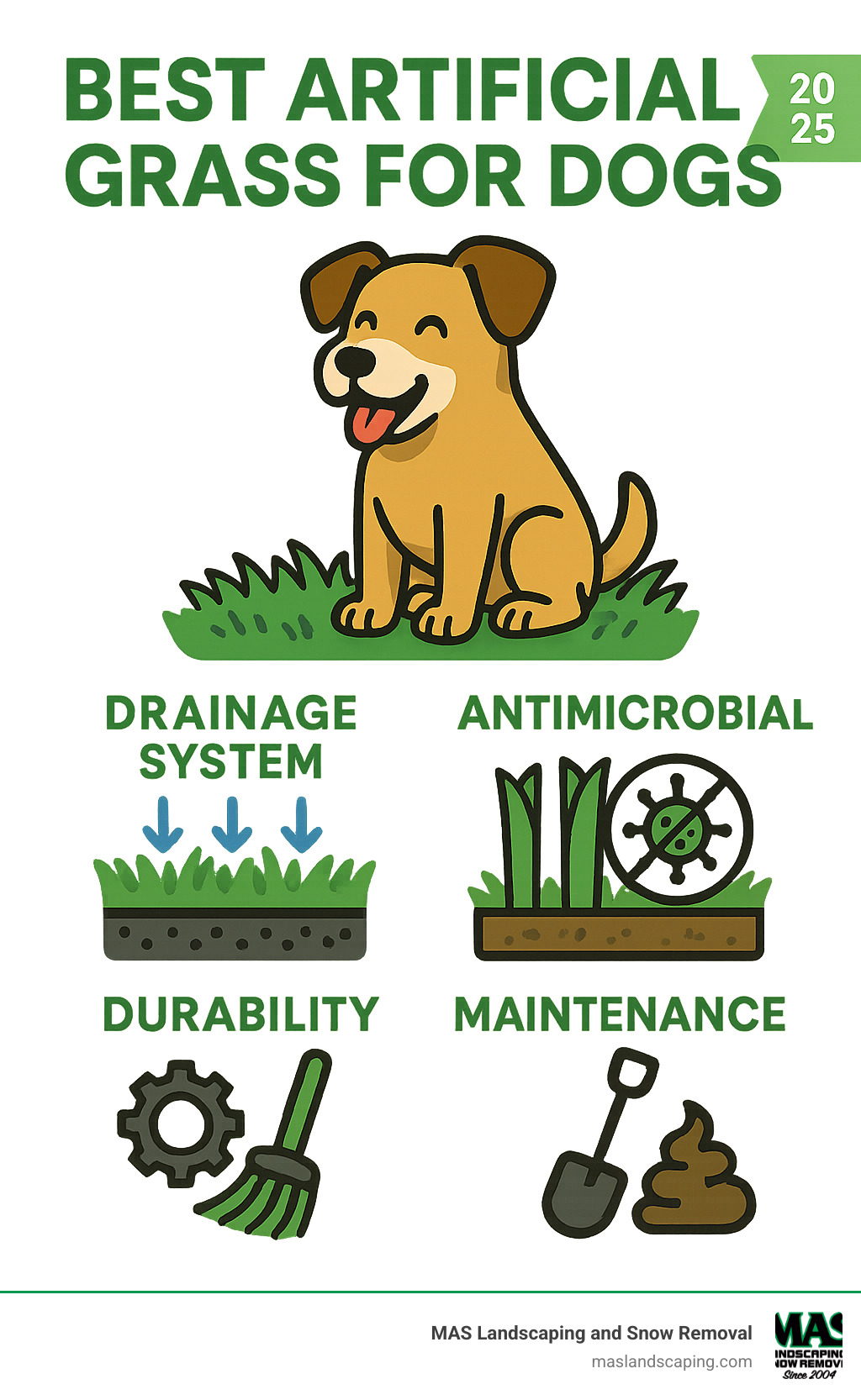
Finding the best artificial grass for dogs starts with understanding what makes pet-friendly turf different from standard synthetic grass. The top options feature superior drainage systems, antimicrobial properties, and durable construction designed to handle everything your furry friend can dish out.
Key features to look for in the best artificial grass for dogs:
- Superior drainage – ProFlow™ technology or similar systems that drain 400+ gallons per hour
- Antimicrobial protection – Built-in technology that reduces ammonia odor by up to 99%
- Durable construction – Dual fiber or reinforced backing that’s 40% more durable than standard turf
- Pet-safe materials – Lead-free, non-toxic synthetic fibers with UV protection
- Optimal pile height – Shorter blades (1-1.5 inches) for easier waste cleanup
If you’re a dog owner in the Greater Boston area, you know the struggle. Your beautiful lawn quickly becomes a minefield of brown spots where your pup has done their business. Muddy paws track dirt through your house after every rainstorm. And don’t get started on the holes your dog digs when they’re bored.
Natural grass creates several headaches for pet owners:
- Urine burns create unsightly brown spots
- Constant mud after rain or watering
- Holes from digging destroy landscaping
- Fleas, ticks, and other pests thrive in grass
- Expensive reseeding and lawn treatments
Artificial grass solves these problems while giving your dog a safe, comfortable surface to play on year-round. Modern pet-friendly turf systems use advanced drainage technology and antimicrobial infill to stay clean and odor-free, even with heavy use.
Simple guide to best artificial grass for dogs:
Key Features of the Best Artificial Grass for Dogs
When we help homeowners in Everett, Lynnfield, Malden, and other nearby areas choose the best artificial grass for dogs, we focus on several crucial features that ensure durability, safety, cleanliness, and aesthetics. It’s not just about looking green; it’s about creating a truly pet-friendly environment that can handle everything your furry friend throws at it.
Superior Drainage for Pet Waste Management
Here’s the thing about dogs – they don’t exactly use the bathroom on schedule. That’s why the drainage system is absolutely critical when choosing the best artificial grass for dogs. Without proper drainage, you’ll end up with pooling liquids, nasty odors, and bacteria growth that nobody wants in their backyard.
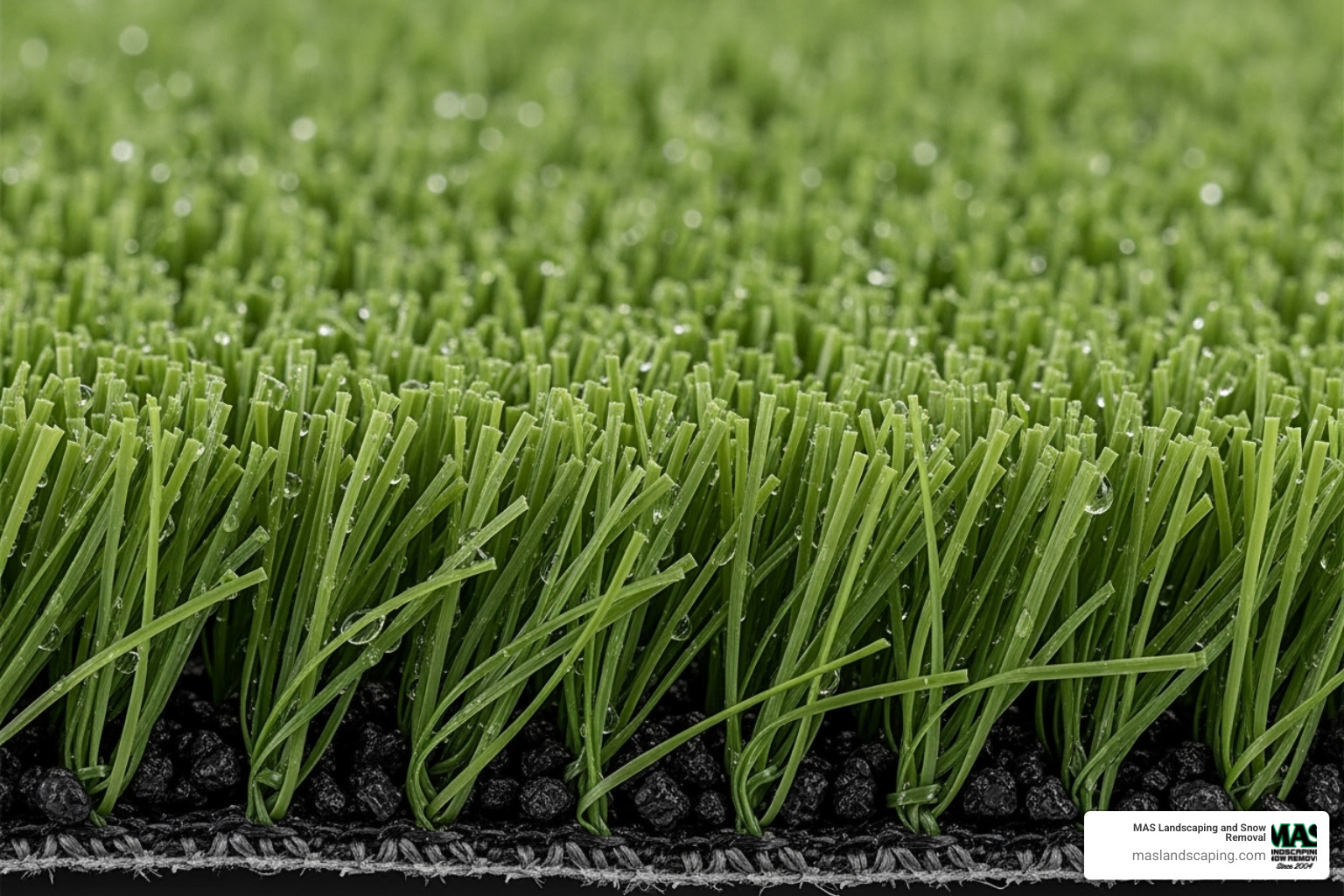
The magic happens in the backing technology. Instead of simple perforated holes that can clog over time, top-quality pet turf uses permeable backing with flow-through technology. This advanced system allows liquids to pass through quickly and completely, preventing any standing water or waste buildup.
Systems with ProFlow™ technology are particularly impressive, boosting drainage capacity by 400% compared to regular turf. We’re talking about handling up to 437 gallons per hour – that’s enough to handle heavy pet use and even the worst New England downpours without missing a beat.
This superior drainage doesn’t just prevent pooling; it actively reduces bacteria growth that causes those awful ammonia smells. Your nose (and your neighbors) will thank you. For more details on how we install these drainage systems properly, check out our comprehensive guide on artificial grass installation.
Durability and Material Composition for Active Paws
Let’s be honest – dogs aren’t gentle on lawns. They run, jump, dig, and play with endless energy. That’s why the best artificial grass for dogs needs to be built like a tank, but still feel comfortable under those precious paws.
Pile height is crucial here. We typically recommend turf with shorter pile (around 1 to 1.5 inches) for pet areas. It might seem counterintuitive, but shorter blades make cleaning much easier and prevent waste from hiding deep in the fibers. Nobody wants to play hide-and-seek with dog poop.
The face weight tells you how dense and resilient the turf is. Think of it as the difference between a cheap carpet and a luxury one – higher face weight means more fibers per square yard, which translates to better durability and a more natural feel.
Material composition makes a huge difference too. Quality pet turf combines polyethylene fibers for softness and realism with polypropylene thatch for added resilience. Some innovative designs even use tubular yarn with special blade shapes that improve airflow and provide cooling properties – because hot paws are unhappy paws.
Advanced dual-fiber constructions can be 40% more durable than standard turf, meaning your investment will keep looking great even with the most enthusiastic four-legged athletes.
The Role of Infill in Odor Control and Comfort
If drainage is the foundation of great pet turf, then infill is the secret weapon for odor control. Most people don’t realize how important this hidden component is, but trust us – it’s a game-changer.
Infill serves multiple purposes: it helps support the blades so they stand upright, provides cushioning for comfort, and most importantly for pet owners, it manages odors like a champ. The right infill can mean the difference between a fresh, clean-smelling yard and one that makes visitors wrinkle their noses.
Pet-friendly infill materials like Zeolite are naturally porous and excel at odor absorption. They trap moisture and ammonia before they can turn into those unpleasant smells that make you avoid your own backyard.
Even better are infills with antimicrobial coating technology. Products featuring Microban® technology work around the clock to inhibit bacteria, mold, and mildew growth. The results speak for themselves – up to 99% ammonia reduction from pet urine.
This isn’t just about eliminating smells; it’s about creating a healthier environment for your pets and family. The antimicrobial protection provides cooling properties while maintaining a hygienic surface that stays fresh between cleanings.
Artificial Grass vs. Natural Lawn: A Comparison for Pet Owners
As a dog owner, you’ve probably stood in your yard wondering if there’s a better way. Maybe you’re tired of the endless cycle of reseeding bare patches, or perhaps you’re frustrated with muddy paw prints throughout your house. The good news? You’re not alone, and there’s a solution that’s helping pet owners across Saugus, Chelsea, and beyond reclaim their outdoor spaces.
When we help families choose between natural grass and the best artificial grass for dogs, we always start with an honest comparison. Both options have their place, but for busy pet owners who want a beautiful, functional yard, artificial turf often emerges as the clear winner.
| Feature | Artificial Grass for Dogs | Natural Grass Lawn |
|---|---|---|
| Maintenance | Low: No mowing, watering, fertilizing, or pest control; easy waste cleanup. | High: Regular mowing, watering, fertilizing, weeding, pest control, reseeding. |
| Durability | High: Designed to withstand heavy pet traffic, digging, and urine burns. | Moderate: Prone to brown spots, digging holes, wear and tear from pet activity. |
| Cost (Upfront) | Higher initial investment for installation. | Lower initial cost for seeding or sodding. |
| Cost (Long-term) | Lower: Significant savings on water, chemicals, maintenance equipment, and labor. | Higher: Ongoing costs for water, fertilizer, pesticides, repairs, and professional services. |
| Pet Safety | Non-toxic materials, no pesticides/herbicides, fewer pests (fleas/ticks). | Requires chemicals for maintenance; can harbor pests; some plants are toxic. |
| Aesthetics | Uniformly green and lush year-round; no mud or brown spots. | Can be patchy, muddy, and discolored; susceptible to weather and pet damage. |
The Unbeatable Benefits of a Pet-Friendly Turf
Picture this: your dog races outside after a rainstorm, plays for an hour, and comes back inside with completely clean paws. No muddy footprints. No grass stains on their fur. No frantic toweling off at the door. This isn’t a dream—it’s what happens when you install the best artificial grass for dogs.
Our clients in Medford and Revere tell us this “no mud” benefit alone has transformed their daily routine. But the advantages go much deeper than clean floors.
Artificial turf eliminates digging because there’s simply nothing to dig. The durable backing makes it nearly impossible for even the most determined excavator to tear through, saving your landscaping and your sanity. Those unsightly brown urine spots that plague natural lawns? They’re a thing of the past with properly installed pet turf that drains efficiently without discoloration.
Here’s something that might surprise you: artificial grass creates a pest-unfriendly environment. Fleas and ticks struggle to survive on synthetic surfaces, giving your dog a safer place to play and reducing your need for chemical treatments.
The environmental benefits are impressive too. You’ll conserve thousands of gallons of water annually since artificial grass needs no irrigation. There’s no need for fertilizers, pesticides, or herbicides, creating a healthier space for your entire family. The result is a consistently green, lush lawn year-round, regardless of weather or how enthusiastically your dog enjoys it.

Potential Downsides and How to Mitigate Them
We believe in giving our Lynnfield and Melrose clients the complete picture, including potential challenges you might face with artificial turf. The good news? Every concern has a practical solution.
Heat retention is the most common worry we hear. Yes, artificial turf can get warmer than natural grass on hot summer days. But this is easily managed with cooling infills that help dissipate heat, providing adequate shade through trees or structures, and giving the surface a quick rinse with your garden hose on particularly hot days. Your dog’s comfort is always the priority.
The higher initial investment compared to seeding or sodding is real, but it’s important to think long-term. Most families find that the elimination of water bills, lawn care equipment, fertilizers, and professional maintenance services makes artificial turf more cost-effective over time.
Odor concerns sometimes arise, but they’re entirely preventable with proper care. Modern pet-friendly turf features excellent drainage and antimicrobial properties, but regular cleaning remains essential. We’ll walk you through simple maintenance routines that keep everything fresh.
Some homeowners worry about environmental impact from plastic-based materials. While these concerns are valid, it’s worth considering that artificial grass also offers significant environmental benefits through dramatic water conservation and the elimination of chemical lawn treatments.
If you’re weighing the financial aspects, our detailed guide on cost of grass installation can help you understand all the factors involved in making this investment.
Safety, Maintenance, and Cost: What Every Dog Owner Needs to Know
As a dog owner in the Greater Boston area, you want the peace of mind that comes with knowing your pet is safe, your yard is easy to maintain, and your investment makes financial sense. When it comes to the best artificial grass for dogs, we understand these concerns completely – and we’re here to address each one.
Is Artificial Grass Genuinely Safe for Dogs?
The short answer? Absolutely. But we know you want more than our word for it, so let’s dive into the specifics.
The best artificial grass for dogs is manufactured using non-toxic materials that are completely safe for your furry friends. These products carry lead-free certifications, which means you don’t have to worry about harmful heavy metals that could affect your pet’s health. Unlike some older artificial turf products from decades past, modern pet-friendly turf is specifically designed with safety as a top priority.
Here’s what makes artificial grass safer than many natural lawn alternatives: it eliminates the need for pesticides, herbicides, and fertilizers that can be harmful to pets. Think about it – no more worrying about whether your dog is rolling around in chemicals or tracking toxic substances into your home on their paws.
For dogs with allergies, artificial turf can be a game-changer. It reduces allergens significantly since it doesn’t produce pollen like natural grass does. Plus, you’ll never have to worry about your curious pup munching on toxic plants that might sprout up in a natural lawn. If you’re ever concerned about which plants are dangerous for dogs, we always recommend checking the ASPCA’s database of poisonous plants to stay informed.
Simple Maintenance for a Lasting, Odor-Free Lawn
One of the biggest myths about artificial grass is that it’s completely maintenance-free. While it’s definitely low-maintenance compared to natural grass, keeping your pet-friendly turf in top condition does require some basic care – but don’t worry, it’s much simpler than you might think.
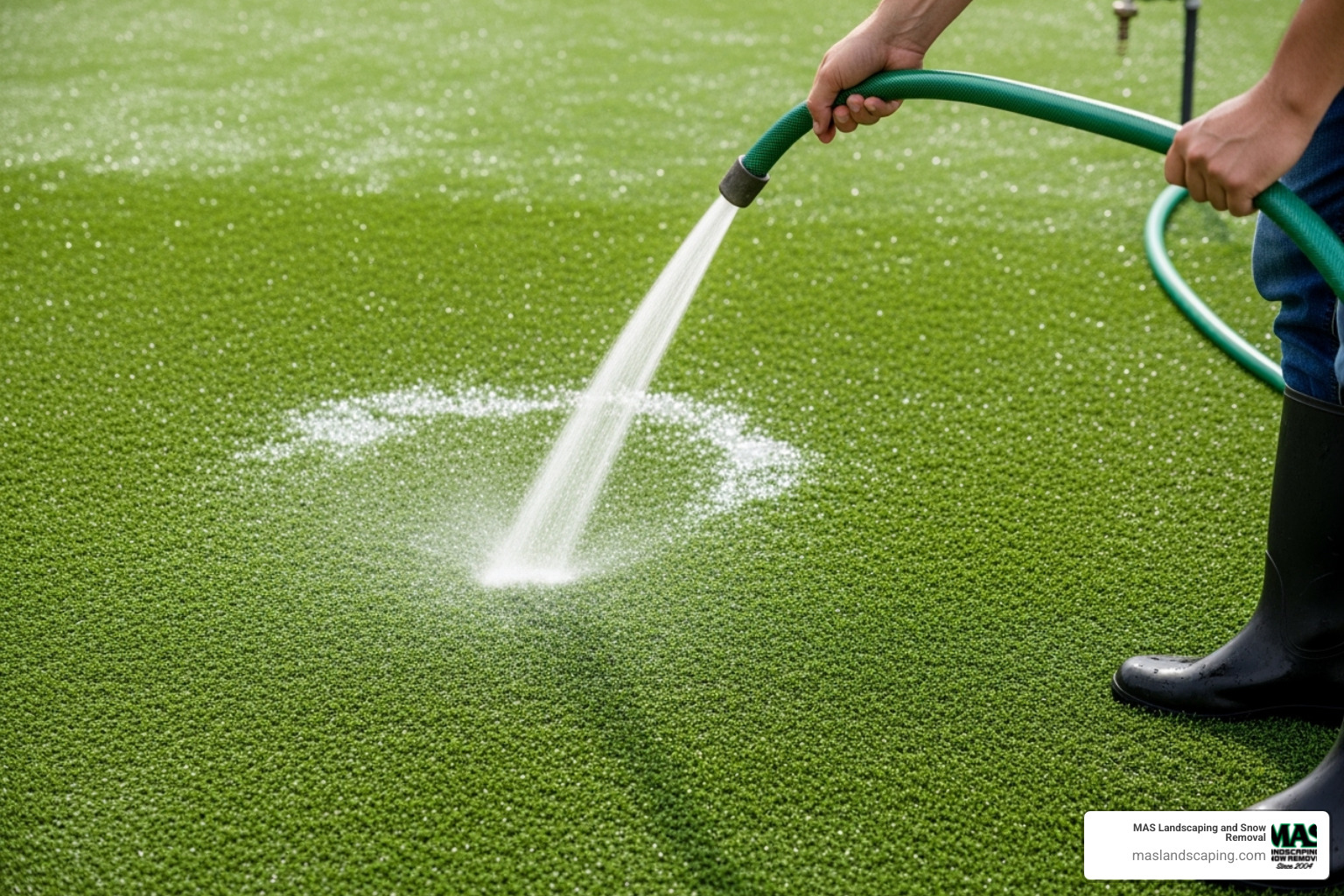
The key to maintaining fresh, odor-free artificial grass starts with establishing a simple cleaning routine. When your dog leaves solid waste, simply scoop it up just like you would on natural grass. For liquid waste, the superior drainage system in quality pet turf does most of the work for you, but a weekly rinse with your garden hose helps flush away any lingering odors and keeps everything fresh.
For those times when you want to do a deeper clean, pet-safe enzyme cleaners are your best friend. These specialized products actually break down the uric acid crystals in pet urine, eliminating odors at their source rather than just covering them up. This is especially helpful if you have multiple dogs or a particularly active pup who spends lots of time outside.
Don’t forget about the appearance of your turf! Over time, especially in high-traffic areas where your dog loves to play, the grass blades might start to lie flat. A quick brushing with a stiff broom every few weeks will help the blades stand upright again, keeping your lawn looking lush and new.
Following these straightforward steps ensures your artificial lawn stays clean, inviting, and odor-free for years to come. For more comprehensive maintenance tips for all types of lawns, check out our guide on lawn maintenance.
Understanding the Cost of the Best Artificial Grass for Dogs
We get it – the upfront investment in artificial grass can feel significant. But here’s the thing: when you choose the best artificial grass for dogs, you’re making a long-term investment that often pays for itself over time through reduced maintenance costs and increased enjoyment of your outdoor space.
Several factors influence the total cost of your artificial grass project. The quality of the turf itself makes a big difference – pet-specific turf with advanced drainage systems and antimicrobial properties naturally costs more than basic artificial grass, but the benefits for dog owners are substantial. The type of infill you choose also impacts pricing, especially if you opt for specialized antimicrobial infills that help control odors.
Labor costs vary based on the complexity of your installation and the amount of site preparation needed. Speaking of which, base preparation is crucial for proper drainage and longevity of your artificial grass. This might involve excavation and laying down layers of aggregate and gravel – it’s not the most glamorous part of the process, but it’s essential for a successful installation that will last for years.
Based on general industry data we’ve researched online, artificial grass installation typically ranges from approximately $5 to $20+ per square foot installed, including both materials and labor. Please note that these are average costs based on internet data and are not actual costs for MAS Landscaping – every project is unique, and we provide personalized quotes based on your specific needs and property characteristics.
To better understand what goes into pricing and get a clearer picture of the investment involved, take a look at our detailed breakdown of artificial turf installation cost per square foot.
Frequently Asked Questions about Artificial Grass for Dogs
As professional landscapers serving dog owners throughout Greater Boston, we hear the same questions time and again. Whether you’re in Everett dealing with muddy spring weather or in Malden trying to maintain a pristine yard, these concerns about the best artificial grass for dogs come up in nearly every consultation.
Let’s address the big three questions that keep pet owners up at night.
Can dogs pee and poop on artificial grass?
Absolutely! This might seem like an obvious question, but it’s actually the most important one to get right. The best artificial grass for dogs isn’t just regular turf with a fancy label – it’s engineered specifically to handle everything your furry friend dishes out.
When your dog relieves themselves on quality pet turf, the advanced permeable backing does the heavy lifting. Urine flows directly through the grass fibers, through the backing, and into the carefully prepared drainage system below. No pooling, no mess, no problem.
Solid waste cleanup is even simpler – just scoop it up like you would on natural grass. The beauty is that high-quality pet-friendly turf resists staining, so you won’t end up with those telltale brown spots that plague natural lawns. Your yard stays consistently green and clean, no matter how many times your dog uses their favorite spot.
How do you stop artificial grass from smelling of dog urine?
Here’s where the magic really happens. Preventing odors isn’t just about one thing – it’s about getting several elements working together like a well-orchestrated team.
Proper drainage forms the foundation of odor control. When urine drains quickly through the turf instead of sitting on the surface, you’ve already won half the battle. But the real hero is often the specialized infill material. Products like Zeolite work like tiny sponges, absorbing ammonia molecules before they can turn into those nose-wrinkling smells.
Even better, antimicrobial infills with Microban® technology actively fight the bacteria that cause odors. We’re talking about scientifically proven odor reduction – up to 99% less ammonia smell.
Your part in this partnership is beautifully simple. Regular rinsing with your garden hose keeps everything fresh, especially in your dog’s favorite bathroom spots. For deeper cleaning, pet-safe enzyme cleaners break down the organic compounds that cause persistent odors.
The secret sauce? Professional installation that gets the drainage layers and infill system right from day one. When everything works together properly, odor control becomes effortless.
Does artificial grass get too hot for dogs’ paws?
This is a legitimate concern, especially during those sweltering Boston summers. Artificial turf can indeed get warm – sometimes warmer than natural grass – but it doesn’t have to be a deal-breaker for your dog’s comfort.
Smart turf selection makes a huge difference. Modern pet-friendly grass often features cooling technology like tubular yarn shapes that improve airflow and reduce heat buildup. Light-colored infills reflect more sunlight than darker materials, keeping surface temperatures more manageable.
Strategic shade planning transforms your yard into a comfortable retreat. Whether it’s existing trees, a pergola, or shade sails, giving your dog options during the hottest parts of the day is always wise.
Here’s our favorite quick fix: a simple rinse with the garden hose. The excellent drainage means water won’t puddle, but it will instantly cool the surface temperature. Your dog’s paws will thank you, and the relief is immediate.
The key is thinking ahead and planning for comfort. With the right turf selection and simple management strategies, heat concerns become a minor consideration rather than a major obstacle.
Conclusion: Creating the Perfect Pet Paradise
Choosing the best artificial grass for dogs isn’t just about upgrading your lawn—it’s about changing your entire relationship with your outdoor space. After years of installing pet-friendly turf throughout Greater Boston, we’ve seen how the right artificial grass can turn a muddy, patchy yard into a pristine pet paradise.
The benefits speak for themselves: superior drainage that handles even the most enthusiastic marking sessions, antimicrobial technology that keeps odors at bay, and durable construction that laughs in the face of enthusiastic diggers. Your dog gets a safe, comfortable surface to play on year-round, while you get to say goodbye to brown spots, muddy paw prints, and weekend lawn maintenance.
But here’s the thing—professional installation is absolutely crucial to open uping these benefits. The most advanced artificial grass in the world won’t perform properly without the right base preparation and drainage system underneath. A properly installed base with adequate drainage layers ensures your investment will last for years while maintaining its odor-fighting and aesthetic properties.
That’s where our local expertise makes all the difference. At MAS Landscaping, we’ve been serving pet owners in Saugus, Everett, Lynnfield, Malden, and surrounding Massachusetts communities for years. We understand the unique challenges of New England weather and the specific needs of active dogs. Every installation we complete is backed by our commitment to quality workmanship and personalized service.
Ready to give your furry friend the ultimate outdoor playground while reclaiming your beautiful, hassle-free lawn? Transform your yard with a professional artificial grass installation from MAS Landscaping. Your dog will thank you, and so will your weekend schedule.
