




Best Fertilizer for New Sod: Top 5 Essential Tips 2024
Best fertilizer for new sod is crucial for ensuring a vibrant, healthy, and long-lasting lawn. Once you’ve successfully installed your new sod, understand that fertilization plays a key role in its development. Here’s a quick look at why choosing the right fertilizer matters:
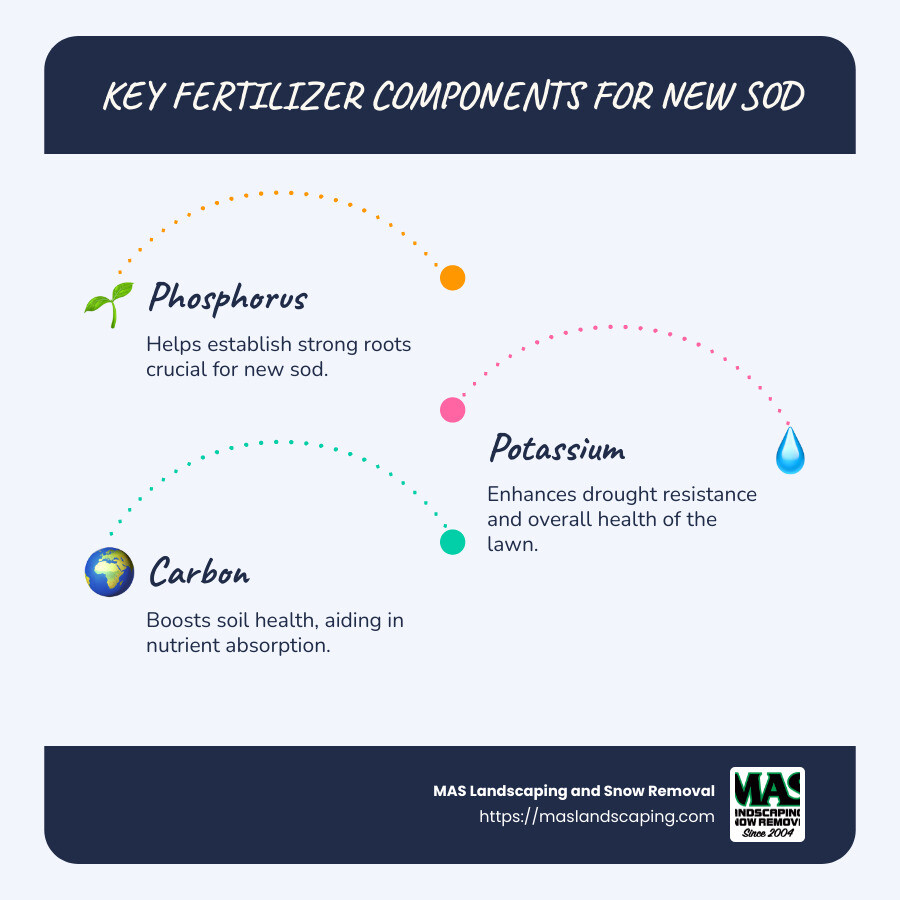
- Phosphorus: Helps establish strong roots.
- Potassium: Improves drought resistance and overall health.
- Carbon: Boosts soil health, aiding in nutrient absorption.
Caring for new sod goes beyond merely watering and mowing. Fertilization is a fundamental part of the process. It provides essential nutrients that support strong root establishment—a critical step in changing your yard into a lush, green space. A newly laid sod, without the right nutrients, may struggle to adapt, resulting in weak roots and poor growth.
Whether you’re a homeowner in Boston or a business owner seeking to lift your property’s curb appeal, understanding the importance of fertilization can save you time and effort later on. The first few weeks after sod installation are vital. Choosing the right fertilizer can ensure your lawn not only survives but thrives.
Understanding Fertilizer Components
To nurture your new sod into a lush, vibrant lawn, understanding the core components of fertilizer is crucial. Each component plays a unique role in the health and growth of your grass.
Nitrogen (N)
Nitrogen is like a growth booster for your lawn. It helps grass grow quickly and become lush and green. But be careful! Too much nitrogen can lead to rapid growth that the roots can’t support, making your sod weak and prone to disease. For new sod, it’s best to use a balanced fertilizer with moderate nitrogen levels to avoid overwhelming the young grass.
Phosphorus (P)
Phosphorus is essential for establishing strong roots. It helps with energy transfer in plants, which is vital for root development. A deficiency can leave your sod looking discolored and struggling to take hold. Starter fertilizers high in phosphorus are ideal for new sod, ensuring those roots dig deep and hold strong.
Potassium (K)
Potassium is the protector of your lawn. It makes grass more resistant to drought, disease, and stress. Think of it as the immune system booster for your sod. Adequate potassium levels help grass build thicker cell walls, which is crucial for enduring tough weather conditions, whether it’s the heat of summer or the chill of winter.
Iron (Fe)
Iron is a lesser-known but vital component for lush, green grass. It helps in the production of chlorophyll, which is necessary for photosynthesis. While not needed in large amounts, a little iron can make a big difference in the color and health of your lawn.
Organic Matter
Organic matter in fertilizers comes from natural sources like compost and manure. It enriches the soil, improving its structure and water retention. Organic fertilizers release nutrients slowly, providing a steady supply of nutrition to your sod over time. They also promote beneficial microbial activity in the soil, which can improve nutrient uptake.
By understanding these components, you can make informed decisions when selecting the best fertilizer for new sod. Proper balance and application of these nutrients will help your sod establish quickly and grow into a healthy, resilient lawn. Next, we’ll explore the best practices for applying fertilizer to ensure your new sod gets off to the best start possible.
Best Practices for Fertilizing New Sod
Once you’ve selected the best fertilizer for new sod, it’s time to focus on how to apply it effectively. Proper techniques ensure your new sod establishes strong roots and thrives. Here are the best practices to follow:
Watering Techniques
Watering is vital when laying new sod. After installation, water the sod thoroughly so it penetrates to a depth of 6 inches. This ensures the roots have enough moisture to establish themselves in the soil. Initially, your sod will require frequent watering—ideally, daily for the first two weeks. Gradually reduce the frequency as the sod takes root.
Tip: Water early in the morning to minimize evaporation and reduce the risk of fungal diseases.
Application Timing
Timing is everything when it comes to fertilizing new sod. The first application of fertilizer should occur right after installation to give your sod the nutrients it needs to start rooting. Use a starter fertilizer high in phosphorus, as this supports root development. Follow up with another application about six weeks later to maintain nutrient levels.
Remember: Avoid fertilizing during the hottest part of the day to prevent burning the grass. Early morning or late afternoon is best.
Soil Preparation
Before laying sod, preparing the soil is crucial. Proper soil preparation creates a supportive environment for your new sod to thrive. Start by removing any debris, rocks, or old grass. Next, till the soil to a depth of about 6 inches to improve aeration and drainage. Mixing in organic matter like compost will improve soil structure and nutrient content.
Pro Tip: Ensure the soil is slightly moist before laying sod. This helps the sod make better contact with the soil and reduces transplant shock.
By focusing on these best practices, you’ll set your new sod up for success. Proper watering, timely fertilizer application, and thorough soil preparation are key to establishing a lush, healthy lawn. Next, we’ll dive into choosing the right fertilizer type for your sod to ensure it receives the optimal nutrients for growth.
Best Fertilizer for New Sod
Selecting the best fertilizer for new sod is crucial for ensuring your lawn thrives. The right choice can help establish strong roots and promote healthy growth. Let’s explore the different types of fertilizers and what makes them suitable for new sod.
Choosing the Right Fertilizer Type
When it comes to fertilizers, understanding the composition is key. Fertilizers are typically categorized by their N-P-K ratio, which stands for Nitrogen (N), Phosphorus (P), and Potassium (K). For new sod, a balanced ratio is essential, but with an emphasis on phosphorus to encourage root development.
- Organic vs. Synthetic: Organic fertilizers are derived from natural sources and improve soil health over time. They release nutrients slowly, reducing the risk of over-fertilization. Synthetic fertilizers, on the other hand, provide nutrients in a readily available form, offering quicker results but requiring careful application to avoid damage.
- Liquid vs. Granular: Liquid fertilizers are easy to apply and are quickly absorbed by the grass. They are ideal for a quick nutrient boost. Granular fertilizers, however, release nutrients slowly, providing a steady supply over time, which is beneficial for sustained growth.
- Slow-release: Opting for slow-release fertilizers can be advantageous as they gradually feed the lawn, minimizing the risk of nutrient burn and promoting consistent growth.
Recommended Products for New Sod
Starter Fertilizers: These are specifically formulated to support new sod by enhancing root establishment. A good starter fertilizer will have a higher phosphorus content, which is crucial for root growth.
- Balanced N-P-K Ratios: Look for a fertilizer with a ratio like 15-15-15 or 10-20-10. These ratios provide a balanced supply of essential nutrients while focusing on phosphorus for root development.
- Seasonal Needs: Depending on the season, your sod may require different nutrient levels. In cooler weather, potassium becomes more important as it helps grass withstand temperature fluctuations. In warmer seasons, nitrogen is more critical for promoting lush, green growth.
By understanding the different types of fertilizers and their benefits, you can make an informed decision that suits your new sod’s needs. Next, we’ll explore the optimal timing for fertilizing new sod to ensure it receives the nutrients it needs when it needs them the most.
When to Fertilize New Sod
Timing is everything when it comes to fertilizing new sod. Proper timing ensures your lawn gets the nutrients it needs to establish strong roots and grow lush and green. Here’s how to get it right.
Initial Application
For new sod, the first fertilization should happen about four to six weeks after installation. This waiting period allows the sod to establish initial root contact with the soil. Use a starter fertilizer with a balanced N-P-K ratio, focusing on phosphorus to support root development. Avoid high-nitrogen fertilizers, as they can lead to rapid top growth at the expense of root establishment.
Ongoing Schedule
After the initial application, establish a regular fertilization schedule custom to the type of grass and climate. Generally, fertilizing two to three times a year is sufficient for most sod types. For Bermudagrass, which demands more nutrients, consider adding an extra application or two to keep it vibrant.
Seasonal Adjustments
- Spring: Early and late spring are ideal for fertilizing as the grass wakes up from dormancy and begins to grow. This is the time to give it a nutrient boost.
- Summer: Focus on watering and maintenance. If needed, apply a light dose of fertilizer, especially for warm-season grasses like Bermuda.
- Fall: Early fall is another good time for fertilization. It helps the grass recover from summer stress and prepares it for winter.
Fertilizing in Different Climates
- Cool Season: In cooler climates, grass such as Fescue benefits from fertilization in early spring and fall. Potassium is crucial here as it helps the grass deal with temperature changes.
- Warm Season: For warm-season grasses like Bermuda, focus on fertilizing in late spring and summer when the grass is actively growing. Nitrogen is more important during these times to promote lush growth.
Adjusting Fertilization Based on Sod Type
- St. Augustine: This type of grass requires more water and can tolerate moderate shade. Fertilize it two to three times a year, focusing on spring and fall for the best results.
- Bermuda: Known for its drought tolerance and love for full sun, Bermuda grass may need more frequent fertilization. Consider fertilizing three to four times a year to keep it green and healthy.
- Fescue: This cool-season grass thrives with spring and fall fertilization. Focus on a balanced N-P-K ratio, ensuring adequate phosphorus for root health.
By aligning your fertilization schedule with the sod type and climate, you’ll give your lawn the best chance to thrive. Next, we’ll discuss common mistakes to avoid when fertilizing new sod to ensure you’re on the right track.
Common Mistakes to Avoid When Fertilizing New Sod
Fertilizing new sod can be tricky, but avoiding some common pitfalls can make a big difference in establishing a healthy lawn. Let’s explore the most frequent mistakes and how to steer clear of them.
Over-fertilization
One of the biggest mistakes is applying too much fertilizer. New sod doesn’t need excessive nutrients, especially nitrogen, right away. Over-fertilization can lead to rapid top growth, which might look good initially but can weaken the root system. This imbalance makes the grass more susceptible to disease and stress.
Tip: Follow the recommended rates on the fertilizer package and consider using a starter fertilizer high in phosphorus to encourage root development without overwhelming the grass.
Incorrect Product Choice
Not all fertilizers are created equal, and choosing the wrong one can hinder your sod’s growth. New sod needs specific nutrients, particularly phosphorus, for root establishment. Using a high-nitrogen fertilizer meant for established lawns can result in lush top growth but weak roots.
Tip: Opt for a starter fertilizer with a balanced N-P-K ratio. Confirm with your sod supplier if the sod has been pre-fertilized to avoid doubling up.
Poor Timing
Timing is crucial when fertilizing new sod. Applying fertilizer too soon or too late can affect how well the sod takes root. Fertilizing right after laying the sod can burn the roots, while waiting too long can slow down the establishment process.
Tip: Wait about four to six weeks after sod installation before applying the first round of fertilizer. This allows the sod to establish initial root contact with the soil.
By avoiding these common mistakes, you’ll set your new sod on a path to becoming a lush, green lawn. Next, we’ll look at sustainable practices for ongoing lawn care.
Conclusion
Creating a lush, green lawn with new sod is about more than just choosing the right fertilizer for new sod. It involves sustainable practices that ensure your lawn remains healthy and vibrant for years to come. At MAS Landscaping and Snow Removal, we believe in a holistic approach to lawn care that prioritizes both the environment and the well-being of your outdoor spaces.
Sustainable Practices
Adopting sustainable practices in lawn care not only benefits the environment but also improves the longevity and health of your lawn. Here are some key sustainable practices to consider:
- Use Organic Fertilizers: Organic fertilizers release nutrients slowly, improving soil health and reducing the risk of over-fertilization. They also support beneficial soil microbes that help break down organic matter, enriching the soil naturally.
- Efficient Watering: Proper watering is crucial for new sod. Water deeply but less frequently to encourage deep root growth, which makes your lawn more drought-resistant and reduces water waste.
- Routine Maintenance: Regular mowing, aeration, and dethatching keep your lawn healthy. These practices help manage thatch build-up and improve air and water movement in the soil.
- Integrated Pest Management (IPM): Rather than relying on chemical pesticides, IPM focuses on long-term prevention of pests through biological control, habitat manipulation, and use of resistant varieties.
By integrating these sustainable practices, you can enjoy a beautiful lawn that’s both eco-friendly and resilient.
Our Commitment at MAS Landscaping and Snow Removal
At MAS Landscaping and Snow Removal, we are committed to delivering professional and personalized landscaping services that improve the beauty and functionality of your outdoor spaces. Our expertise in local climates and soil conditions ensures that your lawn receives the best care possible.
Whether you’re looking for comprehensive landscaping services or need advice on the best practices for your new sod, our team is here to help. We pride ourselves on our professionalism and dedication to creating beautiful, sustainable outdoor environments for our clients in Saugus, Everett, Lynnfield, Malden, and surrounding areas.
For more information on how we can assist with your landscaping needs, visit our Landscape Design page. Let’s work together to create a lawn that’s not only stunning but also sustainable.
