




Block Walls for Landscaping: Top 5 Stunning Ideas 2024
Block walls for landscaping are more than just barriers in your yard; they are design elements that turn outdoor spaces into functional and beautiful environments. Whether used to form terraced gardens or to support soil on sloped areas, these walls offer a balance between utility and aesthetic appeal.
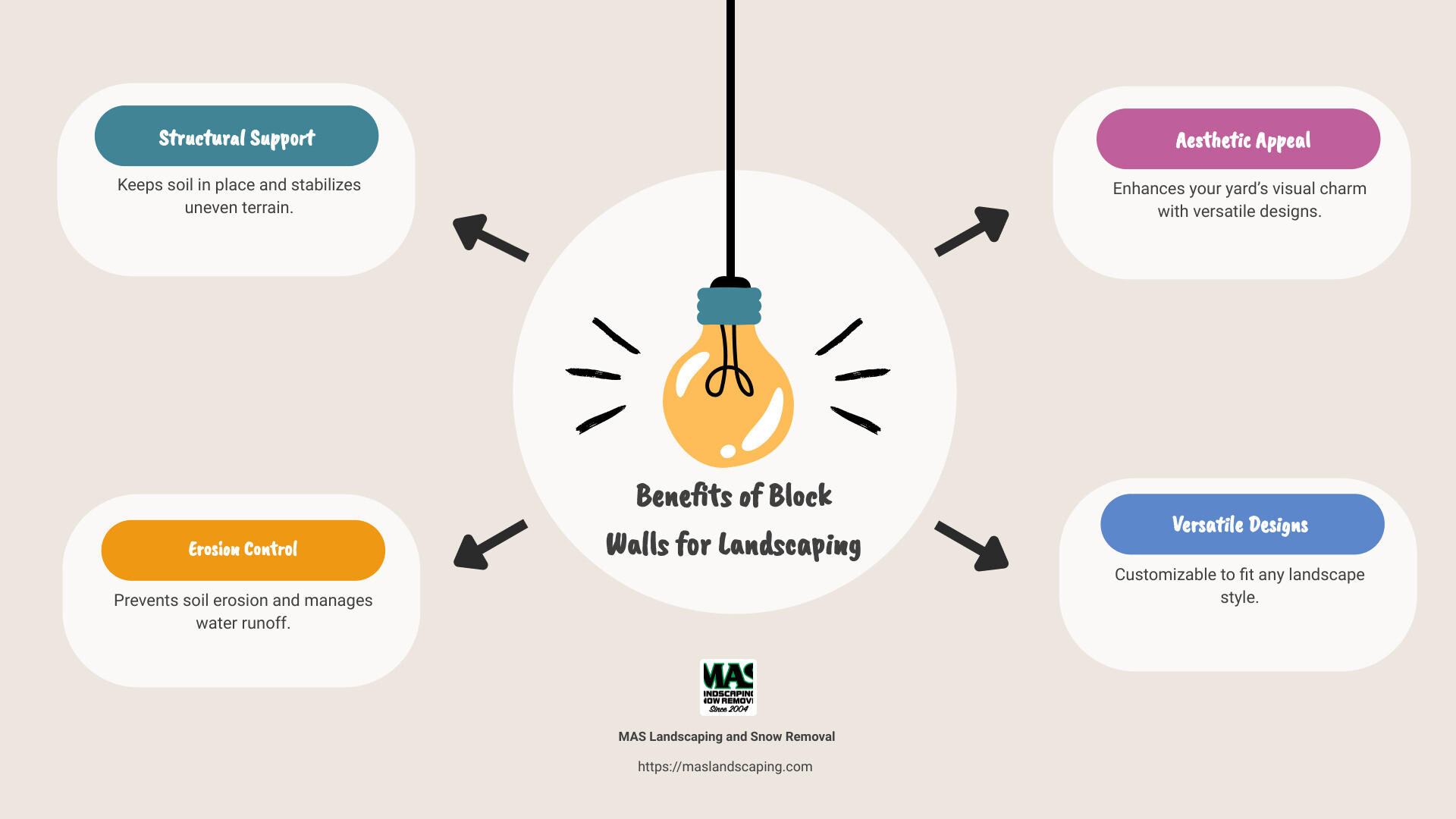
Benefits of block walls for landscaping:
– Structural support: Keeps soil in place and stabilizes uneven terrain.
– Erosion control: Prevents soil erosion and manages water runoff.
– Aesthetic appeal: Improves your yard’s visual charm with versatile designs.
With options ranging from simple concrete blocks to intricate interlocking systems, these walls can be customized to fit any landscape style.
Block walls for landscaping word roundup:
– Garden wall construction
– Hardscape design services
– Landscape Walls
Benefits of Block Walls for Landscaping
Block walls for landscaping offer a variety of benefits that go beyond their basic function. Let’s explore how they contribute to both the structural integrity and the beauty of your outdoor space.
Structural Support
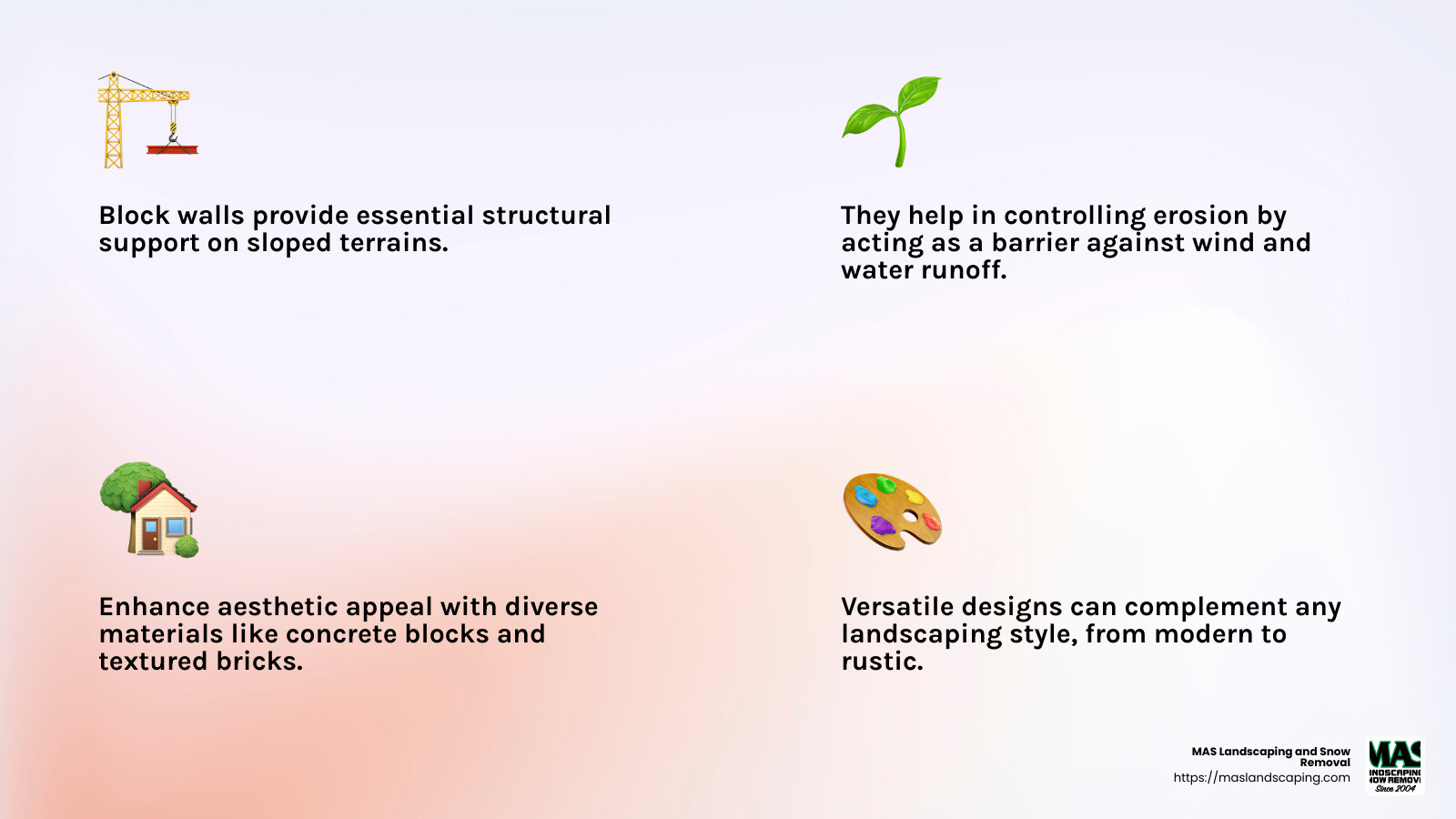
Block walls are key to providing sturdy support in your landscape. They keep soil in place, especially on sloped terrains, preventing landslides and maintaining the shape of your yard. This structural support is crucial in areas with varying elevations, ensuring that your garden beds and pathways remain intact over time.
Erosion Control
One of the most important benefits of block walls is their ability to control erosion. By acting as a barrier against the elements, these walls help prevent soil erosion, which is often caused by wind and water runoff. This means your garden stays healthy and your topsoil remains where it should be, providing a stable environment for plants to thrive.
Aesthetic Appeal
Beyond functionality, block walls add a touch of elegance to any landscape. With a wide range of materials and design options, they can complement any style, from modern to rustic. Whether you choose sleek concrete blocks or textured bricks, these walls can improve the overall visual appeal of your outdoor space, making it more inviting and cohesive.
Versatile Designs
The versatility of block walls allows for endless design possibilities. You can create anything from simple, straight walls to complex, curved structures. This flexibility means you can tailor your landscape to suit your personal taste and the specific needs of your yard. Whether you’re building raised garden beds or creating a cozy seating area, block walls offer the perfect solution.
In summary, block walls for landscaping are a smart investment for any homeowner. They provide essential structural support, effective erosion control, and an aesthetic boost to your yard. With their versatile designs, they can be customized to fit any landscape style, making them a valuable addition to your outdoor space.
Types of Landscaping Block Walls
When it comes to block walls for landscaping, there are several types to consider. Each type offers unique benefits in terms of durability, cost, and aesthetic appeal. Let’s explore the most popular options: concrete blocks, cinderblocks, bricks, boulders, and Allan blocks.
Concrete Blocks
Concrete blocks are a go-to choice for many landscaping projects. They are durable and cost-effective, making them an ideal option for those who want both strength and affordability. Available in various sizes, concrete blocks provide excellent structural integrity. This makes them perfect for building walls that need to withstand heavy loads or harsh weather conditions. Their uniform shape and size also make installation straightforward, saving time and effort.
Cinderblocks and Bricks
Cinderblocks and bricks offer a different set of advantages. Known for their versatility and customizable nature, they allow for a wide range of aesthetic options. Cinderblocks are lightweight and easy to handle, ideal for DIY projects. Bricks, on the other hand, bring a classic look to any landscape. They are perfect for those who want a more traditional or rustic appearance. Whether you’re creating a garden wall or a decorative feature, these materials can be custom to fit your design vision.
Boulders
For a more natural look, consider using boulders. These large stones add a rugged charm to your landscape and blend seamlessly with natural surroundings. Boulders are excellent for creating organic, flowing lines in your yard. They are also incredibly sturdy, providing both visual and physical support to your landscape design.
Allan Blocks
Allan blocks are renowned for their interlocking systems, which offer superior structural support. These blocks are designed to fit together seamlessly, creating a stable and secure wall. As an industry standard for retaining walls, Allan blocks are favored for their reliability and ease of use. They are particularly useful for projects that require precision and strength, such as terraced gardens or high retaining walls.
In summary, choosing the right type of block wall for your landscaping project depends on your specific needs and aesthetic preferences. Whether you opt for the robust nature of concrete blocks, the classic appeal of bricks, or the innovative design of Allan blocks, each option provides a solid foundation for enhancing your outdoor space.
How to Build a Block Wall for Landscaping
Creating a block wall for landscaping can enhance your outdoor area and provide essential support. Follow this step-by-step guide to ensure your project is successful.
Step-by-Step Guide
Preparation
- Plan Your Layout: Start by marking the outline of your wall using stakes and string. For curved designs, use a rope or hose to guide your layout. This helps you visualize the space and ensures accuracy.
- Excavate the Area: Dig a trench approximately 4-6 inches deep and 12 inches wide. This trench will serve as the foundation for your wall, ensuring stability.
- Add a Base Layer: Fill the trench with gravel, compacting it to create a solid base. This step is crucial for drainage and maintaining the wall’s integrity.
Leveling and Laying Blocks
- Level the First Block: Place the first block at one end of the trench, ensuring it is level in all directions using a spirit level. This block sets the tone for the entire wall, so take your time to get it right.
- Lay the First Row: Continue placing blocks along the trench, checking each one for level. Adjust as needed to ensure a straight and even row.
- Adjust for Level: As you lay each block, use a rubber mallet to tap them into place. This helps to maintain a uniform height across the row.
Prepare and Lay Subsequent Rows
- Prepare the Second Row: Begin the next row by cutting a block in half. This staggered approach increases stability by offsetting joints.
- Lay the Second Row: Place the first half-block and continue with full blocks, making sure to align them with the first row.
- Add Landscape Fabric: Once a few rows are completed, lay landscape fabric behind the wall. This prevents soil from seeping through the blocks and aids in drainage.
Tools and Materials Needed
To successfully build your block wall, gather the following tools and materials:
- Shovel: Essential for digging and moving soil.
- Spirit Level: Ensures every block is perfectly level.
- String and Stakes: Helps outline and guide your layout.
- Marking Paint: Useful for marking straight or curved lines.
- Back Support: Consider wearing this if you’re handling heavy blocks.
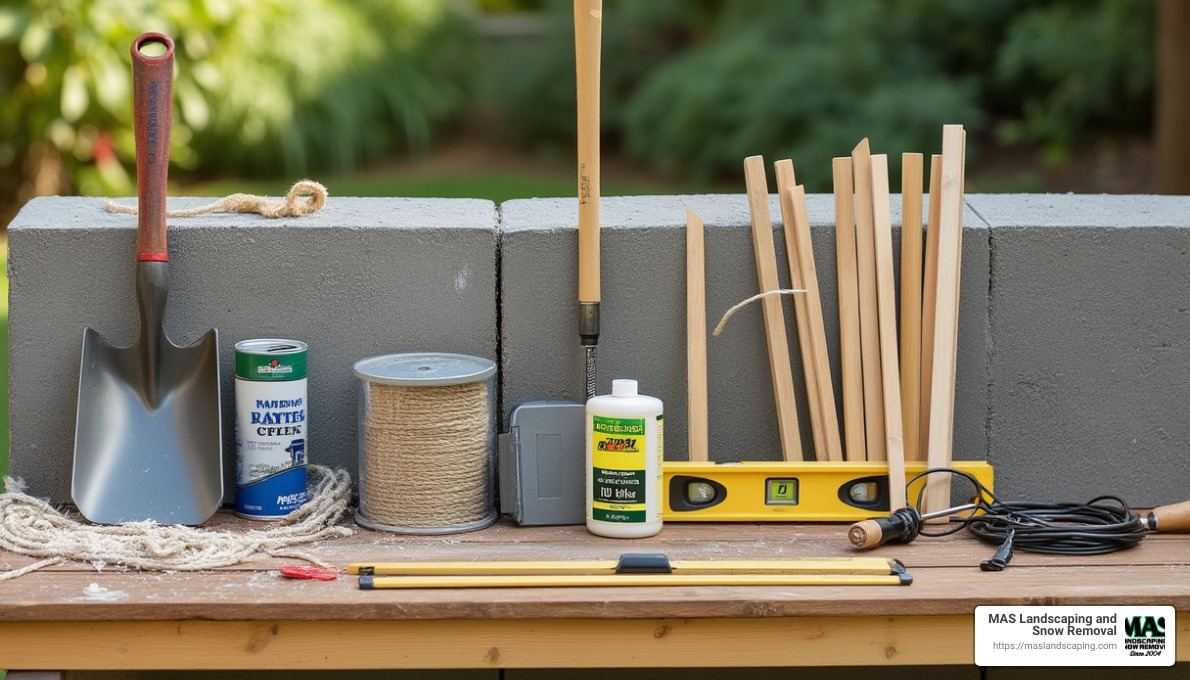
With your tools ready and steps outlined, you’re well-equipped to tackle your landscaping project. By following these guidelines, you’ll create a sturdy and visually pleasing block wall that enhances your yard’s beauty and functionality.
Next, we’ll explore exciting design ideas for landscaping block walls to inspire your project.
Design Ideas for Landscaping Block Walls
Block walls for landscaping aren’t just about function—they can transform your yard into a stunning outdoor space. Let’s explore some creative ways to use block walls to improve your landscape.
Raised Beds and Terraced Walls
Raised beds and terraced walls serve dual purposes: they add visual appeal and help with erosion control. By creating multilevel plantings, you can introduce new textures and colors to your garden. Terraced walls are perfect for sloped yards, making them more usable while preventing soil erosion. Imagine a hillside transformed into a lush, tiered garden—it’s both practical and beautiful.
Pathways and Outdoor Kitchens
Block walls can define pathways and outdoor kitchens, turning them into functional spaces with a touch of elegance. A simple block wall can line a pathway, guiding visitors through your garden with style. For those who love to entertain, consider integrating block walls into your outdoor kitchen design. These walls can create nooks for cooking and dining, making your backyard a true gathering area.
Fire Pits and Seating Walls
Create a cozy outdoor living space by incorporating fire pits and seating walls. Block walls can form the structure of a fire pit, offering a warm and inviting spot for family and friends to gather. Add built-in seating around the fire pit for a seamless and functional design. This setup not only encourages socializing but also adds a focal point to your yard, enhancing its aesthetic appeal.
By incorporating these design ideas, you can transform your yard into a space that’s both beautiful and functional. Whether it’s through raised beds, terraced walls, or creative outdoor living spaces, block walls offer endless possibilities for enhancing your landscape.
Frequently Asked Questions about Block Walls for Landscaping
What is the Cheapest Type of Retaining Wall?
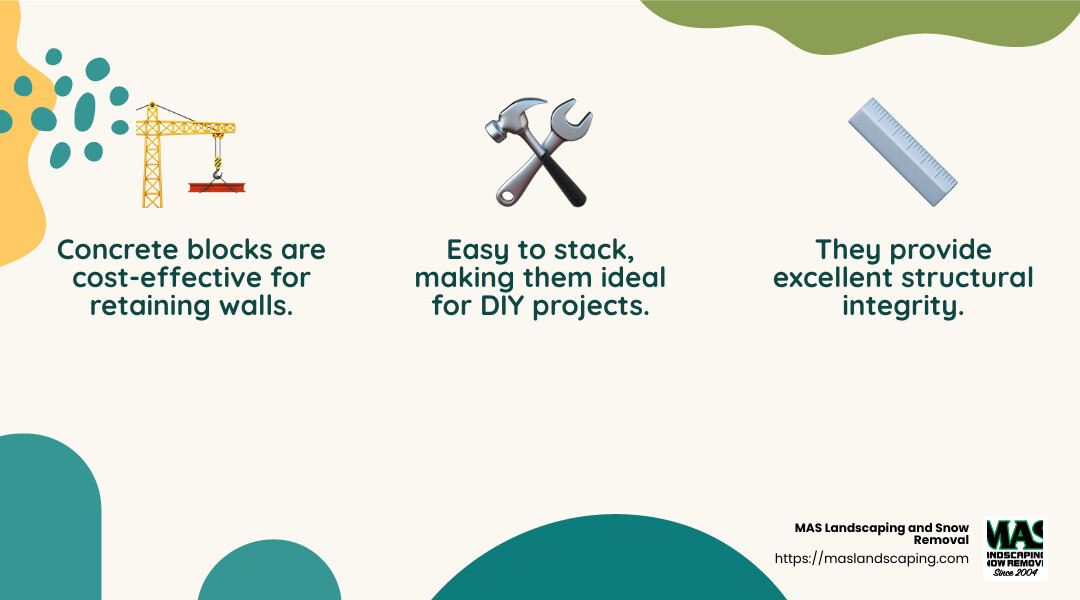
When considering cost-effective options for retaining walls, concrete blocks often come out on top. They offer a balance of affordability and durability. Concrete blocks are widely used because they are cost-effective and provide excellent structural integrity. These blocks are designed to withstand pressure and can be stacked easily, making them a popular choice for DIY projects.
What Kind of Block is Used for Garden Walls?
For garden walls, the choice of block can depend on the desired look and function. Concrete blocks are a versatile option, offering a range of sizes and finishes. Cinderblocks and bricks are also popular due to their aesthetic flexibility and ease of use. For a more natural appearance, boulders can be used, though they may require professional installation due to their weight and irregular shapes. Each type of block has its own advantages, so consider your specific needs and preferences when choosing.
How Deep Should a Footing Be for a Retaining Wall?
The footing is the foundation of your retaining wall, and getting it right is crucial for stability. A proper footing should be 4-6 inches deep and about 12 inches wide, which is generally twice the width of the block being used. This depth ensures that the blocks sit halfway into the soil, providing a stable base that can support the weight of the wall and resist shifting over time. Proper footing is essential to prevent issues like leaning or collapsing, especially in areas with heavy rainfall or unstable soil.
By understanding these aspects of block walls for landscaping, you can make informed decisions that suit your yard’s needs and your budget. Whether you’re building a retaining wall for erosion control or a garden wall for aesthetic appeal, knowing the basics helps ensure a successful project.
Conclusion
At MAS Landscaping and Snow Removal, we believe in the power of a well-crafted outdoor space. Our professional service is rooted in years of experience, ensuring that every project not only meets but exceeds your expectations. We pride ourselves on delivering beautiful, functional landscapes that improve your property and lifestyle.
Our local expertise sets us apart. Based in Saugus, MA, we understand the unique challenges and opportunities presented by the local climate and terrain. This knowledge allows us to select the best materials and designs for your block walls, ensuring they stand the test of time while complementing the natural beauty of your surroundings.
Whether you’re looking to install retaining walls for structural support or garden walls for aesthetic appeal, our team is here to guide you through every step of the process. We work closely with you to transform your vision into reality, creating outdoor spaces that are as practical as they are beautiful.
Ready to improve your yard with expertly crafted block walls? Visit our retaining wall installation page to learn more about how MAS Landscaping and Snow Removal can help you achieve the perfect outdoor space. Let’s work together to create a landscape that you’ll love and enjoy for years to come.
