




Complete Lawn Makeover: 5 Steps to Paradise
From Patchy to Paradise: Why a Complete Lawn Makeover Might Be Your Best Option
A complete lawn makeover is the process of fully renovating your existing lawn when it’s too damaged for basic care to fix. This involves removing the old turf, preparing the soil, and installing a new lawn with seed or sod. If you’re looking at a yard with more weeds and bare dirt than healthy grass, you may have what landscapers call an “unserviceable lawn”—one that won’t respond to simple fertilizing and watering.
The good news is that you don’t have to live with it. A complete lawn makeover can transform a hopeless yard into a lush, green space.
When You Need a Complete Lawn Makeover:
- More than 30-50% of your lawn is weeds or bare spots.
- Your lawn feels spongy when you walk on it (a sign of excessive thatch).
- Fertilizer and watering don’t help and the lawn fails to improve.
- You want a different grass type better suited to your yard’s conditions.
- Severe damage from drought, pests, or disease has occurred.
Quick Decision Guide:
- If your lawn is “unserviceable”, a complete makeover is your best path forward.
- Best timing: Mid-August to mid-September for optimal results in Massachusetts.
- Two main methods: Sodding (instant results, higher cost) or seeding (takes longer, more affordable).
The process is straightforward, and understanding it helps you make the best decisions for your yard’s future, whether you do it yourself or hire professionals like MAS Landscaping.
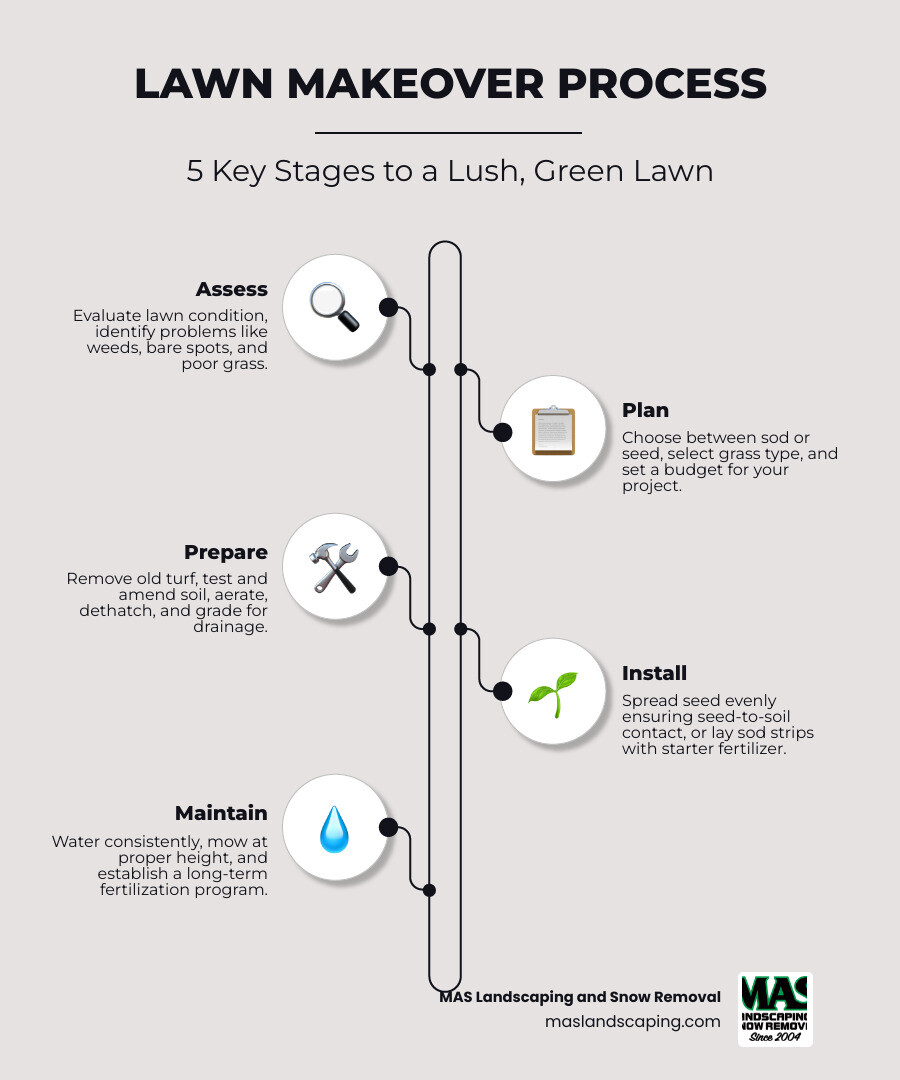
Explore more about complete lawn makeover:
Is It Time for a Total Lawn Reset? Key Signs and The Perfect Season
Sometimes, regular maintenance isn’t enough. In the landscaping world, a lawn that’s too damaged for fertilizing and watering to fix is called “unserviceable.” If your lawn has reached this point, a complete makeover is the most effective solution.
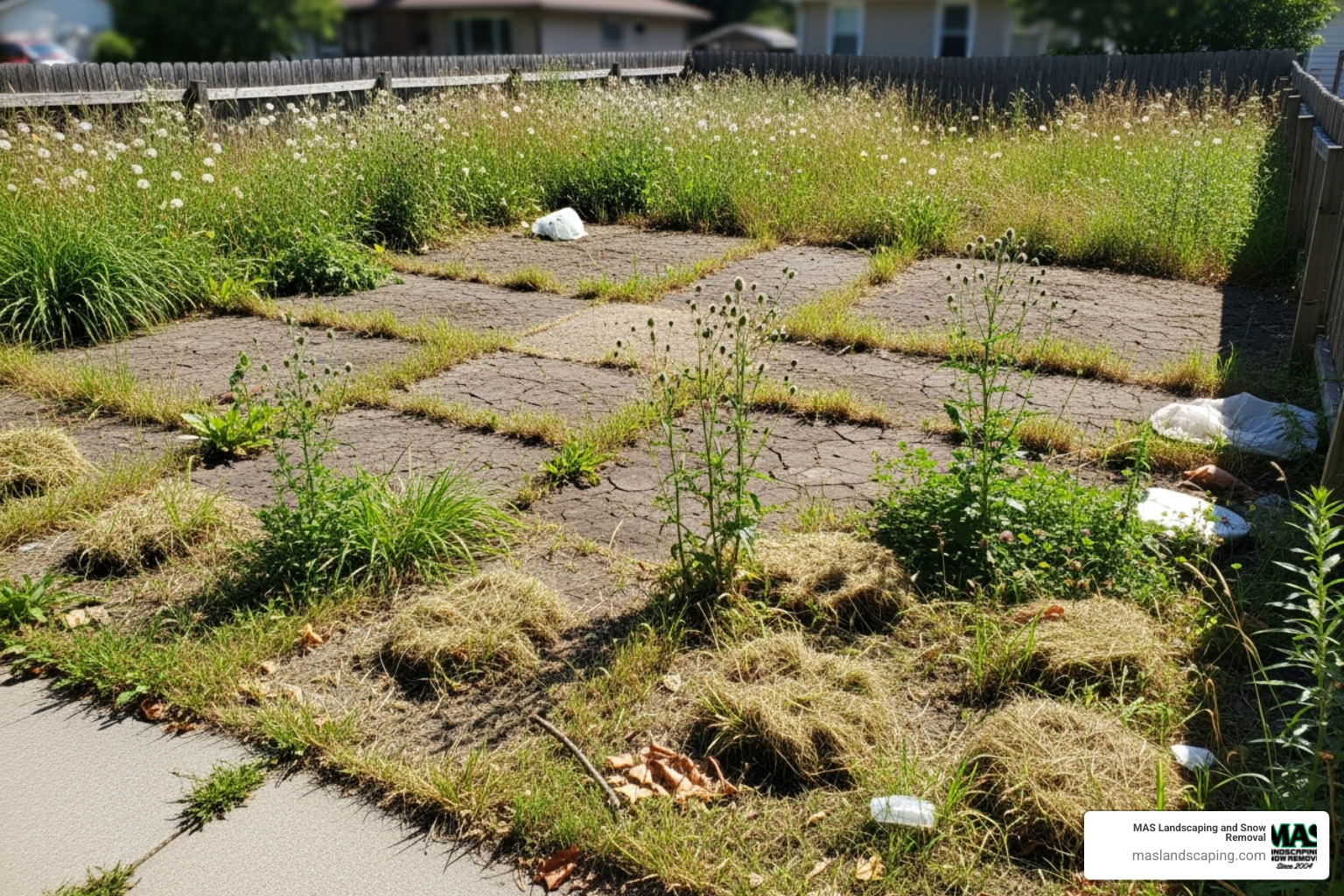
When to Know You Need a Renovation
How do you know if your lawn has crossed the line? Look for these key indicators:
- Widespread Weeds or Bare Spots: If 30% to 50% of your yard is weeds or dead patches, there isn’t enough healthy grass to recover and fill in the gaps.
- A Spongy Feel: When your lawn feels bouncy underfoot, it’s a sign of excessive thatch—a layer of dead organic matter over 3/4-inch thick that suffocates the grass roots by blocking water, air, and nutrients.
- No Response to Care: You’ve fertilized and watered correctly, but the lawn still looks weak and patchy. This indicates a fundamental problem, like severe soil compaction or poor soil health, that basic care can’t fix.
- The Wrong Grass Type: Your lawn might be healthy but composed of an undesirable grass variety for your needs or the Massachusetts climate. A complete lawn makeover lets you start fresh with a grass type suited to your yard’s sun exposure, traffic, and soil.
The Best Time of Year for a Lawn Makeover
Timing is your secret weapon for a successful renovation. The ideal window for a complete lawn makeover in Massachusetts is late summer to early fall (mid-August through mid-September).
During this period, the soil is warm from the summer, which encourages rapid seed germination. However, the air is cooler, reducing stress on new seedlings. Fall also brings more consistent rainfall and, most importantly, less competition from weeds, which are dying off for the season. This gives your new lawn a crucial head start to establish strong roots before winter.
Early spring is a secondary option, but it presents more challenges. Aggressive spring weeds compete for resources, and unpredictable temperature swings can stress young grass. While possible, a spring renovation requires more intensive care.
If you’re planning your renovation as part of a broader seasonal cleanup, check out our guide on spring and fall cleanups to see how everything fits together.
Planning Your Attack: Sod, Seed, and Setting a Budget
A successful complete lawn makeover requires a solid plan. Before you start, you need to decide on your method, select the right materials for our climate, and understand the budget.
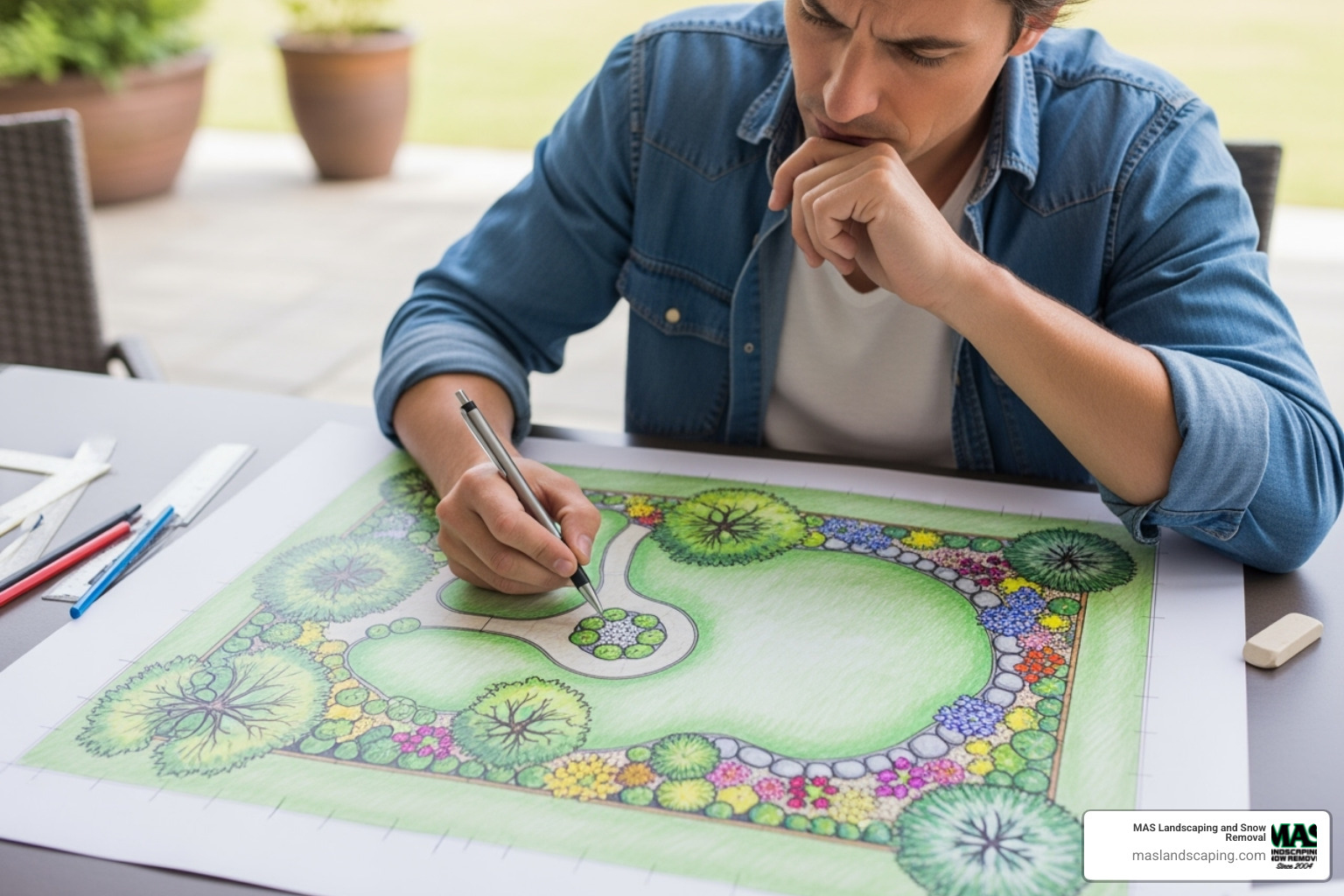
Deciding on Your Method: Key Choices for a Complete Lawn Makeover
The two primary methods for a new lawn are sodding and seeding. Sod provides an instant, mature lawn and is highly resistant to weeds, but it comes at a higher cost. Seeding is more affordable and offers more grass variety options, but it requires more time and patience for the lawn to establish.
For a detailed look at sod, explore our page on professional sod installation. If seeding seems like the right fit, learn more about our process for new lawn seeding.
Here’s a quick comparison:
| Feature | Sod | Seed |
|---|---|---|
| Cost | High (often thousands for smallest yards) | Low (often affordable for repairing damaged lawns) |
| Time to Results | Immediate, as sod is pre-grown and established | Slower, with germination visible in 5-7 days and significant improvement in 2-3 weeks |
| Labor | Generally less intensive for the homeowner, though more physically demanding to install yourself | More labor-intensive over time with repeated watering and care needed for establishment |
| Weed Resistance | Strong, due to already thick and established growth | Lower initially, as young seedlings are vulnerable to weed competition |
Choosing the Right Grass for Your Massachusetts Lawn
Selecting the right cool-season grass is vital for long-term success in New England. The best choice depends on your yard’s sunlight, soil, and expected use.
- Kentucky Bluegrass: The classic choice for a dense, deep green lawn. It recovers well from damage but requires full sun and regular maintenance.
- Perennial Ryegrass: Germinates quickly, making it great for fast results and high-traffic areas. It’s often blended with other seeds and tolerates full sun to partial shade.
- Fine Fescues: The best option for shady, low-maintenance areas. These grasses are drought-tolerant once established and thrive in poorer soils.
- Tall Fescue: A durable, drought-tolerant workhorse with deep roots. Its wear-resistance makes it ideal for high-traffic zones and water conservation.
When helping homeowners in Everett, Lynnfield, or Saugus, we select a seed blend based on sun exposure, desired maintenance level, and foot traffic to ensure a resilient and beautiful lawn.
Budgeting for Your New Lawn: DIY vs. Professional Costs
A complete lawn makeover is an investment. Sodding is generally more expensive than seeding due to the cost of mature turf. Based on industry averages from internet research, seeding can cost from a few hundred to several thousand dollars, while sodding typically starts in the low thousands and can exceed $10,000 for large properties. These are average costs and not actual prices for MAS Landscaping.
A DIY approach involves costs for equipment rental, materials (seed, topsoil, fertilizer), and a significant investment of your own time and labor. While it can save on labor costs, many homeowners find that hiring a professional is a worthwhile investment for the expertise, efficiency, and superior results. A professional can also recommend the most cost-effective methods, like power seeding for severely damaged lawns. Learn more about the factors that influence new lawn installation cost on our website.
The Ultimate Step-by-Step Process for a Complete Lawn Makeover
With a plan in place, it’s time to execute. A successful complete lawn makeover depends on meticulous site preparation and proper installation.
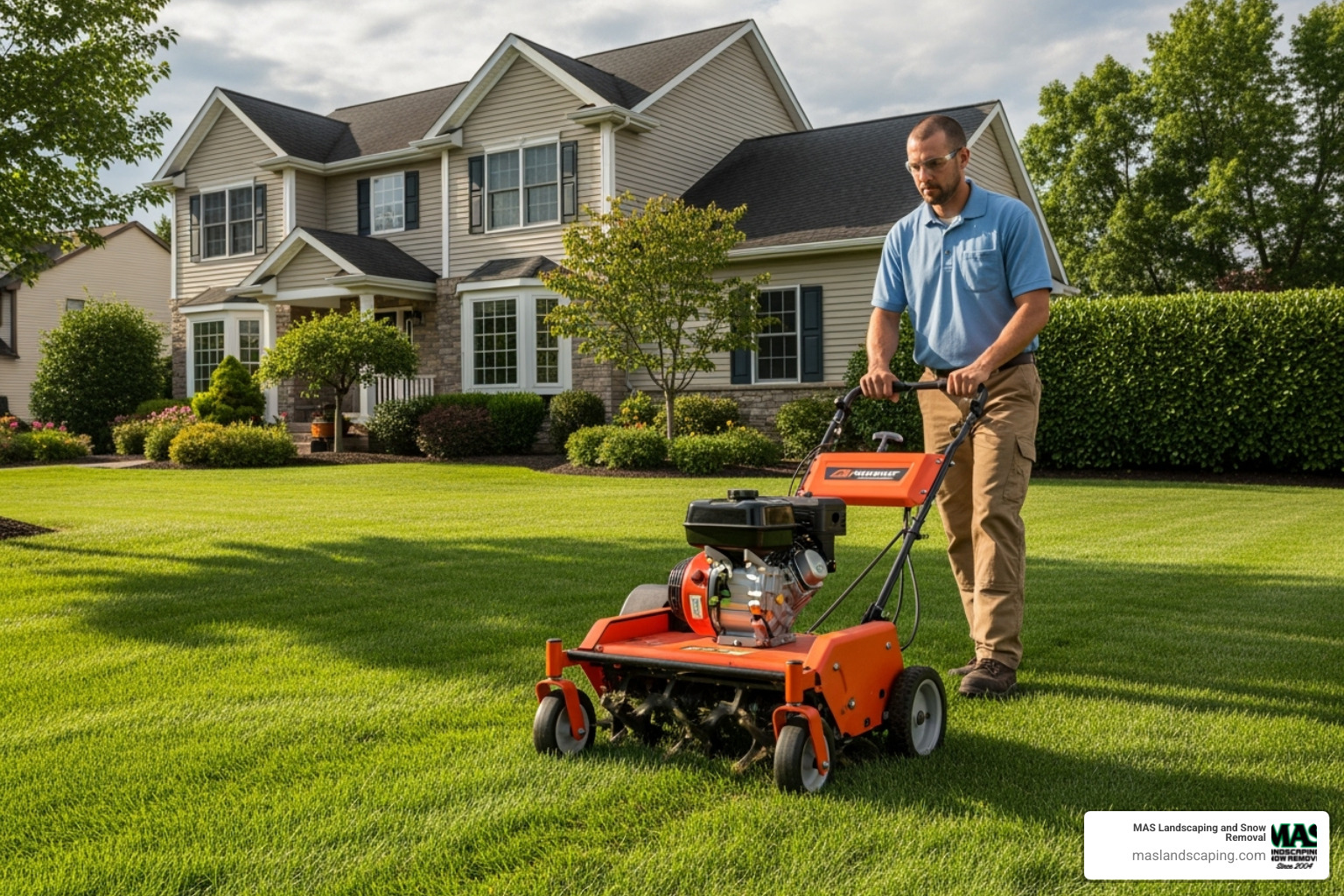
Step 1: Say Goodbye to the Old Lawn
To give your new lawn a fresh start, the old, unhealthy turf must be removed. This prevents old weeds and undesirable grasses from competing with new growth.
- Non-Selective Herbicide: For lawns overrun with weeds, an herbicide can kill all existing vegetation. This is a task best left to professionals like MAS Landscaping to ensure safe and proper application.
- Organic Methods: Solarization (using clear plastic to bake the turf for 6-8 weeks) or smothering (using cardboard/newspaper under mulch for 6-8 weeks) are effective non-chemical options.
- Physical Removal: Once the old lawn is dead, the debris is removed by raking, dethatching, or using a sod cutter to create a clean surface.
Always consult a professional for the safest and most effective lawn removal method for your property.
Step 2: Prepare the Perfect Foundation
The quality of your soil is the single most important factor for a healthy new lawn.
- Soil Testing: A soil test reveals your soil’s pH and nutrient levels, allowing for precise amendments. You can get a test from a local lab, like those at university extensions (e.g., the University of Minnesota Soil Testing Laboratory).
- Dethatching: If the thatch layer is over 3/4 inch thick, it must be removed with a power dethatcher to allow seed, water, and nutrients to reach the soil.
- Core Aeration: This process removes small plugs of soil to relieve compaction, allowing air, water, and nutrients to penetrate the root zone. For large areas, our Bobcat services can perform this work efficiently.
- Amending and Grading: Based on the soil test, add a layer of topsoil or compost to improve fertility. We ensure the area is properly graded to promote good drainage and prevent water from pooling.
For more details, see our guide on how to prepare ground for sod.
Step 3: Installation Day – Planting Your New Lawn
With the site prepped, it’s time to install your new lawn.
For Seeding:
- Use a broadcast spreader to apply seed evenly, making two passes in perpendicular directions for uniform coverage.
- Gently roll or walk over the area to ensure good seed-to-soil contact, which is essential for germination.
- Apply a starter fertilizer high in phosphorus to promote strong root development.
For Sodding:
- Lay sod strips in a staggered, brick-like pattern, ensuring the edges fit tightly together without overlapping.
- After laying the sod, use a roller to press it firmly against the soil, removing air pockets and encouraging rapid rooting.
- Apply a starter fertilizer to give the new sod the nutrients it needs to establish.
For a detailed guide on this method, see our page on how to lay sod.
Aftercare: Ensuring the Success of Your Complete Lawn Makeover
Congratulations, the hardest part of your complete lawn makeover is done! But the journey isn’t over. The initial weeks and months after installation are critical for ensuring your new lawn establishes successfully and flourishes into the lush, green space you envisioned.
The Critical First Month: Watering and Initial Care
Consistent moisture is the number one priority for a new lawn.
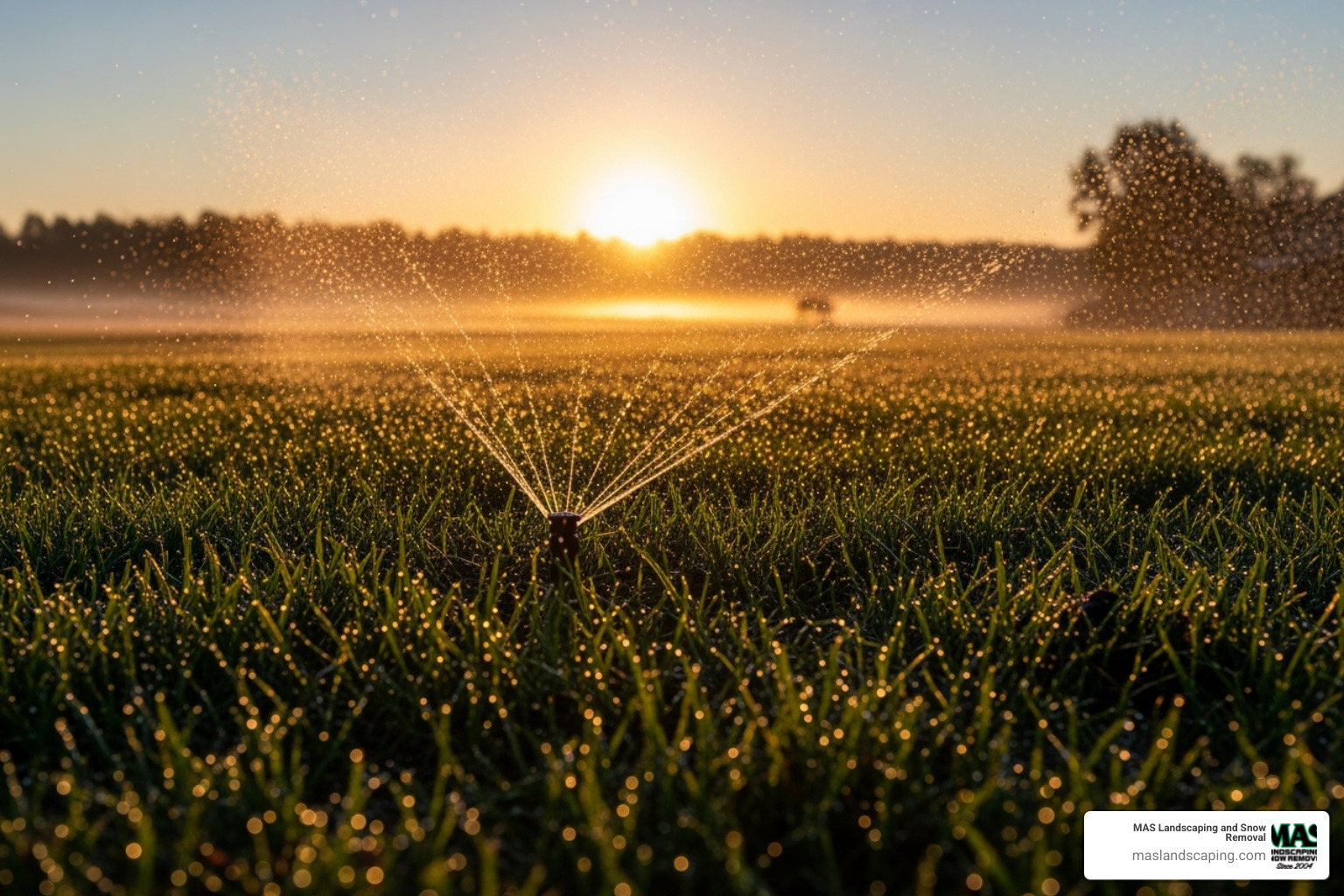
- Watering: For both seed and sod, the goal is to keep the top layer of soil consistently moist but not waterlogged. New seed may require light watering 2-3 times a day for 10 minutes to aid germination (visible in 5-7 days). New sod needs deeper watering once or twice a day for the first two weeks to encourage roots to grow into the soil below.
- Limit Traffic: Keep foot traffic to an absolute minimum. New seedlings and sod roots are extremely fragile and easily damaged.
- First Mow (Seeded Lawns): Wait until new grass is about 2.5 inches tall. Mow high, removing only the top third of the blade to avoid stressing the young plants.
For comprehensive advice on caring for new sod, our guide on how to care for new sod is an invaluable resource.
Long-Term Success: Mowing, Feeding, and Ongoing Maintenance
Once established, your lawn needs consistent care to stay healthy.
- Mowing: Mow high, at 3 to 4 inches. Taller grass shades out weeds and develops deeper, more drought-tolerant roots. Always follow the “one-third rule”—never cut more than one-third of the grass blade at a time.
- Watering: Water deeply but infrequently, providing about 1 to 1.5 inches of water per week in one or two sessions. This encourages deep root growth.
- Fertilization: A regular fertilization program custom to your grass type will keep your lawn dense, green, and better able to outcompete weeds.
- Annual Aeration: We recommend aerating your lawn annually, especially in high-traffic areas or with clay soil, to prevent compaction and ensure water and nutrients reach the roots.
- Weed and Pest Control: Address any issues promptly with targeted treatments to protect your investment.
A complete lawn makeover is a significant undertaking, but with proper long-term care, your beautiful new lawn will provide years of enjoyment. For all aspects of ongoing care, our lawn care and maintenance services are designed to keep your lawn looking its best.
Frequently Asked Questions about Lawn Renovation
We know you’ll have questions when considering a complete lawn makeover. Here are some of the most common ones we hear from homeowners in and around Saugus, MA.
How long does a complete lawn makeover take to show results?
The timeline for results depends heavily on the method chosen:
- Sod: This is the “instant gratification” option. You’ll have a green lawn immediately after installation. While it looks established, the roots still need to knit into the underlying soil, which typically takes 2-4 weeks. During this time, heavy traffic should be avoided.
- Seed: Seeding requires more patience. You can usually see germination (tiny green sprouts) within 5-10 days, depending on the grass type and conditions. Significant improvement, where the lawn starts to look green and filled in, can be seen in 2-3 weeks after seeding. A usable lawn, ready for light traffic, usually takes 6-8 weeks, and full maturity (a dense, established turf) can take a full growing season.
Can I do a complete lawn renovation myself?
A complete lawn makeover can certainly be a DIY project, but it’s important to understand the commitment involved. It’s a labor-intensive process that requires significant time, effort, and often specialized equipment.
- DIY Challenges: Many homeowners underestimate the physical demands and complexity. We’ve heard stories of aerators getting away from people on hills, and the difficulty of operating unfamiliar machinery can lead to subpar results. Consistent, precise watering for weeks on end is also a challenge.
- Equipment Costs: While you can rent equipment like power dethatchers, aerators, and tillers, these costs can add up, and the learning curve for operating them efficiently can be steep.
- Professional Expertise: Hiring professionals like MAS Landscaping brings expertise in soil analysis, grass selection, proper grading, and efficient use of heavy equipment. For tasks like initial clearing or significant regrading, our Bobcat services can handle the heavy lifting quickly and effectively, preventing costly mistakes and ensuring a solid foundation. While DIY is an option, many clients find the peace of mind and superior results from professional help to be well worth the investment.
What if my new lawn is part of a larger project?
That’s a fantastic approach! We often encourage homeowners to think holistically about their outdoor spaces. Integrating your lawn renovation with other landscape improvements is an excellent way to create a cohesive and functional design.
- Integrated Design: If you’re planning a larger outdoor change, it’s ideal to coordinate your lawn makeover with other elements. For example, if you’re installing patios, walkways, or even retaining walls, these projects should ideally be completed before the final grading and planting of your new lawn. This prevents damage to your newly laid turf and ensures that all elements flow together seamlessly.
- Efficient Project Management: Combining projects allows for more efficient use of resources, such as heavy machinery like Bobcat services, which can handle multiple tasks like excavation for a patio and initial lawn grading in one go. This thoughtful planning ensures that we avoid re-doing work and achieve the best overall aesthetic and functional outcome.
Our team at MAS Landscaping excels in comprehensive landscape design, helping you plan and execute your entire outdoor vision, from the lush green of your lawn to the neat lines of your hardscaping.
Your Dream Lawn is Within Reach
A complete lawn makeover is more than just planting new grass; it’s an investment in your home, your lifestyle, and your enjoyment of the outdoors. Imagine stepping onto a lush, vibrant carpet of green, walking barefoot without a single weed, and knowing that your yard is a source of pride, not frustration.
The benefits are clear: increased curb appeal, a more inviting and usable outdoor space for family and friends, and the satisfaction of changing a neglected area into a thriving landscape. While the process requires effort and careful planning, the end result is profoundly rewarding.
At MAS Landscaping, we understand the unique challenges and opportunities of properties in Everett, Lynnfield, Malden, Melrose, Medford, Revere, Chelsea, Saugus, and surrounding MA areas. Our commitment to professionalism, personalized service, and local expertise means we’re equipped to guide you through every step of your lawn renovation, ensuring a successful and beautiful outcome.
Don’t let an “unserviceable lawn” define your outdoor space any longer. Your dream lawn is not just a fantasy; it’s an achievable reality. Contact us for a comprehensive landscape design consultation today, and let’s start the journey to your perfect green paradise.
