




Concrete Garden Retaining Wall: 5 Easy Steps to Success
Why Your Sloped Yard Needs a Concrete Solution
A concrete garden retaining wall is a durable structure that holds back soil on sloped properties, prevents erosion, and creates usable outdoor space. Here’s what you need to know:
Key Benefits of Concrete Retaining Walls:
- Soil Erosion Control – Prevents washouts and keeps your landscape intact.
- Creates Usable Space – Transforms steep slopes into flat areas for patios, gardens, or lawns.
- Long-Lasting Durability – Properly built concrete walls can last for decades.
- Increases Property Value – Adds both function and curb appeal to your home.
Basic Construction Steps:
- Plan layout and check permits
- Excavate trench and create compacted base
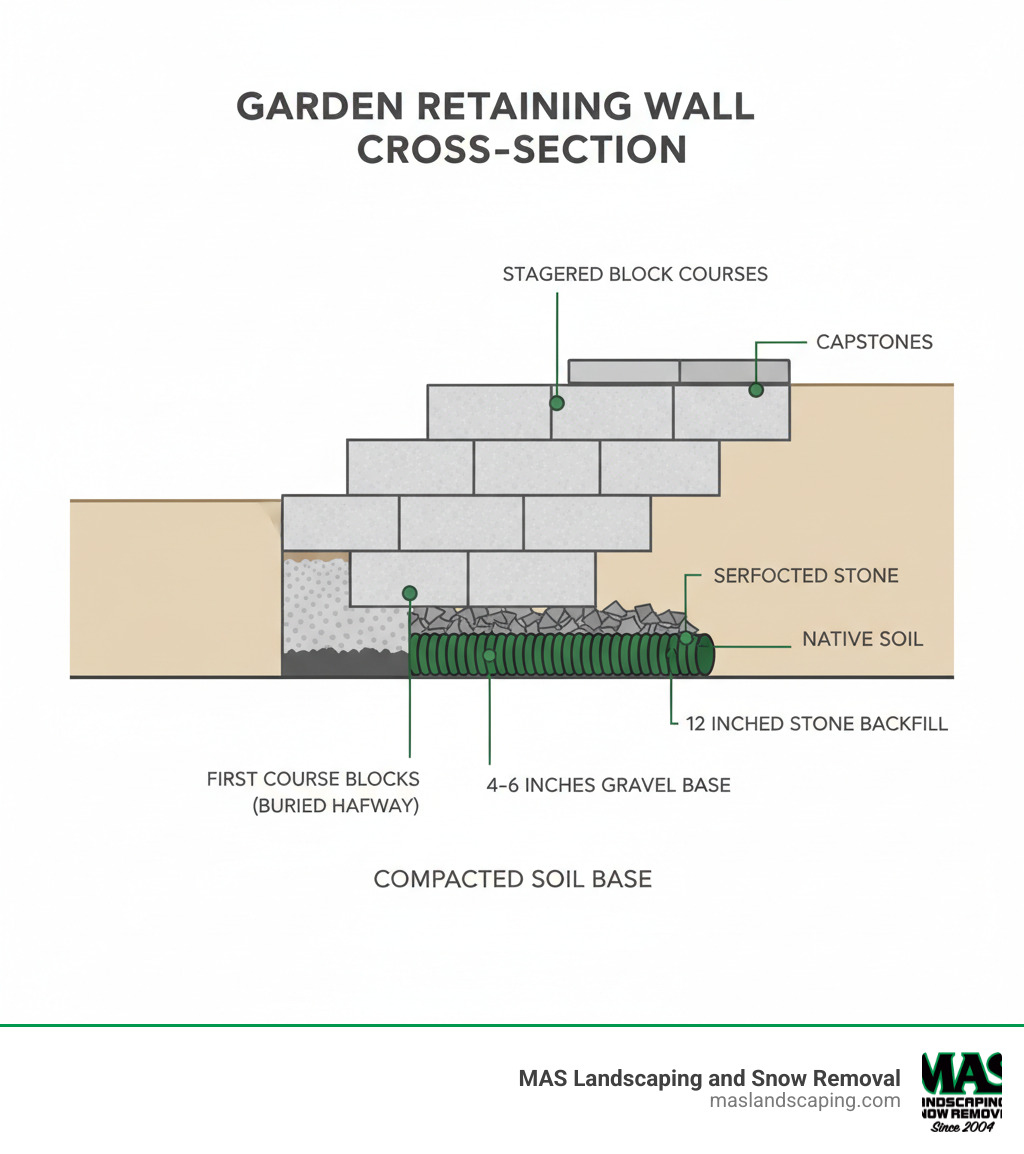
- Lay first course of blocks (buried halfway)
- Stack subsequent courses with staggered joints
- Install drainage pipe and backfill with gravel
- Add capstones and finish with topsoil
Slopes can cause washouts and make your yard feel unusable. A concrete garden retaining wall solves these problems while adding structure and beauty to your landscape.
Building a low retaining wall (under 3-4 feet) is a DIY-friendly project. For taller walls, you’ll need professional engineering and installation. Understanding the process helps you make informed decisions.
This guide covers everything from choosing blocks to creating proper drainage. Whether you DIY or work with a professional like MAS Landscaping’s hardscape team, you’ll learn what makes a retaining wall stable and long-lasting.
Why Choose a Concrete Retaining Wall?
When facing a sloped yard, concrete garden retaining walls are a go-to solution because they work, and they work well.
Concrete’s primary benefit is durability. A properly built wall can last 50 years or more, withstanding New England’s freeze-thaw cycles and heavy rains. Unlike timber that rots or metal that rusts, concrete endures.
The versatility of modern concrete may surprise you. Today’s concrete retaining wall block options come in a wide range of colors and textures that can mimic natural stone or provide a sleek, modern finish, complementing any home style.
In terms of cost-effectiveness, while there’s an upfront investment, the minimal maintenance means you save on repairs and replacements over the long term. You’re adding lasting value to your property with a hardscape retaining wall that offers both structural support and curb appeal.
Freestanding vs. Retaining Walls: Understanding the Difference
It’s crucial to know that not all walls are retaining walls, as the difference impacts construction, permits, and labor.
A retaining wall is engineered to hold back soil, prevent erosion, and manage water. It requires a substantial footing below the frost line and proper drainage. This is what you need for any slope or grade change.
A freestanding wall is primarily decorative. It defines a garden bed or borders a patio on flat ground. Its construction is simpler, with a shallower footing and less critical drainage needs.
| Feature | Retaining Wall | Freestanding Wall |
|---|---|---|
| Primary Purpose | Holds back soil, prevents erosion, manages slopes | Defines spaces, decorative, creates garden borders |
| Footing/Base | Deep, engineered footing (below frost line), compacted gravel | Simpler, shallower footing, compacted gravel/sand |
| Structural Needs | Engineered for soil pressure, drainage crucial | Minimal soil pressure, drainage less critical |
| Height | Can be tall (with engineering/reinforcement) | Generally shorter, decorative heights |
The bottom line: If you’re dealing with a slope, you need a proper retaining wall. Don’t cut corners.
Choosing the Right System for Your Concrete Garden Retaining Wall
Most homeowners choose from a few proven systems.
Interlocking concrete blocks, or Segmental Retaining Wall (SRW) systems, are the most popular choice. They fit together without mortar, using lips or pins to lock each course. They are stable, DIY-friendly for shorter walls, and come in many styles.
Poured concrete walls offer maximum strength for large projects but require professional installation. For most garden walls, interlocking blocks provide sufficient strength with less hassle.
When selecting concrete landscape blocks, consider block size and weight. Larger blocks are faster to stack but heavier to move. For color and texture, options range from natural stone looks to sleek, modern finishes. A split-face finish offers a quarried stone appearance. Popular styles include classic beveled blocks, rustic or tumbled blocks, and modern smooth-face blocks. Choose a style that complements your home and landscape.
Step-by-Step Guide to Building Your Concrete Garden Retaining Wall
This section walks you through the entire process, from crucial planning steps to the finishing touches that make your wall both stable and beautiful.
Step 1: Planning, Permits, and Budgeting
Proper planning is the first step and saves headaches later. Start by marking the wall’s path with stakes and string or a garden hose to visualize the layout.
Crucially, call 811 a few days before you dig. This free service locates underground utilities, preventing dangerous and expensive accidents.
Next, check local building codes and permit requirements. In communities like Everett, Lynnfield, and Saugus, MA, walls over a certain height (usually 3-4 feet) require a permit and sometimes engineering plans. Building without a permit can lead to fines.
Regarding wall height limitations, most DIY interlocking block systems are suitable for walls up to 3-4 feet. Taller walls face immense soil pressure and require professional engineering and reinforcement. For taller projects, it’s best to call professionals like our team at MAS Landscaping.
Budgeting for a building a retaining wall on a slope cost depends on materials, wall size, and site access. For professional installation, these are average costs based on internet data and not actual costs for MAS Landscaping, but projects typically range from $3,000 to $30,000+. For an accurate estimate, a personalized quote is necessary.
Step 2: Tools and Materials
Gathering all tools and materials beforehand prevents delays and ensures safety.
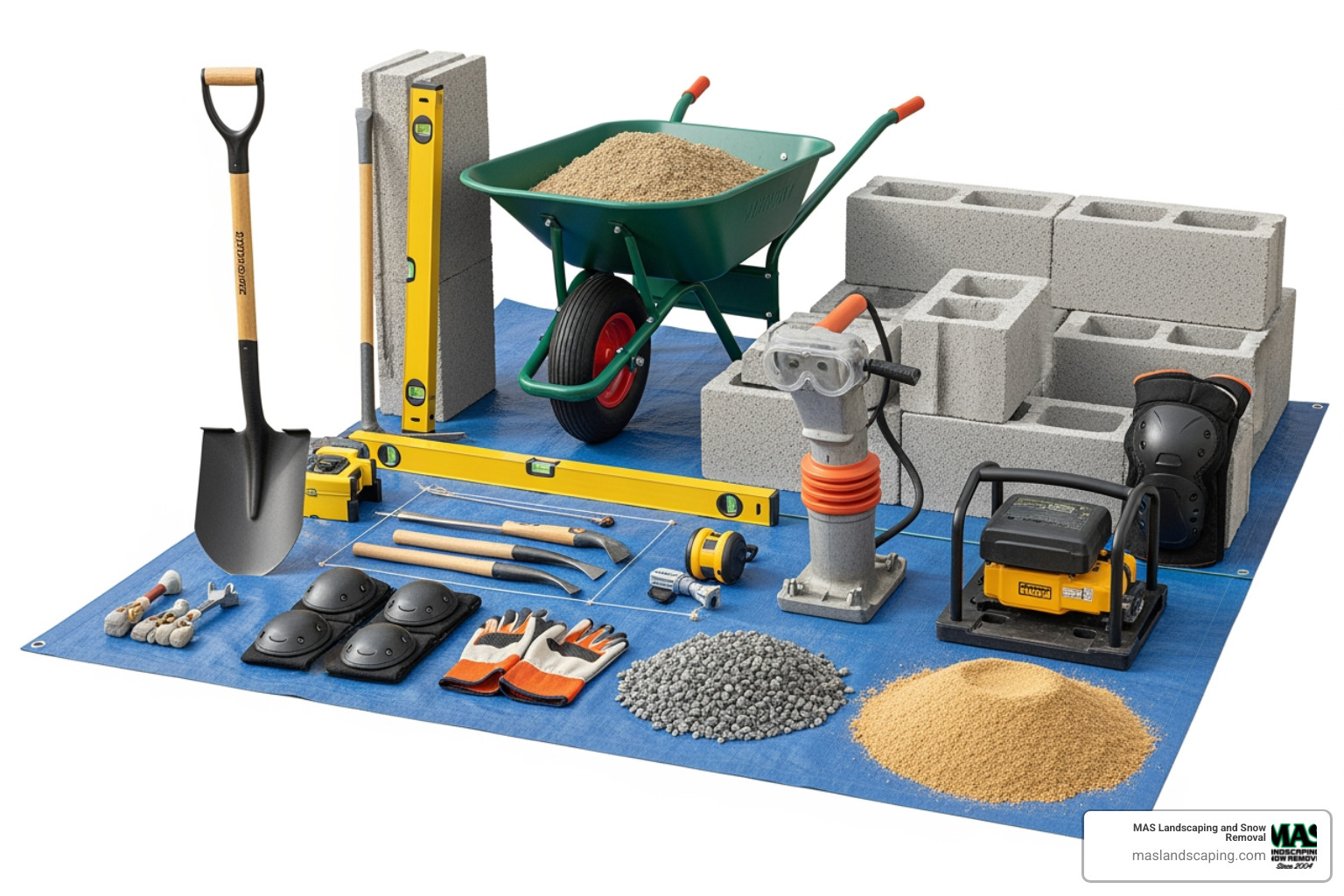
Essential items include:
- Safety Gear: Heavy-duty gloves, safety glasses, steel-toed boots, and knee pads.
- Tools: Shovel, pickaxe, wheelbarrow, hand tamper or plate compactor (renting is recommended), levels (long and torpedo), string line, rubber mallet, caulk gun, and a concrete saw or chisel/hammer for cutting blocks.
- Materials: Your chosen concrete landscape blocks (buy 10% extra), paver base (compactable gravel), 1/2″ to 3/4″ crushed gravel for drainage, coarse sand, perforated drain pipe (with fabric sock), landscape fabric, and construction adhesive.
Step 3: Site Preparation and Base Construction
A strong base is the key to a long-lasting wall. This step cannot be rushed.
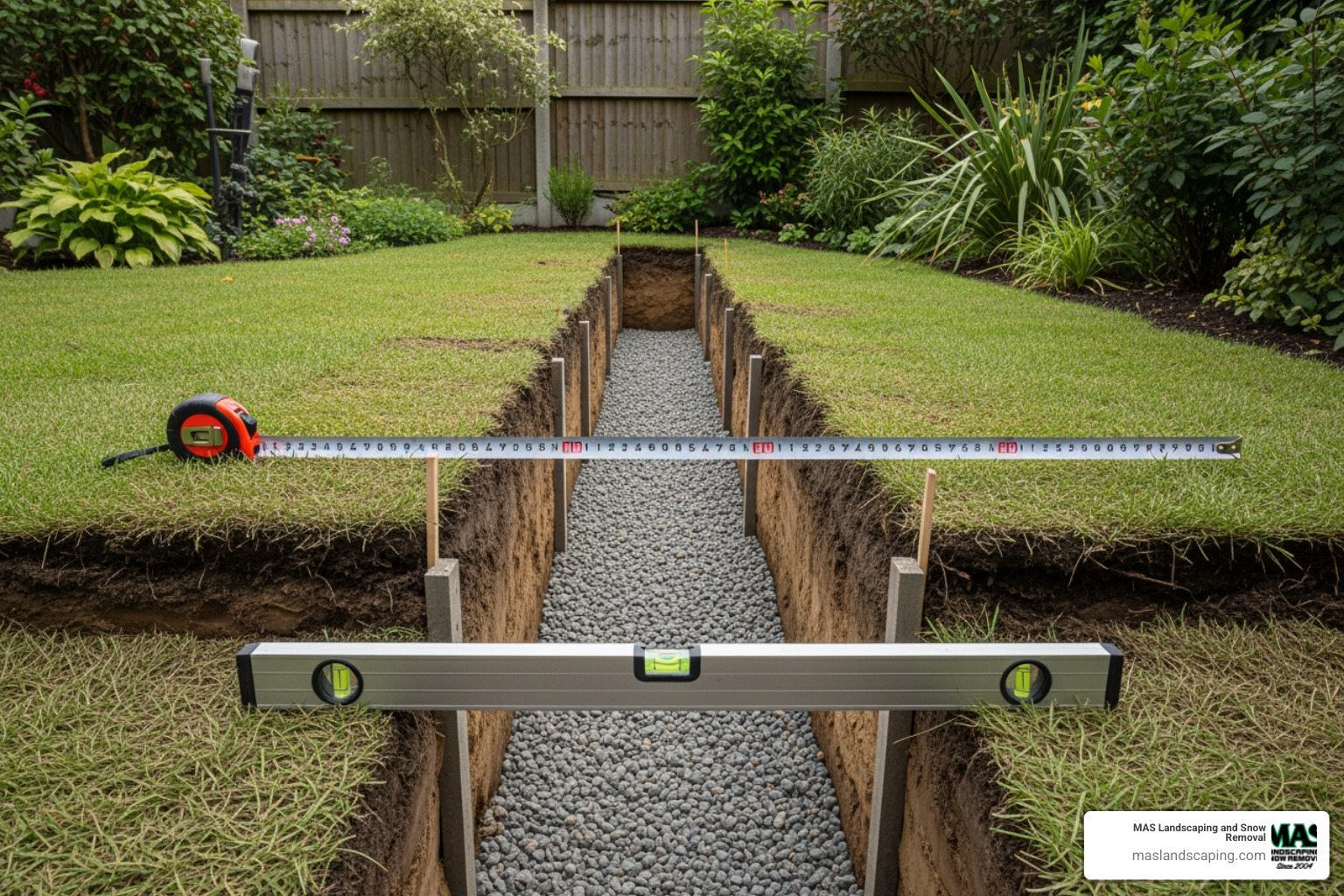
First, excavate the trench. It should be twice the width of your blocks to allow room for the block and drainage material. The depth must accommodate 4-6 inches of compacted base, 1 inch of leveling sand, and enough depth to bury half of the first course of blocks (approx. 10 inches deep for a 6-inch block).
Next, compact the native soil at the bottom of the trench with a tamper until it is firm.
Now, build the gravel base. Add paver base material in 2-3 inch layers, compacting each layer thoroughly until you have a solid, level base of 4-6 inches. Use a long level to ensure it’s perfectly even.
Finally, spread a 1/2-inch layer of leveling sand over the base and screed it smooth. This careful preparation, similar to what you’d do when preparing a new lawn bed, is crucial for success.
Step 4: Laying and Securing the Blocks
With a solid base prepared, you can begin laying the blocks.
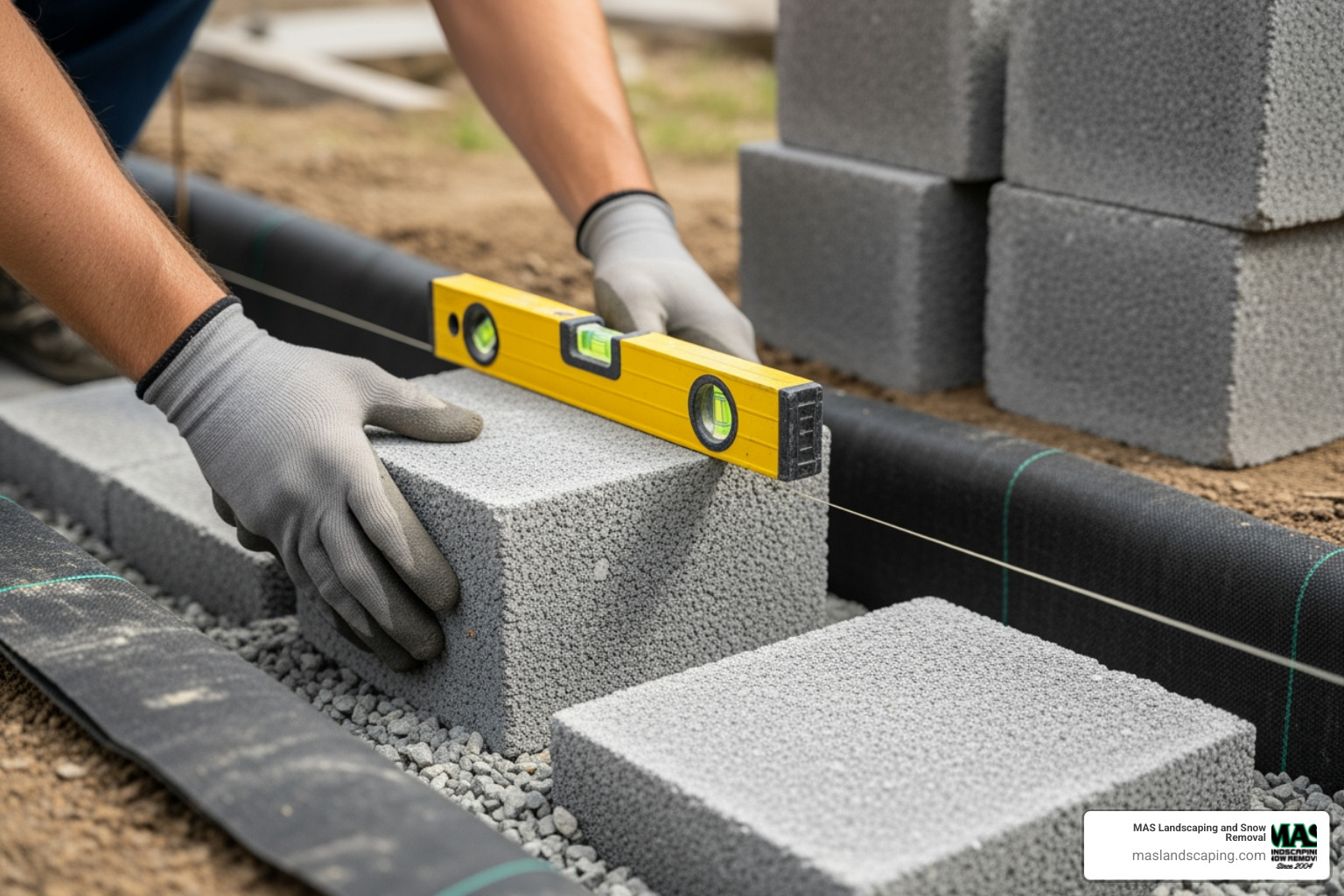
The base course is the most important. Place each block carefully, ensuring it is perfectly level both front-to-back and side-to-side. Use a torpedo level and rubber mallet to make adjustments.
You must bury the first course so that about half its height is below the final grade. This anchors the wall and provides critical stability.
For all subsequent courses, stagger the blocks in a running bond pattern, so vertical joints don’t line up. You will need to cut blocks at the end of alternating rows to maintain the stagger.
Most modern concrete landscape blocks have built-in interlocking systems (lips or pins) that lock courses together and create a slight backward lean (setback). Follow the manufacturer’s instructions. For more guidance, see our guide on how to build a landscaping wall with blocks.
Step 5: Drainage and Backfilling
Proper drainage is the most critical element for a retaining wall’s longevity. Without it, water builds up, creating hydrostatic pressure that can cause the wall to fail. This is especially true in areas like Medford, Revere, and Chelsea, MA, with heavy rain and freeze-thaw cycles.
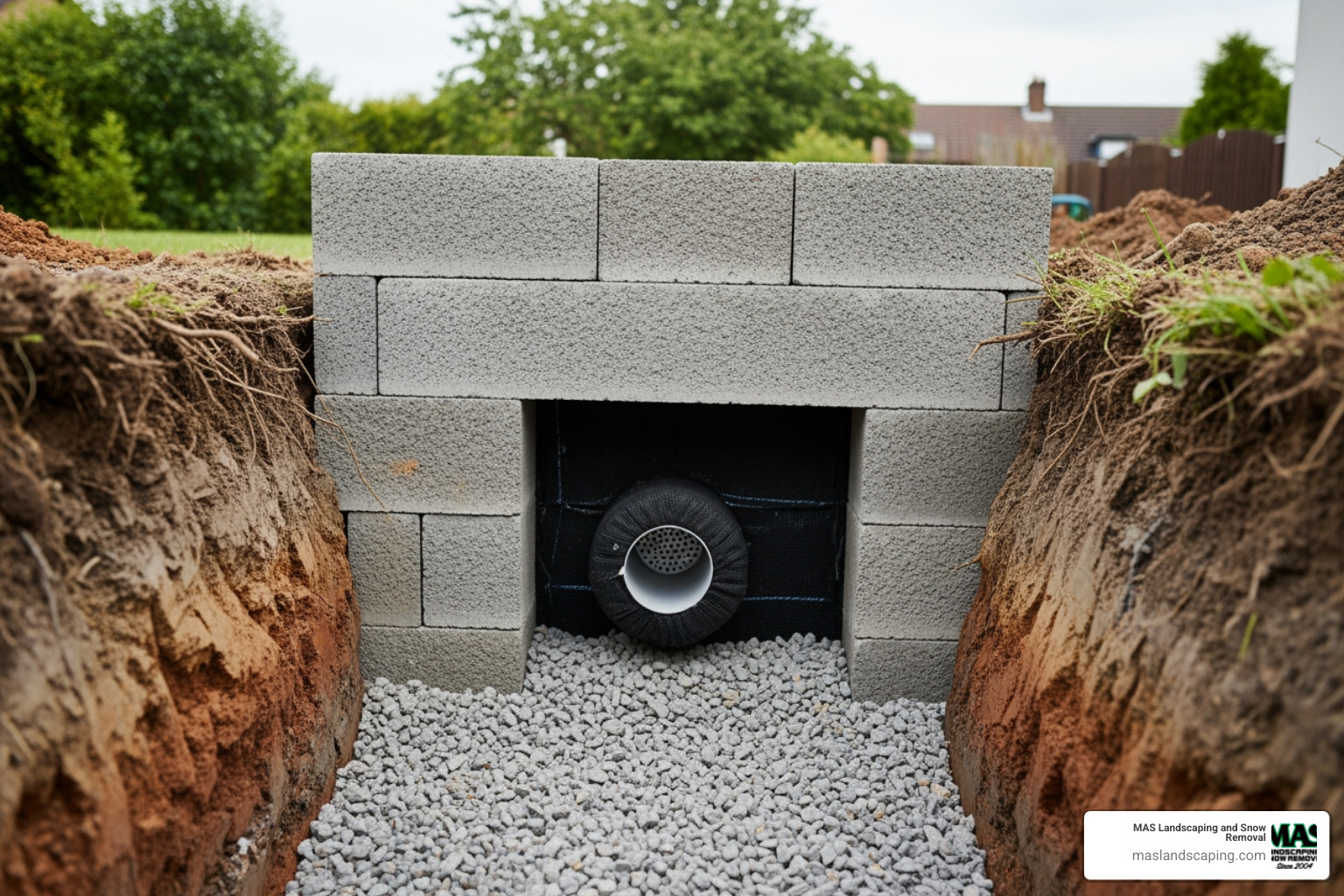
To manage water, install a perforated drain pipe behind the first course of blocks. Use a pipe with a fabric sock to prevent clogging. The pipe should slope slightly (1/8 inch per foot) and drain to a lower area away from the wall.
Next, backfill with clean, crushed gravel (1/2″ to 3/4″ stones). Fill the hollow cores of the blocks and create a drainage zone at least 12 inches thick behind the wall.
Compact the backfill in lifts of no more than 8 inches at a time. Continue this process as you build each course. At the top, add a final 6-inch layer of topsoil over the gravel. For more technical details, you can view a detailed commercial installation manual.
Beyond the Basics: Design, Function, and Maintenance
A concrete garden retaining wall can be more than just a structural element; it can be a central feature of your landscape design.
Enhancing Your Concrete Garden Retaining Wall
Once the wall is built, you can add design elements to make it a unique feature.
- Terraced Gardens: Build multiple shorter walls up a slope instead of one tall one. Each terrace creates a flat, manageable planting bed for a beautiful cascading effect.
- Integrated Seating: Add a wide capstone or a wooden bench top along a section of the wall to create permanent, built-in seating.
- Built-in Planters: Use special planter blocks or build boxes into the wall to grow trailing flowers or herbs, softening the wall’s appearance.
- Wall Caps: Add decorative capstones to the top course for a polished look. Secure them with construction adhesive.
- Outdoor Lighting: Incorporate low-voltage LED lights into or along the wall to improve its texture at night and improve safety.
- Curves and Corners: Design your wall with gentle curves to create a more organic, flowing feel in your landscape.
These thoughtful choices can turn a functional decorative retaining wall into landscape art. For more inspiration, explore our landscaping ideas for retaining walls.
Maintenance Tips for Your Concrete Garden Retaining Wall
A well-built concrete garden retaining wall is low-maintenance, but a few regular checks will ensure its longevity.
- Regular Inspection: A few times a year, walk along the wall to check for any signs of cracking, shifting, or bulging. Catching issues early is key.
- Cleaning Efflorescence: A harmless white, powdery substance called efflorescence may appear on the blocks. It can be removed with a stiff brush and water or a specialized cleaner.
- Check for Leaning or Bulging: If you notice significant leaning, especially after heavy rain, it could signal a drainage problem. Contact a professional immediately for an assessment.
- Clear Drainage Outlets: Periodically check that drain pipe outlets are clear of leaves and debris to ensure water can escape. This is critical in rainy climates like ours in Medford and Revere.
- Weed Control: Remove any weeds growing in the joints to keep the wall looking sharp and prevent root damage.
For homeowners who prefer to enjoy their yard without the work, our hardscape maintenance service can handle these tasks for you.
Frequently Asked Questions about Concrete Retaining Walls
How high can I build a concrete block retaining wall?
For a DIY project, most concrete garden retaining wall block systems are suitable for walls up to 3-4 feet high. Walls taller than this face significantly more pressure and require professional engineering, permits, and often geogrid reinforcement for safety and stability. Building codes vary by town, so always check with your local building department in Everett, Lynnfield, Malden, or your specific community before starting.
What is the best base for a retaining wall?
The best base for a concrete garden retaining wall is a foundation of at least 4-6 inches of compacted, dense-grade aggregate (also called paver base or crushed gravel). This creates a solid, level footing that won’t shift. It also allows water to drain away, preventing frost heave. A thin top layer of coarse sand helps with the final leveling of the first course of blocks.
Do all retaining walls need drainage?
Yes, proper drainage is critical for nearly every concrete garden retaining wall. Without it, water (hydrostatic) pressure builds up behind the wall, especially after heavy rain or during spring thaws. This pressure can cause the wall to bulge, crack, or fail completely. A perforated drain pipe behind the wall, surrounded by crushed gravel, is the essential system for relieving this pressure and ensuring the wall’s long-term stability.
Conclusion
Building a concrete garden retaining wall is a major project that can dramatically improve your property. For low walls under 3-4 feet, a DIY approach can be a rewarding experience, leaving you with a beautiful, functional structure that prevents erosion and creates usable space.
However, there is no shame in calling a professional. Taller walls, complex slopes, or poor soil conditions require expert knowledge to ensure a safe and lasting result. Sometimes, the sheer scale of moving tons of soil and blocks makes a professional team the right choice.
If you’re in the Saugus, MA area or surrounding communities like Everett, Lynnfield, or Medford, the team at MAS Landscaping understands our local New England climate. We know how to build walls that withstand freeze-thaw cycles and heavy rains, ensuring your investment lasts for decades.
Whether you build it yourself or hire a pro, your concrete garden retaining wall must be built correctly, with a solid foundation and proper drainage. A well-built wall is an asset you can enjoy for years, not a problem you worry about after every storm.
Ready to transform your sloped yard? Learn more about our professional retaining wall installation services and let’s discuss your project.
