



Cost for concrete retaining wall 2025: Ultimate Value
Why Understanding Concrete Retaining Wall Costs Matters
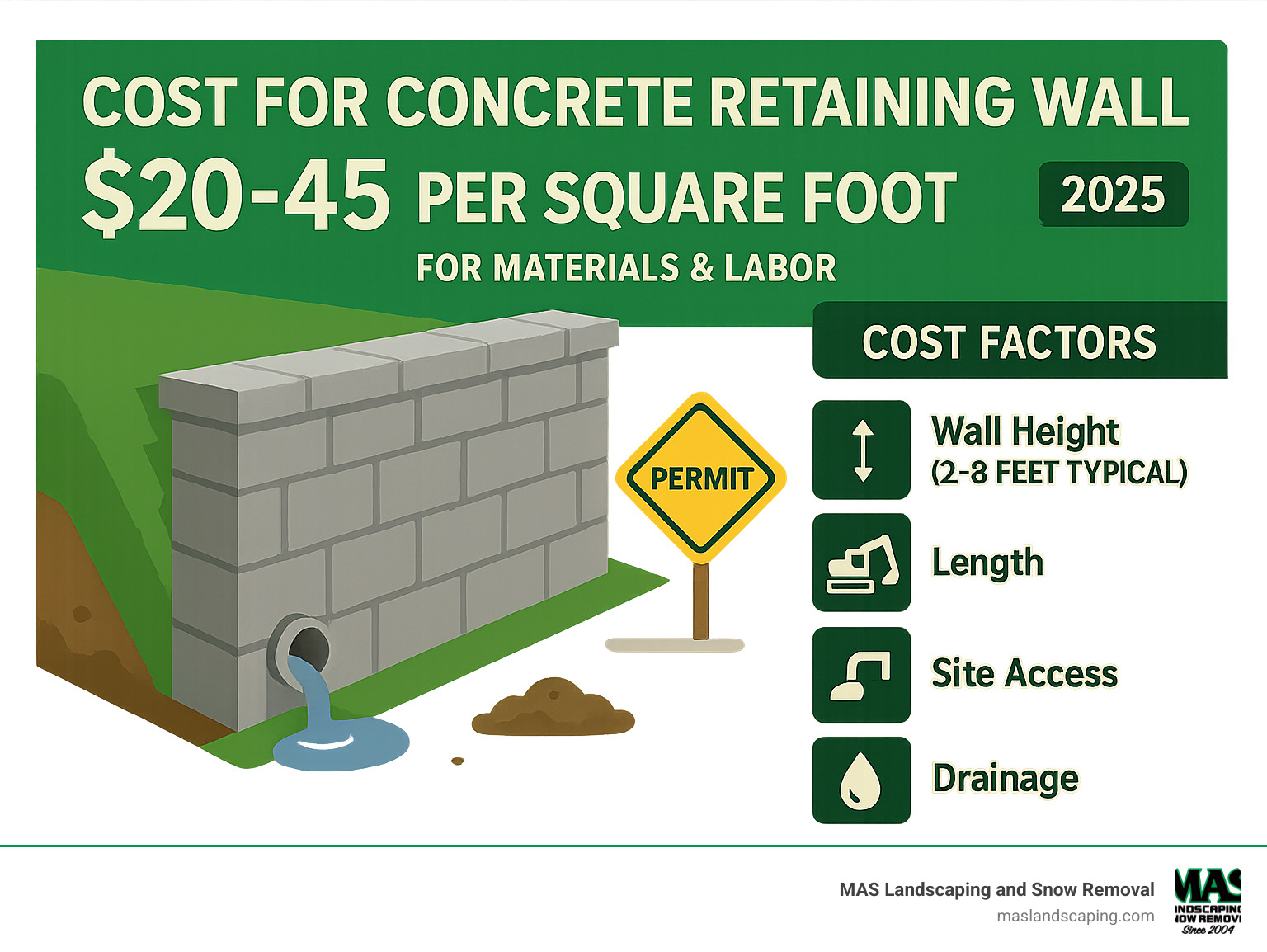
The cost for concrete retaining wall projects typically ranges from $3,000 to $54,000, with most homeowners paying between $20-$75 per square foot or $45-$270 per linear foot. Here’s what drives these costs:
Key Cost Factors:
- Wall size – Height and length directly impact total cost
- Material type – Poured concrete, blocks, or precast panels
- Site conditions – Slope, access, and soil type
- Labor rates – Vary by region and contractor experience
- Additional features – Drainage, permits, and engineering
Note: These are average costs based on industry data and not actual pricing for MAS Landscaping services.
Retaining walls do more than just hold back soil. They prevent erosion, create usable outdoor space, and can significantly boost your property value. When slopes threaten your landscape or you need to maximize yard space, a well-built retaining wall becomes both a practical necessity and a smart investment.
Concrete stands out as the most popular retaining wall material for good reason. It offers best durability, lasting 50-100 years with minimal maintenance. Unlike timber walls that rot or metal that rusts, concrete walls resist weather, pests, and time itself.
The versatility of concrete also means you have options. From affordable cinder blocks to neat stamped finishes that mimic natural stone, concrete can match any budget and design vision. Whether you need a simple garden wall or a complex terraced system, concrete delivers the strength and flexibility to make it happen.
Common cost for concrete retaining wall vocab:
Understanding the Average Cost for a Concrete Retaining Wall
Planning a concrete retaining wall project? You’re probably wondering what you’ll actually spend. The truth is, cost for concrete retaining wall projects varies dramatically based on your specific needs and site conditions.
Most homeowners spend between $3,000 and $10,000 for their retaining wall projects, though costs can range much higher for complex installations. Simple walls might come in under $1,000, while elaborate terraced systems or challenging sites can push costs beyond $30,000.
These are average costs based on industry data and not actual pricing for MAS Landscaping services.
Breaking down the numbers, you’ll typically see costs quoted in two ways. Per square foot pricing ranges from $40 to $150, measuring the face of your wall. Linear foot pricing runs $45 to $270 per foot, which works well for walls with consistent height.
Let’s make this real with an example. Picture a 50-foot long concrete retaining wall standing 4 feet tall. This common project size gives you about 200 square feet of wall face. Based on average pricing, you might expect costs anywhere from $8,000 to $30,000 – quite a range!
Why such variation? Every retaining wall project is unique. Your soil conditions, site access, local building codes, and design preferences all play major roles in the final investment.
At MAS Landscaping, we’ve built countless retaining walls throughout Saugus, MA, and surrounding communities like Everett, Lynnfield, and Malden. We know that Block Walls For Landscaping can transform your outdoor space while solving practical problems like erosion and unusable slopes.
What Factors Influence Your Concrete Retaining Wall Price?
Understanding what drives retaining wall costs helps you make informed decisions and budget appropriately. Several key factors can dramatically impact your final investment.
Wall size is the most obvious cost driver. Taller walls need deeper footings, more materials, and often engineering approval. A 3-foot wall might seem only slightly smaller than a 6-foot wall, but the 6-footer could cost three times more due to structural requirements and complexity.
Length matters too, but it’s usually more predictable. Double the length, roughly double the cost – assuming everything else stays the same.
Design complexity can surprise homeowners with its cost impact. Straight walls are straightforward to build. Add curves, corners, or terraced levels, and you’ve increased both labor time and material waste. Curved walls require custom formwork for poured concrete or precise cutting for blocks.
Site accessibility often makes or breaks a budget. Can trucks reach your backyard? Is the ground level or steeply sloped? Easy access means efficient work and lower costs. Difficult sites where everything must be carried by hand or requires special equipment can double or triple labor costs.
Slopes present particular challenges. Building a Retaining Wall on a Slope Cost involves additional considerations like stepped footings, extra reinforcement, and more complex drainage solutions.
Essential Structural and Additional Costs
Beyond the visible wall itself, several critical components ensure your retaining wall performs properly for decades. These “hidden” costs are actually investments in your wall’s success.
Site preparation sets the foundation for everything that follows. Clearing vegetation, removing stumps, and excavating for the wall and footing are essential first steps. Excavation costs typically run $50 to $200 per cubic yard, depending on soil conditions and access.
Proper land grading ensures water flows away from your wall rather than pooling behind it. This seemingly simple step prevents major headaches later.
Drainage systems are absolutely critical – and non-negotiable. Water buildup behind retaining walls creates enormous pressure that can cause cracking, tilting, or complete failure. Basic drainage might include gravel backfill and weep holes. More complex situations need French drains or elaborate drainage networks.
Concrete footings anchor your wall and distribute its weight. Taller walls need deeper, wider footings. In Massachusetts, footings must extend below the frost line to prevent freeze-thaw damage. This requirement adds both materials and excavation costs.
Backfill material fills the space behind your completed wall. Proper backfill uses layers of gravel for drainage near the wall, topped with suitable fill dirt. The right materials prevent settling and maintain proper drainage.
Don’t forget the paperwork! Building permits are required for most retaining walls over 2-4 feet tall, depending on your local codes. Permit costs range from $50 to $450, but they’re essential for legal compliance and safety.
Structural engineer fees become necessary for taller walls or challenging conditions. Engineers ensure your wall can handle soil pressure, water loads, and local conditions like seismic activity. Their expertise prevents costly failures and ensures safety. For complex seismic considerations, you might want to review more on engineering for seismic zones.
These are general cost ranges. Your specific project will have unique requirements that affect the final investment.
Cost Breakdown: Concrete Wall Types, Materials, and Labor
Now that we’ve covered the general factors, let’s get into the nitty-gritty of how different concrete types impact the cost for concrete retaining wall projects.
Comparing the Cost for Concrete Retaining Wall Types
When it comes to concrete retaining walls, you’ve got several options to choose from, and each one brings its own personality and price tag to your project.
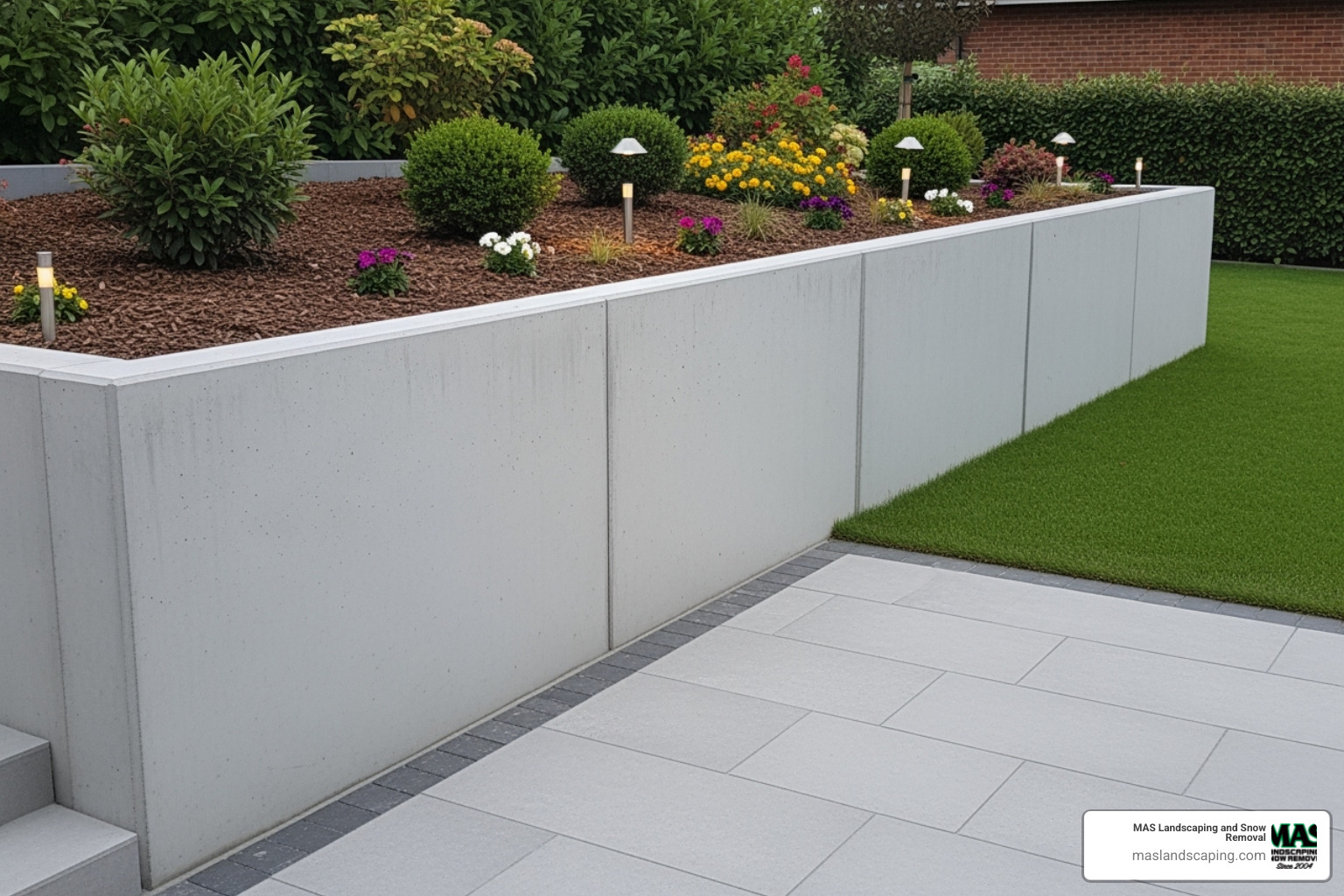
Poured concrete walls are the sleek athletes of the retaining wall world. These monolithic structures get cast as one continuous unit right on your property, creating that smooth, modern look that screams quality. They require extensive formwork and specialized equipment, which bumps up the initial cost for concrete retaining wall installation. But here’s the thing – their strength and longevity are best. You can finish them smooth, add texture, or even color them to match your vision.
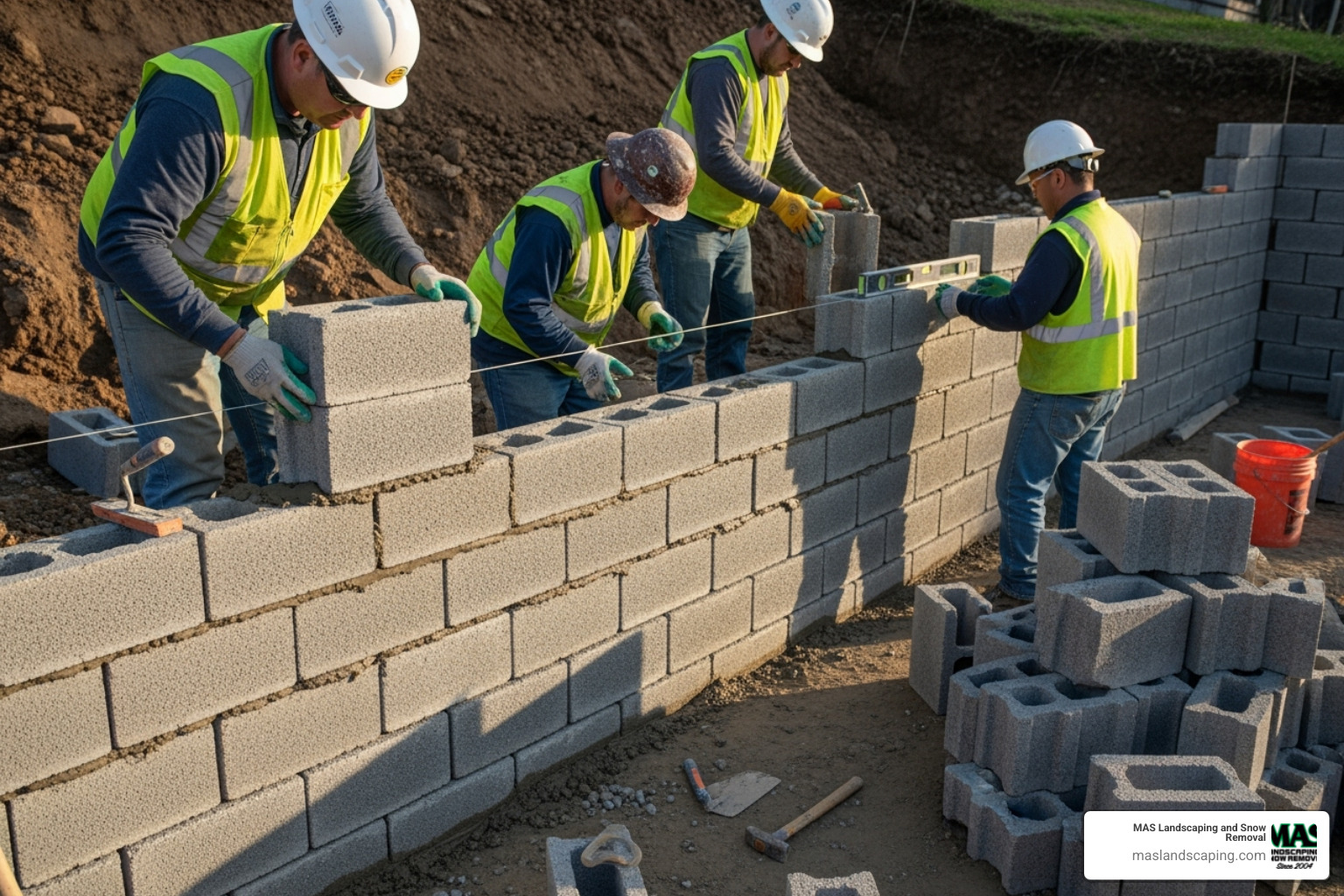
Interlocking concrete block walls are like building with grown-up Legos. These pre-formed blocks stack together without mortar, making them popular for residential projects. While individual blocks might seem affordable at first glance, the installation requires careful leveling and precise stacking. The result? A segmented, modular appearance that many homeowners love for its versatility and charm.
Cinder block walls (also called CMU walls) are the budget-friendly workhorses. These hollow concrete masonry units get filled with rebar and concrete for strength. They’re often the most economical concrete option, though they usually need a finishing touch like stucco or veneer to really shine aesthetically.
Precast concrete panels are the efficiency experts – manufactured off-site in controlled conditions, then transported and installed. These large slabs are popular for bigger projects where consistency and speed matter most.
For those who want the best of both worlds, stamped concrete finishes let you have your cake and eat it too. This technique presses patterns onto freshly poured concrete, mimicking natural stone, brick, or wood. It’s perfect for creating a Decorative Retaining Wall that adds serious curb appeal without breaking the bank.
Here’s how these options stack up:
| Type of Concrete Wall | Average Cost Range (Installed)* | Durability | Aesthetics |
|---|---|---|---|
| Poured Concrete | $20 – $75 per square foot | Excellent | Smooth, modern, customizable with colors and stamps |
| Interlocking Concrete Block | $15 – $50 per square foot | Very Good | Segmented look with various textures and colors |
| Cinder Block (CMU) | $20 – $65 per square foot | Good | Basic appearance, usually needs additional finishing |
| Precast Concrete Panels | $15 – $45 per square foot | Excellent | Uniform, consistent appearance |
| Stamped Concrete Finish | Additional $3 – $15 per square foot | Very Good | Mimics natural materials beautifully |
These are average costs based on industry data and not actual pricing for MAS Landscaping services.
Understanding Material and Labor Cost for Concrete Retaining Wall Installation
Let’s break down what you’re actually paying for when you invest in a concrete retaining wall. The cost for concrete retaining wall projects splits into two main buckets: materials and labor.
Material costs vary dramatically depending on your chosen wall type. For poured concrete, the raw concrete itself is surprisingly affordable – but don’t let that fool you. You’ll also need forms, rebar for reinforcement, and specialized mixing equipment. Rebar alone can add significantly to your material costs, but it’s absolutely essential for structural integrity.
Concrete blocks tell a different story. Individual interlocking blocks might cost anywhere from a few dollars to ten dollars each, but when you calculate the coverage per square foot, the numbers add up quickly. Larger retaining wall blocks designed for serious structural work can cost much more per unit.
Labor rates often represent the biggest chunk of your investment, and for good reason. Installing a concrete retaining wall requires skill, experience, and attention to detail. For poured concrete, you’re paying for the expertise to build proper forms, place rebar correctly, and achieve a smooth, professional finish.
Block installation might seem simpler, but it demands precision. Each block must be perfectly level and properly aligned – one small mistake early on can throw off the entire wall. This is why experienced installers are worth their weight in gold.
Regional variations play a big role too. Here in Saugus, MA, and surrounding areas like Chelsea, Malden, and Everett, labor costs reflect our local market conditions. What you’d pay in other parts of the country might be quite different.
Finding the right installer makes all the difference. Organizations like the Mason Contractors Association of America (MCAA) certify contractors who meet high standards for quality and professionalism. Yes, certified installers might charge a bit more, but they bring expertise that prevents costly mistakes and ensures your wall will stand strong for decades.
At MAS Landscaping, we understand that every project is unique. Our team’s experience with Hardscape Installation Near Me means we can help you steer these choices and find the perfect solution for your property and budget.
These figures represent broad industry averages. For accurate pricing custom to your specific project, nothing beats a personalized consultation with local professionals.
Is a Concrete Retaining Wall a Good Investment?
You might be wondering, “This sounds like a significant investment. Is it really worth it?” The short answer is absolutely! When you look at the cost for concrete retaining wall projects, you’re not just paying for materials and labor – you’re investing in decades of functionality, beauty, and peace of mind.
Lifespan, Durability, and Maintenance
Here’s where concrete retaining walls really shine – they’re built to last. We’re talking about a 50 to 100-year lifespan with proper installation. That’s not just a wall, that’s a legacy! Your grandchildren might still be enjoying the same retaining wall you install today.
The low maintenance needs are honestly one of our favorite things about concrete walls. Once they’re in, you can pretty much forget about them. No annual staining like wood decks, no worry about termites munching away, and no concerns about rot or decay. Concrete laughs in the face of Massachusetts winters, handling our freeze-thaw cycles like a champ.
Compare that to timber retaining walls, which might seem cheaper upfront but typically only last 10 to 20 years before they start showing their age. You’ll find yourself replacing a wooden wall multiple times over the lifespan of a single concrete installation. When you factor in those replacement costs, concrete becomes the clear winner for long-term value.
The resistance to rot, pests, and weather means you won’t be dealing with surprise repairs or emergency replacements. Your concrete wall will look essentially the same in year 20 as it did in year one, just with a bit more character from weathering.
Functional Benefits and Return on Investment
Beyond just lasting forever, concrete retaining walls deliver real, tangible benefits that make your property more valuable and enjoyable.
Preventing soil erosion is probably the most important job your wall will do. If you’ve ever watched topsoil wash away during a heavy rainstorm, you know how heartbreaking (and expensive) erosion can be. A properly built concrete wall stops this process cold, protecting your landscaping investment and potentially saving your home’s foundation from water damage.
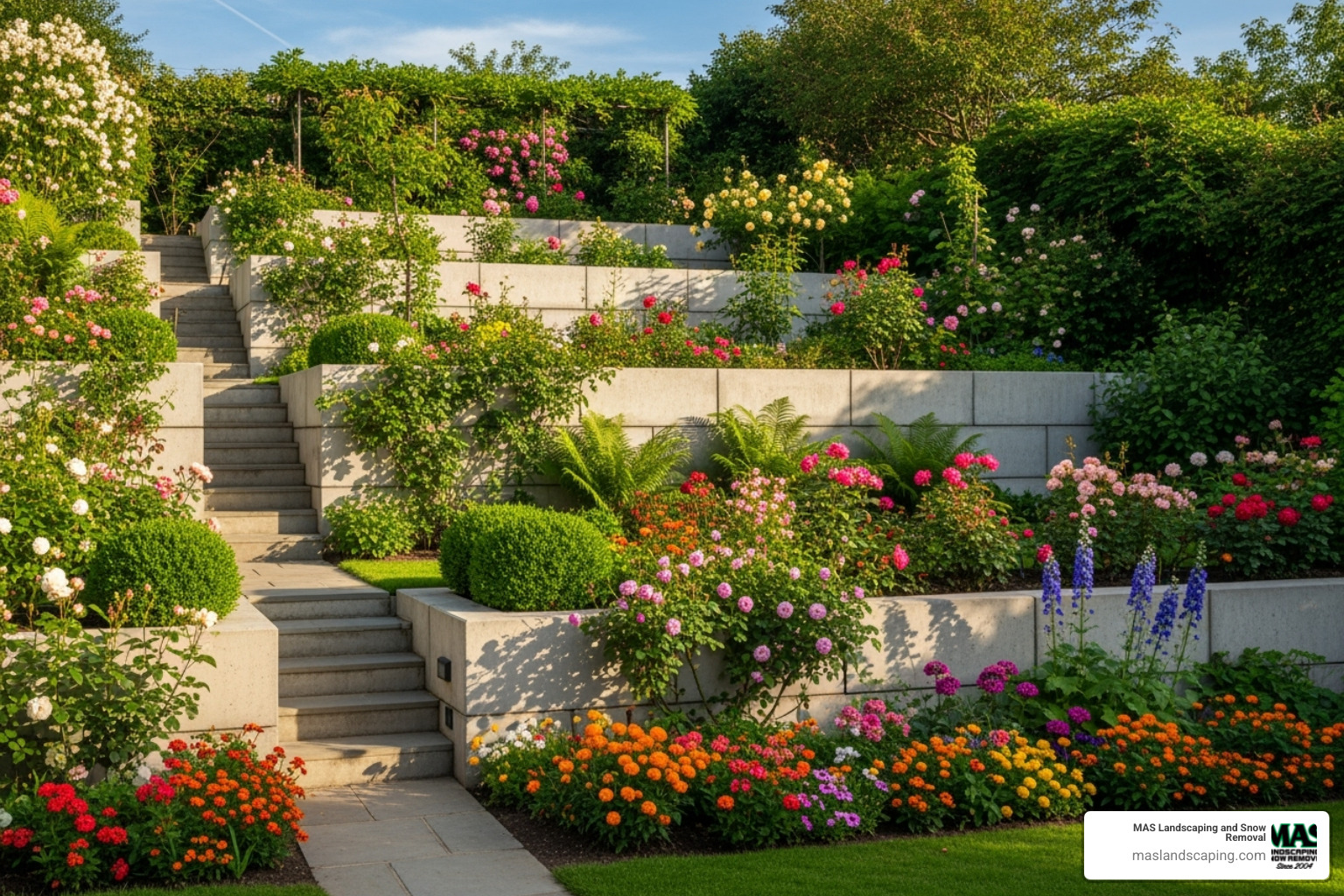
The ability to create usable, flat land from previously unusable slopes is like magic. That steep backyard that was impossible to mow or enjoy suddenly becomes terraced garden space, a level patio for barbecues, or a safe play area for kids. You’re literally expanding your property’s functional square footage.
When it comes to increasing property value, retaining walls are among the smartest investments you can make. A well-designed concrete wall doesn’t just solve problems – it creates opportunities. Studies suggest that quality landscaping projects can offer returns of 100% to 200%, potentially adding around 15% to your home’s overall value.
The improved curb appeal factor can’t be overstated either. A professionally installed retaining wall signals to potential buyers (and neighbors) that this property has been thoughtfully maintained and improved. It’s the kind of upgrade that makes people stop and take notice.
At MAS Landscaping, we love how concrete walls integrate seamlessly with comprehensive Hardscape and Landscaping designs. Your retaining wall can become the foundation for outdoor kitchens, provide built-in seating, or create the perfect backdrop for stunning Garden Wall Designs. We’ve helped homeowners throughout Everett, Lynnfield, and Malden transform challenging slopes into their favorite outdoor spaces.
The bottom line? While the initial cost for concrete retaining wall installation represents a significant investment, the decades of functionality, beauty, and increased property value make it one of the smartest home improvements you can make.
Frequently Asked Questions About Concrete Retaining Wall Costs
We get a lot of questions from homeowners thinking about their retaining wall projects. After years of building walls throughout Saugus, MA and surrounding areas, we’ve noticed the same concerns come up again and again. Let’s tackle the big ones that might be on your mind.
Do I need a permit to build a concrete retaining wall?
The short answer? Probably yes, especially if your wall is going to be more than a few feet tall. Most municipalities require permits for retaining walls over 2 to 4 feet in height, though the exact threshold varies depending on where you live.
Height regulations are the main trigger for permit requirements. Some areas set the bar at 3 feet, others at 4 feet. It might seem like a hassle, but these rules exist for good reason – taller walls carry more risk if they’re not built properly.
Local building codes in places like Medford, Revere, or Chelsea each have their own specific requirements. These might cover everything from how close your wall can be to property lines to what kind of structural engineering is needed. The cost for concrete retaining wall projects can actually increase if you skip this step and have to rebuild later!
Here’s the thing about permits: checking with your municipality is absolutely essential. We’ve seen homeowners get hit with fines or even forced to tear down completed walls because they didn’t get proper permits. Nobody wants that kind of surprise.
When you work with professional contractor guidance, this whole process becomes much smoother. At MAS Landscaping, we’re familiar with the local requirements throughout our service areas and can help steer the permit process. We handle this regularly, so you don’t have to worry about missing important details or deadlines.
How can I save money on my retaining wall project?
Smart question! While a concrete retaining wall is definitely an investment, there are several ways to manage the cost for concrete retaining wall installation without cutting corners on quality or safety.
Material selection makes a big difference in your budget. Interlocking concrete blocks or standard CMU walls typically cost less than elaborate poured concrete designs with custom finishes. You can always start simple and add decorative elements later.
Simple designs will always be more budget-friendly than complex ones. Straight walls cost less than curved ones, and single-level walls are more affordable than multi-tiered terraced systems. Save the fancy curves for phase two if budget is tight.
Site accessibility is huge for controlling costs. If trucks can easily reach your project area, you’ll save significantly on labor. Clear pathways and remove obstacles before the crew arrives – every hour of hand-carrying materials adds up quickly.
For smaller projects, you might handle some DIY site preparation like clearing brush or minor debris removal. However, be careful here – excavation and grading need to be precise for wall stability. We’ve seen well-meaning homeowners create expensive problems by digging in the wrong spots or at incorrect depths!
The best money-saving tip? Get multiple quotes from reputable contractors. Two to three detailed estimates help you understand what’s included and find the best value. Just remember – if a quote seems too good to be true, it probably is. Quality work costs what it costs.
How thick does a concrete retaining wall need to be?
Wall thickness isn’t something you want to guess at – it’s critical for safety and longevity. Typical thickness for concrete retaining walls ranges from 6 to 12 inches, but the right choice depends on several important factors.
Wall height is the biggest consideration. A 3-foot garden wall needs much less thickness than an 8-foot slope stabilization wall. Generally, taller walls need proportionally thicker construction to handle the increased soil pressure behind them.
Soil pressure varies dramatically depending on what your wall is holding back. Heavy clay soil that gets saturated during spring rains creates much more pressure than well-draining sandy soil. This is why site evaluation is so important before determining wall specifications.
Engineering requirements come into play for larger projects. When walls exceed certain heights or face challenging soil conditions, structural engineers calculate the exact thickness needed. They factor in everything from soil type to local weather patterns to ensure your wall can handle whatever nature throws at it.
The bottom line? Don’t try to figure this out yourself. A properly designed wall thickness ensures your investment in a cost for concrete retaining wall project pays off with decades of reliable performance. Cutting corners on thickness is one of those “penny wise, pound foolish” decisions that can lead to expensive failures down the road.
Start Your Retaining Wall Project with Confidence
Taking on a retaining wall project doesn’t have to feel overwhelming. By now, you understand that the cost for concrete retaining wall projects depends on several key factors: your wall’s size, the type of materials you choose, your site’s unique conditions, labor requirements, and those essential structural elements like drainage and proper footings. While costs can vary widely, investing in quality materials and professional installation pays dividends for decades to come.
Here’s something we can’t stress enough: professional installation is absolutely critical for retaining wall projects. We’re not just talking about aesthetics here – a retaining wall is literally holding back thousands of pounds of soil and water pressure. When drainage isn’t properly designed or the foundation isn’t adequate, walls can fail catastrophically. This isn’t just about losing your investment; it’s about protecting your property and ensuring everyone’s safety.
An experienced contractor brings invaluable knowledge to your project. They understand local soil conditions, know the building codes inside and out, and have seen enough projects to anticipate potential problems before they happen. This expertise ensures your wall is built right the first time, saving you from costly repairs or complete rebuilds down the road.
Planning your project thoughtfully makes all the difference in both cost and outcome. Take time to consider how you want to use the space, what drainage challenges you’re facing, and how the wall will integrate with your existing landscape. Getting detailed quotes from reputable professionals helps you make informed decisions and avoid unpleasant surprises.
For homeowners in Saugus, MA, and the surrounding communities of Everett, Lynnfield, Malden, Melrose, Medford, Revere, and Chelsea, MAS Landscaping brings the local expertise and professional commitment you need for your hardscaping project. We understand the unique challenges of New England soil conditions and weather patterns, and we’re dedicated to creating functional, beautiful outdoor spaces that stand the test of time.
Ready to transform that challenging slope into usable, beautiful outdoor space? We’re here to guide you through every step of the process, from initial planning to final installation.
Get a professional quote for your retaining wall installation and start building with confidence today!
