

Cost of New Lawn Irrigation System Installation: 2025 Expert Guide & Best Prices
Why Understanding Irrigation System Costs Matters for Your Property Investment
The cost of new lawn irrigation system installation typically ranges from $1,600 to $10,000, with most homeowners investing $2,500 to $6,500 for a professionally installed system. Here’s what drives these costs:
Quick Cost Breakdown:
– Per square foot: $0.20 – $1.00
– Per irrigation zone: $500 – $1,000
– Quarter-acre lawn: $2,000 – $4,500
– Labor costs: $50 – $100 per hour
– Permits: $35 – $200
Whether you’re tired of dragging hoses around your Greater Boston property or watching brown patches appear during dry spells, a properly designed irrigation system solves these problems while potentially adding up to 12% to your home’s value.
The investment goes beyond convenience. Smart irrigation systems can reduce water usage by 15-30% compared to manual watering, often paying for themselves through lower utility bills within 3-5 years.
But here’s the thing – not all irrigation systems cost the same. A basic above-ground setup might run $1,800, while a premium smart system with weather sensors and drip zones can reach $15,000 or more.
Understanding these cost factors helps you make informed decisions about what features matter most for your property and budget.
Key cost of new lawn irrigation system installation vocabulary:
– how much does it cost to install a new lawn
– how to prepare ground for sod
– best fertilizer for new sod
Average Cost of New Lawn Irrigation System Installation in 2025
When homeowners start researching the cost of new lawn irrigation system installation, they quickly find that pricing varies dramatically across the country. The national average hovers around $2,500, but that number doesn’t tell the whole story for your specific situation.
Based on internet data from across the United States, most homeowners invest somewhere between $1,600 and $10,000 for a professionally installed system. The wide range reflects the enormous variety in property sizes, system complexity, and regional factors that influence final costs.
Per-square-foot pricing typically falls between $0.20 and $1.00 for standard installations, though premium smart systems can push costs to $2.50 per square foot or higher. For zone-based pricing, expect $500 to $1,000 per zone, with bulk discounts often available for larger installations.
A typical quarter-acre property requires an investment of $2,000 to $4,500, but properties with challenging terrain, rocky soil, or premium features can easily exceed these ranges. Here in the Northeast, we face unique challenges that affect these national averages.
Regional labor rates play a significant role in final costs. In Massachusetts and surrounding areas, skilled irrigation installers command $50 to $100 per hour due to the specialized knowledge required for cold-climate installations and the higher cost of living.
The 2025 inflation outlook suggests continued upward pressure on both materials and labor. Trenching costs alone range from $4 to $12 per linear foot, while municipal permits typically add $35 to $200 to your project total.
Smart add-ons are becoming increasingly popular despite their upfront costs. Weather-based controllers and soil moisture sensors add $170 to $530 to installation costs, but the EPA’s research on smart controllers shows they can save over 7,000 gallons of water annually, translating to roughly $430 per year in reduced water bills.
Perhaps most encouraging for homeowners considering this investment: professional installations typically recover about 83% of their cost when you sell your home, making irrigation systems one of the smarter landscaping investments for long-term property value.
Regional price differences & what drives them
Geography isn’t just about aesthetics when it comes to irrigation costs – it fundamentally changes how systems must be designed and installed. Here in the Northeast, we deal with conditions that make installation more complex and expensive than many other regions.
Soil conditions present our biggest challenge. New England’s notoriously rocky soil requires powerful trenching equipment and significantly more labor time. Rocky conditions can increase digging costs by 20% to 50% compared to the sandy soils found in places like Florida or Arizona.
Frost depth requirements add another layer of complexity. Our systems must be buried 8 to 12 inches deep to prevent freeze damage, requiring more extensive excavation than warmer climates where 6-inch depths work fine.
Water prices in the Greater Boston area rank among the highest nationally, making efficient system design crucial for long-term affordability. This drives demand for smart controllers and precision irrigation components that cost more upfront but save significantly over time.
Contractor availability creates seasonal pricing pressure. Our short installation window – typically April through October – concentrates demand into just six months, supporting higher labor rates of $50 to $100 per hour.
The Southwest presents different challenges entirely. While their longer installation season and easier soil conditions reduce labor costs, extreme heat and water restrictions drive demand for premium drip systems and sophisticated controllers.
These regional factors explain why identical systems can vary by $1,500 to $2,500 between different parts of the country.
Cost of new lawn irrigation system installation by zone count
Understanding zone-based pricing gives you a clearer picture of costs than square footage alone. Each zone represents a separately controlled watering area, and pricing scales predictably as you add zones.
Single-zone systems run $500 to $1,000 and work perfectly for small properties under 2,000 square feet. You’ll get a basic controller, one valve, 4 to 8 sprinkler heads, and minimal trenching. While limited in flexibility, single-zone systems provide excellent value for compact lawns with uniform watering needs.
Four-zone systems represent the sweet spot for most suburban properties, costing $2,000 to $4,000. This setup allows separate control for your front yard, back lawn, flower beds, and foundation plantings – giving you the flexibility to water different areas based on their specific needs.
Seven-zone systems cost $3,500 to $7,000 and suit larger properties or complex landscaping with varied watering requirements. With seven zones, you can accommodate different sprinkler types for optimal coverage, mixing spray heads for small areas with rotary heads for larger lawn sections.
Scalability works in your favor with irrigation systems. Adding zones to existing systems costs less per zone than initial installation, and bulk discounts often apply when installing five or more zones simultaneously.
Every system requires a backflow prevention device costing $250 to $550 – most municipalities mandate these to protect the water supply. Each zone needs its own valve and solenoid ($15 to $85), sprinkler heads ($2 to $40 each), PVC piping, and control wiring.
The materials for each zone typically include 6 to 12 sprinkler heads, 100 to 200 feet of piping, and the electrical connections to tie everything together. When you factor in trenching, installation labor, and system testing, the per-zone costs make sense.
Remember: These figures represent internet-based averages from across the country, not specific quotes from MAS Landscaping and Snow Removal.
Key Factors That Influence Your Final Bill
Several variables can dramatically impact your cost of new lawn irrigation system installation. Understanding these factors helps you make informed decisions and avoid surprise expenses that can turn a straightforward project into a budget-busting headache.
Think of your irrigation system like a custom suit – the final price depends on the fabric you choose, how many alterations you need, and whether you’re shopping during peak season. Let’s break down what really drives these costs.
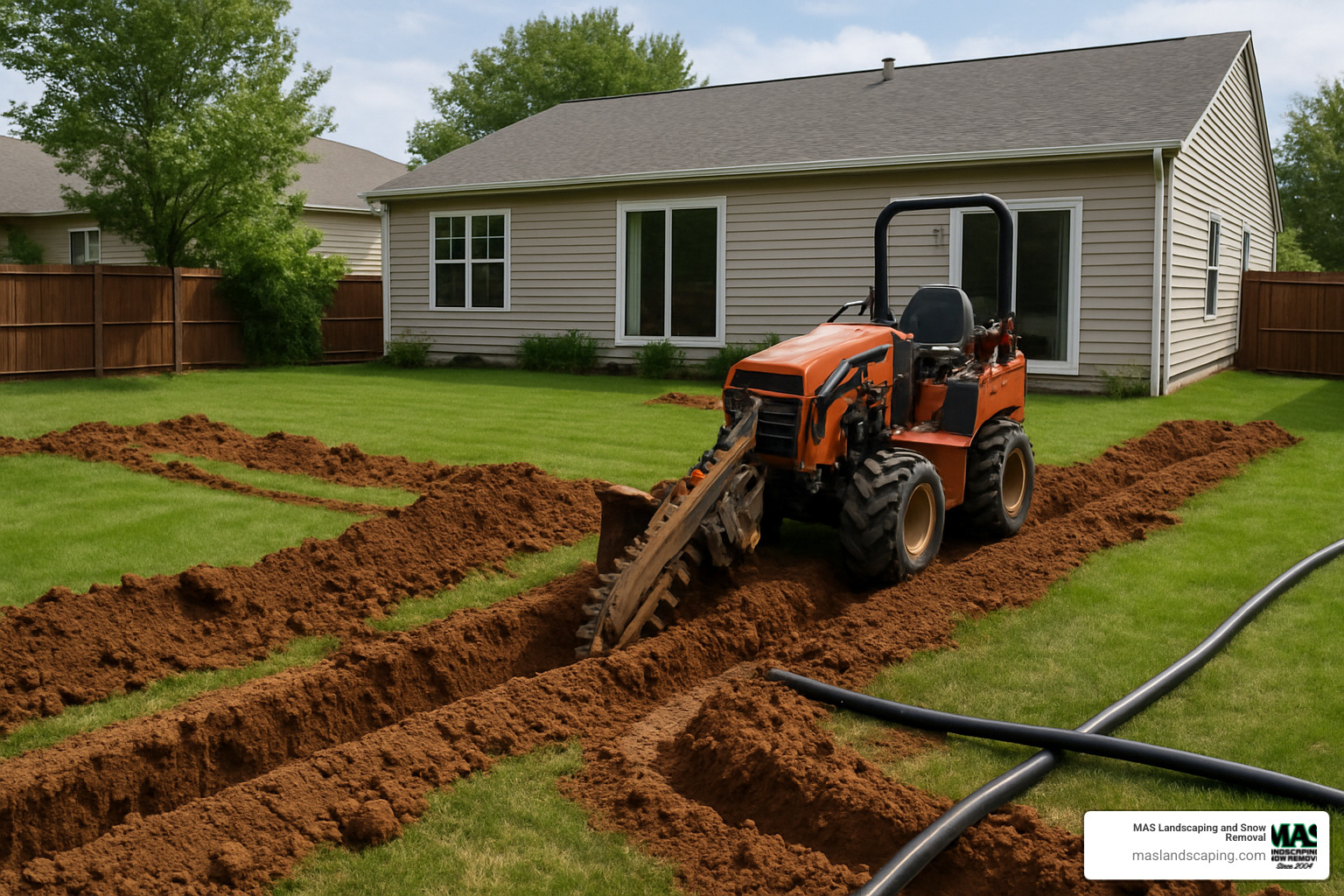
Lawn size and shape play the biggest role in determining costs. A perfectly square quarter-acre lot might need 100 feet of main line, but that same area stretched into a narrow rectangle could require over 200 feet of piping. More trenching means more labor hours and materials – it’s simple math that adds up quickly.
Zone requirements multiply costs faster than most homeowners expect. Your basic front and back lawn setup might work with 3-4 zones, but add flower beds, foundation plantings, and a vegetable garden, and suddenly you’re looking at 6-8 zones. Each zone needs its own valve, wiring, and control setup.
System type selection creates the widest cost swings. Above-ground systems can cost 40-60% less than in-ground installations, but they sacrifice the convenience and curb appeal that make irrigation systems worthwhile investments.
Trenching depth matters more than you might think. Standard 8-12 inch depth protects pipes from our harsh New England winters and lawn mower damage. Hit rocky ledge or existing utilities, and your crew might need to hand-dig sections at triple the normal labor rate.
Sprinkler head types range from basic spray heads to sophisticated pressure-compensating rotary heads. The difference between a basic system using simple spray heads versus premium rotating heads can add thousands to your project cost.
Controllers and sensors separate basic systems from smart ones. A simple timer gets the job done, but smart controllers with weather integration and soil moisture sensors can cut your water bills significantly while protecting your investment from overwatering damage.
Slope and drainage challenges can surprise homeowners with additional costs. Properties with significant grade changes often need specialized pressure-compensating equipment or French drain integration, potentially adding substantial expenses to the base installation.
Soil type affects everything from sprinkler spacing to installation difficulty. Clay soil requires different flow rates and timing than sandy soil, while rocky conditions can double trenching time and equipment wear.
Permits in Massachusetts municipalities typically range from modest fees to more substantial costs, and some areas require licensed plumber involvement for backflow prevention devices, adding professional fees to your project.
Smart contractors always include a repair allowance of 5-10% for unexpected issues. Whether it’s hitting an unmarked utility line, finding drainage problems, or needing extra lawn restoration, these contingencies protect both you and your installer from project delays.
For homeowners planning complete lawn renovations, timing irrigation installation with other projects can create significant savings. Check our guide on new lawn installation cost to understand how coordinating these projects affects your overall investment.
Material Cost Breakdown
Understanding material costs helps you evaluate quotes and make smart upgrade decisions without getting overwhelmed by technical jargon. Think of it like shopping for a car – you want to know what you’re paying for under the hood.
Sprinkler heads create the most visible difference in system performance. Basic spray heads work fine for small areas but lack the coverage and efficiency of rotary heads. Premium pressure-compensating heads cost significantly more but deliver consistent watering regardless of pressure fluctuations – a common issue in municipal water systems.
Valves and controls represent the heart of your system. Professional-grade valves cost more upfront but resist clogging and last longer than basic residential models. The solenoid (the electrical component that opens and closes valves) often fails first, so choosing quality here prevents service calls later.
Piping systems offer choices between traditional PVC and flexible PEX tubing. PVC costs less but requires more fittings and precise installation. PEX handles ground movement better and installs faster, making it worth the premium in challenging soil conditions.
Controllers range from simple timers to sophisticated smart systems. Basic multi-zone controllers handle scheduling well, but smart weather-based controllers automatically adjust watering based on rainfall, temperature, and humidity – often paying for their premium through water savings.
Backflow prevention isn’t optional in most areas – it’s required by law to protect municipal water supplies. Professional-grade devices cost more but handle pressure variations better and require less maintenance than basic models.
Wire, connections, valve boxes, and rain sensors might seem like small expenses, but they add up quickly on larger installations. Quality components in these “invisible” parts prevent the frustrating service calls that can make you regret choosing the cheapest option.
Labor & Equipment Charges
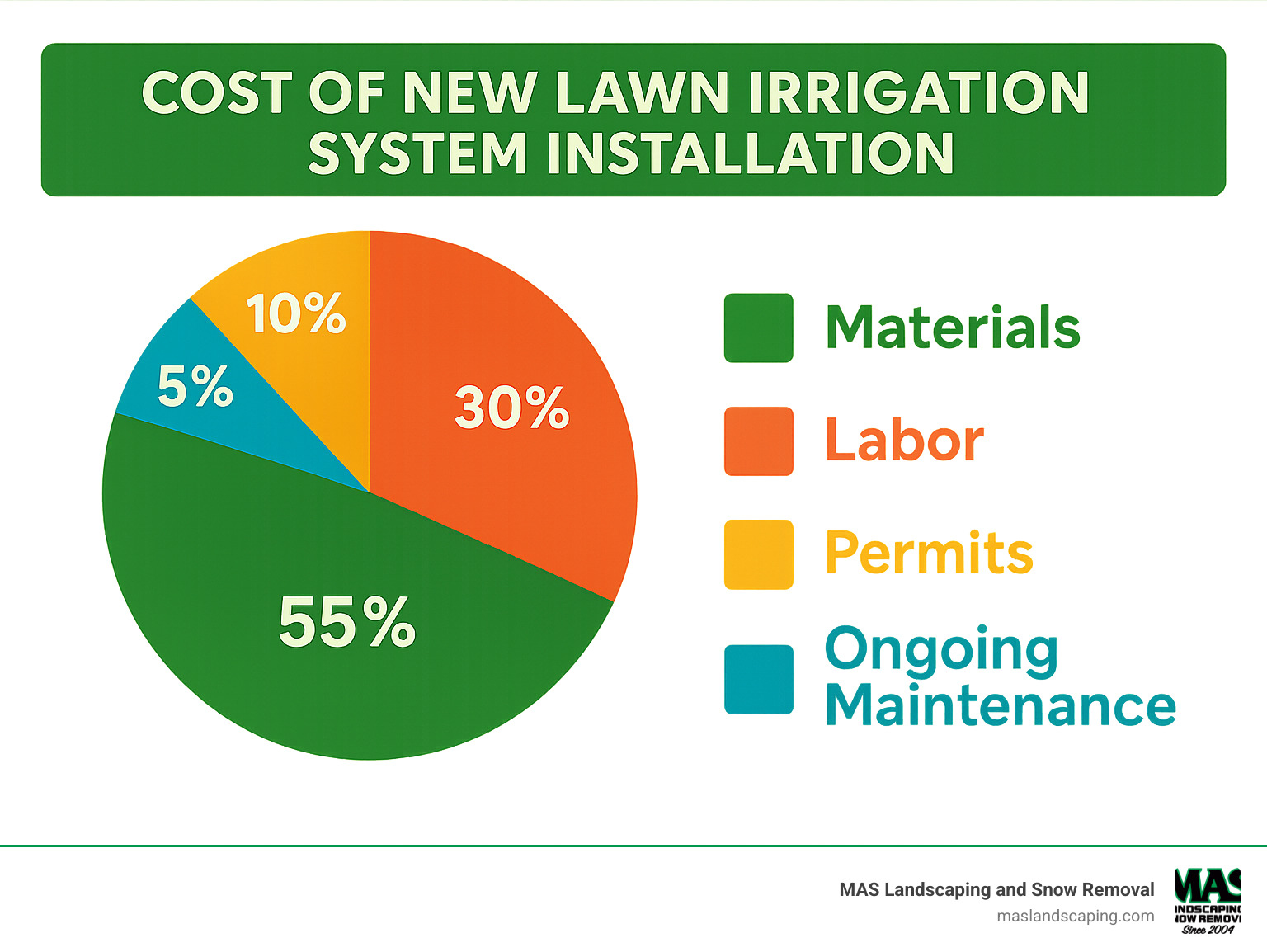
Labor represents the largest portion of your installation cost, typically 50-60% of the total project expense. Understanding these charges helps you appreciate the skill and equipment required for professional installation.
Crew size and efficiency directly impact your costs. Professional crews typically include a lead technician who designs the layout and handles technical connections, an equipment operator who manages trenching, and a laborer who assists with pipe laying and cleanup. This team approach completes installations faster and more accurately than single-person crews.
Equipment rental for trenching machines represents a significant daily expense. Walk-behind units work for smaller projects, while large installations require ride-on trenchers that can cost several hundred dollars per day. Weather delays can extend equipment rental periods, adding unexpected costs.
Mobilization costs cover crew travel time and equipment transport. Local contractors typically charge less for mobilization, which is one advantage of choosing established local companies familiar with your area’s soil conditions and permit requirements.
Cleanup and restoration separate professional installations from amateur work. Quality contractors include lawn repair, seed or sod replacement for damaged areas, and complete debris removal. This restoration work often determines whether your new system improves or detracts from your property’s appearance.
Trenching costs vary dramatically based on soil conditions, depth requirements, and utility conflicts. Rocky New England soil can triple digging time compared to sandy conditions. Utility line conflicts require careful hand-digging around marked cables and pipes.
Markup structure covers contractor overhead, insurance, licensing, and profit margins. Established contractors with proper insurance and licensing typically charge higher markups than unlicensed operators, but this investment protects you from liability and ensures quality workmanship.
Seasonal pricing fluctuates with demand. Spring and early summer installations command premium pricing when everyone wants their system installed immediately. Fall installations often offer significant savings as contractors fill their schedules before winter shutdown.
These labor and equipment costs reflect the complexity of creating a reliable irrigation system that will serve your property for decades. While the upfront investment might seem substantial, professional installation prevents the costly repairs and poor performance that often result from cutting corners on labor quality.
Comparing Irrigation System Types & Price Points
When it comes to irrigation systems, you’re not just buying sprinklers—you’re investing in a solution that needs to match your lifestyle, budget, and property’s unique needs. The cost of new lawn irrigation system installation varies dramatically depending on which type you choose, and understanding these differences helps you make the smart choice for your situation.
Think of it like buying a car. You could get a reliable used sedan that gets you from point A to point B, or you could invest in a luxury vehicle with all the bells and whistles. Both will transport you, but the experience—and price tag—are worlds apart.
| System Type | Pros | Cons | Average Install Cost* |
|---|---|---|---|
| Above-ground | Low cost, easy DIY, portable | Limited automation, visible equipment | $300 – $1,500 |
| In-ground spray | Automatic operation, hidden components | Higher cost, permanent installation | $2,500 – $6,500 |
| Rotary heads | Better coverage, wind resistant | Higher head cost, slower application | $3,000 – $7,500 |
| Drip irrigation | Water efficient, precise delivery | Limited to specific areas, higher maintenance | $450 – $2,000 |
| Smart/automated | Weather responsive, maximum efficiency | Highest cost, technology dependence | $5,500 – $15,000 |
*These are average costs based on internet data and not actual costs for MAS Landscaping.
The key is matching the system to your property’s personality. A small cottage garden might thrive with a simple drip system, while a sprawling suburban lawn benefits from the convenience of smart, automated coverage. Here in the Greater Boston area, we also need to consider our harsh winters and rocky soil conditions when making these decisions.
Budget-Friendly Above-Ground Options
Sometimes the simplest solution is the smartest one. Above-ground irrigation systems prove that you don’t need to break the bank—or break ground—to keep your lawn healthy and green.
These systems work especially well for homeowners who want to test the irrigation waters before committing to a permanent installation. Maybe you’re not sure if automated watering is worth it, or perhaps you’re planning other landscaping changes and want flexibility.
Basic components include garden hoses with automatic timers for around $50-$200, stationary sprinkler heads that cost $15-$40 each, and complete DIY kits ranging from $300-$1,500 that can cover anywhere from 1,000 to 5,000 square feet.
The beauty of above-ground systems lies in their simplicity and flexibility. You can set them up in an afternoon, store them in your garage during winter (no expensive winterization needed), and modify them as your garden evolves. Most importantly, you typically won’t need permits, which saves both time and money.
However, let’s be honest about the trade-offs. Visible hoses and sprinklers can make your beautiful lawn look like an obstacle course. They create tripping hazards during summer barbecues and turn lawn mowing into a strategic exercise. You’ll also need to set them up each spring and take them down each fall.
These systems work best for smaller properties under 3,000 square feet, rental homes where permanent improvements don’t make sense, or areas where trenching simply isn’t practical due to existing landscaping or hardscaping.
Mid-Range In-Ground Spray Systems
Here’s where most homeowners find their sweet spot. In-ground spray systems offer that professional, polished look while delivering reliable, automated watering at a reasonable investment level.
Picture this: your sprinklers pop up like magic each morning, water your lawn evenly, then disappear back into the ground. No hoses to trip over, no equipment cluttering your beautiful landscape, just a consistently green lawn that makes your neighbors wonder what your secret is.
Typical mid-range systems include 3-7 irrigation zones that let you customize watering for different areas, automatic timer controllers that can run multiple programs, pop-up spray heads with 8-15 foot coverage radius, and basic rain sensors that prevent your system from watering during storms.
Most homeowners in our Everett, Lynnfield, and Malden service areas invest between $2,500-$6,500 for these systems, and here’s why they’re so popular: they deliver significant curb appeal improvement while eliminating the daily chore of manual watering.
The magic happens in the design details. Head-to-head coverage ensures every square inch gets consistent water—no more brown spots or soggy areas. Separate zones for sunny and shady areas mean your hostas won’t get the same treatment as your sun-loving grass. Proper pressure regulation prevents that annoying misting that wastes water and creates muddy spots.
According to Fixr, these mid-range systems typically recover 80-85% of their installation cost when you sell your home. That makes them one of the smarter landscaping investments you can make.
Premium Smart & Drip Hybrids
If you’re the type of person who appreciates technology that makes life easier—and you want the most water-efficient system possible—premium smart irrigation represents the pinnacle of residential watering systems.
These aren’t just sprinklers with timers. Smart irrigation systems think for themselves. They check the weather forecast and skip watering when rain is coming. They monitor soil moisture and adjust schedules when your lawn is already adequately hydrated. Some even send alerts to your phone if there’s a problem.
Weather-based controllers form the brain of these systems, automatically adjusting schedules based on temperature, humidity, wind, and rainfall data. Add soil moisture sensors, and your system becomes incredibly precise—watering only when and where it’s actually needed.
The hybrid approach combines different irrigation methods for maximum efficiency. Your lawn might get coverage from rotary heads, while dedicated drip zones deliver water directly to flower bed root zones. Vegetable gardens can have their own moisture-controlled sections, and foundation plantings get gentle, targeted irrigation.
Investment levels typically range from $5,500-$15,000 or more, depending on property size and feature complexity. That might sound steep, but the water savings can be substantial—up to 30% reduction compared to conventional systems. In areas with high water costs like ours, these savings add up quickly.
Advanced slope management becomes crucial on many New England properties. Premium systems include pressure-compensating emitters that prevent runoff on hills, French drains that handle excess water during heavy spring rains, and smart sensors that shut off during saturation to prevent erosion.
The convenience factor is hard to overstate. Remote smartphone control means you can adjust your irrigation from vacation, check water usage while at work, or troubleshoot issues without walking around your property in the dark.
For homeowners who want the ultimate in convenience, efficiency, and environmental responsibility, these premium systems represent the future of residential irrigation.
DIY vs. Professional Installation & Money-Saving Tips
The decision between DIY and professional installation significantly impacts both upfront costs and long-term results. Here’s what you need to know:
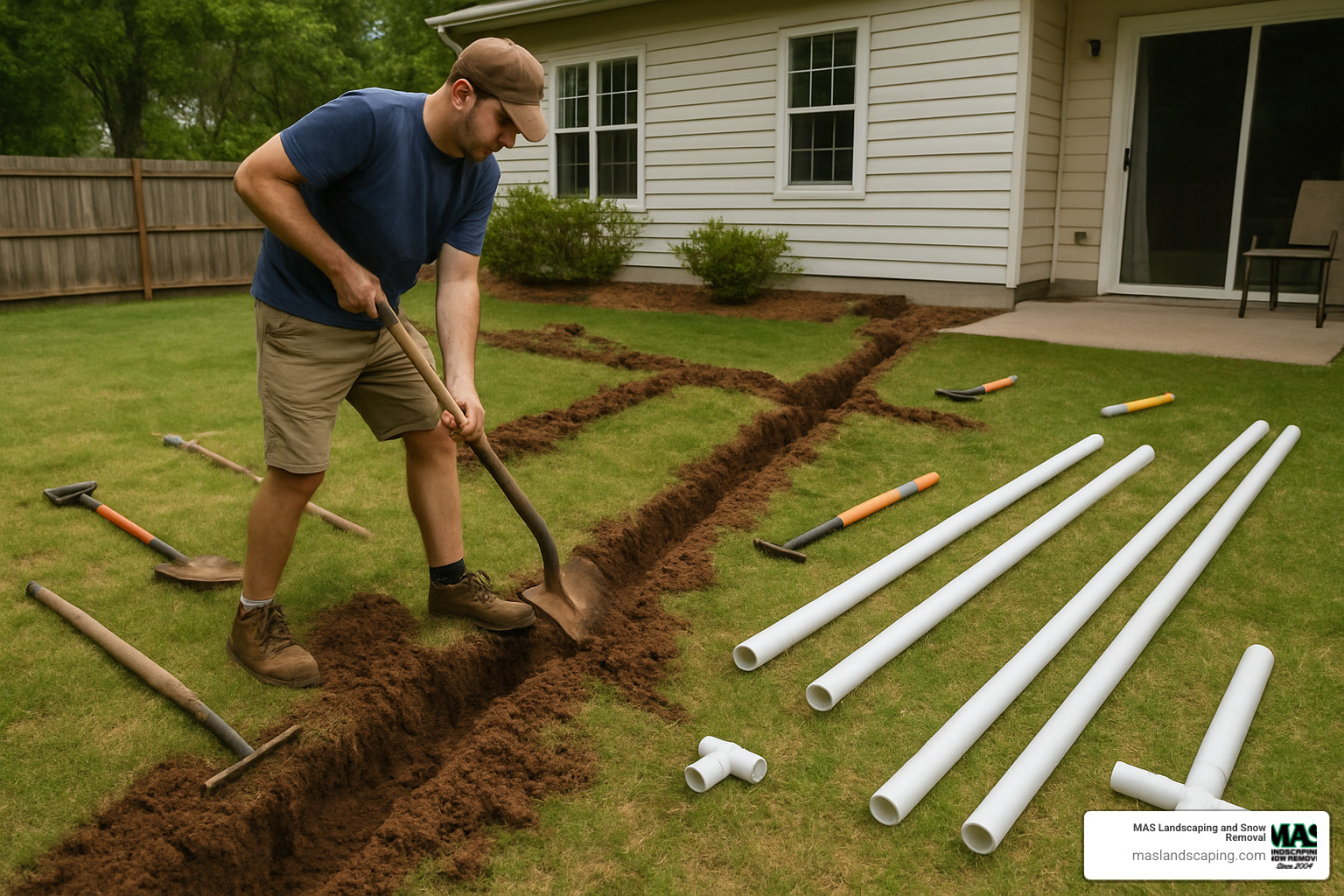
DIY Installation Reality Check:
Skill Requirements:
– Basic plumbing knowledge for pipe connections
– Electrical understanding for controller wiring
– Landscape design principles for optimal coverage
– Local code compliance for permits and backflow prevention
Hidden Costs Often Overlooked:
– Tool and equipment rental: $200-$500
– Permit applications and inspections: $100-$300
– Utility location services: $50-$150
– Repair costs for mistakes: $200-$1,000+
– Time investment: 20-40 hours for typical installation
Professional Installation Advantages:
– Design expertise ensures optimal coverage and efficiency
– Warranty protection covers parts and labor
– Proper permits and code compliance
– Insurance coverage for property damage
– Seasonal maintenance and repair services
Money-Saving Strategies:
- Dig Your Own Trenches: Save $2-$8 per linear foot by renting a trencher and doing excavation yourself
- Seasonal Timing: Schedule installation during fall or early spring for 10-15% discounts
- Group Projects: Combine irrigation with other landscaping work for bulk pricing
- Rebate Programs: Check local utilities for water conservation incentives
- Phased Installation: Start with priority zones and expand over time
Pros and Cons Checklist
DIY Installation:
Pros:
– Lower upfront costs (materials only)
– Personal satisfaction and learning experience
– Complete control over timeline and design
– No contractor scheduling constraints
Cons:
– Significant time investment (weekends for months)
– Risk of costly mistakes requiring professional repair
– No warranty coverage for installation issues
– Potential code violations affecting home sales
– Limited access to professional-grade materials
Professional Installation:
Pros:
– Expert design maximizes efficiency and coverage
– Warranty protection provides peace of mind
– Proper permits and inspections ensure compliance
– Insurance coverage protects against property damage
– Ongoing maintenance and repair services available
Cons:
– Higher upfront investment
– Contractor scheduling may delay project start
– Less personal involvement in design decisions
– Markup on materials increases total cost
Cost of New Lawn Irrigation System Installation: DIY vs. Pro Case Studies
Quarter-Acre Property Case Study:
DIY Approach:
– Materials cost: $1,200-$1,800
– Tool rental: $300-$500
– Permits: $100-$200
– Total: $1,600-$2,500
– Time investment: 25-35 hours
Professional Installation:
– Complete turnkey system: $3,500-$5,500
– Design, permits, installation, warranty included
– Total: $3,500-$5,500
– Time investment: 8-16 hours for homeowner consultation
Two-Acre Property Case Study:
DIY Approach:
– Materials cost: $2,500-$4,000
– Equipment rental: $600-$1,000
– Permits and inspections: $200-$400
– Total: $3,300-$5,400
– Time investment: 60-80 hours
Professional Installation:
– Complete system with 8-12 zones: $8,000-$15,000
– Includes design, trenching, installation, testing
– Total: $8,000-$15,000
– Warranty and maintenance package included
Break-Even Analysis:
DIY installations make financial sense when:
– You have significant time availability
– Basic plumbing/electrical skills exist
– Property is relatively simple (flat, few obstacles)
– You’re comfortable with potential re-work costs
Professional installation provides better value when:
– Time is limited or valuable
– Property has complex features or challenging terrain
– Long-term warranty and service are priorities
– Resale value and curb appeal matter
Maintenance, Repairs & Long-Term Ownership Costs
Understanding ongoing costs helps you budget accurately for irrigation system ownership. While the initial cost of new lawn irrigation system installation gets most attention, annual maintenance and occasional repairs represent significant long-term expenses that smart homeowners plan for from day one.
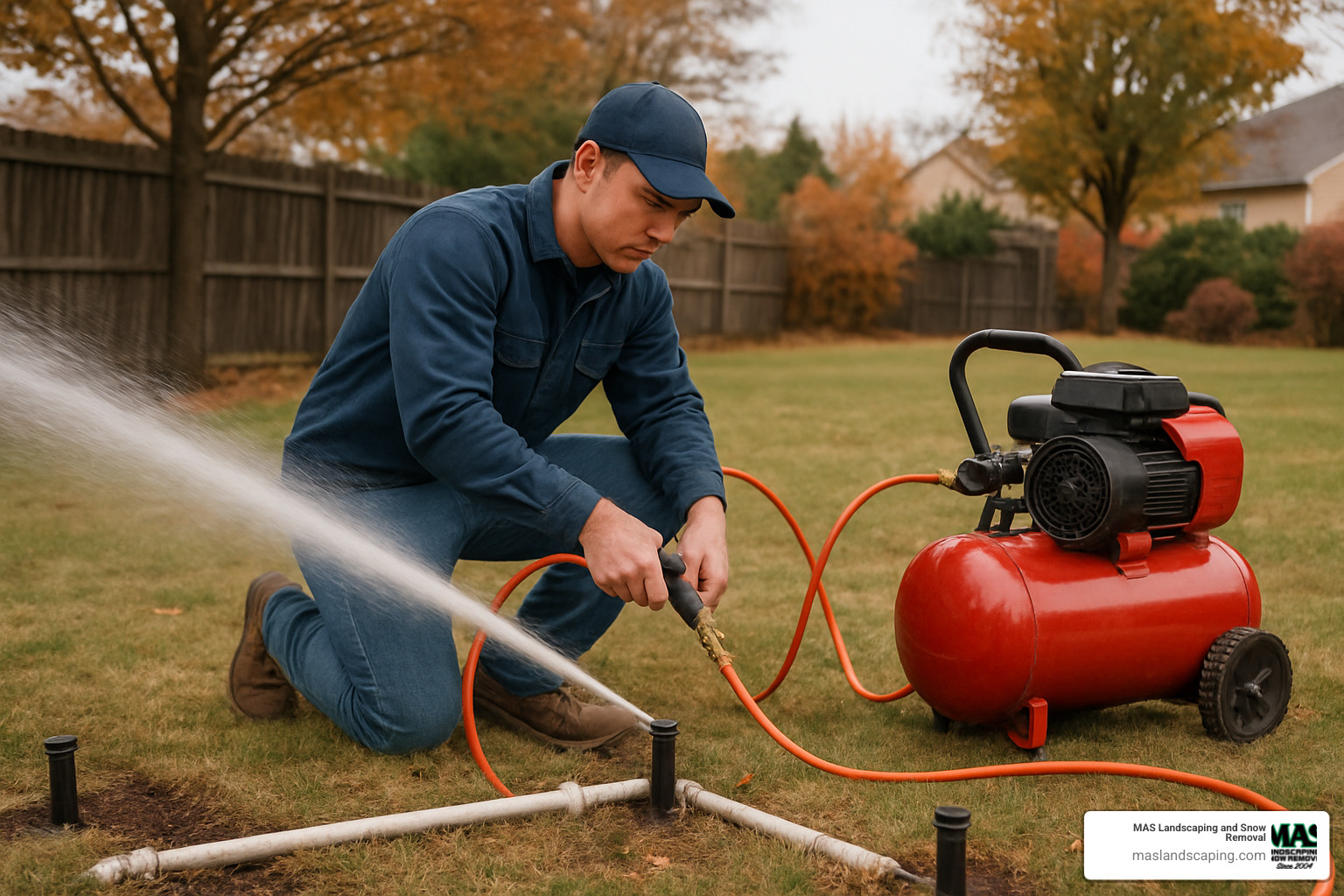
Here in Massachusetts, winterization is absolutely essential and typically costs homeowners $60-$120 annually. This isn’t optional – skip it once and you’ll likely face hundreds or thousands in freeze damage repairs come spring. Professional winterization involves draining all water from pipes and heads, blowing out remaining moisture with compressed air, and properly shutting off backflow preventers.
Spring start-up services run $75-$150 annually and involve much more than just turning the water back on. Technicians slowly restore pressure to prevent shocking the system, test every zone for proper operation, and adjust sprinkler heads that may have shifted during winter freeze-thaw cycles.
Most homeowners benefit from annual inspections costing $100-$250. Think of this as preventive medicine for your irrigation system – catching small problems before they become expensive headaches. During these visits, technicians check for leaks, test backflow devices, clean clogged heads, and fine-tune controller settings.
Individual sprinkler head replacements cost $10-$90 each depending on the head type and whether you tackle it yourself or hire a pro. The good news? Quality systems typically last 20+ years with proper care, making them excellent long-term investments.
Controller upgrades every 5-10 years keep your system current with water-saving technology. Smart controller retrofits cost $150-$400 but often pay for themselves through reduced water bills within 2-3 years.
For comprehensive lawn care that maximizes your irrigation investment’s effectiveness, explore our lawn treatment services to keep your grass healthy and vibrant year-round.
Common Repair Prices & How to Avoid Them
Leak repairs represent the most frequent irrigation problems, typically costing $85-$300 to fix. Most leaks stem from freeze damage caused by inadequate winterization, root intrusion in poorly installed systems, or accidental damage from overzealous digging or lawn equipment mishaps.
The dreaded broken sprinkler head usually costs $25-$90 to replace, with lawn mower damage being the number one culprit. Here’s a pro tip: mark your sprinkler head locations with small flags during the first few mowing sessions each spring. Your future self (and wallet) will thank you.
Valve failures hit harder at $130-$360 per zone since these components control water flow to entire sections of your system. Sometimes you can get away with just replacing the solenoid for $50-$100, but complete valve replacement runs $130-$250 plus labor.
Don’t forget about backflow testing – most municipalities require annual testing by certified technicians costing $50-$100. If your device fails testing, repairs can run $150-$500, while complete replacement costs $250-$550.
The best defense against expensive repairs? Preventive maintenance and quality installation. Address small leaks immediately before they turn into geyser-sized problems. Schedule annual professional check-ups. And invest in proper winterization – it’s much cheaper than replacing a system destroyed by freeze damage.
According to research from the National Association of Realtors, well-maintained irrigation systems provide strong ROI data, with professional installations typically recovering 83-86% of their cost when you sell your home.
Ongoing Water & Utility Costs
Let’s talk about the elephant in the room – water bills. A typical irrigation system uses about 623 gallons per 1,000 square feet per watering session. For a quarter-acre lawn, that translates to roughly 6,800 gallons each time your system runs. Over a full season, expect to use 50,000-100,000 gallons depending on your local climate and watering schedule.
Municipal water rates vary dramatically, and drought surcharges can double your normal rates during water restrictions. Many areas also charge sewer fees on irrigation water usage, even though that water never enters the sewer system – frustrating but common.
Here’s where smart technology really shines. Weather-based controllers can save homeowners over 7,000 gallons annually through intelligent weather integration, translating to average savings of $430 per year on water bills. These systems typically pay for themselves within 1-3 years through reduced usage.
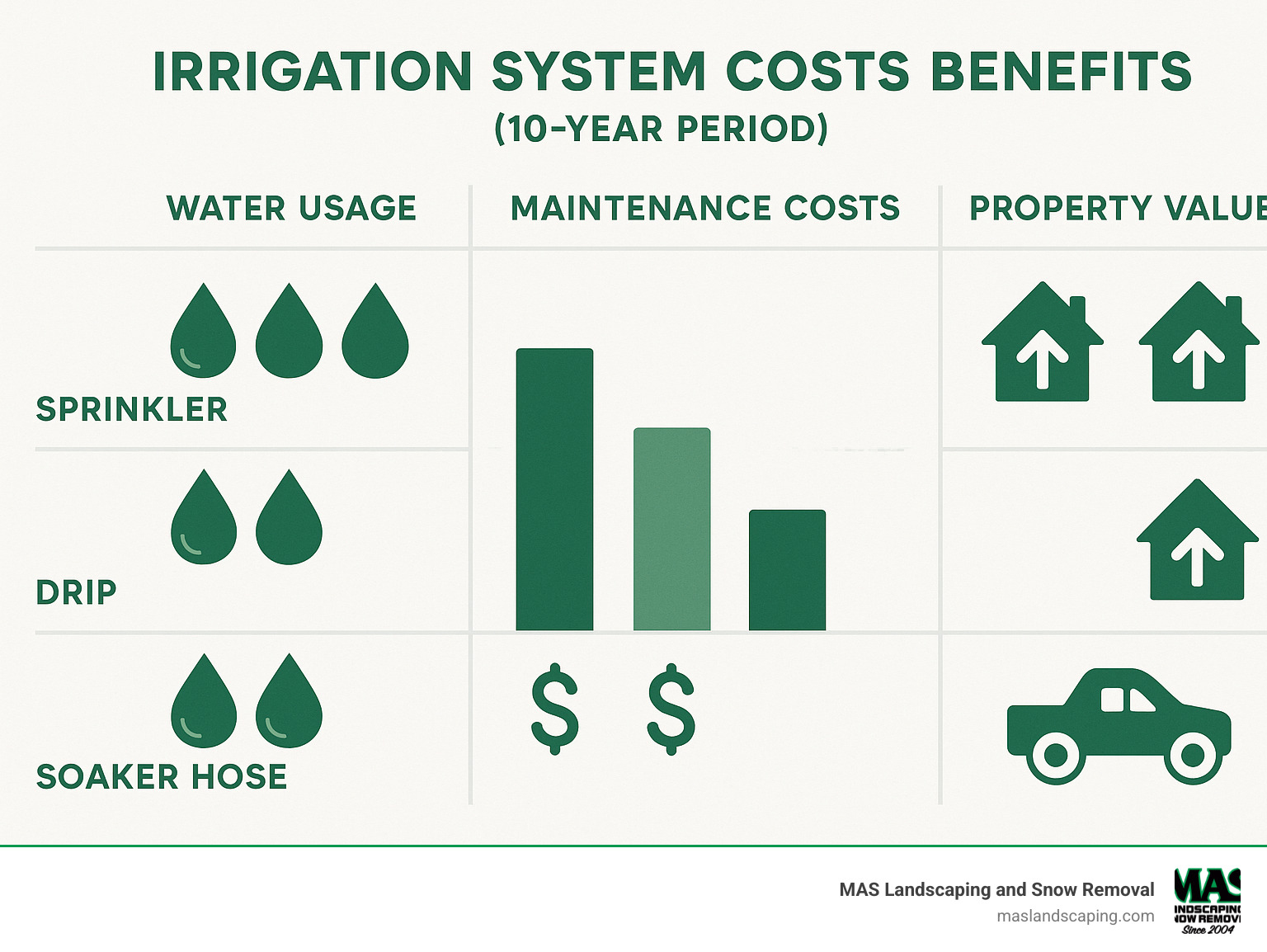
Drip irrigation zones use 30-50% less water than traditional spray systems, making them excellent investments for flower beds and vegetable gardens. Soil moisture sensors prevent overwatering by monitoring actual ground conditions rather than relying on preset schedules.
Rain sensors eliminate unnecessary watering cycles during natural precipitation, while pressure regulation reduces misting and waste that occurs when water pressure exceeds sprinkler head specifications.
The bottom line? A well-designed, properly maintained irrigation system with smart controls typically reduces overall outdoor water usage by 15-30% compared to manual watering methods, making the ongoing utility costs quite reasonable for the convenience and lawn health benefits provided.
Frequently Asked Questions about the Cost of New Lawn Irrigation System Installation
How many irrigation zones does my yard really need?
The number of zones your property needs goes far beyond simple square footage calculations. Think of zones as separate watering neighborhoods, each with their own unique needs and schedules.
Water pressure plays the starring role in determining zone count. Most homes receive 30-50 PSI (pounds per square inch) from municipal water supplies. Since each sprinkler head needs 15-30 PSI to work effectively, you can only run so many heads at once before pressure drops and coverage suffers.
Your landscape’s personality also shapes zone requirements. Turf areas love consistent, moderate drinks, while flower beds prefer frequent sips. Trees and shrubs thrive with deep, occasional soaks, and vegetable gardens demand precision watering. Mixing these different plant personalities in the same zone is like trying to feed a toddler and teenager the same meal – it rarely works well.
Sun exposure creates another layer of complexity. That sunny front yard bakes all day and needs more frequent watering than the shaded area under your maple tree. Slopes require slower water application to prevent runoff, while flat areas can handle higher flow rates without waste.
Here’s what typically works for different property sizes: small yards under 5,000 square feet usually need 2-3 zones, medium properties between 5,000-10,000 square feet work well with 3-5 zones, and larger lawns over 10,000 square feet often require 5-8 zones. Properties with complex landscaping features might need 8 or more zones for optimal control.
The cost of new lawn irrigation system installation increases with zone count, but the efficiency gains often justify the investment through reduced water waste and healthier plants.
Does installing a sprinkler system add value to my home?
Absolutely! Professional irrigation systems deliver measurable returns through both direct property value increases and long-term cost savings.
The numbers tell a compelling story. Well-designed irrigation systems typically add 7-15% to home value, with professional installations recovering 83-86% of their costs when you sell. That’s better than many home improvement projects, and the benefits start immediately rather than waiting for resale.
Curb appeal works like magic when attracting potential buyers. A lush, evenly watered lawn creates that crucial first impression that makes people want to see more. Automated systems particularly appeal to busy homeowners who want beautiful landscapes without the weekend sprinkler shuffle.
Beyond the direct value bump, irrigation systems provide indirect benefits that keep paying dividends. Consistent watering maintains healthy, attractive landscaping year after year. New homeowners appreciate reduced maintenance costs and the convenience of automated scheduling. Smart technology integration adds modern appeal that tech-savvy buyers love.
Market research from the National Association of Realtors consistently shows outdoor improvements, including irrigation systems, ranking among top features desired by homebuyers. Properties with professional landscaping and irrigation sell faster and command higher prices than comparable homes without these features.
Think of it as a 20+ year investment rather than just an expense. Systems last decades with proper maintenance, annual costs get offset by water savings, and smart controllers provide ongoing utility bill reductions. Professional warranties protect against major repair costs, making the investment even more secure.
What mistakes raise the cost of new lawn irrigation system installation?
Several common mistakes can transform a reasonable irrigation project into an expensive headache. Understanding these pitfalls helps you avoid costly surprises.
Poor planning creates the most expensive problems. Inadequate site surveys that miss utilities, slopes, or drainage issues can double project costs when problems emerge mid-installation. Wrong zone sizing either creates uneven coverage requiring expensive fixes or wastes money on unnecessary complexity. Ignoring local permit requirements can force expensive re-work that delays your project for weeks.
Seasonal timing mistakes cost real money too. Peak season installations during spring and early summer typically cost 15-20% more than off-season work. Smart homeowners schedule installations during fall or early spring for better pricing and contractor availability.
Design errors compound quickly once installation begins. Mixing different sprinkler types in the same zone creates pressure problems requiring complete re-design. Insufficient coverage leaves gaps that need additional heads and re-piping. Wrong head selection – like using spray heads in windy areas – wastes water and money while providing poor results.
Installation shortcuts might save money upfront but cost much more long-term. Shallow trenching above frost line guarantees winter pipe damage in our Massachusetts climate. Poor pipe bedding with rocks and debris damages pipes over time. Skipping proper backflow protection violates codes and creates potential contamination risks.
DIY pitfalls can turn into genuine emergencies. Hitting utility lines creates repair bills ranging from hundreds to thousands of dollars, plus potential safety hazards. Improper electrical connections create fire risks and system failures. Wrong pipe sizing reduces system effectiveness, requiring expensive upgrades.
The cost impact examples paint a clear picture: utility line repairs run $500-$2,000, permit violation corrections cost $300-$1,500, freeze damage replacement hits $200-$1,000 per zone, and poor coverage re-design can reach $2,500 or more.
Prevention strategies center on professional expertise and proper planning. Experienced installers understand local conditions, code requirements, and seasonal challenges. Proper permits protect your investment, utility location services prevent dangerous accidents, and quality components ensure long-term reliability.
At MAS Landscaping and Snow Removal, we’ve seen these mistakes across our Everett, Lynnfield, and Malden service areas. Our local expertise helps homeowners avoid these costly pitfalls while creating irrigation systems that perform beautifully for decades.
Conclusion
Making smart decisions about the cost of new lawn irrigation system installation starts with understanding what you’re really investing in. This isn’t just about watering your grass—it’s about creating a sustainable, valuable addition to your property that pays dividends for decades.
Throughout this guide, we’ve explored how costs can range from simple $300 above-ground setups to sophisticated $15,000+ smart systems. The wide variation isn’t arbitrary—it reflects the genuine differences in quality, features, and long-term value that different approaches provide.
Your specific investment will depend on factors we’ve covered: lawn size and complexity, zone requirements, system sophistication, and those unique New England challenges we know so well here in Massachusetts. Rocky soil, frost protection needs, and our short installation season all play roles in shaping final costs.
At MAS Landscaping and Snow Removal, we’ve seen how proper irrigation transforms properties throughout Everett, Lynnfield, Malden, Melrose, Medford, Revere, Saugus, and Chelsea. Our local experience with everything from challenging soil conditions to municipal permit requirements helps ensure your investment delivers maximum value.
It’s worth noting that all the cost figures discussed in this guide represent internet-based averages and industry research, not specific pricing for MAS Landscaping services. Every property tells its own story, and your actual investment will reflect your unique needs and goals.
The math on irrigation systems is compelling when you look beyond the initial price tag. Smart controllers that cut water usage by 15-30% often pay for themselves within just a few years. Professional installations that recover 83-86% of their cost when you sell provide returns that most home improvements can’t match.
But the real value goes deeper than dollars and cents. There’s something satisfying about stepping outside to a perfectly watered lawn without having spent your weekend wrestling with hoses. There’s pride in knowing your landscape looks its best while using water efficiently. And there’s peace of mind in having a professional system backed by warranties and local service.
Whether you’re leaning toward a straightforward system to eliminate manual watering chores or considering a premium smart installation for maximum efficiency and convenience, the key is matching your choice to your actual needs and budget. No system is worth the investment if it’s more complex than you need—but skimping on essential features often costs more in the long run.
The best irrigation projects happen when homeowners take time to understand their options, work with experienced professionals, and think about long-term benefits alongside upfront costs. Quality installation and proper maintenance turn irrigation systems into decades-long investments rather than ongoing headaches.
Ready to explore what irrigation could mean for your property? Our team can walk through your specific situation, explain local requirements that matter in our area, and help design a system that fits both your landscape and your budget. We’d love to discuss how professional irrigation can simplify your landscape maintenance while adding lasting value to your home.
For properties where irrigation is part of a larger landscape vision, our landscape design services can help integrate watering systems with overall outdoor planning, creating beautiful, functional spaces that work together seamlessly.