




Cost to build block wall fence: 5 Crucial Tips
Understanding Block Wall Fence Costs: What You Need to Know
The cost to build block wall fence projects typically ranges from $60 to $240 per linear foot or $15 to $45 per square foot. Most homeowners spend between $3,000 and $9,000 for a standard 50-foot fence, though complex projects can exceed $25,000.
Quick Cost Overview:
- Cost per linear foot: $60 – $240
- Cost per square foot: $15 – $45
- 50-foot fence project: $3,000 – $12,000+
- Materials (blocks only): $1 – $5 per block
- Labor: $10 – $35 per square foot
Note: These are average costs based on national data and not specific MAS Landscaping pricing.
Building a block wall fence is a significant investment in your property’s privacy, security, and curb appeal. Unlike wood or vinyl, a properly constructed block wall can last 50-100 years with minimal maintenance. However, the final price involves more than just blocks and mortar; it includes foundation work, permits, labor, and site preparation.
Key factors affecting your final price include wall dimensions, block material, site terrain, labor rates, permits, foundation needs, and finishing options. For homeowners in the Greater Boston area, costs are also influenced by local building codes and the need for construction that can withstand New England’s freeze-thaw cycles. This guide will break down every cost factor so you can budget effectively for your project.
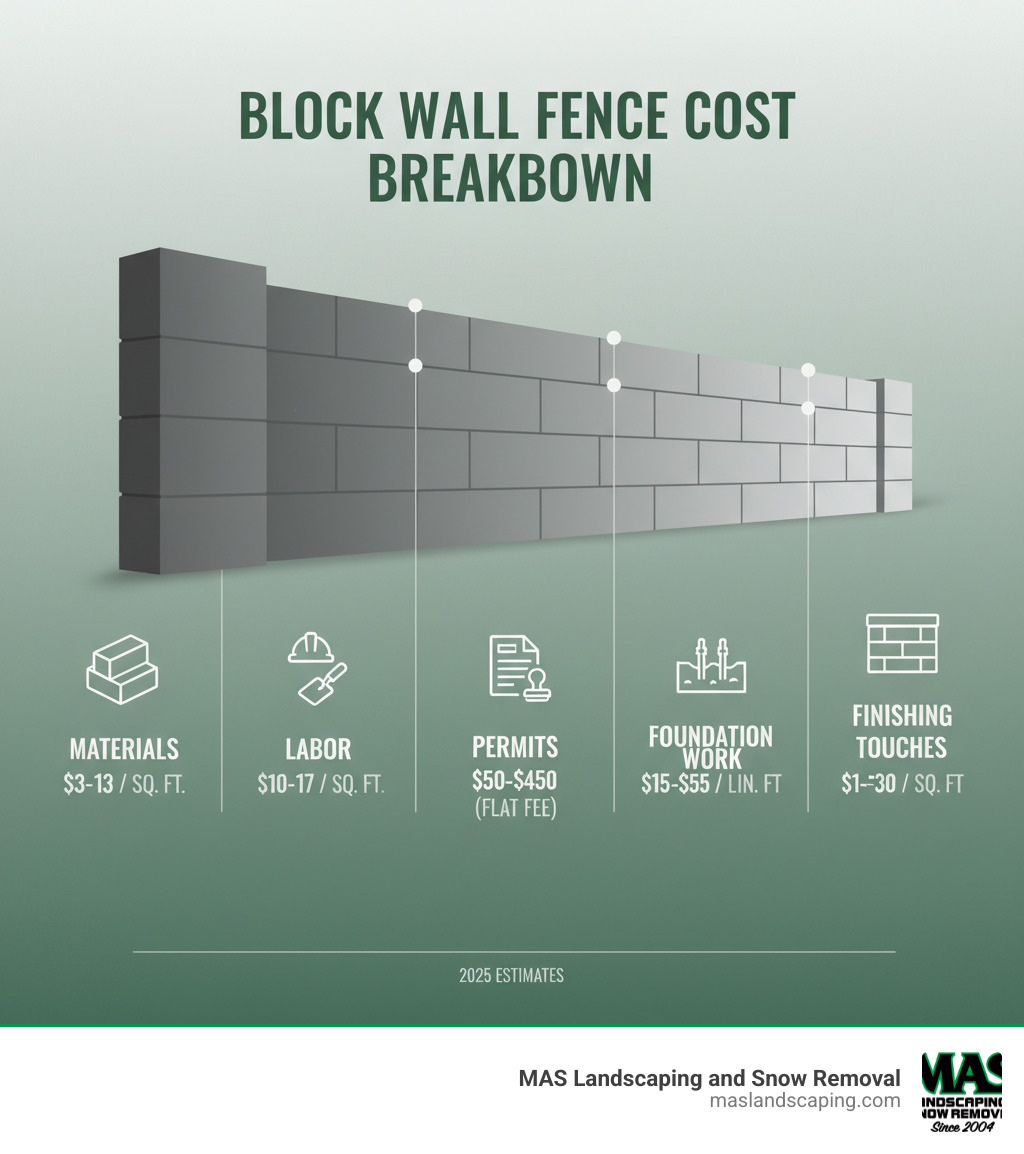
What is the Average Cost to Build a Block Wall Fence?
When budgeting for a block wall, it helps to understand the typical price ranges. Based on national averages, the cost to build block wall fence projects usually falls between $60 and $240 per linear foot. A simple, standard block wall will be on the lower end, while a tall, decorative privacy fence on challenging terrain can push a project’s total cost past $25,000.
This wide variation is due to factors like block type, wall height, site conditions, and local labor rates. In the Greater Boston regionincluding Saugus, Everett, and Lynnfieldlabor costs reflect the high demand for skilled masonry work. Our hardscaping services include expert guidance to help you balance your vision with your budget.
Important note: The costs discussed here represent average internet data from across the country, not specific pricing from MAS Landscaping. We provide custom quotes for every unique project.
Cost Breakdown by Unit
Contractors typically estimate block wall pricing in two ways:
- Per square foot: Expect to pay roughly $15 to $45 for materials and labor, based on average internet data. This is calculated by multiplying your wall’s length by its height.
- Per linear foot: A more common metric, this ranges from $60 to $240 per linear foot for a complete installation. This figure includes everything from materials to labor.
For example, a 50-foot block wall fence could cost anywhere from $3,000 to $12,000 or more. A simple 4-foot wall will be at the lower end, while a 6-foot privacy wall with a stucco finish will be at the higher end.
Total Project Cost Estimates
Heres a look at complete project costs based on size and complexity, according to internet data:
- Small projects ($1,300 – $4,000): This range typically covers garden walls, short decorative borders, or landscape accent features.
- Medium-sized projects ($4,000 – $12,000): This is the most common range for homeowners, covering a standard 4- to 6-foot-tall privacy fence for a typical backyard.
- Large or complex projects ($9,000 – $30,000+): These include extensive perimeter fences, tall reinforced walls, or designs with premium finishes and decorative patterns. The price reflects more materials, specialized engineering, and challenging site work.
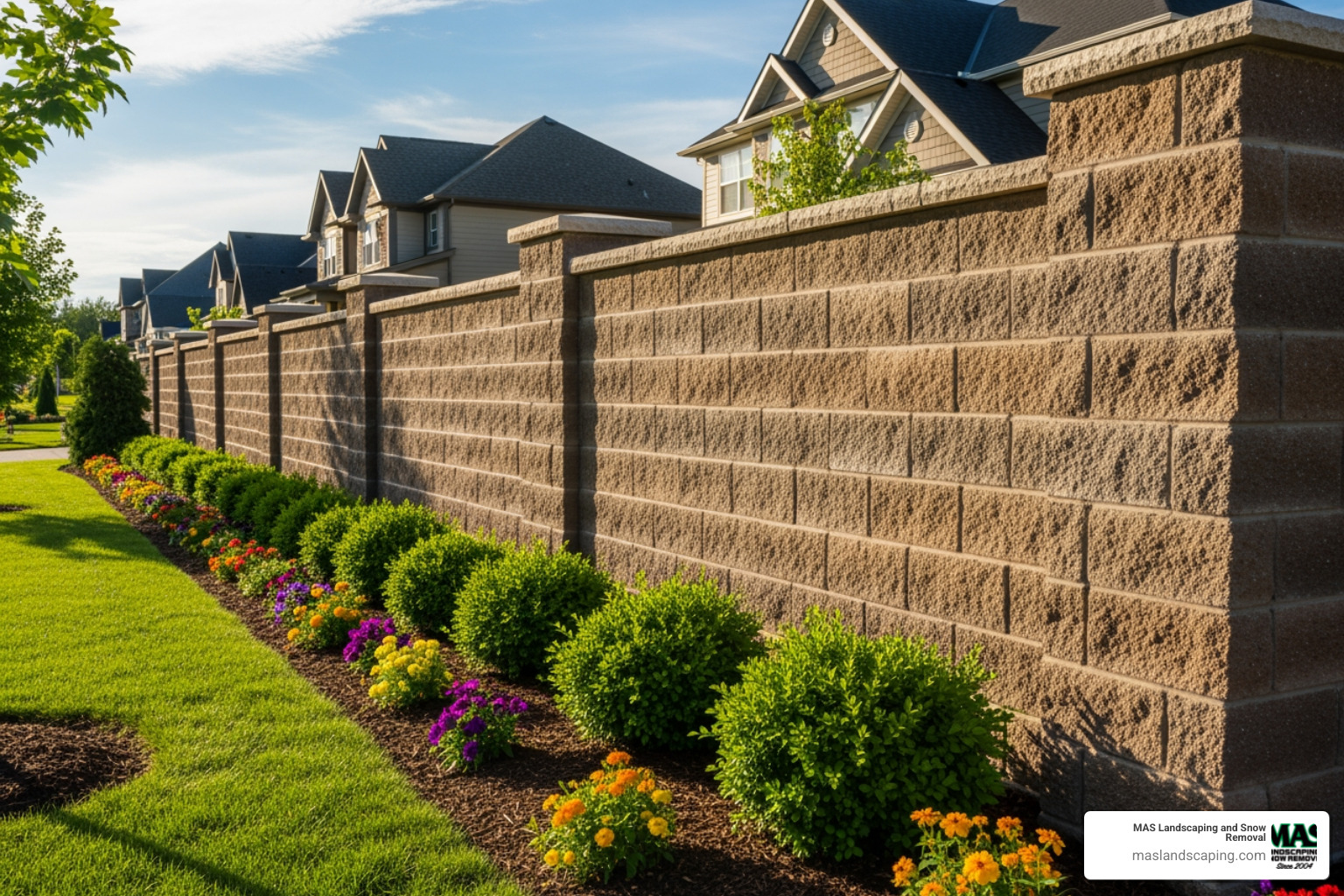
Key Factors That Determine Your Final Price
Several key factors influence the final cost to build block wall fence projects. We carefully consider each of these elements to provide an accurate estimate for your property and vision.
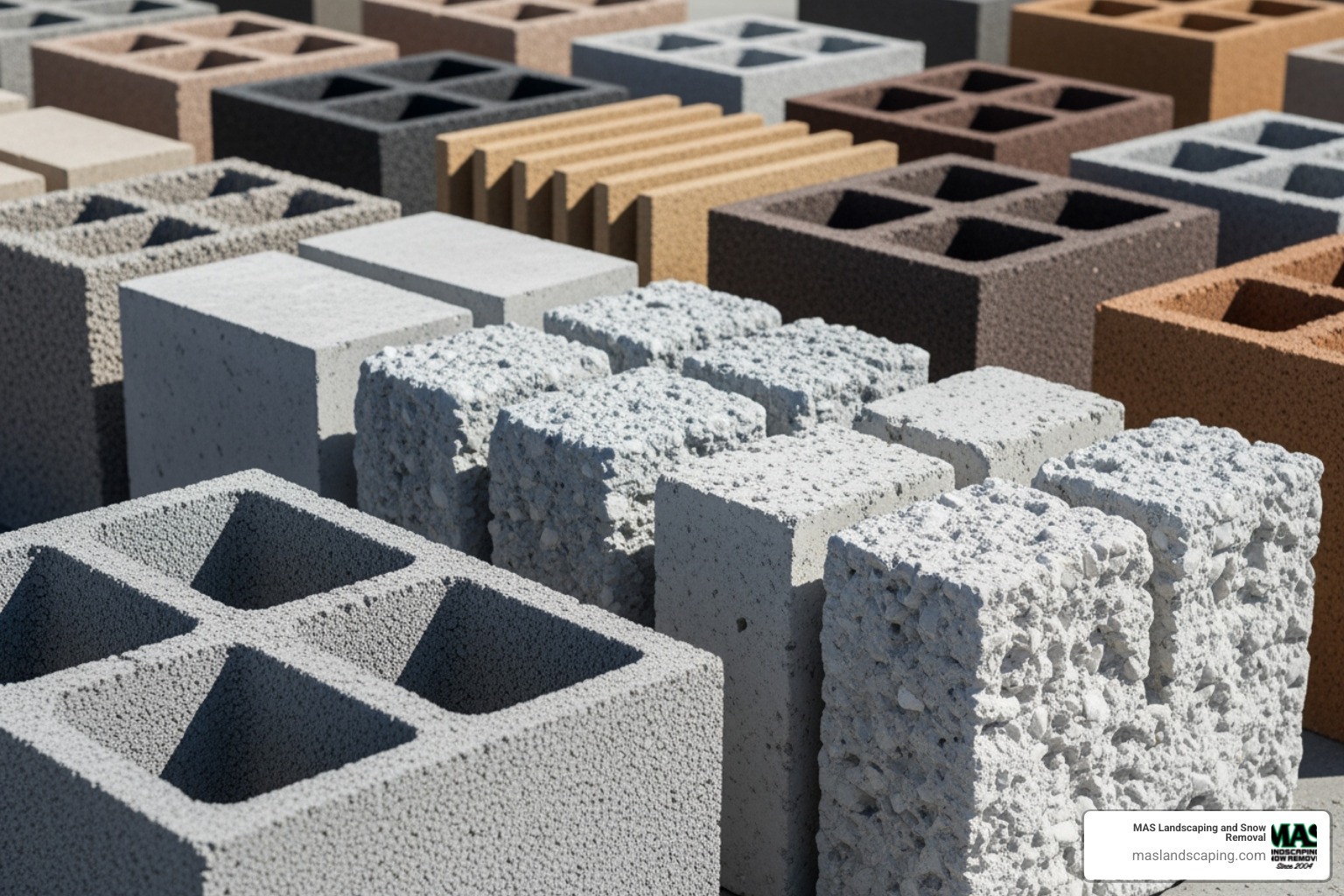
The most significant factors are wall size, material choice, labor rates, site conditions, and overall project complexity. A 100-foot privacy fence will naturally cost more than a 20-foot garden wall, but the type of block used, the slope of your yard, and the inclusion of features like curves or gates also make a major difference.
Wall Dimensions: Length & Height
The length and height of your wall are the primary drivers of cost. A longer fence requires more materials, labor, and foundation work. However, wall height has a compounding effect on the budget. A taller wall not only needs more blocks but also requires a wider, deeper foundation, more steel rebar for reinforcement, and concrete-filled cores for stability. Labor costs also increase with height, as scaffolding and additional safety measures become necessary.
Based on internet data, costs per linear foot increase with height:
- 4-foot wall: $60 to $180 per linear foot
- 6-foot wall: $90 to $270 per linear foot
- 8-foot wall: $120 to $360 per linear foot
We calculate the total square footage (length x height) to determine material quantities and estimate labor hours.
Block Material: Cinder vs. Concrete vs. Decorative
The type of block you choose impacts both the look and the cost of your fence.
- Standard Concrete Masonry Units (CMUs) are the most functional and affordable option, typically costing $1 to $3 per block based on internet data. They are durable and ideal for structural purposes.
- Cinder blocks are a lighter-weight version, while modern concrete blocks made with sand and gravel are denser and stronger, making them better suited for New England’s climate.
- Split-faced blocks offer a textured, stone-like appearance for a mid-range price, usually $2 to $7 per block, based on internet data.
- Decorative blocks, such as breeze blocks or slump blocks, are premium options that can turn a fence into an architectural feature.
- Capstones are essential for finishing the top of the wall, protecting it from water and providing a polished look. They typically cost $1 to $5 per block, based on internet data.
Labor Costs: What to Expect from Masons
Building a block wall requires skill and precision, which is why labor is a significant portion of the cost. Based on internet data, skilled masons may charge around $30 to $120+ per hour, or the cost may be calculated at $10 to $35 per square foot or $5 to $15 per block. In Massachusetts service areas like Everett and Lynnfield, rates for skilled masons reflect their high demand and expertise. This investment ensures your wall is level, plumb, and structurally sound, preventing costly failures down the road.
Site Conditions & Preparation
Every property is unique, and site conditions can significantly affect preparation work and costs.
- Terrain: A flat, level yard is ideal. Sloped land requires more excavation, grading, and a stepped or terraced design, which can increase labor costs substantially.
- Site Access: Easy access for equipment and materials reduces labor time and cost. Difficult access requiring manual hauling will increase the project’s duration and price.
- Preparation Work: Before building, the site must be prepared. This can include excavation ($1 to $15 per square foot, based on internet data), trenching for the footing ($5 to $36 per linear foot), and removal of any existing structures.
- Property Lines: To avoid disputes, it’s crucial to know your property lines. A land survey, which typically costs $300 to $2,100 based on internet data, is a wise investment if there is any uncertainty.
Don’t Forget These Additional Costs
Beyond blocks and labor, several other essential costs contribute to a successful block wall project. These are not optional extras but necessary components for a legal, stable, and finished fence. Overlooking them can lead to budget overruns, so we include them in every comprehensive quote.
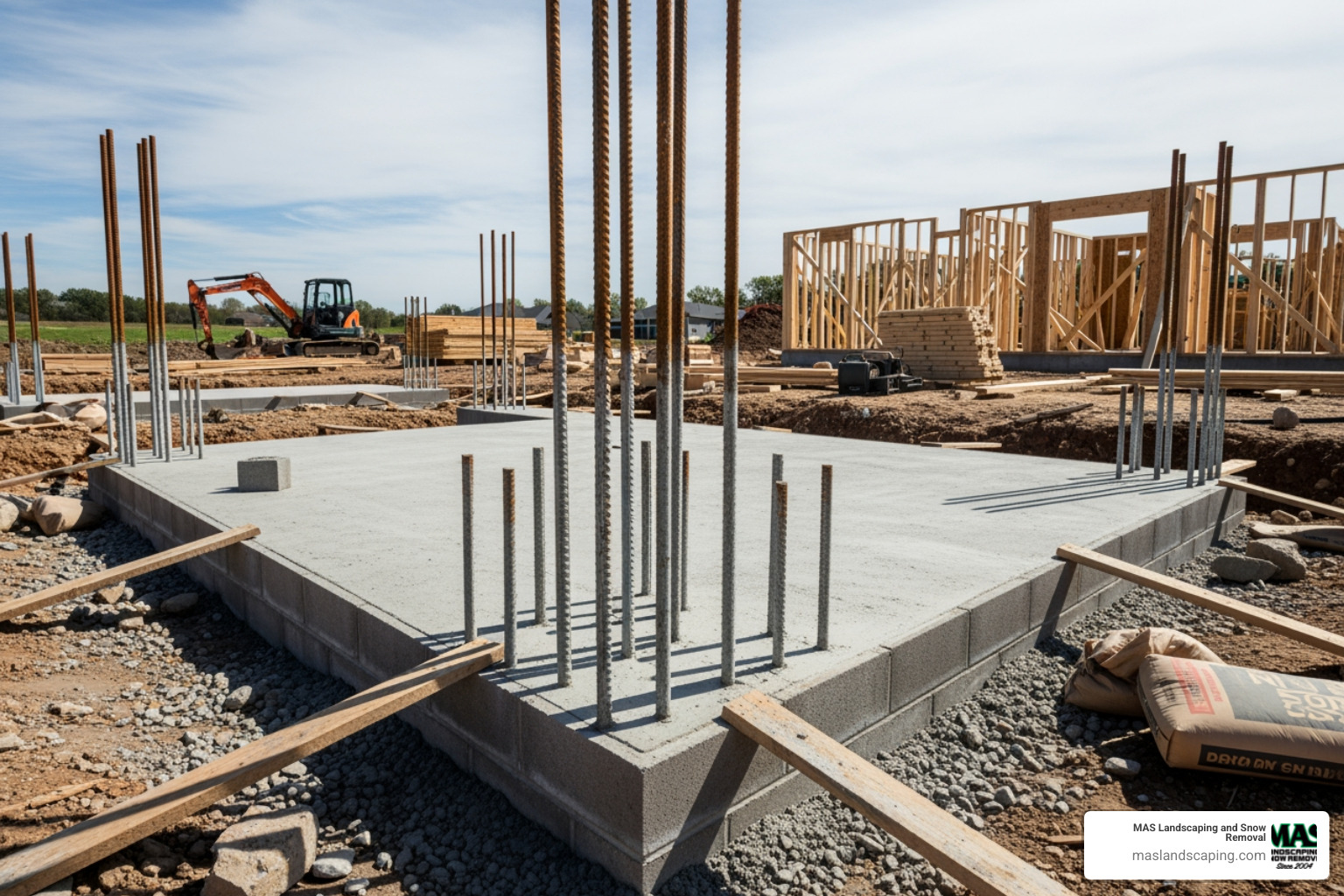
These costs include permits, demolition of old structures, drainage solutions, and finishing touches that complete the look of your wall.
Permits, Surveys, and Demolition
Before work begins, some important prep is required to ensure the project is legal and built in the correct location.
- Building Permits: Most municipalities, including our service areas like Medford and Saugus, require permits for fence construction. Based on internet data, these typically cost $50 to $450 and ensure your wall meets local safety and building codes.
- Fence Height Regulations: Towns have specific rules for fence height, often 4 feet in front yards and 6-8 feet in backyards. We design your fence to comply with these regulations to avoid fines or removal orders.
- Demolition and Debris Disposal: If an old fence needs to be removed, this will be an added cost. Demolition typically runs $1 to $5 per linear foot, depending on the material. The cost also includes hauling and disposing of the debris.
Foundation, Footings, and Reinforcement
The foundation is the most critical part of your block wall, especially in New England, where freeze-thaw cycles can destroy weak structures. This is an area where cutting corners leads to failure.
- Concrete Footing: A continuous concrete trench provides a stable base for the wall, distributing its weight and preventing settling or cracking. Based on internet data, footings typically cost $15 to $55 per linear foot.
- Rebar Reinforcement: Steel bars (rebar) are embedded in the footing and run through the block cores to provide tensile strength, resisting bending and cracking. This adds approximately $1.00 to $5.25 per square foot to the cost, according to internet data.
- Grout Filling: Filling the hollow block cores with a concrete mixture (grout) and rebar transforms the wall into a solid, monolithic structure. This is essential for tall fences and retaining walls.
These elements ensure the wall’s structural integrity and longevity. More info about our retaining wall work
Finishing Touches: Veneers, Stucco, and Caps
Finishing touches give your wall its final appearance and provide protection.
- Stucco Finish: A popular option that creates a smooth or textured surface that can be painted. Based on internet data, stucco costs $3 to $11 per square foot.
- Stone Veneer: Thin slices of real or manufactured stone are applied to the wall’s face for a high-end look at a fraction of the cost of a full stone wall. This premium finish runs $13 to $45 per square foot.
- Paint or Sealant: The most budget-friendly option, costing $0.65 to $10.00 per square foot, paint adds color while sealant protects against moisture.
- Wall Caps/Capstones: These pieces sit on top of the wall to protect it from water intrusion and provide a finished, architectural look. They typically cost $1 to $5 per block.
Block Wall vs. Other Fencing: A Cost & Durability Comparison
When choosing a fence, it’s important to compare materials not just on upfront cost, but also on longevity, maintenance, and durability. While the initial cost to build block wall fence projects is higher than wood or vinyl, its long-term value is often superior.
A wood fence has a low upfront cost but requires significant maintenance (staining, repairs) and typically lasts only 10-20 years, especially in New England’s climate. Vinyl fencing is a mid-range option with low maintenance and a 20-30 year lifespan, but it can become brittle and crack in extreme cold.
A block wall fence is the most durable option, with a lifespan of 50-100+ years and minimal maintenance. It withstands weather, impact, and fire far better than other materials. While the initial investment is higher, you are paying once for a structure that can last a lifetime, making it a cost-effective choice over the long run.
| Feature | Block Wall Fence | Wood Fence | Vinyl Fence |
|---|---|---|---|
| Initial Cost Per Linear Foot | $60 – $240 | $15 – $50 | $25 – $70 |
| Lifespan | 50 – 100 years | 10 – 20 years | 20 – 30 years |
| Maintenance Requirements | Low (cleaning, occasional sealing) | High (staining, painting, repairs for rot/pests) | Low (cleaning) |
| Durability | Very High (weather, impact, fire, structural) | Moderate (susceptible to rot, pests, weather) | High (weather, some impact, can crack in extreme cold) |
Note: Initial costs shown are average internet data and vary widely based on material quality, design, and regional labor rates. They do not represent MAS Landscaping pricing.
For homeowners in the Greater Boston area, a block wall is a lasting investment that protects your property and adds significant value for generations.
DIY vs. Hiring a Professional Mason
While the idea of a DIY block wall project can be tempting as a way to save money, it’s a demanding and high-risk undertaking. Building a structurally sound block wall, especially in New England’s climate, requires expertise that goes far beyond simply stacking blocks.
Consider the challenges: safety risks from handling heavy materials (30-50 lbs per block), the specialized masonry skills needed to ensure a level and plumb wall, and the high cost of buying or renting required tools like concrete mixers and masonry saws. A professional crew can finish a project in days that might take a DIYer weeks or months, and the risk of a costly structural failure is significant. An improperly built wall can lean, crack, or collapse, often costing more to fix than professional installation would have in the first place.
More info about professional landscape design
DIY vs. Professional Cost to Build a Block Wall Fence
On paper, DIY seems cheaper because you eliminate labor costs. However, the expenses add up quickly.
- DIY Material Costs: Based on average internet data, materials alone run $15 to $45 per linear foot.
- DIY Equipment Rental: Renting a concrete mixer, masonry saw, and compactor can cost $100 to $300+ for a multi-weekend project.
- Hidden DIY Costs: Don’t forget safety gear, wasted materials from mistakes, your time, and the physical toll. The biggest hidden cost is the risk of a failed wall, which can wipe out all initial savings.
Professional installation includes labor, tools, insurance, expertise, and often a warranty. While the upfront cost is higher, it provides peace of mind and a guaranteed quality result.
When to Call a Pro
For small, decorative garden borders, DIY might be feasible. However, for most projects, hiring a professional is the wisest choice. Always call a pro for:
- Walls over 4 feet tall: These require deep footings, extensive reinforcement, and engineering to be safe and stable.
- Load-bearing or retaining walls: Any wall holding back soil or supporting a structure requires professional design to handle immense pressure and prevent catastrophic failure.
- Projects on complex terrain: Professionals know how to handle slopes, poor drainage, and unstable soil to ensure a lasting structure.
- Navigating permit requirements: We are familiar with local codes in Saugus, Malden, and other service areas, ensuring your project is compliant and avoiding fines or tear-down orders.
Hiring a professional to manage the cost to build block wall fence is an investment in quality, safety, and longevity. View our hardscaping photo gallery
Frequently Asked Questions about Block Wall Fence Costs
Homeowners often have similar questions when planning a block wall. Here are answers to some of the most common ones we hear regarding the cost to build block wall fence projects.
Is a block wall cheaper than a poured concrete wall?
Often, yes. Based on average internet data, a concrete block wall typically costs $15 to $45 per square foot, while a poured concrete wall is slightly more at $15 to $50 per square foot. A key advantage for block walls is accessibility. Poured concrete requires large trucks and pumps, which may not fit in tight residential spaces. Blocks can be carried in by hand, making them a more practical and sometimes cheaper option for properties with limited access.
How can I save money on my block wall fence project?
While you should never cut corners on the foundation or professional installation, there are ways to manage your budget:
- Use standard CMU blocks instead of decorative ones.
- Keep the design simple with straight lines instead of curves.
- Prepare the site yourself by clearing brush or removing an old fence, if you are able.
- Ensure the work area is easily accessible for our crew and equipment.
These steps can help reduce material and labor time without compromising the structural integrity of your fence.
How many blocks do I need for my fence?
Here’s a simple way to estimate:
- Calculate the total square footage of your wall (Length x Height).
- A standard 8″x16″ block covers about 0.89 square feet (accounting for mortar joints).
- Divide the total square footage by 0.89 to find the number of blocks needed.
- Add 5-10% extra to account for cuts, corners, and potential breakage.
For example, a 50-foot long, 6-foot high wall (300 sq. ft.) would require approximately 337 blocks (300 / 0.89), plus 10% extra, for a total of about 371 blocks.
Get a Precise Quote for Your Block Wall Fence
This guide provides a solid overview of the cost to build block wall fence projects, but national averages can’t replace a detailed, site-specific estimate. Your property’s unique terrain, soil conditions, access, and your design preferences all influence the final cost.
For homeowners in Saugus, MA, and our surrounding service areas—including Everett, Lynnfield, Malden, and Chelsea—local expertise is crucial. We design and build block walls that are made to withstand New England’s demanding climate, ensuring your investment lasts for decades. We are familiar with local building codes and permit processes, ensuring a smooth and compliant project.
A block wall is a long-term investment in your property’s security, privacy, and value. When you contact MAS Landscaping and Snow Removal, we provide a detailed, on-site consultation to understand your goals. We then deliver an accurate, transparent quote with no hidden fees.
Ready to turn your vision into a durable, beautiful reality? Let’s build a fence that adds value and appeal to your home for years to come.
Contact us today to discuss your hardscaping needs.
