




Why a Paver Patio Transforms Your Outdoor Space
Build a paver patio and you’ll create a durable, beautiful outdoor living area that adds value to your home. This comprehensive guide walks you through the entire process, from site preparation to the final finishing touches.
Quick Overview: Building a Paver Patio in 6 Key Steps
- Plan and prepare – Mark your area, check drainage, and call utility services
- Excavate – Dig 7-10 inches deep to accommodate base layers and pavers
- Build the base – Layer and compact 4-6 inches of gravel, then 1 inch of sand
- Lay pavers – Start from one corner, maintain spacing, and tap level with a mallet
- Cut and edge – Trim pavers for borders and install restraints to prevent shifting
- Fill joints – Sweep polymeric sand between pavers and mist with water to set
The average paver patio project covers about 280 square feet and takes roughly 30 hours to complete. While professional installation can run anywhere from a few thousand dollars to over $20,000 depending on size and complexity, a DIY approach typically costs between a few hundred to several thousand dollars in materials and tool rentals.
A paver patio isn’t just about creating a place to set your outdoor furniture. It’s about building a foundation for memories – weekend barbecues, quiet morning coffee, family gatherings under the stars. Unlike poured concrete that cracks and requires expensive repairs, pavers offer flexibility, easy maintenance, and the ability to replace individual pieces if needed.
The key to success lies in what you can’t see. Most of the critical work happens below the surface, where proper base preparation and drainage determine whether your patio lasts three years or thirty. Get the foundation right, and you’ll have a surface that handles New England’s freeze-thaw cycles without buckling or settling.
Basic build a paver patio glossary:
- backyard patio design
- pavers for patios
- affordable patio
Planning and Preparation to Build a Paver Patio
Before we pick up a shovel, we need a plan. In our experience serving homeowners in Saugus, Revere, and Lynnfield, the most common mistake is rushing the layout. A well-planned patio looks like it was meant to be there, seamlessly blending with your home’s architecture and the surrounding landscape.
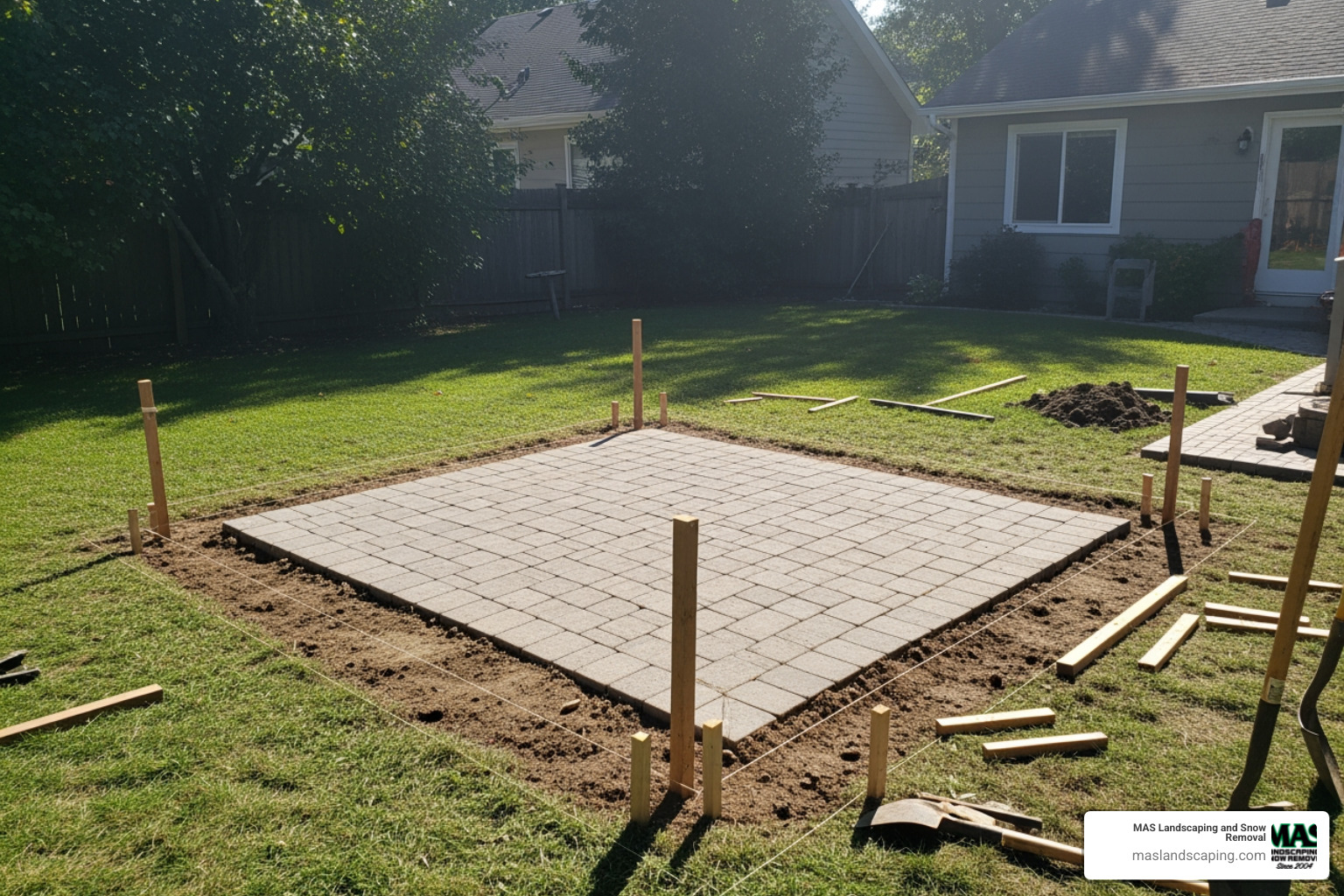
Site Selection and Layout Start by visualizing how you will use the space. Do you want a sun-drenched spot for tanning in Malden, or a shaded nook for reading in Melrose? Once you’ve picked the location, use a garden hose or spray paint to outline the shape. For a more precise layout, use batterboards and mason’s string. This allows you to check for squareness by measuring the diagonals; if the diagonal measurements are equal, your corners are 90 degrees.
The Golden Rule of Drainage Water is the enemy of a stable patio. To prevent water from pooling against your foundation or turning your yard into a swamp, you must build in a slope. We recommend a 1:48 ratio, which translates to a 1-inch vertical drop for every 4 feet of horizontal distance. This ensures that even during a heavy Everett rainstorm, the water flows safely away from your home.
Safety First: Utility Marking Before you build a paver patio, you must call 811. Digging into a gas, water, or electric line is not only dangerous but incredibly expensive to fix. Even if you think you know where the lines are, get them marked professionally.
Essential Tools and Materials for Your Project
Building a patio is a labor-intensive process, and having the right equipment can save your back and your sanity. While you can do everything by hand, we often suggest renting a mini skid steer from Home Depot for the excavation phase. Removing 8-10 inches of soil over a 300-square-foot area is a monumental task that a machine can handle in a fraction of the time.
For the base, you’ll need a compactor that I rented from Home Depot. A hand tamper is fine for small walkways, but for a full patio, a plate compactor is essential to prevent future settling.
Your Shopping List:
- Pavers: Choose from concrete, brick, or natural stone.
- Base Material: 3/4-inch clean crushed gravel or “crusher run.”
- Bedding Sand: Coarse builder’s sand (not play sand).
- Landscape Fabric: To prevent soil from mixing with your gravel.
- Edge Restraints: Plastic or aluminum edging and 10-inch spikes.
- Screed Pipes: 1-inch diameter PVC or steel pipes.
- Hand Tools: Rubber mallet, level, tape measure, and a broom.
Estimating the Cost to Build a Paver Patio
When you decide to build a paver patio, budget is usually a top concern. Based on internet data, the national average for a professional 280-square-foot installation is approximately $3,800, but prices can range significantly.
| Installation Type | Estimated Cost Range |
|---|---|
| DIY Project | $500 – $2,500 |
| Professional (Standard) | $2,400 – $7,000 |
| Professional (High-End/Complex) | $7,500 – $21,000+ |
Note: These are average costs based on internet data and not actual costs for MAS Landscaping. Factors like site accessibility in Chelsea or Medford and the choice of premium pavers can influence these numbers.
By doing it yourself, you can save thousands in labor. However, remember to factor in delivery fees for heavy materials like gravel and the cost of tool rentals.
Establishing a Stable Foundation and Base
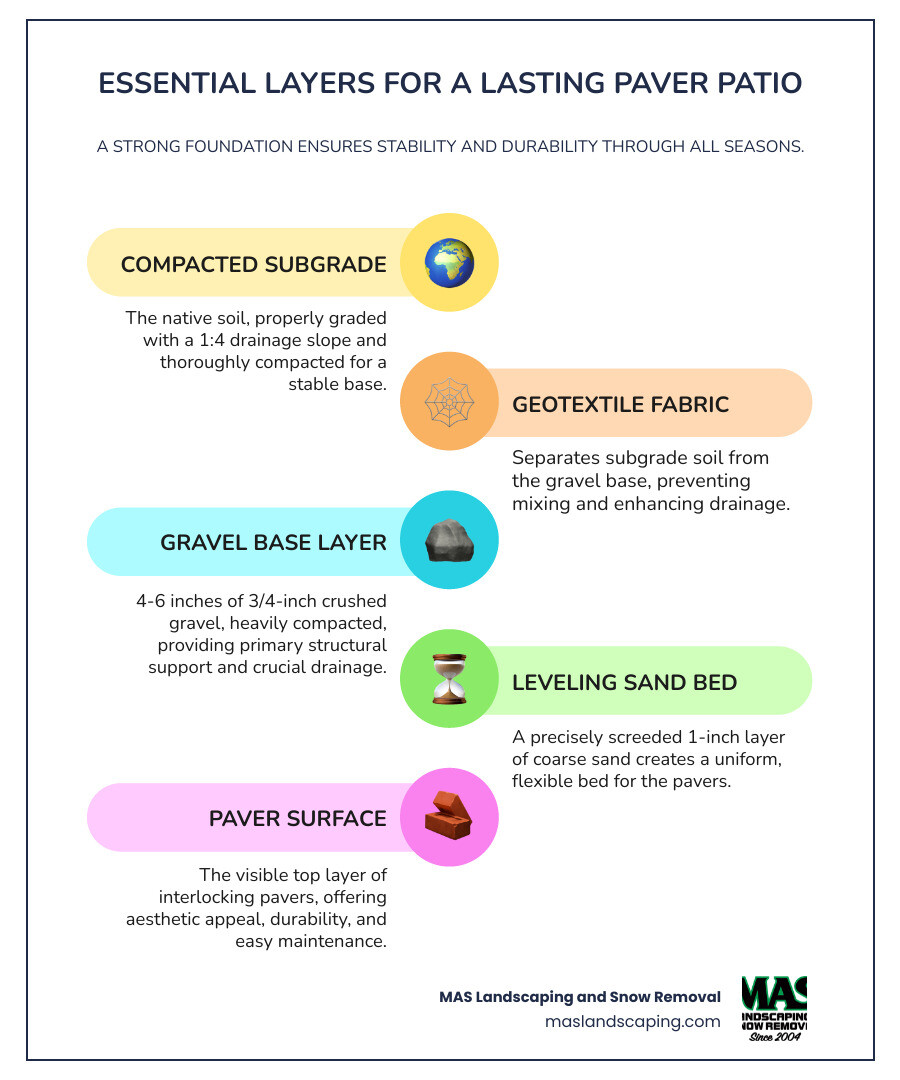
The secret to a patio that stays flat for decades is the “subgrade” preparation. Once you’ve excavated to the required depth (usually 7-10 inches), you need to compact the raw soil. If the soil is loose, your patio will eventually sink.
Layering the Gravel We recommend laying your 3/4-inch crushed gravel in 2-inch increments. After spreading each layer, mist it lightly with water. This helps the particles slide together for a tighter fit. Run the plate compactor over each layer multiple times until the base feels rock-solid. For a typical residential patio, a total gravel depth of 4-6 inches is standard.
Geotextile Fabric Before the gravel goes down, we like to lay a layer of heavy-duty landscape fabric. This acts as a bridge, preventing the heavy gravel from sinking into the soft Massachusetts clay soil over time. It’s a small investment that adds years to the life of your project.
Creating a Level Sand Bed to Build a Paver Patio
Once your gravel base is compacted and sloped correctly, it’s time for the bedding sand. This 1-inch layer of coarse sand provides the final leveling surface for your pavers.
The Screeding Technique
- Place two 1-inch PVC pipes parallel to each other on top of the gravel.
- Pour coarse sand between the pipes.
- Use a straight 2×4 board (the “screed board”) and pull it across the pipes to smooth the sand.
- Remove the pipes and carefully fill the indentations with sand, smoothing them with a trowel.
Do not walk on the sand once it is screeded! You want a perfectly uniform, fluffy bed for the pavers to nestle into.
Laying Pavers and Mastering the Pattern
This is the most rewarding part of the job. For a classic, high-end look, many of our clients in Saugus prefer Unilock Brussels Block pavers. These pavers offer a tumbled, natural stone appearance that fits perfectly with New England aesthetics.
If you want a look that is “organized chaos,” consider a random pattern “W”. This uses multiple sizes of stones to create a visually interesting surface that doesn’t feel too rigid.
Laying Techniques
- Start in a Corner: Always start from a 90-degree corner or a straight edge like the house foundation.
- Click-Drop Method: Place the paver straight down against the edge of the previous one. Do not slide it, as this will disturb the sand bed.
- Tapping: Use a rubber mallet to gently tap each paver into place. Use a level frequently to ensure you aren’t creating any “lippage” (tripping hazards).
- Soldier Course: Consider laying a perimeter of pavers in a different color or orientation (perpendicular to the main pattern). This “soldier course” acts as a beautiful frame for your work.
Precision Cutting and Edge Restraints
Unless your patio is a perfect rectangle that perfectly matches the paver dimensions, you’re going to need to make some cuts. For straight cuts, a masonry chisel and hammer work, but for a professional finish, a wet saw is your best friend. It provides clean edges and keeps dust to a minimum.
If you’re creating a curved patio in Medford, mark the curve with a piece of string anchored to a center point. Use an angle grinder with a diamond blade to score the pavers along the line before making the final cut.
Securing the Perimeter Without edge restraints, your pavers will eventually migrate into your lawn. Install plastic or aluminum edging tightly against the outer pavers and secure them with 10-inch steel spikes every 12 inches. Once the edging is in, you can backfill with topsoil and grass seed to hide the plastic.
Finishing Joints and Long-Term Maintenance
The final step in your quest to build a paver patio is “locking” everything together. We highly recommend using G2 Polybind sand. Unlike regular sand that washes away in the rain or provides a home for weeds, polymeric sand contains binders that harden when wetted.
How to Apply Polymeric Sand:
- Dry Surface: Ensure the pavers are completely dry.
- Sweep: Pour the sand and sweep it into the joints until they are filled to about 1/8 inch below the paver surface.
- Vibrate: Run the plate compactor (with a protective pad) over the pavers to shake the sand deep into the joints.
- Clean: This is critical! Sweep and blow off every bit of excess sand from the surface. Any sand left on top will stain the pavers once it gets wet.
- Mist: Lightly mist the joints with water. You want to dampen the sand without washing it out. Follow the manufacturer’s instructions for repeat misting.
Long-Term Care Once your patio is set, maintenance is simple. Sweep off debris regularly to prevent organic matter from staining the stones. Every 2-3 years, you may want to apply a sealer to improve the color and protect against oil spills from your Pit Boss grill.
Fire Pit Safety Many homeowners want to add a fire pit to their new space. You absolutely can build a fire pit on a paver patio, but safety is paramount. Ensure you use fire-rated bricks for the inner liner and keep the pit a safe distance from your home and any low-hanging branches. Using a pre-made fire pit kit is often the easiest and safest way to integrate this feature.
Frequently Asked Questions about Paver Patios
Can I lay pavers directly on dirt?
While you can, you really shouldn’t. In the Saugus and Malden areas, our soil goes through significant “heaving” during the winter. Pavers laid directly on dirt will become uneven, tilted, and overgrown with weeds within a single season. A gravel and sand base is essential for a flat, long-lasting patio.
How long does it take to build a paver patio?
For a DIYer, a standard 280-square-foot patio usually takes about 30 to 40 hours of active work. This is often spread over two or three weekends. If you rent professional equipment like a skid steer, you can significantly reduce the excavation time.
What is the best sand for paver joints?
Polymeric sand is the gold standard. It hardens to prevent weed growth and resists being washed away by rain or leaf blowers. While it is more expensive than play sand, the reduced maintenance makes it well worth the investment.
Conclusion
There is a unique sense of satisfaction that comes from sitting on a patio you built with your own two hands. From the first scoop of dirt to the final misting of the joints, you have transformed a patch of grass into a functional outdoor oasis. Whether you’re hosting a summer bash in Everett or enjoying a quiet evening in Revere, your new paver patio is the heart of your backyard.
However, we know that not everyone has the time or physical ability to tackle a project of this scale. If the idea of moving tons of gravel sounds a bit daunting, MAS Landscaping and Snow Removal is here to help. We bring local expertise and a commitment to personalized service to every hardscaping project in Saugus and the surrounding communities. We handle the heavy lifting, the precision levels, and the professional design so you can jump straight to the “outdoor bliss” part.
Ready to transform your yard without the DIY stress? More info about patio installation services is just a click away. Let us help you lay the foundation for your next great outdoor memory!
