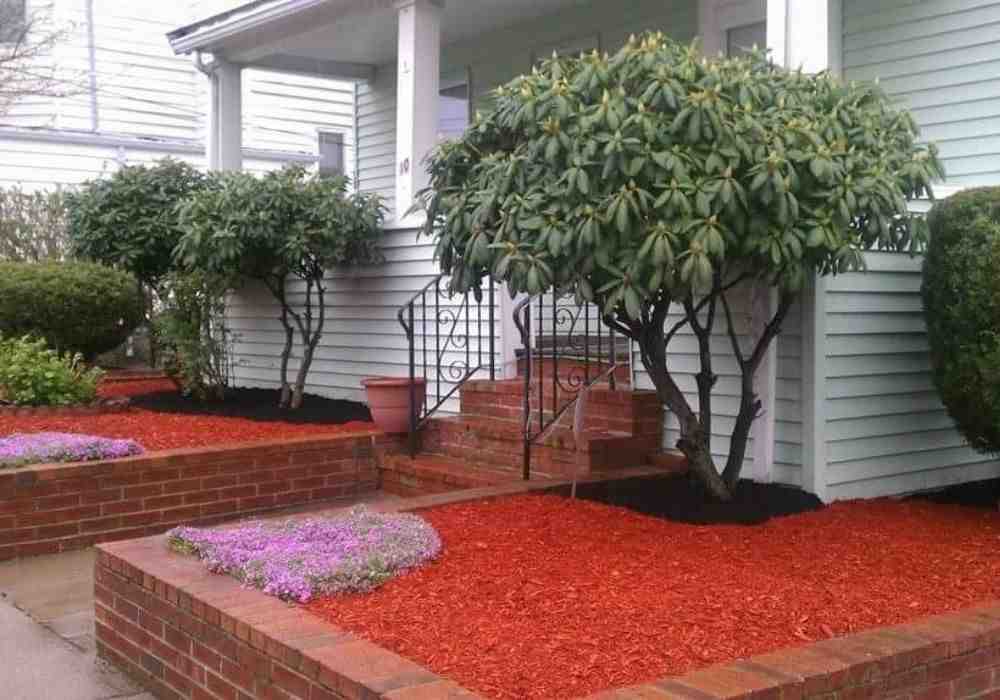



Transform Your Sloped Yard into a Beautiful Garden Space
A retaining wall flower bed combines structural engineering with natural beauty to solve one of landscaping’s most common challenges: managing sloped terrain while creating stunning planting areas. If you’re dealing with a hillside that’s hard to maintain or simply want to add dimension to your yard, here’s what you need to know:
Quick Overview: Building a Retaining Wall Flower Bed
- Plan your layout – Mark the wall location, check for utilities (call 811), and measure your slope
- Choose your materials – Concrete blocks, natural stone, or treated timber
- Prepare the foundation – Dig a trench, add compacted gravel base
- Build the wall – Lay blocks with proper drainage and slight backward tilt
- Plant strategically – Select flowers and shrubs that won’t damage the wall structure
You’ve probably noticed that sloped yards present real challenges. Water runs off too quickly, soil erodes into neighboring properties, and maintaining plants on an angle feels like a losing battle. A retaining wall flower bed solves all three problems at once.
The functional benefits are clear: You get level, usable space where there was once only a slope. The wall holds back soil, preventing erosion. Proper drainage channels water away from problem areas.
But there’s more than just function here. Terraced retaining walls create visual interest that flat yards simply can’t match. They add architectural structure to your landscape. They create natural boundaries between different garden zones. And they can significantly boost your property value.
The beauty is that retaining walls work for any size project. You might build a small curved wall to define a flower bed near your patio. Or you could terrace an entire hillside into multiple planting levels connected by stone steps.
Whether you’re a DIY enthusiast or planning to hire professionals, understanding the basics will help you create something that lasts for decades while looking better every year.
Simple retaining wall flower bed word guide:
Why a Retaining Wall is the Perfect Solution for Your Garden
A retaining wall flower bed is far more than just a decorative element in your landscape; it’s a powerhouse of functionality and aesthetic appeal. For properties in Everett, Lynnfield, Malden, and throughout our service areas in Massachusetts, where varied terrain is common, a well-designed retaining wall can transform your yard.
The primary purpose of a retaining wall is to hold back soil and create level areas on a sloped site. This is incredibly useful for turning an otherwise unusable incline into a functional space. Imagine converting a steep, grassy bank into a tiered garden overflowing with colorful blooms, or creating a flat, inviting patio area where before there was only a hillside. Retaining walls are most commonly used to create such functional areas out of sloped terrain, allowing us to expand your usable living space.
Beyond creating flat surfaces, retaining walls play a critical role in managing the natural forces that affect your landscape. They prevent soil erosion, which can be a significant problem on sloped properties, especially during heavy rains. By holding back the soil, they protect your plants, your lawn, and even your home’s foundation from the damaging effects of runoff. They also control water runoff, directing it away from unwanted areas like your basement or patio, ensuring proper drainage.
From an aesthetic standpoint, retaining walls are game-changers. They improve an outdoor space by creating distinct levels, evening out a hillside, and adding a structural beauty that lifts your garden’s design. They can create topographic interest, turning a monotonous slope into a dynamic landscape feature. Whether you’re looking to define garden beds, create a cozy outdoor living area, or simply add visual interest, a retaining wall offers versatility. This combination of functionality and beauty not only makes your yard more enjoyable but also significantly increases your property’s value.
For more information on how we can improve your outdoor space, explore our landscape design services.
Freestanding vs. Retaining Walls: What’s the Difference?
When considering adding walls to your garden, it’s important to understand that not all walls are created equal. The two main types you’ll encounter are freestanding walls and retaining walls, and each serves a distinct purpose.
Retaining walls are built to fight gravity. Their fundamental role is structural: to hold back soil and the lateral pressure it exerts, especially on sloped terrain. Because they bear significant weight, retaining walls require robust construction, including proper footings that are designed to hold the wall securely in place and effectively retain the soil behind it. If you have a sloped yard in areas like Medford or Saugus that needs leveling or protection from erosion, a retaining wall is the solution.
In contrast, freestanding walls are primarily decorative. They are used when the ground is flat and do not need to resist the pressure of tons of soil. Instead, they are commonly used to divide landscapes into different areas, break up open space, and add visual interest. Think of a low wall defining a garden path, a boundary around a patio, or an ornamental feature in a flat garden bed. While they add beauty and definition, they lack the structural integrity required to hold back soil on a slope.
Choosing the right wall type depends entirely on its intended function. If you’re dealing with a slope, require structural support, or need to prevent erosion, a retaining wall is essential. If your goal is purely aesthetic, such as creating garden borders or privacy screens on level ground, a freestanding wall might be more appropriate. For a retaining wall flower bed on a slope, the structural integrity of a true retaining wall is paramount.
Planning Your Project: Materials and Initial Design
Before we even think about digging, careful planning is the bedrock of a successful retaining wall flower bed. This stage is crucial, especially in our Massachusetts communities where local regulations and specific terrain might influence your choices.
Our first step is always a thorough site assessment. We look at the slope, soil conditions, and surrounding landscape to understand the challenges and opportunities. Crucially, before any excavation begins, we always call 811 to check for underground utilities. This essential safety measure ensures that we avoid hitting gas lines, water pipes, or electrical cables, protecting both our team and your property.
Local building codes in areas like Chelsea or Revere might have specific requirements for wall height, setbacks, and materials, especially for walls over a certain height (often three feet). Walls over three feet high may need frost footings, reinforcement, and drainage, and sometimes require professional engineering.
Consider the aesthetic you’re aiming for. Do you envision a straight, formal wall that defines a crisp border, or a flowing, curved design that blends more organically with your garden’s natural contours? Straight walls create a formal, structured look, while flowing curves have a more natural feel, provide planting areas, and create a softer look.
Choosing the Best Materials for Your Wall
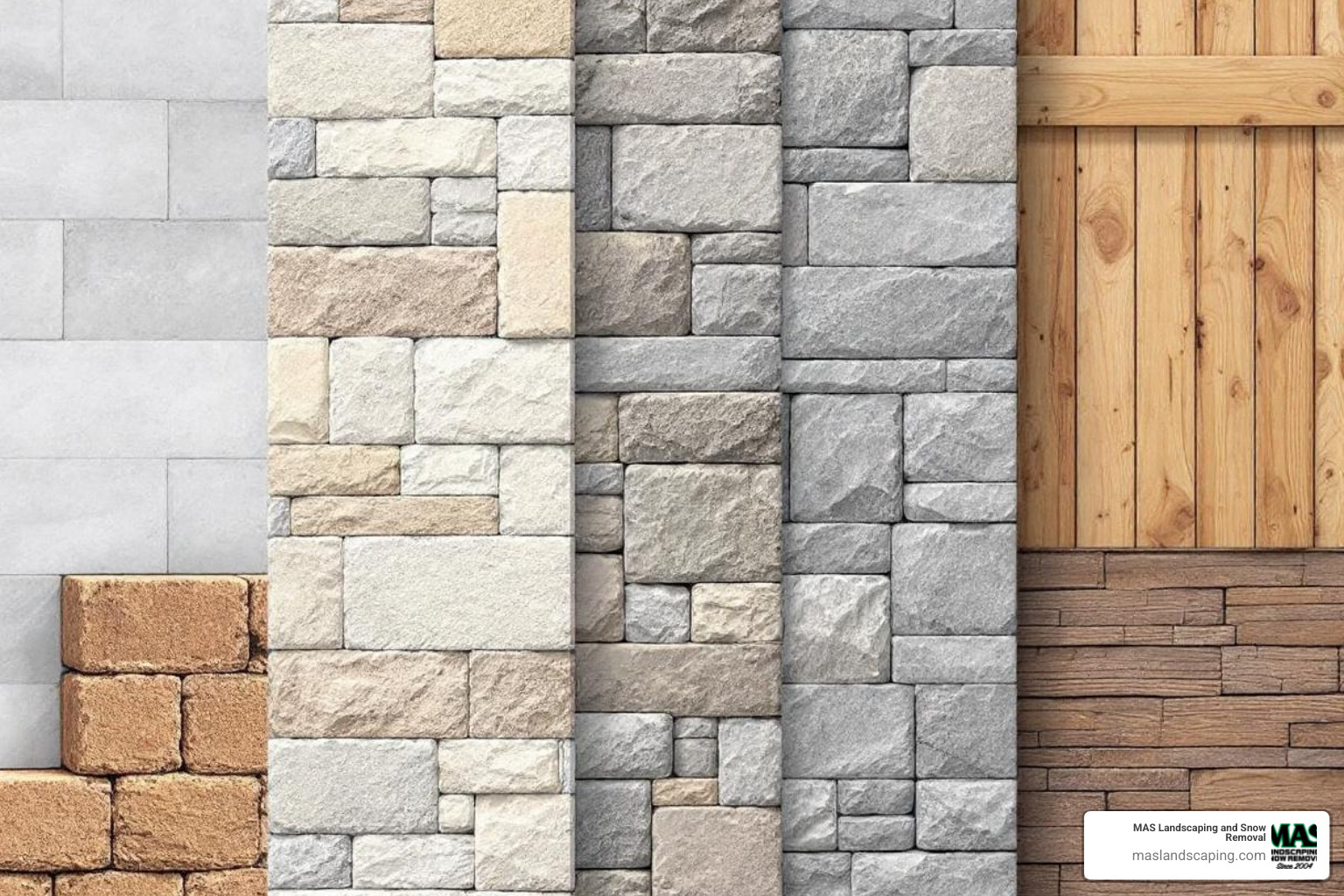
The material you choose for your retaining wall flower bed will greatly influence its appearance, durability, and cost. Here’s a look at some popular options:
| Material | Pros | Cons | Best For |
|---|---|---|---|
| Interlocking Concrete Blocks | DIY-friendly, uniform, variety of styles, affordable | Can look manufactured | Straight or curved walls up to 4 ft. |
| Natural Stone | Timeless look, durable, unique | Expensive, difficult to install, irregular shapes | Rustic, high-end designs |
| Treated Wood/Timber | Inexpensive, easy to cut, rustic feel | Shorter lifespan, can rot | Budget-friendly, straight-lined walls |
| Gabion Wall | Affordable, excellent drainage, modern look | Industrial aesthetic, requires heavy fill material | Modern designs, large-scale projects |
Interlocking Concrete Blocks: These are among the most affordable options and are very popular for DIY projects. They come in a wide variety of shapes, colors, and textures that can mimic natural stone or offer a more contemporary look. Modular blocks and retaining walls add structural beauty and functionality to your garden landscape and are a perfect solution for uneven ground.
Natural Stone: For a truly timeless and neat look, natural stone is unbeatable. It’s incredibly durable and each stone is unique, creating a rustic or sophisticated appearance. However, natural stone is more expensive and can be challenging to work with due to its irregular shapes and weight, often requiring professional installation.
Treated Wood/Timber: Wood is an inexpensive and easily accessible material, offering a natural and rustic feel. However, since it’s an organic material, expect it to have a shorter lifespan compared to solid options like stone or concrete. Treating the wood can extend its longevity.
Gabion Walls: These are decorative wire mesh cages filled with stones or gravel. Gabion walls are considered one of the most affordable ways to retain soil and offer excellent drainage. They have a distinct industrial-modern aesthetic that can be quite striking.
Designing for Slopes and Terraces
One of the most exciting aspects of a retaining wall flower bed is its ability to transform sloped yards into dynamic, usable spaces. For properties with significant inclines in areas like Melrose or Lynnfield, terracing is a fantastic solution.
Terraced retaining walls create multiple levels, effectively taming steep slopes and maximizing your usable space. Instead of one continuous, challenging incline, you get a series of flat, plantable areas. Terraced retaining walls can create more usable space, build raised gardens, help prevent erosion, and add interest to your landscape. Landscape designs are often more attractive when they include smaller, terraced/tiered, or in-wall planters rather than one large retaining wall.
When designing terraced walls, it’s crucial to consider the spacing and height of each wall. For walls to be engineered as independent structures, the height of the upper retaining wall should be less than or equal to the height of the lower wall, and the distance between them must be at least twice the height of the lower wall. This careful planning ensures stability and longevity.
Integrating steps into your terraced design can improve accessibility, allowing you to easily move between different garden levels. This thoughtful design not only improves the beauty of your yard but also makes it more functional and enjoyable. For detailed guidance on building terraces, you can refer to resources like Allan Block’s guide on building terraces.

How to Build Your Retaining Wall Flower Bed Step-by-Step
Building a retaining wall flower bed can be a rewarding DIY project, especially for smaller, lower walls. However, for larger or more complex structures, or if you’re in any doubt, professional installation is always recommended. Our team at MAS Landscaping has the expertise to ensure your wall is built to last.
Regardless of who builds it, safety always comes first. This includes calling 811 before you dig to locate underground utilities.
Step 1: Preparation and Excavation
This is where the real work begins, and thorough preparation is key to a stable, long-lasting wall.
Tools Needed:
- Shovel
- Level (4 ft and torpedo level)
- Tape measure
- Rubber mallet
- Hand tamper
- String line
- Stakes (wooden)
- Safety glasses
- Gloves
- Wheelbarrow
- Broom
- Chisel and hammer (if cutting blocks)
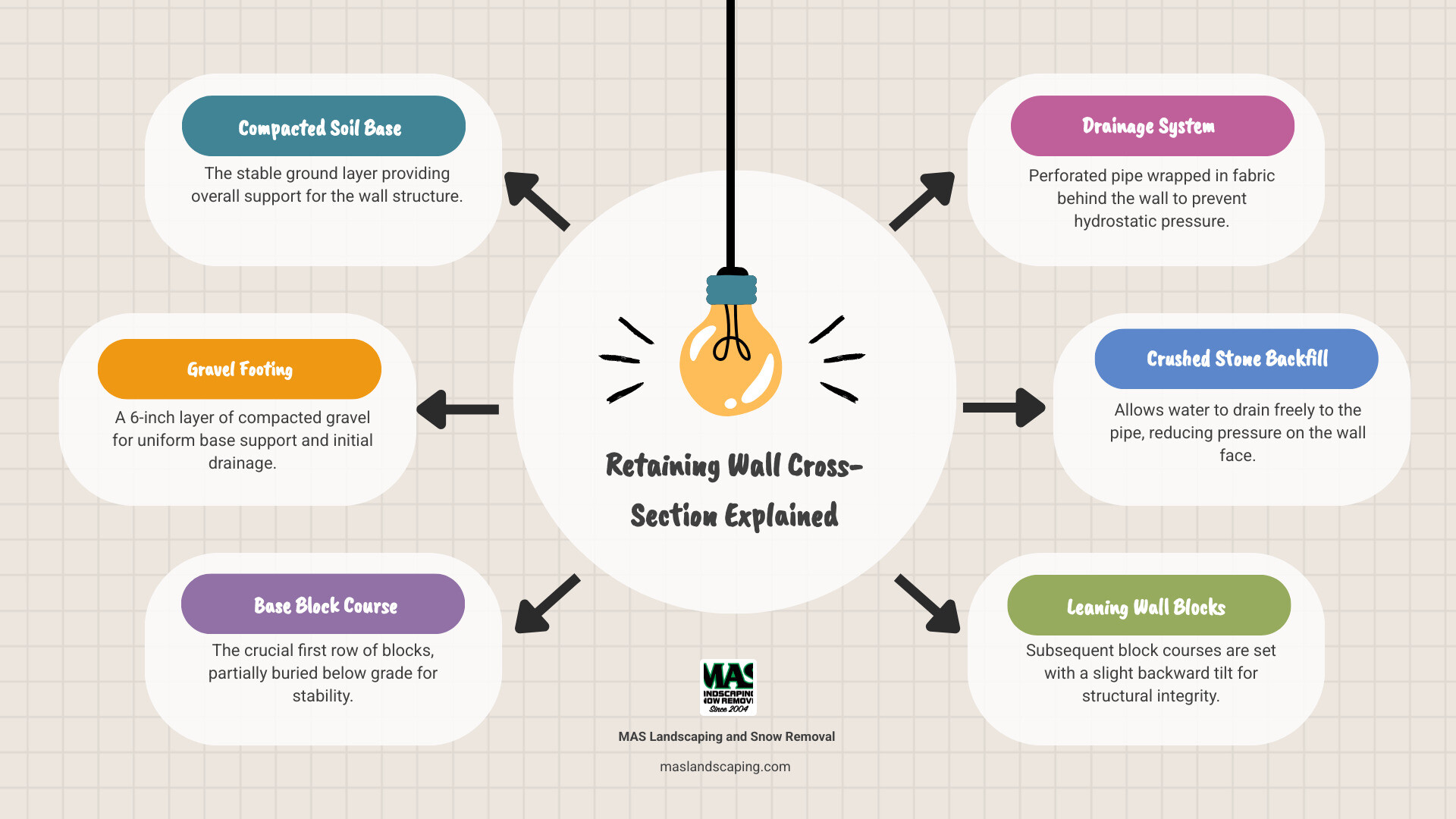
First, mark the layout of your retaining wall. Use stakes and a string line to define the path of your wall, ensuring it’s straight or smoothly curved according to your design. Once marked, it’s time to excavate. Dig a trench that is at least two feet wide and about eight inches deep. The trench should be at least two inches lower than the surrounding soil to allow for the gravel base and the first course of blocks to be partially buried. This partial burial adds stability and a clean finish.
The most critical part of this step, especially in our Massachusetts service areas, is to call 811 before you dig. This free service helps you identify and mark the location of any underground utility lines, preventing dangerous and costly accidents.
Step 2: Building a Solid Foundation
A strong foundation is non-negotiable for any retaining wall. Without it, your beautiful retaining wall flower bed risks tilting or failing over time.
Once your trench is dug, we add a base layer of gravel, typically about six inches deep. This gravel needs to be thoroughly compacted with a hand tamper or plate compactor. A stable base is essential; it provides drainage and prevents the wall from settling unevenly. Retaining walls are required for structural support, and footings are vital to hold the wall in place and better retain soil.
To help prevent weeds from growing up through your wall and to stabilize the soil, we line the trench with landscape fabric. This fabric also helps separate the gravel from the surrounding soil, maintaining drainage efficiency. For a visual guide to building a garden wall, you might find resources like This Old House’s guide helpful.
Step 3: Laying the Blocks and Ensuring Drainage
With your foundation ready, it’s time to start laying the blocks for your retaining wall flower bed.
Begin by placing the first course of blocks directly on the compacted gravel base. Each block should be carefully leveled both front-to-back and side-to-side. Use a rubber mallet to tap blocks into place and adjust as needed. It’s crucial that this first course is perfectly level, as it sets the standard for the entire wall. We also ensure that these base blocks tilt slightly backward, or “batter,” leaning into the hill. This backward slope adds crucial stability to the wall.
As you build subsequent courses, stagger the joints like bricks in a wall for added strength. Many interlocking block systems are designed to automatically create a slight setback with each course, where the next course of blocks is set back slightly (about 1/4 inch) from the course below. This setback also increases the wall’s stability against the pressure of the soil.
Proper drainage is paramount to prevent retaining wall failure. We install a perforated drainage pipe behind the first row of blocks, making sure it has a slight incline to direct water flow. This pipe is then covered with a layer of crushed rock (typically about three inches deep) and wrapped in landscape fabric. This system prevents water from building up behind the wall, which can cause hydrostatic pressure that overwhelms the structure, leading to tilting or collapse. The combination of the gravel backfill and the drainage pipe effectively channels water away, protecting your wall for years to come.
Bringing Your Wall to Life: Planting and Maintenance
Once your retaining wall flower bed is built, the real fun begins: bringing it to life with plants! This is where we transform the hardscape into a soft, vibrant landscape feature, creating year-round interest and complementing your property’s aesthetic. You can see examples of how we integrate hardscaping with beautiful plantings in our hardscaping photo gallery.
Choosing the Right Plants for Your Retaining Wall Flower Bed
Plant selection is crucial for both the beauty and the long-term health of your retaining wall. The key is to choose plants whose root systems will not damage the wall’s structure. Aggressive root systems from large trees or vigorous vines like wisteria can weaken the wall over time, so careful consideration is needed.
A popular design concept is “Thriller, Filler, Spiller”:
- Spillers: These are plants that cascade beautifully over the edge of the wall, softening its lines and adding a lush, flowing effect. Good choices include creeping phlox, calibrachoa, petunias, and trailing junipers. These look lovely spilling down the face of the wall.
- Fillers: These plants provide body and volume to the bed, filling the space behind the spillers. Consider mounding plants like hostas, coral bells, or various perennial flowers that offer seasonal color.
- Thrillers: For vertical interest, choose upright plants that add height and drama. Smaller shrubs like Oakleaf hydrangea, Green Mountain boxwoods, Delaware Valley azalea, Quickfire hydrangea, and Cunningham’s White rhododendron can be excellent options, provided they are placed appropriately.
When planting, consider the mature size of your plants. As a general rule, place flowers and groundcovers close to the wall. Keep small shrubs at least three feet back, large shrubs and small trees at least six feet back, and large trees a minimum of 15 feet back from the wall. This ensures their roots won’t interfere with the wall’s integrity. For more expert advice on landscaping around walls, the Extension service offers valuable insights.
Long-Term Care and Avoiding Common Problems
Maintaining your retaining wall flower bed is key to its longevity and continued beauty.
Proper watering and mulching are essential for healthy plants. Mulch also helps retain soil moisture and suppresses weeds. Regularly check the drainage system behind your wall. Clean any weep holes at the base of the wall with wire or a screwdriver, and ensure drainpipes remain unplugged.
Common problems can arise if proper installation and maintenance are neglected. Improper drainage is the most common cause of retaining wall failure. When waterlogged soil accumulates behind the wall, it creates immense pressure that can compromise the structure. If you notice a tilted wall or bowing sections, this indicates the wall is being overwhelmed by the soil’s weight, often due to drainage issues or insufficient construction. Loose bricks or rocks can also occur if saturated soil causes the wall to shift, or if the initial construction or mortar mix was incorrect.
Addressing these issues promptly is crucial. Minor issues like loose blocks can sometimes be repaired by removing old mortar, applying new, and re-setting. However, a tilted or bowing wall often requires dismantling and rebuilding to ensure structural integrity. Regular maintenance, including monitoring drainage and the wall’s condition, will help you enjoy your stunning retaining wall flower bed for many years to come. For comprehensive landscape care, explore our landscape maintenance services.
Budgeting and Cost Considerations
Understanding the costs associated with a retaining wall flower bed is an important part of your planning process. The overall expense can vary significantly depending on several factors, including whether you opt for a DIY project or professional installation, the materials chosen, and the size and complexity of the wall.
Generally, the cost of a wall project will depend on its height and length. Shorter retaining walls are often more budget-friendly than taller ones, as taller walls require more materials, deeper footings, and potentially engineering oversight and reinforcement. Labor expenses for professional installation will also be a significant factor, reflecting the expertise and time required for proper construction. Depending on local regulations in your Massachusetts town, permit fees might also apply for taller or more complex retaining walls.
Cost Considerations for a Retaining Wall Flower Bed
Any specific pricing mentioned below represents average costs based on internet data and not actual costs for MAS Landscaping. We provide personalized quotes based on your unique project needs.
As we discussed, concrete blocks are among the most affordable options for retaining walls, making them a popular choice for budget-conscious projects. Natural stone, while offering best beauty and durability, will typically be a premium choice due to material cost and specialized installation.
For professional installation, the potential cost range for a retaining wall can vary widely, from approximately $25 to over $75 per square foot. This wide range accounts for differences in material, wall height and length, site accessibility, and the complexity of the design and drainage requirements. For instance, a simple, low wall made of concrete blocks will fall on the lower end of this spectrum, while a tall, curved wall made of natural stone with integrated steps and complex drainage will be on the higher end. Again, short retaining walls are often more budget-friendly than taller ones, making them a great starting point for many homeowners.
Frequently Asked Questions about Retaining Wall Flower Beds
How high can I build a DIY retaining wall?
Most DIY-friendly block systems are designed for walls up to 3-4 feet. Taller walls, or those on significant slopes, often require professional engineering and installation to ensure they are safe and properly supported. Walls over three feet high may need frost footings, reinforcement, and drainage, which typically require professional expertise to design and implement correctly.
What is the most common cause of retaining wall failure?
Improper drainage is the number one cause of retaining wall failure. When water builds up behind the wall, the hydrostatic pressure can overwhelm the structure, causing it to bulge, tilt, or collapse. This is why proper installation of a drainage pipe and gravel backfill is absolutely critical for the longevity of your retaining wall flower bed.
Can I plant trees on or near my retaining wall?
It’s generally not recommended to plant large trees or shrubs directly behind a retaining wall. Their powerful root systems can grow into and damage the wall’s structure over time, potentially causing cracks or shifting. For safety and the wall’s integrity, it’s safer to plant them at a distance of at least 6-15 feet, depending on the tree’s mature size. Smaller plants, flowers, and groundcovers with less aggressive root systems are best placed closer to or directly in your retaining wall flower bed.
Transform Your Landscape with a Professional Touch
A retaining wall flower bed is a fantastic project that adds immense value and beauty to your property. It solves practical problems like erosion while creating a stunning focal point for your garden. While a rewarding DIY endeavor, achieving a long-lasting, professional result requires expertise, especially on challenging terrain or for taller, more complex designs. For homeowners in the Saugus, MA area, including Everett, Lynnfield, Malden, Melrose, Medford, Revere, and Chelsea, looking for a flawless installation, the team at MAS Landscaping and Snow Removal offers expert design and construction services. We bring personalized service and local expertise to create functional, beautiful outdoor spaces that you’ll cherish for years. Contact us today to discuss your retaining wall installation project.