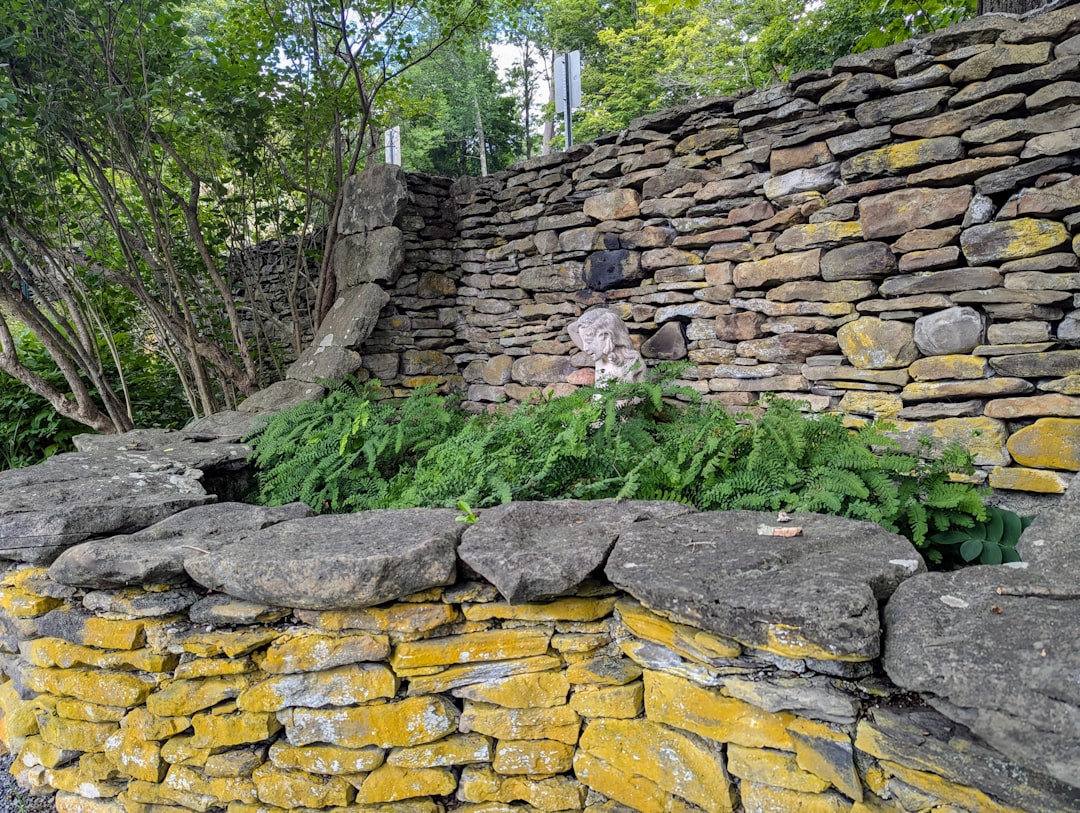



Garden Stone Wall: Rock Solid Build Guide 2025
Why Garden Stone Walls Transform Your Outdoor Space
A garden stone wall is a versatile and enduring way to improve your landscape. These structures combine practical benefits like erosion control with timeless natural beauty that complements any outdoor design.
Key Building Options for Garden Stone Walls:
- Dry-Stacked Walls – Natural look, allows drainage, DIY-friendly for walls under 4 feet
- Mortared Walls – Stronger structure, better for retaining soil, requires concrete foundation
- Natural Stone – Fieldstone, flagstone, granite offer unique character but higher cost
- Manufactured Stone – Concrete blocks provide consistent shapes and easier installation
Stone walls are famously durable, with some ancient structures still standing today. As one landscape expert notes, “Building dry stacked stone walls is an art and craft” that transforms your outdoor space.
Whether you need erosion control, raised beds, or simple beauty, understanding your options is key. This guide covers choosing between dry-stacked and mortared walls, selecting stone for the Massachusetts climate, foundation work to prevent frost heave, stacking techniques, and when to call a professional.
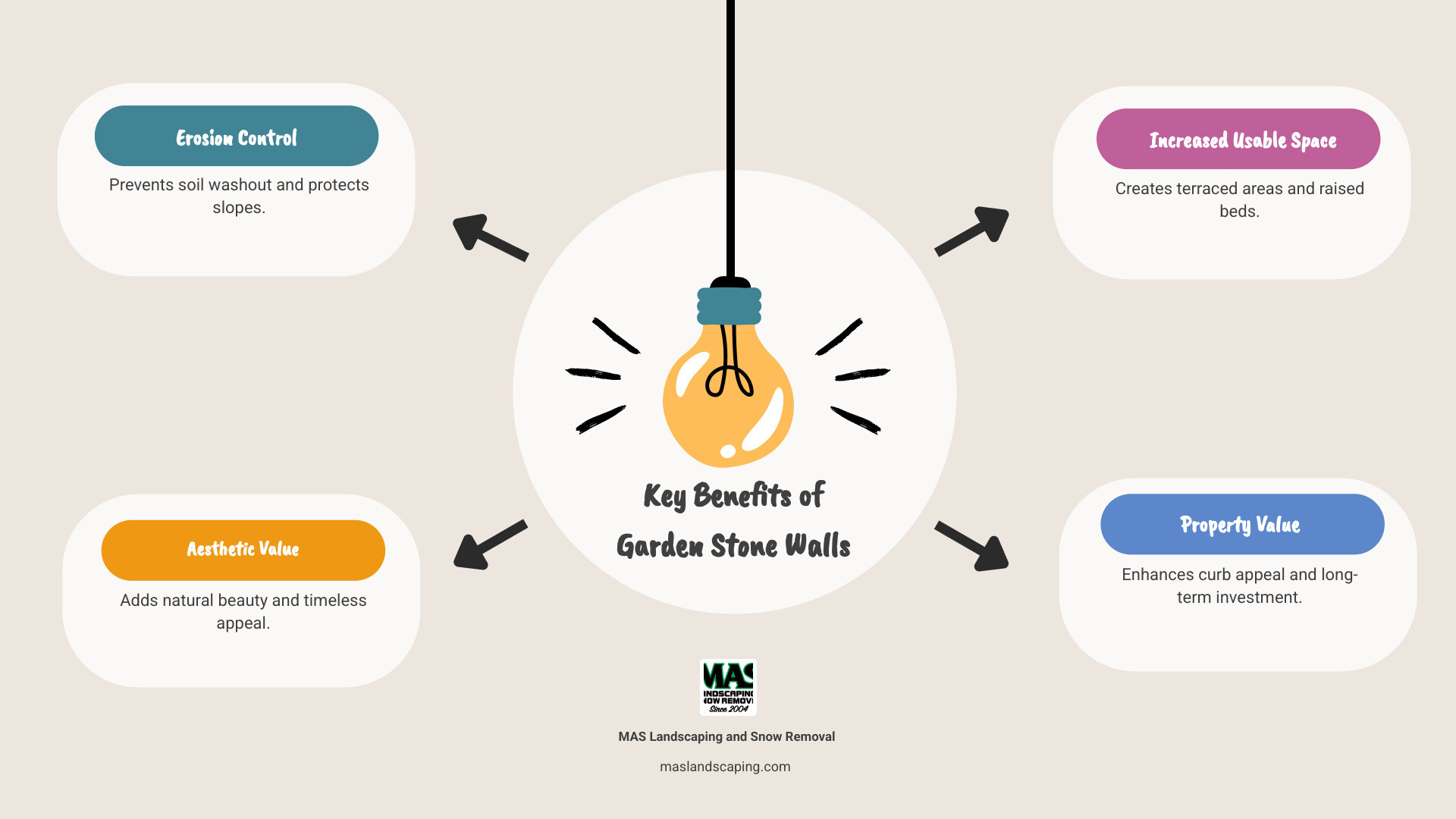
Garden stone wall terms made easy:
Understanding the Fundamentals of a Garden Stone Wall
This section covers the essential knowledge needed before you start your project, from the types of walls and their benefits to the materials you can use.
Functional and Aesthetic Benefits
A garden stone wall is a versatile landscape feature with many functional and aesthetic benefits. Functionally, these walls excel at erosion control on slopes and are perfect for creating terraced yards, turning sloped areas into flat, usable space. They also make great raised garden beds, offering better drainage and easier access. A stone wall can also define outdoor “rooms,” separating patios from lawns and adding structure to your yard.
Aesthetically, the natural appeal of stone adds timeless beauty. Whether it’s rustic fieldstone or clean-cut quarry stone, the look can be improved by mosses and lichens over time. This beauty increases property value and curb appeal, making a stone wall a wise investment. For more ideas, you can explore more on design possibilities.
Dry-Stacked vs. Mortared: Which is Right for You?
A key decision is choosing between a dry-stacked or mortared garden stone wall. Each method has unique pros and cons.
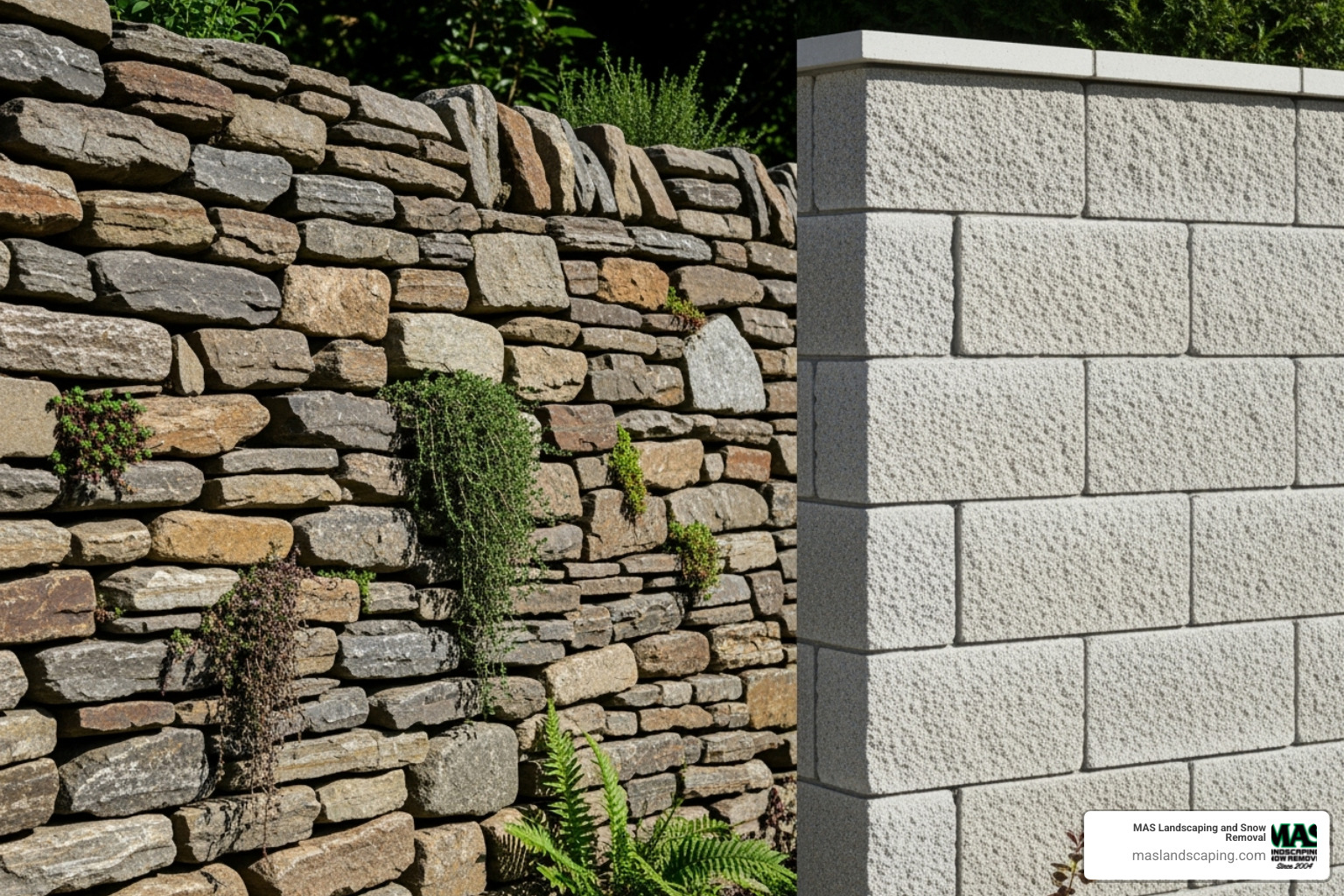
Dry-stacked walls use no mortar, relying on gravity, friction, and interlocking stones for stability. This method allows for natural drainage through the gaps, which can also be used as planting pockets for a softer look. They are DIY-friendly for walls under 4 feet, but taller walls require professional expertise for safety.
In contrast, mortared walls use cement to bind stones, creating a rigid, strong structure ideal for retaining significant soil pressure. Because they are less permeable, proper drainage behind the wall is crucial to prevent pressure buildup. Mortared walls require more skill and a concrete footing, especially for taller structures. They are a good choice for round fieldstones that are difficult to dry-stack.
Here’s a quick comparison to help you decide:
| Feature | Dry-Stacked Walls | Mortared Walls |
|---|---|---|
| Construction | Stones interlocked without mortar, relying on gravity. | Stones bound together with mortar; often requires concrete footing. |
| Drainage | Excellent natural drainage through gaps. | Requires engineered drainage system to prevent hydrostatic pressure. |
| Appearance | Rustic, natural, organic; can incorporate plants. | Formal, structured, clean lines; less natural look. |
| Durability | Long-lasting if built correctly; flexible with freeze-thaw. | Very strong and rigid; susceptible to cracking from frost heave if drainage is poor. |
| Best Use | Garden borders, low freestanding walls, aesthetic features, planting beds. | Retaining walls, privacy walls, structural elements, foundations. |
| DIY Suitability | High for low walls (under 4 ft); requires patience and skill. | Lower; typically requires professional skill and specialized tools. |
Choosing Your Stone: Natural vs. Manufactured Options
Your choice of stone impacts the wall’s look, cost, and installation. Options fall into two main categories: natural and manufactured.
Natural stone offers unique character, with each piece having its own color, texture, and shape.
- Fieldstone: Naturally rounded, it creates a rustic, informal look. It’s common in New England in various sizes and colors.
- Flagstone: Large, flat sheets ideal for layered walls or capping. Thinner flagstone is best for low walls (under 18 inches).
- Granite and Limestone: Quarried and often cut into uniform shapes for a formal look. Natural stone is beautiful but generally more expensive.
Manufactured stone offers consistency, easier installation, and a wide range of styles at a lower price.
- Concrete blocks: Engineered to look like natural stone, these blocks from brands like Best Way Stone and Belgard come in consistent shapes and sizes. Many have locking features, making installation faster and easier than with natural stone. Their consistency allows for precise construction, even for gravity walls up to 5-6 feet. While they lack the unique character of natural stone, they provide a durable and beautiful alternative. You can find out more at more on stone selection.
Planning Your Project: From Design to Foundation
Proper planning is the most critical phase for ensuring your wall is both beautiful and built to last. This involves careful design, layout, and preparing a solid base.
Designing and Laying Out Your Wall
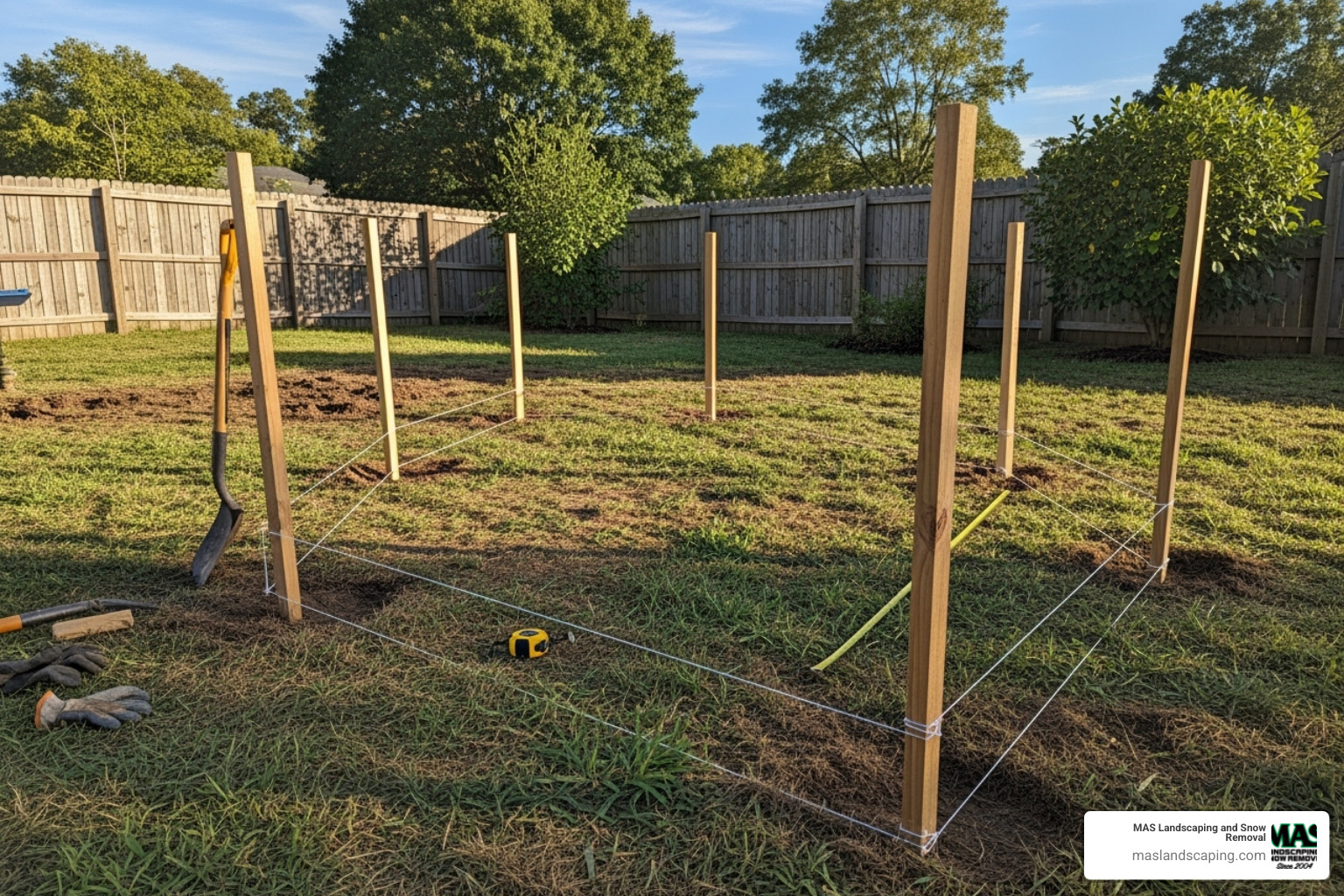
Before moving a single stone, proper planning is essential to ensure your garden stone wall is both beautiful and functional.
First, determine the wall’s purpose: retaining soil, defining a garden bed, or adding beauty. This helps decide its height and length. Pro tip: Retaining walls over 3-4 feet tall, especially in areas like Saugus, MA, may require local permits or even an engineer’s approval. Check with your town hall early to avoid issues.
Next, shape your vision. While straight walls are classic, curved walls add flow. Use stakes and string or spray paint to mark the layout and visualize it in your space. On a slope, consider terracing with multiple shorter walls instead of one tall one. This often looks better and can avoid stricter permit requirements. Ready for some inspiration? You can explore design ideas to spark your creativity!
The Critical First Step: Digging the Trench
A strong foundation is everything for a garden stone wall, and that starts with a proper trench. A solid, level base prevents shifting and protects against frost heave.
In cold climates like Massachusetts, frost heave (when frozen soil expands and pushes structures up) is a major concern. To prevent this, the trench must be dug below the frost line. In New England, this can mean a depth of up to 18 inches.
The trench should also be at least six inches wider than your base stones for stability and backfill space. After digging, ensure the bottom is perfectly level and firmly tamped down. This prep work is crucial for a long-lasting wall.
Ensuring Stability with a Gravel Base and Drainage
With the trench dug, the next secret to a durable garden stone wall is a strong gravel base and proper drainage. This is critical for retaining walls.
Fill the trench with crushed gravel. For a retaining wall, the gravel base should be about half the height of your finished wall. Tamp the gravel down until it’s solid and level.
Water is a retaining wall’s biggest challenge. For walls over 3 feet tall or any mortared wall, drainage is essential to prevent hydrostatic pressure from causing failure. Install a perforated drain pipe at the base behind the first course of stones, surrounded by crushed gravel. To prevent clogging, wrap the pipe and gravel in geotextile fabric. This system is the backbone of a stable wall. For more expert insights, we often turn to resources like The Stone Trust.
Step-by-Step Guide to Building Your Garden Stone Wall
With your foundation prepared, it’s time to start building. Following these steps will help you construct a strong and stable garden stone wall that you’ll be proud of!
Laying the First Course
The first course, or row, of your garden stone wall is the most important. It’s the foundation for the entire structure and must be perfect.
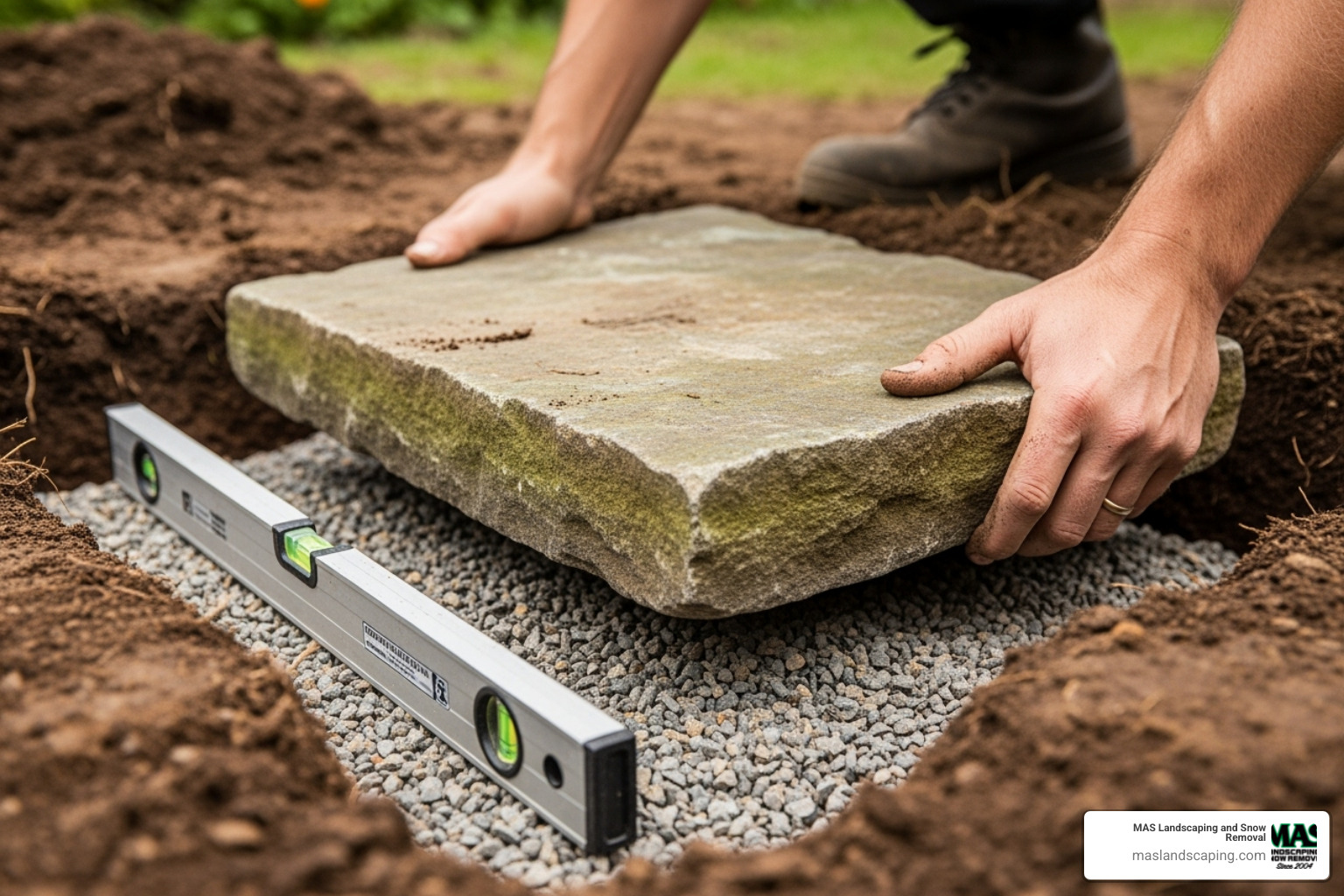
Select your largest, flattest stones for this base layer. Place each one on the prepared gravel trench, ensuring it sits firmly without rocking.
Use a level to check each stone from side to side and front to back. Adjust its level by adding or removing gravel beneath it, or by using small, flat stone shims.
Tap each leveled stone with a rubber mallet to set it into the gravel. Backfill behind the first course with gravel or soil, packing it down firmly to lock the base stones in place. A perfect first course is key to a straight, durable wall.
Building Up: Stacking Techniques for a Strong Garden Stone Wall
Building a strong garden stone wall is like solving a puzzle; the secret is in how you stack the stones.
Follow the “one over two, two over one” principle: stagger the joints so each stone rests on two stones below it, never creating a continuous vertical seam. This distributes weight and ensures stability. Fit stones tightly, using small shims (spalls) to eliminate wobbles.
For added strength in retaining walls, use “tie-backs”—longer stones placed perpendicular to the wall face to anchor it into the backfill. Also, build with a slight backward slope, or “batter,” of about 2 inches for every 12 inches of height to resist soil pressure. A helpful guide for retaining walls is the “1-2-3 rule”: a 3-foot-tall wall should be 1 foot wide at the top and 2 feet wide at the base. These details create a rock-solid wall.
Finishing Touches: Capping and Cutting Your Garden Stone Wall
As you reach the final height, it’s time for finishing touches like capstones and cutting stones to fit.
Choose flat, attractive capstones for the top layer. They provide a finished look, protect the wall from rain, and can serve as seating on low walls. Lay them to create a smooth, level surface. On dry-stacked walls, their weight is often enough, but for extra security on taller or mortared walls, use an outdoor-grade adhesive.
If a stone needs shaping, you can cut it. For small adjustments, use a hammer and a 3-inch carbide chisel (always wear safety goggles). For larger, precise cuts, consider renting a wet saw with a diamond blade. Don’t worry about perfection; small imperfections add to the wall’s natural charm. If you want more details, check out how to cut stone.
Cost, Timelines, and When to Call a Professional
Deciding to build a garden stone wall is exciting! But before you start, it’s smart to think about the time and money involved. Understanding the potential investment helps you figure out if this is a project you want to tackle yourself or if bringing in an expert is the best path.
Estimating the Cost of Your Garden Stone Wall Project
The cost of building a garden stone wall varies widely based on materials, size, complexity, and whether it’s a DIY project or professionally installed.
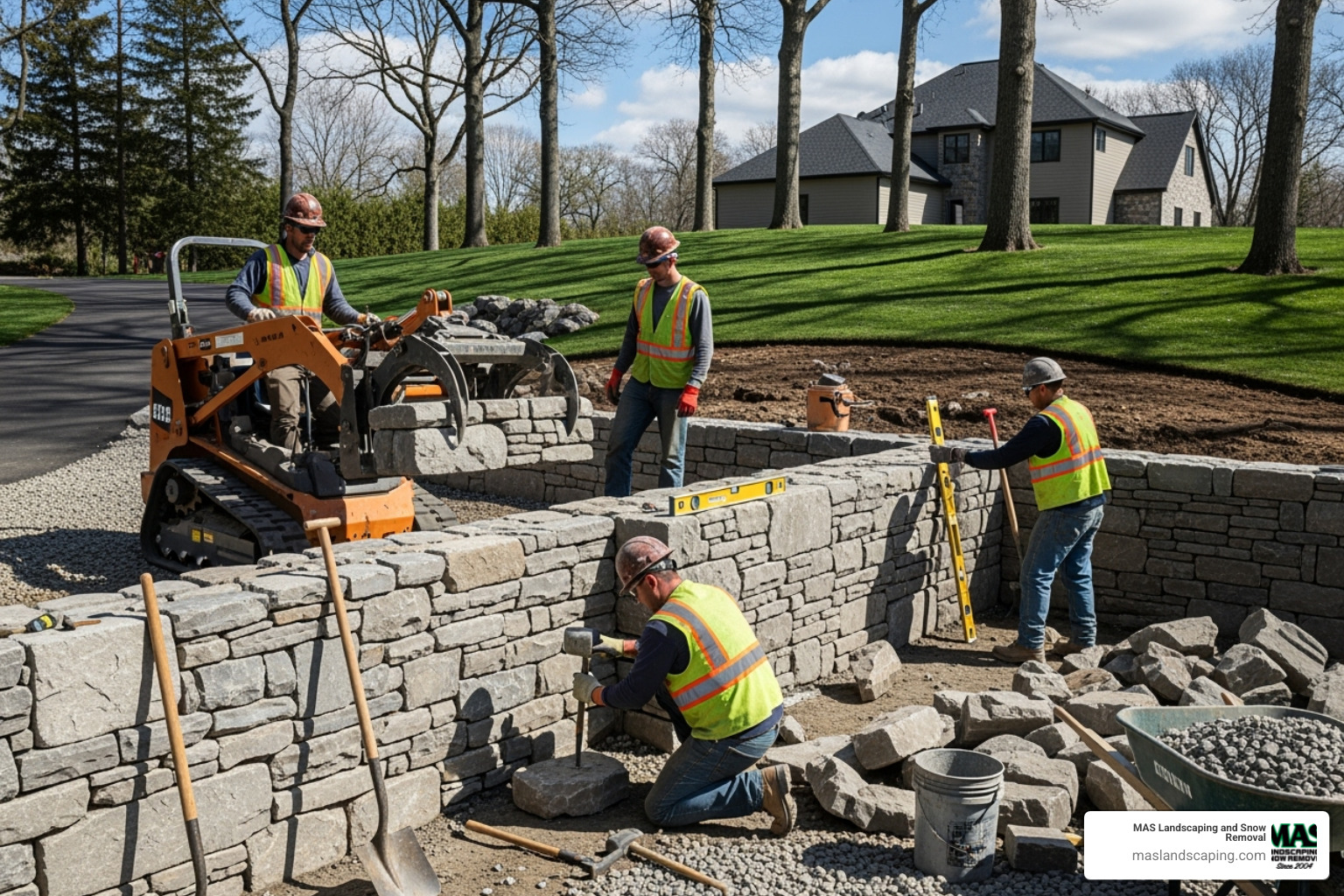
For a DIY project, your main cost is materials. Stone is the biggest expense, though you might find free fieldstone on your property. Purchased natural stone can cost hundreds or thousands per ton, while manufactured blocks are often cheaper. Budget for gravel, drainage supplies, and tool rentals. A small DIY wall might cost several hundred to a couple of thousand dollars.
When you choose professional installation, the cost includes labor, specialized equipment, and material delivery. Please note that any cost estimates mentioned here are national averages and not actual quotes for MAS Landscaping. We provide personalized estimates for projects in the Saugus, MA area.
While a national average project cost might be around $4,900, the range is wide. A simple wall could be much less, but complex retaining walls can easily exceed $15,000. Intricate projects requiring significant excavation, engineering, or premium materials can cost much more. Factors like site access, soil type, and wall height all affect the final price.
DIY vs. Hiring a Pro: Making the Right Choice
Deciding between DIY and hiring a pro involves balancing your budget, time, and desired outcome.
You might be ready to DIY if:
- You’re building a low wall (under 3-4 feet).
- The design is simple, like a straight garden border.
- It’s a small project, like a raised flower bed. DIY saves on labor costs and can be very rewarding.
However, hiring a professional is the smarter choice for:
- Walls over 4 feet tall, which often require professional engineering for safety.
- Complex retaining walls on steep slopes or holding significant weight.
- Properties with poor drainage issues.
- A guaranteed, long-lasting result. A pro like MAS Landscaping understands local conditions (like Massachusetts frost heave) and has the experience and equipment to build a wall that lasts, preventing costly future repairs. A properly built wall should never fail.
For projects in and around Everett, Lynnfield, Malden, and other nearby areas, finding a reputable retaining wall company can give you great peace of mind and a truly beautiful, flawless finish.
Frequently Asked Questions about Garden Stone Walls
Does a small, 2-foot retaining wall need drainage?
While codes may not require it for walls under 4 feet, we strongly recommend drainage for any retaining wall, even a 2-foot one. This is especially true in clay soil or rainy areas. Water pressure can build up and damage even a short wall over time. A simple gravel-filled trench behind the wall, with an optional perforated pipe, is an easy way to prevent this pressure and frost heave, ensuring your garden stone wall‘s longevity.
What is the cheapest material for a garden wall?
For a budget-friendly garden stone wall, the cheapest option is using fieldstone from your own property. Among purchased materials, poured concrete and manufactured concrete blocks are typically the most inexpensive choices. Concrete blocks are also easier and faster to install than natural stone. While landscaping timbers are cheap, they rot and don’t last. Natural stones like flagstone or granite are generally the most expensive materials.
Do all stone walls need a concrete foundation?
No, not every garden stone wall needs a concrete foundation. Low, dry-stacked walls (under three feet) can be built on a compacted gravel trench foundation. The gaps in these walls allow for natural drainage. However, mortared walls or any significant retaining wall should have a proper concrete footing. This footing distributes the weight and prevents shifting, which is critical in Massachusetts due to our freeze-thaw cycles!
Conclusion: Enjoy Your Timeless Landscape Feature
Building a garden stone wall is a satisfying project that creates a lasting feature for your landscape. Whether you DIY or hire a pro, success depends on understanding the fundamentals: choosing between dry-stacked and mortared walls, selecting the right stone, and building a proper foundation. A wall is only as strong as its gravel base and drainage system.
Over time, your wall will develop character, hosting plants and providing timeless natural beauty. You’ll enjoy knowing it was built correctly to withstand New England’s weather for years to come.
Your Partner in Professional Hardscaping
For a perfect finish that lasts, professional expertise is key. In New England, proper construction techniques are a necessity due to our tricky soil and harsh winters.
MAS Landscaping and Snow Removal brings local experience to every stone wall project across Saugus, Everett, Lynnfield, Malden, and the surrounding communities. We understand the local climate, soil, and materials needed to build a wall that’s more than just functional—it’s a space for making memories.
Ready to transform your landscape with a wall built to last for generations? Contact us for a professional retaining wall installation and let’s create something beautiful together.