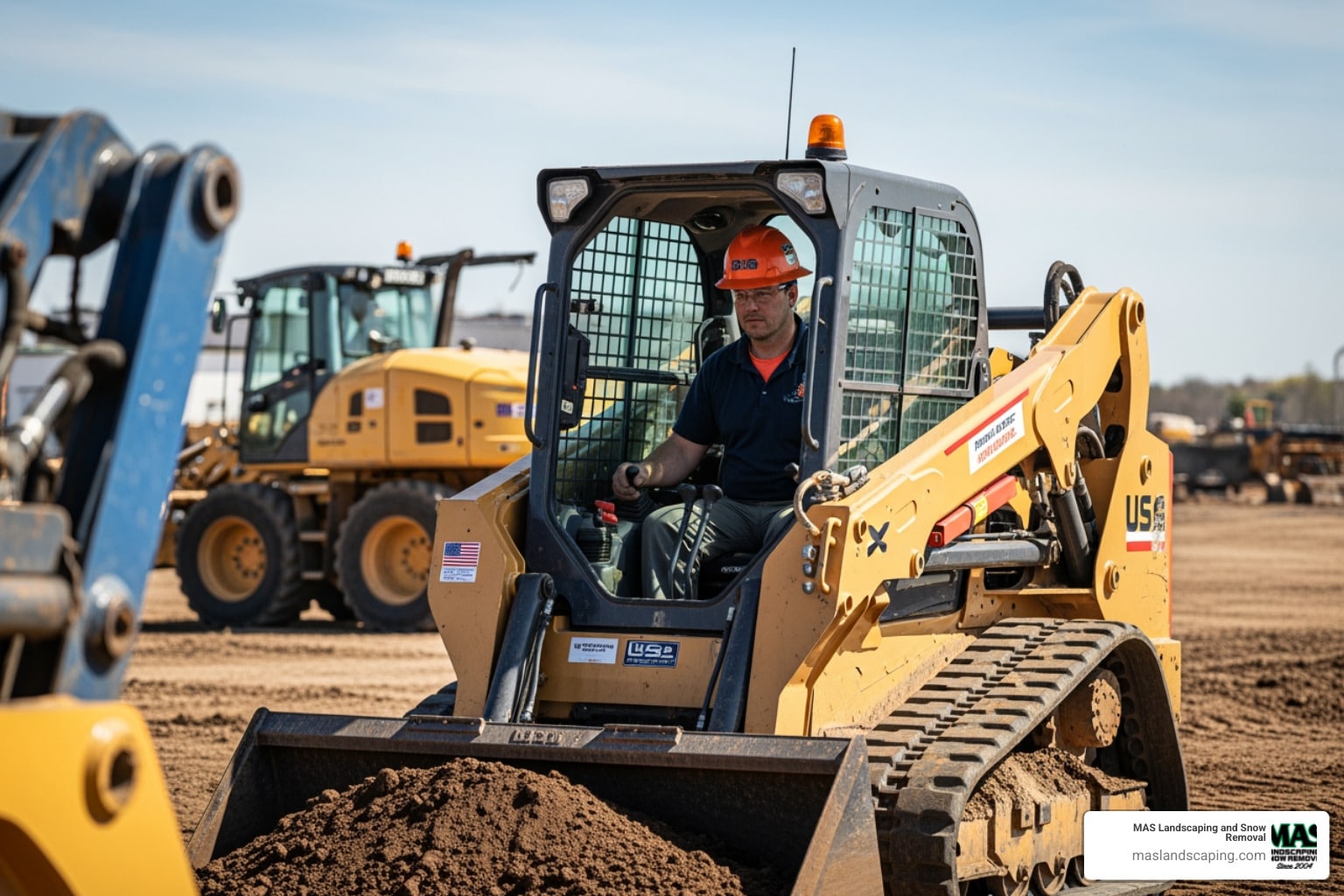



Why Skid Steer Operators Are in High Demand
A skid steer operator is a skilled heavy equipment professional who operates compact, maneuverable loaders used across construction, landscaping, agriculture, and municipal services. These operators command strong earning potential and job security due to growing industry demand.
Quick Overview: Becoming a Skid Steer Operator
- Training Required: 4-hour theoretical course plus hands-on practical evaluation
- Certification Cost: Average industry range from $195 to $750 (varies by provider and location)
- Time to Competency: 1-2 weeks for basic comfort; full apprenticeship takes approximately 2,560 hours (1.5 years)
- Salary Range: $18 to $75 per hour, or $35,000 to $115,000 annually (based on average industry data)
- Job Growth: 12% annual increase in skid steer operator positions
- Certification Validity: Typically 3 years before renewal required
Skid steer loaders have become indispensable on busy jobsites because they can accomplish significant work in tight spaces. Their compact size, zero-radius turning capability, and versatile attachment system make them the Swiss Army knife of heavy equipment. But this versatility also demands respect—these machines turn fast and can become unstable quickly when carrying loads high or working on uneven ground.
The demand for qualified operators continues to climb as construction, landscaping, and snow removal companies expand their services. Many incidents result from operators who rush, guess at controls, or skip proper training. That’s why professional certification isn’t just a credential—it’s a life-saving investment that opens doors to better job opportunities and higher pay.
Whether you’re considering a career change, looking to enhance your skills, or simply want to understand what makes a qualified operator, this guide walks you through everything from training pathways to safety protocols to career prospects.
Terms related to Skid steer operator:
What is a Skid Steer and Why is it Essential?

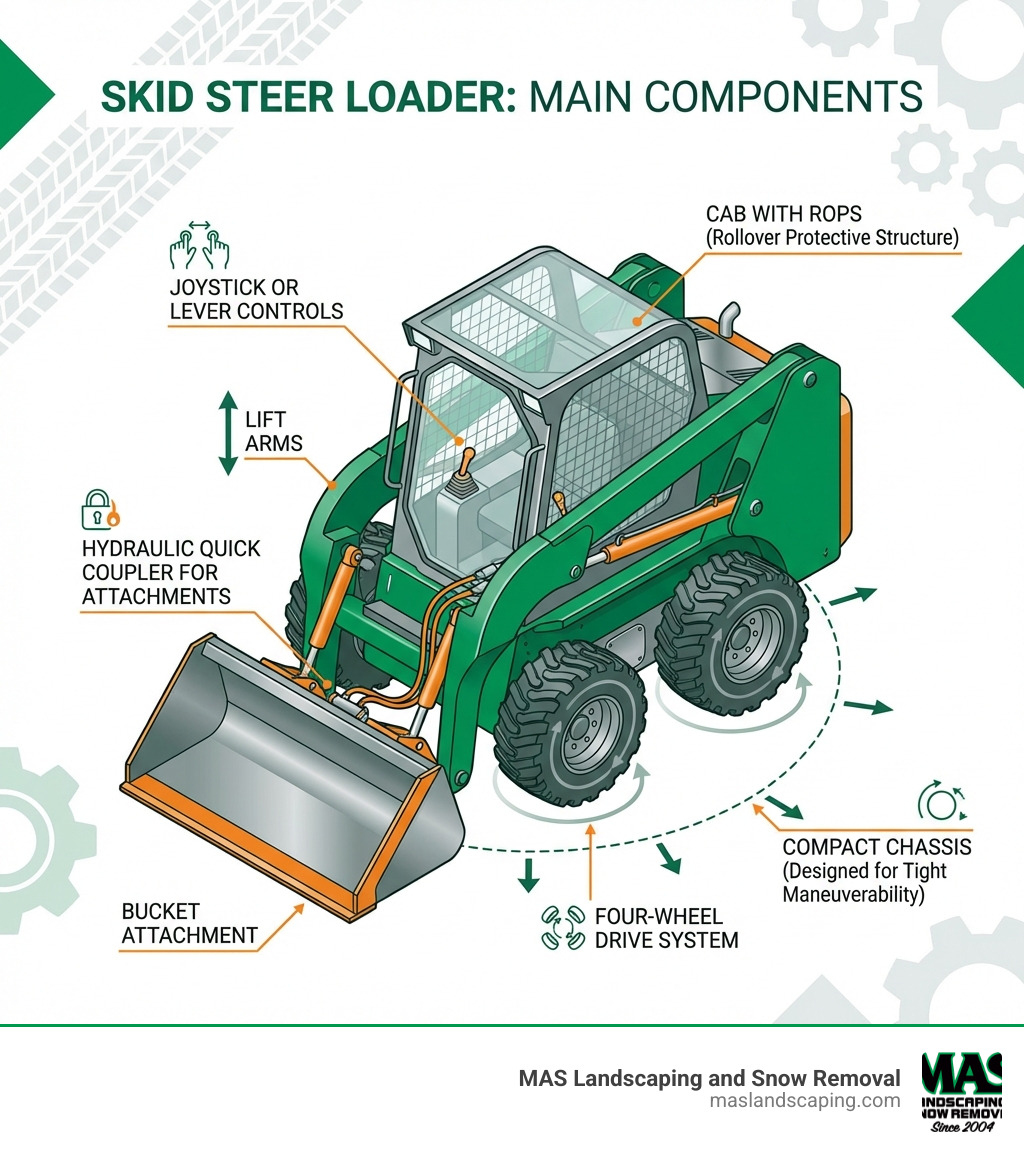
At its core, a skid steer loader is a compact, engine-powered machine with lift arms used to attach a wide variety of labor-saving tools. Unlike a standard tractor, the left-side wheels operate independently of the right-side wheels. By “skidding” one side while the other rotates, the machine achieves a zero-radius turn, allowing it to pivot in its own tracks.
This incredible maneuverability is powered by a hydrostatic transmission, which eliminates the need for gear shifting and allows for smooth, precise movement. Whether we are navigating a tight backyard in Saugus or clearing a narrow alleyway in Chelsea, the skid steer is our go-to tool.
But what exactly do we use them for? The answer is almost everything. To understand the full scope, you can explore what are Bobcat services to see how these machines transform a jobsite.
- Construction: Operators use them for excavating, moving heavy pallets, and backfilling foundations.
- Agriculture: They are essential for cleaning barns, moving hay, and handling feed in tight quarters.
- Landscaping: From grading a new lawn to transporting heavy stones for a retaining wall, the efficiency is unmatched.
If you are looking to purchase or rent, it helps to know the major players. We recommend checking out your go-to list of skid steer manufacturers to see which brands lead the industry in reliability and power.
Pathways to Becoming a Professional Skid Steer Operator
Becoming a professional skid steer operator requires a blend of formal education and hands-on experience. While some start with just a secondary school education, the path to becoming a “competent” operator is structured.
In Canada, the National Occupational Classification (NOC) categorizes this role under Heavy Equipment Operators (NOC 73400). A common path involves an apprenticeship program, which typically requires 2,560 hours of training. This is roughly 1.5 years of commitment, split into 2,260 hours of on-the-job experience and 300 hours of in-school technical training.
For those looking to reach the top of the field, a Red Seal endorsement is the gold standard. This allows an operator to work anywhere in Canada, signifying they have met national qualification standards. In Ontario, organizations like Skilled Trades Ontario oversee these regulations.
Essential Duties of a Skid Steer Operator
The daily life of a skid steer operator is rarely boring. We aren’t just “driving”; we are managing a complex piece of machinery to perform high-precision tasks. Common duties include:
- Excavation and Grading: Carving out space for new patios or leveling earth for drainage.
- Material Handling: Moving pallets of brick, bags of mulch, or heavy debris.
- Snow Removal: Utilizing specialized blades or blowers to clear commercial lots.
- Maintenance: Performing daily pre-operational checks to ensure the machine is fueled, lubricated, and safe to run.
For a deeper dive into how we apply these skills locally, you can view our dedicated Bobcat services page.
Choosing a Skid Steer Operator Training Course
If you’re looking to get certified, you’ll need to choose the right course. Most training is broken down into theory and practical modules.
- SSL-01 (Full Course): This is for new operators. It includes classroom or online theory plus a mandatory on-site practical evaluation.
- SSL-02 (Refresher): Designed for experienced operators who need to renew their 3-year certification.
The How to perform a practical evaluation (PDF) guide provides a great look at what instructors look for during your test. Generally, courses take about 4 hours for the theory portion, while hands-on comfort takes a week or two of practice.
Note: Average industry training costs range from $195 to $750. These are average industry costs and not actual costs for MAS Landscaping.
Safety Protocols and Hazard Mitigation
Safety isn’t just a checkbox; it’s the most important part of the job. A skid steer operator must be hyper-aware of their surroundings at all times.
Before even turning the key, you must perform a pre-use inspection. This includes checking for hydraulic leaks, tire pressure, and ensuring the attachment locking pins are fully engaged. When entering the cab, always maintain “three points of contact” (two hands and one foot, or two feet and one hand) to prevent falls—one of the most common causes of operator injury.
Once inside, the seatbelt and restraint bar are non-negotiable. Modern machines are equipped with ROPS (Rollover Protective Structures) and sophisticated interlocking systems that prevent the lift arms from moving unless the operator is safely buckled in. For a comprehensive safety deep-dive, we recommend reading A Guide to Safe Skid Steer Operation.
One expert tip for the skid steer operator: never check for hydraulic leaks with your hands. High-pressure fluid can be injected under your skin, which is a medical emergency. Instead, use the “cardboard test”—pass a piece of cardboard near the hoses to see if fluid sprays onto it.
Avoiding Common Hazards for the Skid Steer Operator
The very things that make a skid steer great—speed and agility—also make it dangerous.
- Rollovers: These usually happen when an operator carries a load too high while turning or working on a slope. Always keep the bucket as low as possible when traveling.
- Struck-by Incidents: Because visibility can be limited to the rear, always use a spotter and agreed-upon hand signals when working near other crew members.
- Stability Limits: Every machine has a Rated Operating Capacity (ROC). A good rule of thumb is the “30% to 50% rule”—never attempt to lift more than 30-50% of the machine’s tipping weight.
Machine Maintenance and Inspections
A well-maintained machine is a safe machine. We follow a strict schedule to keep our fleet running in top shape across Everett and Malden:
- Daily: Visual checks for leaks, debris in the radiator, and grease point lubrication.
- 250-Hours: Periodic deep inspections by a qualified mechanic, including oil and filter changes.
- Annual: Comprehensive safety inspections to ensure structural integrity.
Operators often use a Skid Steer practical evaluation checklist to ensure no bolt or hose is overlooked.
Career Outlook: Salary and Job Market Demand
The career path for a skid steer operator is looking brighter than ever. With a projected 12% annual job growth, there is a constant need for skilled labor in infrastructure and residential construction.
As cities like Revere and Melrose continue to grow, the demand for specialized Bobcat services near me increases. This isn’t just a job; it’s a career with significant upward mobility. Experienced operators often move into foreman roles or start their own contracting businesses.
Note: Average hourly rates range from $18 to $75 per hour, and yearly salary ranges from $35,000 to $115,000. These figures represent average industry data and not actual wages for MAS Landscaping.
For more details on what the government expects from this role, you can view the official Job description in Canada.
Frequently Asked Questions about Skid Steer Operation
Is skid steer certification compulsory in Ontario?
While trade certification for heavy equipment operators is compulsory in Quebec, it is currently voluntary in Ontario. However, most reputable employers (including us!) require it to ensure workplace safety and to satisfy insurance requirements.
How long does a skid steer operator certification last?
Per CSA requirements and industry best practices, certification typically expires every 3 years. After this period, a refresher course and a new practical evaluation are required to ensure the operator’s skills remain sharp.
What is the difference between a skid steer and a track loader?
The primary difference is the undercarriage. A skid steer uses four wheels, which is better for hard surfaces like asphalt or concrete. A track loader (often called a multi-terrain loader) uses rubber tracks, which provide better flotation and traction in muddy, sandy, or sensitive turf conditions.
Conclusion
Becoming a professional skid steer operator is about more than just moving dirt—it’s about precision, safety, and local expertise. Whether we are providing Bobcat services in Everett, MA or helping a homeowner in Lynnfield with a new patio, our commitment to professional operation is what sets us apart.
If you are looking for a career that offers variety, competitive pay, and the satisfaction of building something real, the driver’s seat of a skid steer is a great place to start. For those in our local service area—from Saugus to Medford—who need professional help with their next project, we invite you to contact us for professional landscaping services. We bring the right equipment, the right training, and a deep love for our local community to every single job.