

How to install fake grass: 3 Easy Steps
Why Installing Fake Grass is Easier Than You Think
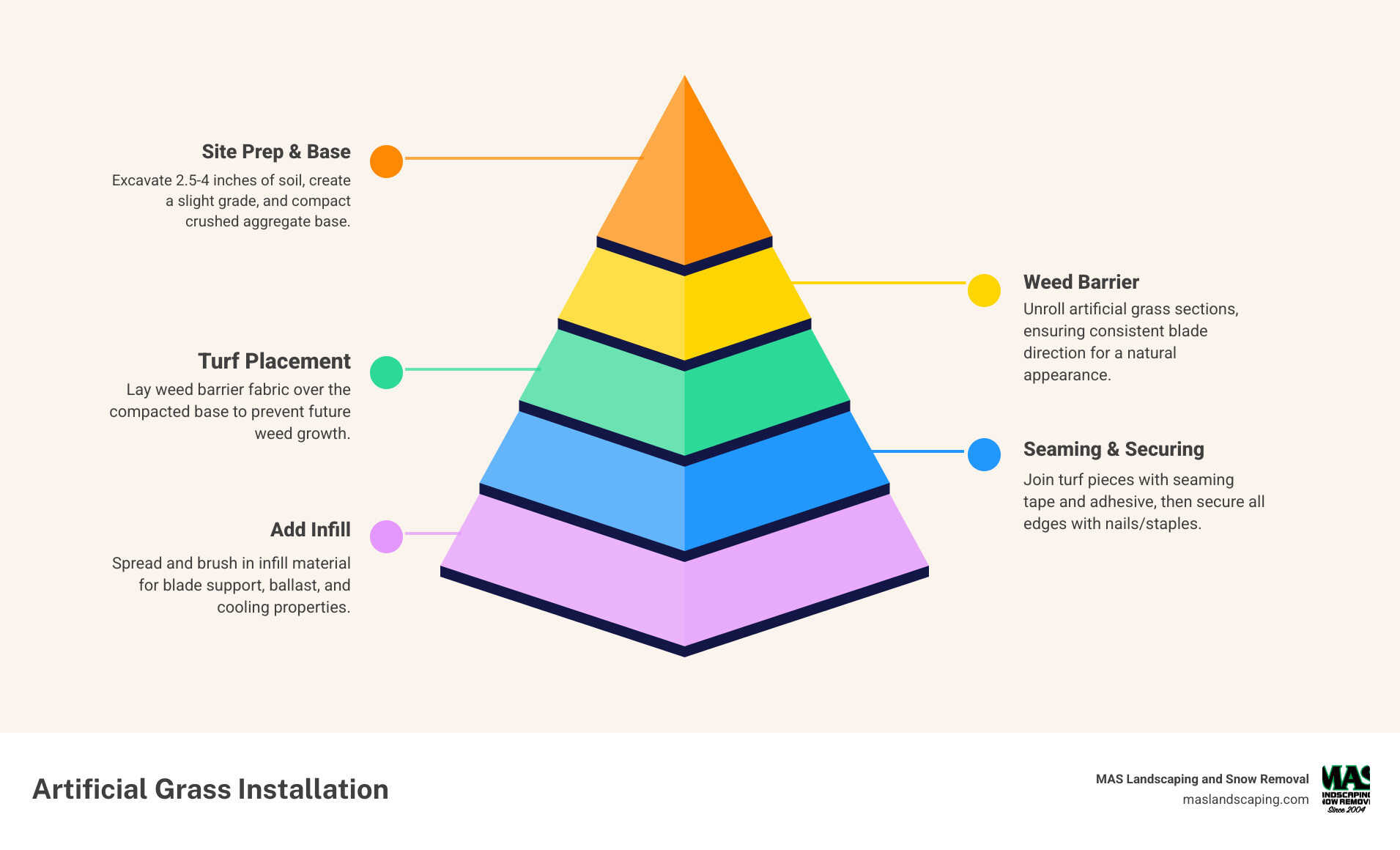
Installing fake grass is simpler than many homeowners believe. The process involves excavating soil, laying a compacted aggregate base with a weed barrier, rolling out the turf, securing it, and adding infill. With the right tools and preparation, you can create a low-maintenance, year-round green space in a single weekend.
Quick Installation Overview:
- Excavate – Remove 2.5-4 inches of existing soil and vegetation
- Build Base – Add crushed aggregate, compact thoroughly
- Install Barrier – Lay weed barrier fabric over compacted base
- Place Turf – Roll out artificial grass, ensuring consistent blade direction
- Seam & Secure – Join pieces with tape/adhesive, nail edges every 6 inches
- Add Infill – Spread sand or specialized infill, brush into grass fibers
Modern synthetic turf looks remarkably realistic and offers compelling benefits: no weekly mowing, no watering, and no brown patches from pets or heavy foot traffic.
The installation requires physical work like digging and hauling materials, but it doesn’t demand special skills. Most homeowners can rent a plate compactor and complete a typical backyard installation over a long weekend.
The key to success is proper base preparation. As one professional installer noted, “If the site is prepared correctly… the subsequent steps are easier.” Rushing the foundation work leads to wrinkles, drainage issues, and premature wear.
How to install fake grass word guide:
- artificial grass cost per square metre installed
- artificial grass over pavers
- artificial grass contractors
Planning and Preparation: Your Foundation for Success
Picture yourself sipping morning coffee while gazing at your perfect green lawn – no brown patches, no weeds, just beautiful grass year-round. That dream starts with solid planning, and taking time to prepare properly will save you countless headaches later.
How to install fake grass successfully begins long before you touch the turf. Think of this phase as building a foundation; skip corners here, and you’ll pay for it later with drainage problems, wrinkles, or turf that shifts over time.
Start with accurate measurements of your project area. Note any curves or obstacles. Artificial grass typically comes in 15-foot-wide rolls, so planning your layout around these dimensions can minimize waste and reduce the number of seams.
Here’s a crucial step: call 811 before you dig. This free service locates underground utility lines, preventing dangerous and expensive accidents. It’s required by law in most areas and could save your life.
Once you know your project area, gather your tools and materials. Having everything on hand before you start prevents frustrating mid-project trips to the hardware store.
Tools You’ll Need
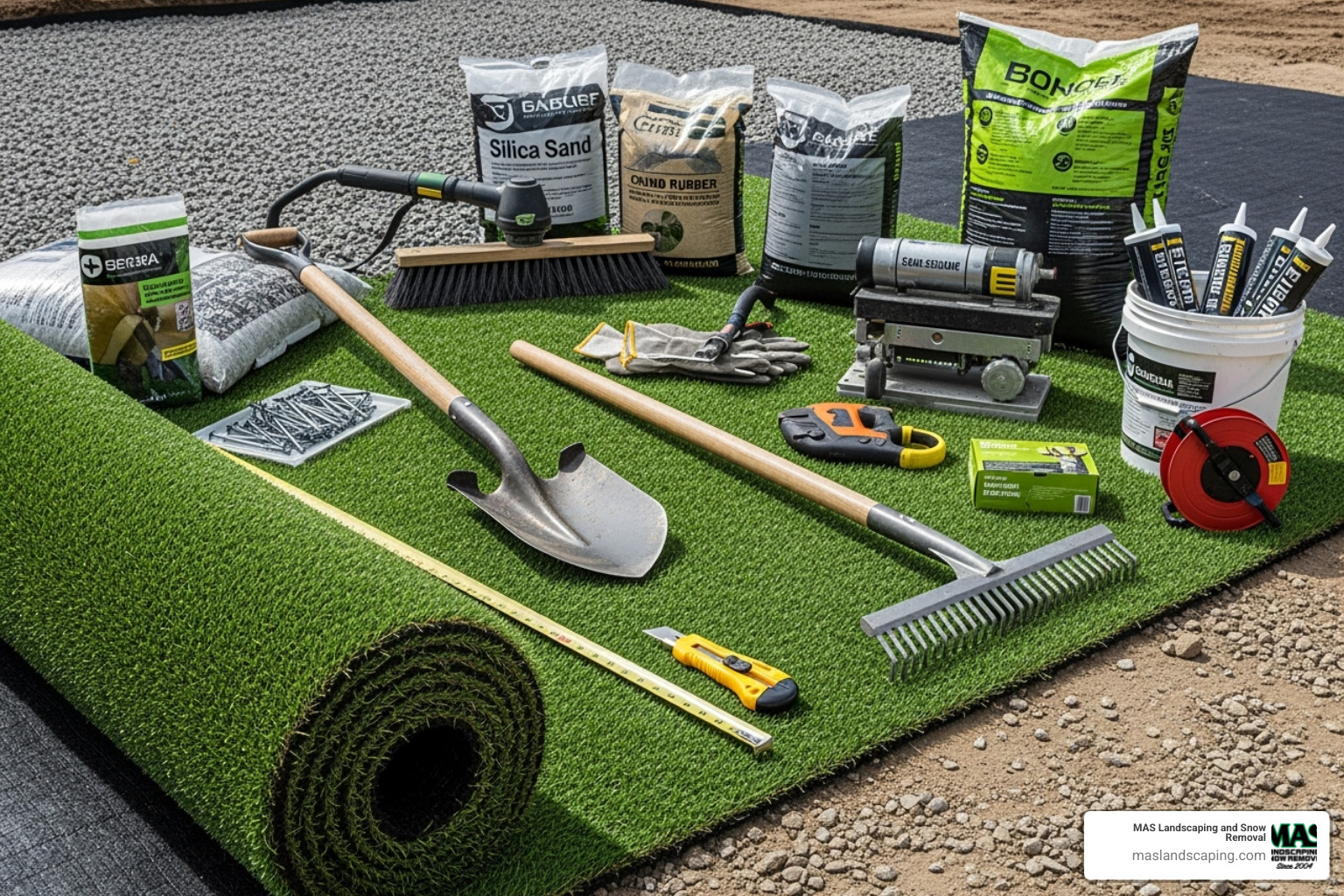
The right tools make all the difference. A sharp utility knife is essential; we recommend a snap-blade knife for clean cuts through the turf backing.
Your shovel and wheelbarrow will get a workout during excavation, while a rake helps spread and level the aggregate base. Don’t forget your tape measure for accurate positioning.
For compacting the base, a good tamper is essential. A hand tamper works for small areas, but for larger projects, rent a plate compactor—your back will thank you.
Finally, grab a stiff-bristle broom or power broom for working infill into the grass fibers. A drop spreader makes this job much easier for larger yards.
Materials Required
Quality materials are worth the investment for lasting results. Artificial turf is the star of the show; choose one that fits your needs and budget.
The foundation relies on crushed aggregate base (3/4″ crush and fines work perfectly). This provides stability and drainage. Plan for 4 to 6 inches deep across your project area.
Weed barrier fabric goes over the compacted base to prevent unwanted growth while allowing water to drain.
For joining pieces, you’ll need seaming tape and adhesive. This creates invisible seams when applied correctly. Six-inch galvanized nails or landscape staples secure everything around the perimeter.
Don’t overlook the infill material, usually silica sand or specialized options. It gets brushed into the grass fibers, helping blades stand upright and providing ballast to keep the turf in place.
More info about preparing your yard can help you understand the groundwork that makes everything else possible. Taking time to gather quality materials and prepare properly sets you up for a successful installation.
Your Step-by-Step Guide on How to Install Fake Grass
Now that you’ve gathered your tools and materials, it’s time for the installation. This guide walks you through each crucial step of how to install fake grass, from digging the base to the final grooming touches.
Think of this process like building a house—everything depends on a rock-solid foundation. Skipping corners here will lead to wrinkles or drainage problems later.
Step 1: Excavate and Build a Stable Base
This is the most important step in the entire process. The quality of your base will determine your artificial lawn’s longevity and appearance.
Removing existing sod is your first task. Use a shovel to clear away grass, roots, mulch, or other debris that could cause bumps under the turf. For installations over dirt, you’ll need to dig deeper.
Excavation depth is typically 2.5 to 4 inches, though some projects may require up to 6 inches. We usually aim for enough depth to accommodate a solid 4 to 6-inch base layer. This might seem like a lot of digging, but it’s worth it.
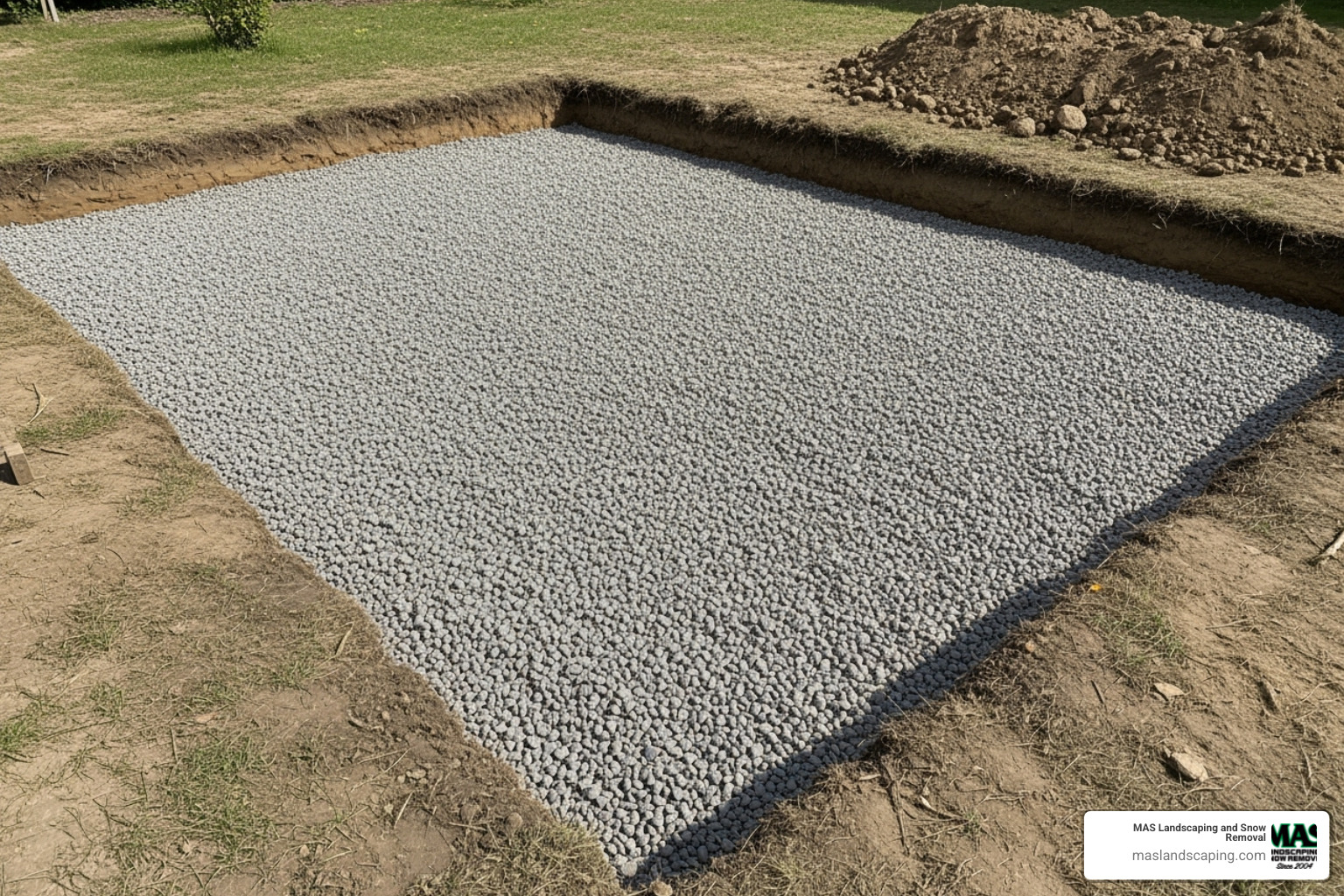
Creating a slight grade for drainage is crucial. Aim for a gentle 2-3% slope away from any structures to keep water moving.
Before adding your base material, lay the weed barrier. Roll out the fabric, overlapping sections by 3-4 inches, and secure it temporarily with landscape pins. It’s strong enough to stop weeds while allowing drainage.
Now, spread the aggregate—your 4 to 6-inch layer of 3/4″ crush and fines. Rake it out evenly to your desired grade. This crushed aggregate provides stability and excellent drainage.
Compacting the base is a step you can’t rush. Use a hand tamper for small areas or rent a plate compactor for larger spaces. Pro tip: soak the area with water, then compact again. This helps the fines settle and creates an incredibly solid foundation.
Learn more about soil installation for additional details on working with different soil types.
Step 2: Lay, Cut, and Seam the Turf
With your base prepared, it’s time for the artificial turf.
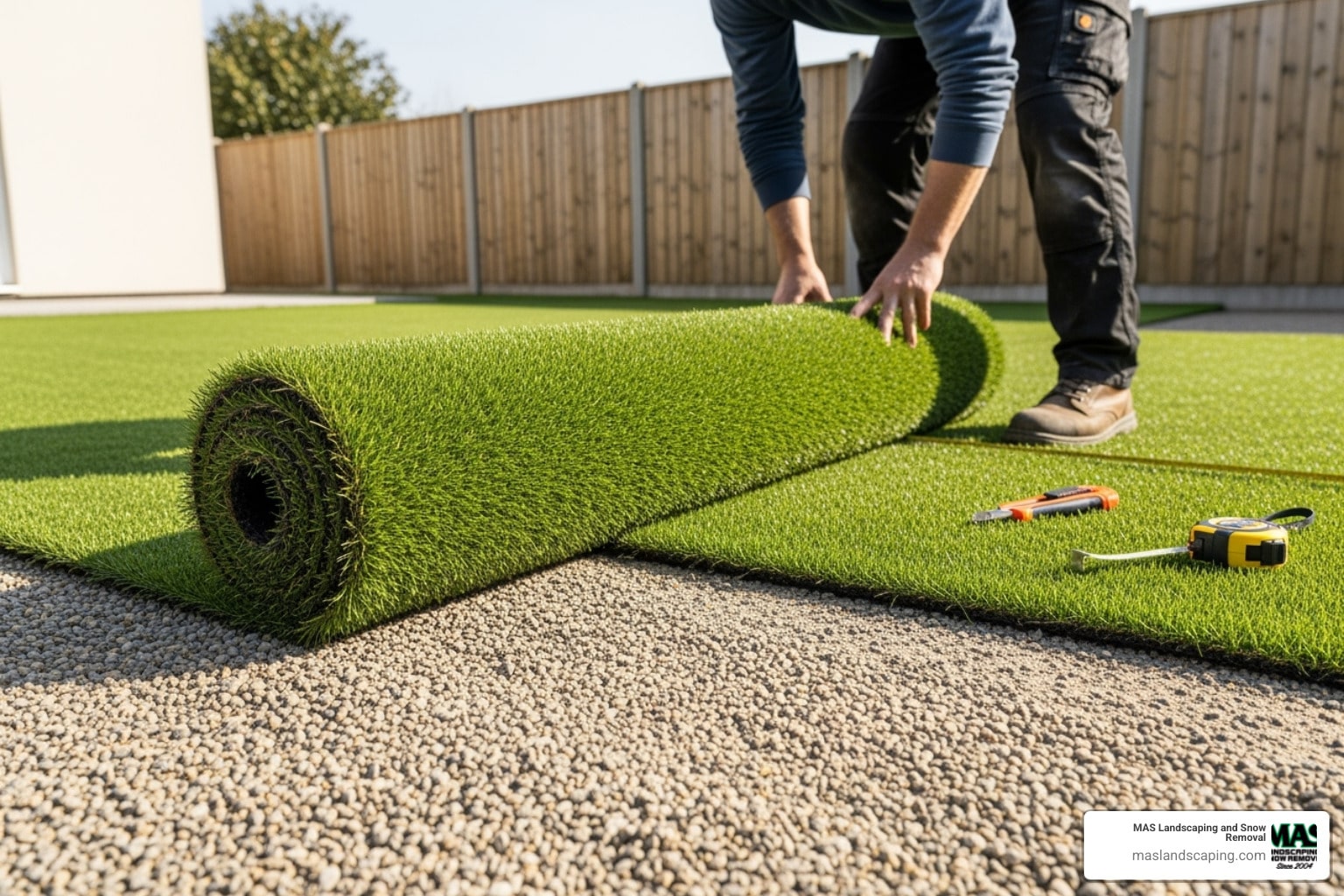
Unroll the turf to relax for 1-2 hours in the sun. This helps remove creases from packaging and makes the material easier to work with.
Aligning blade direction is crucial for a natural look. Ensure all grass blades point in the same direction across your entire lawn to avoid a patchy, fake appearance.
Carefully lay each strip over the base, being gentle not to disturb your leveled foundation.
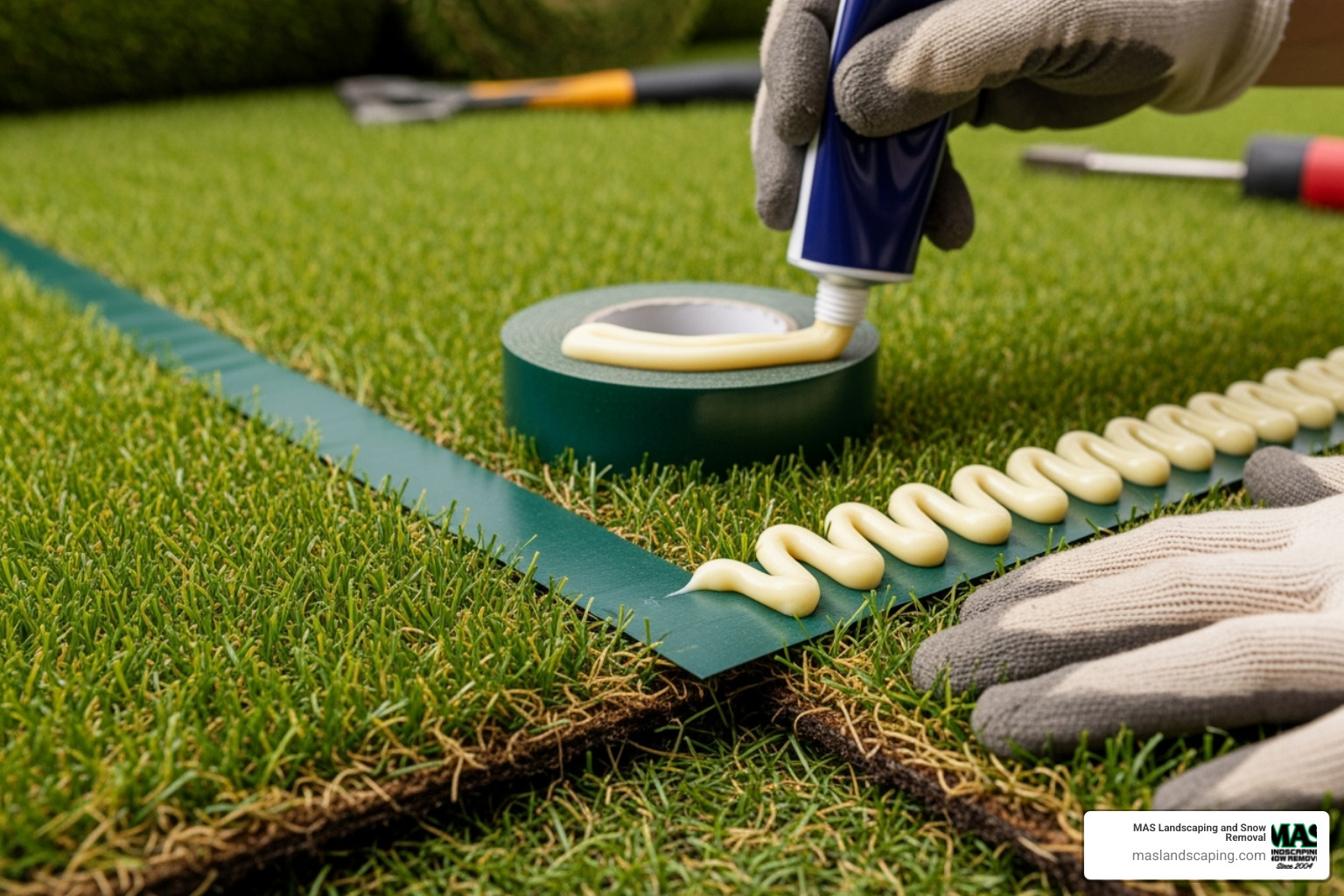
Make relief cuts with your utility knife where needed to help the turf conform to corners or obstacles.
Trim the edges for a clean, professional finish. Cut away excess material along borders. If installing against a patio, remove the outer tuft and factory edge for the cleanest line.
For projects requiring multiple pieces, the seaming process requires attention to detail. Align two pieces edge-to-edge, then fold back the edges to lay seaming tape along the joint. Apply adhesive evenly to the seaming cloth.
Ensure invisible seams by carefully easing the two edges back together, pressing firmly onto the adhesive. Keep the gap between joining tufts minimal (1/8 to 1/4 inch maximum) for a seamless look.
Step 3: Secure the Perimeter and Add Infill
Now, let’s lock down the turf and add the finishing touches.
Secure the edges with nails/staples by stretching the turf tightly to eliminate wrinkles. Use 6-inch galvanized nails or landscape staples every 6-12 inches around the perimeter and every 12-24 inches through the center. Ensure the nail heads sit flat against the backing.
Preventing lifting is important in high-traffic areas. Add extra securing points in these zones to avoid issues later.
Spreading infill evenly is the final step. This material serves multiple purposes: it helps grass blades stand upright, provides ballast to weigh down the turf, offers blade support, and helps with cooling.
Brush the infill into the base by working it deep into the grass backing so the blades stand vertically. A drop spreader provides more even coverage for large yards, while a shovel works for smaller sections.
Use a stiff-bristle broom or power broom to work the infill down, brushing the grass blades upright as you go. A light rinse with a hose helps settle everything.
More on the complete process can guide you through any specific challenges.
Aftercare and Special Considerations
Congratulations! Your new artificial lawn is installed. The good news? Maintaining it is a breeze compared to natural lawns—no more weekend mowing or fighting brown patches.
Think of your new turf as a long-term investment that just needs a little TLC to keep it looking its best. If you have pets or expect heavy foot traffic, a few smart choices will ensure your lawn stays beautiful for years.
Maintaining Your Artificial Lawn
Maintenance for artificial grass is incredibly simple. Rain often does most of the cleaning for you, washing away dust and pollen.
Routine cleaning is straightforward. Use a leaf blower or plastic rake to clear away leaves and debris. Avoid metal rakes, as they can damage the turf fibers.
For general cleaning, a simple spray with your garden hose removes most dust and light soiling. For stubborn dirt, mix warm water with about 5% mild household detergent, apply it gently, then rinse thoroughly with clean, cold water.
High-traffic areas may need occasional attention to keep the grass blades standing tall. Foot traffic can flatten the fibers, but this is easily fixed. Use a stiff-bristle broom or power broom and brush against the grain to perk up the blades.
Stain removal is about acting quickly. Blot fresh spills immediately. Most stains respond to a mild detergent solution. For tougher oil-based stains, you can use mineral spirits sparingly, but always test in a hidden corner first. Avoid chlorine bleaches or highly acidic cleaners (pH below 5 or above 9), as they can cause permanent damage.
For comprehensive maintenance instructions, check the guide provided by your turf manufacturer to keep your lawn looking perfect.
Considerations for Pets and High-Traffic Areas
If your lawn will host pets or serve as a gathering spot, some extra planning makes a world of difference.
Choosing durable turf is your first line of defense. Look for grass designed for high traffic or pet use, which features denser piles and more robust backing.
For pet owners, proper infill selection is crucial. Standard silica sand works, but specialized options like Zeolite are game-changers. This natural material neutralizes odors by absorbing ammonia from pet waste. Your routine becomes simple: pick up solid waste, hose down the area, and use a 50-50 mix of water and white vinegar for any lingering odors.
Improved drainage systems are especially important in pet areas. While proper base preparation ensures good water flow, pet areas benefit from more permeable backing or sub-base materials to ensure urine drains quickly.
For families with children, consider adding foam padding for play areas. A shock-absorbing underlayment beneath the turf provides extra cushioning, making tumbles softer and safer.
Find the best artificial grass for dogs and learn about pet turf installation to explore specialized solutions for your pets.
Understanding the Cost of Artificial Grass
Let’s talk numbers. While how to install fake grass can be a rewarding DIY project, understanding the financial investment is crucial for planning.
Please note: The following cost estimates are based on national averages from online data and are not quotes from MAS Landscaping. Actual costs can vary significantly based on your region, material choices, and project complexity.
DIY vs. Professional Installation Costs
The cost difference between doing it yourself and hiring professionals is significant, but so are the trade-offs.
Taking the DIY route means you’re primarily investing in materials. Based on national averages, you can expect to pay $4.50 to $15+ per square foot. The lower end covers basic turf and infill, while the higher end includes premium, realistic turf, specialized infills, and comprehensive base materials.
High-quality artificial grass alone can run $4-8 per square foot, and crushed aggregate base materials add another $1-2 per square foot. Specialized infills can also increase costs compared to basic sand.
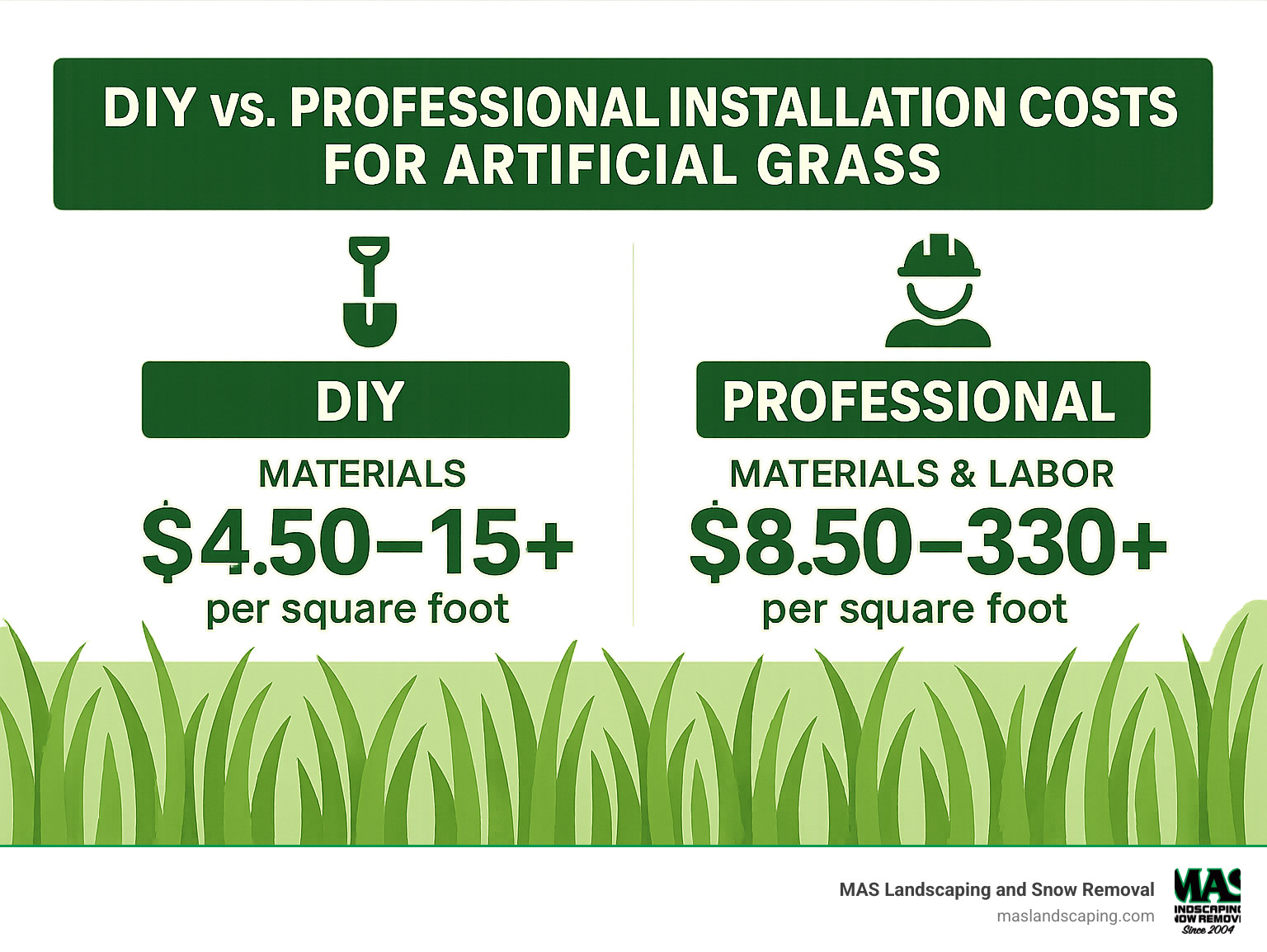
Professional installation brings both materials and expertise, with national averages ranging from $8.50 to $30+ per square foot. The typical project in 2023 averaged around $13 per square foot, but factors like complex yard shapes, drainage challenges, premium turf, and extensive excavation can push costs higher.
The value in professional installation often lies beyond labor. Many certified installers offer warranties up to 15 years, giving you peace of mind. For projects over 100 square feet, the physical demands make professional installation increasingly attractive.
Time is another factor. A DIY project can stretch over several weekends, while professional crews typically complete installations in 1-3 days. Your choice depends on your budget, available time, and comfort with physical work.
Get an estimate for your project to see what works for your situation, or compare with turf installation costs to help guide your decision.
Frequently Asked Questions about Fake Grass Installation
Installing artificial grass is a big step, and you likely have questions. We’ve heard just about every concern, so let’s tackle the most common questions about how to install fake grass so you can move forward with confidence.
Can I install fake grass directly on top of soil or existing grass?
This is a common question, but the answer is a definitive no. Laying artificial grass directly on unprepared soil or existing grass is like building a house on quicksand.
When you skip proper preparation, the existing grass decomposes, creating an uneven, bumpy surface. Poor drainage becomes a nightmare, leading to odors and potential mold. Weeds will also find a way to grow through your new turf.
The excavation and base preparation steps are the foundation of a successful installation. Removing 2.5 to 4 inches of soil and building a compacted aggregate base with a weed barrier is what separates a professional-looking lawn from a DIY disaster.
How do you install fake grass on a hard surface like concrete?
Installing turf over concrete or patios is possible, but it requires a different approach. The main challenge is ensuring proper drainage, as concrete doesn’t drain like an aggregate base.
If your concrete doesn’t slope, you’ll need to create drainage solutions. This might mean drilling drainage holes or using a specialized underlayment that allows water to flow underneath. Proper drainage is crucial to prevent standing water and odors, especially with pets.
We also recommend a foam underlayment for comfort, as concrete is unforgiving. Instead of nails, you’ll secure the turf around the edges using a specialized outdoor adhesive.
More on installing over hardscapes covers the specific techniques for these installations.
How hot does artificial grass get in the sun?
Artificial grass can get hot in direct sunlight, much like asphalt or concrete. On scorching days, the surface can become uncomfortable for bare feet.
However, there are several ways to manage the heat. A quick rinse with your garden hose instantly cools the surface. Choosing specialized cooling infills can also help reduce heat retention, and lighter-colored turf stays cooler than darker shades.
Be aware of highly reflective windows, which can concentrate heat and potentially damage your turf. Applying a non-reflective film to the outside of these windows can solve the problem. With simple management, artificial grass remains perfectly comfortable for everyday use.
Ready for a Perfect, Low-Maintenance Lawn?
You’ve learned how to install fake grass, a rewarding DIY project that can transform your outdoor space. By following each step carefully—from base preparation to the final infill application—you can achieve results that look professionally installed.
Your new lawn will stay consistently green and beautiful year-round, without the need for mowing, watering, or patching up brown spots. This frees up your weekends for barbecues, relaxation, or other home improvement projects.
Homeowners often tell us they can’t believe how much time and stress their artificial lawn has saved them. No more worrying about sprinkler schedules or fertilizer applications.
Of course, not every project is suited for the DIY approach. Larger installations, yards with complex drainage, or intricate designs can be overwhelming. If your project is large or you simply prefer to leave it to the experts, professional expertise really shines.
Here at MAS Landscaping, we have perfected artificial grass installation throughout Saugus, Everett, Lynnfield, Malden, Melrose, Medford, Revere, and Chelsea, MA. Our team brings specialized equipment and years of experience to handle even the trickiest installations, from poor drainage to oddly shaped yards.
Whether you tackle this project yourself or partner with our team, you’re making a smart investment in your home. Contact us to learn more about our full-service landscape installation options, and let’s discuss how we can help create the outdoor oasis you’ve been envisioning.