



How to seal paving: Master 5 Steps for Stunning Patios
Protect Your Investment: Why Understanding Paving Sealing Matters
Learning how to seal paving is critical for protecting your hardscape investment from stains, weeds, and premature aging. Without proper sealing, a beautiful paver patio or driveway can quickly become faded, cracked, or stained, especially after a few harsh New England winters.
Quick Answer: The Basic Sealing Process
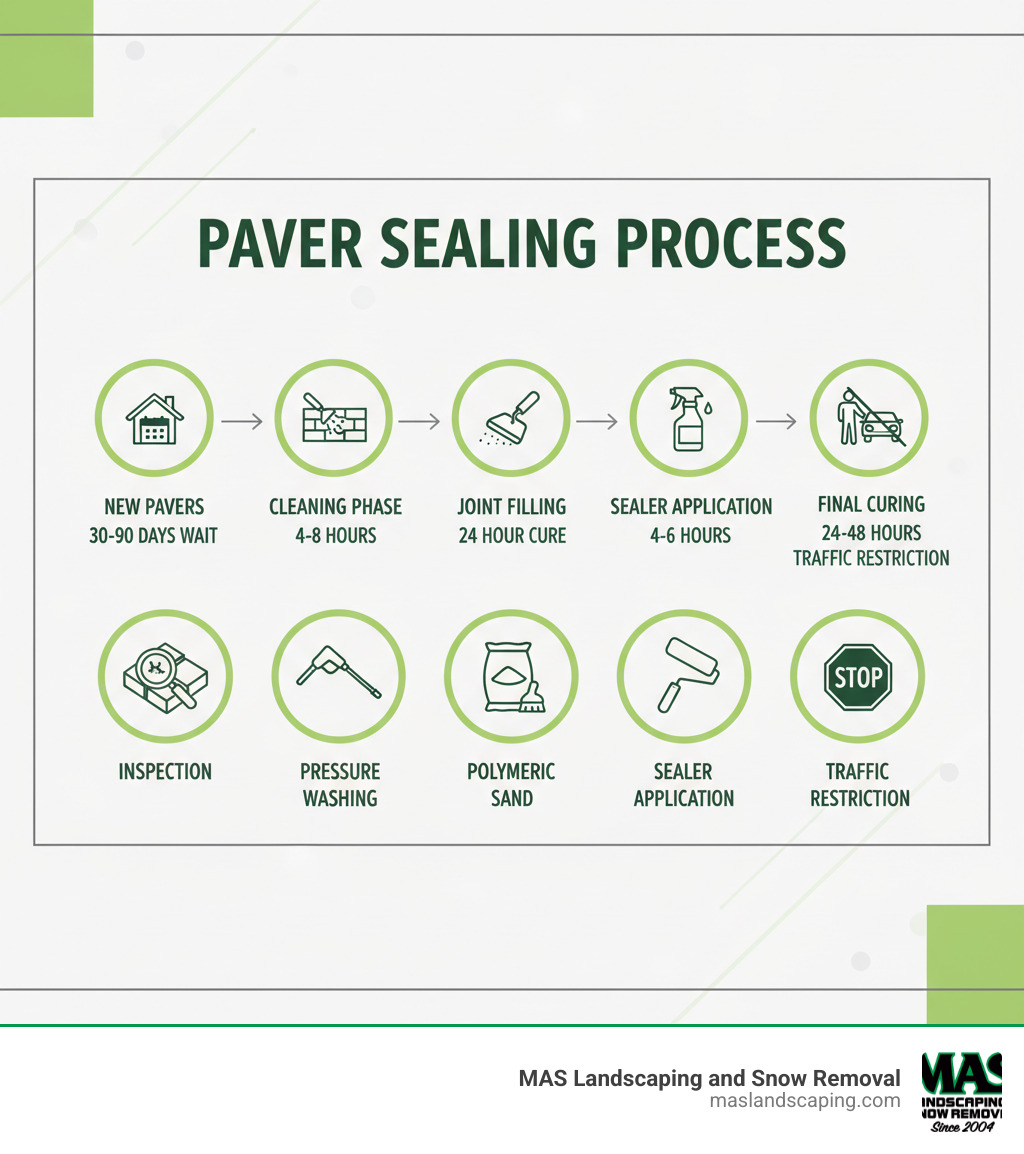
- Wait 30-90 days after new paver installation to allow for curing and efflorescence to clear.
- Clean the surface thoroughly with a pressure washer and paver cleaner.
- Apply polymeric sand to joints, activate with water, and let cure for 24 hours.
- Choose the right sealer (water-based, solvent-based, or penetrating) for your paver type.
- Apply sealer evenly with a sprayer or roller in 50-90°F weather, with no rain expected for 24-48 hours.
- Allow 24-48 hours curing time before use.
- Reseal every 3-5 years, depending on traffic and weather.
Sealing pavers is about more than just aesthetics; it’s about protecting a significant investment. Properly sealed pavers resist stains, prevent weed growth, stabilize joint sand, and withstand UV damage. While patios may last 3-5 years between applications, high-traffic driveways often need resealing every 2-3 years.
The success of your project depends almost entirely on the preparation phase. Rushing the process or sealing too soon can trap moisture, cause a white, chalky residue called efflorescence, and lead to a peeling or blotchy finish.
This guide will walk you through every step, from choosing a sealer to applying the final coat, so you can decide whether to DIY or call a professional.
Before You Begin: Essential Paving Sealing Prep
Before opening a can of sealer, understanding the fundamentals of how to seal paving is crucial. Getting these basics right is the difference between a professional finish and a frustrating do-over.
Why Seal Your Paving? The Key Benefits
Sealing your pavers is essential for long-term appearance and durability, especially in Massachusetts where the weather is challenging. The key benefits include:
- Stain Protection: Pavers are porous and absorb spills like oil, grease, and wine. A sealer creates a protective barrier, keeping stains on the surface for easy cleanup.
- UV Ray Defense: Sealing acts like sunscreen for your pavers, preventing the sun from bleaching their rich colors.
- Improved Appearance: Many sealers deepen and enrich paver colors, with some creating an attractive “wet look.”
- Weed Inhibition: When combined with polymeric sand, sealing hardens the joints, creating a tough barrier that prevents weed growth.
- Joint Sand Stabilization: Sealing locks joint sand in place, preventing it from washing away and causing pavers to shift or become uneven.
- Easier Cleaning: Dirt and grime sit on top of a sealed surface, making cleaning as simple as a quick sweep or rinse.
- Increased Longevity: By protecting against stains, UV damage, and moisture, sealing significantly extends the life of your paver investment.
Timing is Everything: When to Seal and Reseal
Proper timing is critical. Sealing too soon can cause major issues.
For new pavers, you must wait 30 to 90 days before sealing. This allows the pavers to cure and for a natural process called efflorescence to occur. Efflorescence is a harmless, white, chalky residue of natural salts that comes to the surface. If you seal before it has cleared, you will trap a cloudy haze under the sealer that is very difficult to remove. It typically fades on its own over several months.
For existing pavers, perform a simple water test. If water beads on the surface, your sealer is still working. If it soaks in and darkens the paver, it’s time to reseal.
Resealing frequency is generally every 3 to 5 years. However, high-traffic areas like driveways may need it every 2-3 years. Harsh New England weather also accelerates wear. The type of sealer used also affects longevity, with some high-end products lasting much longer than budget options.
Choosing Your Weapon: Types of Paver Sealants
Choosing the right sealer is key to the final look and level of protection.
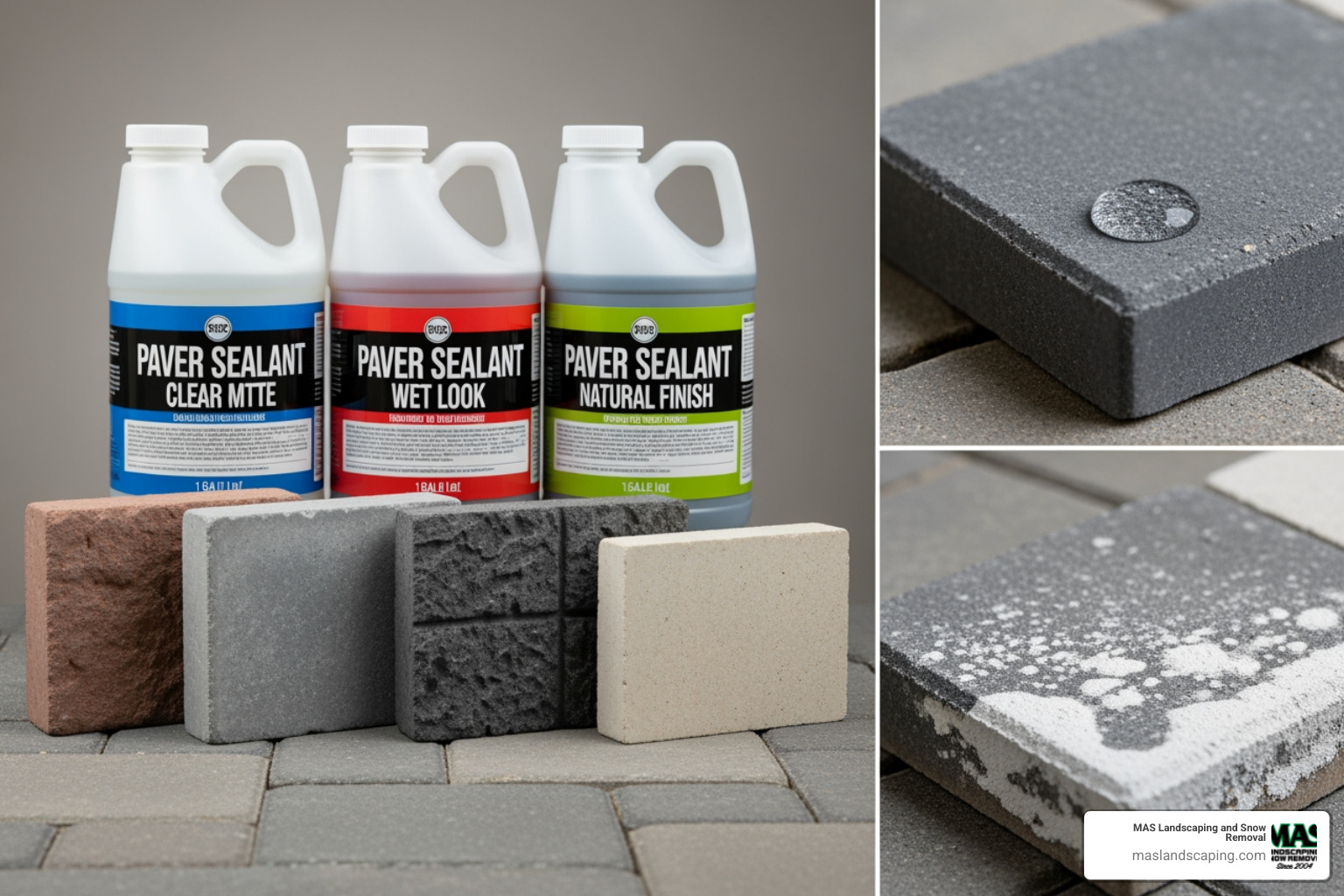
- Water-based sealers are eco-friendly, low-odor, and easy for DIY projects. They are breathable, allowing moisture to escape, but are typically less durable than solvent-based options and offer a more natural finish.
- Solvent-based sealers penetrate deeply and create a highly durable, stain-resistant surface, often with a high-gloss “wet look.” They are ideal for high-traffic areas but have strong fumes, require mineral spirits for cleanup, and can be tricky for DIYers to apply evenly.
- Penetrating (impregnating) sealers soak into the paver to protect from within, maintaining the natural look and texture. They are highly breathable and long-lasting, making them great for preventing freeze-thaw damage, but they do not improve color or stabilize joint sand on their own.
- Film-forming (topical) sealers create a visible layer on the surface, enhancing color and providing good stain resistance. However, they can become slippery when wet and may peel over time if not applied correctly.
You will also choose between a matte finish for a natural look or a gloss finish for a vibrant “wet look.”
Selecting the Right Sealer for Your Pavers
Match the sealer to your paver type for the best results.
- Concrete Pavers: Both water-based and solvent-based sealers work well. Breathable, penetrating sealers are an excellent choice for long-lasting, natural-looking protection.
- Brick Pavers: These are very absorbent. Penetrating sealers or breathable film-forming sealers with a matte finish are recommended to preserve their classic, earthy look.
- Natural Stone Pavers: Impregnating (penetrating) sealers are best, as they protect the stone from within without creating a film, preserving its natural beauty. Non-porous porcelain paving generally does not require sealing.
If you’re planning a new patio or walkway and want expert guidance on the best paver choices for your property in the Saugus area, we’d love to help. More info about our patio installation services can help you get started on creating the perfect outdoor space.
The Ultimate Guide on How to Seal Paving: A Step-by-Step Process
Now that we’ve covered the prep work, let’s dive into the practical steps of how to seal paving for a durable and beautiful finish.
Step 1: Gather Your Tools and Materials
Having all your tools ready will save time and frustration. You will need:
- Safety Gear: Chemical-resistant gloves, eye protection, and a respirator mask (especially for solvent-based sealers).
- Cleaning Supplies: Stiff-bristle broom, leaf blower, weeding tool, paver-specific cleaner/degreaser, rust remover, garden hose, and a pressure washer.
- Jointing Sand: Polymeric sand and a soft-bristle push broom.
- Sealing Equipment: Enough paver sealer for two coats, a low-pressure garden sprayer or a long-handled roller, a foam roller or squeegee for excess, painter’s tape, and plastic sheeting.
Step 2: The Critical Cleaning and Preparation Phase
This is the most important step. Do not cut corners here, as improper prep will ruin the final result.
- Inspect the Surface: Check for and repair any loose or damaged pavers.
- Remove Weeds: Pull all weeds, moss, or grass from the joints. Avoid using wire brushes, which can scratch pavers and leave rust particles.
- Treat Stains: Use a paver-specific degreaser for oil, a formulated rust remover for rust stains, and a mild detergent for organic stains like mildew. Scrub and rinse thoroughly.
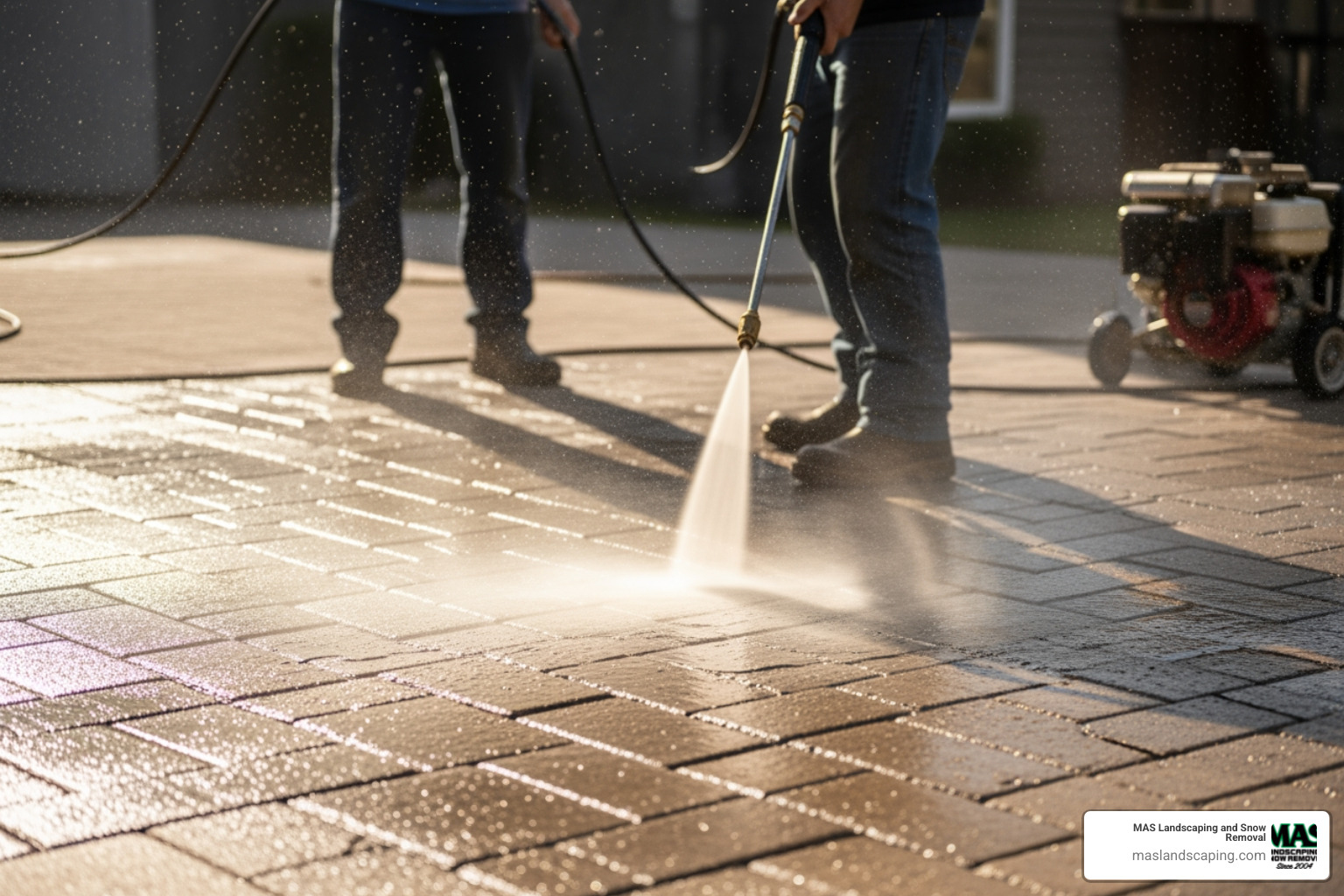
- Pressure Wash: Use a fanned nozzle (around a 30° angle) held about 12 inches from the surface. Work systematically to clean the pavers and lightly wash out old joint sand and debris. Avoid excessive pressure, which can damage the pavers.
- Dry Completely: The pavers must be bone dry before sealing. Trapped moisture causes hazing and peeling. In Massachusetts, allow a full 24-48 hours for complete drying. If a splash of water darkens the pavers, they are not dry enough.
Step 3: Joint Stabilization with Polymeric Sand
Before sealing, apply polymeric sand to stabilize pavers and inhibit weeds.
- Spread the Sand: With the paver surface clean and dry, spread polymeric sand evenly over the area.
- Fill the Joints: Use a stiff broom to sweep the sand thoroughly into the joints. The sand level should be about 1/8 inch below the paver surface.
- Remove Excess Sand: This is critical. Use a leaf blower to remove all excess sand from the paver surfaces. Any remaining sand will be sealed in place, creating a permanent hazy finish.
- Activate the Sand: Lightly mist the entire surface with a garden hose on a fine spray setting. This activates the polymers, causing the sand to harden. Do not over-saturate.
- Cure: Allow the sand to cure for at least 24 hours before sealing.
For those considering new hardscape installations where proper joint stabilization is built in from the start, we’re always here to help. More info about our walkway installation services
Step 4: Applying the Paver Sealant – The Core of How to Seal Paving
With your pavers clean and joints stabilized, it’s time to apply the sealer.
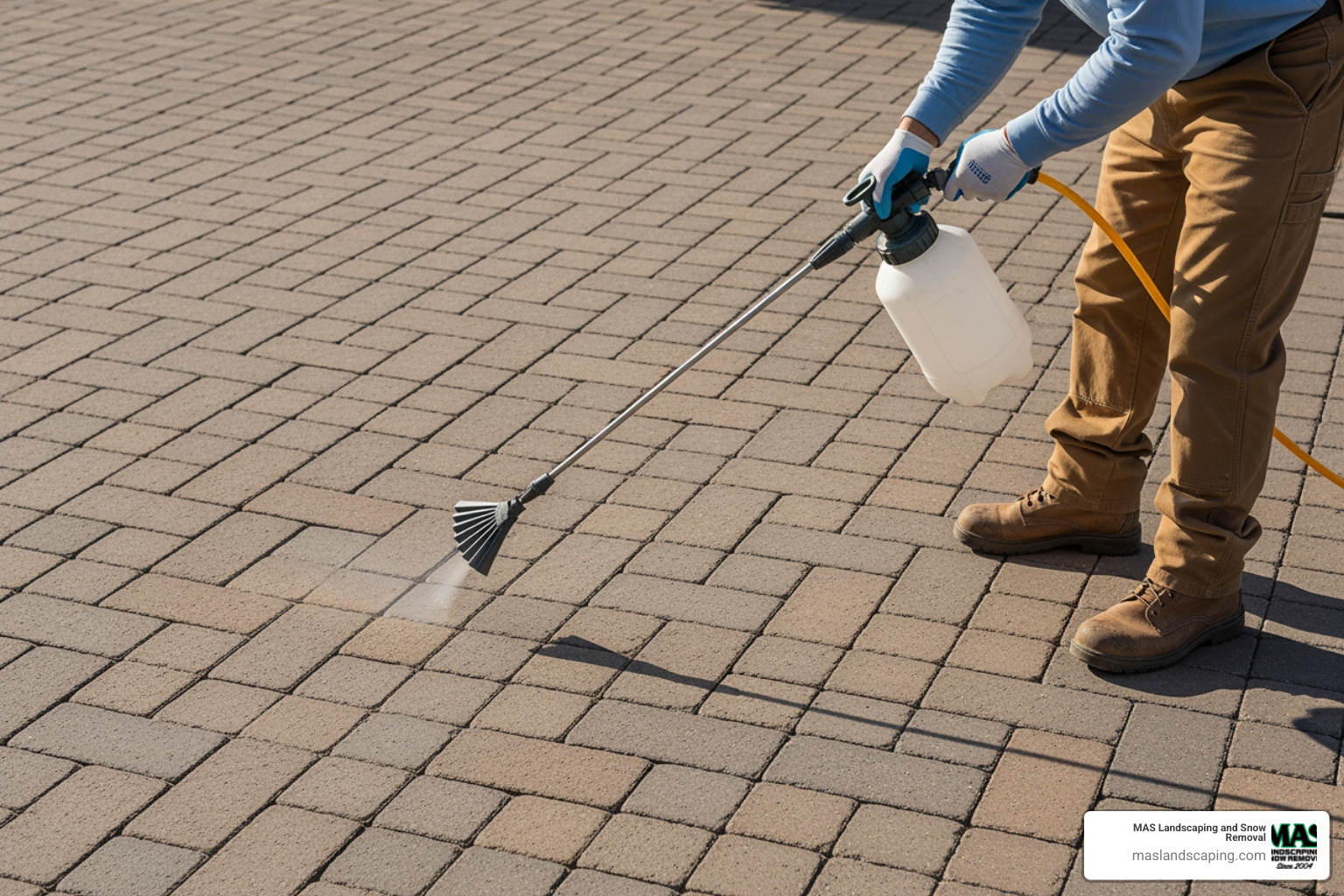
- Check Weather Conditions: The ideal temperature is between 50°F and 90°F. Ensure there is no rain expected for at least 24-48 hours. Avoid sealing in direct, intense sunlight, which can cause the sealer to dry too quickly and streak.
- Test First: Always apply the sealer to a small, inconspicuous area first to check the final appearance and finish.
- Apply Evenly: A low-pressure garden sprayer is recommended for the most even application, as it helps the sealer penetrate the joints without disturbing the sand. A roller can also be used, but be careful with the joint sand. Work in manageable sections to maintain a wet edge and avoid painting yourself into a corner.
- Avoid Over-Application: Apply a thorough, even coat, but do not let the sealer pool. Immediately use a foam roller or squeegee to spread or remove any excess to prevent shiny spots. Check the manufacturer’s instructions, as a second coat may be recommended.
Step 5: Curing and Final Touches
Proper curing is essential for the sealer to perform correctly.
- Allow Curing Time: Most sealers are touch-dry in a few hours, but you must allow at least 24-48 hours for full curing before use.
- Avoid All Traffic: Keep all foot and vehicle traffic off the sealed surface during the curing period to prevent scuffs, impressions, or peeling.
- Clean Your Tools: Clean your equipment immediately after use. Use water for water-based sealers and mineral spirits for solvent-based ones.
To avoid common pitfalls, it’s helpful to learn from others’ experiences. Check out this insightful video: A video on common sealing mistakes to avoid
DIY vs. Hiring a Professional: Making the Right Choice
Deciding whether to seal your pavers yourself or hire a pro depends on your budget, time, and comfort level with the process.
The DIY Approach: Costs and Considerations for How to Seal Paving
Tackling how to seal paving yourself can be rewarding and save money. However, it requires a significant time commitment and carries some risks.
- Costs: Based on internet data, quality paver sealer materials typically range from $0.15 to $1.50 per square foot. Equipment like a pressure washer and sprayer can add another $100 to $300 or more if you don’t already own them.
- Time Commitment: A DIY project can easily take 10-18 hours spread over several days, including research, cleaning, application, and curing time.
- Potential Risks: Incorrect application can lead to streaking, hazing, or peeling. Trapping moisture can cause a permanent cloudy appearance. Fixing these mistakes can be costly and time-consuming, sometimes requiring the surface to be stripped and redone.
The Professional Advantage: Expertise and Efficiency
Hiring a professional offers peace of mind and guaranteed results, which is a smart choice for many homeowners in areas like Everett, Lynnfield, and Saugus, MA.
- Costs: Based on internet data, all-inclusive professional sealing services typically cost between $0.75 and $5.00 per square foot. While the upfront cost is higher, it includes labor, materials, and expertise.
- Time Savings: Professionals handle the entire process, saving you a full weekend (or more) of hard labor.
- Guaranteed Results: Reputable companies offer warranties and have the experience to solve problems on the spot, ensuring a high-quality, even finish.
- Better Products: Professionals have access to commercial-grade sealers and equipment that are often more durable and longer-lasting than consumer products.
- Local Expertise: A local company like MAS Landscaping understands how Massachusetts weather affects pavers, ensuring the right products and techniques are used for our climate.
If you’re looking for expert paver sealing services in the Saugus, MA area, we’re here to help. More info about our paver sealer services
Frequently Asked Questions about Sealing Paving
We’ve covered the process of how to seal paving, but here are answers to some common questions we hear from homeowners in the Saugus area.
How long does paver sealer typically last?
Most sealers provide three to five years of protection, but longevity depends on several factors. Traffic volume is the biggest one; a busy driveway may need resealing every 2-3 years, while a quiet patio could last 5 years or more. Our New England weather, with its freeze-thaw cycles and intense sun, also accelerates wear. Finally, product quality matters—high-end sealers can last much longer than budget options. The best indicator is the water test: if water soaks in instead of beading, it’s time to reseal.
What are the potential risks or downsides of sealing pavers?
While highly recommended, sealing can have downsides if done improperly. Incorrect application can cause streaking, blotchiness, or peeling, especially if the surface isn’t perfectly clean and dry. Trapped moisture is another risk; sealing too soon can trap efflorescence, creating a permanent cloudy haze. Some high-gloss, film-forming sealers can become slippery when wet, which is a safety concern. Finally, sealing is ongoing maintenance, not a one-time fix. You’ll need to reseal every few years to maintain protection.
Should polymeric sand be applied before or after sealing?
Always apply polymeric sand before sealing. The sand needs to be swept into the joints and activated with water to cure and harden, which stabilizes the pavers. Once the sand has fully cured (at least 24 hours), the sealer is applied over the top. The sealer then locks the hardened sand in place, providing an extra layer of protection. Applying sealer first would prevent the sand from bonding correctly and would be a waste of time and materials.
Conclusion: Protect Your Hardscape Investment
Your pavers are a significant investment in your home’s beauty and value. Properly learning how to seal paving is the key to protecting that investment. From choosing the right sealer and timing the application to meticulous preparation and curing, every step is crucial for ensuring longevity and appearance.
Whether you tackle the project yourself or hire a professional, the goal is the same: a durable, beautiful surface that resists stains, weeds, and UV damage. A DIY job can be satisfying, but the peace of mind, guaranteed results, and commercial-grade products that come with a professional service are invaluable.
For homeowners throughout the Saugus, MA area—including Everett, Lynnfield, Malden, Melrose, Medford, Revere, and Chelsea—MAS Landscaping offers local expertise. We understand how New England weather impacts your hardscape and use professional-grade products to ensure your pavers are protected for years to come.
Your sealed pavers will maintain their vibrant color and structural integrity season after season, giving you a beautiful outdoor space to enjoy without worry.
Ready to protect your hardscape investment with professional results? Contact us for a professional consultation on your hardscaping project
