




Installing New Grass Sod: 5 Quick & Easy Steps
Why Installing New Grass Sod Transforms Your Lawn Overnight
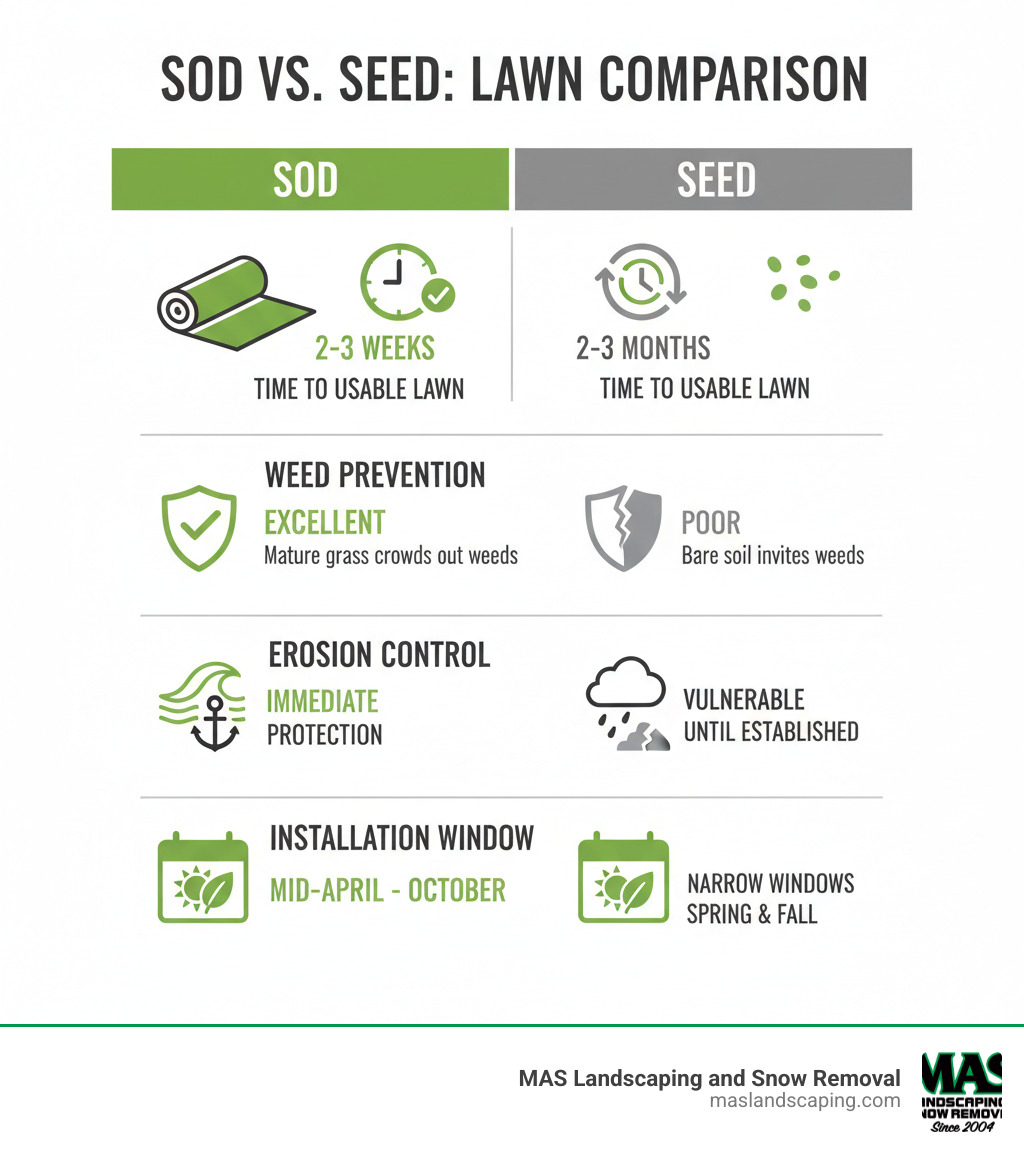
Installing new grass sod is the fastest way to get a lush, green lawn. Unlike seeding, which takes months to establish, sod provides an instant, usable lawn in just a few weeks. It also offers immediate erosion control and superior weed resistance.
Quick Answer: Key Steps for Installing New Grass Sod
- Choose the right time – Spring or fall when temperatures are cooler.
- Prepare the soil – Remove old grass, till 4-6 inches deep, and test pH (ideal 6.0-7.5).
- Grade and level – Slope away from buildings and keep the surface 1 inch below hardscapes.
- Install immediately – Lay sod the same day it’s delivered, staggering pieces like bricks.
- Water thoroughly – Start within 30 minutes and water daily for the first week.
- Wait before mowing – Make the first cut when grass reaches 3-4 inches tall.
The installation process requires careful planning and execution. Each step, from choosing the right grass for the Massachusetts climate to proper soil preparation, is crucial for success. Get it right, and you’ll have a beautiful lawn that adds value to your property. Rush the prep work, and you risk uneven growth and brown patches.
This guide walks you through everything you need to know, from calculating how much sod to buy to the watering schedule that ensures your new lawn takes root.
Related content about installing new grass sod:
Planning Your Sod Project: Timing, Types, and Quantity
Proper planning is the first step toward a successful sod installation. Getting these fundamentals right makes the entire process smoother and sets your new lawn up for long-term health.
Best Time to Lay Sod
While you can lay sod anytime the ground isn’t frozen in Massachusetts (roughly mid-April to October), not all seasons are equal. Spring and fall are the ideal times. Cooler temperatures and natural rainfall reduce stress on the new grass and ease your watering duties. Early autumn is particularly good, as is spring before the summer heat arrives. If installing in spring, aim to finish by late May to avoid the stress of high temperatures on your new lawn.
Choosing the Right Sod
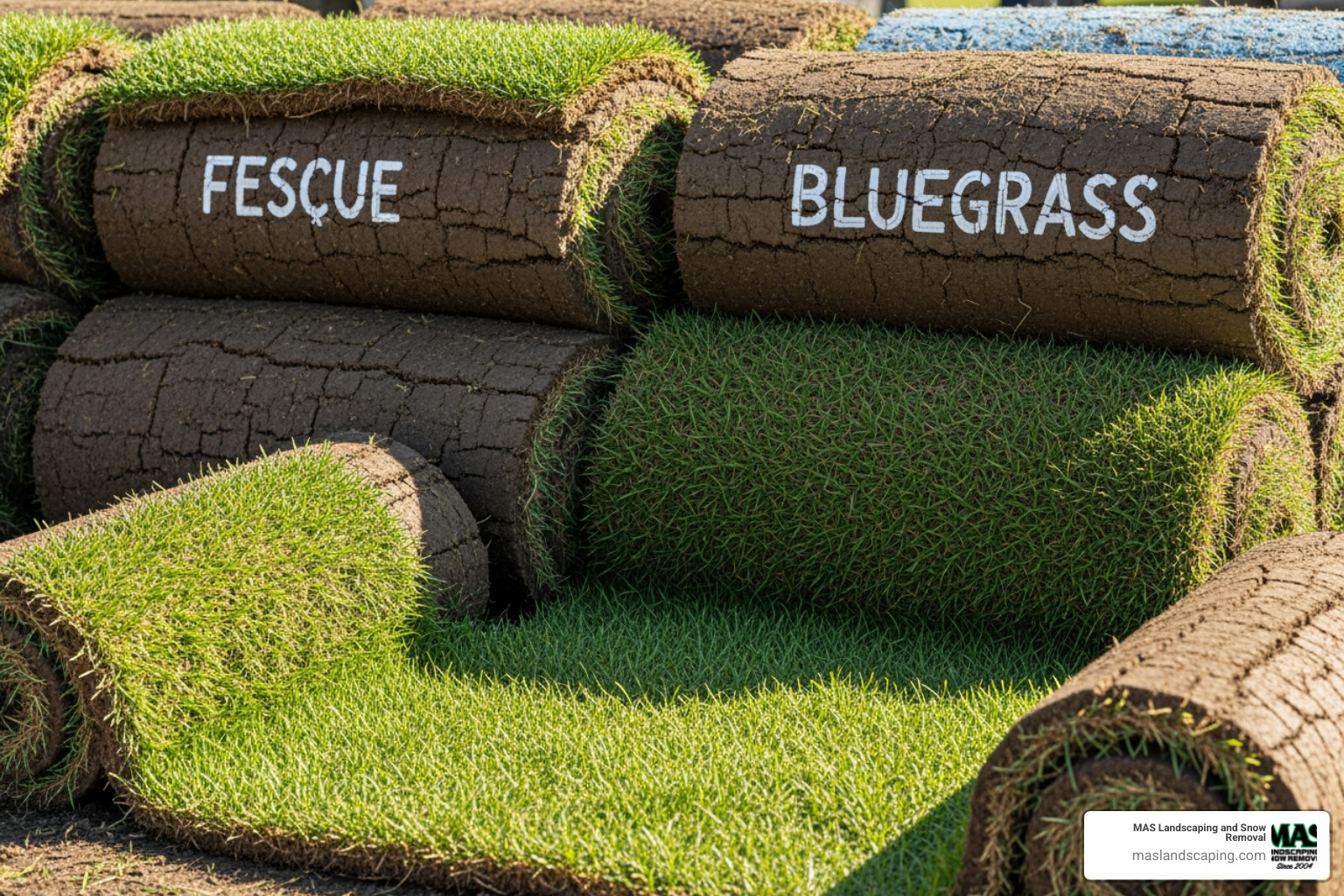
For Massachusetts, cool-season grasses are the best choice. The most common options are Kentucky Bluegrass and Fescue blends (Tall or Fine Fescue). Your yard’s sun exposure is the main factor in choosing between them.
- Full Sun (6+ hours): Kentucky Bluegrass and Tall Fescue varieties thrive in direct sunlight.
- Partial Shade (3-6 hours): Fescue blends, especially Fine Fescues, generally perform better.
For heavily shaded areas (less than 5 hours of sun), grass struggles. Consider shade-tolerant groundcovers or other landscaping alternatives for these spots. Your local sod supplier will have varieties bred for our regional climate.
Measuring Your Yard
To calculate how much sod you need, sketch your lawn area and break it into simple shapes like rectangles and squares. Measure the length and width of each section, multiply to find the area, and add them all together for your total square footage.
Pro Tip: Order about 5% extra sod. This covers cuts, curves, and any potential mistakes. Running short mid-project is a headache you want to avoid. For help, you can use an online Lawn Area Calculator.
Cost Considerations
The cost of installing new grass sod depends on your yard’s size, the grass type, and whether you do it yourself or hire a professional. Based on average internet data, costs can range from $300 to over $2,700 for 1,000 square feet. The lower end reflects DIY material costs, while the higher end includes professional labor and equipment. These are general market averages, not specific quotes for our services.
At MAS Landscaping, we provide transparent, customized quotes. For more details on budgeting, see our Cost to Install New Lawn Sod page.
The Foundation: How to Prepare Ground for Sod
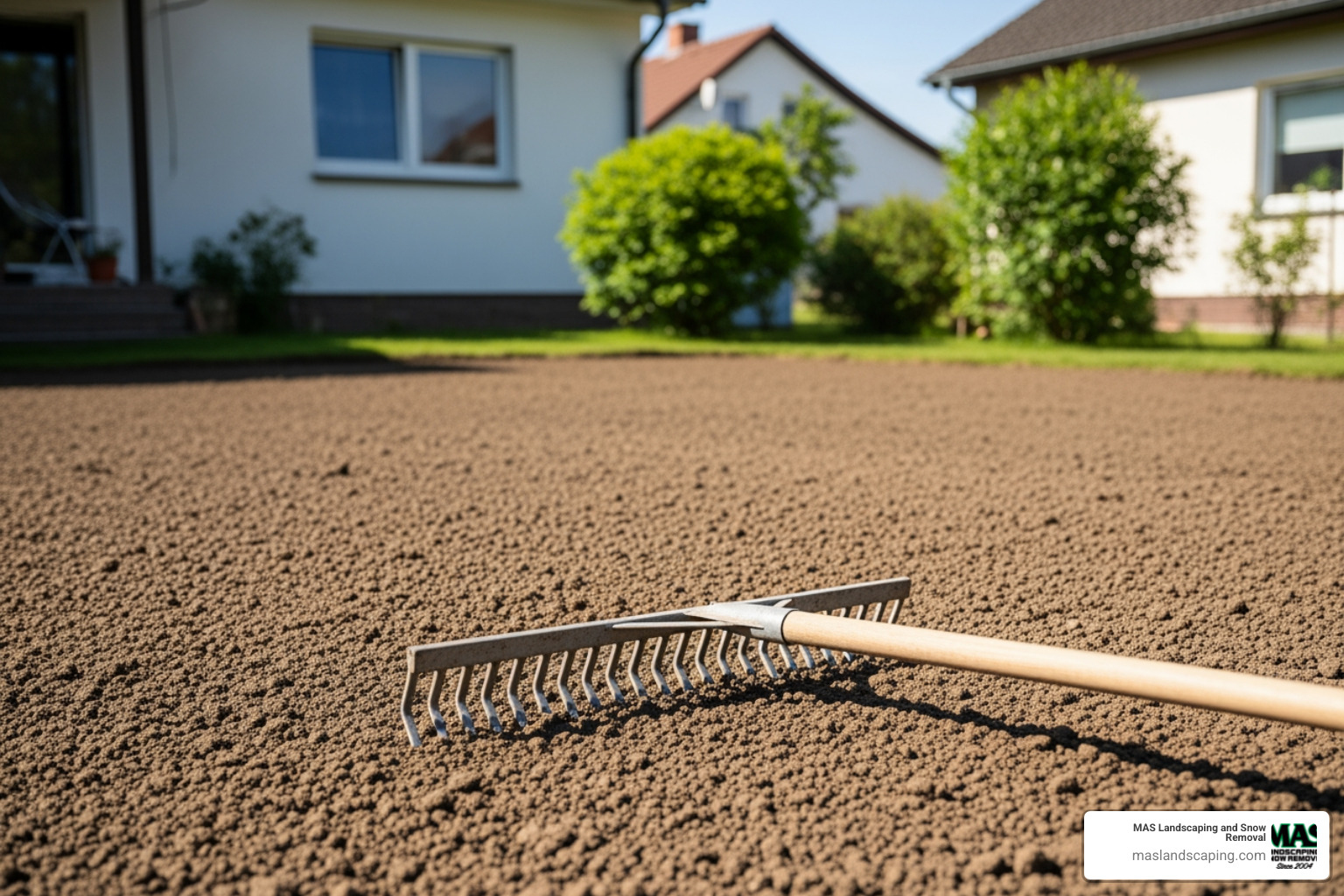
The secret to a long-lasting lawn is the work you do before laying the first piece of sod. Proper soil preparation is the foundation for a healthy, beautiful lawn. Rushing this step can lead to brown patches, uneven growth, and frustration. We cover this critical process in detail on our How to Prepare Ground for Sod page.
Clearing the Area
First, create a clean slate by removing all old grass, weeds, and debris. Laying new sod over an existing lawn is a common mistake that prevents roots from making contact with the soil and leads to a lumpy, unhealthy surface. For large areas, a sod cutter is effective. A non-selective herbicide can also be used a couple of weeks prior to clear stubborn vegetation without leaving harmful soil residue.
Tilling the Soil
Once clear, till the soil to a depth of 4 to 6 inches. This breaks up compacted earth, allowing new roots to penetrate easily. Avoid tilling when the soil is wet; it should be crumbly, not muddy. Tilling wet soil can worsen compaction.
Soil Testing and Amendments
A soil test reveals your soil’s pH and nutrient levels, providing a clear guide for amendments. You can get testing kits from the UMass Extension. Grass thrives in a pH between 6.0 and 7.5. Adjust the pH as needed based on your test results. Regardless of pH, adding a 2-inch layer of compost is highly beneficial. It improves soil structure, water retention, and provides essential nutrients. Mix all amendments thoroughly into the top 4-6 inches of tilled soil.
Grading and Leveling
The final prep step is creating a smooth, properly sloped surface. Rough grade the area so the final surface will sit about 1 inch below surrounding hardscapes like sidewalks and patios. This prevents tripping hazards and drainage issues.
Critically, ensure the grade slopes gently away from buildings (about 1 foot of fall per 50 feet) to prevent water from pooling near your foundation. After rough grading, fine-grade with a garden rake to remove stones and create a smooth surface. Finally, use a lawn roller (half-filled) to firm up the soil. The surface should be firm enough that you sink in no more than half an inch when walking on it. This ensures good contact between the sod and soil.
The Main Event: A Step-by-Step Guide to Installing New Grass Sod
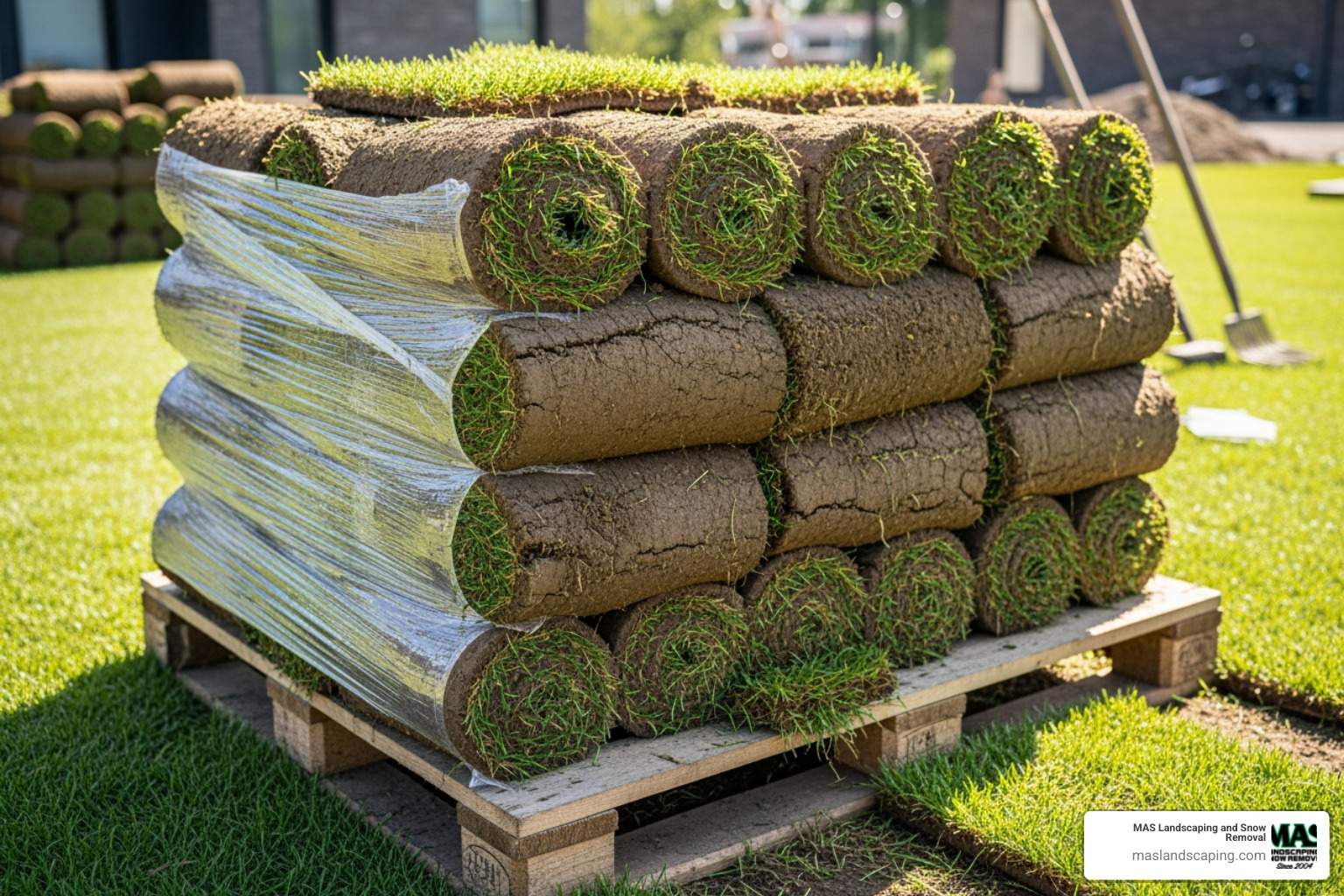
With your soil prepped, it’s time to lay the sod. This step is time-sensitive. Sod is a living product and must be installed the same day it’s delivered, ideally within a few hours. Before starting, lightly water the prepared soil until it’s damp but not muddy. This helps the new roots establish quickly. For a visual guide, see our How to Install Sod page.
Correct technique for installing new grass sod
Laying sod correctly ensures a seamless, healthy lawn.
- Start along a straight edge, like a driveway or sidewalk. This provides a clean reference line.
- Lay sod in a staggered, brick-like pattern. This avoids aligning the seams, which can create weak points.
- Push edges together tightly but do not overlap. Gaps invite weeds, while overlaps cause the edges to dry out and die.
- Lay each piece flat without stretching it. Stretched sod will shrink, creating gaps later.
- Use a sharp utility knife to cut pieces to fit around curves and obstacles. It’s often easier to cut from the grass side for a cleaner edge.
- Avoid walking on freshly laid sod. Use plywood to distribute your weight if you must cross it.
After all the sod is laid, fill any visible gaps with topsoil. Finally, go over the entire lawn with a half-filled lawn roller to press the roots firmly against the soil, removing air pockets and ensuring good contact. Skip rolling if the ground is very wet to avoid over-compacting the soil.
Handling slopes and oddly shaped areas
Slopes and curves require a specific approach.
- On slopes, lay sod horizontally (across the slope), not vertically. Start at the bottom and work your way up. On steep inclines, use sod staples to anchor the pieces until they root.
- For curves and irregular shapes, cut pieces to fit precisely. Avoid using thin, narrow strips along the edges, as they dry out quickly. Instead, cut larger pieces to fit the curve and use the smaller leftover scraps to fill gaps in the interior of the lawn.
Aftercare: Watering, Mowing, and Long-Term Maintenance

Your new sod is installed, but the work isn’t over. The next few weeks of aftercare are critical for establishing a healthy, rooted lawn. Proper care now ensures you’ll enjoy a beautiful lawn for years. For more details, visit our How to Care for New Sod page and the Michigan State University Extension’s guide on Establishing a New Lawn Using Sod.
Checking for Root Establishment
Your sod is working to send roots into the soil. After about two weeks, you should feel slight resistance when you gently tug a corner. By four to six weeks, the sod should be firmly anchored and difficult to pull up. This is your sign that the lawn is established.
Watering Your New Sod
Water is the most critical element for new sod.
- Immediately After Installation: Start watering within 30 minutes. Soak the lawn thoroughly so water penetrates the sod and moistens the soil 4 inches deep.
- Week 1: Water daily in the morning. The goal is to keep the sod and underlying soil consistently moist but not soggy. Avoid watering late in the evening to prevent fungal growth.
- Week 2: Water every other day, but for longer sessions to encourage deeper root growth.
- Week 3 and Beyond: Transition to a normal watering schedule of 1-2 times per week, providing about one inch of water total. Deep, infrequent watering builds a drought-resistant lawn.
Mowing and Foot Traffic
Patience is key. Limit all foot traffic for at least two to three weeks to allow fragile roots to anchor.
Wait for the first mow until the grass is 3 to 4 inches tall (usually 10-14 days). Set your mower to a high setting (3 to 3.5 inches) and never cut more than one-third of the grass blade’s height at once. A sharp mower blade is essential for a clean cut that prevents stress and disease.
Fertilizing and Long-Term Care for Your New Lawn
- First Fertilization: Apply a starter fertilizer 4 to 6 weeks after installation, once you have mowed at least twice. Our guide to the Best Fertilizer for New Sod has specific recommendations.
- Weed Control: Do not use any herbicides on your new lawn for at least three months or until it has survived its first winter. New grass is sensitive to these chemicals. Hand-pull any weeds that appear.
- Long-Term Maintenance: For heavy clay soils common in Massachusetts, consider core aeration 3-6 months after installation to improve air circulation and root growth. An annual aeration and a balanced fertilization program will keep your lawn healthy for years to come.
Frequently Asked Questions about Installing New Grass Sod
We talk to homeowners every day in Saugus, Medford, and Chelsea about installing new grass sod, and the same questions often come up. Here are answers to the most common ones.
What are the most common mistakes when installing new grass sod?
Most mistakes are preventable and usually result from rushing the process. The biggest culprits include:
- Poor soil preparation: Skipping tilling, clearing, or amending the soil creates a weak foundation for your new lawn.
- Leaving gaps or overlapping edges: Gaps allow weeds to grow, while overlaps cause the sod to dry out and die, creating an uneven, patchy look.
- Improper watering: Both too little and too much water can kill a new lawn. Consistency is key in the first few weeks.
- Mowing too soon or too short: This stresses the grass before its roots are established.
- Not testing the soil: Without a soil test, you’re just guessing what nutrients your lawn needs to thrive.
Can I lay new sod over an existing lawn?
We get this question a lot, but we strongly recommend against it. Your new sod’s roots need direct contact with soil to establish properly. A layer of old grass prevents this, leading to poor rooting. Furthermore, the old grass will decompose unevenly, creating a lumpy surface, and any existing weeds or diseases can transfer to your new lawn. For best results, always remove the old lawn completely. Learn more on our Laying Turf On Existing Lawn page.
How long does it take for new sod to root?
The timeline depends on the season, grass type, and aftercare, but here’s a general guide:
- Within two weeks, you should see light rooting. You can check by gently lifting a corner and looking for small white roots.
- By four to six weeks, the sod should be firmly established and resist being pulled up. At this point, it can handle normal foot traffic and is ready for its first fertilization.
Sod installed in the cooler temperatures of spring or fall typically roots faster than sod installed in the summer.
Conclusion: Enjoy Your Instant Lawn
Installing new grass sod offers a change that seeding can’t match, providing instant beauty, immediate erosion control, and a usable lawn in weeks, not months. The satisfaction of seeing a vibrant green carpet replace bare dirt is undeniable.
We’ve covered the critical steps: planning, preparing the soil, careful installation, and consistent aftercare. Following these steps ensures your investment results in a thriving lawn that boosts your home’s curb appeal and provides a beautiful space for your family.
While a DIY sod installation can be rewarding, the preparation and labor are significant. For homeowners in Everett, Lynnfield, Malden, and surrounding communities who prefer a guaranteed professional result, MAS Landscaping is here to help.
Our expert Sod Installation services cover everything from soil prep to the final roll, drawing on years of local experience to ensure your new lawn is done right the first time.
Ready to transform your yard? Contact us today to discuss your landscape design project and create the outdoor space you’ve been dreaming of.
