


Laying a New Lawn with Grass Seed: 7 Perfect Steps
Why Laying a New Lawn with Grass Seed is Worth Your Effort
Laying a new lawn with grass seed is a cost-effective way to get a lush, green yard. While sod offers instant results, seeding provides a wider variety of grass types, promotes better root development, and offers significant cost savings. It’s also ideal for tricky areas like slopes and helps prevent soil erosion.
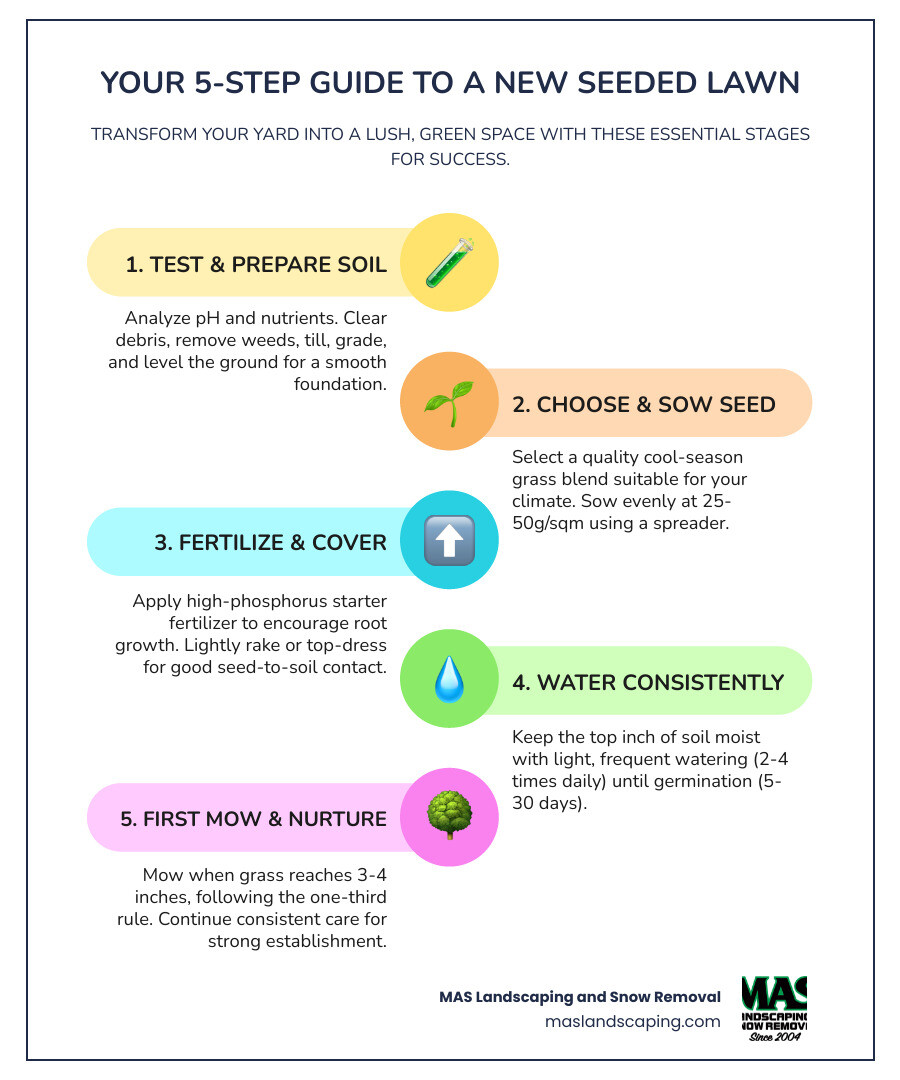
Here’s a quick overview of the process:
- Test your soil to check pH and nutrient levels.
- Prepare the ground by clearing weeds, tilling, and leveling.
- Choose the right seed for your climate and sun exposure.
- Apply starter fertilizer for strong root growth.
- Sow seed evenly with a spreader in a criss-cross pattern.
- Cover lightly with a thin layer of soil or compost.
- Water consistently to keep the soil moist until germination.
- Mow carefully once the grass is 3-4 inches tall.
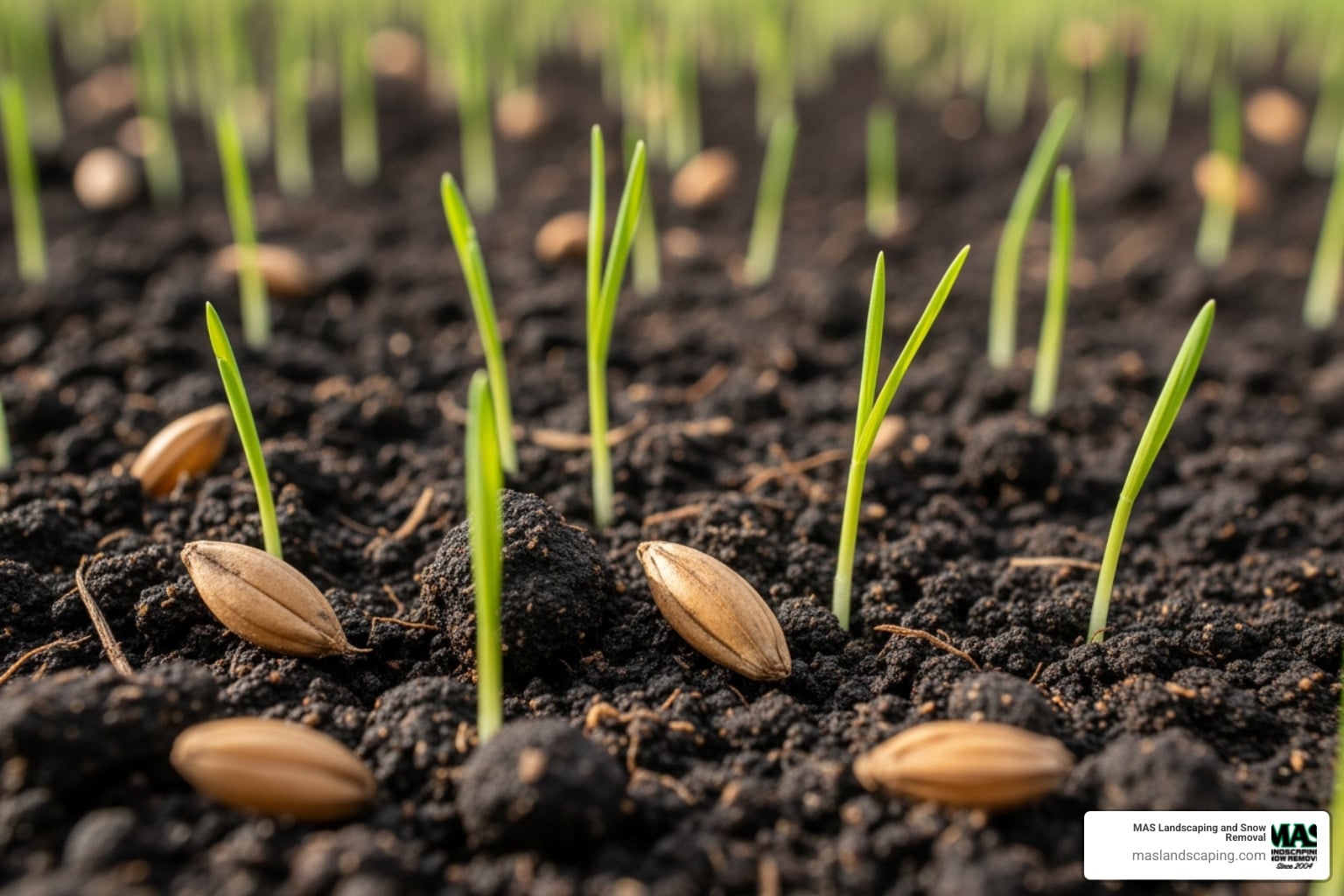
The key to success is patience and consistent care. Germination takes 5 to 30 days, and it can be six months before a new lawn is ready for heavy foot traffic. However, with proper prep and a solid watering schedule, you’ll grow a healthier, more resilient lawn than you’d get from sod.
In Massachusetts, timing is crucial. The best window for seeding cool-season grasses (Kentucky Bluegrass, Ryegrass, Fescues) is late summer to early fall (mid-August to mid-September). Soil is warm, air is cool, and weed competition is low. Spring is the next best option, but be prepared for more weeds.
Basic laying a new lawn with grass seed vocab:
- how to prepare ground for sod
- how long does the new lawn installation process take
- how much does it cost to install a new lawn
Planning and Preparation: The Foundation for a Perfect Lawn
You know how a house is only as good as its foundation? The same goes for laying a new lawn with grass seed. The time you invest in planning and preparing your soil will determine whether you end up with a thick, healthy lawn or a patchy disappointment.
When to Plant Grass Seed in Massachusetts
In Massachusetts, timing is everything. The best window for seeding cool-season grasses is late summer through early fall (mid-August to mid-September). This timing is ideal because the soil is still warm from summer for quick germination, but the cooling air puts less stress on new grass. You’ll also face far less competition from weeds, giving seedlings the space they need to establish strong roots before winter.
Spring is your second-best option, but it has challenges. The soil warms up slowly, which can delay germination, and you’ll be fighting an explosion of spring weeds for water and nutrients. If you seed in spring, be prepared for more vigilant watering and weed management.
Choosing the Right Grass Seed
Not all grass seed is created equal. The right choice depends on your yard’s sun exposure, traffic, and maintenance goals. A quality seed blend from a reputable supplier is a worthwhile investment. In the Greater Boston area, we work with these cool-season grasses:
- Kentucky Bluegrass: Known for its classic dark green color and durability. It self-repairs but is slow to germinate (14-30 days) and needs full sun and consistent watering.
- Perennial Ryegrass: A quick-start option, germinating in just 5-10 days. It’s tough enough for heavy foot traffic and establishes fast, making it a common addition to seed blends.
- Fine Fescues: The champions of shade. These varieties (Creeping Red, Chewings, Hard) are drought-tolerant once established and require less water and fertilizer, though they are less wear-resistant.
- Tall Fescues: The workhorses. Deep roots make them incredibly drought-tolerant and wear-resistant. Newer varieties offer a finer texture and create a dense, attractive turf with moderate shade tolerance.
When shopping, check the label for Pure Live Seed (PLS) content and a low weed seed percentage. A blend of several grass types often performs best, providing insurance against disease or stress.
How to Prepare the Soil for Seeding a New Lawn
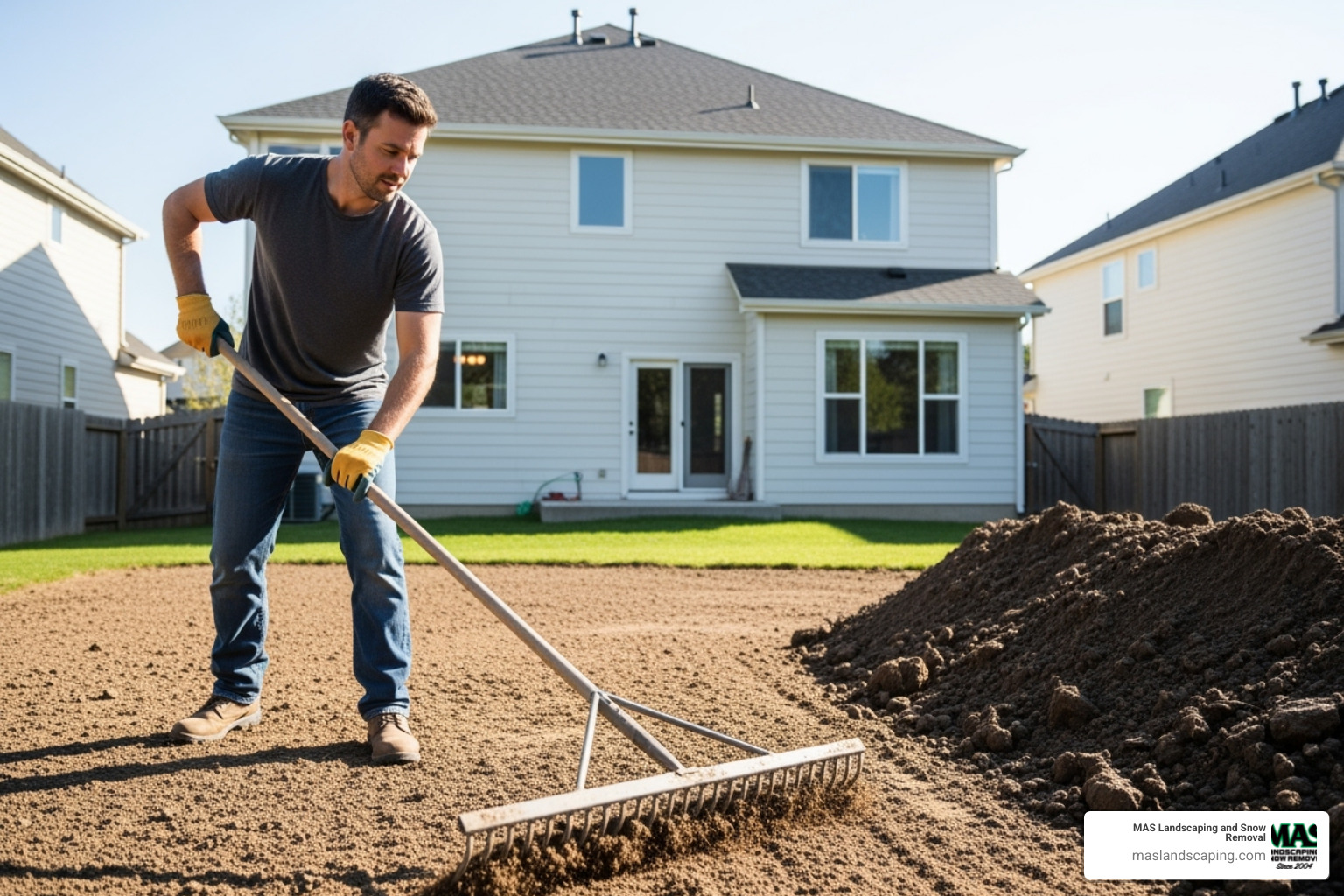
Proper soil preparation is the most critical factor for success. Rushing this step will lead to problems for years.
- Clear the area of all weeds, rocks, and old grass. For serious weed problems, consider a non-selective herbicide, waiting at least a week before planting. Dealing with weeds now is far easier than fighting them in a new lawn. If you need help, learn more about our yard clean-up services.
- Test your soil. This simple step removes guesswork. A soil test from the UMass Extension provides concrete data on your soil’s pH and nutrient needs, with recommendations for amendments.
- Add organic matter. Work 1-2 inches of quality compost into heavy clay or sandy soil. This improves drainage in clay and helps sand retain moisture. Avoid barnyard manure, which often contains weed seeds.
- Till the soil to a depth of 5-6 inches. This mixes in amendments and breaks up compaction, creating a soft bed for roots to establish.
- Grade and level the area. Create a gentle slope away from buildings to ensure proper drainage. Rake the area smooth, filling in low spots. Lightly firm the soil by walking on it, then give it a final rake to create a fine, level surface perfect for seed-to-soil contact.
Step-by-Step Guide to Laying a New Lawn with Grass Seed
With your soil prepped and ready, it’s time for the exciting part – actually laying a new lawn with grass seed! Precision and care here will ensure every seed gets the best possible start.
Sowing the Seed for Even Coverage
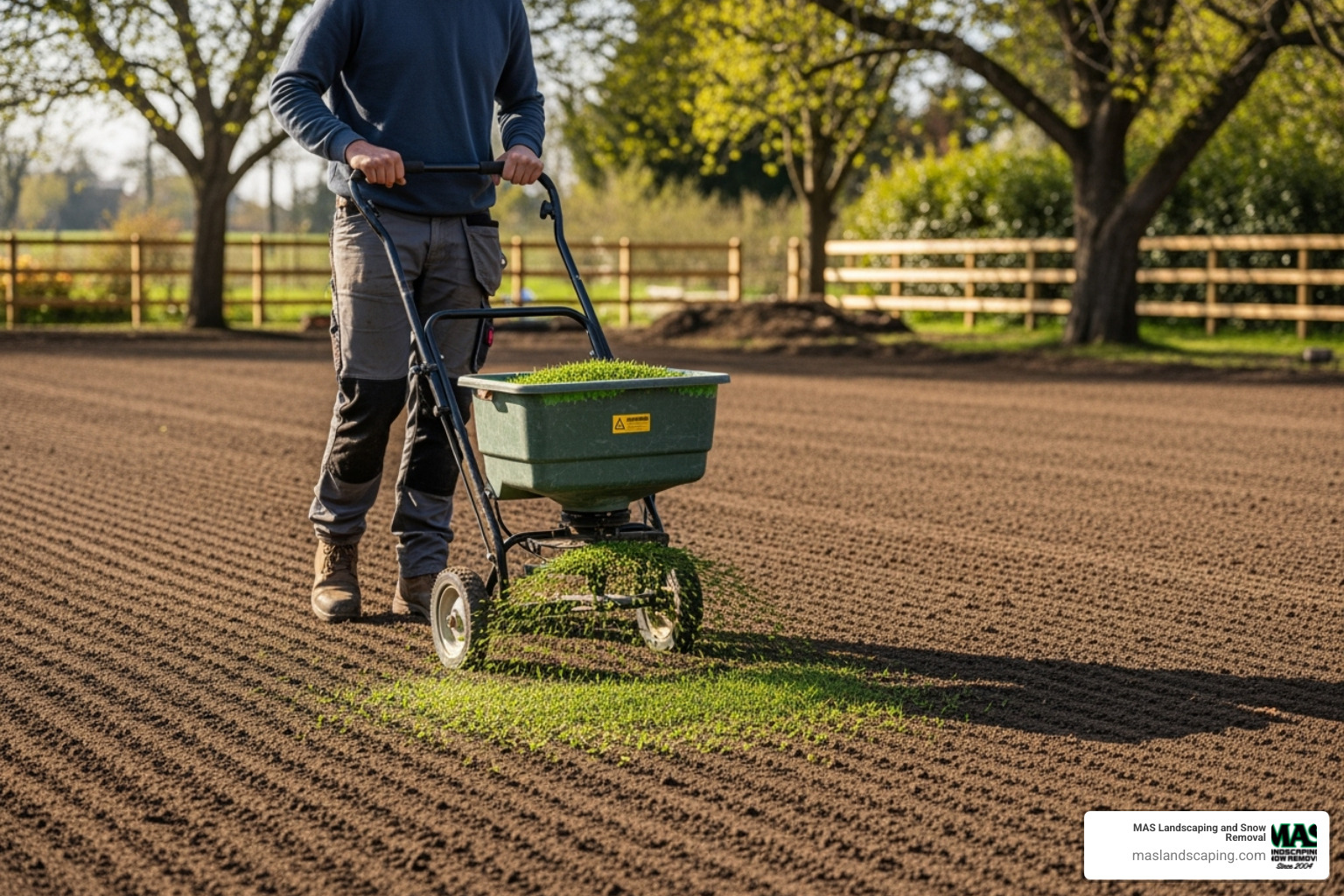
First, calculate your yard’s square footage (length x width). Check your seed bag for the recommended coverage rate, which is typically 25 to 50 grams per square meter (roughly 5-10 pounds per 1,000 sq. ft.). Avoid the temptation to overseed; spreading seed too thickly forces seedlings to compete for resources, resulting in a weak, patchy lawn.
For the most consistent coverage, use a broadcast or drop spreader. To achieve a uniform lawn, divide your seed in half. Apply the first half while walking in one direction (e.g., north to south), then apply the second half in a perpendicular, criss-cross pattern (east to west). This professional technique prevents missed spots and ensures even growth.
The Role of Starter Fertilizer
Starter fertilizer is essential for new seedlings. It is specially formulated with high phosphorus content, the key nutrient for developing strong, deep roots. These roots are the foundation of a resilient, healthy lawn.
Apply a fertilizer labeled “starter” at the time of seeding, following the package directions or your soil test recommendations. This initial feeding provides enough nutrition for the first 6-8 weeks, giving your new grass the vigor it needs to establish quickly. Once your lawn is established, keeping it healthy is key. Learn More info about our landscape maintenance services to see how we can help.
Ensuring Good Seed-to-Soil Contact
Seeds won’t germinate if they’re just sitting on the surface; they need direct contact with soil to absorb moisture.
After spreading seed and fertilizer, lightly rake the area to cover the seeds with about 1/8 to 1/4 inch of soil. You should still see about 10% of the seeds. Next, use a lawn roller filled about halfway with water to gently press the seeds into the soil. This firms the seedbed without over-compacting it.
The final touch is a thin top dressing (about 1/8 inch) of peat moss or compost. This protective layer helps retain moisture and hides the seeds from hungry birds. This step significantly improves germination rates and is well worth the effort.
Aftercare: Nurturing Your New Grass Seedlings
The seeds are in the ground, but the work isn’t over. The aftercare phase requires patience and consistency to turn those tiny sprouts into a thick, healthy lawn.

Watering Your New Lawn
Consistent watering is critical for germination. Once seeds sprout, they cannot be allowed to dry out. Your goal is to keep the top inch of soil moist at all times. This often means light, frequent watering—2 to 4 times a day in hot or windy weather. Use a gentle mist or sprinkle to avoid washing seeds away. The soil should be damp, not soggy.
As seedlings grow, gradually change your watering schedule. Water less frequently but for longer periods to encourage deep root growth. The best time to water is early morning to allow grass blades to dry before nightfall, preventing fungal disease.
Germination time varies by grass type and conditions, typically taking 5 to 30 days. Perennial Ryegrass can sprout in under a week, while Kentucky Bluegrass may take up to a month. Maintain consistent moisture throughout this period.
First Mow and Ongoing Mowing
The first mow is a major milestone. Wait until your new grass is 3 to 4 inches tall. Mowing too early can stress the young plants.
For the first cut, ensure your mower blades are sharp to avoid tearing the grass. Most importantly, follow the “one-third rule”: never remove more than one-third of the grass blade’s height in a single mowing. If your grass is 4 inches tall, cut it no shorter than 2.5 to 3 inches. Also, make sure the soil is dry to prevent ruts. Plan on mowing about once a week during the growing season.
Dealing with Weeds and Protecting Your Lawn
Weeds will compete with your new grass for water, light, and nutrients. For the first few weeks, hand-pulling weeds is the safest removal method.
Avoid using herbicides on a new lawn. Young grass is extremely sensitive to these chemicals. Wait until your lawn has been mowed at least three or four times before applying any broadleaf weed killer, and always follow the product label carefully.
Finally, your new lawn needs protection from traffic. Keep foot traffic, pets, and children off the grass for at least a month after germination, or until it has been mowed a few times. Use string and stakes to mark the area as a reminder. About 30 days after germination, a follow-up feeding with a balanced fertilizer will help the lawn continue to thicken. For help with ongoing care, our team at MAS Landscaping is ready to assist with our landscape maintenance services.
Common Questions and Mistakes to Avoid
Laying a new lawn with grass seed is rewarding, but it’s natural to have questions. Here are answers to common concerns we hear from homeowners in the Saugus, Malden, and Lynnfield areas.
How long does it take for grass to establish and when can I walk on it?
Patience is essential. Germination typically occurs within 5 to 30 days, but seeing green shoots doesn’t mean the lawn is ready for use. Those seedlings are still developing fragile root systems.
- Light Foot Traffic: Wait at least one month after germination, or until you’ve mowed two or three times.
- Heavy Traffic: For kids, pets, and backyard parties, wait about 6 months. This allows the lawn to become robust enough to handle wear and tear.
A full lawn establishment can take 12 to 18 months, but you’ll see significant improvement after the first growing season.
What are common mistakes when laying a new lawn with grass seed?
Avoid these common pitfalls for the best results:
- Skipping Soil Prep: Failing to test soil, remove weeds, and amend the soil is the biggest mistake. It’s like building a house on a shaky foundation.
- Choosing the Wrong Seed: A shade mix won’t thrive in full sun, and vice-versa. Match the seed to your yard’s conditions.
- Bad Timing: Seeding in the heat of summer or too late in the fall makes germination difficult. Stick to the late summer/early fall window in Massachusetts.
- Improper Watering: Too little water kills seeds; too much can wash them away or cause disease. Aim for consistently moist, not soggy, soil.
- Over-seeding: More is not better. Dense seeding leads to weak seedlings that compete for resources. Follow the recommended rate on the bag.
- Mowing Too Soon or Too Short: Wait until the grass is 3-4 inches tall and never cut more than one-third of the blade at once.
- Applying Herbicides Too Early: Weed killers can also kill your new grass. Wait until the lawn has been mowed 3-4 times.
What’s the difference between seeding, overseeding, and reseeding?
These terms are often confused, but they refer to different tasks:
- Seeding: This is creating a new lawn from scratch on bare soil. It’s a complete installation process.
- Overseeding: This is spreading seed over an existing lawn to thicken it, fill in minor bare spots, and improve its overall health and appearance. It’s a maintenance task.
- Reseeding: This refers to replanting significant areas of a lawn that have died or been damaged. It’s more intensive than overseeding but less than a full new lawn installation.
Understanding these terms helps you choose the right approach for your lawn. Whether you need a full installation or strategic overseeding, MAS Landscaping can help homeowners in Saugus, Everett, and surrounding communities.
Conclusion
There’s a unique satisfaction in watching a lawn you grew from seed mature into a lush, green carpet. Laying a new lawn with grass seed is a rewarding project that, with patience and dedication, results in a beautiful, healthy lawn with a strong root system. From preparing the soil to that first mow, each step contributes to a final product that adds real value and enjoyment to your property.
That said, we understand that not everyone has the time or tools for such an extensive project. If you’d rather spend your weekends enjoying your yard instead of working on it, that’s where we come in.
At MAS Landscaping and Snow Removal, we help homeowners throughout Saugus, Everett, Lynnfield, Malden, and our surrounding service areas create the outdoor spaces they’ve always wanted. We bring local expertise, professional equipment, and a commitment to quality to every job. Whether you need help with soil preparation, the entire seeding process, or ongoing maintenance, our team is ready to help.
Ready for a professional touch on your outdoor space? Explore our landscaping services and let’s talk about bringing your lawn vision to life.