




New Construction Lawn Installation: 5 Ultimate Steps
Why New Construction Lawn Installation Requires a Different Approach
New construction lawn installation is far more complex than just spreading seed on bare dirt. After building a new home in the Greater Boston area, you’re likely facing compacted soil, buried debris, and poor drainage—all major obstacles to a healthy lawn.
Here’s what you need to know right away:
- Test and amend your soil – Construction leaves behind nutrient-poor, compacted subsoil.
- Add 4-6 inches of quality topsoil – Builders often remove or bury the original topsoil.
- Fix drainage issues first – Grade your yard to slope away from your foundation.
- Choose between sod or seed – Sod is instant but costs more; seed is cheaper but takes longer.
- Plant at the right time – Early fall is best for Massachusetts’ cool-season grasses.
- Water consistently – New lawns need daily moisture until established.
Many new homeowners find their “finished” yard is just the beginning. Construction sites suffer from heavily compacted soil, stripped topsoil, and buried waste. With proper preparation, however, you can transform that barren site into a lush lawn. The key is understanding that new construction lawns have unique challenges that require specific solutions.
This guide walks you through the entire process, from assessing the damage to choosing between sod and seed, and from proper watering to knowing when to hire a professional.
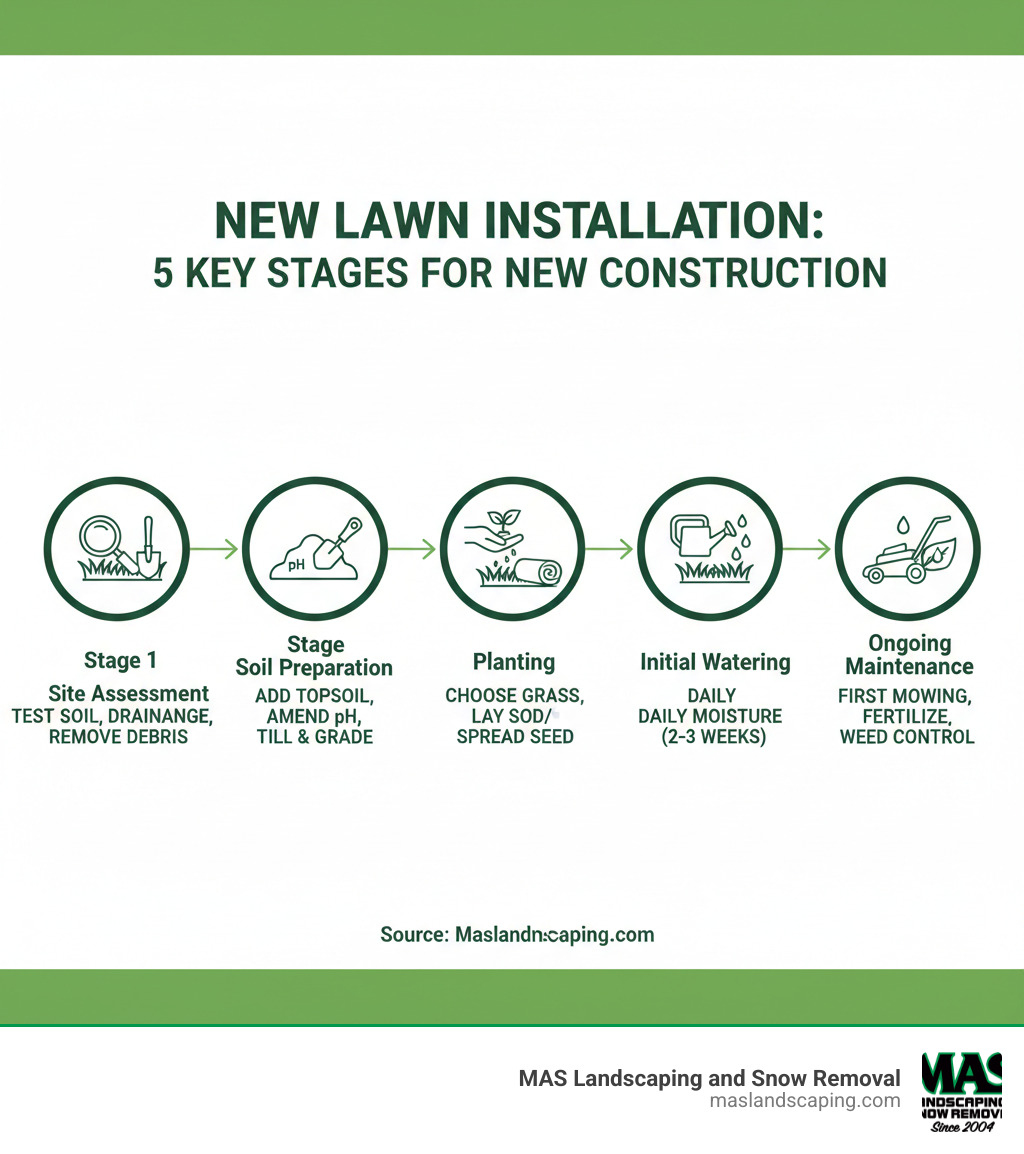
Learn more about new construction lawn installation:
- how to prepare ground for sod
- best fertilizer for new sod
- cost of new lawn irrigation system installation
The Post-Construction Challenge: Why Your New Yard Needs Special Attention
You’ve moved into your new home, but the yard is a mess. The “soil” left after construction is often terrible for growing grass. Heavy machinery compacts the ground, and the valuable, dark topsoil is typically stripped away or buried under lifeless fill dirt. What remains is nutrient-deficient subsoil that drains poorly and is often filled with buried rocks, nails, and other construction debris.
At MAS Landscaping, we’ve seen it all. Understanding these challenges is the first step toward a successful new construction lawn installation.
Healthy soil has distinct layers, or soil horizons. The top layers—the O and A horizons—are rich in organic matter, microbes, and carbon, creating the perfect environment for grass. Construction often removes these vital layers, leaving behind sterile subsoil that can’t hold water or nutrients. Grass roots struggle to penetrate the compacted surface, leading to weak, patchy growth.
How to Establish a Lawn After New Construction
Understanding Construction’s Impact on Soil
The weight of excavators and trucks creates severe soil compaction, squeezing out air pockets that roots need. This rock-hard surface repels water, causing shallow-rooted grass that dies in summer heat. Below the surface, buried rocks and construction debris create drainage problems and dead spots. The most devastating impact is the loss of organic matter, which acts like a sponge for moisture and nutrients. Without it, you have a disrupted soil structure that can’t support a healthy lawn. These factors lead to poor drainage, erosion, and water runoff issues that can even direct water toward your foundation.
Identifying and Correcting Drainage Issues
Before planting, ensure your yard handles water correctly. After a rain, check for puddles near your foundation or areas of standing water. These are red flags that require attention.
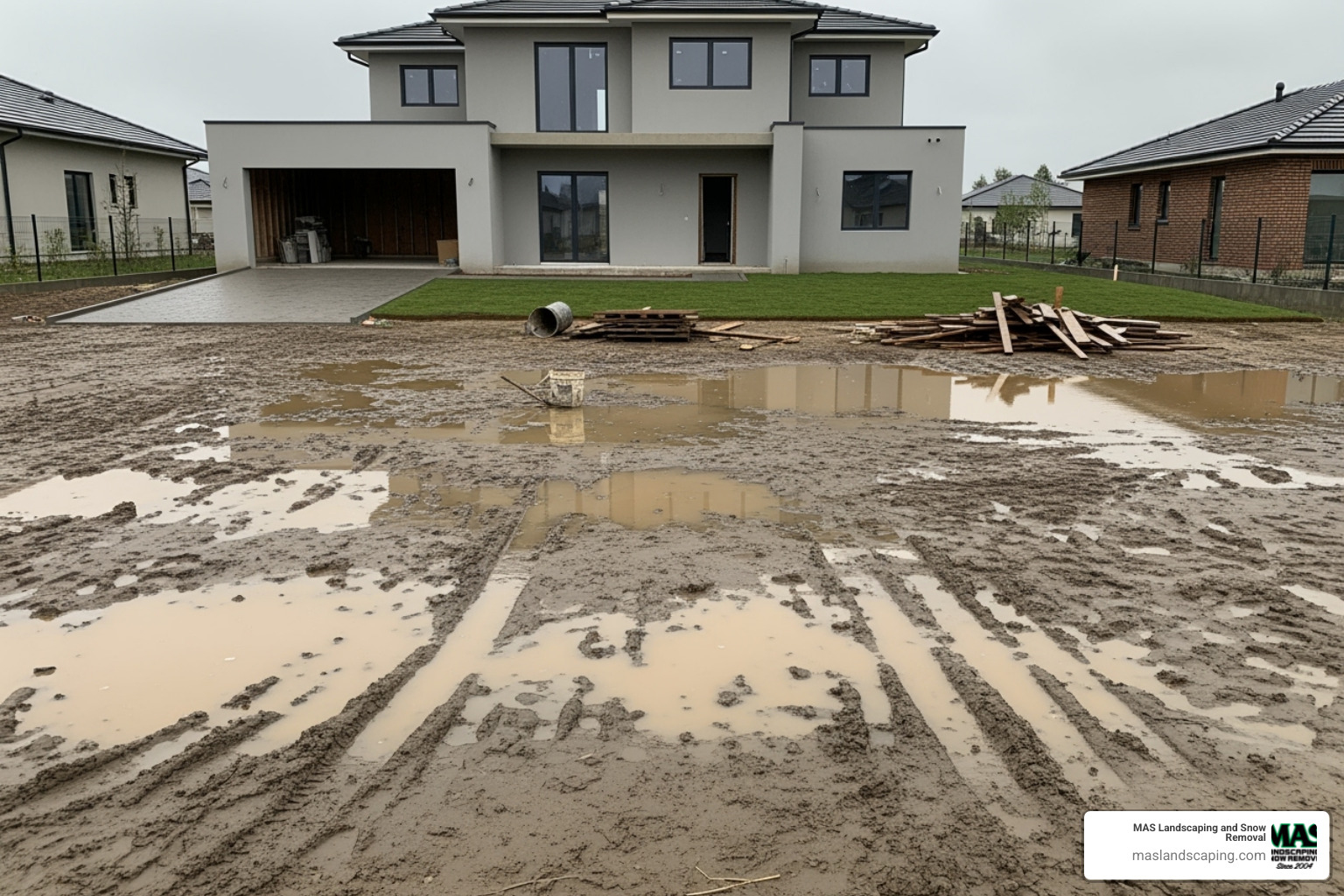
The solution is proper grading to create a gentle slope away from your house. A slope between 2% and 10% is ideal. A 2% slope (a 1-inch drop every 4 feet) is usually sufficient. Steeper slopes risk erosion. Simple fixes like extending downspouts can help, while serious issues may require French drains to channel water away.
If your yard needs significant reshaping, professional equipment is necessary. At MAS Landscaping, we use Bobcat machines to efficiently regrade properties, ensuring water flows away from your home. Fixing drainage now is essential for a healthy lawn and a safe foundation.
More info about bobcat services for grading
Step 1: Preparing the Ground for a Healthy Lawn
Proper ground preparation is the foundation of your future lawn. Rushing this step will lead to problems for years.
Clearing, Grading, and Testing Your Soil
First, clear the site of all construction debris. Using a wheelbarrow, rake, and shovel, walk the yard and remove any rocks, concrete, wood scraps, and other trash. Every piece you remove is one less obstacle for grass roots.
Next, establish proper grading. The yard must slope away from your house—a 2% slope (a 1-inch drop every 4 feet) is generally sufficient to prevent water from pooling near the foundation.
Finally, perform a soil test. You can get a kit from a local garden center or cooperative extension. The test reveals nutrient levels and your soil’s pH level. Most grasses thrive in a pH between 6.0 and 7.0. Outside this range, grass can’t absorb nutrients effectively.
New construction lawn – Ask Extension
How to Amend Soil and Add Topsoil for a New Construction Lawn Installation
Your soil test results will guide your amendments. If the pH is too low (acidic), add lime. If it’s too high (alkaline), add sulfur. These adjustments are critical for a thriving lawn.
The most important step is adding organic matter. Compost is ideal for improving water retention and providing slow-release nutrients. For most new construction sites, you must also bring in quality topsoil. We recommend spreading 4-6 inches of screened topsoil over the entire area. Avoid cheap “fill dirt,” which is often nutrient-poor and full of weed seeds.
Once amendments and topsoil are spread, till everything together to blend the new and existing soil and break up compaction. This creates a uniform, loose growing medium. For larger properties or heavily compacted soil, professional equipment like our Bobcat services may be necessary.
More info about yard clean-ups
Step 2: Choosing Your Lawn Type and Planting Time
With your soil prepared, it’s time to decide on your lawn type and planting schedule. Your budget, timeline, and sun exposure will guide this choice.
Sod vs. Seed: Which is Right for Your New Home?
This is the classic dilemma for new construction lawn installation. Sod offers an instant lawn, providing immediate beauty and erosion control. It also naturally suppresses weeds. However, it has a higher upfront cost and requires intensive watering to establish. Seed is more budget-friendly and offers a wider variety of grass types, but it requires patience. Germination takes 10 to 30 days, and the lawn won’t be fully established for a full season. During this time, it’s vulnerable to weeds and erosion.
If you need a finished yard quickly, sod is a great choice. If you’re on a tighter budget and can wait for results, seed is a smart option.
| Feature | Sod | Seed |
|---|---|---|
| Cost | Higher upfront investment | More budget-friendly |
| Installation Time | Instant lawn in 1-3 days | Germination in 10-30 days; full establishment takes a season |
| Labor | Intensive during installation; less immediate weeding | Easier to spread; more ongoing care during establishment |
| Best Season | Fall is ideal, spring works well; can even install in winter (dormant sodding) | Early fall or spring for cool-season grasses |
| Weed Control | Dense coverage naturally suppresses weeds | Vulnerable to weed competition; can’t use pre-emergent herbicides |
| Water Needs | Deep, consistent watering for several weeks | Daily light watering until germination, then gradually deeper |
Cool-Season vs. Warm-Season Grass: When to Plant in Massachusetts
Planting the right grass type is crucial. Massachusetts’ climate requires cool-season grasses, which thrive in the cooler temperatures of spring and fall and survive our winters.
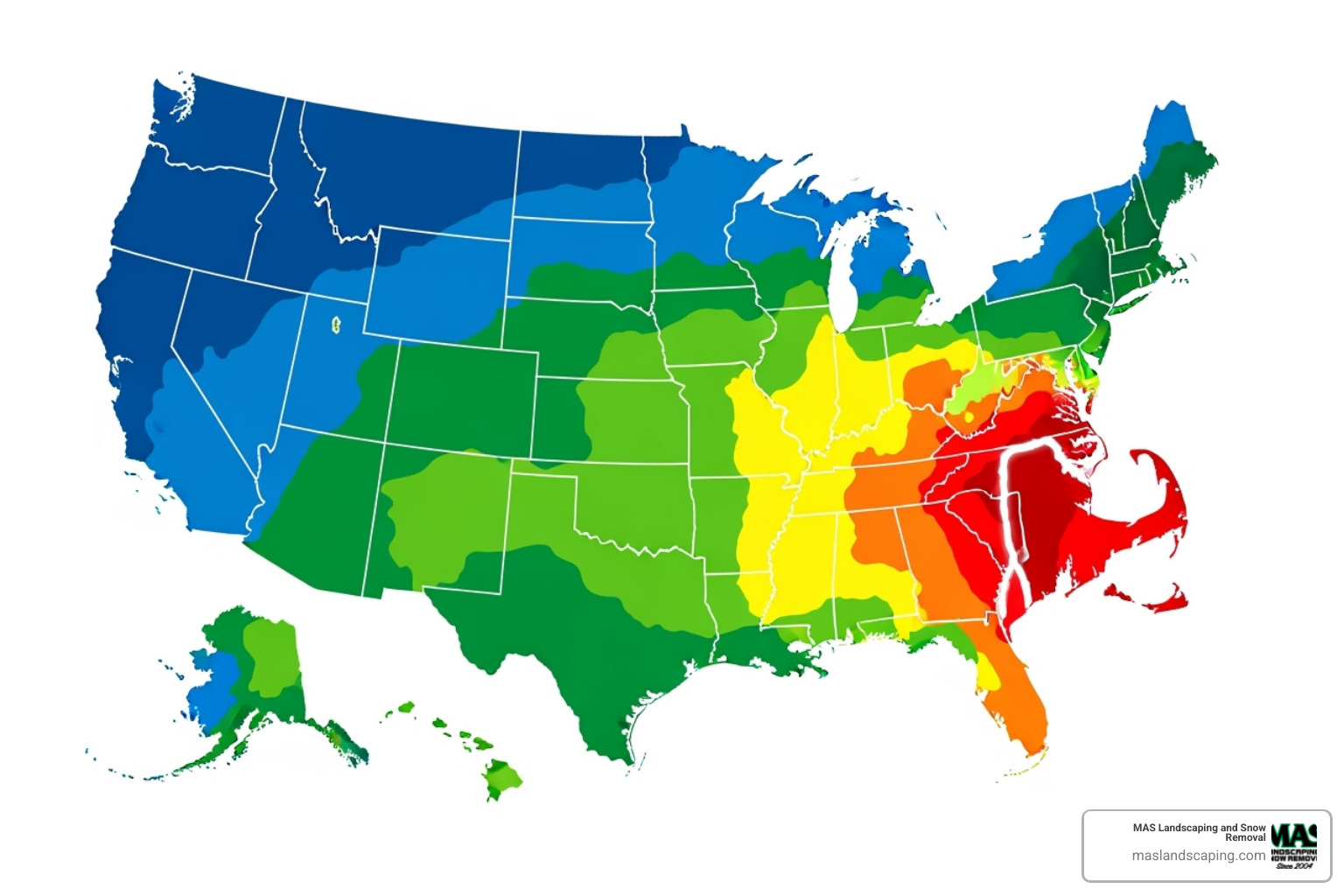
Common choices for the Greater Boston area include Kentucky Bluegrass (for classic beauty), Perennial Ryegrass (germinates quickly), and Tall Fescue (durable and shade-tolerant). Avoid warm-season grasses like Zoysia or Bermuda, as they won’t survive New England winters.
Timing is everything. Early fall (late August to mid-October) is the absolute best time to plant. The cool air and warm soil create ideal conditions for seed germination and root growth, with less weed competition. Spring planting is possible but less ideal, as the new grass will quickly face summer heat and weeds. At MAS Landscaping, we always recommend fall planting for the best results.
The Ultimate Guide to New Construction Lawn Installation and Initial Care
The first few weeks after planting are critical for establishing a strong root system. Whether you chose seed or sod, your new lawn requires consistent watering, proper fertilizer, and patience before the first mowing.
Best Practices for a Seeding a New Construction Lawn Installation
Seeding requires a methodical approach. Start by calibrating your broadcast spreader according to the package instructions to ensure even coverage. Use a drop spreader for more precision near walkways or flower beds.
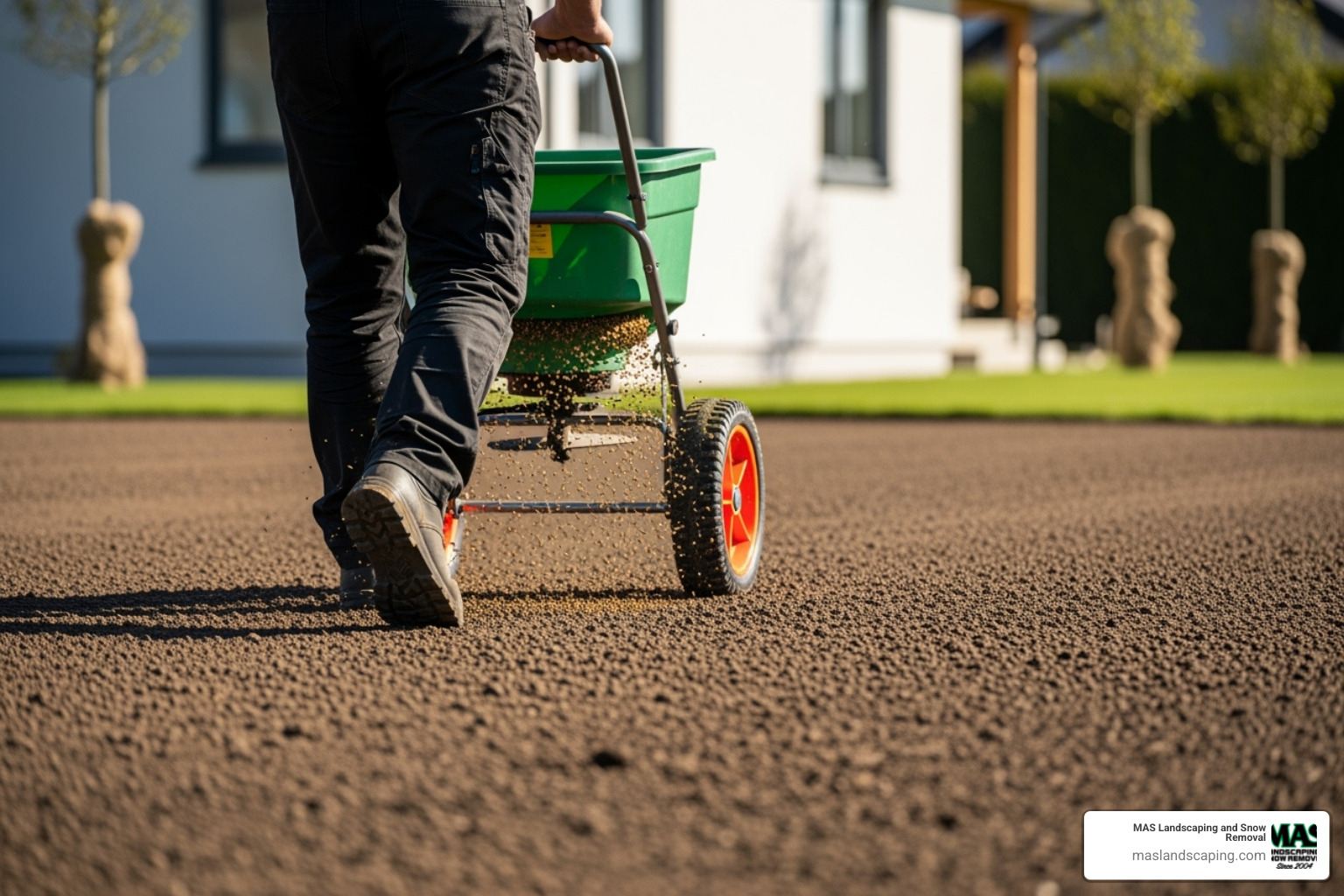
Seed-to-soil contact is crucial for germination. Gently rake the seed into the top quarter-inch of soil. Next, cover the area with a light layer of weed-free straw or a seed accelerator like PennMulch® to retain moisture and protect seeds from birds.
Apply a starter fertilizer high in phosphorus (the middle number on the bag) on the same day you seed. Phosphorus is essential for strong root growth.
Watering is the most critical factor. Keep the top inch of soil consistently moist, which may require light watering once or twice daily. After germination (10-30 days), continue keeping the top two inches of soil moist until the grass is three inches tall. Then, you can transition to deeper, less frequent watering. Keep all foot traffic off the area until the lawn is well-established.
How to Lay Sod and Ensure Proper Rooting
Sod provides an instant lawn but must be installed correctly. Plan to lay sod within 24 hours of delivery, as it deteriorates quickly on the pallet.
Begin laying sod strips along a long, straight edge like a driveway. Place each piece tightly against the next, with no gaps. Stagger the seams like bricks to create a stronger, more unified lawn. Use a utility knife to cut sod to fit around curves and obstacles.
Immediately after laying the sod, roll the entire area with a half-filled lawn roller. This essential step removes air pockets and ensures good root-to-soil contact.
Next, water deeply right away, soaking through the sod and into the soil below. The goal is to keep both the sod and the top few inches of soil consistently moist for the first 10-14 days, which usually means daily watering. After about two weeks, gently tug on a corner. If it resists, the roots are establishing. You can then transition to deeper, less frequent watering.
Stay off the new sod for at least three to four weeks to allow the root system to anchor securely.
DIY vs. Hiring a Professional: Costs and Considerations
Many new homeowners consider a DIY new construction lawn installation to save money. However, this project is far more demanding than typical lawn care due to the labor intensity, required equipment, and significant time commitment needed to fix compacted soil and grade the site properly.
When you hire a professional like MAS Landscaping, you’re investing in professional expertise and guaranteed results. We have the specialized equipment and local knowledge to handle the unique challenges of new construction sites in areas like Everett and Lynnfield, completing the job efficiently and correctly.
The Costs of New Lawn Installation
Disclaimer: The following are average costs based on internet data and do not represent actual quotes from MAS Landscaping. Actual costs can vary significantly based on location, site conditions, materials chosen, and scope of work.
Understanding the potential investment can help you decide. Here are some general price ranges:
- Sod installation costs typically range from $1.50 to $4.50+ per square foot for professional installation, including materials and labor. A 5,000 sq. ft. lawn could cost $7,500 to $22,500+.
- Hydroseeding costs are a middle-ground option, often running $0.10 to $0.40+ per square foot. For a 5,000 sq. ft. lawn, this could be $500 to $2,000+.
Additional material costs include quality topsoil, soil amendments (compost, lime), and starter fertilizer. When comparing DIY to professional services, remember to factor in equipment rental, the value of your time, and the risk of costly mistakes.
When to Call a Landscaping Pro
While some lawn tasks are DIY-friendly, new construction installation often requires a professional. We strongly recommend calling a pro if you face:
- Severe compaction: If soil is rock-hard, you’ll need commercial-grade equipment to break it up.
- Major grading: Proper grading is crucial for drainage and protecting your foundation. Mistakes can be costly.
- Large properties: The logistics of handling materials and labor for a large area are best left to a professional team.
- Lack of time or equipment: Your time is valuable. Hiring a pro saves you from renting and operating heavy machinery.
If you want to ensure a high-quality result, professional expertise is invaluable. At MAS Landscaping, we understand the local soil and climate in Malden, Saugus, and surrounding towns. We can also integrate your new lawn with other landscape elements like patios or retaining walls for a complete outdoor space.
More info about hardscaping installation
Frequently Asked Questions about New Construction Lawns
Homeowners often have the same questions about their post-construction yards. Here are answers to the most common ones.
How long does it take for a new lawn to establish?
This depends on your installation method. For a seeded lawn, you’ll see germination in 10 to 30 days. However, it takes a full growing season (3-6 months) for the grass to mature enough for regular foot traffic and mowing.
For a sodded lawn, you have green grass instantly. The roots need about 2 to 3 weeks to anchor into the soil. We recommend keeping foot traffic to an absolute minimum for at least 3 to 4 weeks. A truly resilient lawn, whether from seed or sod, takes one full season of proper care to establish.
Can I just throw grass seed on the dirt left by the builder?
No, this approach is almost guaranteed to fail. The dirt left by builders is typically compacted, nutrient-poor subsoil. You’ll experience poor germination rates, and any grass that does sprout will be weak. Weeds, which thrive in poor soil, will quickly outcompete your grass, leading to long-term failure. Proper soil preparation is non-negotiable for a successful new construction lawn installation.
How much water does a new lawn need?
Watering correctly is critical. The needs differ for seed and sod.
- Newly seeded lawns: Keep the top inch of soil consistently moist until germination. This often means light, daily watering. Once seedlings appear, transition to deeper, less frequent watering to encourage deep root growth.
- Newly sodded lawns: Immediately after installation, give the sod a deep soaking. Continue watering deeply every day for the first 10-14 days. Once the sod has begun to root, you can reduce watering frequency.
Always check soil moisture before watering. For sod, lift a corner to feel the soil. For seed, push a screwdriver into the ground; if it goes in easily, the soil is moist. Adjust for weather conditions—water more in hot, dry weather and less during cool, rainy periods. Avoid overwatering, as soggy soil can lead to disease.
Conclusion
Changing a bare, compacted construction site into a lush lawn is achievable with the right approach. Success in new construction lawn installation isn’t about shortcuts; it’s about thorough preparation. This means testing your soil, fixing drainage, adding quality topsoil, and choosing the right grass for our Massachusetts climate.
Doing it right the first time provides immense long-term value. A healthy lawn prevents erosion, improves your home’s curb appeal, and creates a beautiful outdoor space for your family to enjoy for years to come. It’s an investment in your home and quality of life.
At MAS Landscaping, we have helped countless homeowners in Everett, Lynnfield, Malden, and surrounding communities steer these exact challenges. We have the local knowledge, equipment, and expertise to turn your construction site into an outdoor space you’ll love.
Whether you’re ready to start your project or just exploring options, we’re here to help you create the lawn of your dreams.
Contact us for your landscape design needs
