



New Lawns: Top 5 Secrets to Stunning Grass 2025
New Lawns offer a vibrant addition to any home, breathing life and color into outdoor spaces. If you’re dreaming of that lush green carpet, it’s crucial to get the basics right. Here’s a quick overview to help you understand the essentials of establishing a healthy and thriving lawn:
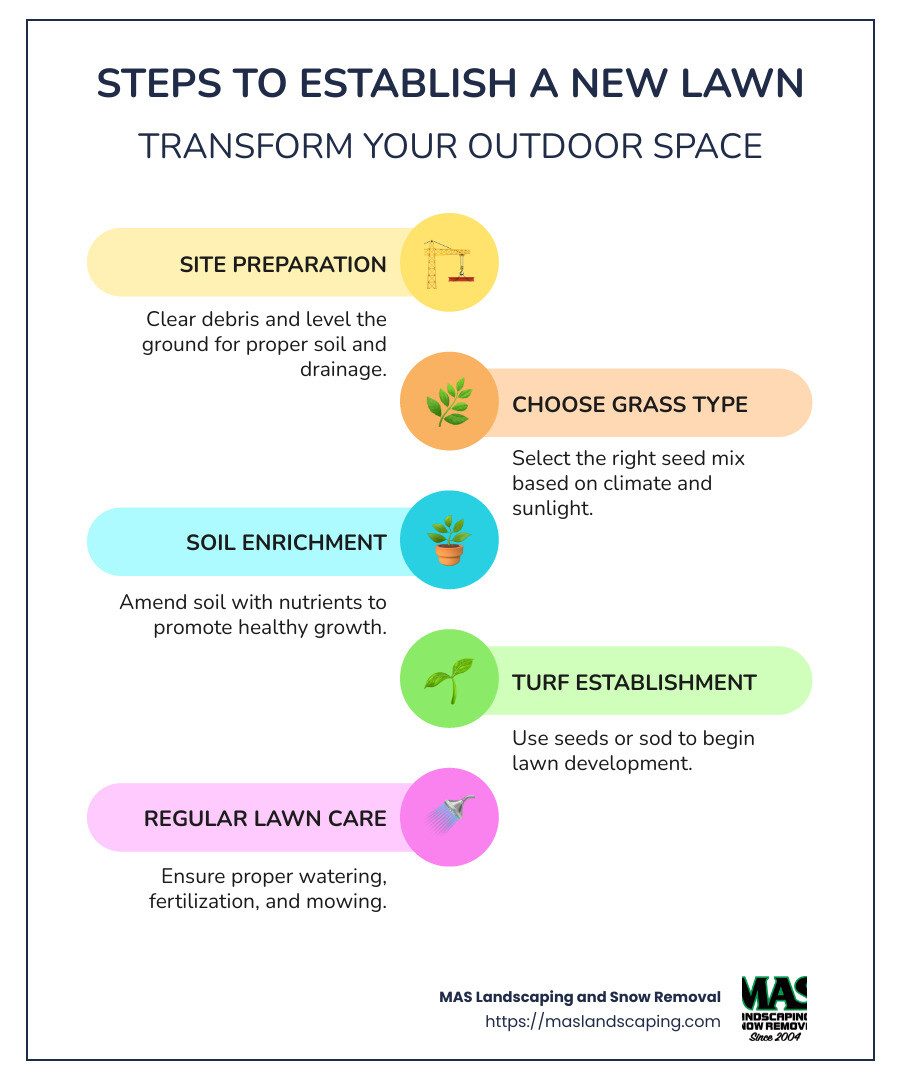
- Site Preparation: Ensure a clean, level area with proper soil and drainage.
- Turf Establishment: Choose the right seed mix for your local climate and sunlight conditions.
- Lawn Care Basics: Prioritize proper watering, fertilization, and mowing techniques.
Building a new lawn from scratch isn’t just about sowing seeds—it’s an art that combines the right preparation of the land with the perfect mix of grass seed.
Whether your yard is basked in sun or nestled in shade, picking the correct grass species is your first step to success. Cool-season grasses like Kentucky bluegrass thrive in regions like Greater Boston, while warm-season varieties suit southern climates. Knowing what suits your lawn’s unique environment is pivotal for turf establishment.
Preparing the site is the next crucial step. Proper grading, clearing debris, and enriching the soil ensure a level playing field for growth. This groundwork paves the way for a robust, weed-free lawn that improves curb appeal and property value.
As we dig deeper into the essentials of lawn care, you’ll find that a bit of patience and the right strategies can transform your outdoor space into a thriving green oasis.
New Lawns glossary:
– Landscape Construction
– Bobcat Landscaping
– Bobcat Services
Choosing the Right Grass for New Lawns
Selecting the right grass for your new lawn is a game-changer. It sets the stage for how your lawn will look, feel, and function. Let’s break down the key factors to consider:
Grass Types
Different grass species have unique characteristics. Here are some popular options:
- Turf-type Tall Fescue: Known for its adaptability, it thrives in both sun and partial shade. Ideal for Maryland and similar regions, it’s drought-tolerant and less prone to disease.
- Kentucky Bluegrass: Offers a lush, dark green appearance. However, it requires more maintenance and is best for sunny areas.
- Fine Fescues: These grasses are perfect for shaded spots but don’t handle heavy foot traffic well. They also require less mowing.
- Zoysiagrass: A warm-season grass that loves full sun. It’s drought-tolerant and low maintenance, making it suitable for southern areas of Maryland.
Region-Specific Considerations
The climate in your region plays a crucial role in grass selection. For example, cool-season grasses like Kentucky bluegrass and tall fescue are ideal for the cooler climates of Massachusetts. They establish best in the spring or early fall when temperatures are moderate.
Sun and Shade
Consider how much sunlight your lawn will receive:
- Full Sun: Grasses like Bermudagrass and Zoysiagrass thrive here. They are durable and handle heat well.
- Partial Shade: Turf-type Tall Fescue and Fine Fescues are great choices. They can flourish with less sunlight.
Traffic and Usage
Think about how you plan to use your lawn:
- High Traffic: If your lawn will host lots of activity, Bermudagrass is robust and can handle wear and tear.
- Low Traffic: For a more decorative lawn with minimal foot traffic, Fine Fescues offer a delicate, beautiful texture.
Choosing the right grass involves balancing your aesthetic desires with practical needs. By understanding the specific conditions of your yard and the traits of different grass types, you can create a lawn that not only looks great but also thrives for years to come.
Now that you’ve selected the perfect grass, it’s time to prepare your site for planting. This involves ensuring the soil is well-prepared and ready to support healthy growth. Let’s explore the next steps for creating your dream lawn.
Preparing Your Site for a New Lawn
Getting your site ready for a new lawn is critical to ensure lush, healthy growth. This involves several key steps: soil preparation, rough grading, adding topsoil, and setting up irrigation. Let’s break it down.
Soil Preparation
Healthy soil is the foundation of a thriving lawn. Start by testing your soil to check its pH and nutrient levels. This helps you understand what amendments might be needed. Ideally, the soil should be slightly acidic to neutral, with a pH between 6.0 and 7.0.
Steps for Soil Preparation:
- Remove Existing Vegetation: Use a sharp shovel or rent a sod cutter for larger areas.
- Clear Debris: Remove rocks, roots, and other debris to create a clean slate.
- Amend the Soil: Based on your soil test, add lime to raise pH or sulfur to lower it. Mix in organic matter like compost to improve soil structure and nutrient content.
Rough Grading
Proper grading ensures your lawn has good drainage and prevents water pooling, which can harm your grass.
Steps for Rough Grading:
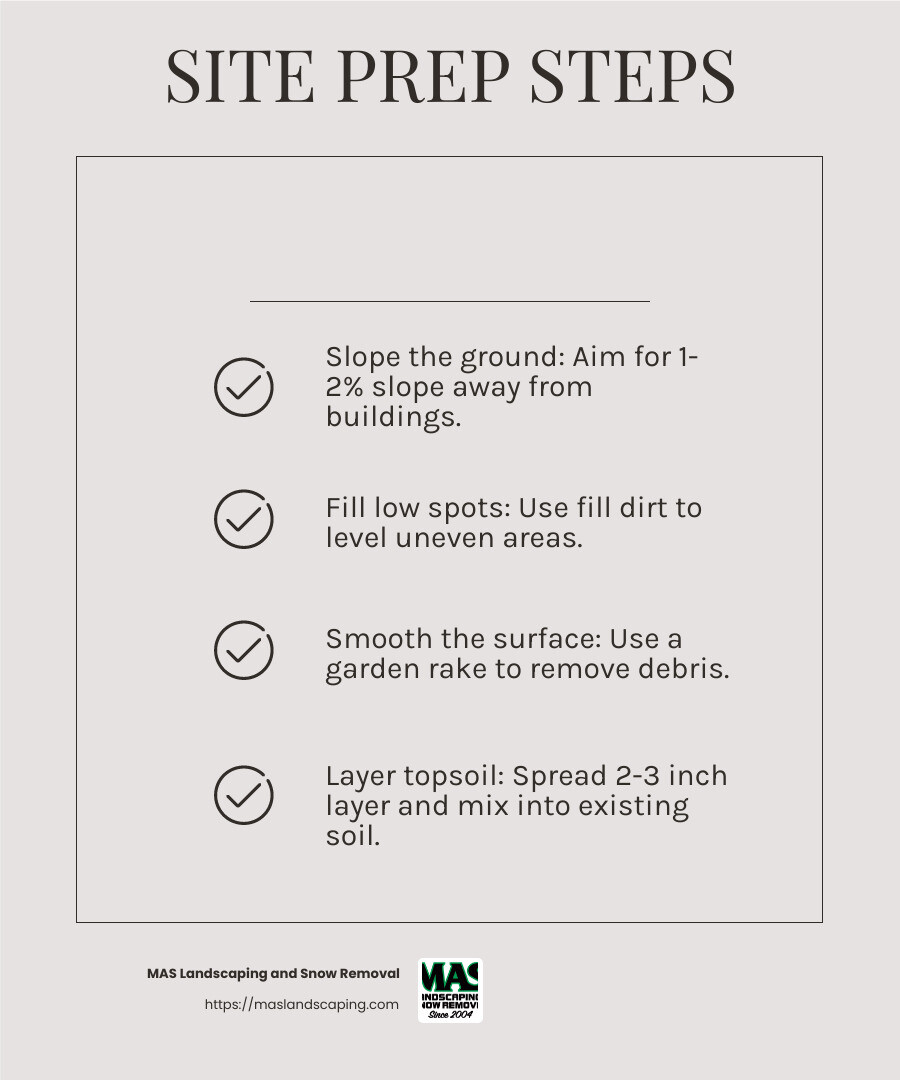
- Slope the Ground: Aim for a 1-2% slope away from buildings to direct water flow.
- Fill Low Spots: Use existing soil or bring in fill dirt to level uneven areas.
- Smooth the Surface: Use a garden rake to even out the soil, removing any remaining debris.
Adding Topsoil
Topsoil provides the nutrients that grass seeds need to germinate and grow. However, be cautious when sourcing topsoil to avoid introducing weed seeds.
Topsoil Tips:
- Quality Matters: Look for topsoil that’s dark, crumbly, and free of rocks and debris. Avoid soil that smells bad or has a sticky texture.
- Layer It Right: Spread a 2-3 inch layer of topsoil over the graded area and mix it into the top 4-6 inches of existing soil.
Irrigation
Proper watering is crucial, especially in the first few weeks as your lawn establishes.
Irrigation Guidelines:
- Initial Watering: Water immediately after planting seeds or laying sod to ensure good soil contact.
- Consistent Moisture: Keep the soil consistently moist but not waterlogged. Light, frequent watering is best during the establishment phase.
- Adjust for Weather: Be ready to increase watering during hot, dry spells and reduce it during rainy periods.
By following these steps, you set the stage for a vibrant, healthy lawn. Preparing your site well is like laying a strong foundation for a house—it ensures everything built on top of it will thrive. Next, we’ll explore the planting process and whether seed or sod is the right choice for your lawn.
Planting New Lawns: Seed vs. Sod
When it comes to planting new lawns, you have two primary options: seed and sod. Each has its own set of advantages and drawbacks, and the choice between them often depends on budget, timing, and personal preference.
Seed
Cost:
Opting for seed is generally more budget-friendly. On average, seed costs about $0.25 per square foot. This makes it a popular choice for homeowners looking to cover large areas without breaking the bank.
Pros:
- Deeper Root System: Seed-grown grass develops a more robust root system, which can lead to a healthier lawn in the long run.
- Variety of Grass Species: There’s a wide selection of grass types available, allowing you to choose one that fits your specific climate and lawn conditions.
- Natural Adaptation: Since the grass grows in place, it naturally adapts to the local soil and climate.
Cons:
- Longer Establishment Time: It can take several weeks for seeds to germinate and establish, and up to two years for a lawn to fully mature.
- Higher Maintenance Initially: The first few weeks require diligent watering and weed control.
- Weed Competition: Young grass seedlings often have to compete with weeds, which can impede their growth.
Installation Timing:
The best time to plant seeds in the North is late summer to early fall, when temperatures are cooler, reducing weed competition and providing ideal growing conditions. Spring is also an option, but be prepared to battle weeds.
Sod
Cost:
Sod is more expensive, with prices averaging around $1.30 per square foot. This reflects the convenience and immediacy it offers.
Pros:
- Instant Lawn: Sod provides an immediate green space, which is ideal for those who want fast results.
- Reduced Erosion and Mud: Laying sod minimizes mud and soil erosion right away.
- Less Weed Risk: Because sod is already grown, there’s less chance for weeds to take hold during establishment.
Cons:
- Higher Initial Cost: The expense of sod can add up, especially for larger areas.
- Limited Grass Types: Sod may not be available in all grass species, which can limit choices.
- Transplant Shock: Sod is grown in different conditions and may take time to adjust to your soil and climate.
Installation Timing:
Sod offers more flexibility in timing. It can be installed almost any time the ground isn’t frozen, making it a versatile choice for different climates. However, avoid peak summer heat to reduce stress on the new sod.
Making the Choice
When deciding between seed and sod, consider your budget, the time you can invest in lawn care, and how soon you want a usable lawn. Both methods can yield beautiful results with the right care and attention.
Next, we’ll explore the best times to plant new lawns, taking into account regional differences and seasonal considerations.
Best Time to Plant New Lawns
Timing is everything when it comes to planting new lawns. The best time to plant varies depending on your location and the type of grass you’re using. Let’s break it down.
Late Summer to Early Fall
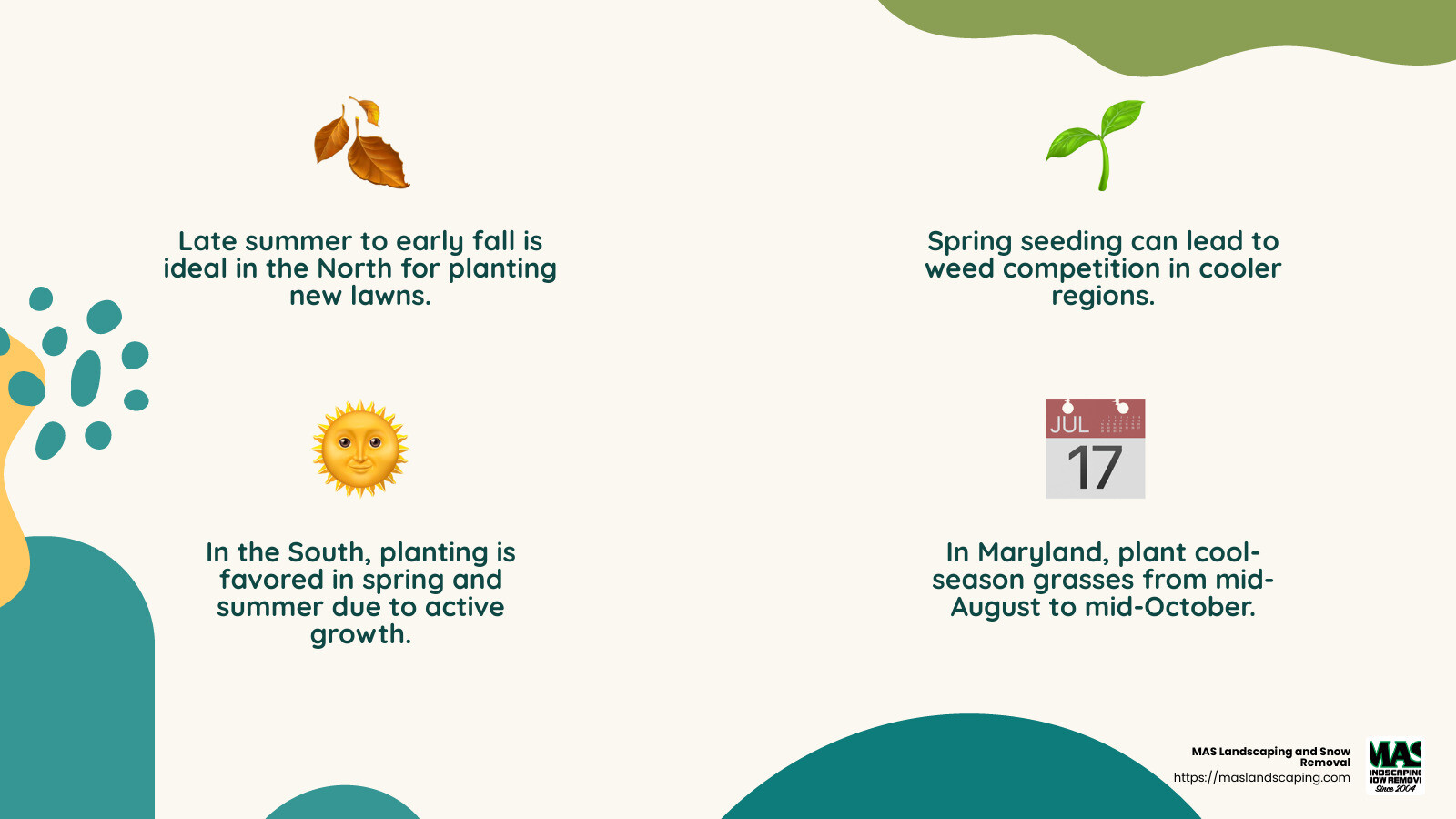
In the North, late summer through early fall is the ideal time to plant a new lawn. Why? Because the soil is still warm from the summer, while the cooler air temperatures reduce weed competition. This combination helps grass seeds germinate and establish before winter sets in. Planting during this period gives your lawn the chance to mature enough to survive the colder months.
Spring Seeding
Spring is the second-best time for seeding in cooler regions. However, it comes with its own set of challenges. While temperatures are favorable, the soil might be cooler, which can slow down germination. Additionally, springtime often brings a surge of weeds, which will compete with your fledgling grass for nutrients and sunlight.
Regional Differences
The optimal planting time can vary significantly based on where you live. For example, in the South or transitional areas like Maryland, the rules change. In some parts of Florida, seeding can happen year-round, especially in spring and summer, when grass is actively growing and there’s plenty of rain.
In Maryland, which lies in the transition zone, the best time to plant cool-season grasses like turf-type tall fescue is from mid-August to mid-October. This timing allows the grass to take advantage of the warm soil and cooler air temperatures, reducing weed competition. Spring planting is the next best option, but be prepared for more intensive weed control.
Key Takeaways
- North: Late summer to early fall is best; spring is a secondary option.
- South/Transitional Areas: Timing can vary, but spring and summer are generally favorable.
- Maryland: Mid-August to mid-October for cool-season grasses; early spring for a second chance.
Choosing the right time to plant your lawn is crucial for its success. Next, we’ll discuss how to care for your new lawn to ensure it thrives.
Caring for Your New Lawn
Once you’ve planted your new lawn, it’s time to ensure it thrives. Let’s look at some key aspects: watering, fertilization, mowing, and weed control.
Watering
Watering is crucial for the health of your new lawn. For newly seeded areas, keep the top inch of soil consistently moist. This might mean misting the area once a day, or even more often if it’s hot and dry. Once the grass begins to grow, aim to keep the top 2 inches of soil moist until the grass reaches about 3 inches tall.
After your lawn is established, you can reduce watering to about twice a week. Deep watering (about 6 to 8 inches) encourages roots to grow deeper, making your lawn more drought-resistant.
Fertilization
Fertilization provides essential nutrients that help your lawn grow lush and green. After laying down seed and lawn food, cover them with a thin layer of soil. A product like Scotts® Turf Builder® Lawn Soil™ can work well. Once your lawn reaches a mowing height, start a regular fertilization program. Be sure to follow the instructions on the fertilizer package for best results.
Mowing
Proper mowing helps keep your lawn healthy. Wait until your new grass reaches at least 3 inches tall before mowing. When you do mow, only remove the top one-third of the grass blades. This helps keep the grass thick and prevents weeds from sneaking in. Adjust your mower to a high setting to avoid cutting the grass too short.
Weed Control
Weeds compete with grass for nutrients and water, so controlling them is important for a healthy lawn. Regular mowing and proper fertilization can help prevent weeds. For existing weeds, consider using a pre-emergent herbicide to prevent new weeds from sprouting, and a post-emergent herbicide for those already growing. Always follow the product instructions to avoid harming your grass.
By focusing on these key areas, you can ensure your new lawn becomes the lush, green space you’ve dreamed of. Next, we’ll tackle some frequently asked questions about establishing a new lawn.
Frequently Asked Questions about New Lawns
What is the average cost of a new lawn?
Creating a new lawn can vary widely in cost, depending on several factors. These include the size of the lawn, the choice between seed and sod, and the necessary materials and labor.
- Lawn Size: Larger lawns will naturally cost more. The average American lawn is slightly less than a quarter acre.
- Materials and Labor: Seed is generally less expensive than sod. On average, seed costs about $0.25 per square foot, while sod can be much higher. That these are average costs based on internet data and not actual costs for MAS Landscaping. Labor costs can also add up, especially if professional installation is required.
When budgeting, consider additional expenses like topsoil, fertilizer, and irrigation. These can sometimes double the initial budget if not anticipated.
What is the best way to start a new lawn?
Starting a new lawn involves careful soil preparation, seed starting, and fertilization.
- Soil Preparation: Begin with rough grading to shape the yard and ensure proper drainage. Add quality topsoil to create a healthy base for your grass.
- Seed Starting: Choose a grass seed that suits your region and sunlight conditions. Spread the seed evenly, cover it with a thin layer of soil, and gently rake to ensure good soil contact.
- Fertilization: Apply a starter fertilizer to provide essential nutrients. Follow the instructions on the fertilizer package to avoid over or under-fertilizing.
What is the best time of year to lay a new lawn?
The timing for planting a new lawn depends on your region and the type of grass you’re using.
- Spring and Autumn: In the North, late summer through early fall is ideal for seeding. The warm soil and cool nights help grass establish without competing with weeds. Early spring is also an option, though cooler soils may slow germination.
- Regional Considerations: In the South, where winters are mild, seeding can often be done year-round. However, spring and summer are generally best due to active growth and ample rain.
Choosing the right time ensures your lawn has the best chance to thrive, considering both climate and grass type.
With these insights, you’re better prepared to tackle the journey of establishing a new lawn. Next, we’ll explore the personalized services and local expertise offered by MAS Landscaping and Snow Removal.
Conclusion
At MAS Landscaping and Snow Removal, we believe that creating the perfect new lawn is more than just planting grass—it’s about crafting an outdoor space that improves your lifestyle and fits seamlessly with your environment. Our commitment to personalized service and local expertise sets us apart in the landscaping industry.
Personalized Service
Every lawn is unique, just like every homeowner’s vision. We start by listening to your ideas and preferences, ensuring that your new lawn reflects your personal taste and meets your specific needs. From selecting the right grass type to planning the layout and design, our team guides you through every step of the process. We understand that a lawn isn’t just grass; it’s a part of your home where memories are made.
Local Expertise
Being based in Saugus, MA, and serving nearby areas like Everett, Lynnfield, and Malden, we have a deep understanding of the local climate, soil conditions, and plant species. This knowledge allows us to recommend the best grass types and lawn care practices that will thrive in your specific area. Our expertise ensures that your lawn is not only beautiful but also sustainable and low-maintenance.
By choosing MAS Landscaping and Snow Removal, you’re partnering with professionals who are as passionate about your lawn as you are. Our goal is to help you achieve the lawn of your dreams with our professional, efficient, and friendly services.
For more information on how we can assist with your landscaping needs, including Bobcat Services, visit our Bobcat Services page. Let us help you transform your outdoor space into a stunning landscape that you and your family will enjoy for years to come.