


Overgrown Property Clean up: 7 Expert Stages
What You Need to Know About Overgrown Property Cleanup
Overgrown Property Clean up is the process of restoring a neglected yard by removing excessive vegetation, clearing debris, and bringing the landscape back to a manageable, attractive state. Whether you’ve inherited a jungle, let maintenance slip, or purchased a property that’s been abandoned, understanding the cleanup process helps you tackle the challenge safely and effectively.
Quick Overview of Overgrown Property Cleanup:
- What It Is: Removing overgrown grass, weeds, vines, brush, dead vegetation, and accumulated debris from a neglected property
- Why It Matters: Prevents safety hazards, pest infestations, fire risks, and decreased property value
- Typical Process: Assess and plan, clear debris, cut vegetation, mow and edge, apply finishing touches
- When to Act: Spring and fall offer the best conditions for cleanup work
- DIY vs. Professional: Depends on property size, severity of neglect, available time, and safety concerns
An overgrown property isn’t just an aesthetic problem. It’s a genuine concern that affects your safety, health, and finances. Tall grass and thick brush attract rodents and mosquitoes, create trip hazards, and can even increase fire risk in dry conditions. Nearly 10,000 children under 18 receive hospital treatment for lawn mower-related injuries annually in the US, often when attempting to tackle severely overgrown conditions without proper equipment or experience.
The good news? With the right approach, any overgrown property can be transformed. Whether you’re preparing to sell, creating a usable outdoor space, or simply taking pride in your property again, this guide walks you through the complete process.
From that initial overwhelming assessment to the final satisfying touches of mulch and fresh edges, you’ll learn what it takes to reclaim your yard from the wild. We’ll cover the essential stages of cleanup, when to call professionals, what it typically costs, and how to prevent your property from becoming overgrown again.
Why an Overgrown Yard is More Than Just an Eyesore
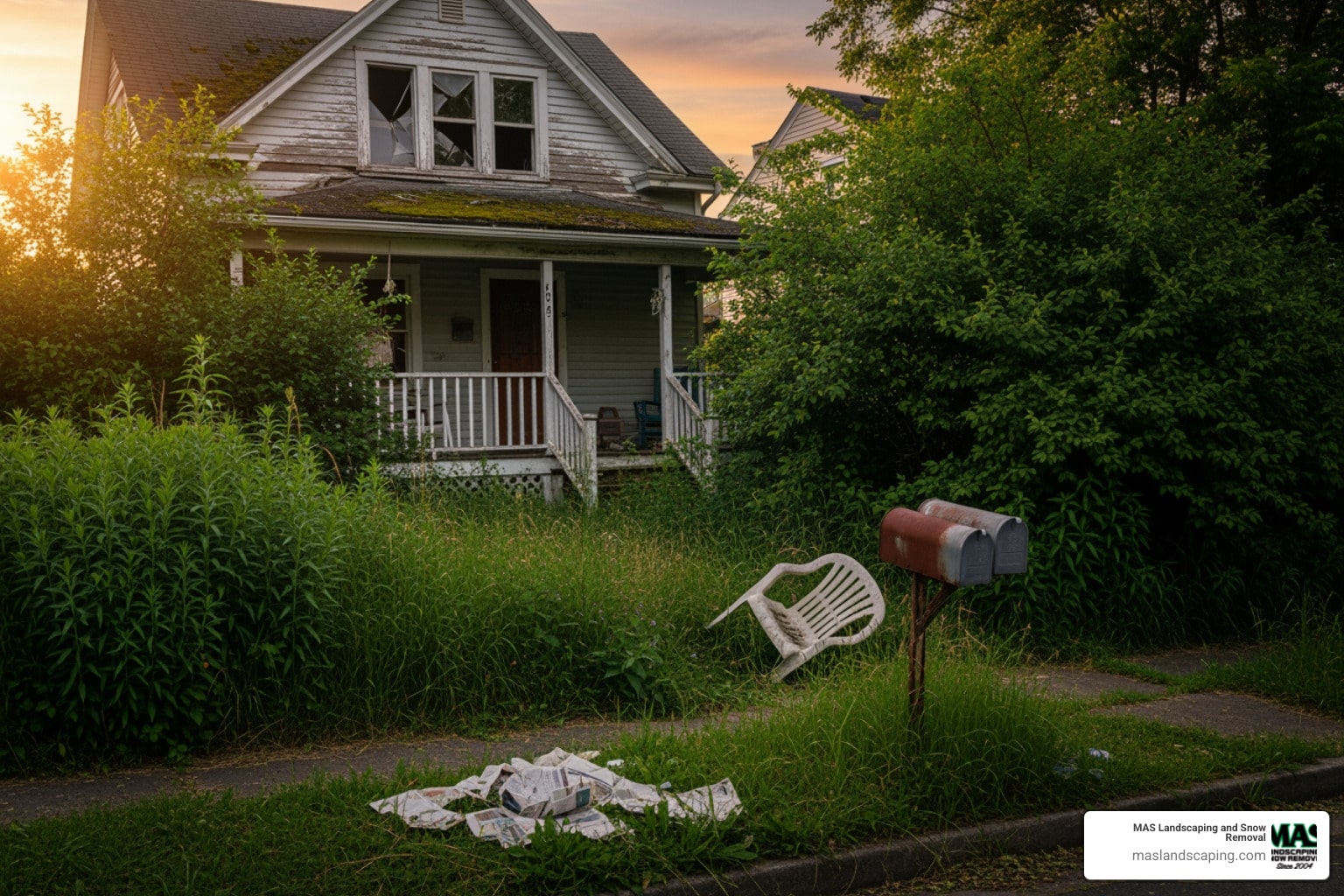
An overgrown yard is more than an aesthetic issue; it’s a silent alarm for health, safety, and financial risks. What seems like a wild landscape can become a breeding ground for pests, a haven for hazards, and a drain on your property’s value. The consequences of neglect are significant, from attracting rodents and mosquitoes to creating trip hazards and increasing fire risk.
The Hidden Dangers and Risks
The most immediate concerns are safety and health. Tall grass and dense vegetation create ideal hiding spots for vermin like rats and mice, which can then enter your home. Hidden standing water becomes a breeding ground for mosquitoes. The landscape itself becomes dangerous, with concealed debris and uneven ground causing trip hazards. For DIY enthusiasts, the risks are even higher; according to scientific research on lawn mower injuries, tackling severely overgrown grass leads to thousands of accidents annually.
In our region, dense brush and dry foliage also pose a significant fire risk, threatening the entire community. Unchecked roots can damage foundations and utility lines, leading to costly repairs. Finally, neglected properties often draw community complaints and municipal fines.
The Surprising Benefits of a Tidy Landscape
The benefits of a well-maintained yard are just as compelling as the dangers of a neglected one. A clean landscape significantly contributes to your well-being and property value.
A well-kept yard dramatically increases curb appeal and can boost property value by 15% or more, with landscaping improvements often delivering a high return on investment. It improves safety by eliminating trip hazards and reducing pest and fire risks. A tidy yard transforms your outdoor space into a usable area for relaxation and recreation, enhancing your quality of life. A healthy lawn, free from excess organic debris, gets the nutrients it needs to thrive. There’s also a deep satisfaction in turning a chaotic space into an organized, beautiful one, which reduces stress and fosters community pride. For more information on enhancing your property’s look and feel, explore our insights on More info about Landscape Design.
Your 7-Stage Roadmap for Overgrown Property Cleanup
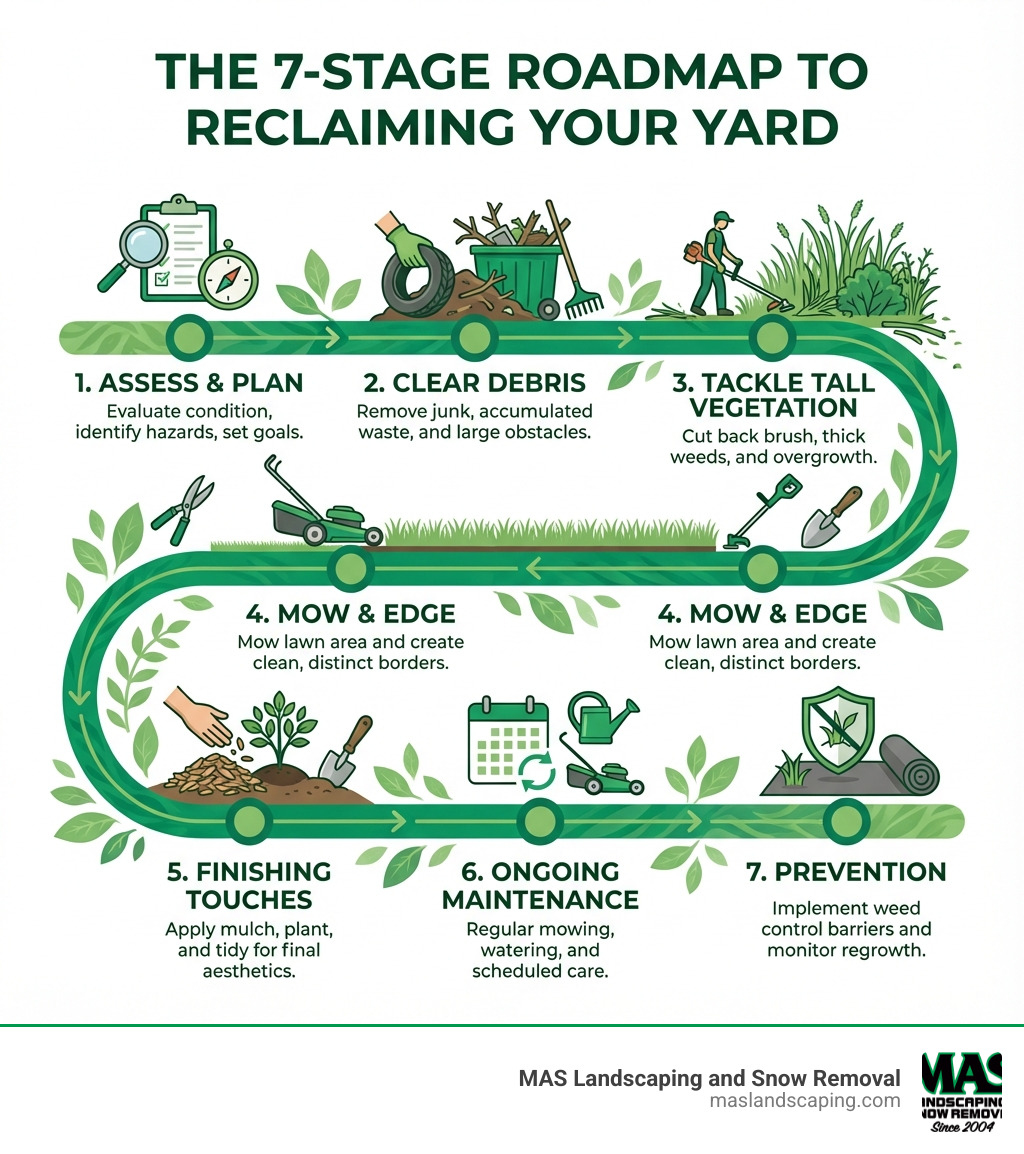
Tackling an overgrown property feels like facing a jungle, but a structured approach makes it a manageable project. We’ve broken down the process into key stages to guide you from assessment to a pristine outdoor space. Resisting the urge to do everything at once is the secret to working safely and effectively.
Stage 1: Assess, Plan, and Prepare
Before starting, survey the landscape. This initial assessment is crucial for a successful Overgrown Property Cleanup. Walk the property to identify hazards like hidden holes, wasp nests, or sharp objects. Map out cleanup zones, prioritizing the most visible or hazardous areas, and take “before” photos. Also, check for local permits that may be required for major tree or brush clearing in communities like Everett, Lynnfield, or Malden. This planning stage helps you anticipate challenges and gather resources. For guidance on large-scale projects, visit our page on More info about Land Cleanup Services.
Stage 2: Clear Debris and Obstacles
With a plan, the next step is to clear all non-organic debris and obstacles. Haul away old furniture, broken planters, trash, and any other junk. This step is critical for safety, as it prevents equipment damage and reduces injury risk from hitting hidden objects with a blade. Move any items you wish to keep to a safe area to create a clear work zone.
Stage 3: Tackle the Tallest Vegetation
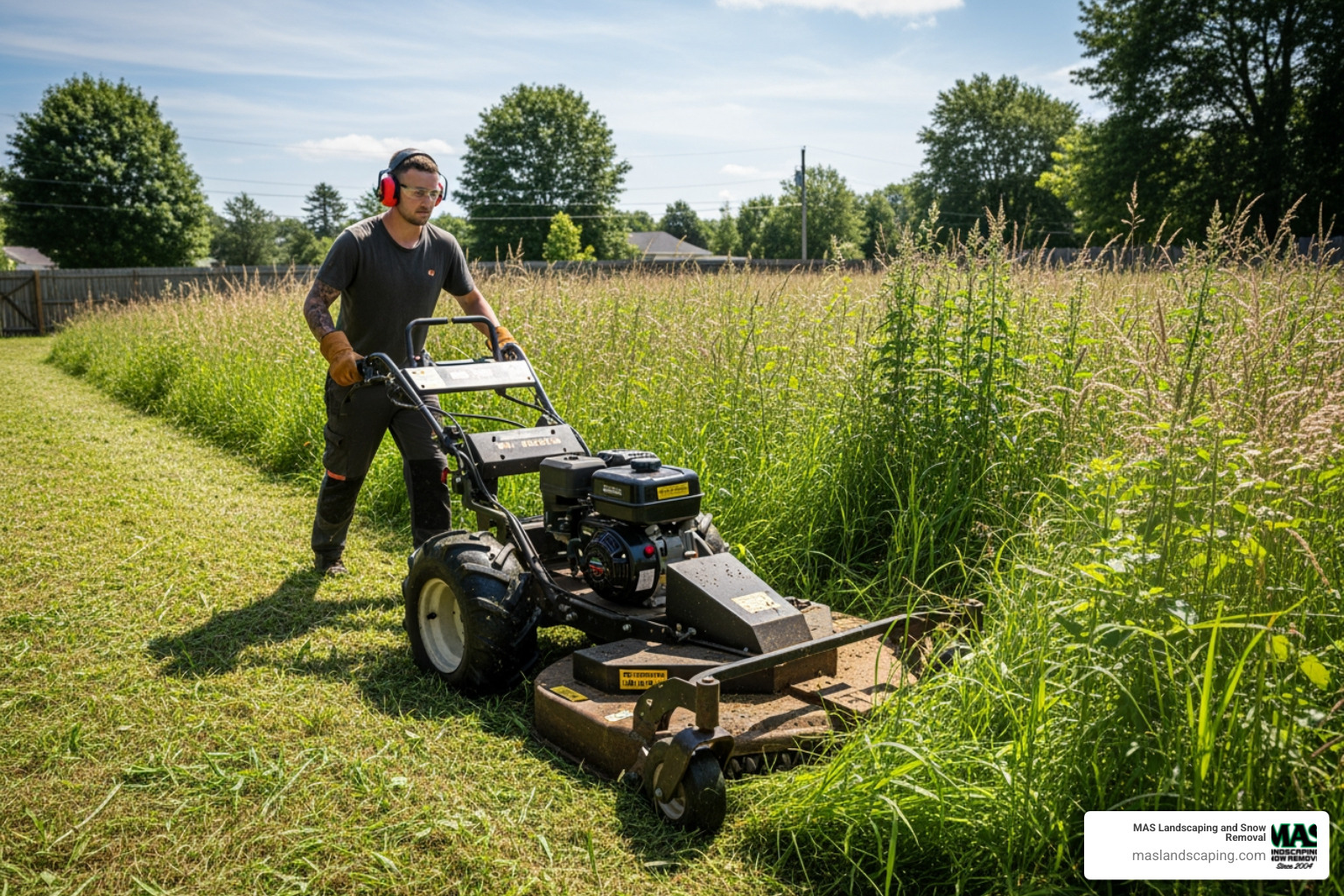
Now, confront the overgrowth. This stage involves cutting back the thickest and most unruly vegetation. Do not use a regular lawnmower on severely overgrown grass. Instead, use heavy-duty tools like a brush mower or heavy-duty string trimmer for dense brush and tall grass. For overgrown trees and shrubs, use chainsaws, pole saws, and hedge trimmers. Proper pruning promotes plant health and growth. If you’re going the DIY route, be aware of equipment rental costs. For extensive brush removal in areas like Saugus or Medford, our team has the equipment and expertise to handle it efficiently. Learn more at More info about Brush Removal in My Area.
Stage 4: Mow, Edge, and Define
Once the major overgrowth is gone, it’s time to bring order. Refine grassy areas and establish clear boundaries. When mowing, start with the mower deck on its highest setting, making several passes and gradually lowering the blade to avoid stressing the grass. Never cut more than one-third of the grass height at once. Afterward, use an edger to define lines along walkways, driveways, and garden beds for a crisp, professional look. This step transforms the raw cleanup into a manicured landscape. For expert lawn care, check out our More info about Lawn Maintenance services.
Stage 5: The Finishing Touches
The final details make all the difference. This stage nurtures your reclaimed landscape for future health. Focus on weed suppression by hand-pulling or applying targeted treatments. Next, apply a 2-4 inch layer of fresh mulch around trees and in garden beds to suppress weeds, retain moisture, and add nutrients. Finally, reseed any bare spots in your lawn to establish healthy grass coverage and prevent weeds from returning. For your mulching needs, we offer a comprehensive More info about Mulching Service, and for a lush new lawn, explore our More info about New Lawn Installation Near Me services.
The Cleanup Arsenal: DIY vs. Professional Services
Deciding whether to tackle an Overgrown Property Cleanup yourself or hire professionals is a common dilemma. The best choice depends on the scale of the overgrowth, your available time, budget, and comfort with physical labor.
| Factor | DIY Cleanup | Professional Cleanup |
|---|---|---|
| Cost | Lower upfront costs (tools/rentals), but potential for hidden costs (injuries, wasted time, improper disposal) | Higher upfront costs, but often more cost-effective long-term due to efficiency, expertise, and proper equipment |
| Time | Can take weeks or months, especially for severely neglected properties or large areas | Completed much faster, often in days, due to experienced crews and specialized equipment |
| Effort | Highly physically demanding, risk of back injuries and exhaustion | Minimal physical effort required from property owner, tasks handled by trained and equipped personnel |
| Equipment | Requires purchasing or renting specialized, heavy-duty tools (chainsaws, brush mowers, stump grinders) | Professionals arrive with all necessary commercial-grade tools and machinery |
| Safety | Higher risk of injury without proper training, PPE, and experience with power tools | Lower risk for property owner; professionals are trained in safety protocols and have insurance |
| Expertise | Requires research into plant identification, disposal methods, and local regulations | Professionals offer expertise in plant health, invasive species removal, and efficient cleanup strategies |
| Disposal | Can be a logistical challenge (hauling, municipal limits, dump fees) | Professionals typically handle all debris removal and proper disposal |
A typical residential yard neglected for one season might take a homeowner 2-3 weekends of DIY work, while years of neglect could stretch into months. Professional crews in areas like Chelsea or Revere can often complete the same job in a few days.
Essential Tools for a DIY Overgrown Property Cleanup
If you go the DIY route, having the right tools is paramount. Forget your standard lawnmower; you’ll need more robust equipment.
Essential Tools:
- Heavy-Duty String Trimmer/Brush Cutter: For tall grass, weeds, and light brush.
- Brush Mower: For thick, woody brush and dense overgrowth.
- Chainsaw: For larger branches and small trees.
- Loppers and Pruning Saws: For smaller branches and shrubs.
- Hedge Trimmers: For shaping hedges.
- Rakes, Shovel, and Wheelbarrow: For gathering and transporting debris.
- Stump Grinder: (Rental) for removing tree stumps.
Safety Gear is Non-Negotiable:
- Safety Glasses or Face Shield
- Hearing Protection
- Heavy-Duty Gloves
- Long Pants and Long-Sleeved Shirt
- Sturdy, Closed-Toe Boots
Always read the owner’s manual before operating power tools.
When to Call the Professionals
DIY can be satisfying, but calling experts for Overgrown Property Cleanup is often the smarter, safer choice. Consider professional help if:
- The Job is Too Big: A severely neglected or large property often requires specialized equipment and a large crew.
- You Lack Time or Physical Ability: Cleanup is labor-intensive. Professionals save you immense effort and potential injury.
- You Lack Proper Tools or Expertise: Renting heavy-duty equipment is costly. Professionals have the right tools and know-how.
- There Are Significant Safety Concerns: Hidden hazards, large tree removal, or aggressive invasive species are best left to trained and insured experts with the right equipment, like our More info about Bobcat Services.
- You Need Invasive Species Removed: Our team, serving areas like Malden and Melrose, can identify and effectively eradicate stubborn invasive plants.
If the job requires more time, effort, or knowledge than you have, our professional More info about Property Cleanup Services are here to help.
Decoding the Dollars and Deadlines: Costs, Laws, and Timing
A successful Overgrown Property Cleanup requires understanding the financial investment, local regulations, and strategic timing.
The Financial Side of Overgrown Property Cleanup
Costs vary widely based on property size, severity of overgrowth, and whether you choose DIY or professional services. Please note that the following are average costs based on internet data and not actual costs for MAS Landscaping.
- Professional Services: Costs can range from $400 to $2,000 for a typical yard, but may exceed $6,000 for severely neglected or large properties. Hourly rates often fall between $50 and $150 per worker.
- DIY Costs: Factoring in equipment rentals (e.g., brush mowers at $100-$300/day) and debris removal fees ($40-$300+) can add up quickly.
- Debris Removal: Disposing of cleared vegetation is an additional cost, which can be significant for large volumes of waste.
While DIY seems cheaper, professional services offer efficiency, safety, and a guaranteed outcome. For a clearer cost picture for your property in Revere or Lynnfield, learn more about our More info about Yard Clean Up Service Cost.
Local Laws and Seasonal Strategies
Before starting, check local laws in your town (e.g., Saugus, Chelsea, Malden). Many municipalities have codes on grass height (often around 12 inches) and debris accumulation. Neglecting these can lead to fines or the town performing the cleanup and billing you. In areas prone to dry spells, creating a ‘defensible space‘ by managing vegetation around your home is a sound practice to reduce fire risk.
Seasonal Timing:
The best times for cleanup are spring and fall.
- Spring Cleanup: Ideal for removing winter debris and preparing for new growth. Milder temperatures make the work more comfortable. Spring cleanups for average properties typically range from $125 to $400. Explore our More info about Spring Yard Cleanups.
- Fall Cleanup: Perfect for clearing leaves and pruning as plants enter dormancy. This prevents pests and lawn suffocation over winter. Fall cleanups often range from $150 to $500. Learn more about our More info about Fall Clean Up Service.
Cleaning during these seasons aligns with natural plant cycles, making the work more effective.
Keeping the Wild at Bay: A Guide to Long-Term Maintenance

Completing an Overgrown Property Cleanup is a significant achievement, but it’s just the first step in enjoying a beautiful and functional outdoor space. The secret to avoiding another “overgrown crisis” is surprisingly simple: consistent, manageable maintenance. Think of it as an insurance policy against future major overhauls.
Creating a Sustainable Maintenance Plan
A sustainable maintenance plan ensures your yard stays healthy, attractive, and manageable year-round. It’s about proactive care rather than reactive crisis management.
Key components of an effective plan include:
- Regular Mowing: Consistent mowing, typically once a week during the growing season, keeps grass at an optimal height, promoting health and preventing weeds.
- Seasonal Pruning: Prune shrubs and trees seasonally to maintain their shape, promote healthy growth, and remove dead or diseased branches.
- Weed Control: Implement a regular weed control strategy, whether through manual pulling, targeted treatments, or pre-emergent applications.
- Fertilization Schedule: A consistent fertilization schedule, often in spring (around April/Memorial Day), summer (around July 4th), and fall (after Labor Day and near the final mow), provides your lawn with essential nutrients.
- Annual Mulch Refresh: Refreshing mulch annually or bi-annually helps suppress weeds, retain moisture, and maintain a neat appearance in garden beds.
By following a routine, you’ll find that individual tasks are much less daunting than a full-scale cleanup. Our More info about Landscape Maintenance Services can help you create and execute such a plan for your property in Medford, Melrose, or any of our service areas.
Preventing Future Overgrowth
Prevention is always easier than a cure. After the intensive effort of an Overgrown Property Cleanup, adopting preventative measures will save you time, money, and frustration in the long run.
Here are some preventative tips:
- Choose Low-Maintenance Plants: When landscaping, select native plants or species known for their low maintenance requirements. They are often better adapted to the local climate and require less watering, pruning, and pest control.
- Install Landscape Fabric: In garden beds, installing landscape fabric beneath mulch can provide an extra barrier against weed growth.
- Create Hardscape Barriers: Consider incorporating hardscaping elements like paver borders or retaining walls around garden beds and property lines. These create clear, defined edges that prevent grass and weeds from encroaching. Explore our More info about Hardscaping Services for ideas.
- Address Small Problems Quickly: Don’t let small patches of weeds or a few overgrown branches become a larger issue. Early intervention is key to preventing minor problems from escalating into another major cleanup project.
- Mulch Barriers: Maintain mulch barriers around trees and in garden beds to suppress weeds, retain moisture, and create clean, defined borders.
Consistent upkeep and smart landscaping choices are your best defense against future overgrowth.
Frequently Asked Questions about Overgrown Property Cleanup
How much time does an average cleanup take?
The time required for an Overgrown Property Cleanup varies significantly. A typical residential yard that has been neglected for just one growing season might take a homeowner 2-3 weekends of intensive DIY work. However, properties with years of neglect, extensive brush, or large acreage could easily take weeks or even months for a homeowner to tackle alone. Professional crews, with their specialized equipment and experienced teams, can often complete the same job in a few days what would take a homeowner much longer. For severe cases, breaking the project into phases can also help manage the timeline.
Can I dispose of yard waste in my regular trash bin?
Generally, no, you cannot. Most municipal trash services, including those in our service areas like Saugus and Everett, have strict rules against placing yard waste in regular trash bins. The volume of debris from a significant cleanup project usually far exceeds what regular collection can handle. You’ll typically need to use designated yard waste bags, schedule special municipal pickups, or for large amounts of debris, rent a yard waste dumpster or hire a professional debris removal service. Always check with your local waste management provider for specific guidelines and schedules.
What is the best season to tackle an overgrown yard?
The best seasons to tackle an Overgrown Property Cleanup are spring and fall. These seasons offer milder temperatures, making the strenuous work more comfortable and less prone to heat exhaustion. Spring cleanup, typically from March to May, focuses on removing winter debris and preparing the landscape for vigorous summer growth. Fall cleanup, from September to November, involves clearing fallen leaves, pruning, and preparing plants for winter dormancy. Both seasons align with the natural growth and dormancy cycles of plants, making it easier to manage vegetation and promote long-term health.
Conclusion
Reclaiming an outdoor space from years of neglect can feel like an overwhelming task, but as we’ve explored, with a strategic approach, the right tools, and a little help, any property can be transformed. An Overgrown Property Cleanup is more than just aesthetics; it’s an investment in the health, safety, and value of your home. From mitigating pest infestations and fire risks to boosting curb appeal and creating a usable, beautiful environment, the benefits are immense.
Remember the importance of safety throughout the process, whether you’re tackling it yourself or bringing in professionals. Planning, proper equipment, and a commitment to ongoing maintenance are your allies in keeping the wild at bay.
At MAS Landscaping and Snow Removal, we understand the unique challenges of properties in Everett, Lynnfield, Malden, Melrose, Medford, Revere, Saugus, Chelsea, and other surrounding Massachusetts communities. Our commitment to professionalism, personalized service, and local expertise means we’re equipped to handle even the most daunting cleanup projects, creating functional and beautiful outdoor spaces for our clients.
Ready to start your change? Take the first step toward reclaiming your yard with our expert Overgrown Property Cleanup services.