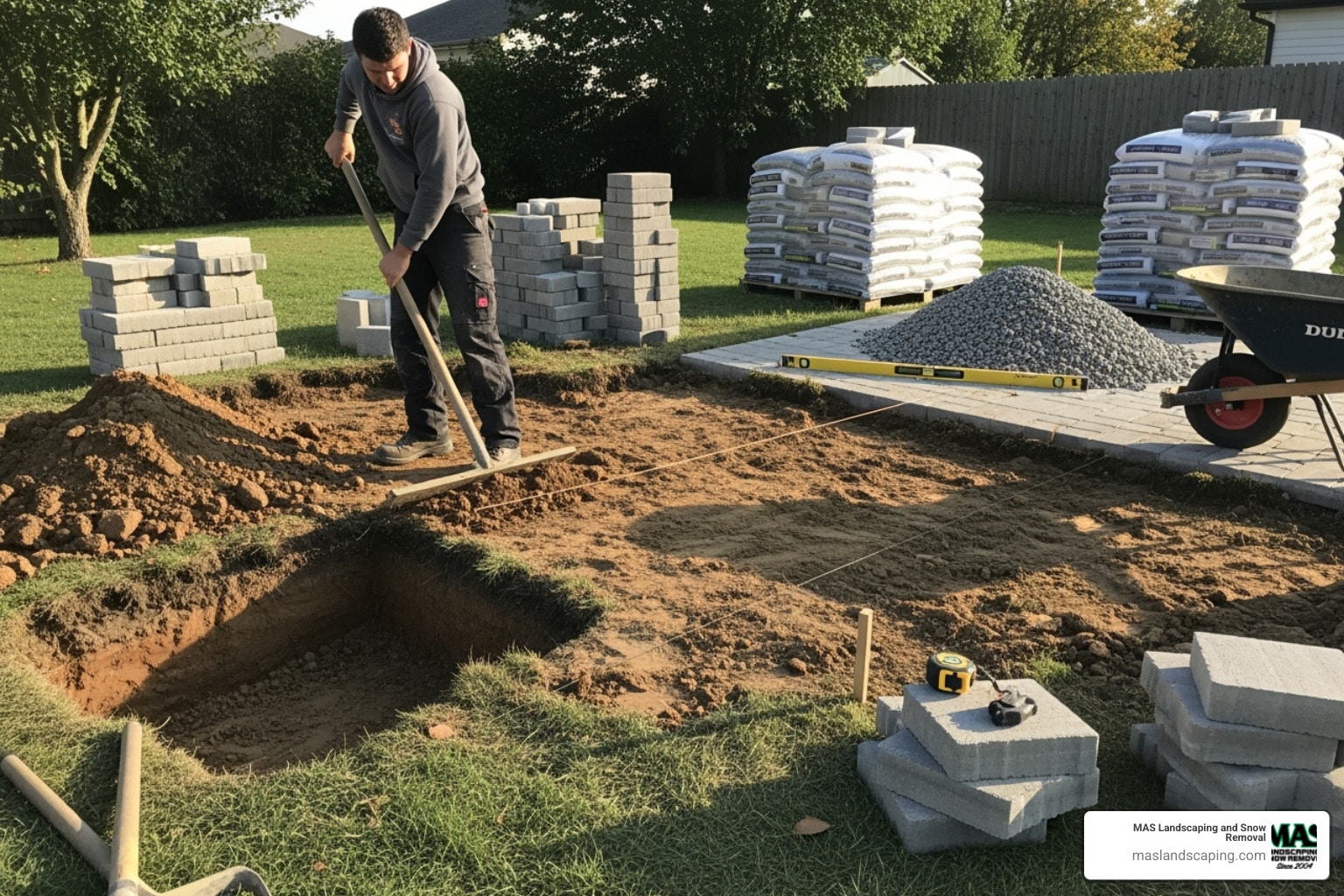



Patio Installations: Your 2025 Dream Guide
Why Patio Installation Has Homeowners Torn Between DIY and Professional Help
Patio installations are one of those home improvement projects that looks deceptively simple but can quickly become overwhelming. Here’s what you need to know:
Essential Steps for Patio Installation:
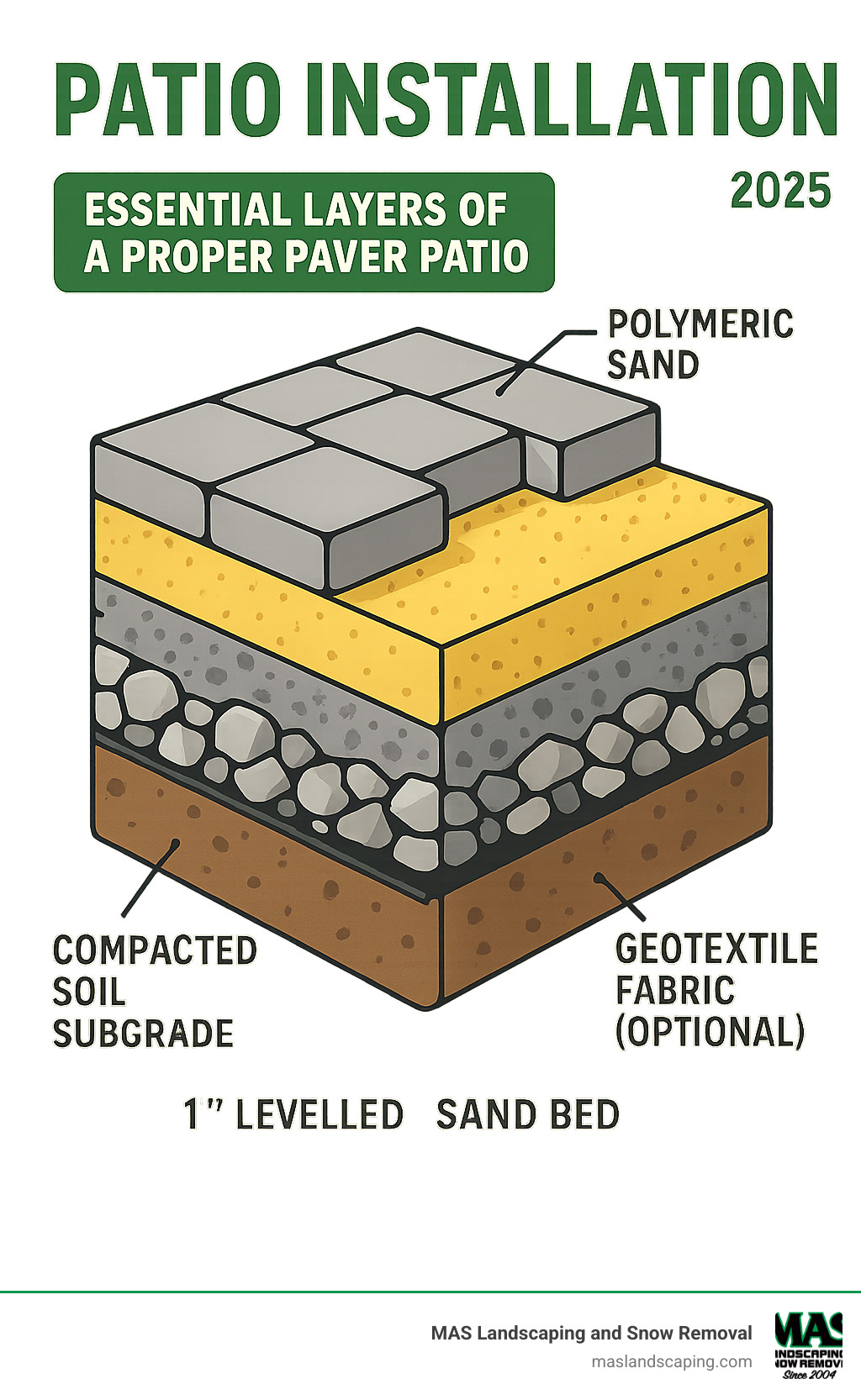
- Plan and design – Choose materials, calculate quantities, check permits
- Excavate – Remove 8-10 inches of soil, establish proper slope
- Build foundation – Add 4-6 inches compacted gravel base
- Add sand layer – Level 1-inch sand bed using screed rails
- Install pavers – Lay from corner, cut as needed, secure edges
- Finish – Fill joints with polymeric sand, compact final surface
The reality? A typical 20×20 foot patio involves moving over 20,000 pounds of material and requires about 50 hours of work over several days. As one DIYer finded, “I literally broke my back doing my patio” – a reminder that this project demands serious physical effort and planning.
The big question: Is this a weekend warrior’s dream project or a recipe for disaster?
The answer depends on your skills, available time, and tolerance for backbreaking work. While DIY can save thousands in labor costs, professional installation ensures proper drainage, eliminates costly mistakes, and comes with warranties.
Most patios cost between $10-40 per square foot installed, with materials like concrete pavers ($8-25/sq ft) offering a middle ground between budget concrete ($2-10/sq ft) and premium natural stone ($15-50/sq ft). Note: All prices are national averages based on internet data and may not reflect actual costs for MAS Landscaping. Prices can vary significantly based on location, material availability, and project complexity.
Handy patio installation terms:
Planning Your Patio: The Blueprint for Success
This section covers the critical first steps before any digging begins, from choosing materials and calculating quantities to understanding costs and regulations. Proper planning is the most important part of any patio installation.
Choosing the Right Pavers and Design
Before you pick up a shovel, take time to dream about your perfect outdoor space. How will you use this patio? Maybe you’re picturing quiet morning coffees with a good book, or hosting big family barbecues that go late into the evening. Perhaps you want a cozy fire pit area where friends gather on cool nights.
Your vision matters because it shapes everything else. A good rule of thumb is 25 square feet of patio space per person in your household. And make sure at least one direction extends 16 feet or more – this gives you room to actually use the space instead of just looking at it.
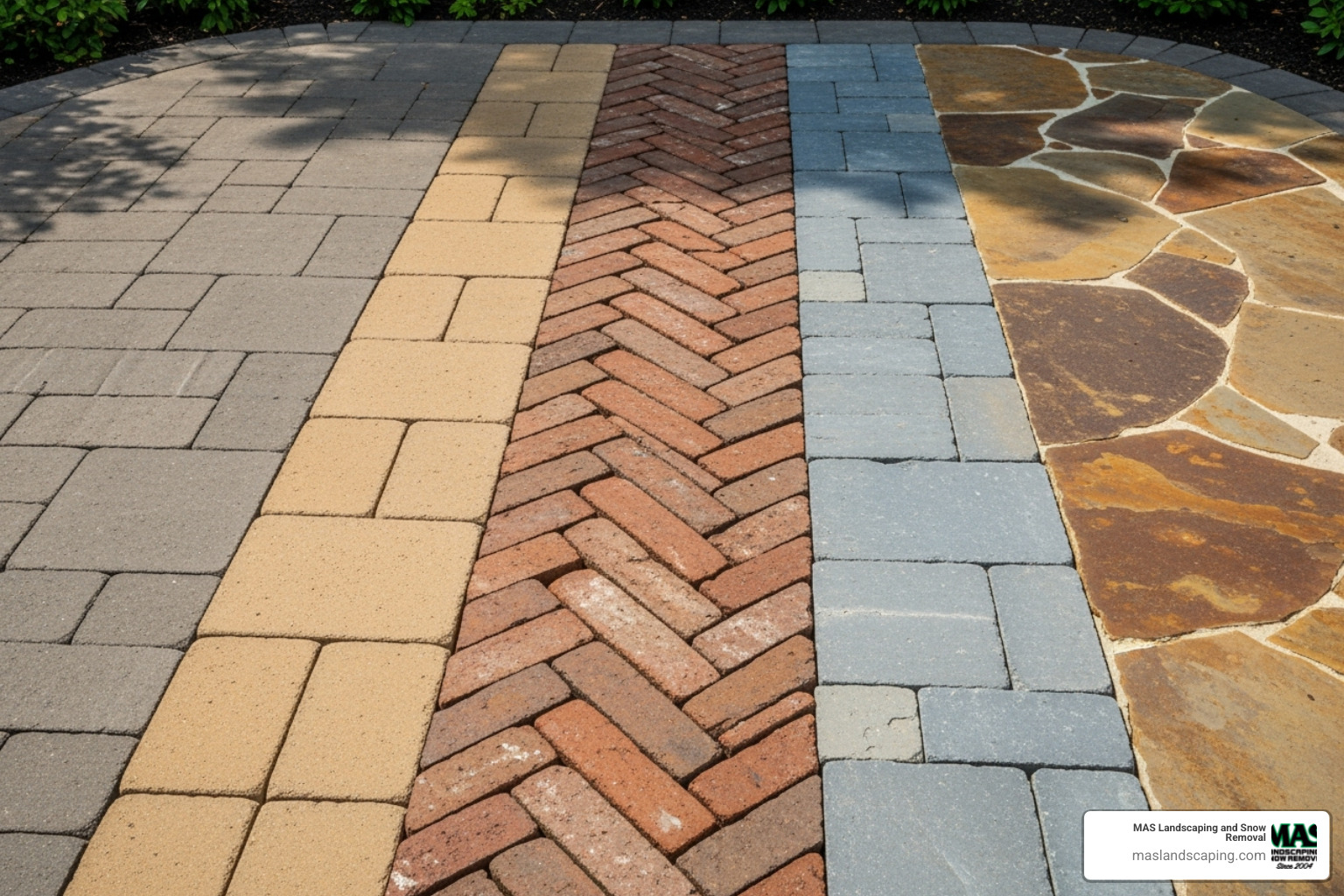
Now comes the fun part – choosing your pavers. Concrete pavers are the most popular choice, and for good reason. They’re tough as nails, won’t break the bank, and come in more colors and styles than you can shake a stick at. Want the look of natural stone without the price tag? Concrete pavers can fool even your pickiest neighbor.
Brick pavers bring that classic, timeless charm that never goes out of style. They age beautifully and give your patio a warm, welcoming feel that makes everyone want to linger a little longer.
If you’re feeling fancy, natural stone pavers like bluestone, flagstone, or sandstone offer stunning natural beauty. Each piece is unique, just like snowflakes, but prettier and much more durable. Just know that this premium look comes with a premium price.
Don’t forget about thickness – it really matters. If you’re planning to put a hot tub, heavy grill, or any other weighty items on your patio, you’ll need thicker pavers to handle the load without cracking.
For design inspiration that’ll get your creative juices flowing, check out Patio Designs With Pavers and Hardscape Patio Designs. The pattern you choose – whether it’s simple running bond, neat herringbone, or intricate pinwheel – can completely transform the character of your space.
Calculating Your Materials: How Much Do You Really Need?
Time for some math (don’t worry, it’s not too painful). Getting your material calculations right saves you from those dreaded mid-project trips to the store – or worse, running out of pavers and finding your style has been discontinued.
Start with square footage. Measure your patio’s width and length, then multiply. A 16 by 18-foot patio gives you 288 square feet. Write this number down – you’ll use it a lot.
For paver quantity, you need to know your paver’s coverage rate. Standard 4×8 inch brick pavers need about 4.5 pavers per square foot. So that 288 square foot patio needs roughly 1,296 pavers. But here’s the golden rule: always add 5-10% extra for cuts, mistakes, and future repairs. Trust us, you’ll thank yourself later. If your design has lots of curves or intricate patterns, go with the full 10% buffer.
The gravel base is your patio’s foundation – literally. You need 4 to 6 inches of compacted gravel. To calculate cubic feet, multiply your square footage by 1/3 for a 4-inch base. Our 288 square foot example needs about 96 cubic feet of gravel.
Your sand bed provides the smooth, level surface your pavers will sit on. This 1-inch layer typically requires about half the volume of your gravel. So you’d need roughly 48 cubic feet of sand.
Don’t forget edge restraints – they keep your pavers from wandering off over time. Measure your patio’s perimeter to know how much edging material you need. A 16×18 foot patio has 68 feet of perimeter.
Polymeric sand fills the joints between pavers and locks everything in place while keeping weeds out. You’ll need enough to cover your entire patio surface, with the exact amount depending on your joint width.
Here’s what you’ll need for your patio installation project:
- Shovel and spade, measuring tape, spray paint for marking
- Stakes and string line, levels (both long and short)
- Plate compactor (rentable), wheelbarrow, rake
- Screed board, rubber mallet, masonry saw (rentable)
- Safety glasses and ear protection, work gloves
- Your chosen pavers, gravel base material, paver sand
- Edge restraints, polymeric sand, geotextile fabric (recommended)
Budgeting and Regulations: What Will Your Patio Installation Cost?
Let’s talk money – because nobody likes surprises when it comes to their budget. Patio installation costs vary widely depending on your choices and whether you roll up your sleeves or call in the pros.
DIY versus professional installation comes down to more than just money. Yes, doing it yourself eliminates labor costs, but 20,000 pounds of material we mentioned earlier? That’s a lot of heavy lifting, and your back will definitely remind you about it the next day.
Based on internet data, material costs can range dramatically. Concrete patios typically run $2 to $30 per square foot for materials, while brick patios range from $10 to $90 per square foot. Natural stone can cost anywhere from $8 to $150 per square foot, and gravel patios are the budget-friendly option at $1 to $12 per square foot. Note: All prices are national averages based on internet data and may not reflect actual costs for MAS Landscaping. Prices can vary significantly based on location, material availability, and project complexity.
Tool rental fees add up quickly if you’re going the DIY route. That plate compactor and masonry saw aren’t cheap to rent, especially for multi-day projects.
Permits and regulations might seem like a hassle, but they’re important. Many areas require permits for patio installation, especially larger projects. Permit fees typically range from $50 to $300. Your HOA might have rules about materials, colors, or placement, so check before you start planning.
Local building codes often specify things like drainage requirements and setbacks from property lines. It’s worth a phone call to your local building department – much cheaper than having to redo work later.
For cost insights that might apply to your project, take a look at our Cost of Paver Sidewalk information, as many pricing principles overlap.
| Factor | DIY Patio Installation | Professional Installation |
|---|---|---|
| Cost | Materials only, plus tool rental | Higher upfront cost, but includes labor |
| Time | Weekends and evenings for weeks | Usually completed in days |
| Labor | All on you – expect sore muscles | Experienced crew handles everything |
| Quality | Depends on your skill level | Professional results with warranties |
| Equipment | Rent or buy specialized tools | Pros bring professional-grade equipment |
| Permits | You handle all paperwork | Often included in service |
The choice between DIY and professional installation isn’t just about money – it’s about your time, physical capability, and peace of mind. Both paths can lead to a beautiful patio you’ll enjoy for years to come.
Planning Your Patio: The Blueprint for Success
This section covers the critical first steps before any digging begins, from choosing materials and calculating quantities to understanding costs and regulations. Proper planning is the most important part of any patio installation.
Choosing the Right Pavers and Design
The first step in any successful patio installation is envisioning your dream outdoor living space. Consider how you’ll use the patio – for quiet morning coffees, large family gatherings, or perhaps a cozy fire pit area? Your intended use will dictate the size, shape, and features of your patio.
We recommend sketching a rough draft of your design, noting desired furniture placement and traffic flow. A good rule of thumb is to allow at least 25 square feet of patio space per household member, and ensure it extends at least 16 feet in one direction for optimal functionality. It’s also wise to consider sight lines from your home’s windows and doors when planning your patio’s location, ensuring it complements your indoor views.
Next, you’ll dig into the exciting world of paver materials. The choice of pavers significantly impacts the look, durability, and cost of your patio.
Common options include:
- Concrete Pavers: These are the most popular choice due to their versatility, durability, and cost-effectiveness. Manufactured under high pressure, they offer incredible strength and come in a vast array of colors, shapes, and textures, allowing you to mimic the look of more expensive materials like natural stone or brick. Their interlocking design allows for flexibility, accommodating ground movement without cracking, making them easy to repair if a single paver is damaged.
- Brick Pavers: For a classic, timeless look, brick pavers are an excellent choice. They offer a warm aesthetic and exceptional durability.
- Natural Stone Pavers: Materials like bluestone, flagstone, and sandstone offer best natural beauty and inherent variations. They are highly durable but often come at a higher material cost and typically require more skilled installation.
When selecting pavers, also consider their thickness. Thicker paving stones are essential for areas that will bear heavy loads, such as hot tubs or large grills, ensuring longevity and stability. For design inspiration, explore Patio Designs With Pavers and Hardscape Patio Designs. Don’t forget to think about paver patterns – from simple running bond to more intricate herringbone or pinwheel designs, the pattern can add significant character to your patio.
Calculating Your Materials: How Much Do You Really Need?
Once you have your design and paver choice, it’s time to crunch some numbers. Accurate material calculation is crucial to avoid costly delays or overspending.
- Calculate Square Footage: Measure the width and length of your planned patio area and multiply them to get the total square footage. For example, a 16 by 18-foot patio is 288 square feet.
- Paver Quantity: To determine how many pavers you’ll need, divide the total square footage by the coverage rate of your chosen paver. For average 4×8 inch brick pavers, you’ll need approximately 4.5 bricks per square foot. So, a 288 sq ft patio would require about 1,296 bricks. Always add 5-10% extra pavers to your order to account for cuts, waste, and potential future repairs. For complex designs with many curves, half pavers, or borders, opt for the higher 10% buffer.
- Gravel Base Calculation: The gravel base is the backbone of your patio, providing stability and drainage. We recommend a compacted gravel base that is 4 to 6 inches deep. To calculate the cubic feet of gravel needed for a 4-inch compacted base, multiply your patio’s square footage by 1/3. For a 288 sq ft patio, this means approximately 96 cubic feet of gravel.
- Sand Bed Calculation: A 1-inch sand layer provides a level bedding surface for your pavers. The amount of sand needed is typically about 1/3 the amount of gravel in cubic volume. So, for our 288 sq ft example needing 96 cubic feet of gravel, you’d need roughly 48 cubic feet of sand.
- Edge Restraints: These are vital for preventing your pavers from shifting over time. Measure the perimeter of your patio to determine the length of edging material required. For a 16×18 foot patio, the perimeter is 68 feet.
- Polymeric Sand: This special sand, used to fill the joints between pavers, locks them in place and inhibits weed growth. You’ll need enough to cover the entire surface area of your patio, considering the joint width.
Here’s a list of essential tools and materials you’ll need for your patio installation project:
- Shovel and spade
- Measuring tape
- Spray paint or marking chalk
- Stakes and string line
- Level (long and short)
- Plate compactor (rentable)
- Wheelbarrow
- Rake
- Screed board (a straight 2×4 works well)
- Rubber mallet
- Masonry saw (rentable)
- Safety glasses and ear protection
- Work gloves
- Pavers
- Gravel (crushed stone, 3/4 minus)
- Paver sand (washed, fine-grained)
- Edge restraints (plastic or metal)
- Polymeric sand
- Geotextile fabric (optional, but recommended)
Budgeting and Regulations: What Will Your Patio Installation Cost?
The cost of your patio installation can vary widely depending on size, materials, and whether you choose to DIY or hire professionals. While we can’t give you specific pricing for your project, we can provide average national costs based on internet data to help you budget.
DIY Costs vs. Professional Costs:
A significant portion of patio costs comes from labor. Doing it yourself can save you this expense, but it requires a substantial investment of your time and physical effort. As you saw in the introduction, moving 20,000 lbs of material is no joke! Professional installation includes the cost of skilled labor, specialized equipment, and often, a warranty on the work.
Average Material Costs (National Averages):
- Concrete Patios: Typically cost between $2 to $10 per square foot for materials.
- Brick Patios: Materials generally range from $10 to $30 per square foot.
- Natural Stone Patios: Material costs can range from $8 to $50 per square foot, depending on the stone type.
- Gravel Patios: The most budget-friendly, usually $1 to $4 per square foot.
Note: All prices are national averages based on internet data and may not reflect actual costs for MAS Landscaping. Prices can vary significantly based on location, material availability, and project complexity.
Tool Rental Fees:
If you’re tackling a DIY project, you’ll likely need to rent a plate compactor and possibly a masonry saw. Daily rental rates for these tools can add up, so factor this into your budget.
Permit Fees and Regulations:
Before you even break ground, it’s crucial to check local building codes and Homeowners Association (HOA) regulations. Many municipalities require permits for patio construction, especially for larger projects or those involving structural elements. Permit fees typically range from $50 to $300. HOAs often have strict rules regarding material types, patio size, and placement, so make sure your plans comply to avoid future headaches. Failure to obtain necessary permits can lead to fines or the requirement to remove the installed patio.
For more information on cost considerations, you might find our insights on Cost of Paver Sidewalk helpful, as many of the principles apply.
Here’s a quick comparison to help you weigh your options:
| Factor | DIY Patio Installation