


Paver Patio with Retaining Wall: Top 5 Stunning Designs
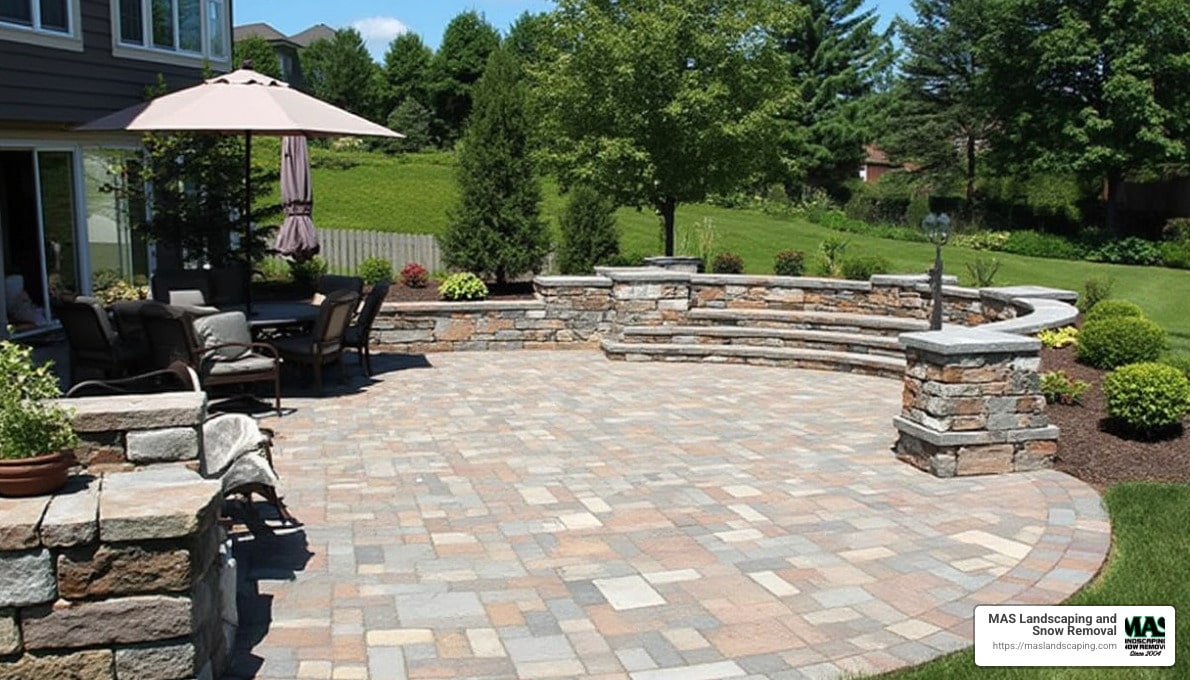
Crafting a paver patio with retaining wall is an art that blends beauty with utility. If you want to lift your backyard or business exterior, this combination offers a perfect solution. Whether you’re dealing with sloped terrain or simply want to create a stunning outdoor living area, a paver patio with a retaining wall can transform your space into a functional and inviting haven.
Key benefits include:
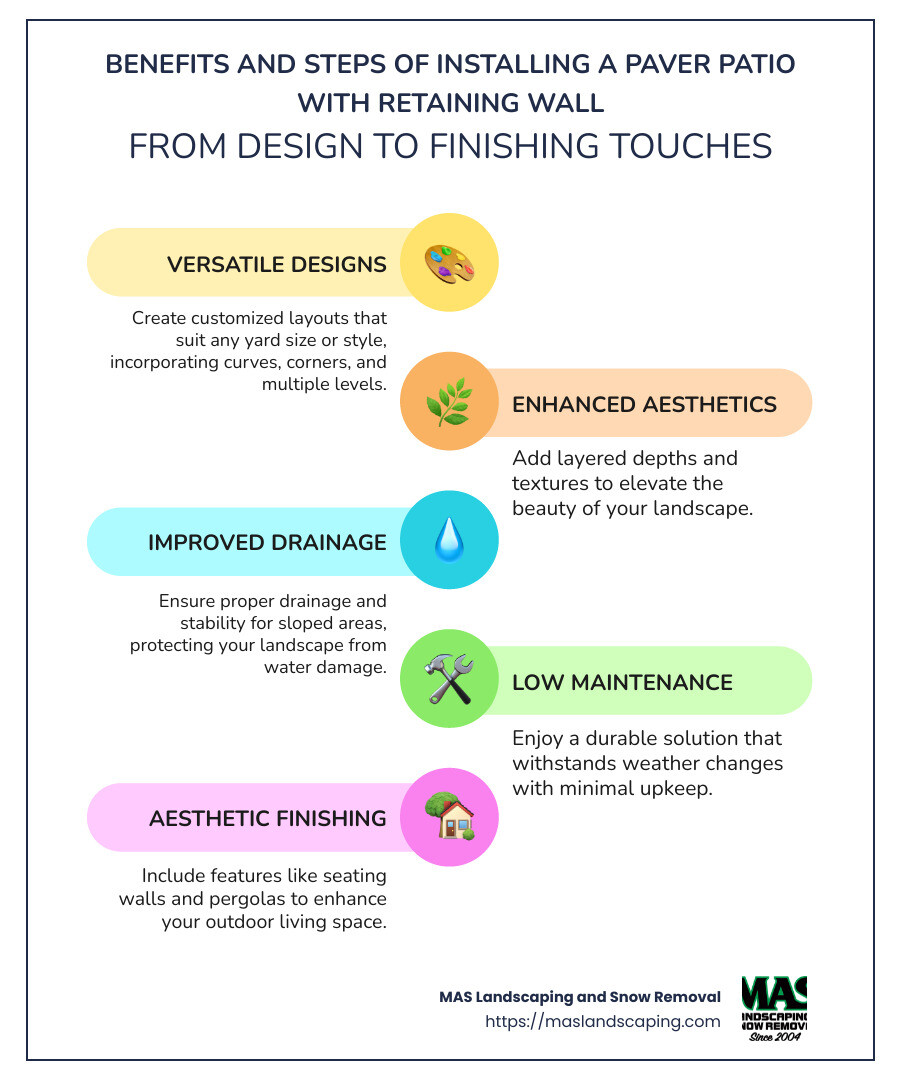
- Versatile designs that fit any yard size or style
- Improved landscape aesthetics with layered depths and textures
- Improved drainage and stability for sloped areas
- Low-maintenance and durable solutions to withstand weather changes
Imagine a space where your children can play safely, guests feel welcomed, and you can relax amidst a perfectly tiered landscape. This is what a well-crafted paver patio with retaining wall can achieve. It represents not only a boost in aesthetic appeal but also a practical improvement to your outdoor living space.
Handy paver patio with retaining wall terms:
– hardscape patio designs
– hardscape retaining wall
Designing Your Paver Patio with Retaining Walls
Creating a paver patio with retaining wall starts with a well-thought-out design. Begin by sketching your vision. Think about how you want your outdoor space to look and function. Do you want smooth curves or sharp corners? Maybe you envision multiple levels for added depth and interest.
Choosing the Right Materials
Selecting the right materials is crucial for the durability and appearance of your patio. Consider using natural stone, concrete, or pavers. Each material has its unique benefits:
- Natural Stone: Offers a timeless, neat look. It’s durable but can be more expensive.
- Concrete: Versatile and cost-effective. It can be molded into various shapes and designs.
- Pavers: Available in many colors and styles. They are easy to replace if damaged.
Choose materials that complement the style of your home and fit your budget.
Planning for Drainage and Stability
Proper drainage and stability are essential to ensure your patio lasts. Here’s how to plan for these:
- Compactable Base: Use a compactable base material, like gravel or sand, to provide a solid foundation. Compact it well to prevent settling over time.
- Drainage: Install a drainage system to prevent water buildup. This could be a simple drain pipe placed at the back of the trench to guide water away from the patio.
- Frost Line: In areas like Everett, MA, and surrounding locations, consider the frost line when designing your patio. Ensure that the base extends below the frost line to prevent frost heave, which can damage your patio over time.
By focusing on these key elements, you can design a paver patio with retaining wall that not only looks great but also stands the test of time. The right design and materials, combined with proper drainage and stability, will create a beautiful and functional outdoor space for years to come.
Building the Perfect Retaining Wall
Creating a sturdy and visually appealing retaining wall for your paver patio involves careful planning and execution. This guide will walk you through the essential steps and highlight common pitfalls to avoid.
Step-by-Step Construction Guide
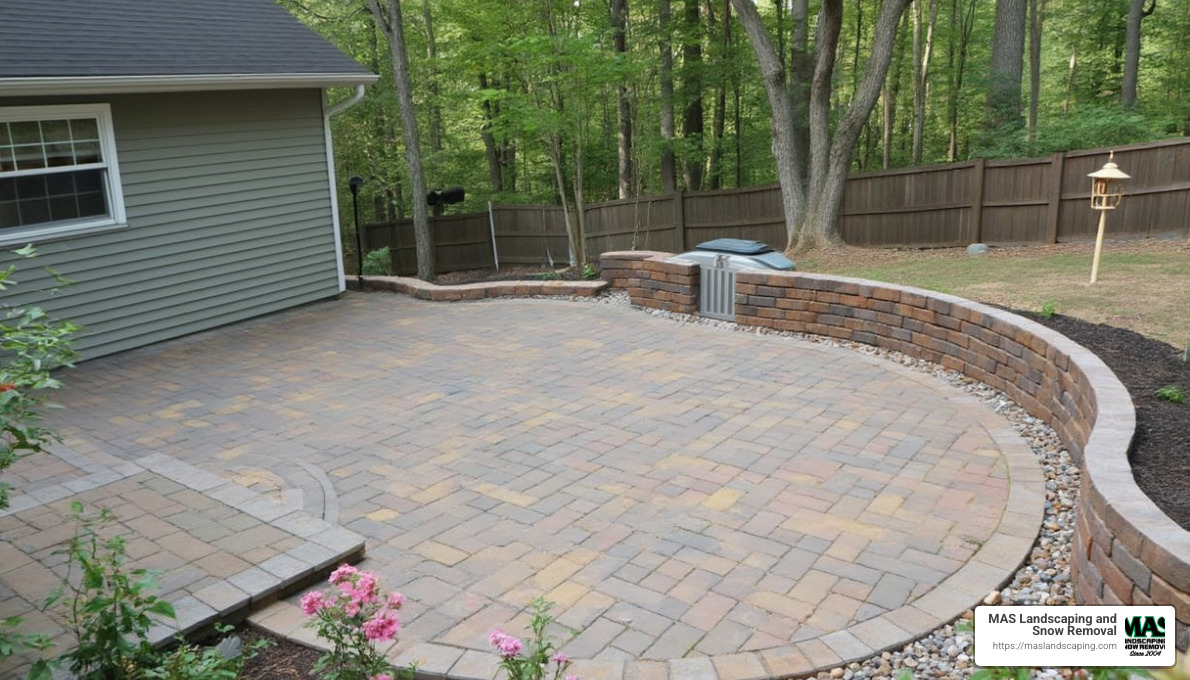
- Base Trench Preparation: Start by digging a base trench where your wall will sit. The trench should be wide enough to support the blocks and deep enough to hold a compacted base. This provides a strong foundation for your wall.
- Level Foundation: Place wall rock in the trench and rake it smooth. Compact the base thoroughly using a plate compactor. Check for level and make adjustments as needed. A level foundation is crucial to prevent the wall from becoming uneven over time.
- Laying the First Course: Begin at the lowest elevation of your site. Place the retaining wall blocks on the prepared base, ensuring each block is level and aligned correctly. Use a dead blow hammer for minor adjustments, or add a thin layer of coarse sand beneath the blocks to achieve perfect alignment.
- Backfilling and Compacting: Fill the area behind the blocks with wall rock and approved backfill materials. Compact these materials in layers no thicker than 8 inches. This step prevents shifting and ensures stability.
- Stacking Additional Courses: Before adding each new course of blocks, remove excess material from the top of the previous layer. Check for level and alignment as you go. Compact directly on top of the blocks and in the patio area to maintain stability.
Common Mistakes to Avoid
- Using the Wrong Material: Not all blocks are suitable for retaining walls. Select blocks specifically designed for retaining purposes to ensure durability and strength.
- Inadequate Footing: Skimping on the base preparation can lead to uneven settling. Ensure the base is well-compacted and level to support the weight of the wall.
- Poor Weight Distribution: Avoid placing too much weight on one part of the wall. Distribute the weight evenly by ensuring each course is laid correctly and the wall is backfilled uniformly.
By following these steps and being mindful of common mistakes, you can build a retaining wall that not only improves the look of your paver patio but also provides lasting support. This foundation will ensure your outdoor space remains both functional and beautiful for years to come.
Installing the Paver Patio Surface
Once your retaining wall is in place, it’s time to focus on the paver patio surface. This step is all about creating a smooth, durable, and attractive area for your outdoor enjoyment.
Paver Installation
Begin by preparing the base for your pavers. Compactable rock or sand is ideal for this, as it provides a stable foundation that resists settling. Compact the base thoroughly to ensure a solid surface for your pavers.
Next, lay the pavers. Start at one corner and work your way out, ensuring each paver is level. Use a rubber mallet to adjust the pavers as needed. Remember to leave a small gap between each paver for joint sand.
Flooring Options
Your choice of flooring can transform the look of your patio. Consider options like:
- Concrete Pavers: Durable and available in various shapes and colors.
- Natural Stone: Offers a timeless, neat look but can be more expensive.
- Brick: Provides a classic appearance and is highly durable.
Slope for Drainage
Proper drainage is crucial to prevent water pooling on your patio. Aim for a slope of about 1% away from your home. This subtle incline allows water to drain efficiently without being noticeable.
Finishing Touches for Aesthetic Appeal
Improve your patio with thoughtful finishing touches. The AB Courtyard Collection offers versatile options for adding seating walls or decorative elements. These features not only improve functionality but also add a touch of elegance.
Consider installing a pergola for shade and style. A pergola can define the space and make it more inviting.
By carefully selecting and installing your paver patio surface, you create a beautiful and functional outdoor area that complements your retaining wall. These thoughtful choices ensure your patio is a welcoming space for relaxation and entertainment.
Frequently Asked Questions about Paver Patios with Retaining Walls
Can you put a retaining wall on a paver?
Yes, you can place a retaining wall on a paver, but ensure proper stability and drainage. The retaining wall should sit on a compacted gravel base, not directly on the pavers. This base provides the necessary support and prevents shifting.
When building your paver patio with retaining wall, the wall’s foundation is crucial. A well-prepared base ensures the wall can handle the pressure from the soil it holds back. This setup also allows for better water drainage, reducing the risk of water damage.
Is a paver patio cheaper than concrete?
When comparing costs, a paver patio can sometimes be more expensive than a concrete slab due to the materials and labor involved. However, pavers offer several advantages that can make them a better investment.
- Materials: Pavers come in various styles, colors, and materials, which can affect the overall cost. Concrete pavers are typically more affordable than natural stone.
- Labor: Installing pavers is labor-intensive, as each piece is laid individually. This process can increase costs compared to pouring a concrete slab.
- Long-term Benefits: Pavers are more durable and easier to repair than concrete. If a paver is damaged, you can replace it without affecting the rest of the patio. Concrete, on the other hand, can crack over time, leading to more extensive repairs.
What are the common mistakes in installing retaining walls?
Building a retaining wall requires careful planning and execution. Here are some common mistakes to avoid:
- Inadequate Footing: The base of the retaining wall must be stable and well-compacted. Skimping on this step can lead to a leaning or collapsing wall.
- Improper Drainage: Water buildup behind the wall can cause it to fail. Incorporate drainage solutions like gravel backfill and drainage pipes to prevent water pressure from damaging the wall.
- Wrong Material Selection: Using the wrong type of block or stone can compromise the wall’s integrity. Choose materials designed for retaining walls, which are usually heavier and more robust.
- Neglecting Maintenance: Regular maintenance is essential to ensure the longevity of your retaining wall. Check for cracks or signs of shifting and address any drainage issues promptly.
By understanding these potential pitfalls, you can ensure your paver patio with retaining wall is both beautiful and durable. Proper planning and execution prevent costly repairs and extend the life of your outdoor space.
Conclusion
At MAS Landscaping and Snow Removal, we understand that crafting the perfect paver patio with retaining wall is more than just a project—it’s an opportunity to transform your outdoor space into a functional and beautiful haven. Our expertise in the local climates and environmental conditions of areas like Saugus, Everett, and Malden allows us to tailor each design to fit your unique landscape.
Local Expertise
Our deep knowledge of the local soil types and weather patterns ensures that every retaining wall and paver patio we build is not only aesthetically pleasing but also structurally sound. We know that the New England climate can be harsh, and our solutions are designed to withstand these conditions while maintaining their beauty and function.
Personalized Service
Every landscape is unique, and so are your needs and preferences. We take the time to listen to your ideas and work closely with you to bring your vision to life. From the initial sketch to the final installation, our personalized approach ensures that your outdoor space reflects your style and meets your functional needs.
Choosing to work with us means partnering with a team that values quality, efficiency, and customer satisfaction. We pride ourselves on delivering exceptional results that not only meet but exceed your expectations.
Ready to start your hardscaping journey? Find how we can help you create the outdoor space of your dreams by visiting our Hardscape Design Services. Let’s work together to craft a landscape that you and your family will enjoy for years to come.