

retaining wall construction near me: 7 Powerful Benefits 2025
Transform Your Sloped Property with Professional Retaining Walls
If you’re searching for retaining wall construction near me, here’s what you need to know:
- Purpose: Retaining walls hold back soil on sloped properties to prevent erosion and create usable space
- When you need one: If your yard has slopes, erosion issues, or unusable hillsides
- Professional installation includes: Site assessment, engineering plans, proper drainage systems, and quality materials
- DIY vs Professional: Walls over 3 feet typically require permits and professional engineering
- Key benefits: Increased property value, expanded usable yard space, improved drainage, and improved curb appeal
A retaining wall is much more than a functional structure—it’s an investment in your property’s future. When properly constructed, these hardscape elements can transform problematic slopes into beautiful, usable outdoor living spaces while preventing costly erosion damage.
“If your front yard hillside moves like a glacier over the sidewalk, slowly inching its way toward the glory of the gutter, it might be time for a retaining wall,” notes one landscape expert. This colorful description captures the reality many homeowners face: without proper slope management, your yard can literally slip away.
With proper design and construction, stone retaining walls can last anywhere from 50 to 200 years, making them one of the most durable landscape investments you can make. But achieving this longevity requires expertise in foundation preparation, drainage installation, and material selection.
At MAS Landscaping and Snow Removal, we understand the unique challenges of New England terrain. Whether you’re dealing with a small garden slope or a steep hillside, our team provides customized solutions that blend seamlessly with your landscape while effectively managing soil movement.
Retaining walls over three feet tall typically require permits in most municipalities, and all walls benefit from professional engineering to ensure they can withstand the significant pressure exerted by soil and water over time.
Quick look at retaining wall construction near me:
– Hardscape design services
– Garden wall designs
– Outdoor plant wall
Understanding Retaining Walls: Purpose, Benefits & When You Need One
Let’s face it—slopes can be a real headache for homeowners. That beautiful hillside might look picturesque until it starts sliding toward your patio after a heavy rain. That’s where retaining walls come in—they’re the unsung heroes of landscape architecture that do so much more than just look pretty.
At their heart, retaining walls are problem-solvers. They hold back earth that would naturally tumble downhill, standing firm against thousands of pounds of soil pressure. It’s quite remarkable when you think about it—these structures silently battle gravity day after day, year after year.
“I never realized how much usable space we were losing to our sloped backyard until we installed a retaining wall,” shares one Malden homeowner. “Now we have a flat area for the kids to play and a beautiful garden terrace above it.”
Gravity support is just the beginning of what these hardscape features offer. When properly designed, retaining walls transform problematic slopes into valuable assets. They create usable space where there was none before, turning awkward inclines into level areas perfect for patios, gardens, or play spaces.
During those notorious New England downpours, a well-constructed wall with proper drainage manages stormwater efficiently, directing water away from your foundation and preventing the soil erosion that can undermine structures over time. This protection against hydrostatic pressure—the force exerted by water-saturated soil—can save you thousands in potential foundation repairs down the road.
Many homeowners are surprised to learn that attractive hardscaping features like retaining walls can boost property value by 5-15%. It makes sense when you consider how they improve both functionality and aesthetics. Plus, they allow for creative landscape tiers that add visual interest and expand your planting options—imagine cascading flowers and shrubs creating a living mix on your property.
“A retaining wall doesn’t just stop soil from moving,” explains a veteran landscape designer. “It creates opportunities for outdoor living that simply didn’t exist before.”
Spotting the Signs You Need a Wall
Your yard might be sending SOS signals that a retaining wall is needed. Here’s what to watch for:
Do you notice soil slumping down your hillside after rain? Perhaps your garden path is slowly disappearing under encroaching dirt, or your once-straight fence is now leaning at an uncomfortable angle. These are clear indicators that the ground is on the move.
Cracking patios or walkways often signal ground movement beneath, while persistent drainage puddles suggest water isn’t flowing properly. If you see tree roots becoming exposed on a slope, that’s Mother Nature’s way of showing you that erosion is actively occurring.
A Lynnfield client told us: “We ignored the small mud slides on our hillside for years. After each storm, I’d rake the soil back up the hill. What a waste of time! Our boulder retaining wall from MAS solved the problem permanently, and now I have beautiful native plants growing between the stones.”
Key Benefits in One Glance
| Benefit | Without Retaining Wall | With Retaining Wall |
|---|---|---|
| Usable Space | Limited by slopes | Expanded flat areas for activities |
| Erosion Control | Ongoing soil loss | Stabilized terrain |
| Drainage | Water pooling, foundation risks | Directed water flow away from structures |
| Landscape Options | Limited planting areas | Multiple planting zones at different heights |
| Property Value | Standard | Improved curb appeal and functionality |
| Maintenance | Constant regrading | One-time investment with minimal upkeep |
When considering whether you need a retaining wall, think beyond the immediate problem. Yes, that sidewalk creep (where soil gradually moves onto walkways) needs addressing. But imagine also gaining a beautiful new garden bed, improving your home’s curb appeal, and creating an aesthetic upgrade that transforms your entire yard.
The best retaining walls do double duty—solving practical problems while enhancing your outdoor living experience. At MAS Landscaping, we’ve seen how these structures can revolutionize properties throughout Everett, Malden, and surrounding communities, turning challenging slopes into your landscape’s greatest asset.
Looking for retaining wall construction near me? The right wall doesn’t just solve problems—it creates possibilities you might never have imagined for your outdoor space.
Materials & Wall Types Explained
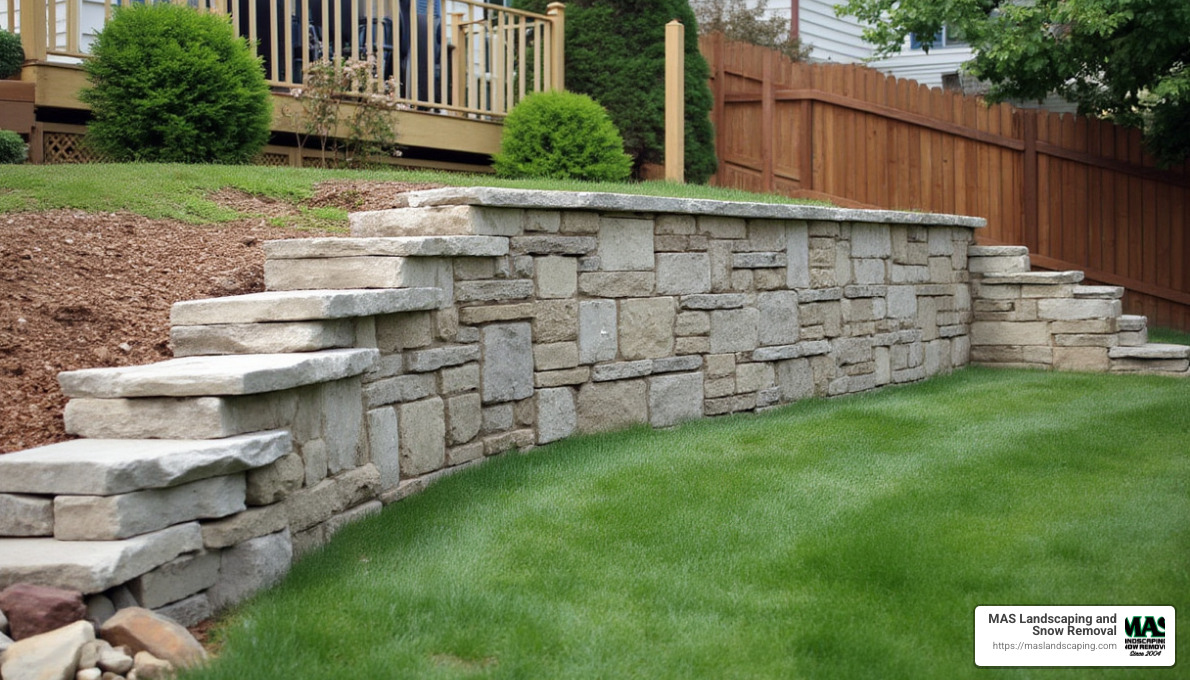
Choosing the right material for your retaining wall isn’t just about looks—it’s about finding the perfect balance between beauty, strength, and longevity for your specific property. When homeowners search for retaining wall construction near me, understanding material options is often their first step toward making an informed decision.
Think of your retaining wall material as the foundation of your project’s success. Each option brings its own personality and practical benefits to your landscape change.
Natural Stone & Boulder Walls
There’s something almost magical about a well-built natural stone wall. These structures don’t just hold back earth—they tell a story, with each stone carefully selected and placed by skilled hands.
“I’ve built walls that have outlived their original owners by decades,” says one of our veteran masons. “Natural stone offers timeless durability and character that simply can’t be manufactured.”
Natural stone walls typically last between 50-200 years when properly constructed, making them true legacy landscape features. The natural gaps between stones provide excellent drainage—a critical feature in New England’s freeze-thaw climate. While they require more skilled labor and typically cost more upfront, their century-plus lifespan makes them surprisingly economical in the long run.
For many Malden and Everett homeowners, the organic, timeless appearance of natural stone perfectly complements their historic properties and wooded lots.
Modular & Segmental Block Systems
If you’ve driven through any New England neighborhood recently, you’ve likely noticed the popularity of interlocking concrete block walls. These manufactured units have revolutionized retaining wall construction near me with their consistent sizing and built-in connection systems.
Systems like VERSA-LOK have become neighborhood staples thanks to their pin-lock technology that eliminates the need for mortar. The blocks’ uniform dimensions make them more DIY-friendly than natural stone, though professional installation is still recommended for walls over three feet tall.
“What my clients love about these systems is the range of color options,” notes our design consultant. “From earthy browns that blend with the landscape to bold charcoals that make a statement, we can match almost any home’s exterior palette.”
These systems typically cost less than natural stone while offering excellent durability and design flexibility. Their ability to form gentle curves makes them perfect for winding garden paths and naturalistic landscape designs throughout Lynnfield and surrounding communities.
Concrete—Poured or Pre-cast
When strength is your primary concern, concrete delivers best performance. For properties in Melrose and Medford with significant grade changes or walls supporting driveways, poured concrete often provides the most reliable solution.
Modern concrete walls are nothing like the plain gray slabs of yesteryear. Today’s options include a variety of textures, from stone-like surfaces to sleek contemporary finishes. Some homeowners even incorporate decorative aggregate or stamped patterns to improve visual interest.
Pre-cast concrete panels offer another option, combining the strength of concrete with faster installation. These factory-made panels arrive ready to install, reducing on-site construction time—particularly valuable during New England’s short building season.
“Concrete walls are workhorses,” explains our engineering consultant. “They can be engineered to handle virtually any load, and with proper reinforcement, they’ll stand strong for generations.”
With lifespans exceeding 75 years and minimal maintenance requirements, concrete walls offer exceptional long-term value despite their higher initial cost.
Wood & Timber (Pros & Cons)
There’s something warmly inviting about a timber retaining wall. The natural grain and rich color create a rustic charm that complements wooden homes and garden settings beautifully.
Unfortunately, this beauty comes with a significant trade-off: longevity. Even pressure-treated timber typically lasts just 5-15 years in retaining wall applications—a fraction of what stone or concrete delivers.
“EPA regulations have changed the game for timber walls,” our senior landscaper explains. “The chemicals that made old railroad tie walls last for decades are no longer permitted, so today’s timber walls require more frequent replacement.”
For smaller garden walls under four feet tall in Saugus or Chelsea properties, timber can still be appropriate, especially when budget constraints are significant. They’re also relatively DIY-friendly, making them popular for weekend warriors looking to tackle smaller projects themselves.
Just remember that timber walls require vigilant maintenance and will eventually need replacement—an important consideration when calculating their true lifetime cost.
Choosing the Right Material for Your Site
Finding your perfect match in retaining wall materials means weighing several key factors:
Budget reality is often the starting point. Natural stone typically commands premium pricing, with manufactured blocks in the middle range, and timber at the lower end. However, considering longevity dramatically changes this equation—that “affordable” timber wall might cost more in the long run when replacement is factored in.
Slope severity and load requirements should guide your material selection. Steeper slopes and walls supporting structures or driveways demand stronger materials and more substantial engineering. A trained professional can help assess your site’s specific needs.
Aesthetic compatibility with your home and existing landscape shouldn’t be overlooked. The most structurally sound wall will still disappoint if it clashes with your property’s character. Our design team carefully considers your home’s architectural style when making recommendations.
Climate considerations are particularly important in New England. Our freeze-thaw cycles can be brutal on retaining walls, making proper drainage and material selection crucial. Materials that perform beautifully in southern climates may fail prematurely in our region.
According to scientific research on drainage design, proper water management behind your wall is just as important as the material itself. At MAS Landscaping, we integrate appropriate drainage systems with every wall we build, regardless of material.
For more detailed information about hardscape options for your specific property, visit our Hardscape Retaining Walls page.
The “best” material isn’t universal—it’s the one that perfectly balances your site conditions, aesthetic preferences, budget constraints, and long-term expectations. Our team’s local expertise throughout Everett, Lynnfield, Malden and surrounding communities has given us unique insight into which solutions perform best in our challenging New England environment.
From Quote to Completion: Construction & Permitting Process
Building a retaining wall requires careful planning, proper engineering, and meticulous execution. The construction process follows a series of essential steps to ensure structural integrity and longevity.
Step-by-Step Walk-Through
When you’re searching for retaining wall construction near me, understanding the process helps you know what to expect. Think of retaining wall construction as baking a cake—skip a step, and the whole thing might collapse!
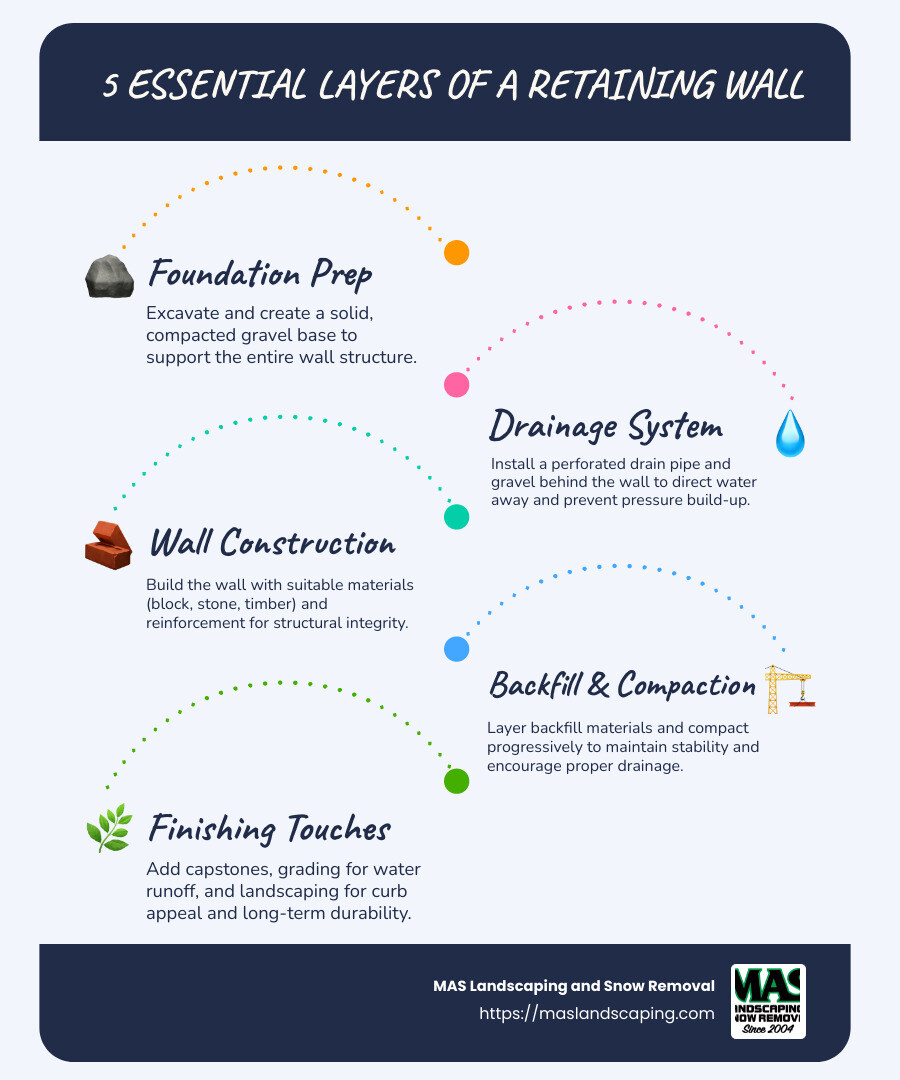
We begin with a thorough site assessment, examining your property’s unique characteristics. This critical first step reveals soil conditions, drainage patterns, and structural needs that inform your entire project. It’s like checking your ingredients before baking.
Next comes design and engineering—particularly important for walls exceeding 3 feet in height. Our engineers calculate soil pressure, recommend appropriate materials, and design drainage systems to ensure your wall stands strong for decades. As one of our engineers likes to say, “A wall without proper engineering is just a pile of stones waiting to fall over.”
Before breaking ground, we handle all permit applications, submitting the necessary plans to your local building department in Everett, Lynnfield, Malden, or wherever you call home. No need for you to steer the bureaucratic maze—we’ve mapped it already.
Safety first! We mark all underground utilities before excavation begins. Nobody wants to hit a gas line while digging a foundation trench. Then we excavate to the proper depth—typically 6-12 inches below grade plus the depth of the base material.
The foundation makes or breaks your wall. We install a 4-6 inch layer of Class 5 gravel and compact it thoroughly using specialized equipment. As our lead installer Tom often says, “The biggest mistake in retaining wall construction is skipping proper base preparation. A wall is only as strong as what it’s built upon.”
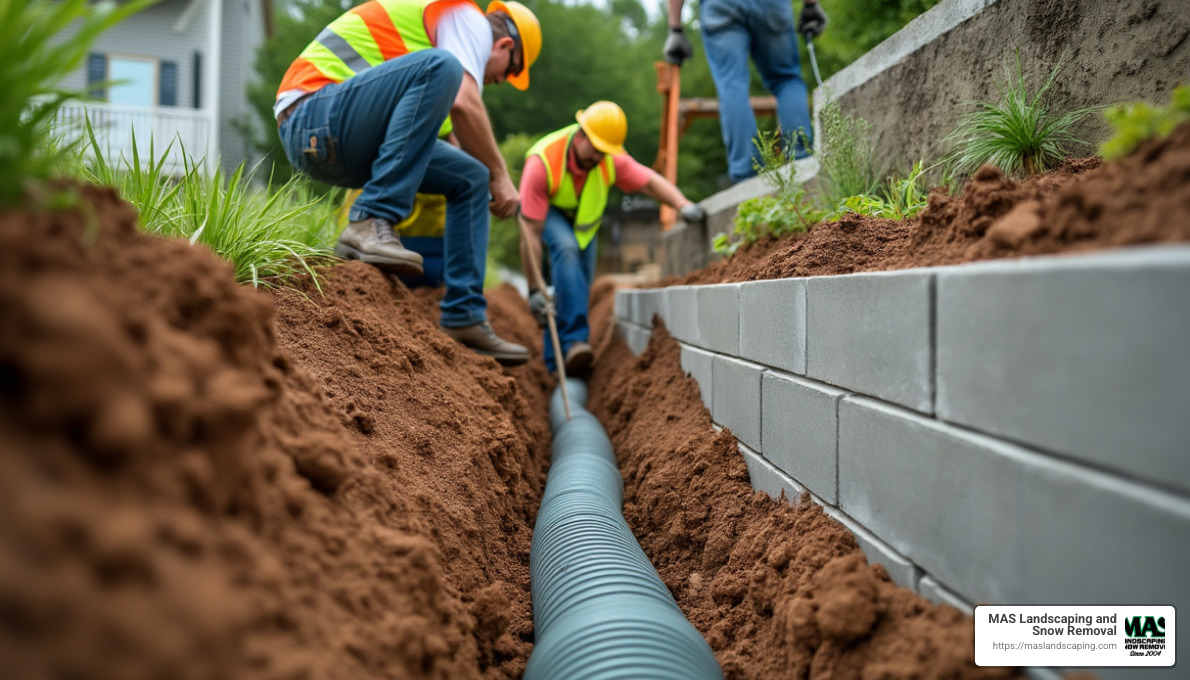
Proper drainage is absolutely essential. We install perforated drainage pipe behind your wall, surrounded by clear gravel and connected to a drainage outlet. Without this step, water pressure can build up and push your wall over within just a few seasons.
The first course of your wall material goes down with laser precision—literally! We use laser levels to ensure perfect alignment, as this critical first row determines how straight and level your entire wall will be.
As we build upward, we follow manufacturer specifications or time-tested masonry techniques. For engineered walls, we install geogrid reinforcement at specific intervals—these “soil sandwiches” dramatically increase your wall’s strength by distributing pressure throughout a larger soil mass.
Backfilling happens in tandem with construction—we carefully add drainage stone near the wall and compacted native soil further back. Then come decorative capstones to give your wall that finished, professional look.
Finally, we grade the surrounding areas to ensure water flows away from your new wall, add any planned landscaping touches, and for permitted walls, schedule the final inspection with local building officials.
Permit Essentials & Local Codes
Navigating permits can feel like learning a foreign language, but it’s a critical part of retaining wall construction near me. We’ve got you covered.
Most municipalities in our service area require permits for walls exceeding 3-4 feet in height (measured from the bottom of the footing to the top). Walls above this threshold typically need plans stamped by a licensed structural engineer—an added layer of safety that protects your investment.
Property line considerations vary by location. In some towns, walls near property lines require neighbor approval or special setbacks. And if you’re part of a Homeowners Association, you’ll likely need their blessing regardless of municipal requirements.
The inspection process typically includes checkpoints at foundation completion, after drainage installation, and upon final completion. Having built walls throughout Everett, Lynnfield, Malden, and surrounding areas for years, we’ve developed positive relationships with local inspectors and understand exactly what they’re looking for.
“I was dreading the permit process,” shared one Malden homeowner, “but MAS handled everything. They even scheduled the inspections around my work schedule so I didn’t have to take time off.”
Timeline & Seasonality
How long will your yard be a construction zone? That depends on several factors, but we pride ourselves on efficiency without cutting corners.
For planning and permitting, allow 1-2 weeks for smaller projects and 3-4 weeks for walls requiring engineering. The actual construction typically takes 3-5 days for a standard residential wall (30-50 linear feet), while larger or more complex projects might require 1-2 weeks.
Concrete walls need curing time—7-28 days before bearing full loads. And while we work year-round, winter construction in frosty New England sometimes requires special techniques and materials that may affect your timeline and budget.
Seasonal timing matters too. Fall is often ideal for retaining wall construction near me, as the ground is still workable but not soggy from spring rains. Summer construction means faster curing times for concrete, while spring projects ensure your wall is ready before summer entertaining begins.
A client in Revere recently told us: “MAS Landscaping completed our 40-foot retaining wall in just 4 days, despite having to work around existing landscaping. Their efficiency was impressive, and they left the site cleaner than when they started.”
From first consultation to final inspection, we keep you informed every step of the way. No surprises—just solid walls built to last generations.
Costs, Budget Factors & Local Regulations
Let’s talk money – because when it comes to retaining walls, understanding the investment helps you plan without unexpected surprises. While every project we tackle at MAS Landscaping is unique (which is why we don’t list specific pricing here), I can share some industry averages to give you a realistic picture of what to expect.
When homeowners ask me about retaining wall costs, I often explain it’s like buying a car – there’s the basic model and then there’s the luxury edition with all the bells and whistles. Your final price depends on your specific needs and choices.
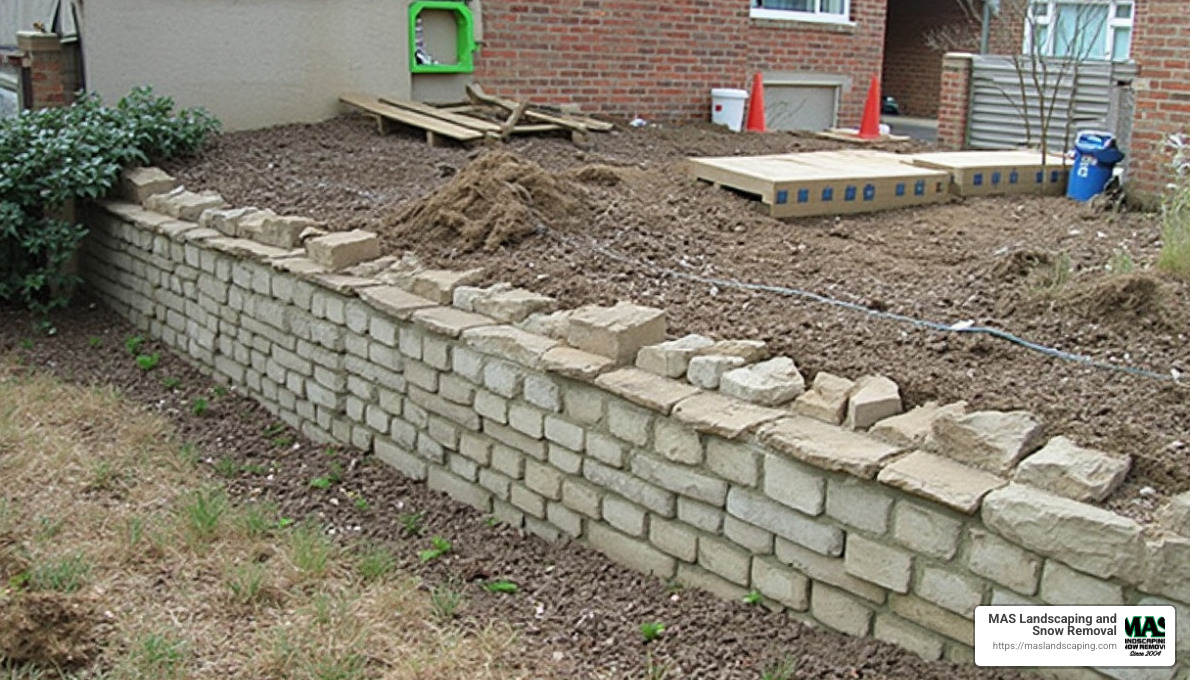
The typical material costs in our industry range from $15 to $45 per square foot. Natural stone sits at the premium end of this spectrum, while concrete blocks and timber offer more budget-friendly options. But materials are just the beginning of the story.
Labor is another significant factor. Most landscape contractors charge between $25 and $50 per person per hour, which translates to roughly $50 to $100 per hour for a standard two-person crew. When you’re comparing quotes, experienced teams might work more efficiently, potentially saving you money despite a higher hourly rate.
Based on national averages (not specific to MAS Landscaping and Snow Removal), here’s what you might expect to invest:
Small garden wall (2 feet high × 20 feet long): $3,500-$9,000
Medium residential wall (3-4 feet high × 30 feet long): $7,500-$18,000
Large or engineered wall (6+ feet high × 40 feet long): $15,000-$45,000+
What drives these costs? Several factors come into play:
Wall height and length make the biggest impact – taller walls require deeper foundations and possibly engineering services. Site accessibility matters too – if we need to haul materials by hand because a machine can’t access your backyard, labor costs increase.
Proper drainage systems might add to your initial investment but are absolutely essential. As I often tell clients, “Pay for drainage now or pay much more for a replacement wall later.” It’s simply not worth cutting this corner.
Engineering and permits typically add $500-$1,500 for walls over 3-4 feet tall. This isn’t just red tape – it’s ensuring your wall is safe and built to last. In Massachusetts, local building codes are particularly strict about retaining walls because of our freeze-thaw cycles and sometimes challenging soil conditions.
Speaking of soil, poor soil conditions might require additional excavation and quality backfill materials. During our initial site visit, we can usually spot potential soil issues that might affect your budget.
Saving Without Cutting Corners
I’m a firm believer that smart planning can save you money without compromising quality. Here are some approaches that have worked well for our clients in Everett, Lynnfield, and surrounding areas:
Consider manufactured block systems instead of natural stone. Modern options offer impressive durability and aesthetics at a lower price point. Some of my clients actually prefer the clean lines of manufactured blocks for contemporary homes.
Sometimes multiple shorter walls (creating a terraced effect) can be more economical than a single tall wall requiring engineering. As a bonus, these terraced spaces create perfect planting pockets that add visual interest to your landscape.
A client in Melrose saved nearly 30% on her project by scheduling during our early spring season when we weren’t as busy. If your timeline is flexible, ask us about optimal timing for your project.
For larger properties, phased implementation lets you spread costs over time while still working toward a cohesive final result. We can help design a multi-year plan that addresses your most critical needs first.
Financing & Incentives
You might be surprised to learn there are sometimes financial assistance options for retaining wall projects:
Some municipalities offer erosion control grants, particularly for properties near waterways or in areas with known erosion problems. These programs vary by location, but they’re worth investigating if your property has significant erosion issues.
Several of our clients have used low-interest home improvement loans for their landscape renovations. These loans typically offer better terms than credit cards and recognize that quality hardscaping adds real value to your property.
If your property falls within certain watershed districts, you might qualify for cost-sharing programs when implementing stormwater management solutions – including properly designed retaining walls with drainage systems.
One of our Saugus clients received a partial rebate through a local water conservation program because their terraced retaining wall system significantly reduced runoff into the municipal storm system. These programs aren’t widely advertised, but we’re happy to point you toward potential opportunities in your area.
When you’re comparing quotes for retaining wall construction near me, look beyond the bottom-line price. Consider the contractor’s experience with local soil conditions, their attention to proper drainage design, and their knowledge of permit requirements. The cheapest option rarely delivers the best long-term value.
Want to learn more about specific options for your property? Check out our detailed guide on Boulder Retaining Wall Cost for more insights on this popular material choice.
Hiring the Right Contractor vs. DIY: Selecting “Retaining Wall Construction Near Me”
When you type “retaining wall construction near me” into your search bar from Everett, Lynnfield, Malden, or surrounding areas, you’ll likely find plenty of options. But how do you separate the true professionals from those who might leave you with a wall that won’t stand the test of time?
Finding the right contractor for your retaining wall isn’t just about price—it’s about finding someone with the right experience, proper licenses, and a track record of quality work that lasts for decades, not just seasons.
Professional Installation vs. DIY
I’ve seen many homeowners struggle with the decision of whether to hire professionals or tackle their retaining wall as a weekend project. While those charming two-foot garden walls might be within reach of a dedicated DIYer, most structural retaining walls benefit tremendously from professional installation.
Professional contractors bring invaluable benefits to your project. They offer engineering expertise that ensures your wall won’t just look good but will actually hold back the earth as intended. Their knowledge of local soil conditions throughout the Malden and Lynnfield areas means they can anticipate drainage needs specific to your property. Plus, they have access to commercial-grade equipment that properly compacts soil—something rental equipment often can’t match.
“I thought I could save a few thousand dollars building my own wall,” admits Mark from Revere. “Three weekends, two trips to urgent care for my back, and a wall that started leaning after the first heavy rain later, I called MAS Landscaping. They rebuilt it in two days, and five years later, it still looks perfect.”
When you hire professionals, you’re also getting their expertise in navigating permit requirements, warranty protection on workmanship, and the ability to efficiently complete your project. Most importantly, they know how to handle those inevitable surprises like buried utilities or unexpected rock ledges that can derail a DIY project.
For those still considering the DIY route, be realistic about what you’re taking on. You’ll need specialized equipment like plate compactors and laser levels. Those concrete blocks might look manageable in the store, but at 75-80 pounds each, they become quite the workout after the first dozen. The technical knowledge required for proper base preparation, drainage installation, and achieving the correct setback isn’t something you’ll pick up from a quick YouTube tutorial.
And let’s talk about time—what might take a professional crew 3-4 days could easily stretch into multiple weekends for even the most dedicated homeowner. By the time you factor in equipment rentals, material delivery fees, and the value of your time, the cost savings often evaporate.
Questions to Ask Before Signing
Before you commit to any contractor for your retaining wall construction near me search, arm yourself with these essential questions:
“How many similar projects have you completed?” Experience matters tremendously with retaining walls. Ask to see photos of projects similar to yours that are at least a few years old.
“Are you properly licensed and insured in Massachusetts?” Never skip this question, and always ask for proof of both general liability insurance and workers’ compensation coverage. This protects you from liability if accidents occur on your property.
“Will you handle the engineering and permits?” Good contractors manage this process for you, including any necessary engineering stamps and municipal approvals.
“What type of foundation and drainage do you recommend for my specific site?” Listen for detailed answers about base material depth, compaction methods, and drainage solutions. Vague responses here are a red flag.
“Which materials do you suggest and why?” Their answer should consider your specific conditions, aesthetic preferences, and budget—not just what they happen to have available.
“Who will be managing my project on-site daily?” You want to know who’s actually making decisions in your yard, not just who sells you the project.
“What’s your typical timeline, and what factors might cause delays?” Realistic contractors acknowledge weather dependencies and potential material delays.
“What warranty do you provide on materials and workmanship?” The industry standard is at least 1-3 years on workmanship, while materials often carry manufacturer warranties of 10+ years.
“How do you handle unexpected conditions or changes I might request?” A clear change order policy protects both you and the contractor.
At MAS Landscaping and Snow Removal, we welcome these questions. In fact, we typically address most of them during our initial consultation before you even need to ask.
DIY Reality Check: Tools, Time, Risk
If you’re still leaning toward DIY, here’s what you’re really signing up for:
Your tool shopping list will include renting a plate compactor ($75-$150/day), laser level ($40-$60/day), and possibly a mini-excavator ($250-$400/day) unless you plan to dig by hand. You’ll need a heavy-duty wheelbarrow, masonry saw for cutting blocks, drainage materials, and proper safety equipment.
Time-wise, expect to spend 10-20 hours on research and planning, 1-3 days on excavation and base preparation, 3-7 days building a typical 30-foot wall, and another day on cleanup and final grading. And that’s assuming everything goes according to plan.
The risks are substantial. Structural failure can lead to property damage, improper drainage might cause water issues, and code violations could result if required permits aren’t obtained. There’s also the physical risk—retaining wall construction involves heavy lifting and potentially dangerous equipment.
“The invisible parts of a retaining wall determine its success,” explains one of our project managers. “Anyone can stack blocks in a line, but proper base preparation, backfill selection, compaction techniques, and drainage installation are what separate walls that last decades from those that fail within seasons.”
Common Mistakes to Avoid
Whether you hire professionals or go the DIY route, be aware of these common pitfalls:
Inadequate base preparation is the number one reason walls fail. That foundation needs to be level, properly compacted, and deep enough to prevent frost heave in our New England winters.
Poor drainage is a close second for failure causes. Water is incredibly powerful, and without proper drainage behind your wall, hydrostatic pressure will eventually win the battle.
Incorrect setback (the slight backward lean of each course of blocks) is essential for counteracting soil pressure. Skip this, and your wall will likely lean forward over time.
Overloading the top of your wall with heavy features like fences or large plantings creates excessive pressure that most residential walls aren’t designed to handle.
Ignoring permit requirements might seem tempting to save time and money, but unpermitted walls can lead to fines, removal orders, or complications when selling your property.
Using improper backfill materials behind your wall is like building a house on sand. The material needs specific drainage and compaction properties.
Neglecting geogrid reinforcement for taller walls is like building a house without a foundation. These horizontal layers distribute soil pressure and are essential for walls over a certain height.
A well-built retaining wall should be nearly maintenance-free and last for decades. When you search for “retaining wall construction near me,” you’re not just looking for someone to stack blocks—you’re looking for a partner who understands the engineering principles that ensure your investment stands the test of time.
For more information about finding quality materials and contractors in your area, check out our guide to Retaining Wall Blocks Near Me.
Maintenance, Lifespan & Improvements

A well-built retaining wall isn’t just a one-and-done project—it’s a living part of your landscape that can evolve and improve over time. With proper care, your wall can remain both functional and beautiful for generations, becoming an increasingly valuable asset to your property.
Retaining Wall Construction Near Me: Longevity Tips
The secret to a long-lasting retaining wall isn’t complicated, but it does require some attention. Think of your wall like your car—regular check-ups prevent major breakdowns.
Twice yearly inspections should become part of your seasonal routine. “Spring and fall are ideal times to give your wall a good once-over,” suggests a seasoned landscape contractor. “Look for any signs of movement, bulging, or leaning—catching these early can save thousands in repairs.”
Water is both a retaining wall’s greatest enemy and the easiest problem to prevent. Keep those weep holes clear of debris and soil buildup. These small drainage openings might not look important, but they’re actually your wall’s pressure-relief valve. A homeowner in Malden learned this lesson the hard way: “I let the drainage holes get clogged with mulch, and after a rainy spring, I noticed my wall starting to bow outward. Clearing the drainage system fixed the problem before it got serious.”
Monitor the ground above and below your wall carefully. Even the best-constructed wall can be undermined if water erodes the soil at its base or creates channels behind it. After heavy rains, take a quick walk around your wall to check for any unusual water patterns or soil movement.
The freeze-thaw cycles of New England winters can be particularly tough on retaining walls. Inspect for cracked mortar or shifted blocks each spring, addressing small repairs promptly before they escalate. Tuck-pointing mortar joints every few years keeps water from penetrating stone walls, while occasional replacement of damaged blocks maintains both appearance and structural integrity.
For walls with anchoring systems, checking and maintaining deadman anchors or tiebacks might require professional assistance, but is well worth the investment. These hidden structural elements are critical for taller walls and should be part of your maintenance schedule.
Enhancing Function & Beauty Over Time
Your retaining wall can become much more than just a soil-holding structure. With thoughtful improvements, it can transform into a standout landscape feature that adds significant value to your outdoor living space.
Planting opportunities abound with retaining walls. The varied elevations create perfect microclimates for different plants. “I love designing cascading plantings for retaining walls,” shares a designer from MAS Landscaping. “The vertical element gives you a chance to showcase plants in a way flat gardens simply can’t match.”
Consider drought-tolerant cascading plants like creeping phlox or sedum for the top edge, letting them spill over to soften the wall’s appearance. For tiered walls, each level becomes its own planting bed with unique conditions. A Saugus homeowner describes her change: “What started as an erosion solution has become my favorite garden feature—each tier has different sun exposure, so I’ve created a sunny herb garden on top and shade-loving hostas below.”
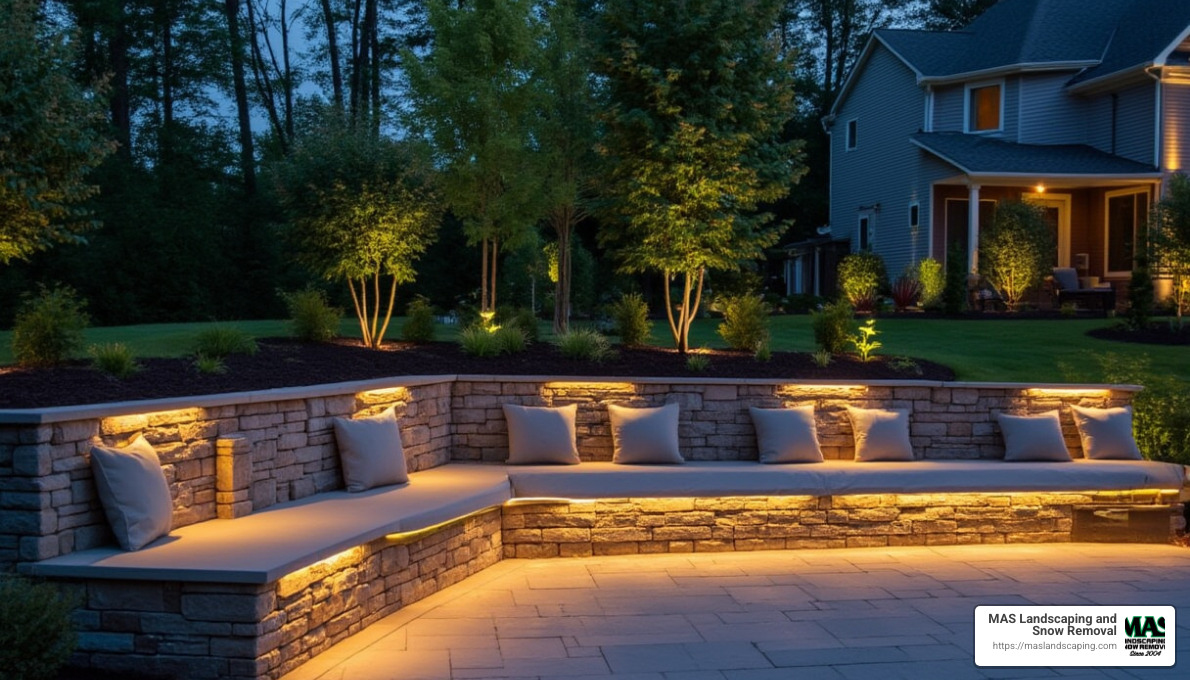
Strategic lighting transforms your wall from daytime workhorse to nighttime showpiece. LED up-lighting placed at the base of the wall creates dramatic shadows that highlight texture and depth. Cap lights improve safety while adding a warm glow to evening gatherings. Modern low-voltage systems are energy-efficient and can often be installed without extensive wiring.
Water features pair naturally with retaining walls, using gravity to create soothing sounds and visual interest. A simple spillway created from a copper scupper can transform a basic wall into a focal point, while more elaborate pondless waterfalls virtually disappear when not in use. “Water and stone have a natural affinity,” notes a landscape architect. “The sound of water trickling down a textured wall creates an instant sense of tranquility in any garden.”
Perhaps the most practical improvement is integrated seating. Walls between 18-24 inches tall (the perfect sitting height) can be topped with wider capstones to create casual perching spots throughout the garden. For walls already in place, consider adding built-out sections that expand into proper benches. A Lynnfield client shared: “The seating our wall provides has completely changed how we use our backyard. What was once just a slope correction has become our favorite spot for morning coffee.”
When planning improvements, always consider your wall’s structural integrity first. Avoid modifications that might compromise drainage or stability. For instance, heavy water features should be incorporated during initial construction rather than added to existing walls that weren’t engineered for the additional weight.
At MAS Landscaping and Snow Removal, we view retaining walls as opportunities rather than just solutions. “A well-designed wall should solve your erosion problem while simultaneously creating new possibilities for your outdoor space,” explains our design team. “The most successful projects are those that look even better ten years after installation than they did on day one.”
For more inspiration on how to improve your retaining wall, check out our Decorative Retaining Wall gallery, showcasing creative approaches to wall design throughout Everett, Lynnfield, Malden, and beyond.
Frequently Asked Questions about Retaining Wall Construction Near Me
What is the typical lifespan of a retaining wall?
When homeowners ask me about how long their retaining wall will last, I always tell them it depends largely on what it’s made of and how well it was built in the first place.
Natural stone walls are the champions of longevity, often lasting 50-200 years when properly constructed. There’s something remarkable about these walls—many built by New England farmers in the 1800s are still standing strong today, silent testimonies to quality craftsmanship.
Concrete block walls typically provide 30-50 years of reliable service, while poured concrete walls can last even longer—50-100 years in many cases. At the other end of the spectrum, timber walls have a relatively brief lifespan of just 5-15 years, even with pressure treatment. Brick walls usually fall somewhere in the middle, lasting about 20-30 years.
“Many stone walls built in New England during the 1800s are still standing today, proving that quality construction can truly stand the test of time,” a veteran masonry expert once told me while we were restoring a historic wall in Malden.
The secret to maximizing your wall’s lifespan? Proper drainage, thorough foundation preparation, and regular maintenance can add decades to these timeframes. Think of maintenance as an investment that pays dividends in longevity.
Do I always need a permit if the wall is under 3 feet?
This question comes up in almost every initial consultation, and while 3-4 feet is often cited as the magic number for permit requirements, the real answer is more nuanced.
Local regulations vary significantly across Everett, Lynnfield, Malden, Melrose, Medford, Revere, Saugus, and Chelsea. Each town has its own specific requirements, and several factors beyond just height can trigger the need for permits:
Location matters—walls near property lines often face stricter scrutiny. Walls near utilities or environmentally sensitive areas like wetlands almost always require permits regardless of height. If your wall will be supporting structures like a driveway or building, permits are typically mandatory. Sometimes, being part of a larger landscape project can trigger permit requirements even for smaller walls.
As one building inspector aptly put it, “The permit threshold isn’t a suggestion that smaller walls don’t need proper engineering—it’s simply a regulatory cutoff.”
At MAS Landscaping and Snow Removal, we’re thoroughly familiar with the permit maze in all the communities we serve. We can guide you through the requirements for your specific location and project, often saving you significant headaches down the road.
How long will construction disrupt my yard?
Nobody wants their yard to become a construction zone for weeks on end. Thankfully, most retaining wall projects move along fairly quickly once we break ground.
For a typical 30-foot residential wall, you can expect about 3-5 days of active construction. However, several factors can influence this timeline. Limited site access might add an extra day or two. Some materials install faster than others—modular blocks generally go up more quickly than natural stone, for instance. Weather conditions are always a wild card in New England—rain or extreme temperatures can cause unavoidable delays. Properties with rocky soil or extensive grading needs often require additional time for proper preparation.
We understand that construction disruption can be stressful, which is why we take specific measures to minimize the impact on your daily life:
We arrange staged material delivery so your property doesn’t become a storage yard. Our crews perform daily cleanup before leaving the site each evening. We create protected access paths to minimize damage to your existing landscaping. And we use efficient crew scheduling to ensure continuous progress without unnecessary gaps.
One client in Revere shared: “I was impressed with how quickly and cleanly MAS Landscaping completed our retaining wall. They sectioned off the work area with temporary fencing to keep our dogs safe, and every evening they left the site tidy and organized.”
Can plants be incorporated into my retaining wall?
Absolutely! Adding plants to your retaining wall transforms it from a purely functional structure into a living, breathing landscape feature.
There are several effective approaches to greening your wall. Planting pockets built into the wall face create natural-looking vertical gardens. The space between tiered walls offers perfect planting beds with excellent drainage. A thoughtful planting strip along the wall base softens the wall’s appearance and creates a beautiful transition to the rest of your landscape. If your wall has wider caps, decorative containers can add seasonal color at eye level. For the truly adventurous, specialized living wall systems allow plants to grow within the actual wall face.
When selecting plants, keep a few considerations in mind. Choose species with non-invasive root systems that won’t compromise your wall’s structural integrity. Drought-tolerant plants minimize the risk of excessive moisture building up behind the wall. Plan for mature growth habits to prevent overcrowding that could push against the wall. And always ensure you’ll have adequate maintenance access for pruning and care without compromising safety.
“Plants are an excellent way to soften the harsh lines of a block retaining wall,” a landscape designer on our team often says. “They can transform a purely functional structure into a beautiful garden feature that changes with the seasons.”
How do I know if my existing retaining wall needs repair?
Your retaining wall will usually give you clear warning signs before serious problems develop. Knowing what to look for can save you from costly failures.
Watch for any leaning or bulging sections—walls should maintain their original alignment. Cracked or broken components like damaged blocks, stones, or deteriorating mortar joints often indicate structural issues. Displaced cap stones that have shifted from their original position suggest movement within the wall. Erosion behind or beneath the wall, where soil is washing out, points to drainage problems that need immediate attention.
Water seepage through the wall face (rather than through proper drainage outlets) is a red flag for potential failure. In our New England climate, frost heave damage is common, where sections get pushed outward by freezing soil. Finally, look for separated joints or gaps between wall sections that weren’t there originally.
If you spot any of these warning signs, especially in walls supporting structures or near property lines, don’t wait to get a professional assessment. Small problems can often be repaired relatively easily before they require complete wall replacement—much like catching a small cavity before it requires a root canal.
At MAS Landscaping and Snow Removal, we offer inspection services for existing walls and can recommend appropriate repairs to extend your wall’s useful life. Sometimes a simple drainage improvement can add years to an aging wall’s lifespan.
Conclusion
When you’re searching for “retaining wall construction near me” in Everett, Lynnfield, Malden, or anywhere across our service area, you’re not just looking for someone to stack some blocks. You’re seeking a trusted partner who understands New England’s unique landscape challenges and can transform that troublesome slope into something beautiful and functional.
At MAS Landscaping and Snow Removal, we’ve been turning problem areas into stunning outdoor spaces for years. Our neighbors throughout Everett, Lynnfield, Malden, Melrose, Medford, Revere, Saugus, and Chelsea have trusted us to handle everything from simple garden walls to complex engineered retaining systems.
“We thought our backyard hill was just wasted space,” shared one Malden homeowner. “Now it’s our favorite spot to entertain, with beautiful stone terraces and built-in lighting. The team at MAS made the whole process painless.”
What makes our approach different? We believe in doing things right the first time. That means proper drainage systems that prevent future failures. It means foundations that can withstand our harsh freeze-thaw cycles. And it means designs that not only solve problems but create new opportunities for outdoor living.
When you work with us, you’re getting more than just construction expertise. You’re getting a complete partner who handles:
Thorough site evaluation that considers soil conditions, water patterns, and your property’s unique characteristics
Expert material recommendations based on your aesthetic preferences, budget constraints, and long-term goals
Professional installation with meticulous attention to those invisible but critical elements like proper base preparation and drainage
Complete permit handling so you don’t have to steer complex local regulations
Creative design integration that improves your overall landscape rather than just solving one problem
A well-built retaining wall is truly an investment in your property’s future. It creates usable space where there was none. It prevents costly erosion damage. It improves your home’s curb appeal and value. And when constructed with care and expertise, it will serve your property for decades to come.
Whether you’re dealing with a slumping hillside, dreaming of garden terraces, or simply wanting to improve your property’s appearance, we’re ready to help turn that vision into reality. Our commitment to craftsmanship and customer satisfaction has made us a trusted name throughout the communities we serve.
Ready to transform your sloped property into beautiful, functional outdoor space? Contact MAS Landscaping and Snow Removal today to schedule your consultation and find how our retaining wall solutions can work for your unique property.
More info about Retaining Wall Installation