



Rock Retaining Wall Cost: Save Big 2025
Understanding Rock Retaining Wall Costs: What Every Homeowner Should Know
Rock retaining wall cost varies widely based on materials, size, and installation complexity. Here’s what you can expect:
Quick Cost Overview:
- Boulder walls: $20 – $85 per square foot
- Gabion walls: $10 – $55 per square foot
- Dry-stack stone: $20 – $95 per square foot
- Stone veneer: $30 – $95 per square foot
- Total project range: $2,000 – $17,000 for typical walls
Note: These prices are national averages based on industry data and are for informational purposes only. They do not reflect the final cost of a project with MAS Landscaping. For an accurate quote, please contact us directly.
Rock retaining walls serve two key purposes: they’re functional barriers that prevent soil erosion and create usable space on slopes, while also adding significant aesthetic value to your property.
Whether you’re dealing with a sloping yard in Newton or need to create terraced garden levels in Brookline, understanding these costs helps you budget effectively for this major landscaping investment.
The wide price range reflects several factors. Material choice makes the biggest difference – simple gabion walls cost less than hand-stacked natural stone. Wall height, site access, and local labor rates also impact your final bill significantly.
Labor typically represents 60-70% of total project costs, with skilled masons charging premium rates for complex stone work. Materials like boulders can cost hundreds of dollars each, while the supporting elements – drainage systems, permits, and site preparation – add substantial expenses beyond just the rocks themselves.
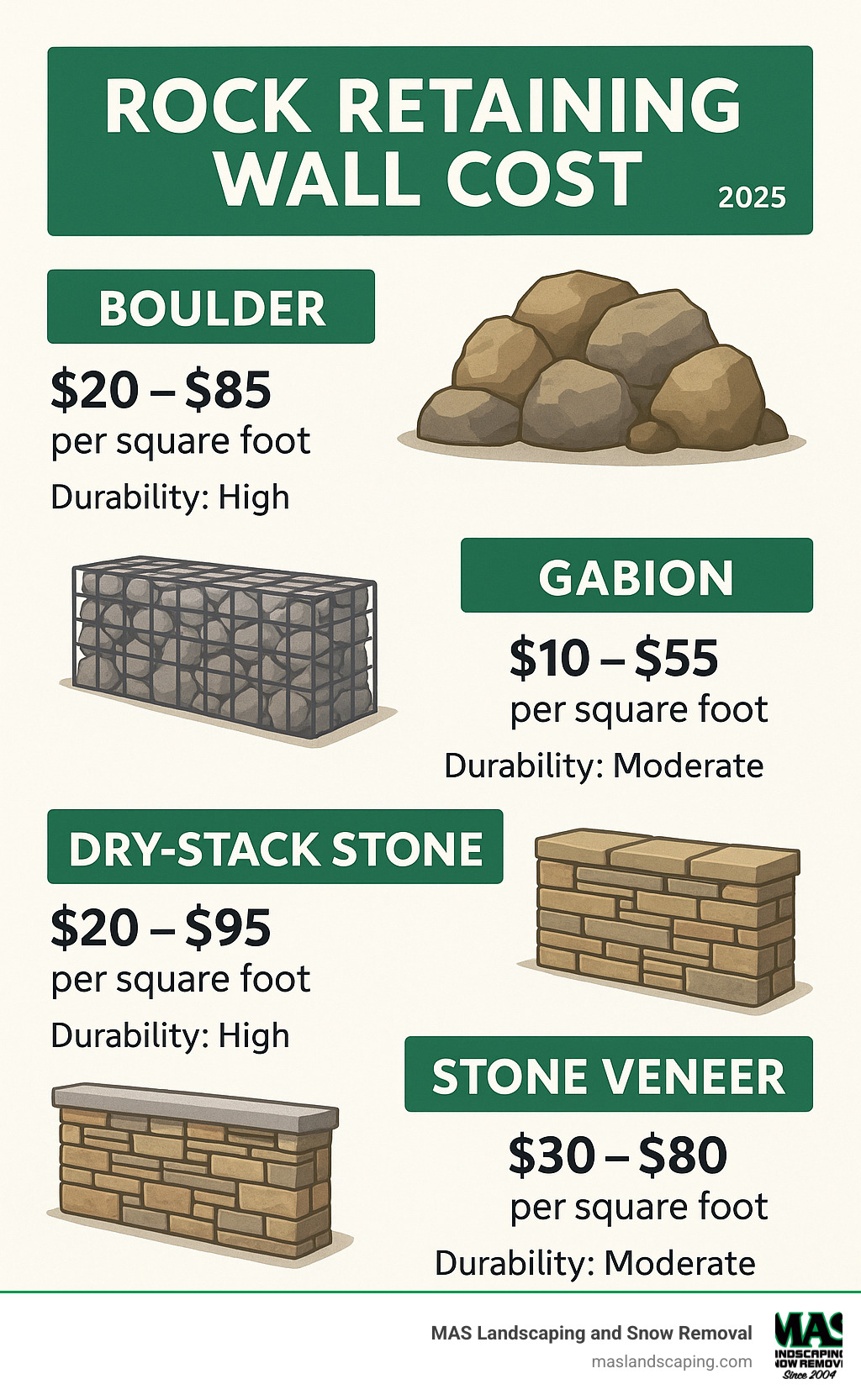
Simple guide to rock retaining wall cost:
Rock Retaining Wall Cost Breakdown by Type
When planning your rock retaining wall cost, you’ll quickly find that “rock” means different things to different builders! From massive boulders that require heavy machinery to delicate stone veneers applied by skilled craftsmen, each type brings its own personality and price point to your project.
Understanding these differences helps you make smart choices for your Saugus or Malden property. Some walls are priced per square foot (covering the wall’s face), while others quote per linear foot for consistent heights. The key factors? Material weight, installation complexity, and how much skilled labor each type demands.
Disclaimer: All prices are national averages based on industry data and may not reflect actual project costs for MAS Landscaping. For an accurate quote, contact a professional.
Boulder Retaining Walls
Nothing says “permanent” quite like a boulder retaining wall. These natural giants rely on sheer weight and gravity to hold back tons of soil, creating that rugged, timeless look that makes your neighbors wonder if those rocks have been there since the last ice age.
Boulder walls offer incredible longevity – we’re talking 50 to 200 years when properly installed. That’s a wall your great-grandchildren might still be admiring! The stones interlock naturally, and their irregular shapes create interesting shadows and textures that change throughout the day.
The average cost ranges from $20 to $85 per square foot, with the wide range reflecting boulder size, site access, and installation complexity. Large boulders weighing several tons need special equipment to position, which adds to labor costs. But here’s the thing – once they’re in place, they’re practically indestructible.
Installation complexity varies dramatically. Simple boulder placement on level ground costs less than creating curved walls or working on steep slopes where every stone needs precise positioning. The natural look blends beautifully into Massachusetts landscapes, especially around Lynnfield’s more wooded properties.
For detailed boulder wall planning, check out our comprehensive guide on Boulder Retaining Wall Cost.
Gabion Retaining Walls
Think of gabion walls as nature’s filing cabinets – wire mesh cages filled with rocks, creating a modern industrial look that’s surprisingly versatile. These permeable structures let water flow through naturally, preventing the pressure buildup that can topple solid walls.
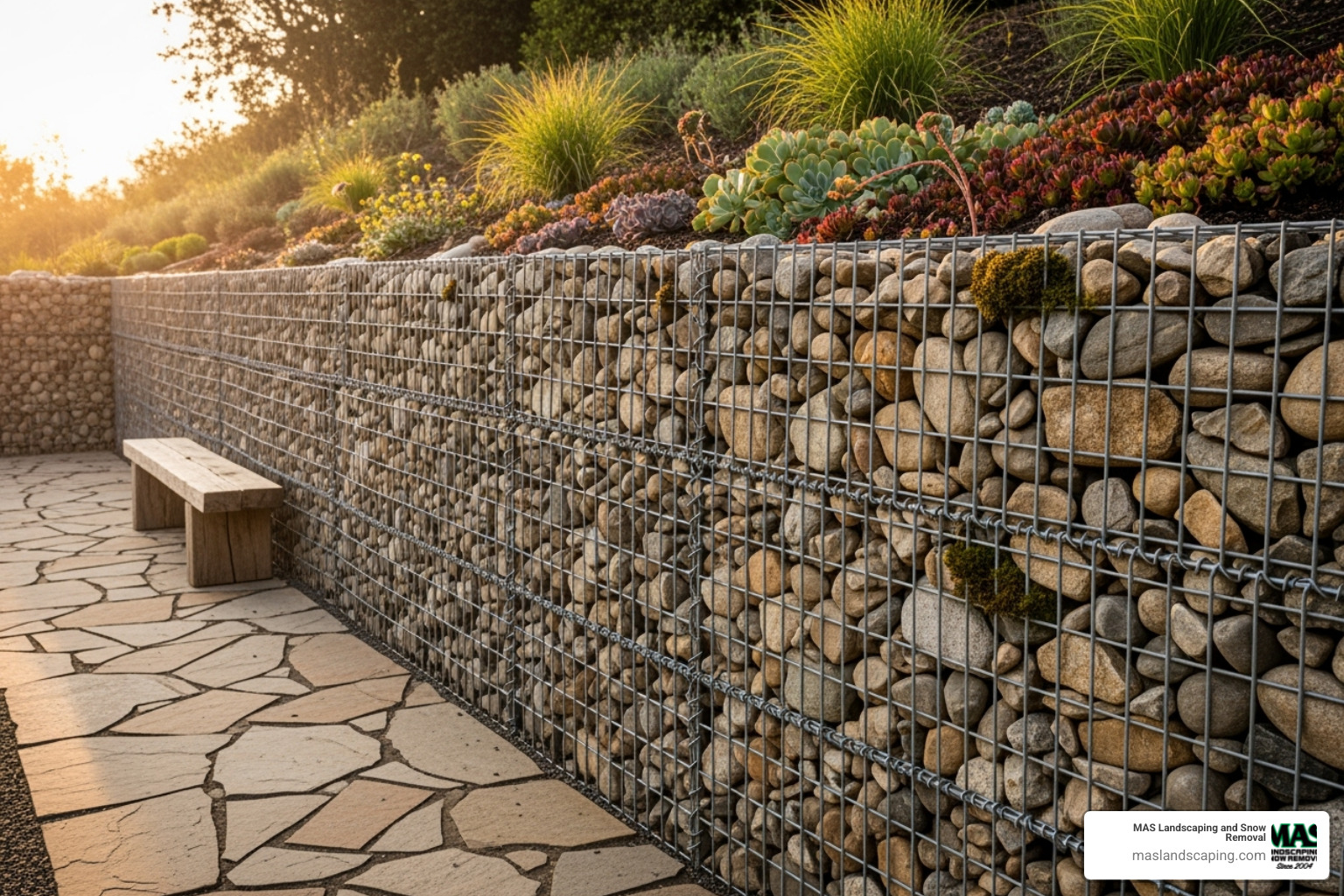
Gabion walls cost between $10 to $55 per square foot, making them one of the most budget-friendly rock options. The modern aesthetic appeals to homeowners wanting something different from traditional stone walls. You can fill the cages with local fieldstone, recycled concrete, or even colorful river rocks for unique visual effects.
Material characteristics include excellent drainage and flexibility. Unlike rigid concrete walls, gabions can settle slightly without cracking. The wire mesh cages come in standard sizes, and installation complexity is relatively straightforward compared to hand-stacked stone work.
The best part? Gabion walls actually get stronger over time as soil and vegetation grow through the rocks, creating a living wall that blends into your landscape.
Dry-Stack Stone Walls
Here’s where artistry meets engineering. Dry-stack stone walls use no mortar – just the mason’s skill in selecting and fitting each stone perfectly. It’s like a giant 3D puzzle where every piece must support the ones above it.
This mortar-free construction requires exceptional skilled labor. Master masons spend years learning to “read” stones, understanding which pieces work together. The result? A timeless appearance that looks like it grew from the earth itself.
Average costs range from $20 to $95 per square foot, with the wide range reflecting stone type and labor intensity. Fieldstone walls using irregular, naturally weathered stones cost more due to fitting time. Limestone blocks with sawn surfaces install faster and cost less per hour.
The installation complexity depends heavily on stone regularity. Uniform stones stack efficiently, while irregular fieldstone can take four to five times longer to fit properly. But that extra time creates walls with incredible character – no two stones exactly alike, each contributing to the wall’s unique personality.
Find how these classic walls can define your outdoor spaces in our Garden Stone Wall guide.
Stone Veneer Walls
Want the beauty of natural stone with more predictable costs? Stone veneer walls combine a sturdy concrete block core with natural or manufactured stone facing. Think of it as giving a practical wall a beautiful outfit.
This approach offers tremendous design flexibility. You can choose from dozens of stone types, colors, and textures while maintaining consistent structural strength. The concrete core handles the heavy lifting while the stone veneer provides the visual appeal.
Average costs run $30 to $95 per square foot for complete installation. Natural stone veneer costs more than manufactured options, but both offer excellent durability and weather resistance. The installation process requires skilled masons who understand both concrete work and stone application.
Material characteristics include lighter weight than solid stone walls and faster installation than dry-stack construction. You get stone’s beauty without the uncertainty of working with irregular natural materials.
For inspiration on enhancing your property’s appeal, explore our Decorative Retaining Wall options.
Key Factors That Influence Your Final Price
Understanding the average costs for different types of rock retaining walls is just the beginning of your budgeting journey. The actual rock retaining wall cost for your specific project depends on several unique factors that can significantly impact your final investment.
Think of it like buying a car – the sticker price is one thing, but options, location, and special requirements can change everything! The same principle applies to retaining walls. Your property’s specific conditions, design preferences, and local requirements all play crucial roles in determining what you’ll actually spend.
Smart budgeting means looking beyond basic material costs and considering the complete project scope. When you understand these variables upfront, you’ll be better prepared for your hardscaping investment and can make informed decisions that balance your vision with your budget.
Learn more about the broader world of hardscaping with our guide on Hardscape Retaining Walls.
Wall Size and Design Complexity
Here’s where simple math meets reality – bigger walls cost more money. The height and length of your rock retaining wall are the biggest cost drivers you’ll encounter. A small garden wall might run a few thousand dollars, while an extensive terraced system can easily reach five figures or more.
Wall height particularly matters because of engineering requirements. Once your wall exceeds 3 to 4 feet tall, most local building codes require professional engineering plans and structural reinforcement. This adds anywhere from several hundred to over a thousand dollars to your project cost, but it’s essential for safety and legal compliance.
Design complexity can dramatically increase costs too. A straight, simple wall is like driving on a highway – efficient and straightforward. Add curves, intricate patterns, or terraced levels, and you’re suddenly navigating mountain roads that require more time, skill, and materials.
Slopes present their own challenges. Building on uneven terrain can increase labor costs by 50% or even triple the overall price compared to flat ground. The extra excavation, leveling, and specialized installation techniques required make these projects significantly more complex.
Terraced walls deserve special mention because they’re essentially multiple retaining walls working together. While they create stunning landscape features and maximize usable space, they also multiply the complexity and cost of your project.
For detailed insights on managing costs on challenging terrain, check out our guide on Building a Retaining Wall on a Slope Cost.
Material vs. Labor: The Two Biggest Expenses
When we break down your rock retaining wall cost, labor typically claims the largest chunk of your budget – often accounting for 60-70% of the total project cost. This might surprise homeowners who focus mainly on material prices, but it reflects the skilled craftsmanship required for quality stone work.
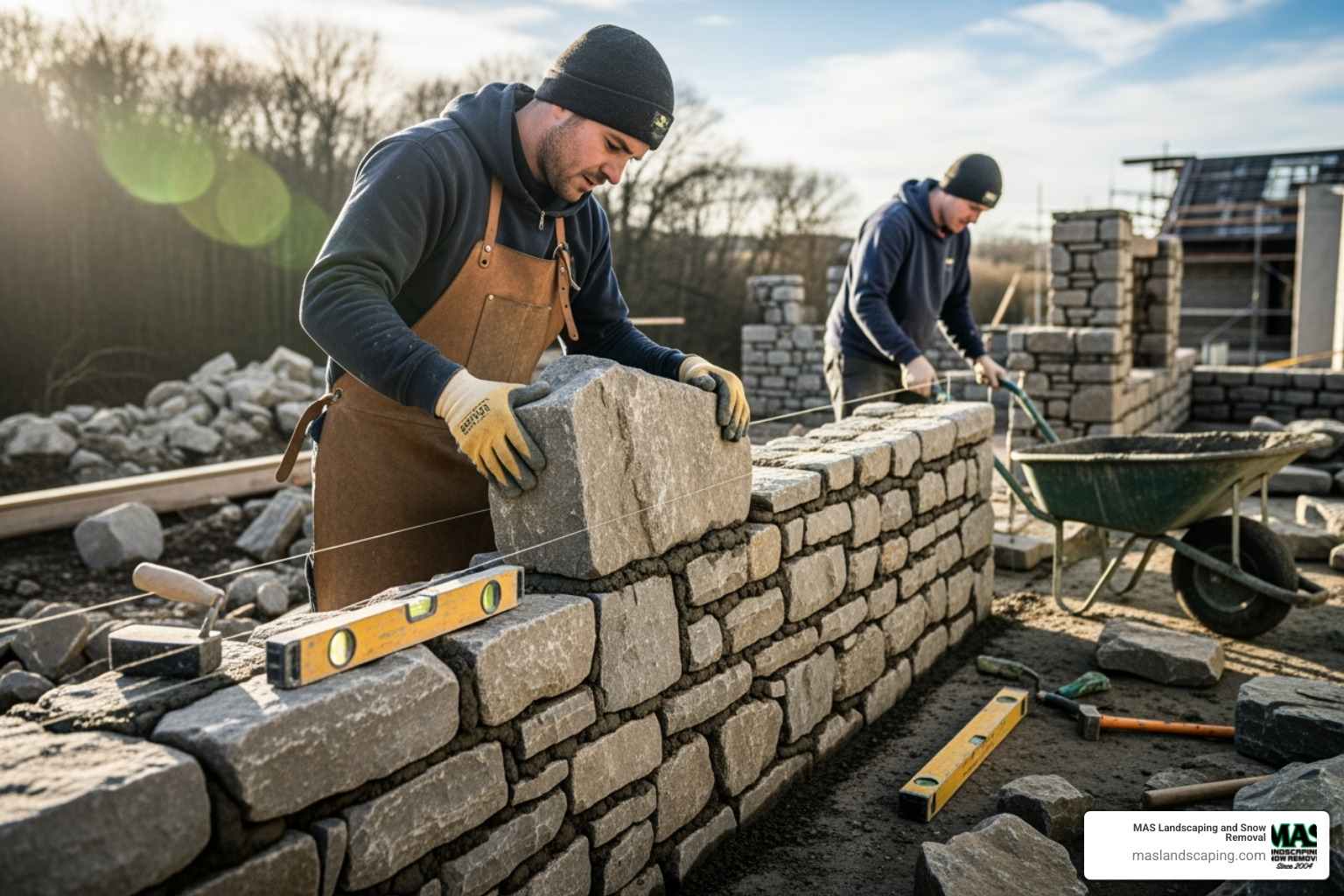
Skilled masons command premium rates because stone work is both an art and a science. These craftsmen understand how stones fit together, how to ensure proper drainage, and how to build walls that will stand for decades. Their expertise isn’t cheap, but it’s invaluable for long-term durability.
The skill level required varies dramatically between wall types. Dry-stack walls using irregular fieldstones demand meticulous attention and significant time, as each stone must be carefully selected and fitted. Working with uniform materials like large, sawn limestone blocks moves much faster, reducing labor hours and costs.
Material costs form the second major expense category. Rock prices vary widely based on type, size, and local availability. Boulders, limestone, fieldstone, and manufactured stones all carry different price tags, and transportation costs can add significantly to your bill.
Local stone availability plays a huge role in material costs. Using locally quarried stone often saves substantial money on freight and shipping expenses. A ton of stones typically covers a specific amount of wall face, so material choices quickly impact your bottom line.
Note: All pricing references are average costs based on industry data and may not reflect actual project costs for MAS Landscaping.
Site Conditions and Preparation
Before the first stone gets placed, extensive preparation work shapes your project’s cost and complexity. Your property’s unique characteristics can either work in your favor or present challenges that require creative solutions.
Site accessibility dramatically affects costs. Can heavy machinery easily reach your build site? If contractors need to hand-carry materials or use smaller equipment due to tight spaces, narrow gates, or landscaping obstacles, labor costs increase significantly. Sometimes temporary access solutions become necessary, adding unexpected expenses.
Soil conditions vary greatly across different properties and directly impact foundation requirements. Sandy soils, heavy clay, rocky terrain, and unstable ground each demand different preparation approaches. Some soil types require extensive excavation, specialized compaction, or improved foundations to ensure wall stability.
Excavation and grading form essential preparation steps that can’t be skipped. Creating a level base, digging proper footings, and ensuring adequate drainage all require time and equipment. The amount of earth that needs moving depends on your site’s current condition and desired final grade.
Existing obstacles often surprise homeowners during project planning. Old trees, existing walls, utility lines, or other structures may need removal or relocation. Tree removal costs vary based on size and location, while disposing of old hardscaping materials adds to project expenses.
These preparation costs are often overlooked during initial budgeting but are absolutely essential for a successful installation. Proper site preparation ensures your investment will perform well and last for decades.
For practical insights into foundation and preparation work, explore our guide on How to Build a Landscaping Wall with Blocks.
Beyond the Blocks: Additional Costs & Ways to Save
When you’re planning your dream rock retaining wall, it’s easy to focus on the stones themselves – those beautiful boulders or neat stacked stones that will transform your landscape. But here’s the thing: the blocks are just part of the story. Understanding the full picture of rock retaining wall cost means looking beyond the materials to the essential systems and smart strategies that can make or break your project’s success and budget.
Think of it this way – you wouldn’t build a house without plumbing, right? The same principle applies to retaining walls. There are crucial “behind the scenes” elements that ensure your wall stands strong for decades, plus clever ways to stretch your budget without cutting corners on quality.
To see how these principles apply across different hardscaping projects, check out our guide on Paver Retaining Wall Cost.
Essential Add-ons: Drainage, Permits, and Engineering
Water is your retaining wall’s biggest threat. Without proper drainage, water builds up behind your wall – what engineers call hydrostatic pressure – and it’s like having an invisible bulldozer constantly pushing against your beautiful stonework. Over time, this pressure causes bowing, cracking, and eventually complete wall failure. That’s why a solid drainage system isn’t optional – it’s absolutely essential for preventing soil erosion and protecting your investment.
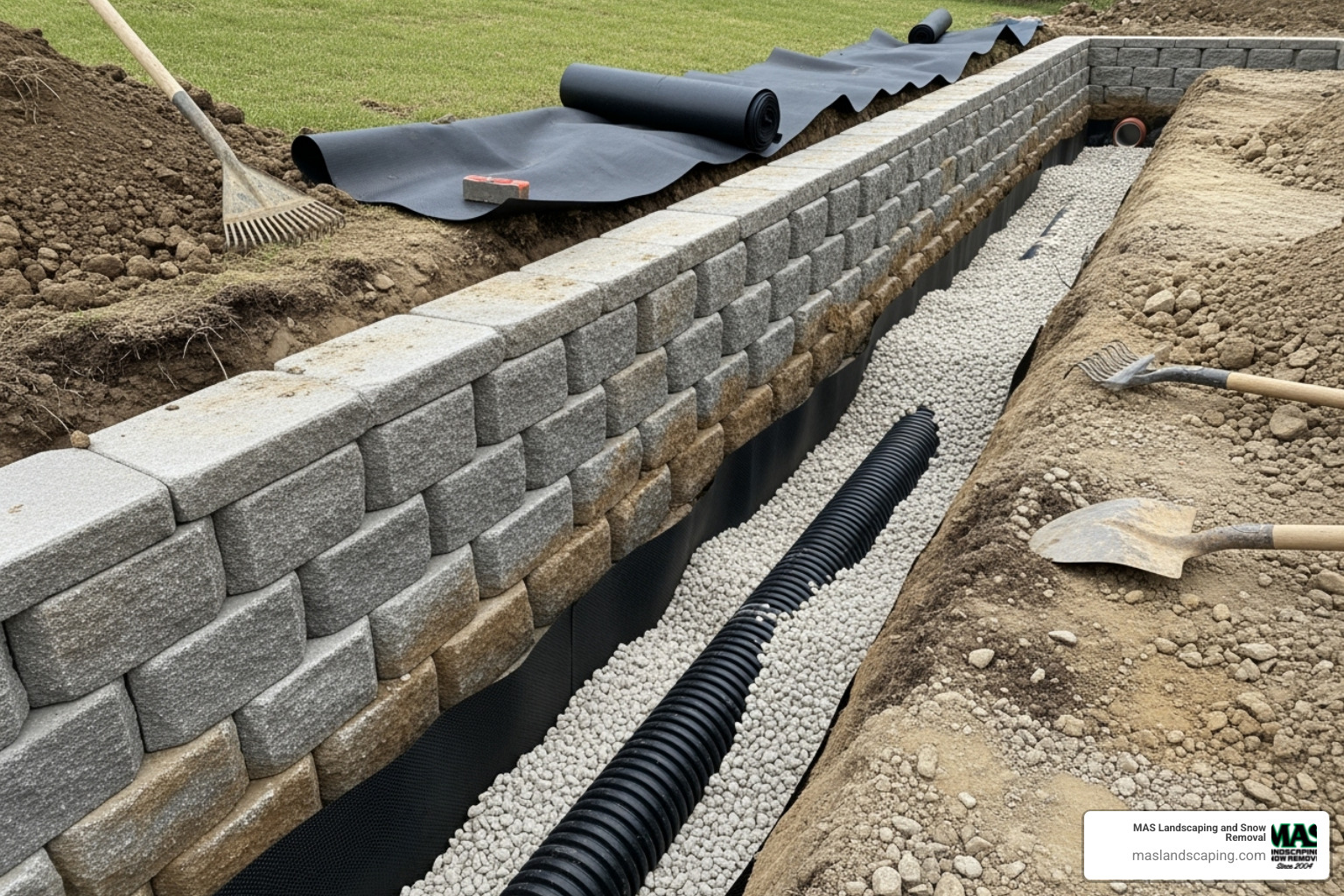
A proper drainage system works like a team. Perforated pipes at the wall’s base collect water, while gravel backfill creates a highway for water to flow toward those pipes. Geotextile fabric acts like a coffee filter, keeping soil particles from clogging up the works, and weep holes give excess water an escape route at ground level.
French drains are particularly effective for retaining walls. While installing one adds to your initial rock retaining wall cost, it’s like buying insurance for your wall. The investment now prevents expensive repairs later – and trust us, fixing a failed retaining wall costs far more than doing the drainage right the first time.
Permits become necessary when your wall exceeds certain heights – typically 3 to 4 feet, depending on your local building codes. These permits protect both you and your neighbors by ensuring the wall meets safety standards. For taller or more complex walls, you’ll need a structural engineer to design the wall and ensure it can handle the loads it’ll face.
Engineering fees and permit costs vary by location and project complexity, but they’re non-negotiable for larger walls. Some projects also require reinforcement like rebar or geogrid systems, which increase both material costs and installation time but dramatically improve the wall’s strength and longevity.
How to Save Money on Your Rock Retaining Wall Cost
Smart planning can significantly reduce your rock retaining wall cost without sacrificing quality or safety. The key is knowing where you can economize and where you absolutely shouldn’t cut corners.
Limiting wall height to under 4 feet often eliminates engineering requirements and complex reinforcements. If your landscape needs more height, consider terraced walls – multiple shorter walls that step down your slope. This approach often costs less than one tall wall and creates beautiful planting areas between levels.
Material choices offer significant savings opportunities. Local stone eliminates expensive shipping costs – and it naturally complements your regional landscape. Gabion walls provide excellent drainage and modern appeal at budget-friendly prices. Stone veneer gives you the natural stone look with a concrete block core that’s faster to install.
DIY site preparation can slash labor costs if you’re up for it. Clearing vegetation, minor grading, and excavation work are within reach for many homeowners with basic tools and some weekend time. However, major excavation or anything involving utilities should always be left to professionals.
Bundling services creates win-win situations. If you’re planning other outdoor improvements, combining your retaining wall with additional hardscaping services often results in project discounts. Contractors appreciate larger jobs, and you save on setup and mobilization costs.
Reusing existing materials from old walls or other structures can provide substantial savings. Even if the stones need cleaning or minor reshaping, salvaged materials often cost a fraction of new stone while adding character to your project.
The smartest approach balances upfront savings with long-term value. Skimping on drainage or structural requirements creates expensive problems later, but thoughtful choices in materials and design can deliver the beautiful, functional wall you want at a price that works for your budget.
Frequently Asked Questions About Rock Retaining Walls
Planning a rock retaining wall project brings up lots of questions – and that’s completely normal! We’ve been helping homeowners in Everett, Lynnfield, Malden, and surrounding areas steer these decisions for years. Here are the answers to the most common questions we hear about rock retaining wall cost and everything else you need to know.
How long does a rock retaining wall last?
One of the best things about investing in a rock retaining wall is how incredibly long they last. Your choice of material makes the biggest difference in longevity, but proper installation is what really determines whether your wall reaches its full potential lifespan.
Boulder and natural stone walls are the absolute champions when it comes to durability. When we build them with proper drainage and a solid foundation, these walls can last anywhere from 50 to 200 years! Think about it – some of the stone walls you see in New England have been standing since the 1800s. Natural stone just gets better with age, developing that beautiful weathered look while staying structurally sound.
Concrete and stone veneer walls typically have a lifespan of 50 to 100 years. While not quite as eternal as solid stone, that’s still long enough for your grandchildren to enjoy the wall you’re building today.
The key to reaching these impressive lifespans? Working with experienced professionals who understand proper installation techniques. Poor drainage or inadequate foundations can cut a wall’s life dramatically short, turning a century-long investment into a decade-long headache. That’s why we always recommend working with skilled, certified contractors to ensure the job is done right.
What is the difference between a retaining wall and a simple garden wall?
People often use these terms interchangeably, but they’re actually quite different beasts with very different jobs.
A retaining wall is a structural workhorse. Its main job is holding back soil and preventing erosion on slopes. These walls need to be engineered to handle serious pressure from the earth and water behind them. They typically need permits for anything over 4 feet tall, require proper drainage systems, and need deep, solid foundations. Think of them as the bodybuilders of the wall world.
A simple garden wall is more like the artist of the family. These Landscape Walls are primarily decorative, designed to define garden beds, create borders, or add visual interest to your yard. They’re usually shorter, don’t need to handle soil pressure, and cost significantly less to build.
The height difference tells the story too. Garden walls rarely exceed 2-3 feet and are mainly about looks. Retaining walls often reach 4-8 feet or more because they’re doing the heavy lifting of managing elevation changes.
How much do rock retaining wall repairs cost?
Even the toughest rock walls sometimes need a little attention. The good news? Catching problems early usually means much smaller repair bills than waiting until things get serious.
Minor repairs like patching small cracks in mortar or concrete typically run in the lower cost range. These are the kind of touch-ups that keep your wall looking great and prevent bigger problems down the road.
Drainage issues are more involved since they often require digging behind the wall to clear or replace clogged pipes. Water problems don’t fix themselves, and ignoring them usually leads to much bigger headaches later.
Structural problems like leaning or bowing walls indicate serious pressure buildup or foundation issues. These repairs might involve installing anchoring systems or even rebuilding sections of the wall. This is when you definitely want professional help – a leaning wall isn’t something to tackle as a weekend DIY project.
Foundation problems are the most serious and sometimes require partial or complete rebuilding. At this point, you’re looking at costs that approach building a new wall.
Most homeowners find that typical rock retaining wall repairs fall into a manageable range, but major structural damage can get expensive quickly. Regular inspections – just walking along your wall once or twice a year to look for changes – can help you catch small issues before they become big ones.
Note: These are average repair costs based on industry data and may not reflect actual project costs for MAS Landscaping. For an accurate assessment of your specific repair needs, it’s best to have a professional take a look.
Get a Professional Quote for Your Rock Retaining Wall
As we’ve walked through together, figuring out your rock retaining wall cost isn’t as simple as picking a number from a hat! From the majestic boulders that can last centuries to the modern appeal of gabion walls, every choice you make – the stone type, your property’s unique slope, drainage needs, and local permit requirements – all play a role in shaping your final investment.
Here’s the thing: a rock retaining wall isn’t just another landscaping project. It’s a long-term investment in your property’s beauty, functionality, and value. When you see a well-built stone wall that’s been standing strong for decades, you’re looking at the result of expertise in masonry, solid engineering principles, and thoughtful landscape design all working together.
We’ve seen what happens when corners get cut on materials or installation – and trust us, it’s not pretty. A beautiful wall can quickly turn into a costly headache if it starts leaning, cracking, or failing altogether. That’s why quality installation matters so much more than just getting the lowest bid.
At MAS Landscaping, we bring something special to every project: our deep understanding of the unique terrain and climate challenges here in Massachusetts. Whether you’re dealing with the specific soil conditions in Everett, the elevation changes common in Lynnfield, or the coastal considerations in Malden, Melrose, Medford, Revere, Saugus, and Chelsea, we know how to build walls that work with your local environment, not against it.
Our commitment goes beyond just stacking stones. We focus on professionalism in every interaction, personalized service that fits your specific needs and budget, and local expertise that comes from years of working in these communities. Every rock retaining wall we build is designed to be both structurally sound and stunning – the kind of feature that makes neighbors stop and admire your property.
Ready to turn your sloping yard into something spectacular? Don’t leave this significant investment to chance. We’d love to Contact us for a professional retaining wall installation quote and help you create the functional, beautiful outdoor space you’ve been dreaming of. Let’s build something that will still be standing strong for your grandchildren to enjoy!
