




Spring Clean Up Lawn Care: 3 Essential Tips
Why Spring Clean Up Lawn Care Sets the Foundation for a Beautiful Year
Spring clean up lawn care is the essential process that transforms your winter-weary yard into a thriving outdoor space. After months of snow, ice, and dormancy, your lawn needs specific care to remove debris, repair damage, and prepare for healthy growth throughout the growing season.
Quick Overview: Essential Spring Cleanup Tasks
- Clear debris – Remove leaves, branches, and winter damage
- Rake and dethatch – Eliminate matted grass and thatch buildup
- Aerate soil – Break up compacted ground for better water and nutrient flow
- Seed bare spots – Repair winter damage and salt burns
- Prune plants – Remove dead branches and shape for new growth
- First mow – Cut at proper height (3-3.5 inches) with sharp blades
Spring cleanup isn’t just about aesthetics – it’s about lawn health. Research shows that a well-maintained yard can increase your home’s value by up to 15%. More importantly, the steps you take now determine whether you’ll have a lush, green lawn or struggle with weeds, bare spots, and disease all season long.
The key is timing and technique. Just as you deep-clean your home in spring, your yard needs the same attention after winter’s harsh conditions. Working when soil conditions are right – not too wet or frozen – makes all the difference.
For first-time homeowners, spring cleanup can feel overwhelming. But breaking it into manageable phases makes the process straightforward and rewarding.
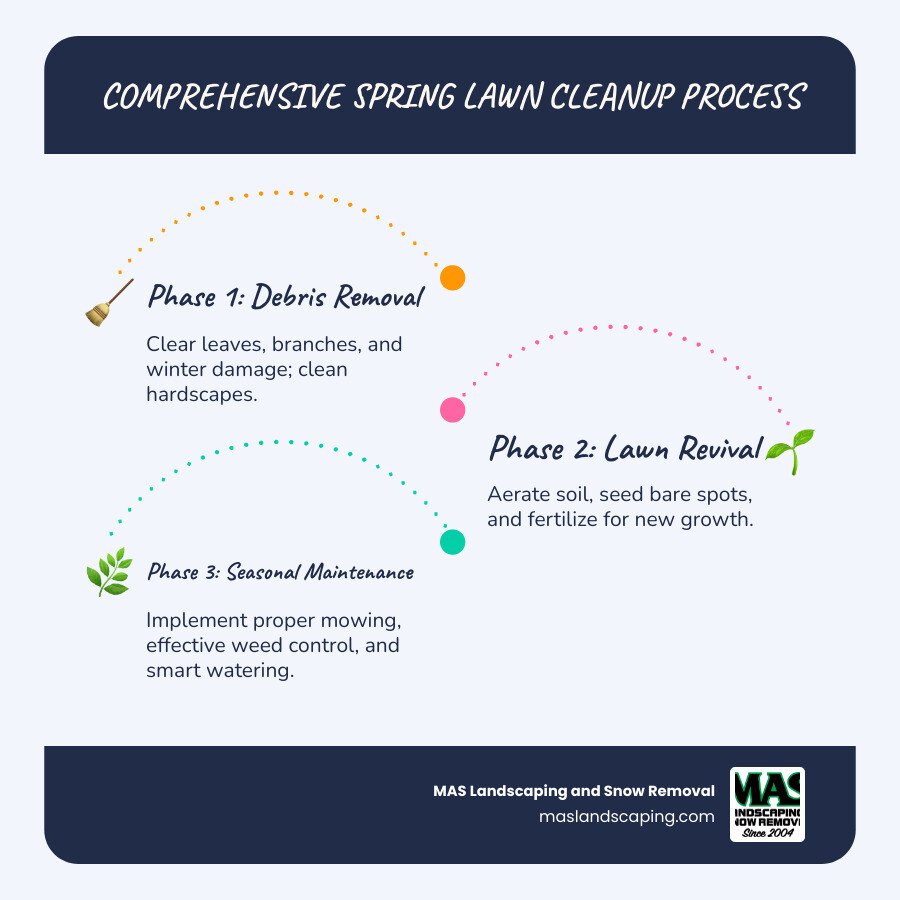
Basic spring clean up lawn care vocab:
The Essential Spring Cleanup Checklist: Clearing Winter’s Mess
Winter leaves behind quite a calling card on our lawns and gardens. After months of snow, ice, and harsh weather, your yard likely looks like it’s been through a battle – and honestly, it has! Spring clean up lawn care begins with rolling up our sleeves and tackling winter’s messy aftermath.

Think of this phase as your yard’s morning coffee – it’s what gets everything moving again. We’re talking about debris removal that goes beyond just picking up a few sticks. You’ll need to assess any winter damage, do some serious raking, tackle necessary pruning, get your garden beds ready for their spring debut, and give your hardscapes some much-needed attention.
This groundwork isn’t just about making things look pretty (though that’s a nice bonus). It’s about creating the right conditions for healthy growth all season long. For homeowners who want professional help with this process, our comprehensive yard clean ups service takes care of everything from debris removal to final cleanup.
Raking and Dethatching for a Healthy Start
Here’s something that surprises many homeowners: that matted grass under the melting snow isn’t just unsightly – it’s actually suffocating your lawn. Winter creates a perfect storm of conditions that lead to thatch layer buildup and problems like snow mold.
Thatch is basically a layer of dead grass, roots, and organic matter that sits between your soil and the green grass blades. A little thatch is normal and even beneficial, but when it gets thicker than half an inch, it becomes a problem. Think of it like a thick blanket that won’t let water, air, and nutrients reach your grass roots.
The solution? Get out there with a good rake and start working. Leaf removal is just the beginning – you’ll want to rake deeply enough to pull up that matted grass and get some soil aeration happening naturally. For lawns with serious thatch problems, you might need to consider more aggressive action with a power rake method or dethatching tool.
Power raking uses a machine with rotating tines that really dig in and pull up the thatch, while dethatching can be done with specialized rakes for lighter buildup. Either way, your grass will thank you by growing thicker and healthier.
Pruning Trees and Shrubs for New Growth
Winter can be rough on trees and shrubs, leaving behind dead branches and damaged limbs that need attention. Spring pruning isn’t just about cleanup – it’s about setting your plants up for their best growing season yet.
When you remove damaged wood, you’re improving air circulation throughout the plant and shaping plants for healthy new growth. But here’s where timing gets tricky, and many homeowners make costly mistakes.
Spring vs. summer bloomers need different treatment. If you have shrubs that bloom early in spring (like forsythia or lilacs), wait until after they finish flowering to prune them. These plants set their flower buds on last year’s growth, so pruning too early means cutting off this year’s beautiful display.
Summer and fall bloomers, on the other hand, bloom on new wood, so you can safely prune them in late winter or early spring before new growth starts.
Always follow proper safety precautions – use sharp, clean tools and wear protective gear. If you have large trees or feel uncertain about what to cut, consider our professional landscaping services for expert pruning that keeps your plants healthy and your property safe.
Tidying Up Garden Beds and Hardscapes
Your garden beds probably look like they hosted a very messy party all winter long. Clearing dead annuals is the obvious first step, but don’t stop there. Those early spring weeds are already plotting their takeover, so address them while they’re still small and manageable.
Edging lawn borders creates those crisp, professional-looking lines that separate your grass from garden beds. It’s amazing how much this simple step can transform your yard’s appearance.
Don’t forget about your hardscapes during spring cleanup. Sweeping walkways and cleaning patios removes winter’s accumulation of sand, salt, and debris. Take time for checking paver damage too – winter freeze-thaw cycles can heave stones or create cracks that become tripping hazards.
A good pressure washing can work wonders on stubborn stains and algae buildup that developed over the winter months. If you find damage that needs professional repair or you’re thinking about upgrading your outdoor living spaces, our team specializes in patio installation and other hardscaping solutions.
Reviving Your Lawn: Soil Preparation and Growth
Once you’ve cleared away winter’s debris, it’s time to focus on what really matters – the health of your soil. Think of soil as your lawn’s foundation. Just like you wouldn’t build a house on shaky ground, you can’t expect beautiful grass to grow in compacted, nutrient-poor soil.
After months of snow cover and dormancy, your lawn is ready for some serious TLC. This is where spring clean up lawn care gets exciting – you’re not just cleaning anymore, you’re actively reviving your outdoor space.
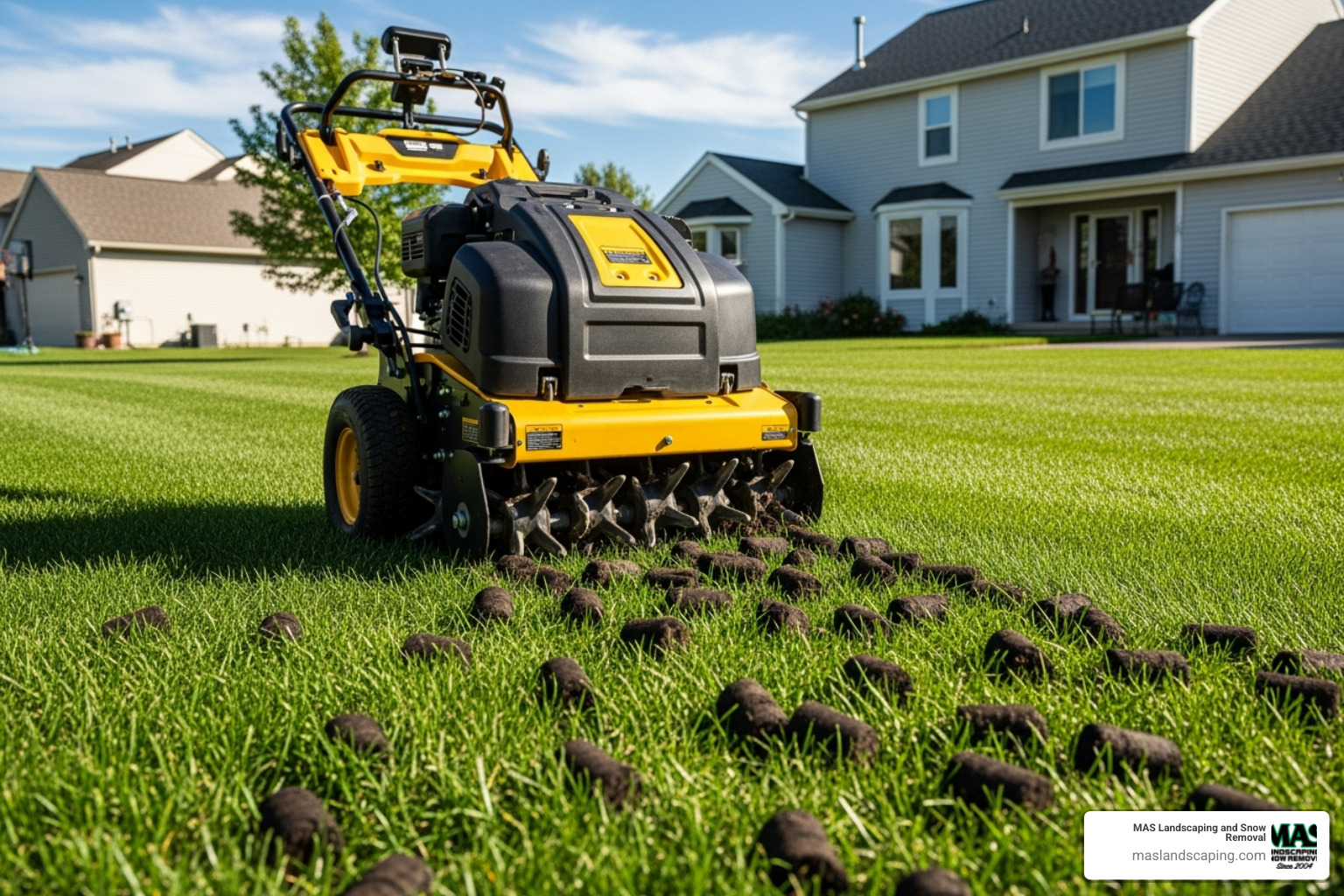
The Importance of Spring Lawn Aeration
Your lawn needs to breathe, just like you do. Over the winter, heavy snow, foot traffic, and natural settling compress your soil into a tight layer that blocks air, water, and nutrients from reaching grass roots.
Core aeration is like giving your lawn a deep breath of fresh air. A core aerator pulls out small plugs of soil, creating channels for water to penetrate deeper and nutrients to flow freely. Those little soil plugs scattered across your lawn might look messy at first, but they’re actually working hard – breaking down and adding organic matter back to your soil.
The benefits are immediate and long-lasting. Your grass develops deeper root growth, which means it can better survive summer heat and drought. Water stops pooling on the surface and actually soaks in where it’s needed. Even your thatch layer starts to break down naturally.
Spring aeration works especially well because your grass is just waking up and ready to take advantage of improved growing conditions.
Seeding and Repairing Bare Patches
Winter can be rough on lawns. You might notice bare spots from winter salt damage, areas where snow sat too long, or patches that just didn’t make it through the cold months. Don’t worry – spring is the perfect time to fix these problems.
Overseeding helps fill in thin areas and creates a thicker, healthier lawn that naturally crowds out weeds. For bare patches, start by loosening the soil and removing any dead grass. The key to successful seeding is seed-to-soil contact – you want those seeds nestled into the earth, not just sitting on top.
After spreading seed, lightly rake the area so you can still see about 10% of the seeds on the surface. This ensures good contact without burying them too deep.
The most important part? Watering new seeds consistently. Keep the soil moist (not soaked) until you see new grass sprouting. This usually takes 7-14 days, depending on grass type and weather conditions.
Fertilizing for a Lush, Green Carpet
Your grass is like a teenager in spring – growing fast and hungry for nutrients. After months of dormancy, it needs fuel to green up and develop strong roots.
Before you grab any fertilizer, consider getting a soil test. This simple step tells you exactly what your lawn needs. Most grasses prefer pH levels between 6.0 and 7.0. If your soil is too acidic or alkaline, even the best fertilizer won’t work properly.
Slow-release nitrogen fertilizers are your best friend for spring feeding. They provide steady nutrition without the risk of burning your grass. Organic compost is another excellent choice – it feeds your grass while improving soil structure.
Timing matters with spring fertilizing. A light feeding in early spring gets your grass started, but avoid going overboard. Too much nitrogen early in the season can actually make your lawn more susceptible to disease and create more work for you later.
Always water thoroughly after fertilizing to help nutrients reach the root zone and prevent any chance of fertilizer burn.
Your Guide to Early Season Spring Clean Up Lawn Care
With the groundwork laid—debris cleared, soil aerated, and new seeds planted—it’s time to shift into the ongoing care that will keep your lawn thriving all season long. Think of this phase as the “maintenance mode” of spring clean up lawn care. You’ve done the heavy lifting, and now it’s about consistent, smart practices that’ll have your neighbors asking for your secret.

Best Practices for Your First Mow of the Season
There’s something deeply satisfying about that first mow of spring. It’s like your lawn is officially saying, “I’m back!” But before you fire up the mower, let’s make sure we’re doing this right.
Mower maintenance comes first. Clean off last year’s grass clippings from the deck, check the oil, and most importantly, sharpen those blades. Dull blades don’t cut grass—they tear it, leaving ragged edges that stress your lawn and invite disease. It’s like trying to cut paper with a butter knife.
When you’re ready to mow, set your mower to its highest setting, around 3 to 3.5 inches. I know it might look a bit shaggy at first, but this height encourages deeper root growth and helps your grass crowd out weeds naturally. Always mow when the grass is dry—wet grass clumps up and can clog your mower.
Here’s a money-saving tip: leave those grass clippings right where they fall. They’ll decompose quickly and feed your lawn with natural nitrogen. It’s like giving your grass a free meal every time you mow.
Effective Spring Weed and Pest Control
Let’s talk about those uninvited guests in your lawn. Weeds are basically the party crashers of the grass world—they show up uninvited and try to take over. Spring is when many of these troublemakers start making their move.
Common spring weeds include the usual suspects: crabgrass, dandelions, chickweed, white clover, henbit, wild violet, and nutsedge. Each one has its own personality, but they all share one goal: stealing nutrients and water from your grass.
For crabgrass, timing is everything. Apply pre-emergent herbicides before soil temperatures hit 55-60 degrees—usually when the forsythia starts blooming. This creates an invisible barrier that stops crabgrass seeds from sprouting.
For weeds that are already established, you have options. Post-emergent treatments work well for larger areas, while hand-pulling is perfect for smaller infestations (and surprisingly therapeutic). The key is catching them early, before they spread.
Don’t forget about grubs—those C-shaped larvae that munch on grass roots underground. Spring is the perfect time to apply preventative treatments, stopping them before they become a summer headache.
Smart Watering for a Stronger Lawn
Watering seems simple enough, right? Turn on the sprinkler and let it run. But smart watering is what separates the pros from the weekend warriors.
The golden rule is deep, infrequent watering. Think of it like teaching your grass to be independent. Shallow, daily watering creates lazy roots that stay near the surface. Deep soakings encourage roots to grow down, making your lawn tougher and more drought-resistant.
Aim for one to two inches per week for established turf, delivered in just one or two sessions. Morning watering is ideal—it gives your grass time to dry before evening (preventing fungal diseases) and reduces water loss to evaporation.
How do you know when your lawn is thirsty? Look for these signs: the grass turns from bright green to a dull, bluish-green color, and your footprints stay visible when you walk across it because the blades don’t bounce back.
New seed areas need different treatment. Keep that top inch of soil consistently moist until germination—usually about 10-14 days. It’s a bit like babysitting, but the results are worth it.
Tools, Costs, and Common Mistakes
Getting your spring clean up lawn care right comes down to having the proper tools, avoiding rookie mistakes, and knowing when to roll up your sleeves versus when to call in the pros. Think of it like cooking a great meal – you need the right equipment, a solid recipe, and sometimes it’s worth splurging on a chef!

Essential Tools for Spring Clean Up Lawn Care
You don’t need to break the bank or fill an entire garage, but having quality basics makes your spring clean up lawn care so much easier. A sturdy garden rake is your best friend for gathering leaves, while a specialized thatch rake with those thin metal tines does the heavy lifting for removing built-up thatch.
A wheelbarrow or large tarp saves your back when moving debris around the yard. Trust me, your future self will thank you after the third trip hauling branches! For pruning, you’ll want both hand pruners for smaller branches and loppers for anything up to about two inches thick.
Quality gloves are non-negotiable – thorns, splinters, and blisters are no fun. Make sure your lawn mower is ready with sharp blades, and invest in a spreader for even fertilizer and seed application. A basic shovel and garden fork round out your toolkit for soil work and stubborn weeds.
For more comprehensive guidance on getting your yard ready, check out this Complete Spring Yard Cleanup Checklist that covers all the details.
Common Mistakes to Avoid
Even experienced homeowners make these mistakes, so don’t feel bad if you’ve done a few! The biggest error? Working on soggy soil. When the ground is waterlogged, you’ll compact it badly, making it harder for grass to grow later. Wait until soil doesn’t stick to your shoes.
Scalping your lawn might feel satisfying, but cutting grass too short stresses it terribly and invites weeds to move in. Stick to that 3-3.5 inch height we talked about earlier. Similarly, over-fertilizing seems helpful but can actually burn your grass and create disease problems.
Timing matters with pruning too. Those beautiful spring-flowering shrubs like forsythia will skip blooming this year if you prune them too early. Skipping aeration is another missed opportunity – compacted soil in our suburban areas really needs that breathing room.
Finally, dull mower blades are lawn killers. They tear grass instead of cutting cleanly, leaving brown, ragged edges that invite disease. Sharpen those blades at least once a year!
DIY vs. Hiring a Professional: What to Expect
The DIY route saves money upfront and gives you that satisfying “I did this myself” feeling. But be realistic about the time commitment – a thorough spring cleanup can eat up several weekends, especially if you’re learning as you go. You’ll also need to buy or rent specialized equipment like aerators and power rakes.
Professional services bring expertise, proper equipment, and efficiency. They can spot problems you might miss and complete in hours what might take you days. This is especially valuable if your lawn has serious thatch buildup, heavy compaction, or extensive winter damage.
Cost-wise, professional spring cleanup varies widely based on your yard size and needs. Average costs based on internet data range from around $200 for basic cleanup to $800 or more for comprehensive services including aeration and detailed work. These are average costs based on internet data and not actual costs for MAS Landscaping.
The sweet spot? Handle basic tasks like raking and light pruning yourself, but consider professionals for technical work like aeration or if you’re dealing with significant lawn problems. Always get detailed estimates that spell out exactly what’s included – no surprises!
Frequently Asked Questions about Spring Lawn Care
As first-time homeowners dive into spring clean up lawn care, we get lots of thoughtful questions. It’s completely normal to feel a bit overwhelmed by all the tasks ahead! Let’s walk through the most common concerns to help you feel more confident about caring for your lawn.
When is the best time to start spring lawn cleanup?
The golden rule for starting your spring clean up lawn care is patience. Wait until the snow has completely melted and the ground has dried out enough that it doesn’t feel squishy underfoot. Walking or working on soggy soil is like stepping on a wet sponge – it compacts everything and actually makes your lawn’s problems worse.
Here in the Northeast, particularly around Saugus, MA, this sweet spot typically falls in late March or early April. But don’t go by the calendar alone! Look for these signs that it’s time to begin: you can walk across your lawn without leaving deep footprints, the soil isn’t sticking to your shoes, and you’re starting to see new grass growth poking through.
Mother Nature doesn’t follow our schedules. Some years spring arrives early, other years we’re still dealing with snow in April. Trust the conditions, not the date on the calendar.
How does spring cleanup impact my lawn’s health?
Think of spring clean up lawn care as giving your lawn CPR after a long, harsh winter. The impact on your lawn’s health is honestly dramatic – and it all comes down to letting your grass breathe again.
When we remove that suffocating layer of matted leaves and debris, we’re preventing disease from taking hold. All that wet, decomposing matter creates the perfect breeding ground for fungal problems like snow mold. By clearing it away, we’re eliminating these disease risks before they can spread.
The cleanup process also reduces pest problems. Insects and grubs love hiding in thatch and debris over winter. Remove their hiding spots, and you’ve already won half the battle against lawn pests.
But here’s the real magic: when we aerate compacted soil and address bare spots early, we’re allowing nutrients and water to reach the roots where they’re needed most. This promotes vigorous, healthy growth that naturally crowds out weeds. A thick, healthy lawn is your best defense against dandelions and crabgrass trying to move in.
The result? Improved curb appeal that makes your entire property look well-cared-for and welcoming. It’s amazing how much difference a properly cleaned-up lawn makes to your home’s overall appearance.
What are the most critical spring clean up lawn care tasks?
While every step in spring clean up lawn care contributes to a beautiful yard, some tasks are absolute game-changers that you simply can’t skip.
Raking and dethatching tops the list because it addresses the most immediate threat to your lawn’s health. That matted layer of dead grass and leaves isn’t just ugly – it’s literally suffocating your lawn. Remove it, and you’ll be amazed at how quickly your grass starts to green up and grow.
Aeration for compacted soil comes in as a close second, especially if your lawn gets heavy foot traffic or you live in an area with clay soil. Compacted soil is like trying to drink through a straw that’s been pinched shut – nothing gets through. Core aeration opens up those pathways for water, air, and nutrients to reach deep into the root zone.
Don’t overlook pruning damaged branches on your trees and shrubs. Winter can be brutal on woody plants, and leaving dead or diseased wood attached is like leaving a wound untreated. Clean cuts made in early spring allow plants to heal quickly and put their energy into healthy new growth.
Finally, addressing bare spots right away prevents weeds from getting a foothold. Nature abhors a vacuum, and if you don’t fill those empty spaces with grass seed, weeds will happily move in instead. It’s much easier to seed bare spots in spring than to fight established weeds all summer long.
These four tasks create the foundation for everything else you’ll do in your lawn care routine throughout the growing season.
Conclusion: Enjoy Your Beautiful Spring-Ready Yard
Taking on spring clean up lawn care as a first-time homeowner might seem overwhelming at first, but you’ve now got a complete roadmap to success. From that initial debris removal and soil preparation to establishing smart watering habits and avoiding common pitfalls, each step builds toward the same goal: a thriving, beautiful lawn that becomes the envy of your neighborhood.
The beauty of this process is in how each task connects to the next. When you clear away winter’s mess, you’re setting the stage for effective aeration. When you aerate compacted soil, you’re creating the perfect conditions for new seed to take root. When you fertilize thoughtfully, you’re feeding not just this season’s growth but building a foundation for years of lawn health.
The long-term benefits extend far beyond just having nice grass. A well-maintained lawn increases your home’s value, provides a safe space for family activities, and gives you that satisfying sense of accomplishment that comes from nurturing something beautiful. Picture summer evenings spent grilling on your patio, kids playing safely on thick, soft grass, and neighbors stopping to compliment your yard’s curb appeal.
Consistency is key. The habits you establish this spring – proper mowing height, deep watering, and staying ahead of weeds – will serve your lawn well throughout the growing season and beyond.
For homeowners in the Saugus, MA area who’d rather spend their weekends enjoying their yard instead of working on it, MAS Landscaping offers expert, professional help to get your outdoor space ready for the season. Our team understands the unique challenges of New England landscapes and is committed to creating functional, beautiful outdoor spaces that you’ll love coming home to. If you’d like professional support for your spring preparation, explore our comprehensive yard clean up services.
Your beautiful, spring-ready yard is waiting. With the right approach and a little patience, you’ll be enjoying the fruits of your labor all season long.
