


Spring cleanup of yard: Your Perfect 2025 Start
Why Spring Cleanup of Your Yard Sets the Stage for Success
Spring cleanup of yard is the foundation that determines whether your outdoor space will thrive or struggle throughout the growing season. Like indoor spring cleaning, your yard needs a thorough refresh after winter’s harsh conditions.
Quick Answer: Essential Spring Cleanup Tasks
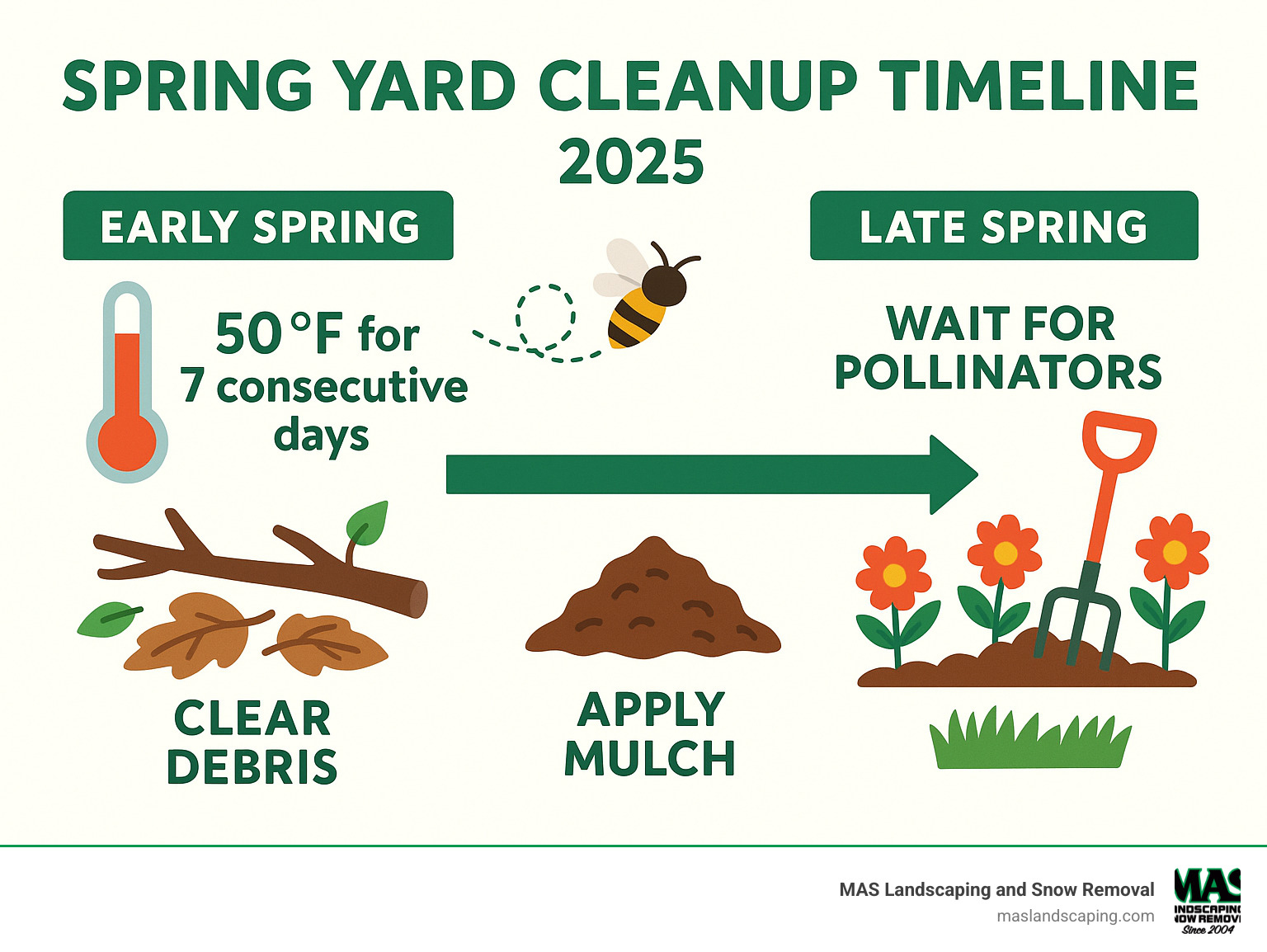
- Wait for warmth: Start when temperatures stay above 50°F for 7 consecutive days
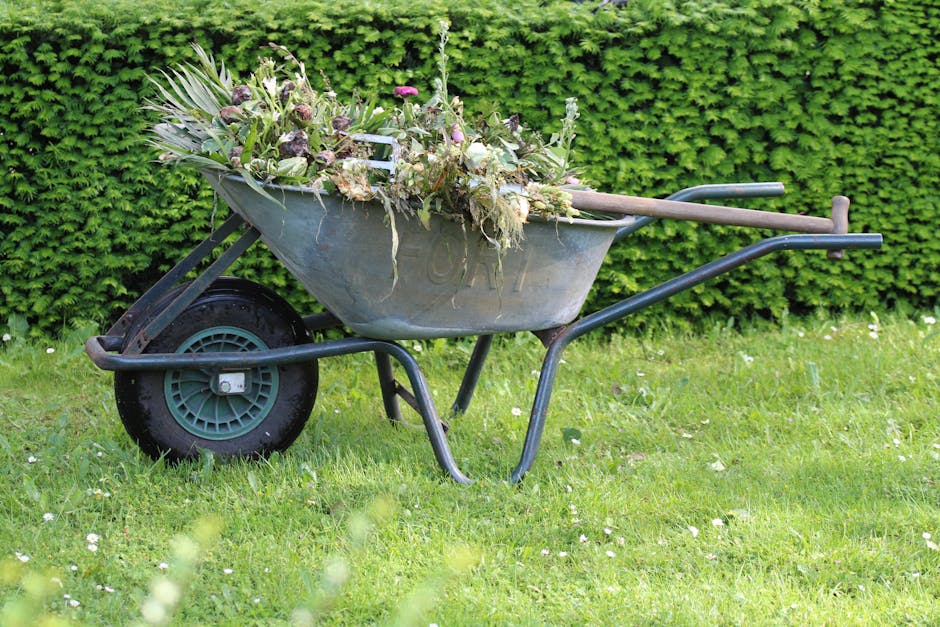
- Clear debris: Remove fallen branches, leaves, and winter litter
- Prune strategically: Cut back perennials and damaged branches (timing matters for flowering shrubs)
- Revive lawn: Light raking, aeration, and bare patch repair
- Refresh beds: Weed, divide perennials, and add fresh mulch
- Clean hardscapes: Power wash patios, walkways, and outdoor furniture
The timing of your spring cleanup matters more than you might think. Research shows that 70% of native bees nest in the ground and many beneficial insects overwinter in leaf litter and hollow plant stems. With insect populations having plummeted 45% in the last 30 years, being mindful of when and how you clean up can make a real difference for local wildlife.
A proper spring cleanup does more than just improve curb appeal. It prevents disease, reduces pest problems, and creates the ideal conditions for healthy plant growth. Whether you tackle it yourself or hire professionals, the key is understanding what needs to be done and when to do it.
For homeowners in the Greater Boston area, spring cleanup typically begins in mid to late April, but the exact timing depends on your local microclimate and the specific tasks at hand.
Spring cleanup of yard vocab explained:
Timing is Everything: When to Start Your Spring Yard Cleanup
That first warm spring day inspires an urge to tackle your spring cleanup of yard tasks, but patience is crucial. Your yard, and the creatures living in it, aren’t ready for a full cleanup yet.
Patience is your secret weapon when it comes to spring cleanup timing. The magic number to remember is 50°F (10°C) – wait until daytime temperatures consistently stay above this threshold for at least seven consecutive days before diving into major cleanup tasks.
This isn’t an arbitrary rule; it’s based on how beneficial insects survive winter. Many native bees, butterflies, and other pollinators spend the cold months tucked away in leaf litter, hollow plant stems, and shallow soil burrows. When you clean up too early, you’re essentially evicting these important creatures before they’re ready to face the world.
Soil temperature matters just as much as air temperature. Cool-season grasses begin active growth when soil temperatures reach 50°F, and this is also when many overwintering insects become active. By waiting for this natural warming, you’re working with nature’s schedule instead of against it.
Your yard also has its own microclimates. A sunny, south-facing spot warms faster than a shaded area, while low-lying areas stay cooler longer. For homeowners in Saugus, Everett, and surrounding areas, we typically see optimal cleanup conditions arrive between mid-April and early May, depending on Mother Nature’s mood that year.
Here’s a sobering fact: insect populations have declined by 45% in the last 30 years. That means every small action we take to protect beneficial bugs and overwintering insects can make a real difference in supporting local ecosystems.
Be a Friend to Pollinators
Being pollinator-friendly during your spring cleanup of yard doesn’t mean you have to live with a messy landscape all season. It just means being a bit more thoughtful about your timing and technique.
Leave the leaves in some areas – at least until you’ve had seven consecutive warm days. Those crispy leaves aren’t just winter debris; they’re tiny hotels for mourning cloak butterflies, ladybugs, and ground-nesting bees. When you do start cleaning, work gently and avoid aggressive raking that might disturb these beneficial insects.
Hollow stems are insect condos during winter months. Instead of hauling away all cut plant material, create small brush piles at your property’s edge. You can also cut perennial stems into bundles and hang them on fences or lean them against trees. This gives remaining insects a safe place to complete their life cycles.
The key is finding balance. You can absolutely have a well-maintained landscape while supporting local wildlife. Many homeowners in Malden and Lynnfield find that leaving strategic “wild zones” in their yards – maybe a small pile of leaves under shrubs or along fence lines – actually reduces maintenance needs while supporting biodiversity.
When you do start your spring garden cleanup, gentle raking is your friend. You’re not trying to remove every single leaf – you’re just tidying up while giving nature a helping hand. Delay mulching until soil temperatures have consistently warmed, and you’ll be working with the natural rhythm of your landscape.
For more detailed guidance on timing your cleanup activities, check out this helpful resource on when to start spring yard cleanup.
The Ultimate Spring Cleanup of Yard Checklist: From Lawn to Garden Beds
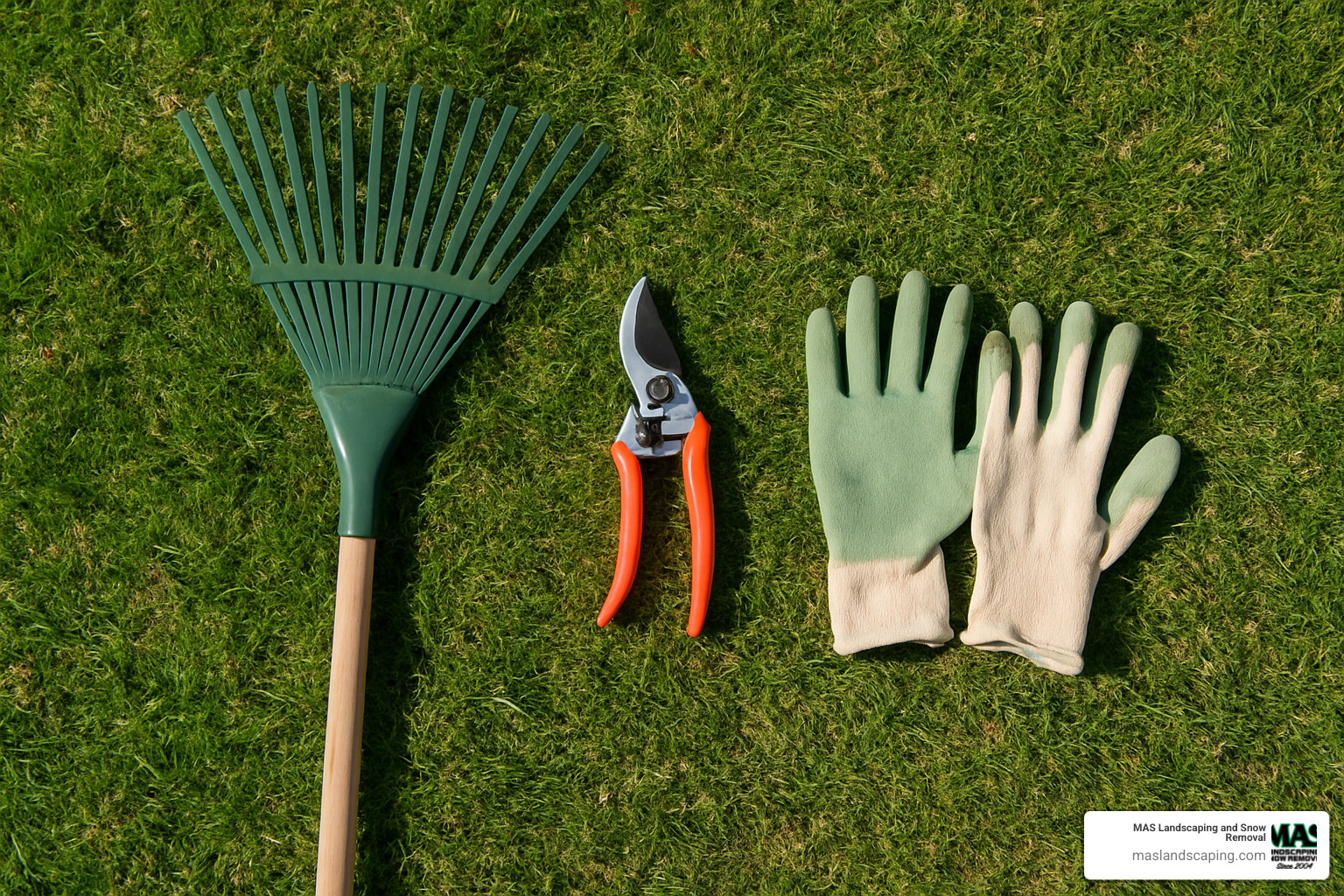
Your spring cleanup of yard doesn’t have to feel overwhelming. Use the five-step system below and you’ll cover everything that matters—without burning an entire month of weekends. Each task builds on the last so your landscape enters the growing season healthy, tidy, and ready to shine.
Step 1: Clear Debris and Prepare the Canvas
- Walk the whole property, gathering fallen branches, twigs and wind-blown litter. This prevents mower damage and exposes problem spots.
- Remove burlap wraps, rose cones and any winter protection. Store reusable items for next year.
- Compost only clean organic matter. Toss diseased plant parts, pet waste, and seedy weeds in the trash so you don’t re-introduce problems later.
Step 2: Prune Trees, Shrubs, and Grasses
- Start with wood that’s dead, damaged, or diseased—that can be removed anytime.
- Spring-blooming shrubs such as forsythia and lilac formed their buds last summer, so wait until after they flower to shape them.
- Summer bloomers like hydrangea flower on new wood. Trim them now to encourage more blossoms.
- Cut ornamental grasses back to a few inches. Pause if you spot cocoons; stagger cuts so insects can finish developing.
Step 3: Revive Garden Beds and Perennials
- Shear perennial stems to 4–5 inches, leaving stubble for nesting bees.
- Divide crowded clumps of hosta, daylily or iris. Replant extras where you need fill-ins or share with neighbors.
- Weed while soil is moist; whole roots pull easily. Tough weeds may need spot treatment—follow label directions exactly.
- Top-dress beds with 2–3 inches of compost and edge with a spade for a crisp, weed-blocking boundary.
Step 4: Tune Up the Lawn
- Lightly rake to loosen matted grass and let air reach the crown.
- Core aerate compacted areas so water, nutrients and oxygen can reach the root zone.
- Overseed bare patches when forsythia blooms—nature’s cue that soil is warm enough.
- Wait until soil temps hit 55 °F to fertilize with a slow-release, balanced product. Mow at 2.5–3 inches to shade weed seeds and conserve moisture.
Step 5: Mulch and Manage Weeds
- After soil has warmed and dried, spread 2–3 inches of mulch—enough to suppress weeds but not smother roots. Keep it a few inches from trunks and crowns.
- Apply pre-emergent herbicide for crabgrass before soil reaches 55–60 °F. If you just overseeded, skip the herbicide in those spots so new grass can germinate.
- Choose mulch type by need: shredded bark enriches soil as it breaks down, while stone gives long-term weed control around hardscapes.
Following this streamlined checklist gets you 90 % of the results with far less stress, leaving you free to relax and enjoy the first warm days on the North Shore.
Beyond the Green: Cleaning Hardscapes and Structures
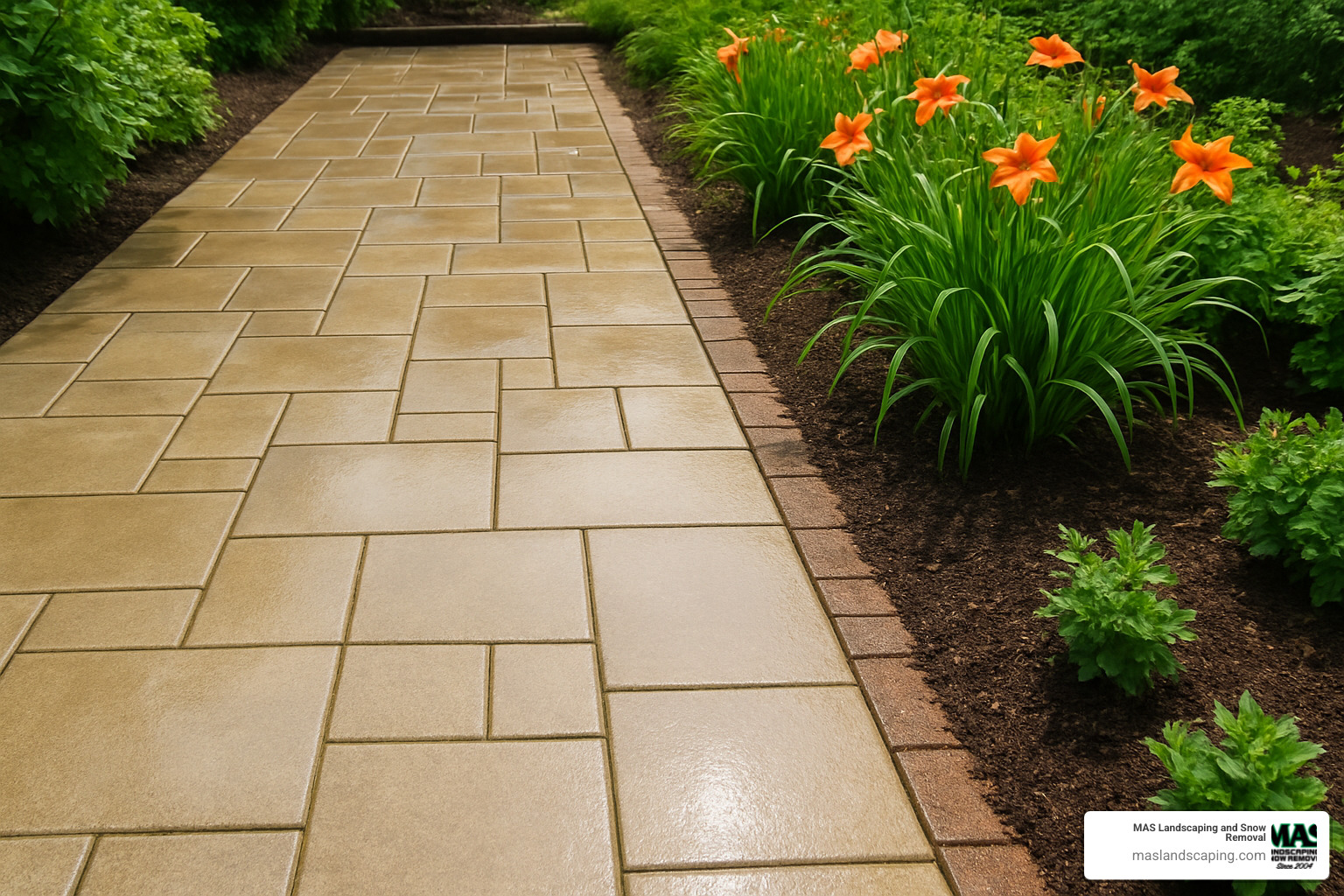
Your spring cleanup of yard isn’t complete until you’ve addressed the hardscape elements that tie your outdoor space together. These non-plant features often show the most dramatic change with proper attention, and they’re usually the areas your guests notice first.
Think of hardscapes as the backbone of your landscape. While plants provide beauty and life, your patios, walkways, and structures provide the framework that makes everything functional. After months of winter weather, these surfaces need some serious TLC to look their best.
The good news? Cleaning hardscapes often provides instant gratification. Unlike plants that take time to respond to care, a freshly cleaned patio or walkway immediately transforms your outdoor space from winter-weary to spring-ready.
Patios, Walkways, and Fences
Power washing is your best friend when it comes to removing winter’s layer of grime and mildew from hard surfaces. Start with a lower pressure setting and gradually increase as needed – you’d be surprised how much damage high pressure can cause to certain materials. Always test in an inconspicuous area first.
After washing, take time to inspect for frost damage. New England winters are notorious for causing pavers and stones to shift or heave. Walk your entire patio and all walkways, looking for uneven surfaces that could become tripping hazards. Reset any displaced pavers and add fresh sand or stone dust to level everything properly.
Gravel paths need special attention after winter. Rake the surface smooth and add fresh gravel to thin spots where snow plows or foot traffic have scattered the material. A crisp, well-maintained gravel path can look just as neat as expensive stone – it just needs regular attention.
Don’t overlook your fences and trellises during this process. Winter weather can loosen boards, damage hardware, or promote rot in wooden structures. Look for signs of damage and make repairs promptly – small fixes now prevent major headaches later. Professional walkway installation often includes guidance on maintaining these features year-round.
For wooden structures, a good cleaning with a mild bleach solution works wonders. Mix about 2 quarts of bleach with 1 cup of liquid soap and 2 gallons of water. This removes mildew and prepares surfaces for staining or sealing later in the season.
Furniture and Irrigation
Outdoor furniture that’s been stored all winter deserves a thorough inspection before it returns to duty. Check for loose screws, cracked plastic, or fabric that needs attention. Clean everything with appropriate cleaners – mild soap and water work for most materials, but some surfaces like teak may need specialized products.
Your irrigation system is probably the most important hardscape element to check, even though it’s mostly hidden. Start by slowly turning on your water supply and checking each zone systematically. Look for broken sprinkler heads, clogged emitters, or obvious leaks. Even small leaks can waste hundreds of gallons of water over a season.
Drip irrigation lines are particularly vulnerable to damage from rodents who may have chewed on them during winter. Flush the entire system thoroughly before connecting it to your automatic timer. Replace any damaged components you find – it’s much easier to fix these issues now than during the heat of summer.
For homeowners in Saugus and surrounding areas, we often find that patio installation and maintenance go hand in hand. A well-maintained patio becomes the centerpiece of outdoor entertaining, while a neglected one can detract from even the most beautiful landscaping.
Outdoor lighting deserves attention too. Replace burned-out bulbs, clean fixtures of winter grime, and check for loose connections. Proper lighting extends your outdoor season and provides important safety benefits for evening entertaining.
The key to successful hardscape maintenance is addressing small problems before they become big ones. A loose paver fixed today prevents a major trip hazard tomorrow. A small irrigation leak repaired now saves water and prevents soggy spots in your lawn that can lead to disease problems.
The “Why”: The Importance and Cost of a Professional Spring Cleanup
Think of spring cleanup of yard as preventive medicine for your landscape. Just like regular health checkups catch problems before they become serious, a thorough spring cleanup prevents issues that could plague your yard all season long.
Why a thorough spring cleanup of your yard is essential
Every pile of wet leaves left from winter and every broken branch creates the perfect breeding ground for fungal diseases that can devastate your plants. Common lawn problems like brown patch and dollar spot don’t just appear out of nowhere – they overwinter in thatch and debris, waiting for the right conditions to explode across your landscape.
But it’s not just about disease prevention. A proper spring cleanup is like hitting the reset button on your entire outdoor space. When you remove overwintering pest hiding spots while preserving beneficial insect habitats, you’re creating a natural balance that reduces the need for chemical treatments later.
The aesthetic change is often the most immediately rewarding part. There’s something deeply satisfying about seeing your property go from winter-weary to spring-fresh. This isn’t just about personal enjoyment – real estate professionals consistently report that well-maintained landscaping can add 5-10% to your home’s value.
Perhaps most importantly, doing things right in spring means less work throughout the growing season. By preventing weed establishment, creating optimal growing conditions, and addressing problems early, you’ll spend more time enjoying your outdoor space and less time fighting problems.
Considering a professional for your spring cleanup of yard?
Professional spring cleanup brings expertise that’s hard to match as a DIY homeowner. Professionals can spot early signs of disease, know exactly when to prune different plants, and have the commercial-grade equipment to tackle big jobs efficiently.
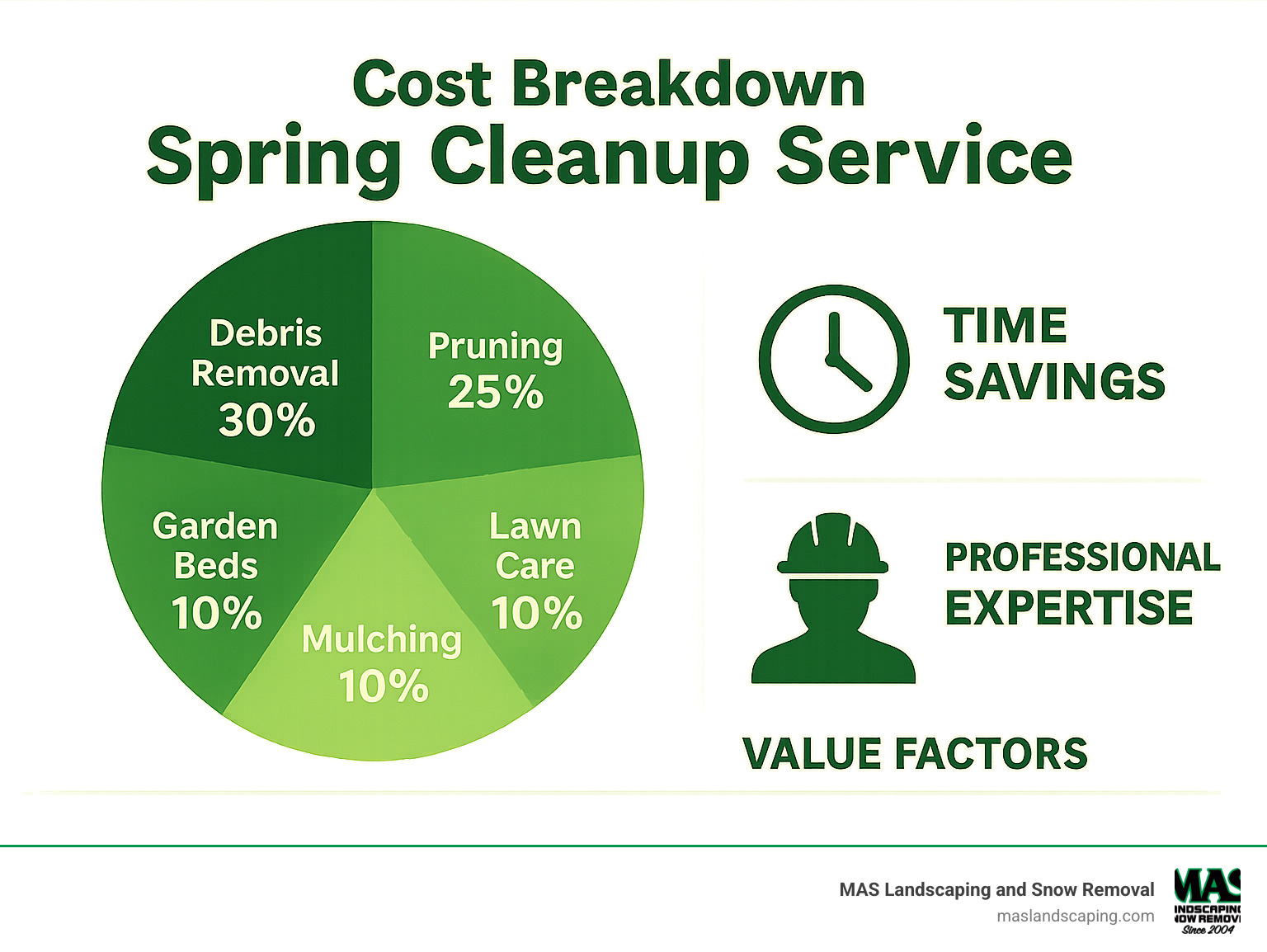
When you hire professionals, you’re typically getting comprehensive service that includes debris removal, proper pruning of trees and shrubs, lawn dethatching and aeration, garden bed preparation and edging, mulch installation, basic hardscape cleaning, and irrigation system startup and inspection.
The investment varies significantly based on property size and scope of work. According to internet data, average costs for professional spring cleanup services range from $300 for basic services on smaller properties to $1,500 or more for comprehensive cleanup on larger properties with extensive landscaping. These are average costs based on internet data and not actual costs for MAS Landscaping and Snow Removal services.
For busy homeowners in Everett, Lynnfield, Malden, and surrounding communities, professional service often pays for itself through time savings and proper technique that prevents costly plant damage. Instead of spending your weekends wrestling with cleanup tasks, you can focus on planning your garden and enjoying the results.
Frequently Asked Questions about Spring Yard Cleanup
How do I make my spring cleanup pollinator-friendly?
The secret to pollinator-friendly spring cleanup of yard activities lies in patience and gentle techniques. Wait until daytime temperatures consistently stay above 50°F (10°C) for about a week before starting major cleanup tasks. This timing gives overwintering beneficial insects like native bees and butterflies the chance they need to emerge safely from their winter shelters in leaf litter and hollow plant stems.
When you do begin cleaning, work gently and thoughtfully. Instead of aggressive raking that disturbs ground-nesting bees, use lighter strokes and consider leaving some “messy” areas at the edges of your property. Create small brush piles with cut stems and leaves – these become temporary hotels for beneficial insects who need a few more days to wake up fully.
Mourning cloak butterflies and ladybugs often spend winter as adults tucked into leaf litter. By being gentle during cleanup, you’re giving these helpful creatures the best chance to contribute to your garden’s health throughout the growing season. For more detailed guidance, the Xerces Society offers excellent advice on timing your cleanup to protect pollinators.
Should I fertilize and seed my lawn at the same time?
This is one of the trickiest timing questions in spring cleanup of yard care, and the answer depends entirely on your weed control strategy. Most pre-emergent herbicides used to prevent crabgrass will also prevent new grass seed from germinating – they don’t discriminate between good seeds and weed seeds.
If crabgrass has been a major problem in your lawn, you’ll want to apply pre-emergent herbicide and delay any seeding until fall. This gives you the best chance of preventing those troublesome weeds from taking hold when warm weather arrives.
However, if you have bare patches that need immediate attention, you’ll need to make a choice. Skip the pre-emergent in those specific areas, focus on getting new grass established through proper watering and care, and tackle any weeds that appear through hand-pulling or spot treatments. This approach requires more hands-on management but allows you to address both problems.
For homeowners in our Saugus area, fall seeding is often the most successful approach anyway, as cooler temperatures and increased rainfall create ideal conditions for grass establishment.
What’s the first thing I should do for spring cleanup?
Before you grab your rake or pruning shears, start with a complete property walk-through. This initial assessment is the foundation of any successful spring cleanup of yard project. Walk every area of your property and remove large debris first – fallen branches, winter litter, and any storm damage that accumulated over the cold months.
This initial debris sweep serves multiple purposes. It gives you a clear view of what actually needs attention, prevents damage to your mower and other equipment, and helps you prioritize your tasks. You might find areas that need more attention than you realized, or find that some areas weathered winter better than expected.
Pay special attention to areas around your home’s foundation and high-traffic zones like walkways and patios. These spaces often collect the most debris and benefit dramatically from thorough cleaning. Once you’ve completed this big-picture cleanup, you’ll have a clean canvas for the more detailed work of pruning, lawn care, and garden bed preparation.
This systematic approach prevents the overwhelming feeling that often comes with spring cleanup and ensures you don’t miss important areas that could cause problems later in the season.
Conclusion
A thorough spring cleanup of yard is like giving your outdoor space a fresh start after winter’s long sleep. When you create optimal conditions for plant health, prevent pest and disease problems, and establish the foundation for a beautiful landscape, you’re setting yourself up for months of enjoyment ahead.
The magic really happens when you understand that timing matters as much as technique. Waiting for those seven consecutive days above 50°F isn’t just about plant health – it’s about being a good neighbor to the beneficial insects that make your garden thrive. When you align your cleanup efforts with natural cycles, everything works better together.
Whether you tackle the work yourself or hire professionals, the investment in proper spring cleanup pays dividends throughout the growing season. Your plants will be healthier and more resilient. Your lawn will bounce back faster from summer stress. And your outdoor space will be ready for whatever Mother Nature throws your way.
Think of it this way: would you rather spend a focused weekend in spring getting everything ready, or find yourself constantly fighting problems all summer long? Most of our clients tell us that a good spring cleanup actually gives them more time to enjoy their yards, not less.
For homeowners in the Saugus, MA area, including Everett, Lynnfield, and Malden, tackling a big cleanup can feel overwhelming – especially after a long New England winter. The good news? You don’t have to do it alone. If you’d prefer to leave it to the experts, the team at MAS Landscaping and Snow Removal is here to help. We understand the unique challenges of New England springs and have the experience to get your yard ready for its best season yet.
Ready to transform your outdoor space from winter-weary to spring-ready? Get a professional quote for your yard clean up services and let us help you create the outdoor space you’ve been dreaming of. Your future self – the one relaxing in a beautiful yard come July – will thank you.