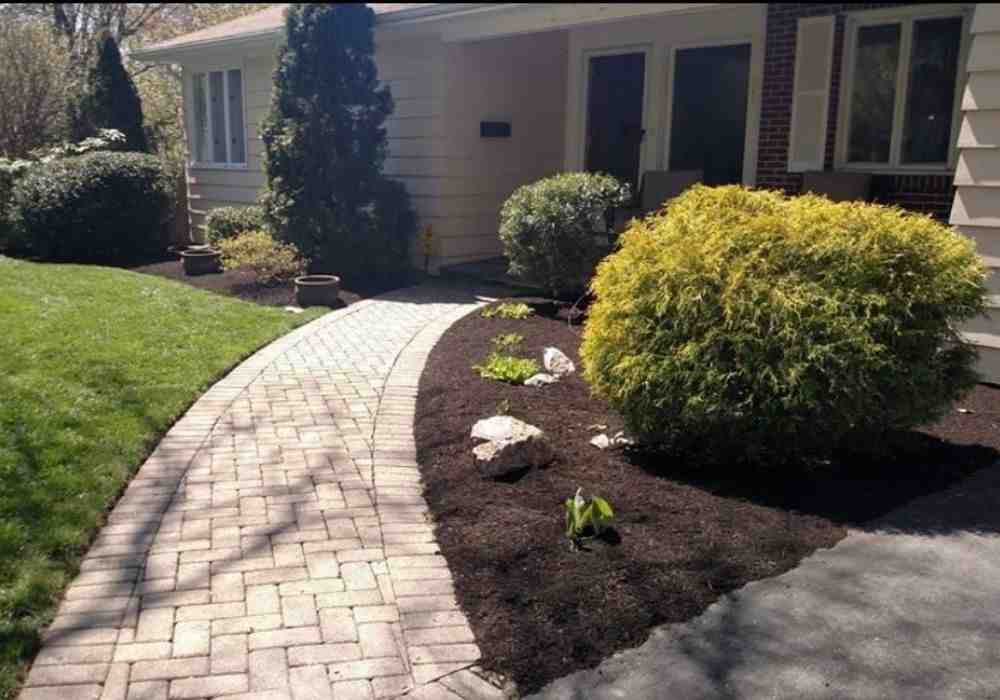



Stone Walkway Contractor: Expert Guide 2025
Why Choosing the Right Stone Walkway Contractor Matters
A stone walkway contractor transforms your outdoor space with durable, beautiful pathways that improve curb appeal and safety. When searching for the right professional, focus on these key factors:
- Local experience in your area’s climate and soil conditions
- Proper licensing and insurance to protect your investment
- Detailed portfolio showing past walkway installations
- Clear written estimates with material and labor breakdown
- Strong references from recent clients
- Expertise in base preparation for long-lasting results
You’re standing at your front window, looking at the worn path leading to your door. Maybe it’s cracked concrete. Maybe it’s just trampled grass. Either way, you know it’s time for something better.
A professionally installed stone walkway does more than get you from Point A to Point B. It creates a welcoming entrance that tells visitors they’ve arrived somewhere special. It protects your lawn from constant foot traffic. And according to landscape professionals with over 60 years of experience, it can significantly boost your property value when installed correctly.
But here’s the challenge: the difference between a walkway that lasts 100 years and one that needs replacement in 10 often comes down to the contractor you choose.
This guide walks you through everything you need to know about hiring a stone walkway contractor. You’ll learn how to spot quality workmanship, what questions to ask before signing a contract, and how to ensure your investment delivers beauty and function for decades to come.
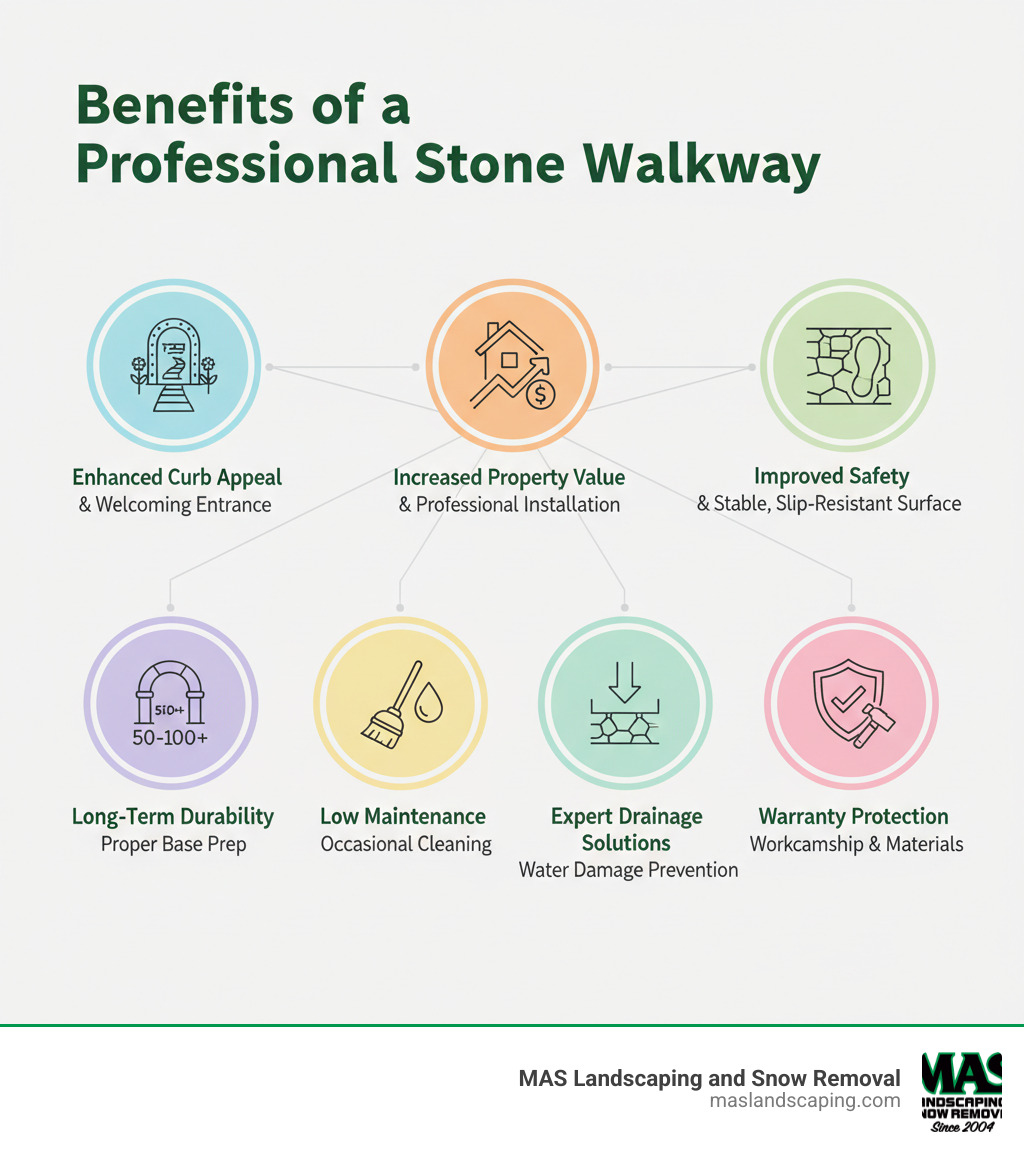
The Foundation: Design, Materials, and Costs
Every great stone walkway starts with a vision. Picture yourself standing in your front yard in Everett or Lynnfield, imagining how a beautifully crafted path could transform your home’s entrance. Maybe you see a graceful curve winding through your garden beds, or perhaps a bold, straight line leading guests to your front door with confidence.
This is where the magic begins—turning that vision into reality through thoughtful design inspiration, smart material selection, and realistic budgeting that ensures your investment delivers long-term value.
A stone walkway isn’t just a functional path from Point A to Point B. It’s an extension of your home’s personality into your outdoor space. It connects different areas of your yard, defines garden beds, and creates an inviting atmosphere that makes guests feel welcome before they even knock on your door. Whether you’re planning a grand front entry or an intimate garden path, the choices you make now will shape how you experience your property for decades to come.
For homeowners in Malden and our other service areas who want to explore how a walkway fits into a comprehensive outdoor design, our landscape design services can help you see the bigger picture and create a cohesive plan for your entire property.
Why Invest in a Professional Stone Walkway?
Let’s talk about why homeowners across New England are choosing professionally installed stone walkways over simple concrete or basic gravel paths.
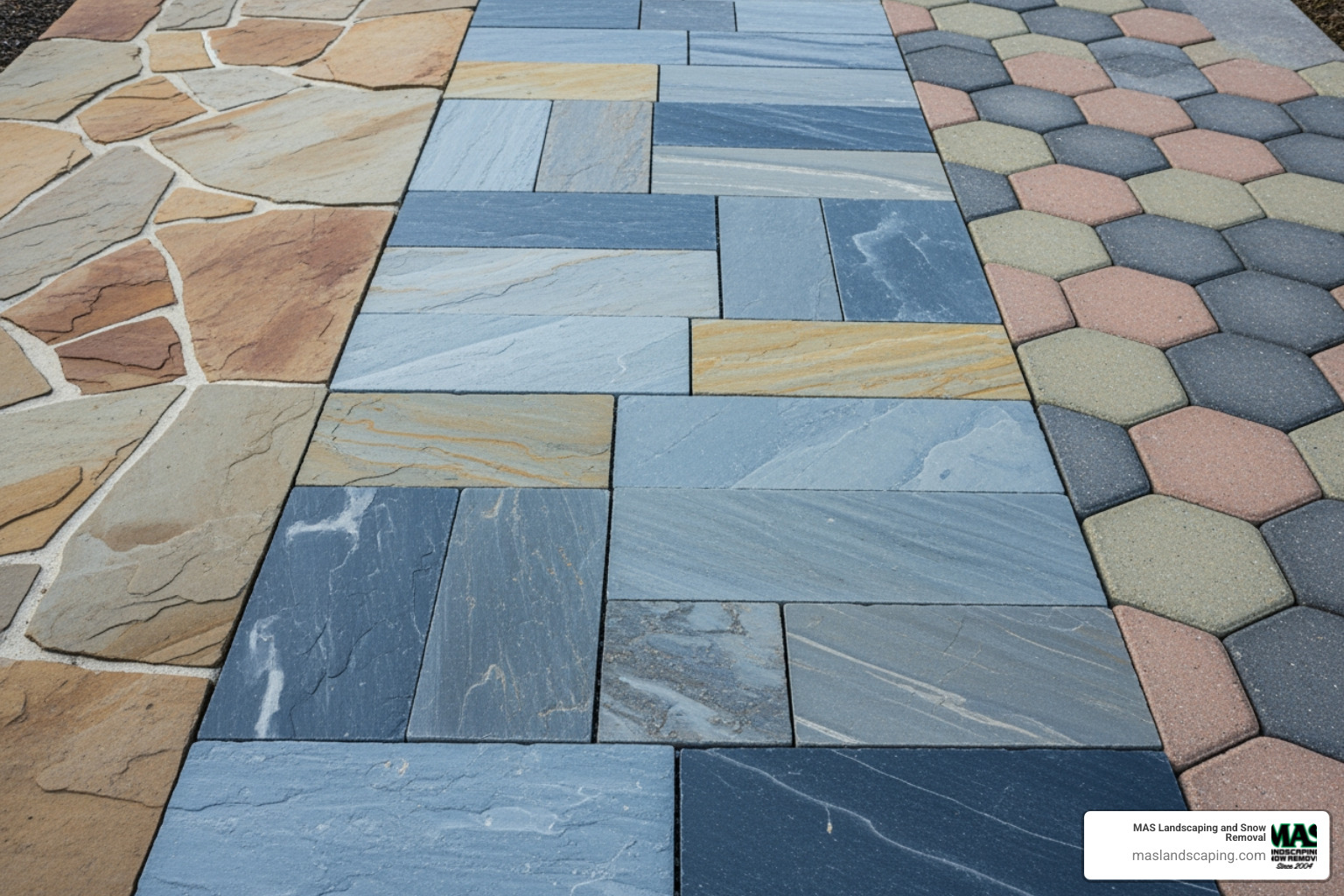
Improved curb appeal is the first thing you’ll notice. Imagine pulling into your driveway after a long day and seeing a beautifully crafted path winding through your landscape or leading neatly to your front door. That instant visual lift transforms your home’s appearance from ordinary to extraordinary. Natural stone adds character and warmth that basic materials simply can’t match. It’s the difference between a house and a home that makes people stop and take notice.
But curb appeal isn’t just about feeling good—it translates directly to increased property value. A professionally installed hardscape feature like a stone walkway is a significant upgrade that potential buyers recognize immediately. Unlike landscaping that requires constant care or temporary improvements that fade quickly, a well-built stone walkway is a permanent improvement. It’s an investment that can offer substantial returns, especially when compared to less durable alternatives that need replacement every few years.
Improved safety matters more than most homeowners realize until someone takes a tumble on uneven ground. Those muddy patches after rain, the cracked concrete that catches shoe heels, the worn grass path that turns slippery when wet—these are all accidents waiting to happen. A stable, slip-resistant stone surface provides safer passage for your family and guests in all weather conditions. This is especially important here in New England, where we deal with rain, snow, ice, and everything in between.
When it comes to durability and longevity, this is where hiring a skilled stone walkway contractor makes all the difference. Properly installed stone walkways are built to last. We’re not talking about a few years—we’re talking about generations. With correct base preparation and quality materials, these walkways withstand heavy foot traffic, harsh New England winters, and the test of time. Some natural stone walkways installed a century ago are still in perfect working condition today.
The low maintenance aspect surprises many homeowners who expect outdoor features to demand constant attention. Stone walkways require minimal upkeep compared to other landscaping elements. Occasional sweeping to remove debris, a bit of attention to prevent weeds from taking hold in the joints, and perhaps some pressure washing every year or two—that’s really all it takes to keep them looking pristine. No resealing driveways every summer, no patching cracks, no replacing rotted wood.
Finally, stone walkways excel at creating functional outdoor spaces by connecting different areas of your yard into a cohesive whole. They guide visitors naturally from the driveway to the front door, from the back patio to the garden shed, or from one seating area to another. They define spaces without walls, protect your lawn from constant foot traffic, and turn disjointed areas into an integrated outdoor living environment. If you’re also considering expanding your outdoor entertaining space, our patio installation services pair beautifully with custom walkways.
Popular Materials: Natural Stone vs. Manufactured Pavers
Choosing between natural stone and manufactured pavers is one of the most important decisions you’ll make. Both have distinct advantages, and the right choice depends on your aesthetic preferences, budget, and how you envision using your walkway.
Natural stone—including flagstone, bluestone, and granite—brings an organic, one-of-a-kind character to your property. No two pieces are exactly alike. Each stone has its own color variations, texture, and personality. This uniqueness creates walkways that feel timeless and neat, as if they’ve always been part of the landscape. Natural stone typically costs more, ranging from $30 to $50 per square foot or higher when installed, but many homeowners feel the investment is worth it for the authentic, high-end appearance. These materials are also incredibly durable, often lasting 50 to 100 years or more with proper installation.
Manufactured pavers—including concrete and brick options—offer uniformity and cost-effectiveness that appeal to budget-conscious homeowners. Modern pavers come in an impressive variety of styles, colors, and patterns. You can find options that mimic natural stone or create contemporary geometric designs. Pavers typically cost between $8 and $25 per square foot installed, making them more accessible for larger projects or homeowners working within tighter budgets. They generally last 25 to 75 years, which is still an excellent lifespan for your investment.
Here’s how they compare side by side:
| Feature | Natural Stone (Flagstone, Bluestone, Granite) | Pavers (Concrete, Brick) |
|---|---|---|
| Cost per Square Foot (Installed) | $30 – $50+ | $8 – $25 |
| Lifespan | 50 – 100+ years | 25 – 75 years |
| Maintenance | Occasional cleaning, re-sanding joints every 2-3 years, optional sealing every 3-5 years | Regular sweeping, occasional pressure washing, re-sanding joints every 2-3 years |
| Pros | Unique appearance, timeless elegance, extremely durable, increases property value significantly | Budget-friendly, uniform appearance, wide variety of styles, easier to replace individual pieces |
| Cons | Higher upfront cost, more labor-intensive installation, irregular shapes require skilled cutting | Can fade over time, less unique character, may need more frequent replacement |
The choice often comes down to personal preference and budget. Natural stone creates that “wow factor” and feels more connected to the natural landscape, while pavers offer practical benefits and modern versatility. Both can be stunning when installed by an experienced stone walkway contractor who understands proper techniques.
Understanding the Investment: Stone Walkway Costs
Let’s talk numbers, but keep in mind that these are average costs based on internet data and not actual costs for MAS Landscaping. Your specific project will vary based on several factors we’ll discuss in a moment.
Nationally, homeowners typically spend between $1,500 and $45,000 on stone walkway projects. That’s a wide range, right? The variation comes from the dramatic differences in project scope—a simple 10-foot path to your front door costs considerably less than an elaborate 100-foot winding walkway with lighting and decorative borders.
On a per-square-foot basis, you’re looking at anywhere from $8 to $50 or more, depending on your material choices and installation complexity. Basic concrete pavers at the lower end, premium natural stone with custom features at the higher end.
Several factors influence the final price of your walkway project. The material itself is the most obvious—as we discussed, natural stone costs more than manufactured pavers. The size of your project matters tremendously; larger walkways require more materials and labor. Complexity plays a huge role too; a straight path is simpler and less expensive than curved designs with intricate patterns or integrated features. Site preparation can significantly impact costs—if your yard requires extensive grading, drainage solutions, or removal of old hardscaping, expect to pay more.
Here’s something many homeowners don’t realize: labor costs typically account for 40 to 60 percent of your total project cost. This isn’t just someone laying stones on the ground. It’s skilled work involving excavation, proper base preparation, precise grading for drainage, careful stone placement, and finishing touches that ensure longevity. According to the Bureau of Labor Statistics, construction wages continue their upward trend, which directly impacts project costs. But remember—this labor investment is what separates a walkway that lasts 100 years from one that starts settling and cracking within five.
Modern Design Trends and Custom Features
Today’s stone walkways go far beyond simple straight paths. Modern homeowners are incorporating design elements that transform walkways into true landscape features.
The debate between curved versus straight paths continues, but many designers now favor gentle curves that feel more natural and inviting. Curved paths create visual interest, make your yard feel larger, and allow for interesting plantings along the edges. Straight paths, on the other hand, offer clean, contemporary lines and work beautifully for formal entrances or modern architecture.
Integrated lighting has become one of the most popular upgrades. Small LED lights embedded along the edges or between stones create magical nighttime ambiance while improving safety. There’s something special about coming home after dark to a softly illuminated path guiding you to your door.
Decorative borders frame your walkway beautifully, creating clear definition between the path and surrounding landscape. These might be contrasting stone colors, smaller accent pavers, or even plantings that soften the edges.
Built-in seating turns a simple walkway into a destination. Strategic placement of low stone walls or benches along your path creates spots to pause, enjoy your garden, or chat with neighbors. If you’re considering this type of feature, our retaining wall installation expertise extends to creating these functional seating elements that integrate seamlessly with your walkway design.
The key to incorporating these features successfully is working with professionals who understand not just the aesthetic appeal but also the structural requirements and long-term implications of each design choice.