

Why Hiring the Right Paver Patio Installer Makes All the Difference
A paver patio installer is a professional contractor who designs and builds outdoor paved surfaces using materials like concrete, brick, or natural stone. If you’re looking to hire one, here’s a quick summary of what to know:
- What they do: Handle excavation, base prep, drainage, paver layout, and finishing
- How long it takes: Most patio projects are completed in 3 to 7 days
- Key things to look for: Licensed and insured, ICPI-certified, strong local reviews, written warranty
- DIY vs. pro: DIY can save money on small projects, but professional installation offers better long-term stability and warranties
- Cost range: Varies widely based on size, materials, and site conditions
A well-built paver patio does more than look great. It adds functional outdoor living space, improves drainage, and can meaningfully boost your property’s value. For homeowners in the Greater Boston area, where freeze-thaw cycles are a real concern, getting the installation right the first time matters even more.
The challenge? Not all paver patio installers are equal. The most important work happens below the surface — proper excavation, compaction, and base preparation — and that’s where inexperienced contractors cut corners.
This guide walks you through everything you need to know to hire confidently, from design options and installation steps to costs and long-term maintenance.
Easy Paver Patio Installer glossary:
Benefits and Design Options for Modern Patios

When we talk to homeowners in Saugus, Lynnfield, or Reading, the first question is usually about why they should choose pavers over a simple concrete slab. The answer lies in the incredible balance of durability and beauty. Unlike solid concrete, which is prone to cracking during our harsh Massachusetts winters, a paver system is flexible. Because it is composed of individual units, it can shift slightly with the freeze-thaw cycle without breaking.
Beyond durability, pavers offer superior drainage. Many modern options are designed to be eco-friendly, allowing rainwater to seep through the joints and back into the ground rather than pooling on the surface or flooding your basement. This versatility makes Patio Paver Design one of the most exciting parts of a home renovation. You aren’t just picking a floor; you’re creating a custom outdoor room that reflects your personal style.
Popular Paver Materials
The “vibe” of your patio depends heavily on the materials you select. As an experienced Paver Patio Installer, we often work with:
- Concrete Pavers: These are the workhorses of the industry. They come in almost any color, shape, and size imaginable. They are uniform, making them easier to install and very cost-effective.
- Natural Stone: For a high-end, timeless look, nothing beats natural stone. Whether it’s the rugged charm of Stone Curators | Reclaimed + Natural Stone Supplier or the classic elegance of bluestone and limestone, natural stone offers unique textures that manufactured products can’t perfectly replicate.
- Brick: If you have a colonial-style home in Danvers or Peabody, classic clay brick pavers offer a traditional aesthetic that never goes out of style.
- Flagstone and Cobblestone: These are perfect for creating winding paths or old-world European courtyards. Flagstone provides a beautiful, irregular look, while cobblestones are nearly indestructible.
Creative Layouts and Patterns
The pattern you choose can actually change how large or small your space feels. We love helping clients explore Patio Designs with Pavers to find the perfect match for their backyard.
- Herringbone: This “V” shape pattern is not only visually striking but also the most stable. It’s excellent for high-traffic areas or driveways because the interlocking units resist shifting.
- Basket-weave: This traditional pattern alternates horizontal and vertical pairs, creating a nostalgic, woven appearance.
- Circular Patterns: Often used around fire pits or as a focal point in a larger patio, circular designs add a touch of sophistication.
- Stacked and Linear Borders: Using a contrasting color or a different shape for a “soldier course” (linear border) can define the edges of your patio and make even a small space look intentionally designed and larger.
DIY vs. Professional Paver Patio Installer: Pros, Cons, and Costs
It’s tempting to look at a pile of bricks and think, “I can do that this weekend!” But as anyone who has spent a Saturday hauling 200-pound plate compactors can tell you, it’s a lot more work than it looks.
| Feature | DIY Installation | Professional Installation |
|---|---|---|
| Labor Intensity | Extremely high; physically exhausting | Handled entirely by a professional crew |
| Tools Needed | Must rent or buy specialized equipment | Professional-grade machinery included |
| Expertise | Learning on the fly (risk of mistakes) | Deep knowledge of soil, slope, and base |
| Warranty | None; you pay for your own mistakes | Usually includes a multi-year labor warranty |
| Long-term Stability | High risk of settling or “dipping” | Engineered for decades of use |
While a DIY project can save on labor costs, the risk of the patio settling unevenly within two years is high. Choosing a professional Paver Patio Installation ensures that the foundation—the part you never see—is built to last.
Why Hire a Professional Paver Patio Installer?
A professional Paver Patio Installer brings more than just muscle; they bring engineering. We focus heavily on site grading and drainage solutions. In hilly areas like Melrose or Stoneham, ensuring water flows away from your foundation is critical.
Look for a team with ICPI (Interlocking Concrete Pavement Institute) certification. This means they follow national standards for base thickness and compaction. If you’re overwhelmed by the options, our Hardscape Installers Near Me Guide can help you vet local contractors to ensure they have the expertise to handle our specific New England soil conditions.
Understanding Project Costs
When budgeting, it’s important to look at the big picture. Based on general internet data and industry averages, professional paver installation can range anywhere from $10 to $75 per square foot.
Please note: These are average costs based on internet data and are not actual costs for MAS Landscaping. Every project is unique.
Why such a wide range? Several factors influence the price:
- Material Quality: Basic concrete pavers are more affordable than imported natural stone.
- Site Access: Can we get a bobcat into your backyard, or do we have to move every stone by hand through a narrow gate?
- Complexity: Curves, stairs, and multi-level designs require more labor and intricate cuts.
- Base Requirements: If your soil is heavy clay, we may need a deeper gravel base.
For a more detailed breakdown, check out our resource on Paver Patio Installation Cost.
The Step-by-Step Professional Installation Process and Timeline
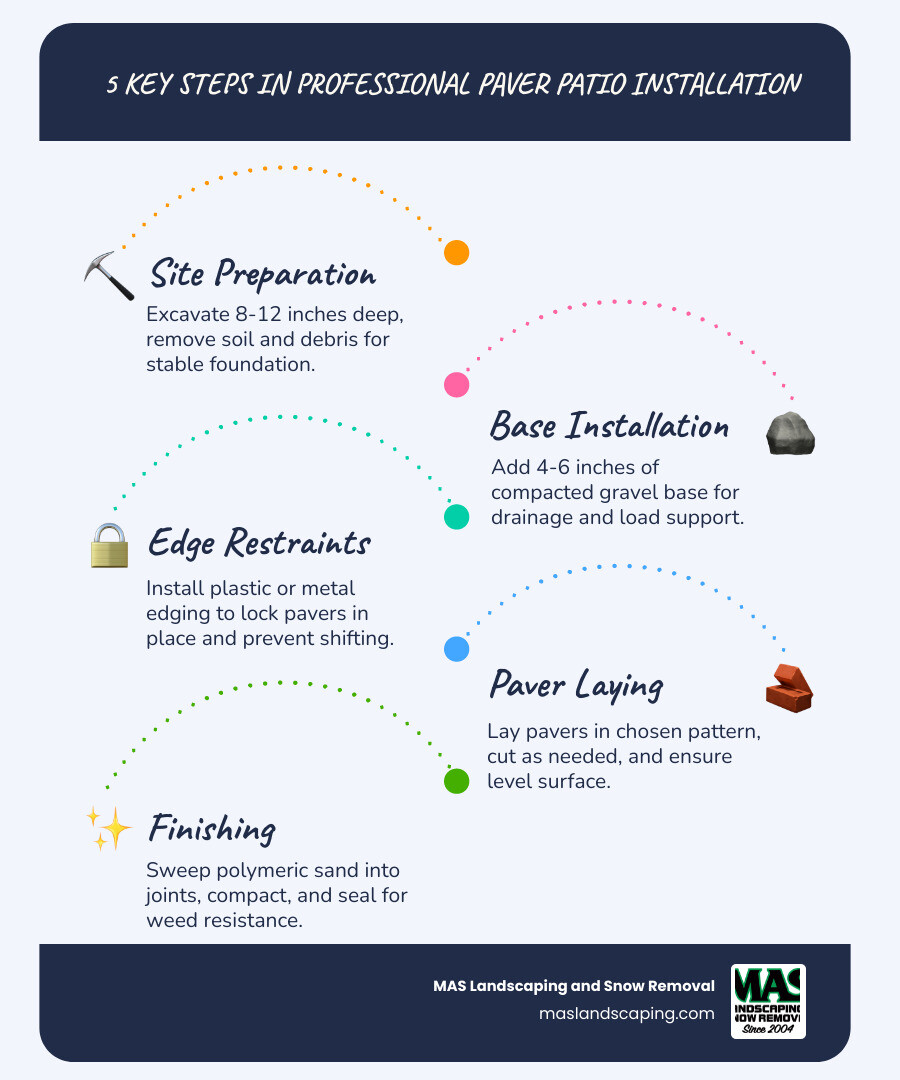
A professional project typically takes between 3 to 7 days. A small walkway might only take 1–2 days, while a massive driveway or multi-tiered patio could take a full week. Here is what the Paver Installation process looks like when done correctly.
Installation Phases and Timeline
- Planning and Layout: We mark the area and check for underground utilities.
- Excavation: We dig 6–10 inches deep, depending on the project.
- Base Preparation: This is the most important step. We lay down layers of crushed stone and compact them until they are rock-solid.
- Bedding Sand: A thin, level layer of sand is “screeded” to provide a smooth surface for the pavers.
- Laying the Pavers: We set the stones in your chosen pattern, using string lines to keep everything perfectly straight.
- Cutting: We use diamond-blade saws to fit pavers around edges or obstacles.
- Edge Restraints: We install heavy-duty edging to prevent the pavers from “creeping” outward over time.
- Polymeric Sand: We sweep special sand into the joints and vibrate the pavers to lock them in place.
For those interested in the nitty-gritty, the Do’s and Don’ts of Paver Installation highlight why things like “never hammering pavers together” are vital for a long-lasting finish. If you’re searching for Patio Installers Near Me, ensure they can explain their specific compaction process.
Technical Considerations: Permits and Drainage
In many of our service areas like Everett or Malden, local regulations may require a building permit for larger structures or if you are changing the “permeable” surface area of your yard.
Slope calculation is another “make or break” factor. A patio should slope away from your house at a rate of 1/4 inch per foot. If you are considering Hardscape Installation Near Me, ask if they perform a transit level check to confirm the grade. We also get asked often about installing pavers over existing concrete. While possible, it requires a careful inspection of the concrete’s condition and height clearance for doors.
Maintenance and Long-Term Care for Paver Surfaces
One of the best things about pavers is that they are low maintenance, but “low” doesn’t mean “none.” To keep your patio looking like new, follow these tips:
- Joint Stabilization: The polymeric sand in the joints is your best defense against weeds and ants. If you notice the sand washing away after a few years, it’s time for a top-off.
- Sealing: While optional, sealing your pavers can protect the color from UV rays and resist stains from oil or spilled wine. If you’re looking for Patio Paver Sealer Companies Near Me, we can recommend the best products for our climate.
- Cleaning: A simple sweep and an occasional rinse with a garden hose are usually enough. For deep cleans, a light pressure wash is okay, but be careful not to blast the sand out of the joints!
What to Look for in a Reliable Paver Patio Installer
Don’t just hire the first person who gives you a quote on a cocktail napkin. Use our Hardscape Contractor Ultimate Guide to vet your options. A reliable installer should be:
- Licensed and Insured: This protects you if an accident happens on your property.
- Locally Experienced: Someone who understands the soil in Saugus or the drainage issues in Medford.
- Transparent: They should provide a written contract and a clear warranty on their workmanship.
Frequently Asked Questions about Paver Patios
Can you install pavers over an existing concrete patio?
Yes, but with caveats. The concrete must be in good structural shape (no major heaving or crumbling). We also have to ensure the extra 2–3 inches of height won’t block doorways or create drainage issues. A professional Patio Contractor will always perform a site inspection first.
How long do paver patios typically last?
With a proper base and minimal maintenance, a paver patio can easily last 25 to 50 years. Individual pavers can be replaced if they ever crack, which is a huge advantage over concrete or asphalt. This longevity is why many Paver Companies are so busy—it’s a one-time investment for a lifetime of enjoyment.
Do paver patios require a lot of maintenance?
Not at all! Unlike wood decks that need staining every two years, a Patio Paver surface just needs the occasional sweep and a fresh application of joint sand every 3–5 years.
Conclusion
At MAS Landscaping and Snow Removal, we take pride in being more than just a Paver Patio Installer. We are your neighbors, based right here in Saugus, MA. Whether you are in Everett, Lynnfield, or Wakefield, we understand the local climate and the high standards our community expects.
We believe in professional hardscaping that blends beauty with functional engineering. From the first consultation to the final walkthrough, our goal is to provide personalized service that transforms your backyard into your favorite “room” in the house. If you’re ready to start your Patio Installation, we’re here to help you build something that lasts.