




5 Yards of Mulch Cost: Top Tips & Savings in 2025
Understanding the Value of Bulk Mulch
5 yards of mulch cost varies depending on several factors, but understanding the basics can help you make an informed decision for your landscaping project.
If you’re looking for quick information about 5 yards of mulch:
| What You Need to Know About 5 Yards of Mulch |
|---|
• Typically covers 500-800 square feet at 3 inches depth
|
|
• Weight is approximately 2-3 tons
|
|
• Most common bulk purchase size for residential projects
|
|
• Delivery usually available from local suppliers
|
|
• Professional installation is an optional add-on service
|
When planning your landscaping project, understanding the cost implications of purchasing mulch in bulk can save you both time and money. A 5-yard mulch delivery represents a sweet spot for many homeowners – enough to cover substantial garden areas without requiring commercial-grade equipment to spread it.
Bulk mulch purchases eliminate the need for dozens of plastic bags, making them not only more cost-effective but also more environmentally friendly. As one satisfied customer noted: “I’m really impressed with the quality of the mulch. Also the ordering process was super easy.”
Whether you’re refreshing your garden beds, creating new landscape features, or protecting your plants for the upcoming season, knowing what affects the cost of 5 yards of mulch will help you budget appropriately and get the best value.
5 yards of mulch cost definitions:
Understanding 5 Yards of Mulch Cost
When planning your next landscaping project, getting a handle on what 5 yards of mulch cost will run you is crucial for staying on budget. Mulch isn’t just mulch—it comes in a wonderful variety of types, each bringing its own price tag and unique benefits to your garden beds.
Think of mulch shopping like buying coffee—you’ve got your basic cup of joe, and then you’ve got your fancy specialty drinks that cost a bit more but might be worth the splurge. Several factors play into what you’ll end up paying:
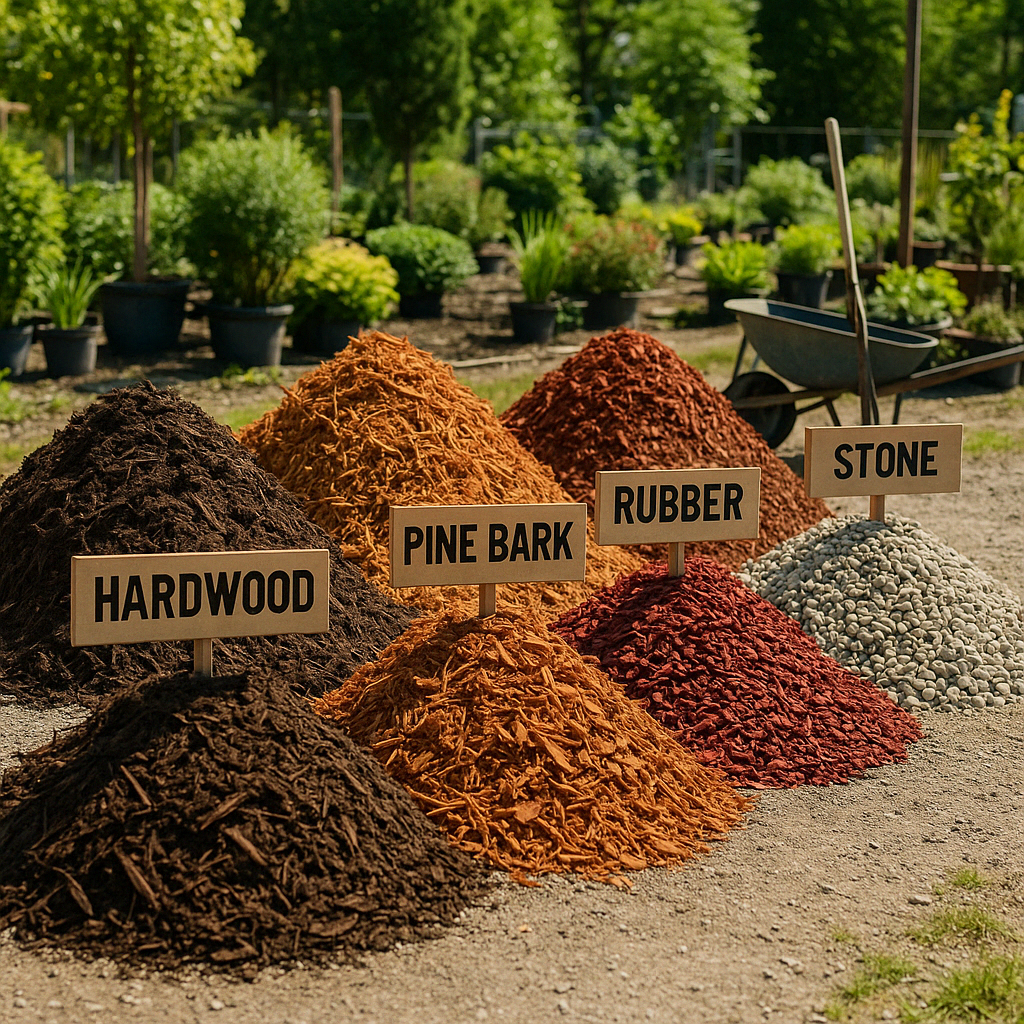
The type of mulch material makes a huge difference—just like choosing between cotton and silk for clothing. Organic options like hardwood or pine bark will hit your wallet differently than inorganic choices like rubber. The quality matters too—double-shredded premium mulch costs more than the basic stuff, kind of like the difference between store-brand and designer jeans.
Timing your purchase can save you money! Prices often jump during the spring mulching frenzy when everyone’s sprucing up their yards. Your location affects pricing too—living far from suppliers means higher delivery costs (those trucks don’t run on wishes!). And as with most things in life, buying more usually means paying less per yard.
One of the biggest perks of going with bulk mulch? The savings! As landscaping professionals often say: “Purchasing mulch by the cubic yard can save up to 40% compared to bagged options.” That’s like getting almost half off just by choosing the bulk option—a no-brainer when you need 5 yards.
What Is the Average Cost of 5 Yards of Mulch?
The 5 yards of mulch cost varies widely depending on what type catches your eye. Based on current industry figures, you can expect to pay anywhere from $150 to $750 for 5 yards, with most homeowners landing in the $275-$350 range for standard varieties.
Here’s what you might expect to pay for different mulch types:
| Mulch Type | Average Cost for 5 Yards |
|---|---|
| Economy/Basic Hardwood | $150 – $250 |
| Premium Hardwood | $200 – $300 |
| Cedar | $250 – $500 |
| Pine Bark | $175 – $275 |
| Cypress | $225 – $350 |
| Colored/Dyed Mulch | $200 – $350 |
| Rubber | $400 – $750 |
| Pine Straw | $175 – $250 |
These figures represent average costs based on internet data and not actual costs for MAS Landscaping and Snow Removal services. Your actual price will depend on current market conditions, your specific location in Everett, Lynnfield, Malden, or surrounding Massachusetts areas, and the unique requirements of your project.
How Mulch Type Affects Price
The mulch you choose has a huge impact on your bottom line when calculating 5 yards of mulch cost. Think of it as choosing between a Toyota and a Mercedes—both will get you where you’re going, but with different experiences and price points.
Organic mulches come from natural materials and eventually break down to enrich your soil. These include hardwood (the reliable workhorse of mulches), aromatic cedar (the fancy option with bonus bug-repelling powers), pine bark (great for acid-loving plants), and cypress (beautiful but pricier). There’s also pine straw for a natural look and cocoa hull mulch that actually smells like chocolate—though you’ll pay extra for that delightful aroma!
Inorganic mulches like rubber, stone, landscape fabric, and synthetic pine straw cost more upfront but last much longer, making them potentially more economical in the long run—like buying quality shoes that last years instead of cheap ones you replace every season.
Industry experts confirm: “Mulch prices vary depending on the type and quantity you need. A cubic yard of mulch costs $30 to $110.” This means your 5-yard purchase could range from $150 to $550 depending on what you choose.
If you’re looking to add a pop of color to your landscape, dyed mulches in rich reds, deep blacks, or warm browns will cost about 15-25% more than their natural siblings. They look stunning against green plants but require that extra investment.
Cedar and cypress mulches command premium prices—up to $100 per cubic yard—because they naturally repel insects and smell wonderful. Your 5-yard cedar mulch delivery could run up to $500, but many gardeners find the benefits worth every penny.
For the budget-conscious, economy mulch made from recycled wood products gives you the most bang for your buck at $30-$40 per cubic yard ($150-$200 for 5 yards). It might not have all the bells and whistles, but it’ll get the job done while being kind to your wallet and the environment.
Delivery Fees for Bulk Mulch
When you’re planning your landscape project, don’t forget to factor in delivery costs when calculating your 5 yards of mulch cost. These fees can make up a surprising portion of your total investment, but understanding them helps you budget more accurately.
Most suppliers break down delivery charges into several components. You’ll typically encounter a base delivery fee – that’s the standard charge regardless of how far you live from the supplier. Then, if you’re located farther away, expect a distance surcharge that increases with mileage.
“Delivery fees for mulch commonly range from $50 to $220,” according to industry data. For a typical 5-yard delivery within 10-15 miles of your supplier, you’re looking at around $60-$80 to start, with costs climbing for greater distances.
Living in a tricky-to-access location? Your delivery might come with accessibility fees if the truck driver needs to steer narrow streets or challenging driveways. And if you need your mulch at a specific time – say, when you’ve scheduled your landscaping crew – you might pay extra for a guaranteed delivery window.
I’ve seen many customers surprised when the delivery truck arrives. These aren’t small vehicles! Most suppliers use dump trucks that need plenty of room to maneuver and deposit your mulch heap. As one delighted customer shared: “My flower beds were perfect… and there wasn’t any evidence of any mulch anywhere on the grass or on my driveway!” That kind of careful delivery is the mark of true professionals who understand the importance of keeping your property clean.
Many suppliers also offer incentives for larger orders. You might qualify for reduced delivery rates when ordering 5 yards or more, compared to smaller quantities. It’s worth asking about these potential savings when you place your order.
Ways to Save on Delivery Costs
You don’t have to pay top dollar for mulch delivery if you plan strategically. Consider ordering during fall or winter when demand drops – suppliers often lower their delivery fees during these quieter seasons to keep business flowing.
Got neighbors who also need to refresh their landscapes? Team up and split a larger delivery! This approach can significantly reduce the per-household cost while building community connections. As an added bonus, you might even help each other spread the mulch.
Choosing local suppliers is another smart strategy. Here at MAS Landscaping and Snow Removal, we know the Everett, Lynnfield, and Malden areas like the backs of our hands. This local expertise allows us to optimize delivery routes and offer competitive rates to our neighbors.
Flexible scheduling can also lead to savings. If you don’t need your mulch on a specific day or time, mention this when ordering. Many suppliers offer discounts for customers who can accept delivery during less busy periods.
Before delivery day, prepare an accessible dump site where you want your mulch pile. Clear away obstacles, ensure there’s enough space for a truck to maneuver, and mark the spot clearly. This preparation prevents additional fees and makes the delivery process smoother for everyone involved.
At MAS Landscaping and Snow Removal, we believe in transparent pricing and efficient service. We’ll help you understand all delivery costs upfront so there are no surprises when your beautiful mulch arrives.
The Impact of Location on Mulch Costs
Ever wonder why your neighbor in the next town might pay a different price for mulch than you do? Location matters more than you might think when it comes to the 5 yards of mulch cost you’ll end up paying.
Here in Massachusetts, particularly around Everett, Lynnfield, and Malden, we see some interesting local pricing patterns. Our relatively short New England growing season creates what I like to call the “spring mulch rush” – when everyone suddenly remembers their gardens need refreshing! This concentrated demand period can temporarily drive prices up by 10-15% compared to off-season rates.
Transportation costs play a huge role too. With fuel prices constantly fluctuating and labor costs generally higher in the Northeast, suppliers need to factor these expenses into their pricing. A truck delivering mulch from a production facility to your home in Malden isn’t running on goodwill – those costs get passed along to customers.
The urban-suburban divide is real when it comes to mulch pricing. If you live in more densely populated areas like Everett or Malden, you might notice slightly higher prices than your friends in Lynnfield. This isn’t random – delivering large quantities of mulch through narrow city streets with limited parking presents challenges that suppliers factor into their pricing. Those dump trucks need somewhere to park while unloading your 5 yards!
“The difference between urban and suburban delivery can sometimes add $25-50 to your total cost,” notes one industry supplier. “It’s not that we want to charge more – it’s simply that operations in congested areas take more time and resources.”
Regional variations across the country are even more dramatic. Industry data shows that the same 5 yards of hardwood mulch that costs $250 in the Midwest might run $325 in the Northeast and as little as $200 in areas of the South where timber production is abundant. These regional price differences can swing as much as 20-30% from the national average.
Local availability makes a big difference too. Areas blessed with nearby mulch production facilities generally enjoy lower prices than regions where mulch must be transported long distances. Here in Massachusetts, we fall somewhere in the middle – not the cheapest in the nation, but not the most expensive either.
Timing your purchase can help offset some location-based price differences. While spring brings peak prices almost everywhere, fall purchases often come with discounts as suppliers look to clear inventory before winter. I’ve seen customers save 15-20% simply by planning ahead and buying in October rather than April.
For homeowners in Everett, Lynnfield, Malden and surrounding areas, understanding these regional pricing factors helps set realistic expectations when budgeting for landscaping projects. While we can’t change our geographic location, being informed about how it impacts pricing allows for smarter planning and potentially significant savings.
Benefits of Buying 5 Yards of Mulch in Bulk
When you’re planning a landscaping project, the decision to purchase 5 yards of mulch cost in bulk rather than in bags can transform both your garden and your budget. Bulk mulch delivery represents one of the smartest investments for medium to large landscaping projects.
![IMAGE] of mulch delivery truck; bulk mulch benefits; cost savings; [INFOGRAPHIC] explaining coverage of 5 yards of mulch
Think about the math for a moment. A typical 2-cubic-foot bag of mulch costs between $4 and $7 at most garden centers. To equal 5 yards, you’d need approximately 67-70 bags. That adds up quickly—between $268 and $490 for bagged mulch! Compare that to bulk pricing of $150-$350 for the same amount, and you’re potentially saving over $100 while getting exactly the same product.
Cost efficiency isn’t just about the initial price tag. When you purchase in bulk, you’re typically saving 30-40% per cubic yard compared to those individual bags. For homeowners in Everett, Lynnfield, and Malden areas, these savings can make a significant difference in your overall landscaping budget.
The environmental benefits of bulk mulch purchases shouldn’t be overlooked either. By eliminating dozens of plastic bags that would otherwise end up in landfills, you’re making an eco-conscious choice. As one satisfied customer shared: “Delivering Mulch & Firewood to Support Local Causes”—highlighting how bulk purchases can align with environmental values.
When it comes to quality, bulk mulch offers remarkable consistency in material. Since your entire order comes from the same batch, you’ll enjoy uniform color, texture, and quality throughout your landscape. This consistency creates a more polished, professional look that’s difficult to achieve when mixing multiple bags that might come from different production runs.
The time savings alone can be worth the switch to bulk. Loading, transporting, and emptying dozens of heavy bags is backbreaking work. With bulk delivery, the mulch arrives at once and is deposited exactly where you need it—saving your back and your weekend.
Bulk ordering also provides greater quantity flexibility. Instead of being limited by standard bag sizes, you can order precisely what your project requires. Need a little more than 5 yards? No problem—you’re not forced to buy another 10 bags just to cover that last corner of your garden.
Many homeowners don’t realize that some of the higher quality options in mulch are only available in bulk form. Premium blends, aged mulches, and specialty varieties often aren’t packaged in bags, giving bulk buyers access to superior products.
The reduced handling benefit becomes immediately apparent when you compare lugging 70 individual bags versus having one delivery. For homeowners in Massachusetts where our seasons can be short and precious, spending less time on mulch logistics means more time enjoying your beautifully landscaped yard.
For MAS Landscaping customers in the Everett, Lynnfield, and Malden areas, bulk mulch delivery represents both convenience and value—allowing you to create stunning landscapes without breaking the bank or your back.
Discounts and Specials for Purchasing 5 Yards of Mulch
Who doesn’t love a good deal? When it comes to your 5 yards of mulch cost, there are plenty of ways to save money without sacrificing quality. Savvy homeowners know that timing and strategy can make a big difference in what you’ll pay for your landscape materials.
Spring may be the most popular time to refresh your garden beds, but it’s often not the most affordable. Many suppliers offer substantial discounts during what they consider “shoulder seasons” – those periods just before or after peak demand. As one industry insider shared with us: “Lock in rates over winter” to secure the best possible pricing for your spring projects.
If you’re planning a landscape refresh, keep an eye out for early bird specials that many suppliers offer in late winter or early spring. These promotions are designed to generate early season business and can save you anywhere from 10-25% on your 5 yards of mulch cost. Similarly, end-of-season clearance sales in late fall can offer impressive savings as suppliers look to reduce inventory before winter.
Volume discounts are another opportunity for savings. While 5 yards is already considered a bulk purchase, some suppliers offer tiered pricing that kicks in at specific thresholds. You might find that ordering 6 or 7 yards instead of 5 qualifies you for the next discount level, potentially saving money even though you’re buying more product.
Here at MAS Landscaping and Snow Removal, we value our repeat customers. Many local suppliers (ourselves included) offer loyalty programs or returning customer discounts that can reduce your overall 5 yards of mulch cost. These relationships are valuable to local businesses, and the savings get passed on to you.
Have neighbors who also need mulch? Consider organizing a neighborhood group purchase. When multiple homeowners combine their orders, suppliers often provide better rates since they can deliver larger quantities to a single area, reducing their logistics costs. This community approach not only saves money but also builds neighborhood connections.
Don’t overlook the potential savings of bundling services. When you combine your mulch purchase with other landscape services like spring cleanup, garden bed preparation, or regular maintenance, many companies offer package discounts that can significantly reduce your overall landscaping investment.
For additional tips on finding the best deals on landscaping materials, check out this helpful mulch cost guide that explains how to maximize your landscaping budget.
While we don’t publish specific pricing online due to seasonal fluctuations in material costs, we encourage you to reach out directly to our team at MAS Landscaping and Snow Removal. We’re always happy to discuss current promotions and find ways to help you beautify your outdoor spaces without breaking the bank. Our local expertise in Everett, Lynnfield, Malden, and surrounding areas allows us to offer competitive pricing custom to your specific project needs.
Factors to Consider When Choosing Mulch for a 5-Yard Purchase
Selecting the right type of mulch isn’t just about cost—it’s about finding the perfect match for your garden’s specific needs. When investing in a 5 yards of mulch cost, you want to make sure you’re getting the most bang for your buck by choosing the right variety for your unique landscape.
Garden Needs
Your plants have their own personalities and requirements—and the mulch you choose should support them! If you’re gardening in a particularly dry area, or have thirsty plants that seem to need constant watering, organic mulches like hardwood or pine bark are your best friends. These varieties excel at trapping moisture in the soil, reducing your water bills and keeping your plants happy.
Battling a weed invasion? Fine-textured mulches create a more effective barrier against those unwanted garden guests. Double-shredded hardwood is particularly impressive for weed control—creating a tight knit “blanket” that makes it difficult for weeds to push through.
For gardeners looking to improve soil quality over time, organic mulches are worth their weight in gold. These workhorses slowly decompose, enriching your soil with valuable nutrients. As one industry expert noted: “Bark mulch is one of the best choices despite being higher priced,” thanks to its impressive durability and soil-enriching properties.
Don’t forget about pH levels! Some plants, like azaleas and rhododendrons, prefer acidic soil. If you’re growing these acid-lovers, pine needles or pine bark mulch can naturally increase soil acidity—a perfect match made in garden heaven.
Aesthetic Preferences
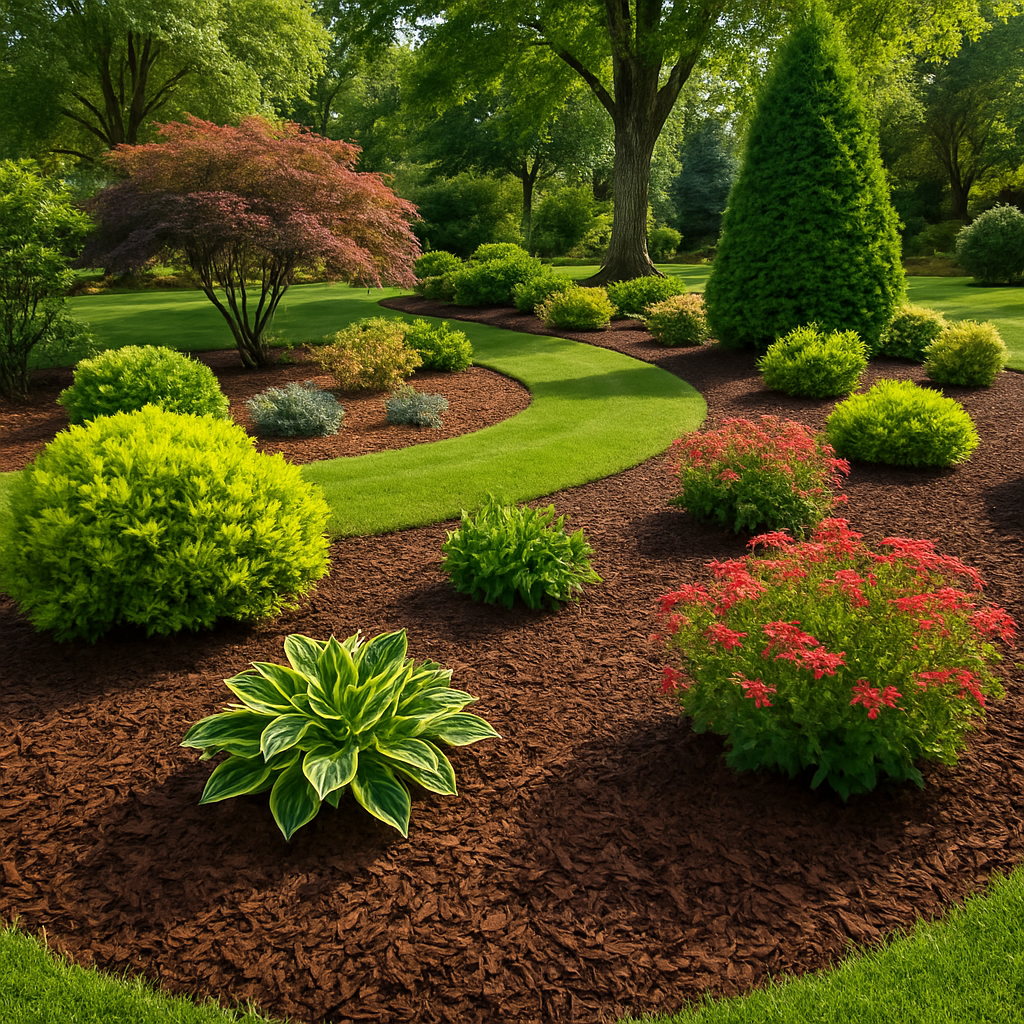
Let’s face it—we want our gardens to look good! Mulch plays a huge role in the overall appearance of your landscape. Dyed mulches maintain their vibrant appearance longer than natural varieties, though they typically need refreshing every 1-2 years as the color fades.
The texture of your mulch creates different visual feelings in your landscape. Larger chunks provide a more rustic, natural look that works beautifully in woodland gardens, while finely shredded varieties offer a more manicured, formal appearance perfect for structured landscape designs.
When choosing colors, think about coordination. The best mulch color complements your home’s exterior and existing landscape elements. A deep chocolate brown mulch might look stunning against a light-colored home, while a reddish mulch can bring warmth to cooler-toned landscapes.
Durability and Maintenance
Nobody wants to replace their mulch every few months! Cedar, cypress, and hardwood mulches typically last 1-2 years before significant decomposition occurs, making them cost-effective choices for busy homeowners.
If you live in a windy area, heavier mulches like hardwood stay put better than lighter options like pine straw, which can blow around during strong gusts. There’s nothing more frustrating than finding your carefully applied mulch scattered across the lawn after a windy day!
Some mulches, especially finer varieties, can compact over time. This compaction might look neat initially but can eventually form a barrier that prevents water from reaching your plants’ roots. Occasionally fluffing your mulch with a rake can help prevent this issue.
Environmental Impact
Today’s gardeners are increasingly concerned about sustainability—and rightly so! Look for mulches made from recycled materials or sustainable forestry practices if environmental impact is important to you.
Locally sourced mulch is a win-win: it reduces transportation environmental impact and often costs less than options shipped from far away. Here in Massachusetts, we’re fortunate to have access to excellent local mulch options.
If you’re concerned about chemicals, be cautious with some dyed mulches that may contain additives. For the most natural approach, opt for undyed organic options that bring beauty to your garden without additional processing.
For personalized guidance on selecting the perfect mulch for your specific landscape needs, check out our Buy Mulch Near Me resource. Our team at MAS Landscaping and Snow Removal is always happy to provide recommendations based on your unique property and preferences. After all, we’ve been helping homeowners in Everett, Lynnfield, and Malden create beautiful, functional landscapes for years!
DIY vs Professional Installation Costs for 5 Yards of Mulch
When the delivery truck dumps that mountain of mulch on your driveway, reality sets in: now what? The total 5 yards of mulch cost isn’t just about the materials—it’s also about how it gets from that pile to beautifying your landscape.
Let’s talk about your options: tackling it yourself or calling in the pros.
| Aspect | DIY Installation | Professional Installation |
|---|---|---|
| Labor Cost | $0 (your time) | $55-$110 per hour or $20-$45 per cubic yard |
| Equipment Needed | Wheelbarrow, rake, shovel, gloves | Included with service |
| Time Investment | 8-12 hours for 5 yards (average homeowner) | 2-4 hours (professional team) |
| Quality Assurance | Varies with experience | Consistent, professional results |
| Physical Demand | High – 5 yards weighs 2-3 tons | None for homeowner |
| Additional Benefits | Personal satisfaction | Often includes bed preparation, edging, cleanup |
| Hidden Costs | Tool purchase/rental if needed | None – all inclusive |
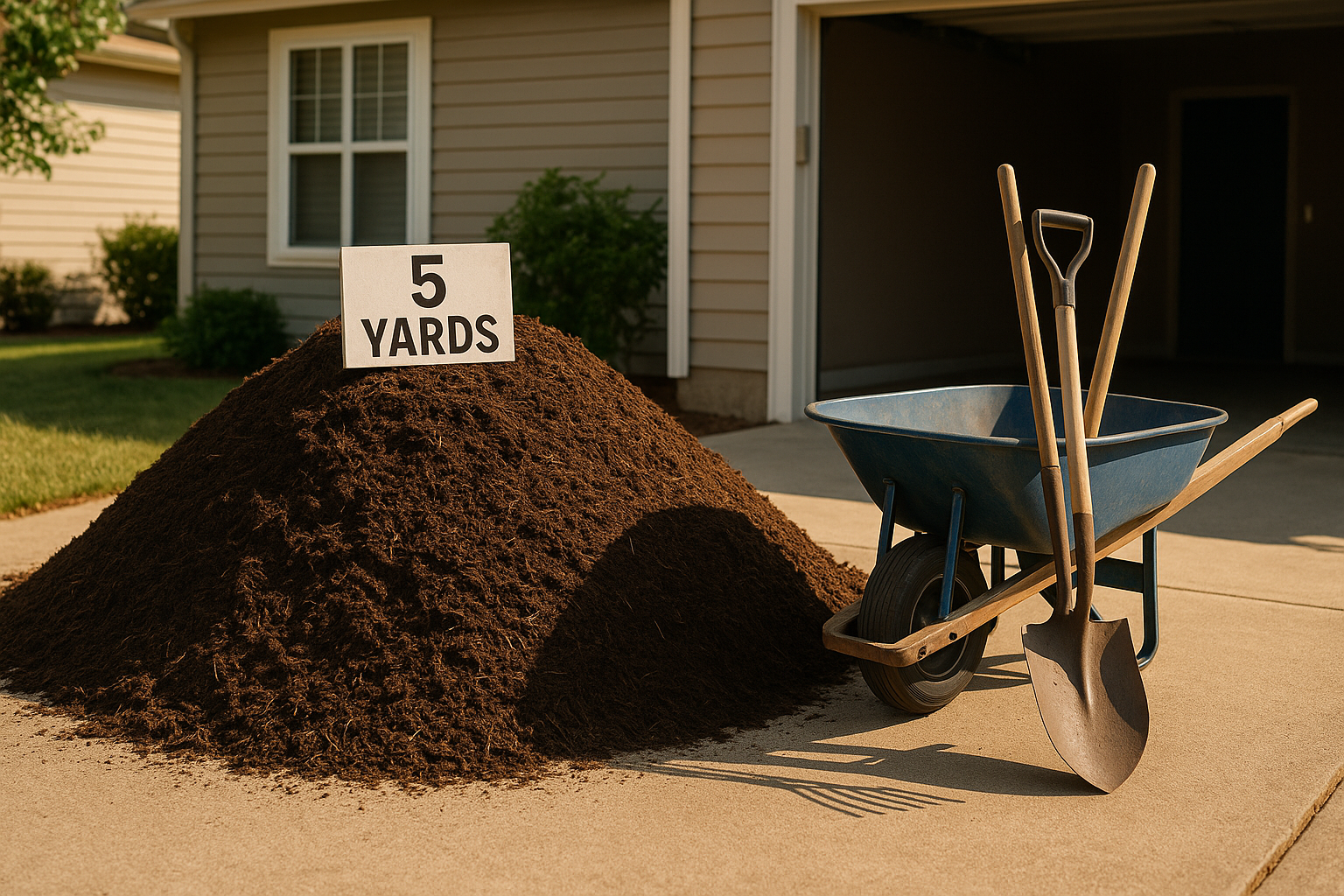
That pile of mulch sitting in your driveway represents about 2-3 tons of material—roughly the weight of a midsize car! For DIY enthusiasts, spreading 5 yards of mulch is no small weekend project. While industry experts note that “a two-person crew can install up to 3 yards of mulch per hour,” the average homeowner working solo might spend an entire weekend on the task.
The true cost of DIY goes beyond dollars and cents. There’s the sore back, blistered hands, and the time you could have spent doing, well, almost anything else. Not to mention the potential need to purchase or rent equipment if you don’t already own wheelbarrows, pitchforks, and other spreading tools.
That said, there’s something undeniably satisfying about stepping back and admiring your own handiwork. Some homeowners genuinely enjoy the physical labor and find it therapeutic. If you’re one of them, the $0 labor cost might be worth the sweat equity.
Professional installation transforms the experience entirely. Instead of that intimidating mulch mountain, you simply watch as trained crews make quick work of the job. As one relieved customer shared: “Mulching was done with great care for existing landscape. Very appreciated.”
Professional mulch installation typically includes benefits that DIY efforts might miss:
Proper bed preparation makes all the difference in mulch effectiveness and appearance. Professionals thoroughly weed and edge garden beds before a single piece of mulch is laid down.
Consistent application depth ensures your mulch performs optimally. Too thin and you lose weed suppression benefits; too thick and you risk plant health issues. Pros consistently hit that sweet spot of 2-3 inches.
Clean, defined edging creates that manicured look that lifts your entire landscape. The crisp line between mulch and lawn is a hallmark of professional installation.
Complete cleanup means no mulch trails on sidewalks or scattered across lawns. When professionals finish, the only evidence of their work is your beautiful landscape.
For busy homeowners in Everett, Lynnfield, Malden, and surrounding areas, the time savings alone often justifies the professional installation cost. What might take you a full weekend can be completed by MAS Landscaping and Snow Removal’s experienced crews in just a few hours, with superior results.
Professional installation costs can vary widely based on property specifics, accessibility, and the amount of preparation needed. While internet data suggests average costs between $55-$110 per hour or $20-$45 per cubic yard for installation, these are industry averages and not specific to MAS Landscaping and Snow Removal services.
Whether you choose DIY satisfaction or professional convenience, understanding the full picture of 5 yards of mulch cost—including installation—helps you make the choice that’s right for your time, budget, and landscape goals.
Environmental Impact of Different Mulch Types
When you’re calculating your 5 yards of mulch cost, there’s more to consider than just the price tag. The environmental impact of your mulch choice matters too—both for your garden’s health and for our planet.
Let’s take a closer look at how different mulch types affect the environment around us.
Organic mulches like hardwood, pine bark, and cedar aren’t just beautiful—they’re earth-friendly powerhouses. As these natural materials slowly break down, they actually help lock carbon in the soil instead of releasing it into the atmosphere. This process, called carbon sequestration, is a small but meaningful way your garden can help fight climate change.
Your plants will thank you too. Organic mulches transform over time, improving your soil structure and feeding the beneficial microbes that help your garden thrive. Many gardeners notice they need up to 30% less water after applying a good layer of organic mulch, as it dramatically reduces evaporation and runoff during hot summer months.
“We recommend to our clients that they don’t need to use store-bought mulch, unless they like the appearance of one consistent color,” notes an ISA-Certified Arborist. This practical advice highlights that sometimes the most environmentally friendly option—like local arborist wood chips—can also be the most budget-friendly.
Recycled mulch options offer another eco-conscious choice. Rubber mulch, made from old tires, keeps waste out of landfills and lasts for years without breaking down. While it won’t improve your soil quality like organic options, it requires far less frequent replacement. Some suppliers also offer mulch made from reclaimed wood or urban tree removals, giving new life to materials that would otherwise go to waste.
When considering the full environmental picture of your 5 yards of mulch cost, think about where your mulch comes from. Locally sourced products have a much smaller carbon footprint than those shipped across the country. At MAS Landscaping and Snow Removal, we prioritize local sourcing whenever possible for our Everett, Lynnfield, and Malden customers.
The production process matters too. Some highly processed mulches require significant energy to manufacture, and colored varieties may contain dyes that could potentially affect soil and water quality. Natural, minimally processed options generally have a lighter environmental footprint.
Think about the mulch’s entire lifecycle. Organic mulches eventually become part of your soil, completing a natural cycle. Inorganic options like stone or rubber will eventually need to be removed and disposed of, creating an additional environmental consideration down the road.
By weighing these environmental factors alongside your budget and aesthetic preferences, you can choose a mulch that looks beautiful today while supporting a healthier environment for years to come. Your garden—and the planet—will appreciate the thoughtful choice.
Tips to Save Money When Purchasing 5 Yards of Mulch
Let’s face it—landscaping projects can get expensive quickly. But with a little know-how, you can significantly reduce your 5 yards of mulch cost while still creating that beautiful outdoor space you’ve been dreaming about.
The good news? You’re already making a smart choice by considering a bulk purchase. Buying 5 yards of mulch instead of individual bags is like buying in bulk at Costco—it just makes financial sense. When you do the math, those 67-68 bags (at 2 cubic feet each) that equal 5 yards will cost you 30-40% more than buying in bulk. That’s real money back in your pocket!
Timing is everything when it comes to mulch purchases. Many homeowners don’t realize that mulch, like many seasonal products, follows predictable pricing patterns. If you can plan ahead and purchase during the off-season—think late fall or winter—you could enjoy discounts of 10-20%. Suppliers are often eager to maintain sales during these slower periods, and you can capitalize on their motivation with some advance planning.
Shopping around pays dividends when it comes to mulch. I’ve seen prices vary by as much as $30-40 per yard between different suppliers for essentially the same product. Take 15 minutes to call local garden centers, landscape suppliers, and those big box stores to compare quotes. That small time investment could save you a significant chunk of change on your total 5 yards of mulch cost.
Got a pickup truck or know someone who does? Consider local pickup instead of delivery. Those delivery fees—typically $50-$150 for a 5-yard load—are completely avoidable if you’re willing to transport the mulch yourself. Just remember to bring a tarp to cover your load and prevent mulch from blowing out during transport!
Don’t overlook municipal options in your search for savings. Many local towns and cities offer free or very low-cost mulch made from community tree trimmings or composted yard waste. While these options might not have the polished look of commercial products, they’re often perfectly suitable for less visible areas of your landscape.
One of my favorite money-saving strategies is what I call the “mulch hierarchy”—using premium mulches only in highly visible areas like your front beds or entry gardens, while opting for more economical choices in background areas. Your wallet will thank you, and visitors will never know the difference.
Proper application depth is another key to stretching your mulch budget. While it might be tempting to pile on the mulch for that fresh, fluffy look, applying more than the recommended 2-3 inches is actually wasteful and can harm your plants by preventing proper air and water exchange. Using the right depth ensures you’re not buying more mulch than you actually need.
For established landscape beds, consider a mulch refresh rather than a complete replacement. Adding just a 1-inch layer of new mulch on top of existing mulch (after a quick rake to fluff what’s there) can give your landscape that fresh look without requiring a full 5 yards.
Community coordination can lead to significant savings too. Chat with your neighbors about sharing a larger delivery—you’ll split the delivery fee and might even qualify for volume discounts by ordering more. It’s a win-win that builds community while saving everyone money.
Finally, don’t dismiss alternative materials that can function like traditional mulch. Compost, shredded leaves, or pine needles often provide similar benefits at a fraction of the cost, especially if you can source them locally or even from your own property.
For professional assistance with your mulch project in Everett, Lynnfield, Malden, and surrounding areas, explore our Mulch Delivery and Installation services at MAS Landscaping and Snow Removal. We understand budget concerns and can help you make the most cost-effective choices for your specific landscape needs.
Frequently Asked Questions About 5 Yards of Mulch Cost
How Much Area Does 5 Yards of Mulch Cover?
When planning your landscaping project, one of the most common questions is exactly how far your 5 yards of mulch will stretch across your garden beds. The answer depends largely on how thick you spread it.
Most landscaping experts (ourselves included!) recommend applying mulch at a depth of 2-3 inches. This sweet spot provides optimal weed suppression while ensuring your plants get enough moisture without suffocating their roots.
If you’re trying to visualize the coverage, here’s what you can expect from 5 cubic yards:
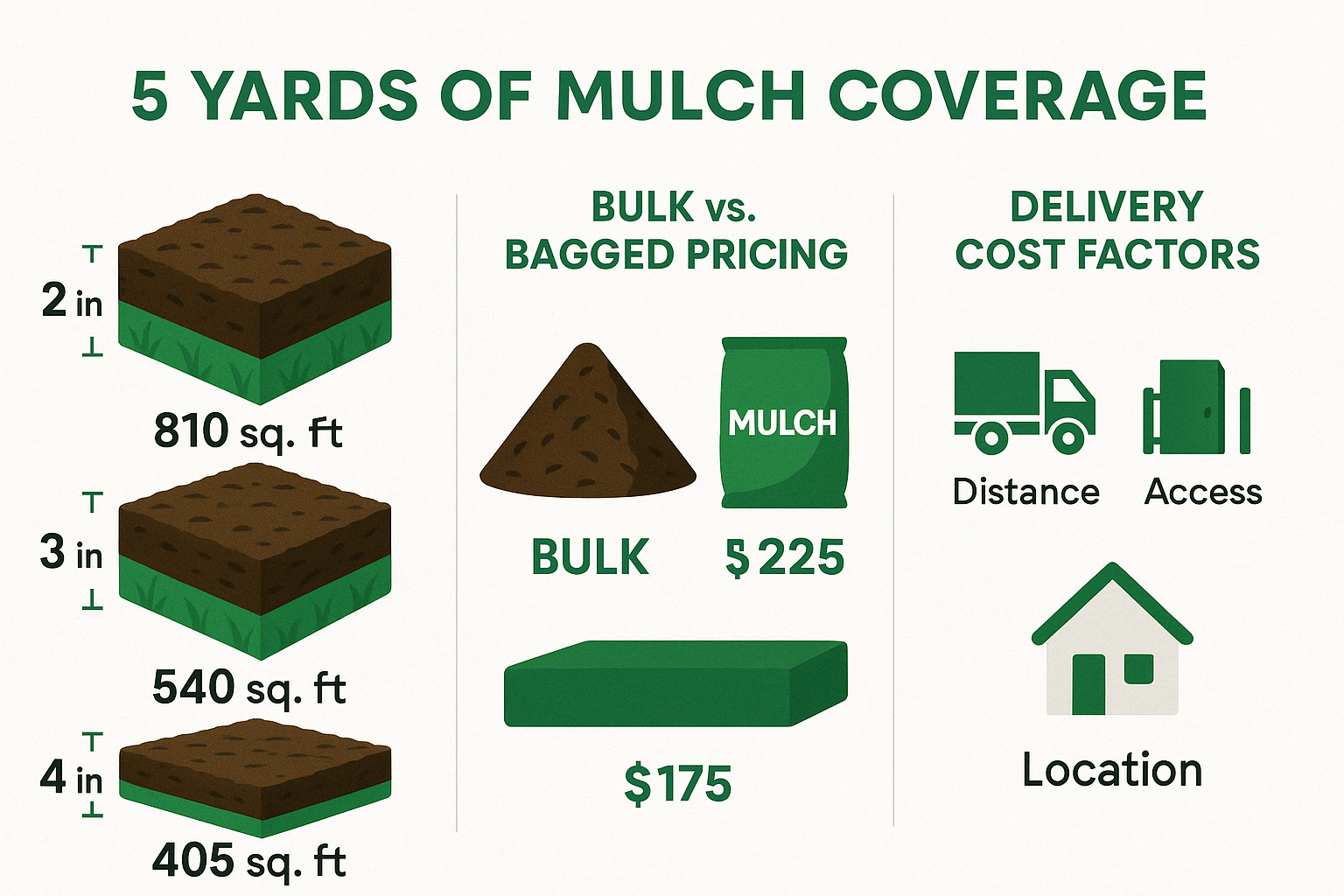
- At 1-inch depth: About 1,350 square feet (enough for a very large garden)
- At 2-inch depth: Roughly 675 square feet (perfect for medium-sized landscaping)
- At 3-inch depth: Approximately 450 square feet (ideal for standard applications)
- At 4-inch depth: Around 337 square feet (generally thicker than needed)
If you’re a math person and want to calculate your exact needs, you can use this simple formula:
Square footage = (Cubic yards × 27) ÷ (Depth in inches ÷ 12)
For example, if you’re planning on a 3-inch layer with your 5 cubic yards, you’d calculate: (5 × 27) ÷ (3 ÷ 12) = 135 ÷ 0.25 = 540 square feet.
I always recommend ordering about 10% more mulch than your calculations suggest. Gardens aren’t perfectly flat, and mulch naturally settles over time. Having a little extra ensures you won’t be left with bare patches or making a last-minute run for more supplies!
Should I Remove Old Mulch Before Adding New?
This is one of those “it depends” situations that frustrates many homeowners. The good news is, there are some clear guidelines to help you decide.
When to remove old mulch:
If your existing mulch layer is already 3-4 inches deep, you’ll want to remove some before adding more. Too much mulch can actually harm your garden by preventing water from reaching plant roots, creating a cozy home for unwanted pests, suffocating roots, or encouraging fungal growth in that damp environment.
If you spot any white, thread-like growth, unusual fungus, or signs of pest infestation in your current mulch, it’s definitely time for removal before fresh application. Think of it as not wanting to trap problems under a new blanket.
When you can simply add more:
If your existing mulch has significantly decomposed and is beginning to look like soil, there’s usually no need to remove it. In fact, this decomposed organic matter is now enriching your soil – exactly what good mulch should do over time!
When the current layer is thin (less than an inch) due to decomposition or being blown away by wind, simply adding new mulch on top is perfectly fine.
As one landscaping expert puts it: “It is not necessary unless the old mulch is breaking down; in that case, removing it can help ensure a fresh layer.” I find this advice spot-on – there’s no need to create extra work for yourself if the old mulch is in good condition.
How Can I Calculate the Exact Amount of Mulch I Need?
Nothing is more frustrating than running short of mulch mid-project or spending money on excess that sits unused. Getting your 5 yards of mulch cost calculation right from the start saves both headaches and dollars.
The process is simpler than most people think:
First, grab a measuring tape and figure out the square footage of all areas you plan to mulch. For rectangular beds, multiply length by width. For circular areas, use π (3.14) multiplied by the radius squared. Got oddly shaped gardens? Just break them into smaller, more regular shapes and add the areas together.
Next, decide on your ideal depth. As mentioned earlier, 2-3 inches works best for most landscapes.
Now plug these numbers into this handy formula:
Cubic yards needed = (Square footage × Desired depth in inches) ÷ 324
Let’s say you have a 1,000 square foot garden area and want 2 inches of mulch:
(1,000 × 2) ÷ 324 = 2,000 ÷ 324 = 6.17 cubic yards
In this case, you’d want to round up to 6.5 or 7 cubic yards to ensure you have enough. Industry data confirms: “For a 10×20 foot area with 2 inches of mulch, approximately 1.23 cubic yards are needed.”
If math isn’t your strong suit, don’t worry! Many online calculators can do the heavy lifting for you. Or better yet, at MAS Landscaping and Snow Removal, we’re happy to help calculate your exact needs for properties in Everett, Lynnfield, Malden, and surrounding areas. We’d rather help you get it right the first time than have you frustrated with too much or too little mulch.
Conclusion
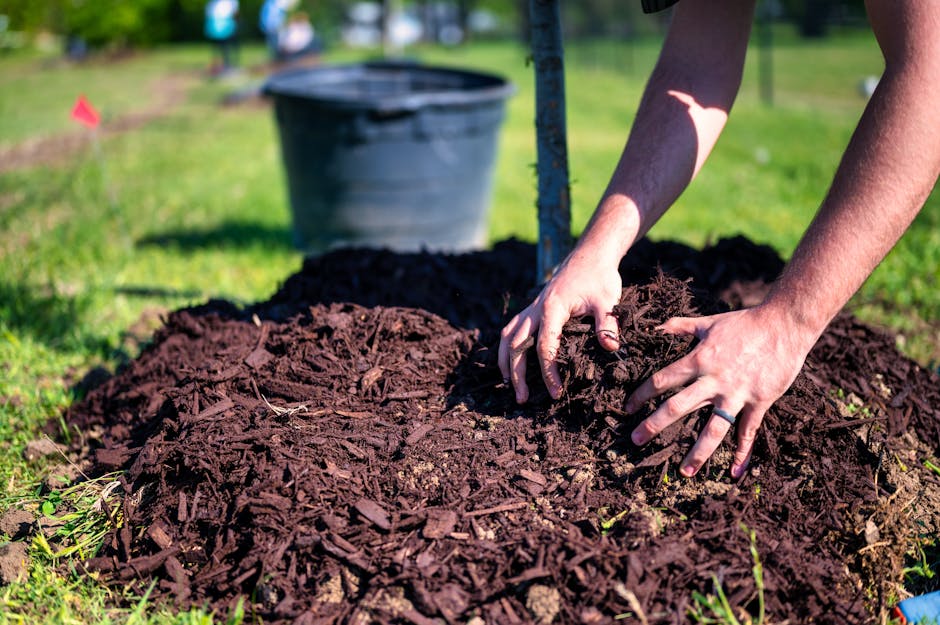
When it comes to changing your outdoor space, understanding the full picture of 5 yards of mulch cost can make all the difference between staying on budget and facing unexpected expenses. Throughout this guide, we’ve walked through everything from mulch types and pricing factors to delivery considerations and installation options.
The beauty of purchasing mulch in bulk is undeniable – not only do you save significantly compared to bagged options (often 30-40% less), but you’re also making an environmentally conscious choice by reducing plastic waste. Most homeowners find that 5 yards hits that sweet spot for residential projects, providing enough material for substantial coverage without overwhelming your property or your weekend.
Depending on your preferences and project needs, you can expect to invest between $150 and $750 for those 5 yards of mulch. The wide range reflects the diversity of options available – from basic hardwood mulch at the lower end to specialty materials like rubber or premium cedar at the higher end.
“I’m really impressed with the quality of the mulch. Also, the ordering process was super easy,” shared one of our satisfied customers. This kind of experience is what we strive for at MAS Landscaping and Snow Removal. We understand that your landscape is both a personal expression and an investment in your property.
While DIY installation is certainly an option (and many homeowners enjoy the process), professional installation offers distinct advantages. Our experienced teams bring proper preparation techniques, consistent application depths, and meticulous attention to detail that transforms good landscaping into great landscaping. The clean edges, perfect depth, and professional finish often justify the additional investment for many of our clients.
Planning is truly the key to success with any mulch project. Taking time to accurately measure your space, consider the right mulch type for your specific plants and aesthetic goals, and schedule your project during optimal timing can all contribute to better results and potential cost savings.
For residents in Everett, Lynnfield, Malden, and surrounding Massachusetts communities, we bring local expertise and personalized service to every project, no matter the size. Our deep understanding of New England’s unique climate challenges and landscaping needs informs every recommendation we make.
Ready to take the next step with your landscaping project? Explore our comprehensive Landscaping Services to see how we can help transform your outdoor space from ordinary to extraordinary.
From initial planning through final clean-up, MAS Landscaping and Snow Removal is committed to delivering professional results that improve your property’s beauty, functionality, and value. Whether you’re refreshing existing beds or creating an entirely new landscape design, we’re here to help you make informed decisions that will keep your outdoor spaces looking their best all season long.
