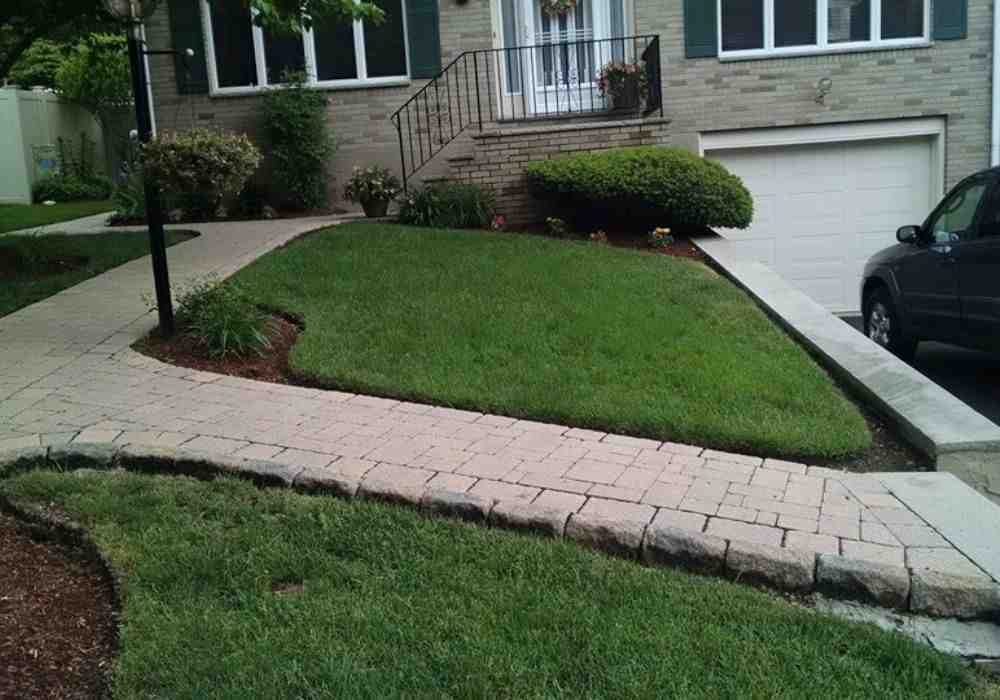



What to Look for When Hiring Brick Walkway Contractors
Brick walkway contractors specialize in designing and installing durable, attractive paths using brick pavers. If you need one fast, here’s what matters most:
Quick answers for homeowners searching for a brick walkway contractor:
- Look for licensed and insured contractors with verifiable local references
- Check online ratings across Google, BBB, and HomeAdvisor
- Ask for a portfolio of completed brick walkway and paver projects
- Get multiple quotes and compare scope, not just price
- Confirm they use proper base preparation – gravel sub-base, edge restraints, and polymeric sand
A brick walkway does more than connect your front door to the street. It adds curb appeal, increases property value, and – when installed correctly – lasts for decades with minimal upkeep. But the key phrase there is when installed correctly.
The difference between a walkway that stays flat and level for 30 years and one that shifts, cracks, or grows weeds within two seasons often comes down to one thing: the quality of the contractor and the foundation they build.
Finding the right pro doesn’t have to be overwhelming. This guide walks you through everything you need to know – from what services contractors offer, to what the installation process looks like, to how to spot a trustworthy company in the Greater Boston area.
Easy brick walkway contractors glossary:
Why Hire Professional Brick Walkway Contractors?
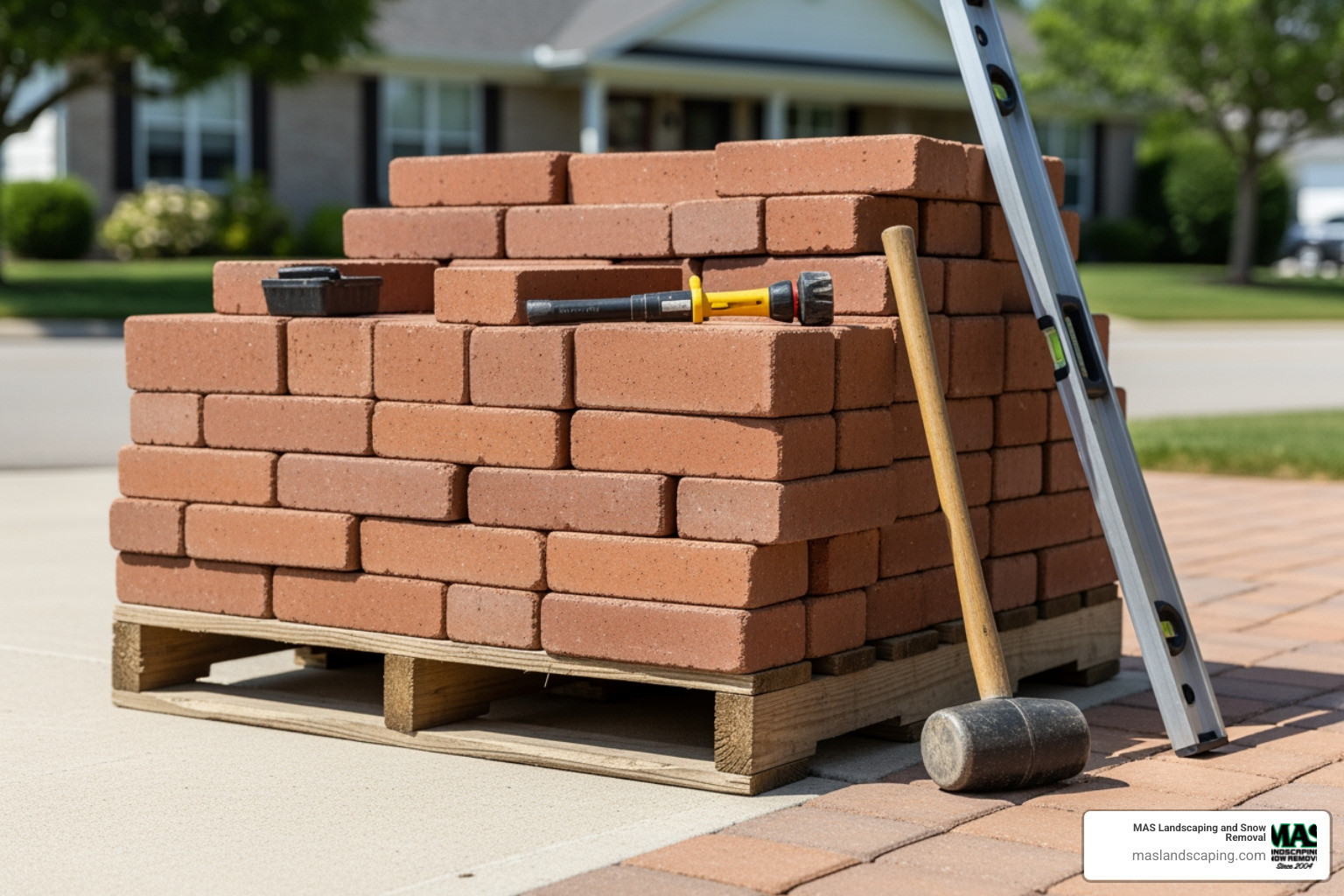
If you’ve ever spent a Saturday morning watching DIY videos, you might think, “How hard can it be to lay some bricks in the dirt?” Well, as we like to say in the industry, the “laying” part is the easy bit. It’s the digging, hauling, leveling, and compacting that separates a weekend warrior from a professional.
Hiring professional brick walkway contractors ensures that your investment doesn’t literally sink into the ground. In areas like Saugus, Lynnfield, and Danvers, our soil deals with significant moisture and dramatic temperature swings. Professional brick-and-masonry/ experts understand how to manage these local conditions.
Structural Integrity and Weather Resistance A professionally installed walkway is built to withstand the heavy frost of a Massachusetts winter. Without a deep, compacted base, the first freeze-thaw cycle will turn your straight path into a roller coaster. Professionals use industrial plate compactors that exert thousands of pounds of force—something a hand tamper just can’t replicate. This structural integrity is why we recommend finding brick-paver-companies-near-me/ who have experience with New England climates.
Long-Term ROI and Repairability One of the biggest perks of brick is that it is infinitely repairable. If a tree root grows under a concrete walkway, the concrete cracks, and you have to replace the whole slab. If a root moves a brick, a walkway-contractor/ can simply lift the affected bricks, fix the base, and put the same bricks back. This “modular” nature makes it a high-ROI choice for homeowners looking for longevity.
Specialized Services from Brick Walkway Contractors
When you hire a pro, you aren’t just paying for labor; you’re paying for a suite of specialized services that ensure the job is done right the first time.
- Site Assessment and Drainage Planning: This is the most overlooked step. We look at where the water goes when it rains. If your walkway acts as a dam, you’ll end up with a flooded basement or a swampy lawn. Proper paver-installation/ requires a slight pitch (usually 1/4 inch per foot) to move water away from your foundation.
- Custom Borders and Patterns: Professional paver-companies/ can offer design flourishes like “soldier courses” (bricks laid side-by-side) or “sailor courses” (bricks laid end-to-end) to frame your path.
- Integrated Hardscaping: Many homeowners choose to combine their path with other features. We often see driveways-and-walkways/ designed together to create a cohesive look for the front of the home.
Choosing a Reputable Brick Walkway Contractor
Not all contractors are created equal. Since your walkway is a permanent fixture of your home, you want to make sure you’re working with the “best of the best.”
- Licensing and Insurance: Never hire a contractor who isn’t fully insured. If someone gets hurt on your property or a machine hits your house, you want to know you’re protected.
- Verify Ratings: Look for an A+ Rating with the BBB. This shows a commitment to resolving customer issues and maintaining high standards.
- Portfolio Review: Any good brick-paver-installers-near-me/ will have a gallery of their work. Look for crisp lines, consistent joint widths, and how the walkway meets the driveway or porch.
- Local References: Ask for projects they’ve done in nearby towns like Peabody or Melrose. A local contractor knows the specific soil types in Essex and Middlesex counties.
Understanding the Installation Process and Materials
The secret to a great walkway isn’t the brick; it’s what’s under the brick. According to guides like Building Brick Walks and Patios, the preparation phase is the most critical. Here is how a professional walkway-installation/ typically unfolds:
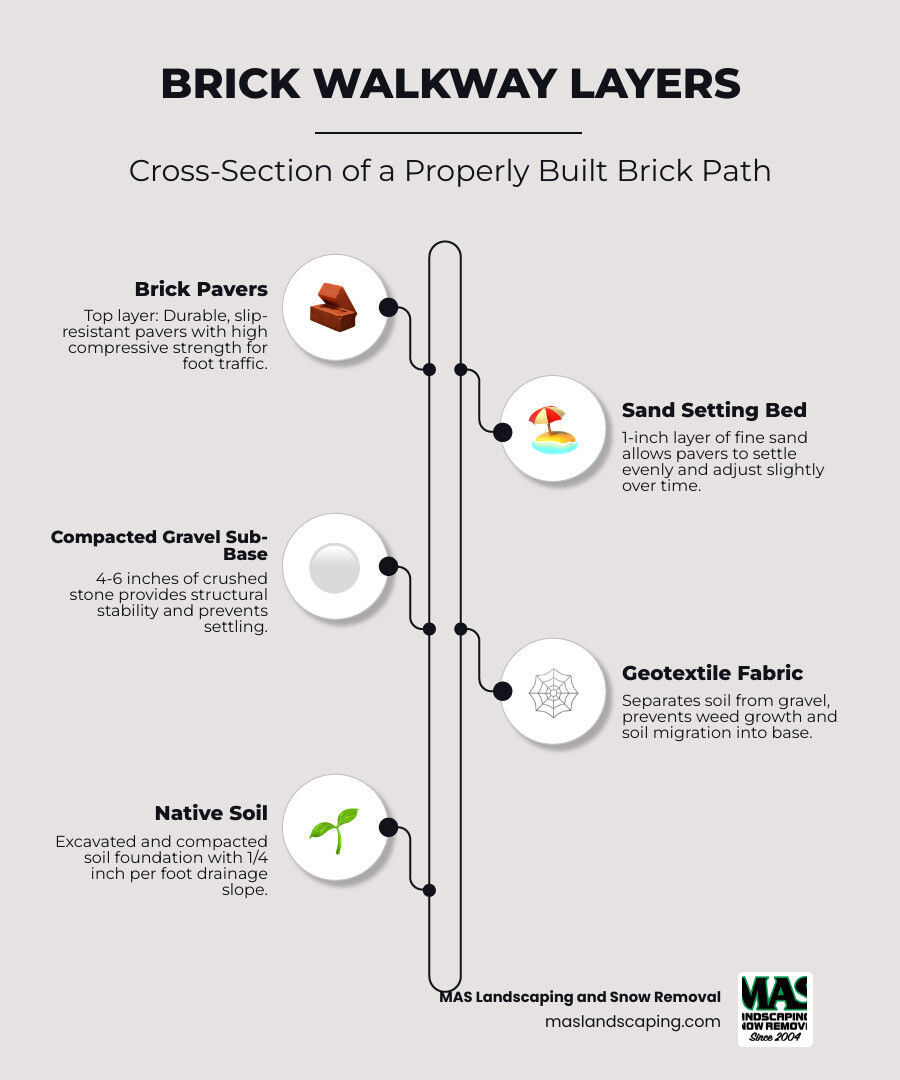
1. Excavation We don’t just clear the grass. We dig deep. For a standard walkway, we usually excavate 7 to 9 inches. This allows room for the sub-base, the sand bed, and the brick itself.
2. Sub-Base Compaction We fill the trench with crushed stone (often called “3/4-minus” gravel). This layer is the “skeleton” of your walkway. We compact it in layers (lifts) of 2-3 inches at a time to ensure there are no air pockets. For our local climate, we often recommend a thicker base to combat frost.
3. Geotextile Fabric We lay down a professional-grade landscape fabric between the soil and the gravel. This prevents the heavy gravel from sinking into the soft Massachusetts clay over time, which is a leading cause of “wavy” walkways.
4. The Sand Bed A 1-inch layer of coarse sand is spread over the gravel. This acts as the final leveling agent. We use “screed pipes” to ensure the sand is perfectly flat before the bricks are laid. You can learn more about this in our stone-walkway-contractor-guide/.
5. Edge Restraints and Polymeric Sand Once the bricks are in, we install plastic or metal edging to keep the bricks from sliding outward. Finally, we sweep polymeric sand into the joints. This sand contains a special binder that hardens when misted with water, locking the bricks in place and preventing weeds.
The Importance of a Solid Foundation
In Saugus and the surrounding areas, we deal with “frost heave.” When water in the soil freezes, it expands. If your foundation isn’t porous enough to let water drain away, that ice will push your walkway up.
A walkway-builder/ who cuts corners on the gravel base is setting you up for failure. Proper paver-installation/ requires a base that is both strong enough to hold weight and porous enough to allow drainage. This foundation is what ensures your path lasts for 25 to 50 years rather than just five.
Brick Pavers vs. Regular Wall Bricks
One common mistake we see is homeowners trying to use “leftover” bricks from a chimney or a wall for their walkway. Don’t do it!
- Compressive Strength: Brick pavers are fired at much higher temperatures and are designed to be walked on (and sometimes driven on). They are much denser than wall bricks.
- Porosity: Wall bricks are porous. They soak up water. In a Massachusetts winter, that water freezes inside the brick and causes it to “spall” or flake apart. Brick pavers are nearly moisture-proof.
- Slip Resistance: Pavers often have a slightly rougher texture to provide grip when wet, whereas some wall bricks can be dangerously slick.
When you hire a brick-paver-patio-contractor/, they will always specify “paver grade” bricks to ensure your safety and the project’s longevity.
Design Options and Material Comparisons
Choosing the right pattern can change the entire “vibe” of your home. A brick-walkway-ideas/ search will show you that there are dozens of ways to lay the same rectangular brick.
| Material | Durability | Maintenance | Aesthetics | Best For |
|---|---|---|---|---|
| Brick Pavers | High (50+ years) | Low (Sweep & Seal) | Timeless/Classic | Historic homes, garden paths |
| Concrete | Medium (20 years) | Low (prone to cracking) | Modern/Clean | Budget-friendly large areas |
| Flagstone | High (Lifetime) | Medium (weeds in gaps) | Natural/Rustic | Wooded lots, informal paths |
Popular Patterns:
- Herringbone: The strongest pattern. Because the bricks are interlocked at 45 or 90-degree angles, they don’t shift under foot traffic. It’s also visually stunning.
- Running Bond: The classic “staggered” look. It’s simple, elegant, and great for following curves.
- Basketweave: Bricks are laid in pairs at right angles. It gives a vintage, “old-world” feel that looks great in towns like Andover or Georgetown.
Check out some of our backyard-paver-walkway-ideas/ for inspiration on how to mix and match these patterns with different color palettes, from traditional “Canton Red” to modern “Ironwood” grays.
Budgeting for Your Project: Costs and Factors
When planning your budget, it’s important to understand that the “bricks” are often the smallest part of the bill. The real cost lies in the labor, equipment, and base materials.
Several factors will influence your final cost-of-paver-walkway/:
- Square Footage: Naturally, a longer, wider path costs more.
- Site Preparation: If we have to remove an old concrete path or dig through heavy tree roots, the labor time increases.
- Labor Complexity: Curves require significantly more cutting than straight lines. Each cut takes time and specialized saws.
- Permit Fees: Depending on your town (like Reading or Wakefield), you may need a permit for “impervious surface” additions.
Average Pricing for Brick Walkway Contractors
Note: These are average costs based on internet data and are not actual costs for MAS Landscaping. Every project is unique and requires an on-site consultation for accurate pricing.
Based on broad industry data, homeowners can expect a wide range of pricing:
- Basic Brick Installations: Often start around $8 to $15 per square foot for simple designs and standard materials.
- Mid-Range Custom Work: Usually falls between $20 to $45 per square foot, involving custom patterns or higher-end clay pavers.
- High-End/Complex Masonry: Can reach $60 to $85 per square foot or more for intricate designs, difficult terrain, or premium natural stone blends.
For a detailed breakdown, check our guide on the cost-of-paver-walkway/.
Frequently Asked Questions about Brick Walkways
How long do brick walkways last?
With proper brick-and-masonry/ care, a brick walkway can easily last 25 to 50 years. The bricks themselves are nearly indestructible. The “lifespan” usually refers to how long the walkway stays level. To maximize this, we recommend:
- Replenishing joint sand every 2-3 years.
- Sealing the bricks every 3-5 years to protect the color and help the sand stay “locked.”
Do I need a permit for a new walkway?
It depends on your local zoning laws. Some towns in Middlesex County have limits on “impervious surfaces” (surfaces that don’t let water soak through). If you are close to a wetland or have a strict HOA, you might need approval. A professional walkway-installation/ team will usually help you navigate these local requirements.
How do I prevent weeds between the bricks?
The “old way” was to use regular sand, which is basically a luxury apartment for weeds. The “new way” is polymeric sand. When installed correctly during the paver-installation/ process, it hardens into a mortar-like consistency that weeds can’t penetrate. Combined with a professional-grade landscape fabric under the base, your weed problems will be virtually non-existent.
Conclusion
A beautiful brick walkway is the ultimate “welcome mat” for your home. It’s a project that combines art with engineering, and when done correctly, it provides a safe, durable, and stunning path for your family for decades.
At MAS Landscaping and Snow Removal, we take pride in our local expertise. Based in Saugus, MA, we understand the specific challenges of Massachusetts soil and weather. Whether you’re in Everett, Lynnfield, or any of our surrounding service areas, we are committed to providing personalized, professional service.
From the first scoop of dirt to the final sweep of sand, we treat every project as if it were our own front yard. If you’re ready to stop dreaming and start building, we’re here to help.
Ready to transform your home’s curb appeal? Contact MAS Landscaping for a Walkway Estimate
We serve Essex and Middlesex Counties, including:
- Essex County: Saugus, Lynnfield, Peabody, Danvers, Middleton, and more.
- Middlesex County: Everett, Malden, Melrose, Reading, Stoneham, and more.
Don’t settle for a “muddy trail.” Let our expert walkway-builder/ and brick-paver-patio-contractor/ team create something you’ll be proud of for years to come.