


Underlay for Artificial Grass on Soil: Top 5 Essential Tips
Underlay for artificial grass on soil is a crucial component that can greatly improve the performance and lifespan of your synthetic lawn. It acts as a foundation that provides stability, improves drainage, and prevents weed growth.
- Importance of Underlay
- Improves drainage and prevents waterlogging
- Reduces surface irregularities
- Extends the lifespan of your artificial grass
Artificial grass has become a popular choice for homeowners and businesses alike, thanks to its low maintenance, aesthetic appeal, and durability. However, to enjoy these benefits fully, it is important to understand the role of a well-chosen underlay. Proper installation ensures your lawn remains beautiful and functional for years to come.
In this guide, we’ll explore the various types of underlay, their specific advantages, and how they fit into the overall installation process. We’ll provide clear, step-by-step instructions to help you make informed choices and achieve the best results for your outdoor space.
Basic underlay for artificial grass on soil glossary:
– how to install artificial grass on soil
– garden artificial grass installation
– artificial turf for yards
Why You Need Underlay for Artificial Grass on Soil
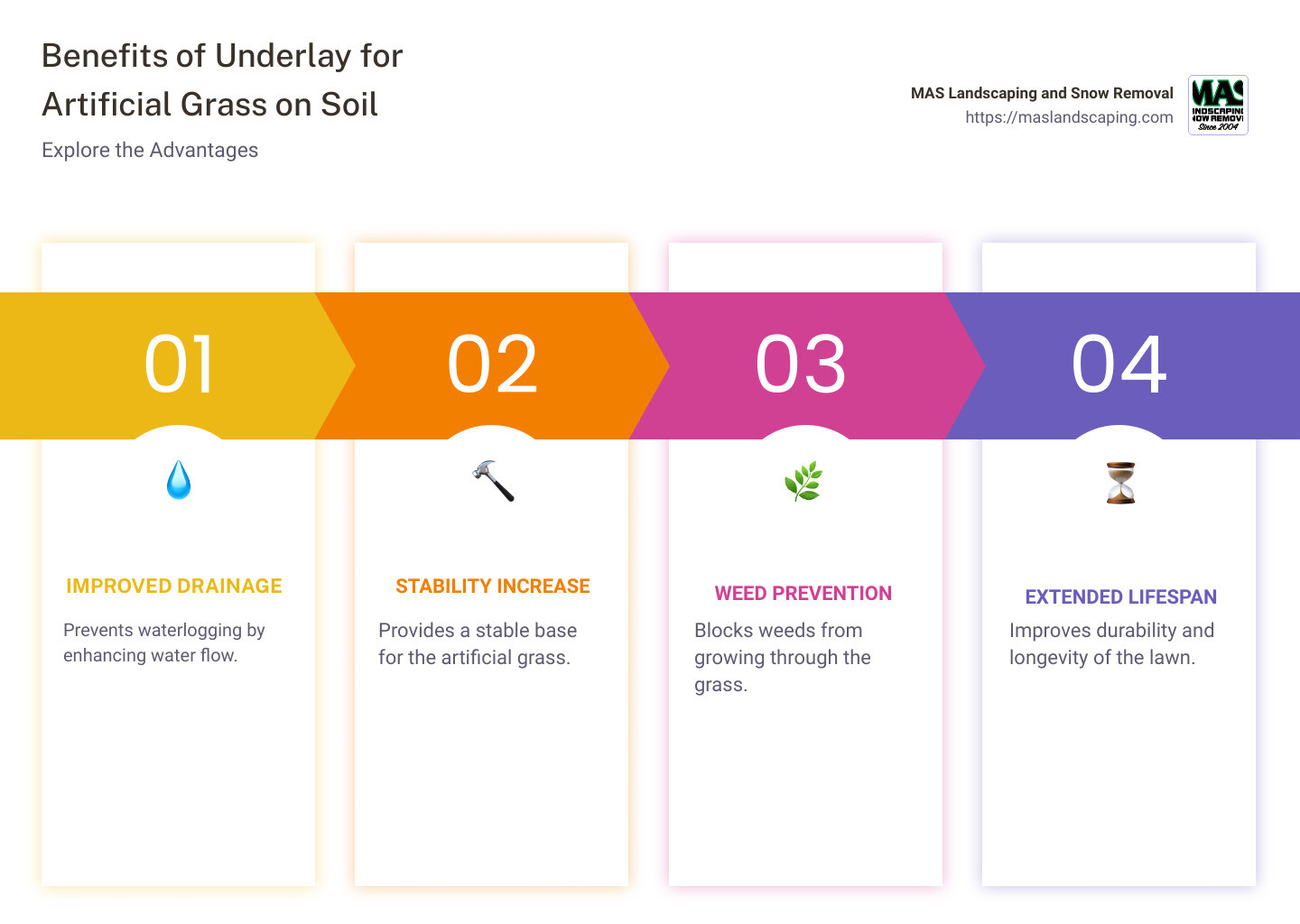
When installing artificial grass, underlay for artificial grass on soil is a game-changer. It provides several benefits that can make your synthetic lawn look and perform better over time.
Stability
A good underlay provides a solid base for your artificial grass. This prevents it from shifting or sinking over time, which can happen if the soil underneath is uneven or soft. By creating a stable foundation, the underlay helps keep your lawn looking smooth and even.
Drainage
Proper drainage is key to avoiding water buildup and soggy spots. An underlay improves drainage by allowing water to flow through the turf and into the soil below. This prevents waterlogging and keeps your lawn dry and usable, even after heavy rain.
- Did you know? Poor drainage can lead to mold and unpleasant odors, especially in pet-friendly areas.
Weed Prevention
No one wants weeds poking through their beautiful artificial lawn. An underlay acts as a barrier, preventing weeds from growing up through the turf. This keeps your lawn looking clean and tidy without the need for chemical weed killers.
Longevity
Investing in a quality underlay can extend the life of your artificial grass. By protecting the turf from wear and tear, the underlay ensures that your lawn stays in great shape for years to come. This means fewer replacements and repairs, saving you time and money in the long run.
In summary, using an underlay for artificial grass on soil is essential for achieving a stable, well-drained, and long-lasting lawn. It’s a small step that makes a big difference in the overall performance and appearance of your synthetic grass.
Types of Underlay for Artificial Grass on Soil
Choosing the right underlay for artificial grass on soil is crucial for a successful installation. Let’s explore some popular options and their benefits.
Geotextile Paper/Mesh Weed Barrier
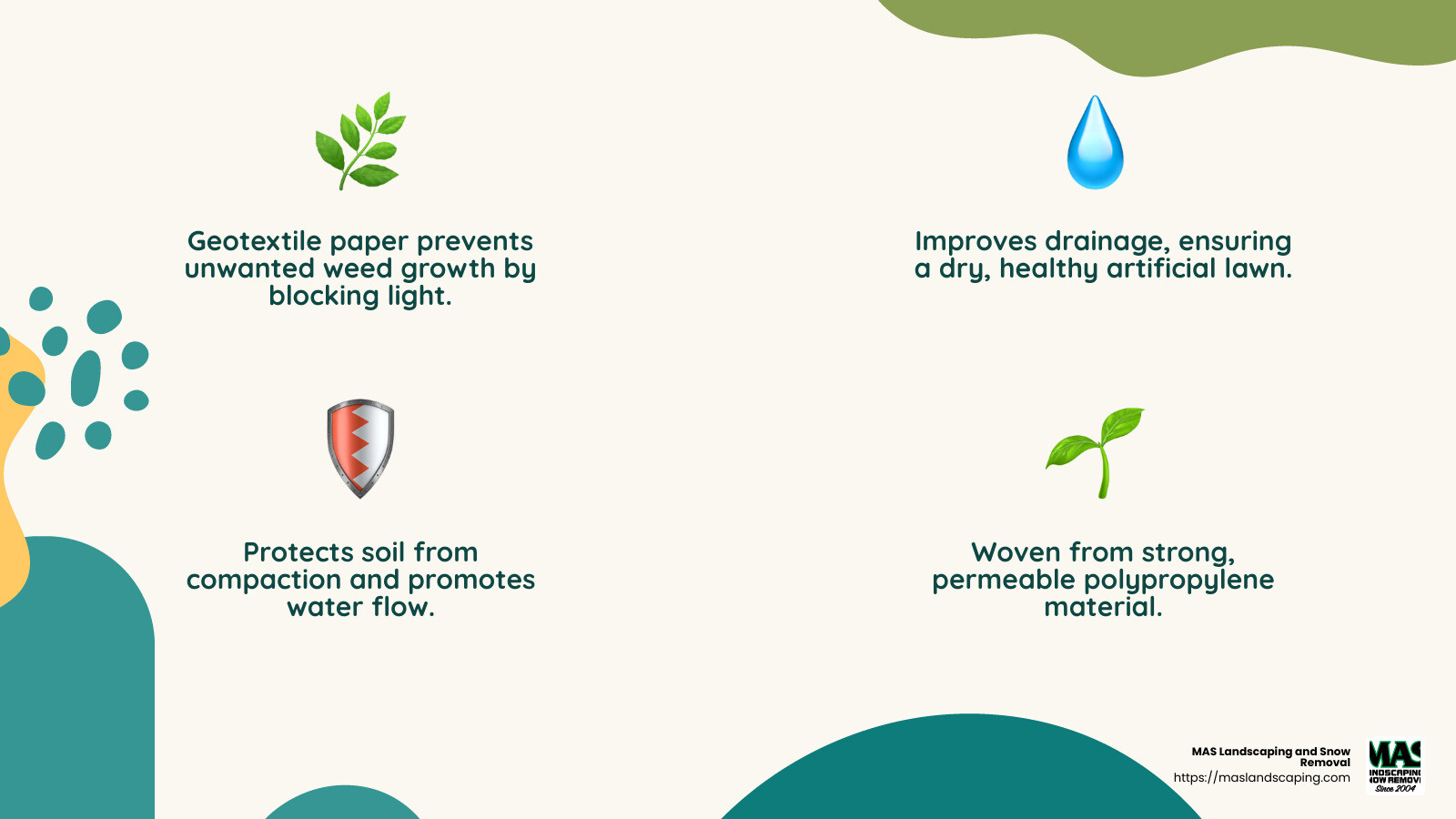
Geotextile paper or mesh weed barriers are a top choice for many artificial grass installations. These materials are designed to prevent weeds from growing through your synthetic lawn. Woven from strong, permeable polypropylene, they create a barrier that blocks light and inhibits weed growth.
- Benefits:
- Weed Prevention: Keeps unwanted plants at bay, ensuring a clean and tidy lawn.
- Soil Protection: Prevents soil compaction and promotes better drainage, keeping your lawn healthy and dry.
Foam Padding
Foam padding is perfect for areas where safety and comfort are priorities, such as playgrounds. This material adds a layer of cushioning under the artificial grass, making it softer and safer for children to play on.
- Benefits:
- Cushioning: Provides a softer surface, reducing the risk of injury from falls.
- Playground Safety: Ideal for areas where kids play, offering extra protection.
- Comfort: Improves the feel of your lawn, making it more enjoyable to walk or sit on.
Drainage Tiles
Drainage tiles are a smart choice for installations on rooftops or concrete patios. These interlocking tiles create a drainage layer beneath the artificial grass, allowing water to flow freely and preventing pooling.
- Benefits:
- Drainage Improvement: Ensures efficient water flow, keeping your lawn dry and free of soggy spots.
- Rooftop Installations: Perfect for areas where traditional drainage may be challenging.
- Concrete Patios: Provides a stable and well-drained base for artificial grass in non-soil environments.
Each type of underlay offers unique benefits, so consider your specific needs and environment when choosing the best option for your artificial grass installation. By selecting the right underlay, you’ll ensure a beautiful and long-lasting lawn that performs well in all conditions.
How to Install Underlay for Artificial Grass on Soil
Installing underlay for artificial grass on soil involves several key steps. Follow this guide to ensure your artificial lawn is stable, well-drained, and long-lasting.
Step 1: Prepare the Soil
Start by removing any existing grass, weeds, or debris. Use a shovel or sod cutter for this task. Once cleared, level the area using a rake. This is crucial for a smooth finish.
Tools Needed:
– Shovel or sod cutter
– Rake
– Level
Check the soil for drainage. If water tends to pool, consider creating a slight slope or installing a drainage system. This will prevent future waterlogging.
Step 2: Install the Weed Membrane
A weed membrane is essential for preventing unwanted plants from growing through your artificial grass. Lay the membrane over the soil, ensuring it covers the entire area. Overlap the edges by a few inches to ensure complete coverage. Secure the membrane with landscape staples or pegs to keep it in place.
Tools Needed:
– Weed membrane
– Landscape staples or pegs
– Scissors or utility knife
Step 3: Lay the Base Material
Next, spread a layer of Type 1 aggregate over the weed membrane. This material provides a solid foundation for your lawn. Aim for a depth of about 4 inches. Once spread, compact the base using a plate compactor or roller. This step is vital to prevent sagging and ensure evenness.
Tools Needed:
– Type 1 aggregate
– Plate compactor or roller
– Rake
For better drainage, add a layer of sharp sand on top of the aggregate. Compact it again to create a smooth surface.
Step 4: Fit the Underlay
Choose the appropriate underlay for your needs, such as foam padding for comfort or drainage tiles for water flow. Cut the underlay to fit the prepared area, using scissors or a utility knife. Secure it with tacks or adhesive, ensuring there are no gaps or overlaps. Use jointing tape to connect multiple pieces.
Tools Needed:
– Underlay material
– Scissors or utility knife
– Tacks or adhesive
– Jointing tape
Step 5: Install the Artificial Grass
Finally, roll out the artificial turf over the underlay. Align the edges and trim any excess with a utility knife. Secure the turf using glue and nails, focusing on the perimeter and seams to ensure it stays in place.
Tools Needed:
– Artificial turf
– Utility knife
– Glue and nails
Take care to stretch the turf slightly as you lay it, avoiding wrinkles or bubbles. This will give your lawn a neat, professional appearance.
By following these steps, you’ll create a durable and aesthetically pleasing artificial lawn. Proper installation is key to maximizing the benefits of your underlay for artificial grass on soil and ensuring a long-lasting outdoor space.
Benefits of Using Underlay for Artificial Grass on Soil
When installing artificial grass, underlay for artificial grass on soil plays a crucial role in enhancing the performance and longevity of your lawn. Here’s how:
Improved Drainage
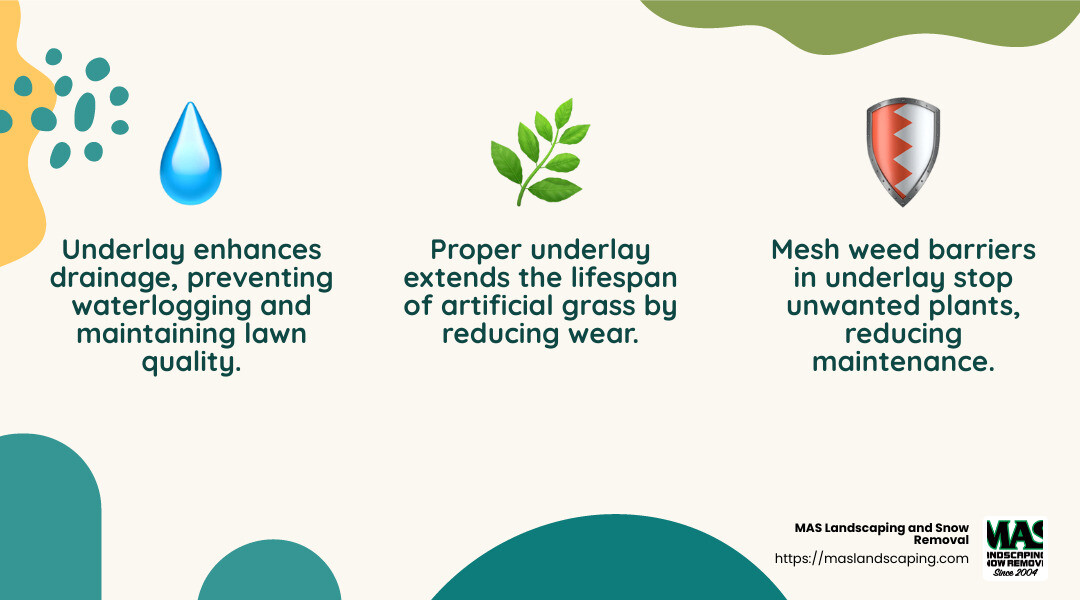
One of the most significant benefits of using underlay is improved drainage. Underlay materials like drainage tiles or a well-chosen geotextile paper allow water to flow through easily, preventing puddles and waterlogging. This is especially important in areas prone to heavy rainfall. By facilitating proper drainage, underlay helps maintain the appearance and function of your artificial grass.
Weed Prevention
Nobody wants weeds poking through their pristine artificial lawn. Using a mesh weed barrier as underlay effectively prevents unwanted plants from sprouting. The barrier blocks sunlight and inhibits weed growth, keeping your lawn clean and low-maintenance. This means less time spent on yard upkeep and more time enjoying your outdoor space.
Increased Lifespan
A well-installed underlay can significantly increase the lifespan of your artificial grass. By providing a stable base and protecting the grass from ground moisture, underlay reduces wear and tear. This means your investment lasts longer, giving you years of use before needing replacement.
Improved Comfort
If you’ve ever walked on artificial grass, you know how important comfort is. Foam padding underlay adds a layer of cushioning, making your lawn softer and more comfortable to walk on. This is particularly beneficial for families with children or pets, as it provides a safer, more pleasant surface for play.
Incorporating underlay into your artificial grass installation is more than just an optional step—it’s a smart investment in the quality and durability of your lawn. Whether you’re focused on drainage, weed control, longevity, or comfort, underlay has you covered.
Frequently Asked Questions about Underlay for Artificial Grass on Soil
Do you need underlay for artificial grass on soil?
Yes, using underlay for artificial grass on soil is highly recommended. While it might seem optional, underlay provides numerous benefits that improve the performance and lifespan of your artificial lawn. It offers stability, improves drainage, prevents weed growth, and adds comfort underfoot. Skipping the underlay can lead to poor drainage, an uneven surface, and increased maintenance due to weeds.
Can I lay artificial turf directly on soil?
Technically, you can lay artificial turf directly on soil, but it’s not advisable. Without a proper base, you risk several issues:
- Poor Drainage: Direct soil installation can lead to water pooling and poor drainage. This can damage the turf and create muddy patches.
- Weed Growth: Without a weed barrier, weeds can grow through the turf, spoiling the appearance and requiring constant maintenance.
- Uneven Surface: Soil shifts over time, causing dips and bumps. A stable base prevents this, keeping the surface even and safe.
Thus, using an underlay is crucial for a durable and low-maintenance artificial lawn.
What is the best underlay for artificial grass on soil?
Choosing the right underlay depends on your specific needs, but here are some popular options:
- Geotextile Paper/Mesh Weed Barrier: This is excellent for weed prevention and soil protection. It improves drainage by allowing water to pass through while blocking weeds. Geotextile paper is a common choice due to its durability and effectiveness.
- Foam Padding: Ideal for areas where comfort and safety are priorities, such as playgrounds. Foam padding provides cushioning, making the surface softer and safer for children and pets.
- Drainage Tiles: These are perfect for improving water flow and are often used in areas with existing drainage issues, like rooftops or concrete patios. Drainage tiles lift the turf, creating an air gap for ventilation and water movement.
Each type of underlay offers unique benefits, so consider your lawn’s specific requirements when making a choice.
Incorporating the right underlay ensures your artificial grass installation is successful, providing a beautiful, functional, and long-lasting lawn.
Conclusion
In summary, using an underlay for artificial grass on soil is a wise investment that brings numerous benefits. It provides stability, improves drainage, prevents weed growth, and increases the lifespan of your artificial lawn. These advantages make it an essential component of any successful artificial grass installation.
Final Tips:
- Always prepare the soil thoroughly before laying any underlay. Remove existing grass and level the area to ensure the best results.
- Choose the right type of underlay based on your specific needs, whether it’s geotextile paper for weed prevention, foam padding for comfort, or drainage tiles for improved water flow.
- Ensure proper installation by securing the underlay and overlapping materials where necessary to prevent gaps.
At MAS Landscaping and Snow Removal, we pride ourselves on our expertise in creating beautiful and functional outdoor spaces. Our landscape installation services are designed to meet the unique needs of clients in the Saugus area and beyond. We are committed to delivering high-quality, personalized service that transforms your outdoor living space into a stunning and practical area you can enjoy for years to come.
Choosing the right underlay is just one part of the process, and our team is here to guide you through every step, ensuring your artificial grass installation is a success. Contact us today to learn more about how we can help you achieve the perfect lawn with our expert services.