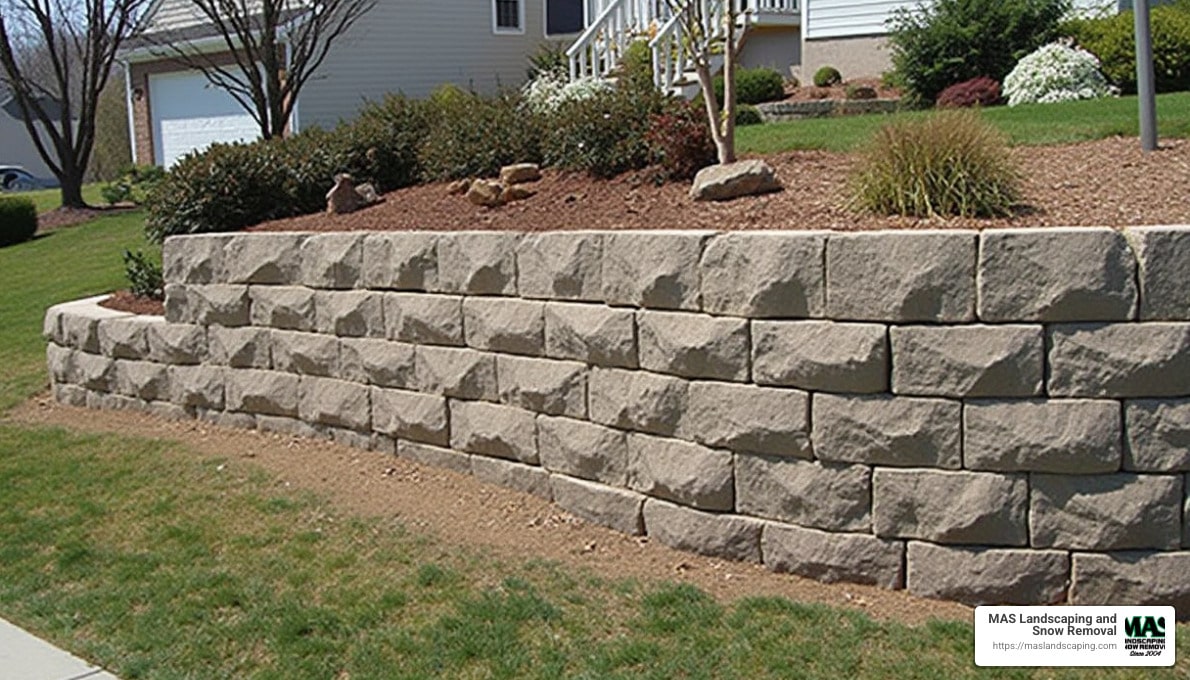



Bulk Retaining Wall Blocks: Top Deals in 2025
Improve Your Outdoor Spaces with Bulk Retaining Wall Blocks
Bulk retaining wall blocks are essential for anyone looking to create beautiful, stable, and functional landscapes. Whether you’re building a terraced garden or preventing soil erosion, these versatile blocks can transform your outdoor space.
- Purpose: Retaining wall blocks help stabilize soil, prevent erosion, and create distinct levels or sections within your landscape.
- Design Flexibility: Available in various styles, colors, and materials, they allow for customization to suit your aesthetic preferences.
- Durability: Properly installed blocks ensure a long-lasting and maintenance-free solution for your landscape needs.
Is your outdoor area lacking that ‘wow’ factor? Not sure where to start with retaining wall blocks? Read on to find how these blocks can help you design the outdoor space of your dreams.
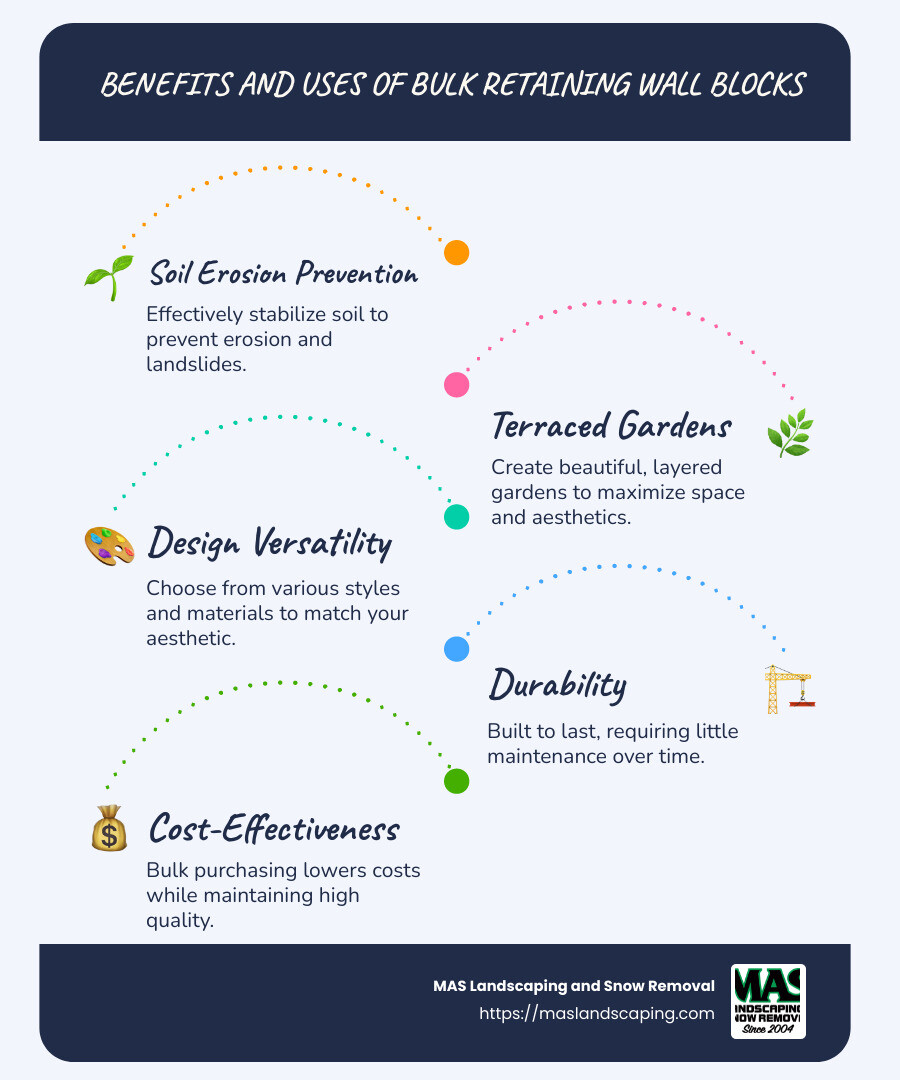
Bulk retaining wall blocks terms simplified:
– block walls for landscaping
– how to build a landscaping wall with blocks
– hardscape retaining walls
Benefits of Using Bulk Retaining Wall Blocks
When it comes to landscaping, choosing bulk retaining wall blocks offers several advantages that make them a smart investment for any project.
Cost-Effective
Buying in bulk can save you money. By purchasing more blocks at once, you often get a better rate per block. This is especially helpful for larger projects where the savings can add up quickly. Plus, these blocks are designed to last, which means you won’t have to replace them often, saving you money in the long run.
Long-Lasting
Retaining wall blocks are built to endure. They can withstand harsh weather conditions, resist pests, and maintain their strength over time. This durability means your investment will stand the test of time, providing a reliable structure for years to come. Properly installed, these blocks require minimal maintenance, reducing long-term costs and effort.
Versatile Design
One of the best things about bulk retaining wall blocks is their versatility. They come in various shapes, sizes, and colors, allowing you to match them perfectly to your outdoor aesthetic. Whether you prefer a natural stone look or a sleek, modern design, there’s a block to fit your style. This flexibility means you can create a unique and personalized outdoor space that reflects your taste.
In summary, using bulk retaining wall blocks is not just about building a wall—it’s about creating a lasting, cost-effective, and beautifully designed landscape. Ready to transform your outdoor area? Let’s explore the different types of retaining wall blocks available to make your vision a reality.
Types of Retaining Wall Blocks
When it comes to building a retaining wall, choosing the right type of block is crucial. Here’s a breakdown of the most popular materials: concrete blocks, timber, stone, and brick.
Concrete Blocks
Concrete blocks are a top choice for many due to their strength and durability. They are made from poured concrete and are designed to interlock, making installation easier and more stable. These blocks are ideal for large projects where strength is a priority. Plus, they come in various textures and colors, allowing for creative design possibilities.
Timber
Timber retaining walls offer a natural look that blends well with outdoor spaces. They are often made from pressure-treated wood to resist decay and pests. Timber is a cost-effective option, especially for smaller walls, but it may not last as long as other materials in wet climates. Regular maintenance can help extend its lifespan.
Stone
For a classic and timeless appearance, stone is an excellent choice. Natural stone walls can be stunning and add significant value to your property. They are incredibly durable and can withstand harsh weather conditions. However, stone can be more challenging to install due to its weight and irregular shapes, which might require professional help.
Brick
Brick retaining walls are known for their aesthetic appeal and strength. They offer a traditional look and can be used to complement existing brick structures. Bricks are durable and require little maintenance, making them a long-lasting option. However, they can be more expensive compared to other materials, especially if you opt for high-end bricks.
Each type of retaining wall block has its advantages. Your choice will depend on your specific needs, budget, and the look you want to achieve in your outdoor space. Whether you go for the robust concrete blocks, the natural timber, the neat stone, or the classic brick, selecting the right material is the first step toward a successful landscaping project.
How to Choose the Right Retaining Wall Blocks
Selecting the right retaining wall blocks is key to ensuring your project is both functional and visually appealing. Here’s a simple guide to help you make the best choice by considering drainage, design, and engineering.
Drainage
Good drainage is crucial for any retaining wall. Without it, water can build up behind the wall, leading to pressure that may cause the wall to fail.
- Permeable Materials: Choose blocks that allow water to pass through, or ensure there is a proper drainage system in place.
- Gravel Backfill: Use gravel behind the wall to facilitate water movement away from the structure.
- Drainage Pipes: Install perforated pipes at the base to direct water away from the wall.
Proper drainage will help maintain the integrity of your wall over time.
Design
The design of your retaining wall should complement your landscape and meet your aesthetic goals.
- Color and Texture: Pick blocks that match or improve the existing elements of your outdoor space. Many blocks come in a variety of colors and textures.
- Height and Shape: Consider the height and shape of your wall. Curved walls can add a dynamic look, while straight lines offer a more formal appearance.
Design isn’t just about looks; it’s about making sure your wall fits harmoniously into the environment.
Engineering
Engineering is where you ensure your wall is safe and effective.
- Load-Bearing Capacity: Make sure the blocks can support the weight of the soil and any additional loads (like foot traffic or vehicles).
- Reinforcement: For taller walls, consider using reinforcement materials like geogrid to provide extra stability.
- Professional Guidance: Complex projects might require the input of a structural engineer to ensure all safety and stability standards are met.
By focusing on these aspects, you can choose the right retaining wall blocks that not only look great but also stand the test of time.
Frequently Asked Questions about Bulk Retaining Wall Blocks
What is the cheapest block for a retaining wall?
When it comes to building a retaining wall on a budget, pressure treated wood and concrete cinder blocks stand out as cost-effective options.
- Pressure Treated Wood: This is often the cheapest option. It’s easy to work with and provides a natural look. However, it’s best for shorter walls and may need more maintenance over time due to weather exposure.
- Concrete Cinder Blocks: These are durable and affordable. They offer a simple, industrial look and can be stacked easily. For a more polished finish, you might need to apply a veneer or paint.
Both options can be suitable for DIY projects, but remember to factor in maintenance and longevity when choosing the best material for your needs.
How many retaining wall blocks are in a pallet?
The number of retaining wall blocks in a pallet can vary based on the block size and manufacturer. For instance, River Red Concrete blocks, which you might find at places like Home Depot, typically come with about 60 to 90 blocks per pallet. This number can change depending on the block’s dimensions and the pallet’s weight limit.
Always check the specific product details when purchasing to ensure you get the right amount for your project.
How much does it cost to build a 50-foot retaining wall?
Building a 50-foot retaining wall involves several cost factors, including materials, labor, and site preparation. Here’s a simple way to estimate:
- Cost Estimator: Use online tools or consult with professionals to get a detailed estimate. These estimators consider local material prices, labor rates, and specific design features.
- Project Size: For a 50-foot wall, costs can vary widely. On average, prices might start low for basic materials and rise significantly for high-end options. The final cost can be three times the initial estimate if you opt for premium materials or complex designs.
When budgeting, consider not just the upfront costs but also the long-term maintenance and any additional features you might want to include, like lighting or decorative finishes.
Conclusion
At MAS Landscaping and Snow Removal, we understand the importance of creating beautiful and functional outdoor spaces. Our expertise in designing and installing retaining walls ensures that each project not only meets but exceeds expectations.
Local Expertise
Being based in Saugus, MA, we have a deep understanding of the local climate, soil, and environmental conditions. This knowledge allows us to choose the best materials and designs that will thrive in the specific environments of Everett, Lynnfield, Malden, and surrounding areas. Our familiarity with local zoning laws and building codes ensures a smooth project from start to finish, free from legal hassles.
Personalized Service
We pride ourselves on our commitment to personalized service. From the moment you reach out, we listen to your ideas and preferences. Our team works closely with you to transform your vision into a reality, ensuring that every detail is custom to your needs. Whether you’re looking for a simple garden wall or a complex terraced landscape, we’re here to guide you through every step of the process.
By choosing MAS Landscaping and Snow Removal, you’re not just hiring a service; you’re partnering with a team dedicated to creating an outdoor space that you’ll love for years to come. Our professionalism and attention to detail make us leaders in landscape design and installation.
Ready to improve your outdoor space with a stunning retaining wall? Visit our Retaining Wall Installation Services page to learn more about how we can help you create the perfect landscape. Let’s bring your vision to life together!