


spring yard cleanup checklist: 5 Easy Steps for Amazing Results 2025
Why Your Yard Needs a Spring Reset
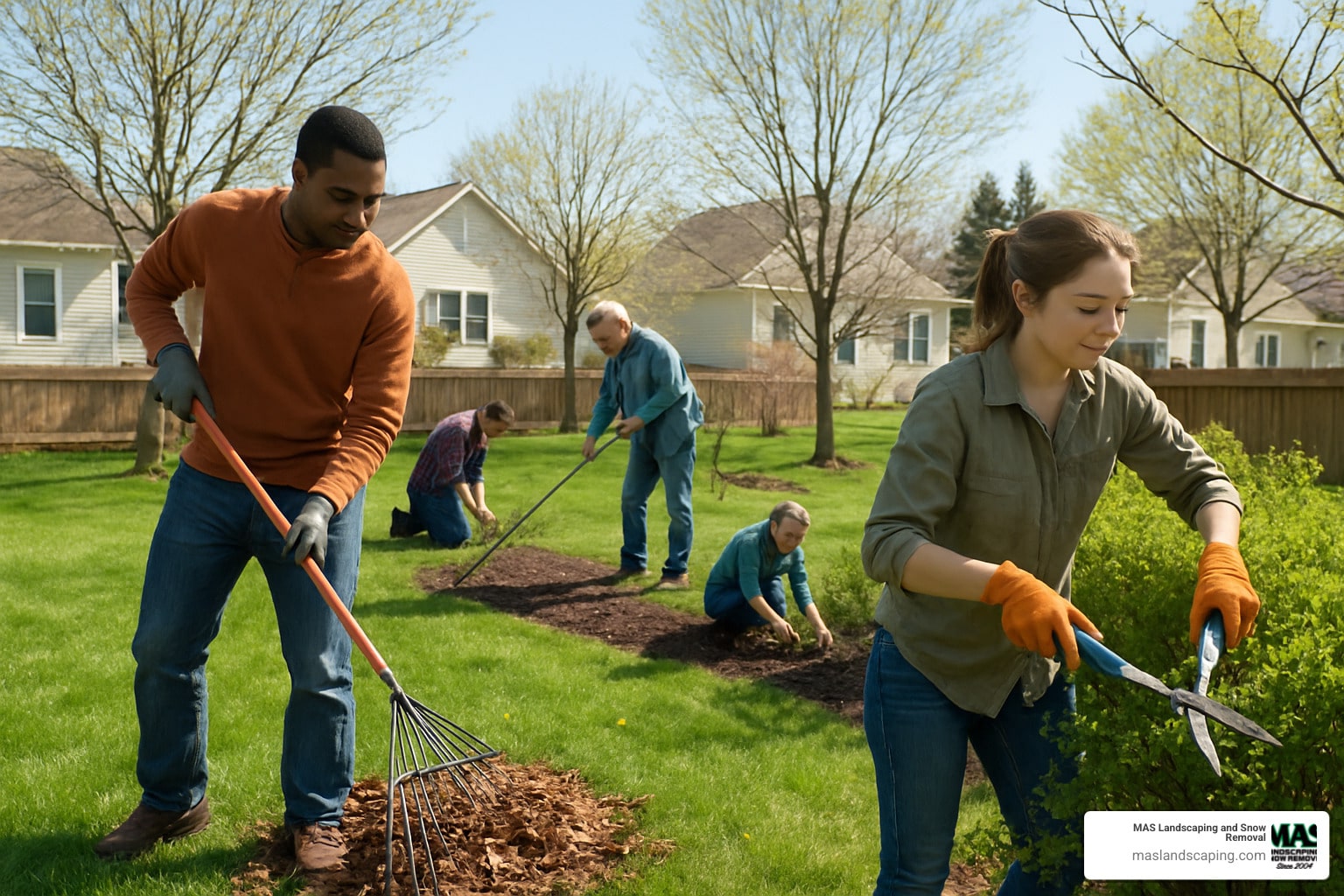
After a long New England winter, your yard is like someone waking from a deep sleep – a bit disheveled and needing some care to look its best again. Just as we open windows and dust off shelves inside our homes, our outdoor spaces deserve the same rejuvenating attention. A thorough spring yard cleanup checklist isn’t just about aesthetics – it’s the foundation for a thriving landscape all season long.
When the last patches of snow melt away and the soil begins to thaw, that’s your cue to head outdoors. Here in Greater Boston, timing is everything. You want to start after the freeze-thaw cycles end but before new growth really takes off – usually that sweet spot in early spring when you can address winter damage without harming emerging plants.
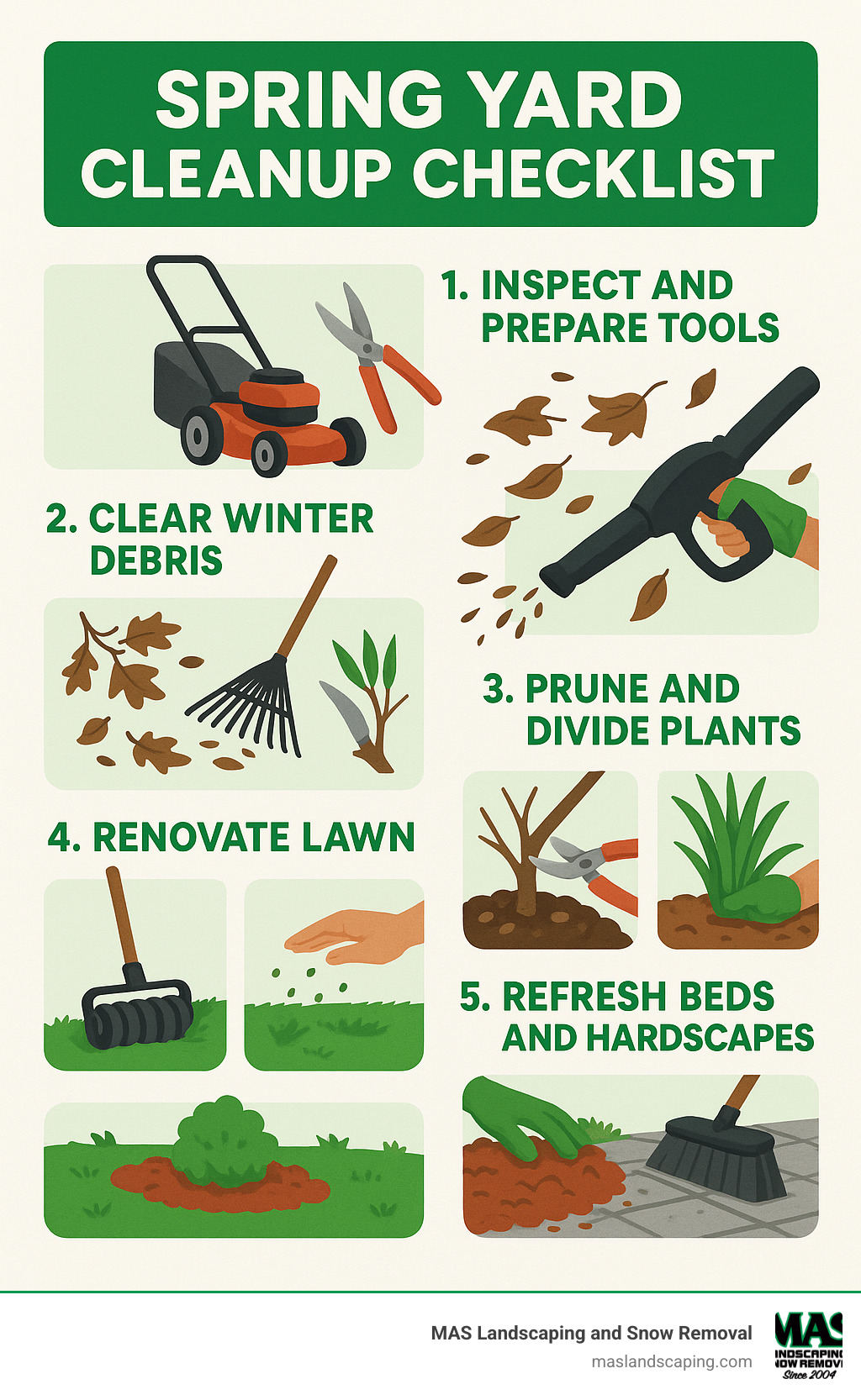
Your spring yard cleanup checklist should include these five essential steps:
- Inspect and prepare tools – Those mower blades won’t sharpen themselves! Now’s the time to change oil, replace spark plugs, and ensure everything runs smoothly before you need it.
- Clear winter debris – Those matted leaves and broken branches aren’t just unsightly – they can harbor diseases and pests. Removing them gives your yard room to breathe again.
- Prune and divide plants – Cutting back dead growth and dividing overcrowded perennials isn’t just good grooming – it promotes healthy new growth and better flowering.
- Refresh your lawn – Your grass needs to breathe too! Aerating, dethatching, overseeding, and applying pre-emergent treatments now pays dividends all summer long.
- Revitalize beds and hardscapes – Fresh mulch isn’t just pretty – it conserves moisture and suppresses weeds. And those clean, edged beds and sparkling patios? Pure joy.
The effort you invest now will determine how your outdoor spaces perform through summer and beyond. It’s not just about immediate beauty – it’s preventative care. According to research from Ground One, a proper spring cleanup that includes pruning, debris removal, and fertilization can actually increase your property’s curb appeal and value by as much as 7%.
“Spring is a season of beauty and renewal, and it’s a time of joy for many homeowners,” notes Ground One’s spring cleanup guide. There’s something deeply satisfying about being part of that renewal process, seeing your yard transform from winter-worn to spring-ready.
Whether you’re tackling your spring yard cleanup checklist yourself or considering professional help, understanding what your landscape needs is the first step. For more specific guidance, check out these helpful resources:
- Average cost of a yard spring cleanup
- Google doc spring cleanup in yard cartoon
- Spring cleaning services
Ready to roll up your sleeves? Let’s dig into each step of your spring yard revival in detail.
Step 1: Inspect & Prep Your Tools
Every successful spring yard cleanup checklist begins with tool preparation. As Roger Cook, a landscaping expert, notes, “Now’s the time to get some basic spring yard maintenance done, then, as temperatures warm up, you’ll be in better shape for seeding and planting and for enjoying the outdoors.”
Before diving into your yard work, take inventory of your equipment. According to The Old Farmer’s Almanac, sharpening your mower blade in spring can improve mowing efficiency by up to 30% and reduce grass damage, leading to a healthier lawn.
Here’s what to check before starting your cleanup:
- Lawn mower: Inspect for damage, clean thoroughly, and ensure it starts properly
- Hand tools: Check for rust, clean, and sharpen pruners, loppers, and shovels
- Power equipment: Test leaf blowers, string trimmers, and hedge trimmers
- Safety gear: Locate gloves, eye protection, ear protection, and proper footwear
“Good maintenance practice begins with caring for the tools necessary for each job,” emphasizes one landscape professional. This wisdom applies whether you’re tackling the job yourself or preparing for our team at MAS Landscaping to assist.
How to Prepare Lawn Equipment
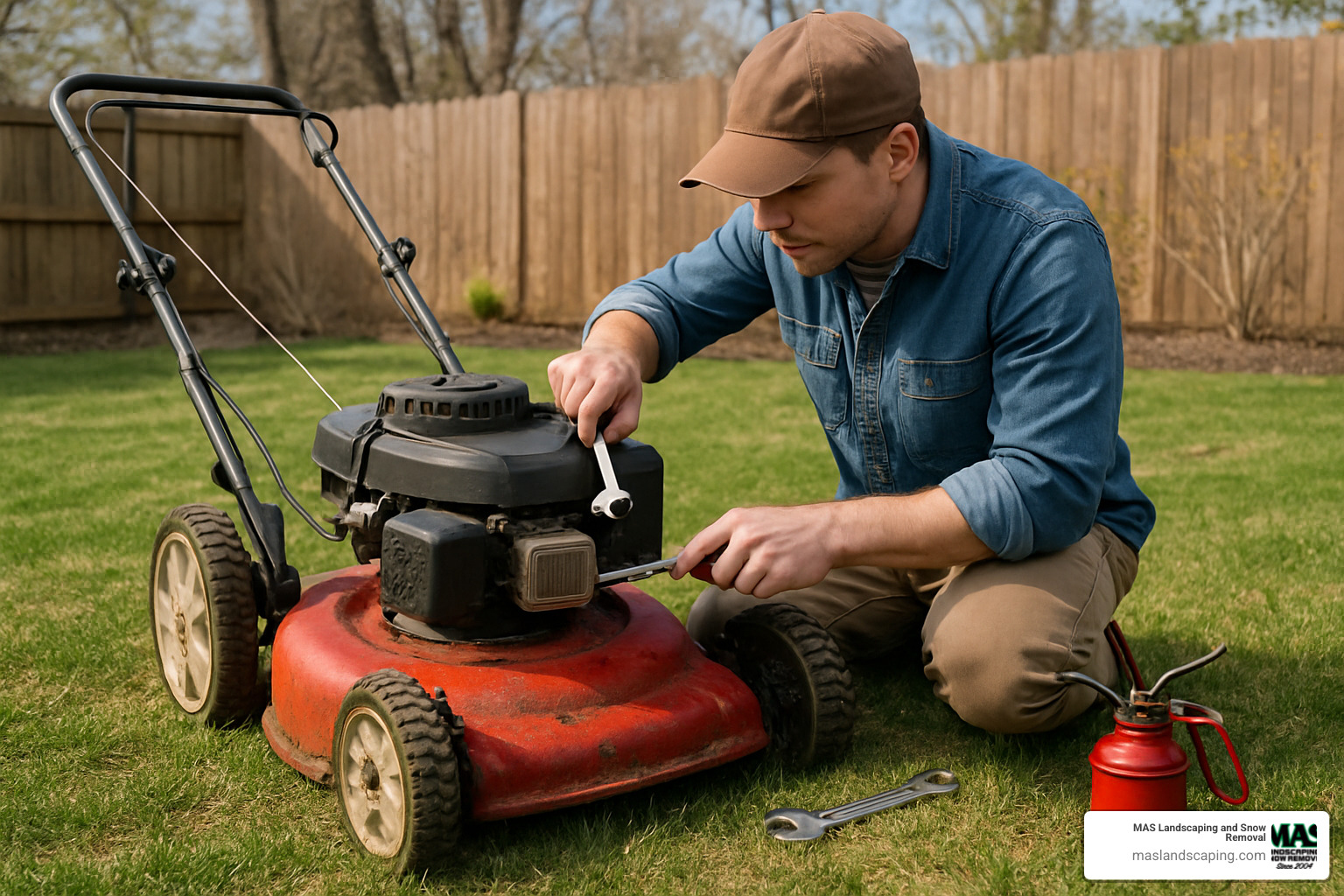
Your lawn mower is the workhorse of spring and summer yard maintenance. Proper preparation now prevents breakdowns during the busy growing season. Follow these steps:
Taking time to change the oil in your mower ensures smooth operation all season. Fresh oil keeps the engine running cooler and extends its life. While you’ve got the maintenance toolkit out, replace the spark plug for easier starting and better fuel efficiency – a simple $3-5 part that makes a world of difference.
Don’t overlook your air filter! A clogged filter forces your engine to work harder and burn more fuel. Cleaning or replacing it takes just minutes but provides hours of improved performance. And nothing says “ready for spring” like a newly sharpened blade. Your grass will thank you with cleaner cuts that heal faster and resist disease better.
Before putting your mower back into service, take a moment to thoroughly clean the mower deck. All that caked-on grass from last season isn’t just unsightly – it can cause rust and reduce cutting efficiency. A good scraping followed by a rinse will have your deck looking and performing like new.
For those with belt-driven mowers, inspect all belts and cables for signs of wear. Fraying or cracking means it’s time for replacement – much better to do this now than when you’re halfway through your first mow of the season! Finally, give all moving parts a shot of lubricant to ensure smooth operation.
For battery-powered equipment, ensure batteries are charged and holding power properly. Replace any that no longer maintain a charge.
Many homeowners in Saugus, Everett, and surrounding communities find that modern battery equipment offers advantages for spring cleanup. Battery tools now match gas power while eliminating tune-ups, fluid changes, and fuel mixing.
| Feature | Gas-Powered Tools | Battery-Powered Tools |
|---|---|---|
| Power | High power for tough jobs | Sufficient for most residential tasks |
| Maintenance | Regular oil changes, spark plugs, filters | Battery charging only |
| Weight | Often heavier | Generally lighter |
| Noise | Louder operation | Quieter operation |
| Runtime | Continuous with fuel refills | Limited by battery life (typically 30-60 min) |
| Environmental Impact | Emissions and fuel handling | Zero emissions during use |
| Winter Storage | Requires fuel stabilization | Simple storage with batteries removed |
More info about Landscape Maintenance Services
Step 2: Sweep Away Winter Debris – The Heart of Any Spring Yard Cleanup Checklist
Once your tools are ready, it’s time to tackle what might be the most satisfying part of any spring yard cleanup checklist – clearing away winter’s leftovers. There’s something deeply rewarding about revealing the fresh green beneath all that debris!
Winter leaves your yard with quite a collection of unwanted souvenirs. According to The Spruce, that layer of debris isn’t just unsightly – it can actually smother new growth and create the perfect breeding ground for diseases like snow mold, which affects up to 20% of uncleaned lawns after winter.
“Just as your home needs spring cleaning after being shuttered up all winter, so do lawns and gardens,” notes The Spruce’s comprehensive guide. When you remove that matted layer of leaves and debris, you’re allowing sunlight and air to reach the soil again, giving your grass and plants the breathing room they need to thrive.
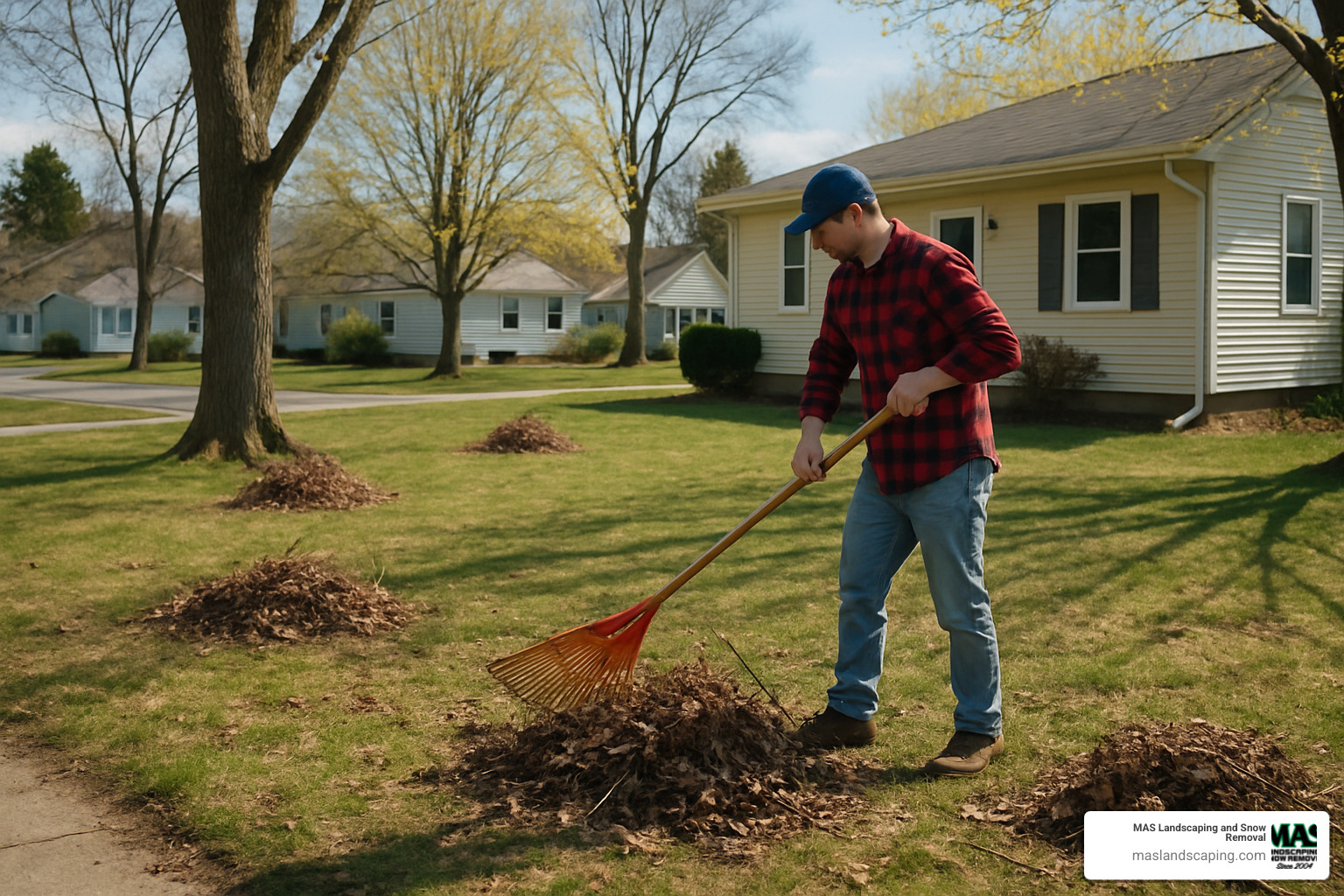
Start by tackling the obvious offenders. Those fallen branches and twigs that winter storms scattered across your yard need to go first, followed by matted leaves and pine needles that can suffocate your grass if left in place. Don’t forget about the wind-blown litter that inevitably accumulates in corners and along fences.
If you have pets, this is also the time to deal with any hidden waste that might have been concealed by snow. And for those in areas where winter ice management was necessary, be sure to sweep away any sand and salt residue that could harm your lawn edges.
A word of caution from our experience at MAS Landscaping: wait until your ground is completely dry before aggressive raking. Working on soggy soil often leads to accidentally tearing grass right from the roots. Use a leaf rake with flexible tines for your lawn areas and save the stiffer rake for your garden beds.
Compost or Curb? Smart Debris Disposal
After you’ve gathered all that debris, you’re faced with the age-old question: what to do with it all? Before you stuff everything into yard waste bags, consider some more environmentally friendly options.
Composting is nature’s recycling program. Those leaves, small twigs, and plant materials you’ve collected can transform into black gold for your garden. Setting up a simple compost pile or bin in a corner of your yard turns today’s “trash” into tomorrow’s soil amendment. As one lawn care expert we work with often says, “Rather than discarding leaves and branches, use them to create a compost pile.” It’s the perfect way to turn “waste” into a resource.
For smaller amounts of leaves, your lawn mower can be a helpful ally. Mulching with your mower chops leaves into fine particles that will decompose right where they fall, feeding your lawn in the process. It’s like creating instant fertilizer!
Most communities in Massachusetts offer curbside collection for yard waste in spring. If you’re in Everett, Lynnfield, Malden, or other areas we serve, check your local pickup schedule to coordinate your cleanup timing.
For those with larger properties, consider creating brush piles with larger branches. Tucked away in a suitable corner, these piles create valuable habitat for beneficial wildlife like birds and small mammals.
For extensive cleanups throughout Saugus and surrounding communities, our team at MAS Landscaping can handle debris removal efficiently, ensuring everything is properly disposed of or recycled. We’ve seen how a thorough debris cleanup transforms not just the appearance but the health of your landscape.
More info about Yard Clean Ups
Step 3: Prune, Divide & Shape Your Plants
With debris cleared away, your spring yard cleanup checklist now shifts to plant care. This is where your landscape truly begins its change from winter dormancy to spring vitality.
“Spring is the perfect time to prune trees as they emerge from dormancy,” notes a landscape professional. This timing is ideal because cuts heal quickly as the growing season kicks into gear, minimizing stress on your plants.
Each type of plant in your yard needs specific attention:
For trees, focus on removing dead, damaged, or crossing branches that could cause problems later. Most deciduous trees benefit from pruning before their leaf buds open, giving them a clean start for the growing season.
When it comes to shrubs, timing is everything. Your approach depends entirely on their bloom cycle. Those gorgeous spring-flowering shrubs like lilacs, forsythias, and rhododendrons should be pruned immediately AFTER they finish flowering. Wait until those beautiful blooms fade, then shape as needed. For summer-flowering varieties like hydrangeas, rose of sharon, and butterfly bushes, early spring is perfect – just before their buds begin to swell.
Don’t forget your perennials and ornamental grasses. Last year’s dead growth needs to be cut back to make way for fresh new shoots. Ornamental grasses should be trimmed to about 2-3 inches in height, while flowering perennials do best when cut back to 4-5 inches.
For roses, inspect for winter damage and cut back to about 1 inch below any blackened areas. This encourages healthy new growth from the remaining viable stems.
“Divide overcrowded perennials, ensuring each division has at least three stems,” recommends one gardening expert. This simple step refreshs tired plants while giving you extras to fill bare spots or share with neighbors – a budget-friendly way to expand your garden.
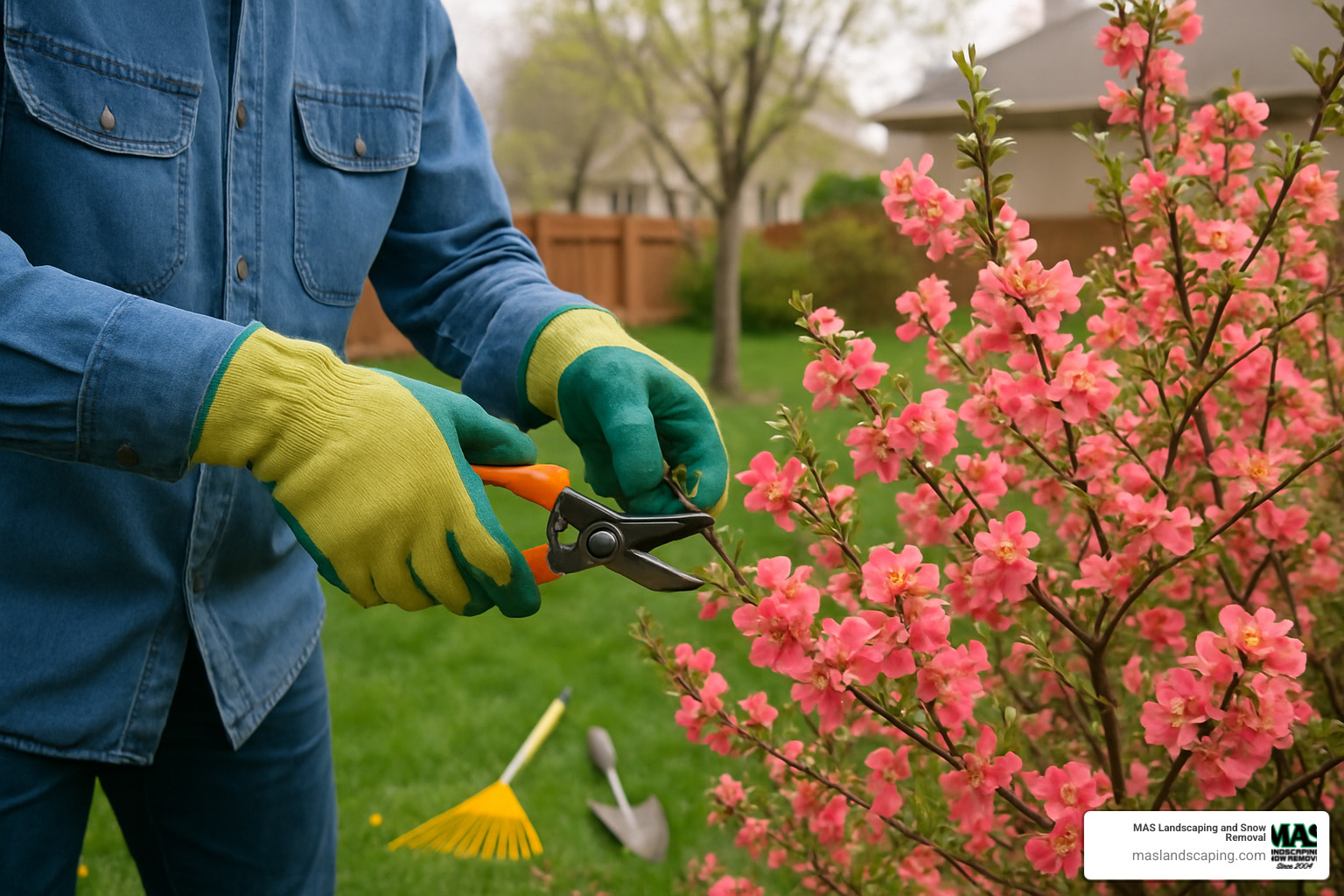
Know What, When & How to Prune – mini spring yard cleanup checklist
The technique you use when pruning matters just as much as when you do it. Here’s how to get it right:
First, always use clean, sharp tools. This isn’t just about making your job easier – it’s about plant health. Disinfect your pruners between plants with a 10% bleach solution or alcohol wipes to prevent spreading diseases from one plant to another.
Make clean cuts at a slight angle just above a bud or branch junction. For larger branches, use the three-cut method to prevent bark tearing, which can create entry points for pests and disease.
Always remove dead wood first before making any aesthetic cuts. This gives you a much clearer picture of the plant’s natural structure and helps you make better decisions about shaping.
Be gentle with your pruning – limit removal to no more than one-third of a plant’s growth in a single session. More aggressive pruning can shock plants and set back their growth.
Most importantly, know your plants. Different varieties have different needs:
– Spring bloomers like forsythia, azalea, and lilac flower on old wood, so prune after flowering
– Summer bloomers like butterfly bush and rose of sharon flower on new growth, so prune in early spring
– Evergreens such as boxwood and holly respond best to light shaping in spring, with major pruning saved for early summer
“Pruning summer-flowering shrubs before buds swell and spring bloomers after flowering” is the simple rule professional gardeners live by. Following this prevents accidentally removing this year’s flower buds and ensures your landscape will deliver maximum beauty.
For homeowners in Medford, Melrose, and other communities we serve, our MAS Landscaping professionals are ready to handle complex pruning tasks that require specialized knowledge or equipment. Some mature trees and extensive hedges benefit from professional attention to maintain both beauty and safety.
More info about Landscape Spring Cleaning
Step 4: Refresh Your Lawn – A Core Piece of the Spring Yard Cleanup Checklist
A beautiful lawn is the canvas for your entire landscape. This step of the spring yard cleanup checklist is where your yard really begins its change from winter dormancy to vibrant spring growth.
Did you know that according to Ground One’s spring cleanup guide, simply aerating your lawn can improve water and nutrient absorption by up to 25%? That’s right – this one task makes everything else you do for your lawn more effective.
Start by giving your lawn a thorough raking to remove thatch – that layer of dead grass that builds up between living grass and soil. For larger properties in Saugus or Malden, you might want to consider a power dethatcher to make this job easier.
Next, tackle soil compaction. “Aeration is like letting your lawn breathe again after a long winter nap,” as one of our clients put it. Core aeration pulls small plugs of soil from your lawn, creating pathways for air, water, and nutrients to reach the roots. Those little soil plugs might look messy at first, but they’ll break down naturally and return nutrients to your soil.
New England soils tend to run acidic, which most grass types don’t love. A simple soil test can tell you if you need to add lime to adjust your pH. Many local garden centers offer testing services, or you can pick up an inexpensive kit.
Spring is an acceptable time for overseeding bare patches in Massachusetts, though fall is generally ideal. Choose grass varieties that thrive in our climate – perennial ryegrass, Kentucky bluegrass, and fine fescue blends work well in most Greater Boston yards.
Timing matters when it comes to crabgrass prevention. Apply pre-emergent weed control when soil temperatures reach 55-60°F – in our area, this usually coincides with forsythia blooming. This natural calendar works better than watching the calendar date.
When fertilizing, choose a balanced spring formula with slow-release nitrogen. This feeds your lawn gradually rather than causing a burst of growth that will require more mowing. According to TruGreen, proper fertilization combined with regular watering can increase seed germination rates by up to 50% compared to under-watered lawns.
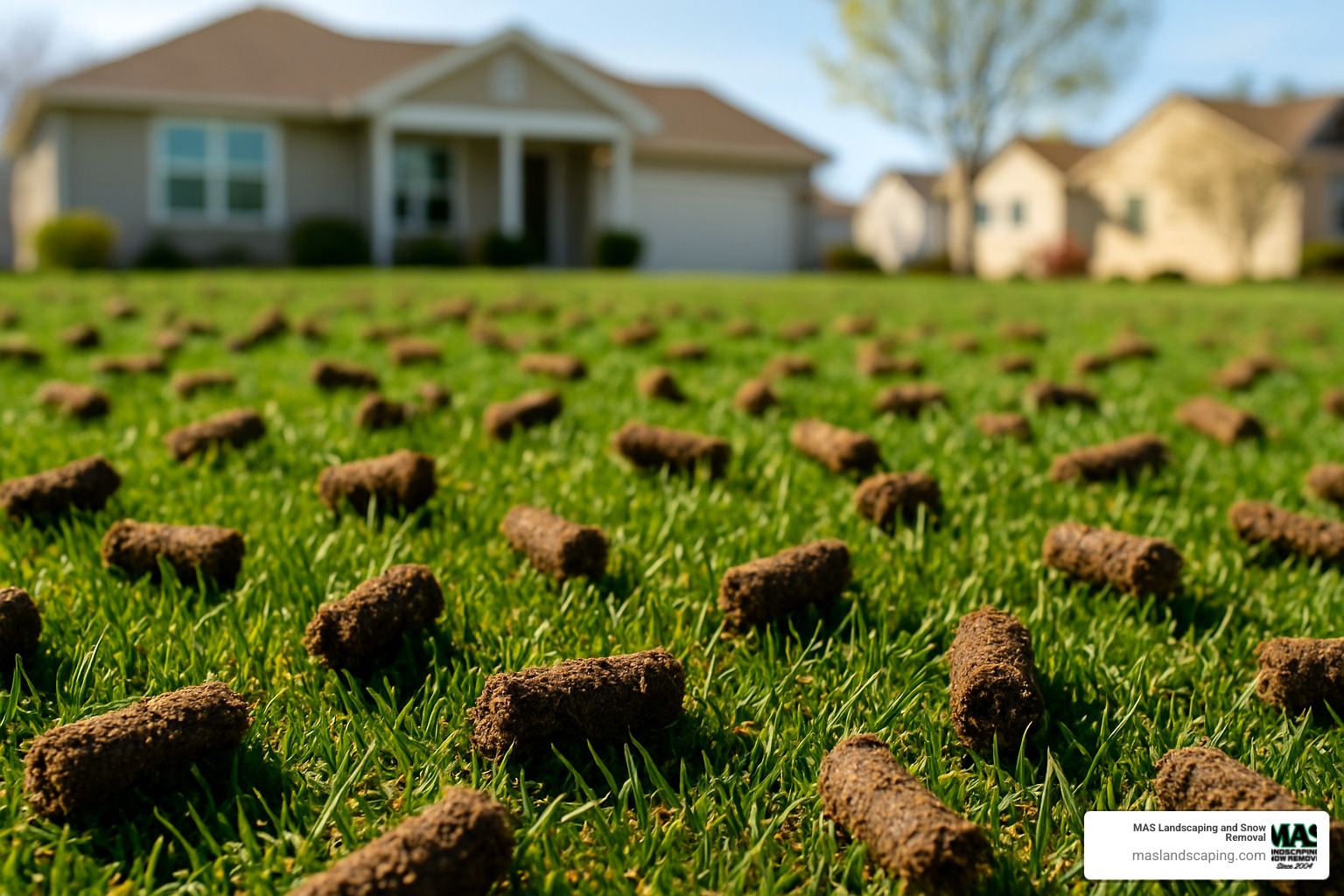
Seed vs Sod: Which Fixes Bare Spots Faster?
When you’re staring at bare patches in your lawn, you have two main options: seed or sod. Each has its advantages, and the right choice depends on your priorities.
Seeding is definitely the more budget-friendly option. At roughly $0.08-$0.23 per square foot, seed costs a fraction of what you’ll pay for sod. However, what you save in money, you’ll spend in time and patience. A newly seeded area takes 4-8 weeks before it’s established enough for light foot traffic.
“Seed when forsythia blooms” is an old gardener’s saying that works remarkably well for Massachusetts homeowners. This natural indicator tells you when soil temperatures are just right for germination.
Sod, on the other hand, is often described as “landscaping gold” – a premium investment that delivers instant curb appeal. At $1.25-$5.00 per square foot, it’s significantly more expensive, but you’ll have a usable lawn immediately. This makes sod particularly valuable for high-visibility areas or when you’re preparing to host outdoor events.
| Factor | Seed | Sod |
|---|---|---|
| Initial Cost | Lower ($0.08-$0.23/sq ft) | Higher ($1.25-$5.00/sq ft) |
| Installation Effort | Moderate | High |
| Time to Usable Lawn | 4-8 weeks | Immediate |
| Root Establishment | Better long-term | May take time to knit with soil |
| Variety Selection | Many options | Limited to available varieties |
| Maintenance Needs | High initially (daily watering) | Moderate (regular watering) |
Many of our clients in Revere and Chelsea opt for a mixed approach – using sod for front yards and visible areas while seeding larger back sections. This balanced strategy gives you the best of both worlds.
For extensive lawn renovation, our team at MAS Landscaping can assess your specific situation and recommend the most cost-effective approach based on your timeline, budget, and how you use your outdoor space.
More info about Yard Maintenance
Step 5: Refresh Beds, Hardscapes & Water Systems
The final piece of your spring yard cleanup checklist brings your landscape to life by focusing on the details that frame your outdoor space. After winter’s harsh grip loosens, your garden beds, patios, and irrigation systems need some tender loving care.
Did you know that something as simple as fresh mulch can transform your landscape? According to The Old Farmer’s Almanac, a proper layer of mulch reduces weed growth by up to 80% while helping soil retain up to 70% more moisture throughout the growing season. That’s a huge return on a relatively small investment!
Start by creating definition in your landscape. Edge your garden beds with a spade or power edger, cutting down 3-4 inches to create clean, crisp lines between your lawn and planting areas. “Form clean bed edges with a square-head shovel,” suggests one garden expert. This simple step dramatically improves your landscape’s appearance and helps contain mulch where it belongs.
Next, apply fresh mulch to your beds, maintaining a consistent 2-3 inch layer. Be careful to keep mulch pulled away from direct contact with plant stems and tree trunks to prevent rot issues. This protective blanket not only looks beautiful but serves multiple purposes in your garden’s ecosystem.
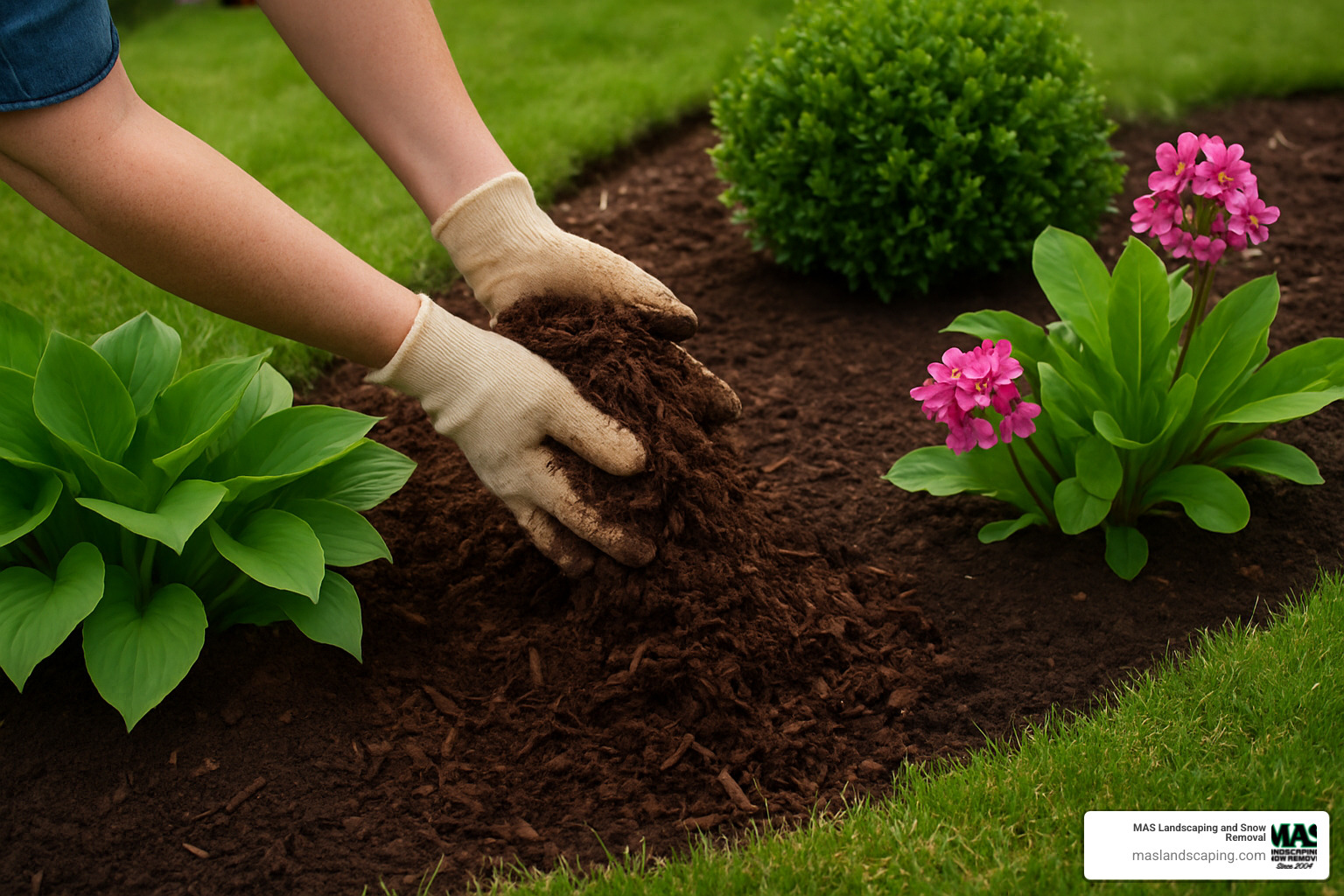
Don’t forget about your hardscape elements. Inspect patios, walkways, and retaining walls for any winter damage. Reset any heaved pavers, repair cracked mortar, and consider power washing surfaces to remove winter grime. Your outdoor furniture should also be cleaned with appropriate solutions based on material type – wood, metal, or plastic each need specific care.
Spring is the perfect time to repair fences and structures that may have sustained damage. Replace broken boards, tighten loose hardware, and apply fresh stain or paint where needed. These repairs not only improve appearance but extend the life of your outdoor investments.
Finally, prepare your irrigation systems for the growing season ahead. Inspect for leaks or damage, clean sprinkler heads, and test each zone to ensure proper coverage. Proper watering will be crucial once summer heat arrives.
Mulch Math & Application Tips
Mulch is truly a landscape multitasker – it suppresses weeds, conserves moisture, moderates soil temperature, and instantly improves appearance. Using it effectively requires a bit of planning.
Wondering how much mulch you’ll need? Start by calculating your bed area in square feet (length × width). For a 2-inch depth, divide your square footage by 162 to determine cubic yards needed. If you prefer a 3-inch depth, divide by 108 instead. For example, a 10′ × 20′ bed (200 sq ft) needs about 1.2 cubic yards for a 2-inch depth.
When applying mulch, remove old, decomposed layers if they’ve built up beyond 3-4 inches. Keep mulch 2-3 inches away from plant stems and tree trunks to prevent rot issues. Apply a consistent depth across your beds, using pine straw or finer mulch around shallow-rooted plants. Many New England gardeners find that darker mulch works best in shady areas as it absorbs heat and warms the soil.
“Mulch does not provide nutrients for the soil, but it develops soil quality by improving its capacity to hold on to water and nutrients,” explains one landscape professional. This makes it an essential component of garden health rather than just a decorative element.
For residents in Saugus, Everett, and surrounding communities, our MAS Landscaping team can handle everything from delivering the perfect amount of mulch to completely refreshing your beds and hardscapes. We understand the unique challenges of New England landscapes and can help your outdoor spaces shine this spring.
More info about Landscape Cleanup Services
Frequently Asked Questions About the Spring Yard Cleanup Checklist
How early can I start cleanup in New England?
The million-dollar question for homeowners around Saugus, Everett, and neighboring communities is always about timing. Mother Nature doesn’t follow a strict calendar in New England, but there are reliable signals to watch for before tackling your spring yard cleanup checklist.
You’re generally safe to begin once three key conditions are met: all snow has melted completely, the ground has thawed and isn’t soggy underfoot, and daytime temperatures consistently climb above 40°F. For most years, this sweet spot falls somewhere between late March and mid-April.
“Begin after your area’s projected last light freeze (29°–32°F), using NOAA or the Farmer’s Almanac for your region,” advises one expert. This science-based approach is much more reliable than simply picking an arbitrary date on the calendar.
Some tasks don’t need to wait for perfect conditions. You can prune certain trees and shrubs during mild spells in late winter, while other activities like fertilizing should wait until you see active growth beginning. Massachusetts weather is notoriously fickle, so flexibility is key to successful spring cleanup timing.
Do I really need to aerate every year?
Not every lawn needs the core aeration treatment annually, despite what some lawn care companies might suggest. The truth is, it depends on several factors unique to your property.
Clay soils, which are common in parts of our service area, benefit from yearly aeration because they compact more readily. Meanwhile, sandy soils might only need attention every 2-3 years. Heavy foot traffic areas—think kids’ play spaces or paths you frequently walk—compress soil more quickly and may need annual attention.
Look at your thatch layer too. When it exceeds ½ inch thickness, aeration helps speed decomposition and prevents that spongy feeling when you walk across your lawn. Struggling lawns with poor drainage will show dramatic improvement with more frequent aeration.
For most residential lawns around Saugus and neighboring communities, aeration every 2-3 years hits the sweet spot unless specific conditions suggest otherwise. If you’re scratching your head wondering about your lawn’s particular needs, our MAS Landscaping professionals can provide a quick assessment during a spring consultation.
When should I hire a professional crew instead of DIY?
There’s something satisfying about working through your own spring yard cleanup checklist, but let’s be honest—sometimes calling in the professionals just makes sense.
Time is often the deciding factor. A thorough spring cleanup can consume anywhere from 8-20 hours depending on your property size. That’s an entire weekend (or two) that could be spent with family or pursuing other interests. Many of our clients simply value their free time more than the cost savings of DIY.
Physical limitations are another consideration. Spring cleanup involves considerable bending, lifting, and sustained effort that might not be suitable for everyone. And then there’s the equipment factor—specialized tools like core aerators and power dethatchers are expensive to purchase for just once-a-year use.
Technical knowledge matters too. Proper pruning techniques, pest identification, and specific plant care requirements take years to master. Mistakes can damage valuable trees and shrubs or create problems that persist throughout the growing season.
“Spring landscape maintenance can be intensive, but the results pay dividends well into the summer,” notes one landscape professional. When you factor in the learning curve, equipment costs, and time investment, hiring experts like our team at MAS Landscaping often delivers better results while saving you considerable time and potential frustration.
Properties with complex features like water elements, extensive hardscapes, or mature specimen trees particularly benefit from professional attention. Our experienced crews handle these specialized features with the care and expertise they deserve.
Conclusion
A thorough spring yard cleanup checklist is your roadmap to a beautiful, healthy landscape throughout the growing season. By methodically working through these steps—from tool preparation to debris removal, pruning, lawn care, and bed refreshment—you set the stage for months of outdoor enjoyment.
Timing is crucial for many spring tasks, especially here in New England. Our unique climate patterns require a thoughtful approach to spring cleanup. The fundamental principles remain the same whether you’re in Everett, Lynnfield, Malden, Melrose, Medford, Revere, Saugus, or Chelsea, though specific timing may vary slightly based on your microclimate.
Think of spring cleanup as an investment in your property’s future. The hours you spend now will pay dividends through reduced maintenance later, fewer pest and disease issues, and a landscape that thrives rather than merely survives. Your outdoor spaces become more inviting, more functional, and more valuable with proper care.
At MAS Landscaping and Snow Removal, we understand the unique challenges of New England yards. Our comprehensive spring cleanup services can handle every item on this checklist, from basic debris removal to complex pruning, lawn renovation, and hardscape repair. We’ve seen how a professional spring cleanup transforms properties across our service area.
Our team brings local expertise and professional equipment to ensure your landscape emerges from winter ready to thrive. We tailor our approach to your specific property needs, whether you’re looking for a one-time spring cleanup or ongoing maintenance throughout the growing season.
Why choose us for your spring cleanup? Because we treat your property with the same care we would our own. We understand the satisfaction that comes from a well-maintained landscape, and we’re committed to delivering that feeling to every client we serve.
Ready to transform your yard this spring? Contact MAS Landscaping and Snow Removal today to schedule your professional spring cleanup. Let us handle the heavy lifting while you enjoy the results—a beautiful, healthy landscape that improves your property value and your quality of life.
More info about yard clean-ups