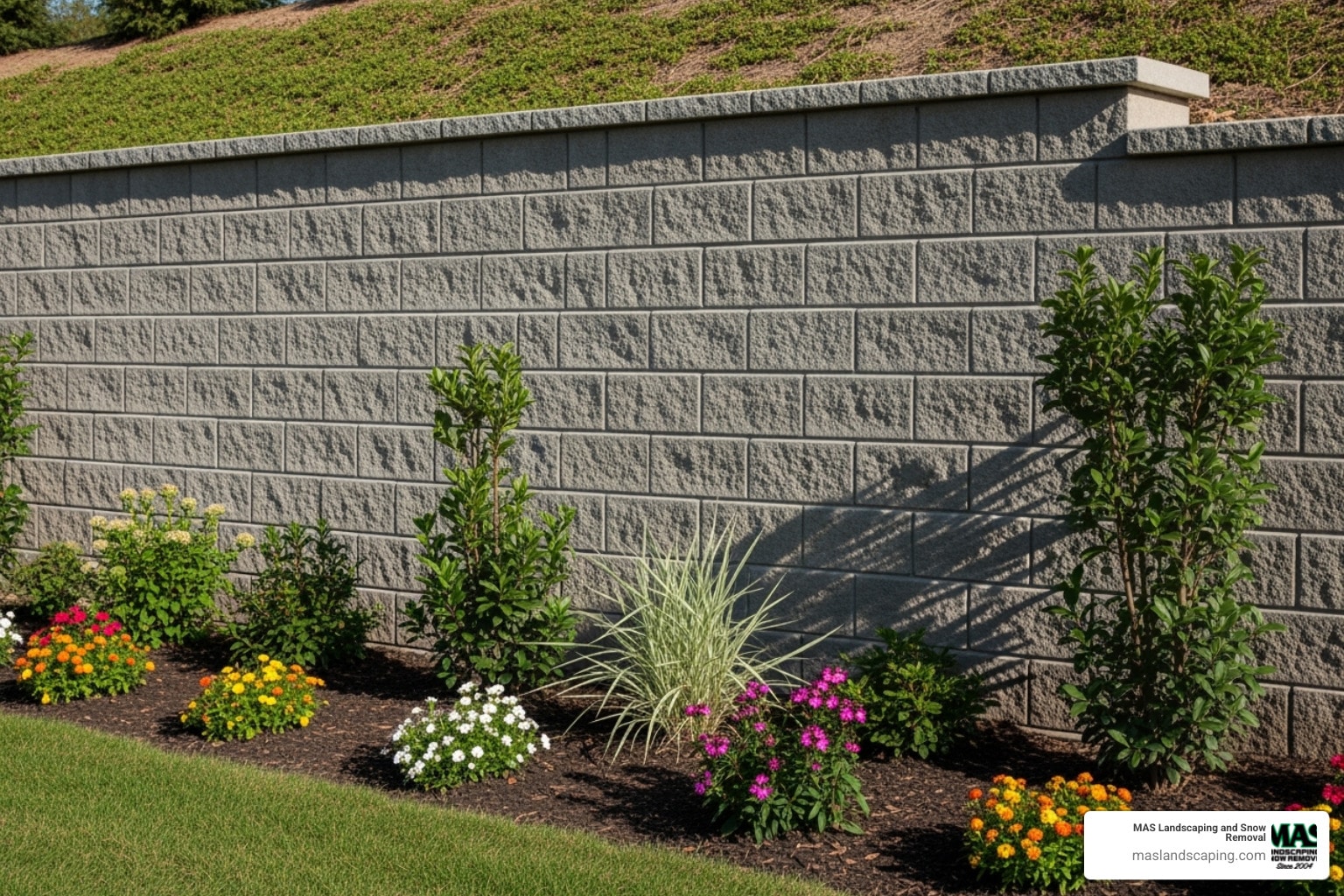



Precast concrete retaining wall: Unmatched in 2025
Why Precast Concrete Retaining Walls Are Revolutionizing Landscape Construction
A precast concrete retaining wall is a prefabricated structure manufactured off-site in controlled factory conditions, then transported and installed at your property. Unlike traditional poured-in-place concrete walls, precast systems offer faster installation, superior quality control, and exceptional durability.
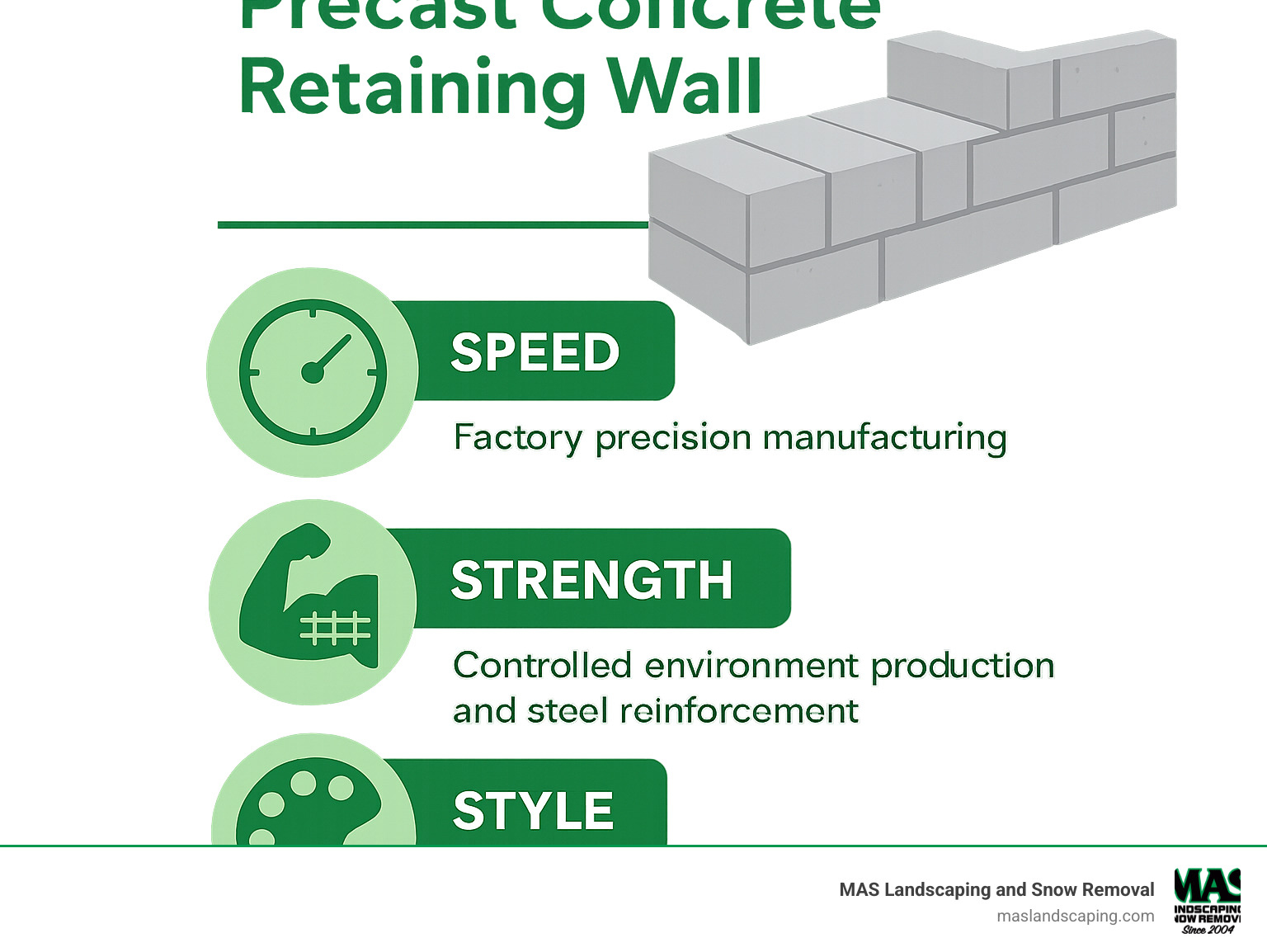
Key Benefits of Precast Concrete Retaining Walls:
- Speed: Installation up to 3x faster than traditional methods
- Strength: 50+ year lifespan with minimal maintenance
- Quality: Manufactured in controlled environments for consistent results
- Versatility: Available in multiple textures, colors, and designs
- Cost-Effective: Lower labor costs and reduced project timelines
A retaining wall is any structure designed to hold back soil and prevent erosion on sloped terrain. Traditional retaining walls are built entirely on-site, which means dealing with weather delays, inconsistent concrete mixing, and lengthy curing times.
Precast concrete changes this equation. These walls are manufactured in specialized facilities where temperature, humidity, and mixing ratios are precisely controlled. The result? Stronger concrete with better consistency than what’s possible to achieve on-site.
Off-site manufacturing allows for advanced engineering and architectural finishes that are difficult to achieve with traditional methods. Once delivered, installation is a matter of precise placement, not lengthy construction.
This approach has made precast concrete retaining walls a top choice for projects ranging from residential landscaping to major highway infrastructure, thanks to their dramatic advantages in speed, strength, and long-term value.
Learn more about precast concrete retaining wall:
The Best Benefits of a Precast Concrete Retaining Wall
When considering retaining wall options, precast concrete retaining walls offer real-world advantages that make your project faster, stronger, and more cost-effective.
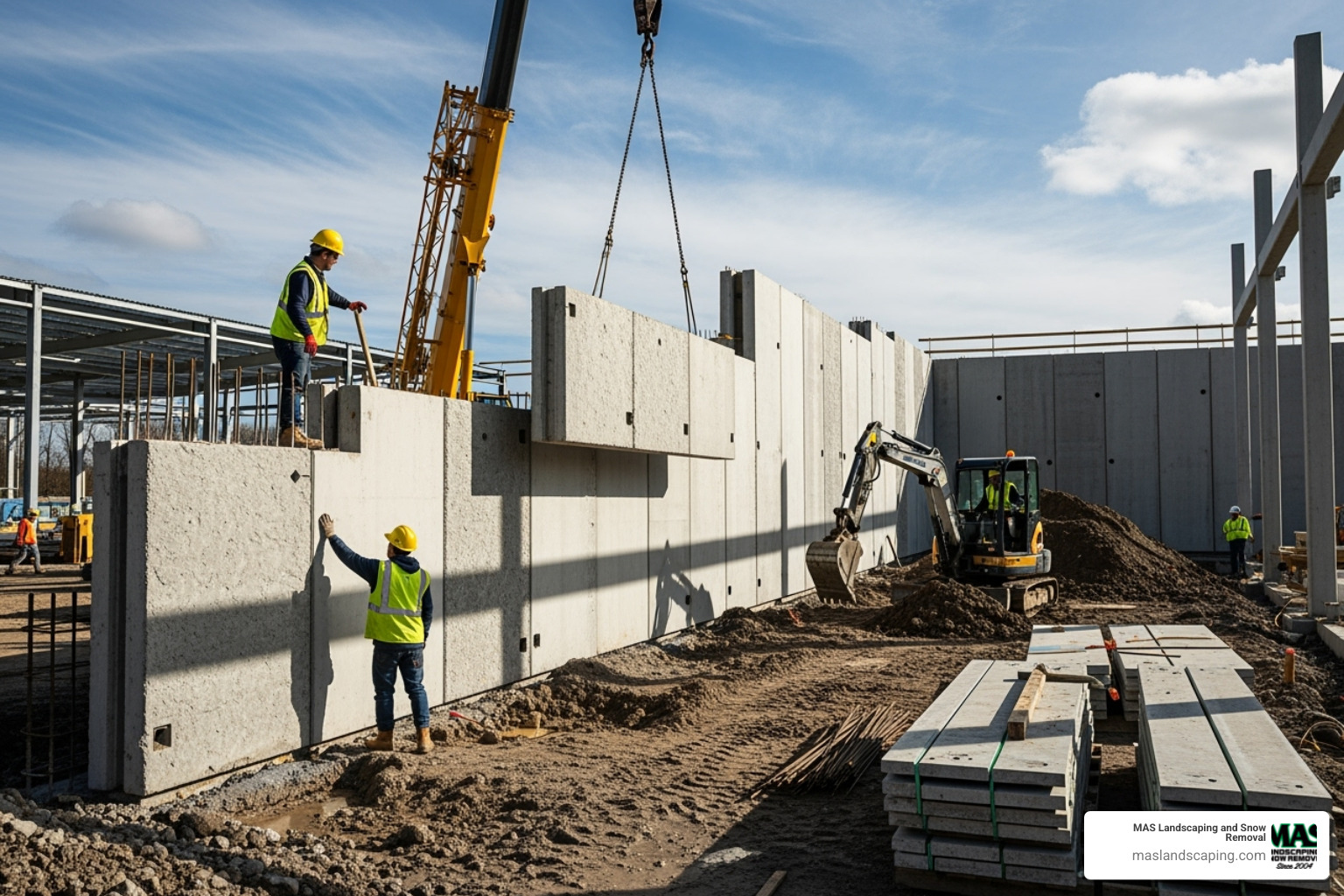
Rapid installation is a major benefit. While traditional walls take weeks, precast units can transform a landscape in days. Since units are made off-site while the ground is prepared, there’s no waiting for concrete to cure. This project efficiency means less disruption and faster results.
The superior strength of precast concrete comes from the controlled manufacturing environment. Each unit is created with precise concrete mixtures and engineered reinforcement, resulting in incredibly durable walls. The science behind concrete’s longevity shows that properly made concrete can last centuries, and modern precast units are designed with a 50+ year lifespan in mind.
From a financial standpoint, precast concrete retaining walls offer excellent cost-effectiveness. Reduced labor costs from faster installation and minimal maintenance create significant long-term value. You invest once for a solution that serves you for generations.
Quality control is another major advantage. When concrete is poured on-site, weather and human variables can affect the final product. Factory-controlled manufacturing eliminates these inconsistencies, ensuring every unit meets exact specifications.
There’s also an environmental sustainability aspect worth mentioning. Precast manufacturing often uses recycled materials and energy-efficient processes, making it a more eco-friendly choice.
More on hardscape retaining walls
Why Precast Outperforms Traditional Methods
The difference between precast and traditional methods is factory precision vs. on-site variables. Pouring concrete on-site involves challenges like weather, temperature changes, and maintaining consistent quality.
Weather delays eliminated is a huge benefit. Rain or extreme temperatures can shut down traditional concrete work. With precast, installation can continue in most weather since curing happened in the factory.
Consistent mix quality is guaranteed with precast manufacturing. Every batch is measured precisely and cured under ideal conditions, a level of control not possible on a construction site.
Engineered reinforcement is placed with precision machinery for optimal strength. Reduced site disruption and faster project timelines mean your property returns to normal sooner so you can enjoy your new wall.
Long-Term Value and Durability
Here’s where precast concrete retaining walls really shine. Minimal maintenance is a key long-term benefit. The concrete is designed to withstand decades of weather and soil pressure. Unlike wood or metal, properly installed precast concrete performs its job year after year with little upkeep.
The resistance to weathering comes from the dense, high-quality concrete achieved through controlled manufacturing. High load-bearing capacity means these walls can handle significant soil pressure without shifting or cracking.
Most importantly, the long-term structural integrity gives you peace of mind. We are confident that a precast concrete retaining wall will protect your landscape for decades, making the investment worthwhile.
Explore our landscape construction services.
Exploring Precast Retaining Wall Systems
When it comes to precast concrete retaining walls, there are more options than you might think. Different projects call for different solutions, which is great news for homeowners and contractors.
The variety in precast systems is impressive, including gravity walls, cantilever walls, Mechanically Stabilized Earth (MSE) walls, interlocking modular blocks, and counterfort walls. Each system has its sweet spot, from shorter residential applications to massive highway projects. The key is matching the right system to your specific needs, soil conditions, and budget.
Understanding the Types of Precast Concrete Retaining Wall Systems
Let’s break down these precast concrete retaining wall systems to help you understand your options.
Gravity walls are straightforward, using their massive weight to resist soil pressure. These heavy, interlocking precast blocks don’t require complex reinforcement, making them perfect for residential projects up to 10 feet tall. They are ideal for creating terraced gardens in areas like Everett or Malden and can be built in phases to accommodate a budget.
Cantilever walls use physics to their advantage. These L- or T-shaped structures have a reinforced base that converts horizontal soil pressure into vertical pressure on the ground. They can handle heights up to 25 feet and are effective in tighter spaces where strength is needed without a large footprint.
Mechanically Stabilized Earth (MSE) walls combine precast concrete face panels with layers of soil reinforcement, like steel strips or geosynthetics in the backfill. The entire system works as a single gravity structure. MSE walls are a go-to choice for taller walls and popular for highway projects due to their quick installation and cost-effectiveness at significant heights.
Interlocking modular blocks are a favorite for their versatility. These large precast units fit together with precision-engineered connections. They offer incredible aesthetic flexibility with various textures and colors, and many systems can reach impressive heights without additional reinforcement, making them perfect for residential and commercial projects.
Counterfort walls are heavy-duty specialists. These are cantilever walls with additional vertical supports (counterforts) on the soil side. They’re designed for challenging projects retaining very tall sections of earth, sometimes over 30 feet, and their prefabricated nature speeds up construction.
Learn about hardscaping a sloped yard
Common Applications and Industries
The versatility of precast concrete retaining walls allows them to solve problems across many types of projects.
In residential landscaping, these walls are game-changers. We use them to transform sloped yards in Lynnfield and surrounding areas into usable, beautiful spaces. They are perfect for creating terraced gardens, managing drainage, and turning unusable slopes into functional outdoor living areas.
Commercial and industrial developments rely on precast walls to maximize usable space. They stabilize land, create level parking areas, and manage site drainage efficiently. In commercial construction, the speed of precast installation saves time and money, which keeps projects on schedule.
Highway and road construction projects depend on precast solutions to prevent soil erosion, support bridge abutments, and maintain road stability, all while minimizing traffic disruption.
For water management and flood control, precast walls provide reliable shoreline protection and help direct water flow, preventing erosion and flood damage. This is especially crucial in our New England climate.
Applications also extend to agricultural settings, railroad projects, and other specialized uses. Whatever challenge your property presents, there’s likely a precast solution that fits.
The Step-by-Step Installation Process
Installing a precast concrete retaining wall looks straightforward, but it requires real skill. It’s like assembling a heavy-duty puzzle where each piece must fit perfectly to hold back tons of soil for decades.
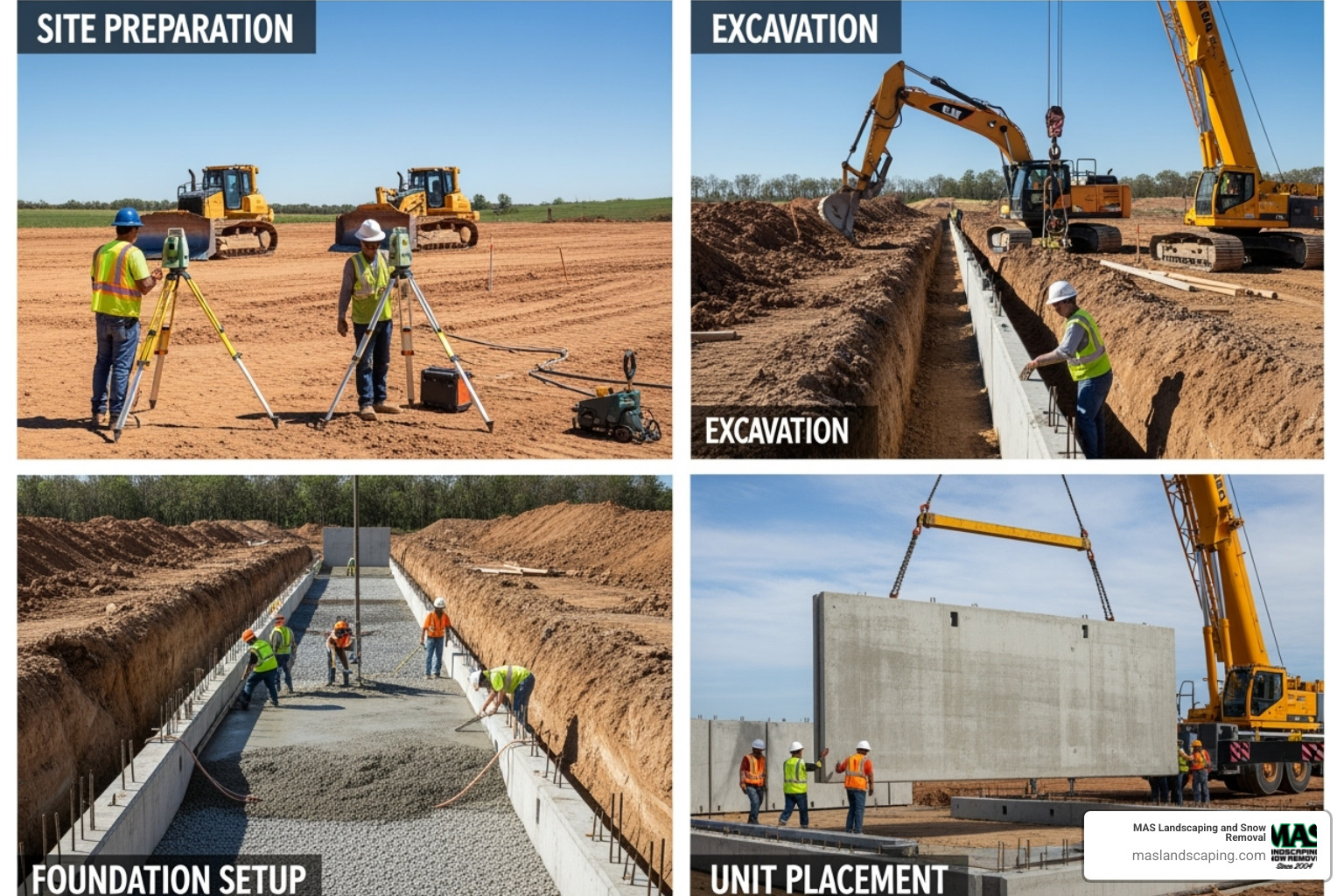
The beauty of precast systems is that they transform a lengthy construction project into a well-choreographed installation. We follow a systematic approach that includes site preparation, excavation, foundation setup, unit placement, backfilling, compaction, and drainage systems. Each step builds on the last, creating a solid foundation for long-term success.
From Groundbreaking to Completion
Every successful precast concrete retaining wall project starts with meticulous site preparation. We begin by clearing the work area of anything that might interfere with the installation, such as old landscaping, debris, or existing structures.
The real work begins with excavation. This is more than digging a hole; it’s creating a precise foundation trench to support the wall for 50+ years. The depth and width depend on the wall’s height, soil type, and the specific precast system being installed.
Before breaking ground, we conduct a thorough site evaluation. This determines the best precast system, drainage needs, and base materials. We also handle any permit requirements to ensure a smooth project.
Setting the Foundation and Placing the Units
Precision is key here. After excavation, we create a rock-solid foundation using compacted gravel or crushed stone. For taller walls or challenging soil, we might pour a concrete footing for an unyielding base.
Getting this foundation perfectly level and aligned is crucial. Like a house’s foundation, any problems here will only get worse over time.
The unit placement phase is where the wall takes shape. Using specialized lifting equipment, we carefully position each precast unit. The units must align perfectly and interlock securely to create a cohesive, strong structure. This “building block” approach is much faster than traditional concrete pouring but still demands expertise.
Backfilling and Finishing Touches
With the precast concrete retaining wall units in place, we move to backfilling. We add soil behind the wall in layers, compacting each one to prevent settling and ensure even pressure distribution.
The drainage system installation happens during this phase and is critical for longevity. We install weep holes or perforated drainage pipes with gravel and landscape fabric to prevent hydrostatic (water) pressure from building up behind the wall. Proper drainage is non-negotiable.
The finishing touches transform the functional wall into an attractive landscape feature. We can apply protective coatings, integrate new plantings, or add decorative caps. Our goal is to make your new wall look like it was always part of your outdoor space.
Find a retaining wall company near you
Design, Customization, and Cost Considerations
Planning a precast concrete retaining wall project is an opportunity to improve your property’s aesthetic appeal. A key benefit of precast concrete is its incredible design flexibility.
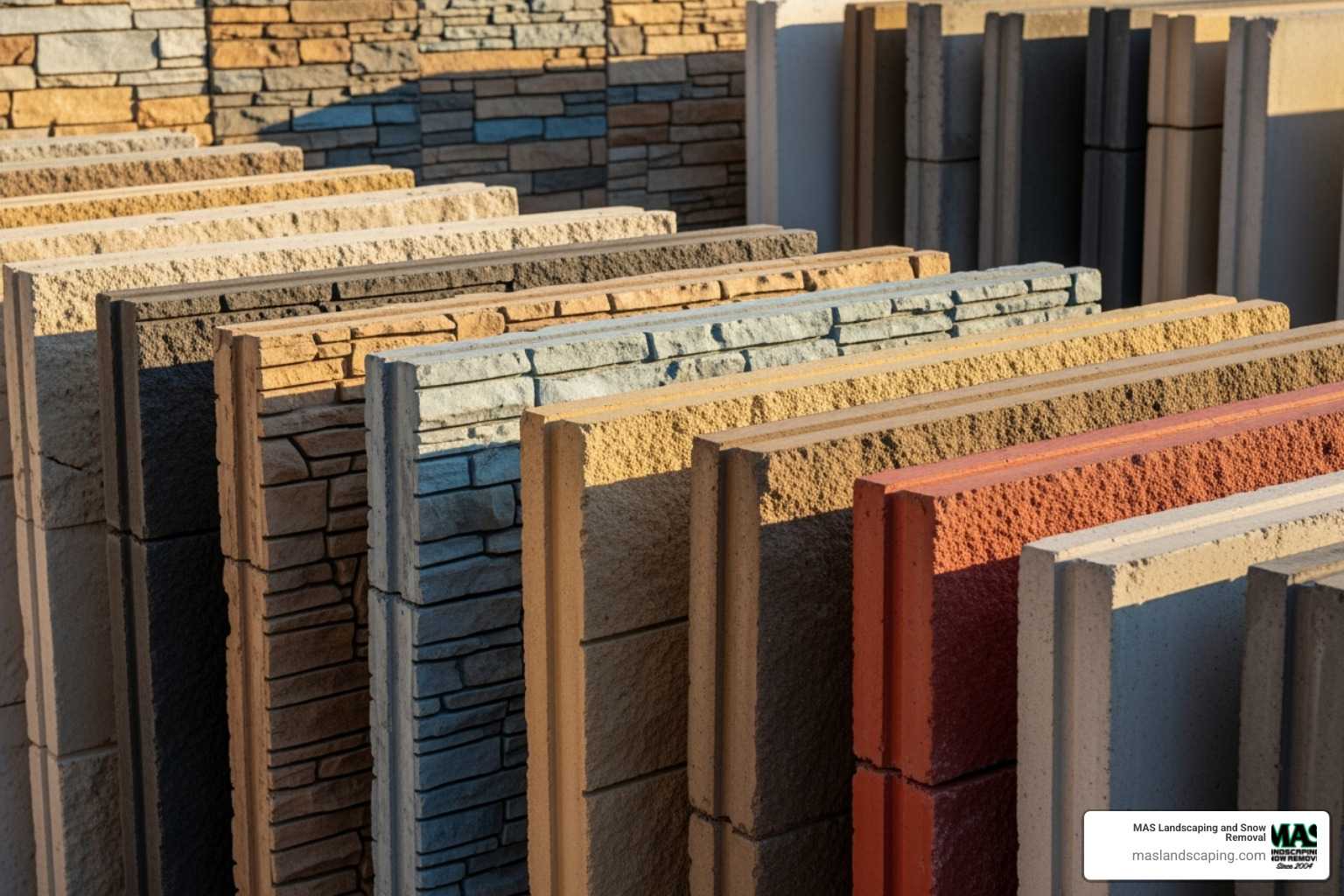
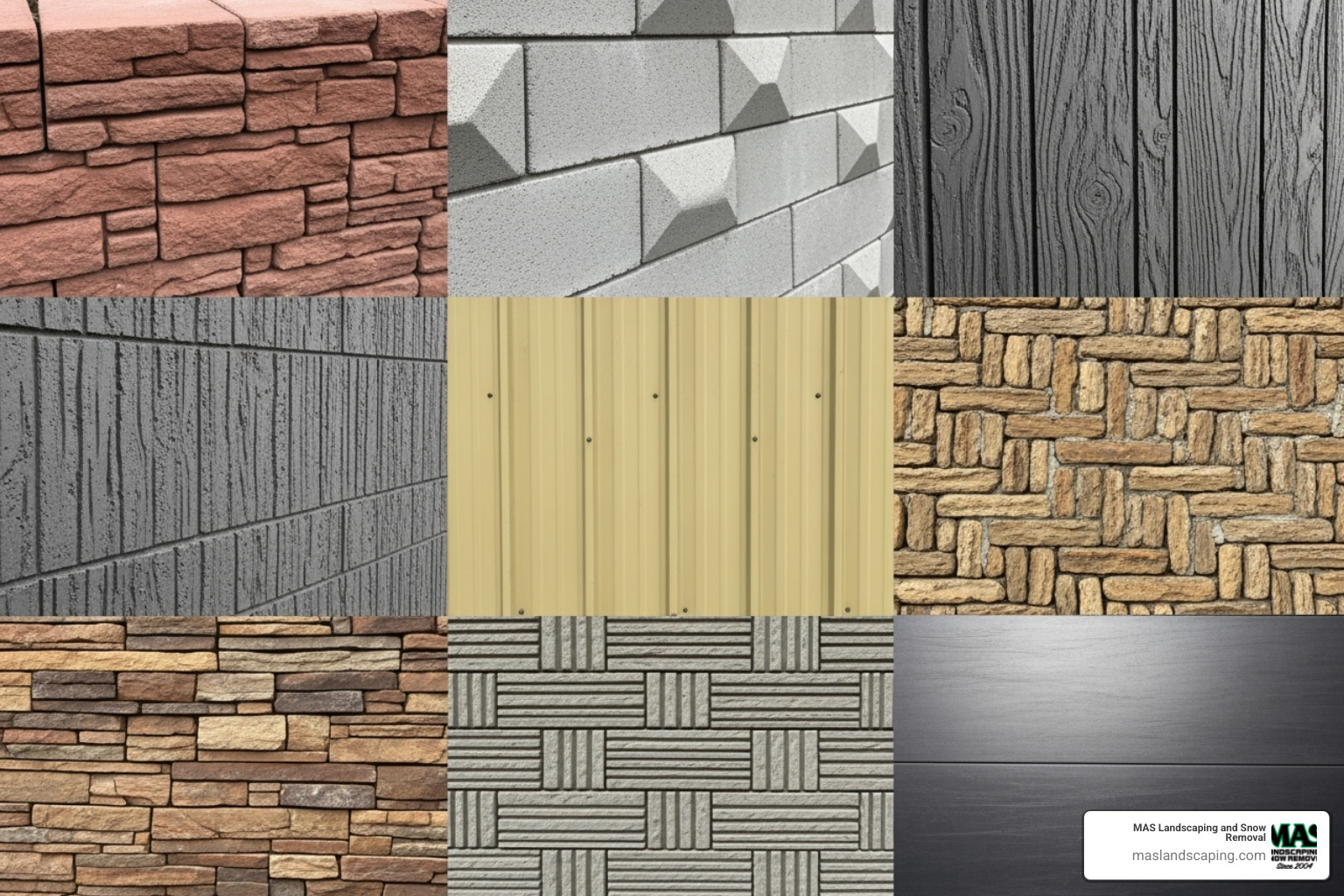
Today’s precast concrete retaining walls are available in a wide variety of finishes, colors, and textures. Through specialized molds and pigments, we can create walls that mimic natural stone, weathered brick, or even aged wood, allowing for looks from natural fieldstone to clean contemporary lines.
The beauty of precast is that these aesthetic options don’t compromise strength or durability. You get both form and function in one robust package. Whether you want your wall to blend with existing hardscaping or become a stunning focal point, the customization options are nearly limitless.
Key Factors for Your Precast Concrete Retaining Wall Project
Every precast concrete retaining wall project is unique, and several factors influence the design and installation approach.
Wall height and length are major considerations. Taller walls require more robust engineering, such as an MSE or cantilever design. The length determines material quantities and installation logistics.
Soil conditions on your property dictate the necessary foundation work. Clay and sandy soils behave differently, each requiring a custom approach for long-term stability.
Site accessibility can significantly impact your project. We assess whether our equipment can easily reach the installation area and if factors like power lines or tight spaces might complicate delivery. This influences both system feasibility and the project timeline.
Drainage requirements are critical. We evaluate how water moves across your property to design a system that prevents wall failure, the number one cause of which is poor drainage.
Your aesthetic goals help us select the perfect system and finish to improve your property’s overall appeal.
Get outdoor retaining wall ideas
Budgeting for Your Project
Understanding the investment in a precast concrete retaining wall helps you plan effectively. While precast systems offer excellent long-term value, several factors influence the project cost.
Upfront material costs vary by system type, with basic gravity blocks typically costing less than engineered MSE or cantilever systems. Custom finishes and colors can also affect material costs.
Labor and equipment are a significant portion of the budget. While faster installation reduces overall labor costs compared to traditional methods, it still requires skilled professionals and specialized equipment.
Site conditions like challenging access, steep slopes, or poor soil can influence costs. We provide transparent estimates so you understand exactly what’s involved.
Transportation costs for moving heavy precast units to your property are also factored in.
Don’t forget essential elements like drainage systems and any required permits and engineering for taller walls, which are often needed for walls over three feet.
The biggest financial benefit is long-term maintenance savings. The durability of precast concrete translates into significant savings over the wall’s 50+ year lifespan.
Industry averages for installed precast concrete retaining walls can range from $30 to over $100 per square foot, depending on system type, height, and site complexity. Please note: These are industry averages for informational purposes; actual project costs will vary based on your specific project requirements and site conditions.
We believe in transparent pricing and provide detailed estimates. Considering the longevity and low maintenance, a quality precast wall is often one of the most cost-effective improvements for your property.
Learn about the cost of building a retaining wall on a slope
Frequently Asked Questions about Precast Walls
Over the years, we’ve helped countless homeowners in Saugus, Malden, and surrounding areas with their retaining wall projects. Along the way, we’ve noticed that people tend to ask similar questions about precast concrete retaining walls. Let’s address the most common ones to help you make an informed decision.
How long do precast concrete retaining walls last?
This is probably the question we hear most often, and for good reason—nobody wants to invest in a wall that won’t stand the test of time. The great news is that precast concrete retaining walls are built to last, typically serving you well for 50 to 100 years when properly installed with adequate drainage.
What makes them so durable? It all comes back to that controlled factory environment we mentioned earlier. When concrete is mixed, poured, and cured under precise conditions—with consistent temperatures, exact water-to-cement ratios, and optimal curing times—it develops superior strength and density. This isn’t something you can easily replicate on a construction site where weather, timing, and human variables can affect quality.
The result is a product that resists weathering, freeze-thaw cycles, and the constant pressure from soil behind it. Your investment literally becomes stronger over time as the concrete continues to cure and harden.
What maintenance is required?
Here’s where precast concrete retaining walls really shine—they’re remarkably low-maintenance. Unlike wooden walls that need regular staining or metal walls that require rust prevention, precast concrete pretty much takes care of itself.
Your main responsibilities are simple: take a walk around your wall a couple times a year to check for any obvious issues like shifting or unusual cracking. More importantly, make sure those drainage systems we installed are doing their job. Clear any leaves or debris from weep holes, and ensure that water is flowing away from the wall as designed.
If you want to keep your wall looking its best, an occasional rinse with the garden hose will do wonders. For textured or colored finishes, a gentle scrub with mild soap can help maintain that fresh appearance. That’s really about it—no special treatments, no annual maintenance contracts, just basic care that takes minutes rather than hours.
Can precast walls be used on curved landscapes?
Absolutely! This is one of those myths that just won’t die—that precast walls are only for straight lines. The truth is, many precast concrete retaining wall systems are incredibly flexible and can follow the natural curves and contours of your landscape.
Interlocking modular block systems are particularly good at this. They can steer gentle curves, sharp angles, and even create stepped terraces that follow your property’s natural slope. Panel systems can also be designed to accommodate curves, especially when planned during the manufacturing phase.
We’ve built beautiful curved walls that wind through gardens, follow property lines, and create stunning terraced landscapes. The key is choosing the right system for your specific design goals and working with experienced installers who understand how to make these systems work with your unique landscape.
Whether you’re dreaming of a gracefully curved garden border or a complex multi-level terrace system, precast concrete can likely make it happen. The best part? You get all the durability and strength benefits of precast while achieving the exact aesthetic you’re after.
Conclusion
When you step back and look at everything we’ve covered, it’s clear that precast concrete retaining walls represent a game-changing approach to landscape construction. They bring together the best of engineering precision, construction efficiency, and design flexibility in ways that traditional methods simply can’t match.
The strength these walls provide goes far beyond just holding back soil. We’re talking about structures that can stand strong for 50 to 100 years, weathering everything Mother Nature throws at them while maintaining their structural integrity and visual appeal. That kind of durability means you’re not just solving today’s erosion or slope problems—you’re creating a permanent solution that will serve your property for generations.
The speed advantage is equally impressive. While other retaining wall methods might leave your yard torn up for weeks, precast systems can transform your landscape in a fraction of the time. This means less disruption to your daily life, faster project completion, and quicker enjoyment of your newly functional outdoor space.
Perhaps most exciting is the versatility these systems offer. Whether you’re dealing with a gentle slope in your backyard garden or managing significant grade changes for a commercial property, there’s a precast solution that fits. From gravity walls to MSE systems, from smooth modern finishes to natural stone textures, you’re never locked into a one-size-fits-all approach.
Precast concrete retaining walls truly offer a superior solution that addresses both your structural needs and aesthetic goals. They represent smart investing in your property’s functionality and beauty, delivering long-term value that traditional methods struggle to match.
For professional design and installation of precast concrete retaining wall systems in the Saugus, MA area—including Everett, Lynnfield, Malden, Melrose, Medford, Revere, and Chelsea—trust the experienced team at MAS Landscaping and Snow Removal. We understand that every property is unique, and we’re committed to building a wall that not only meets your specific needs but exceeds your expectations for quality and longevity.
Contact us today to discuss your retaining wall installation!