

What Are the Cons of Sealing Pavers? (The Quick Answer)
The cons of sealing pavers are often glossed over in favor of the glossy finish and stain-protection benefits — but there are real trade-offs every homeowner should know before committing.
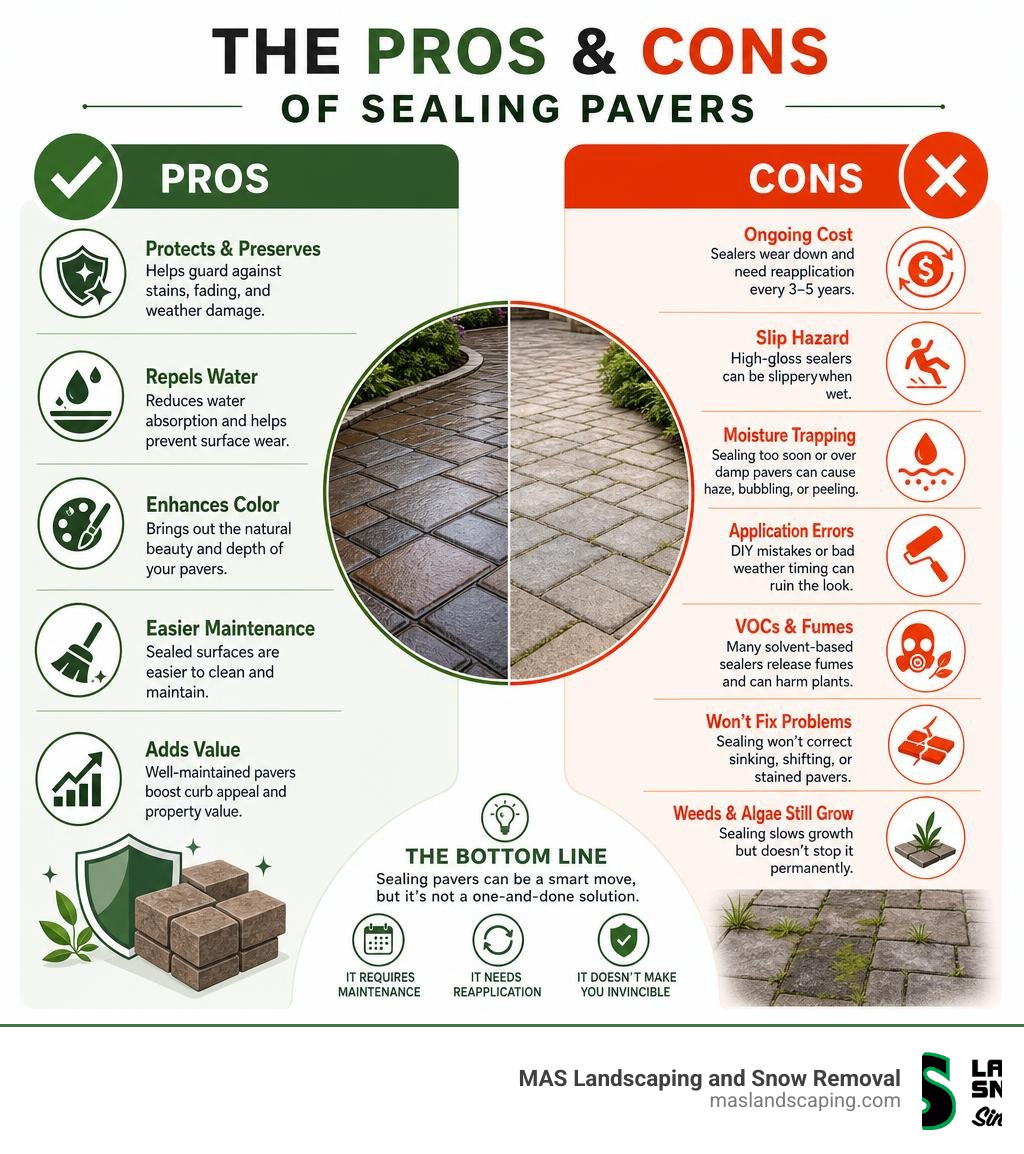
Here are the main drawbacks of sealing pavers:
- Ongoing cost — Sealers wear down and need reapplication every 3–5 years (or sooner in high-traffic areas)
- Slip hazard — High-gloss film-forming sealers can make wet surfaces dangerous, especially around pool decks
- Moisture trapping — Sealing too soon or over damp pavers can cause white haze, bubbling, or peeling
- Application errors — DIY mistakes like over-sealing or bad weather timing can permanently ruin the look
- VOCs and fumes — Many solvent-based sealers release toxic fumes and can damage nearby plants
- Won’t fix structural problems — Sealing over sinking, shifting, or stained pavers doesn’t solve the underlying issue
- Weeds and algae still grow — Sealing slows organic growth but does not stop it permanently
Sealing your pavers can be a smart move — but it’s not the simple, one-and-done solution many homeowners expect.
Think of it like putting sunscreen on before a day at the beach. It helps, but you still need to reapply it, it doesn’t make you invincible, and if you apply it wrong, you still burn.
If you’re in the Greater Boston area weighing whether to seal your patio, driveway, or walkway pavers, this guide breaks down every significant downside so you can make a clear-eyed decision.
Cons of sealing pavers glossary:
- does sealing pavers make them slippery
- how long to wait to seal pavers after polymeric sand
- patio paver cleaning and sealing
The Hidden Cons of Sealing Pavers: Why It Might Not Be Worth It
When you invest in a gorgeous hardscape feature, it is completely natural to want to protect it. Many product labels and online tutorials make sealing sound like an absolute necessity. However, looking closely at the cons of sealing pavers reveals that this process introduces an entirely new cycle of maintenance, costs, and potential structural headaches.
Before you purchase bottles of sealant, you must understand that unsealed pavers can perform beautifully for decades on their own. In fact, concrete and natural stone pavers are engineered to endure harsh weather conditions without any chemical coatings. By sealing them, you are essentially placing a synthetic wear layer over a naturally durable material. This means you are no longer maintaining just the stone; you are maintaining the chemical film on top of it.
To help you weigh the decision, let’s explore the core downsides. For a broader look at this debate, you can read more about What Is the Downside of Sealing Concrete? Pros & Cons and review our comprehensive perspective in Should You Seal Your Paver Patio? A Complete Guide to Protection and Longevity.
Con #1: The Financial Cons of Sealing Pavers Over Time
One of the most overlooked aspects of paver sealing is that it is not a one-time charge. It is a recurring subscription fee for your backyard.
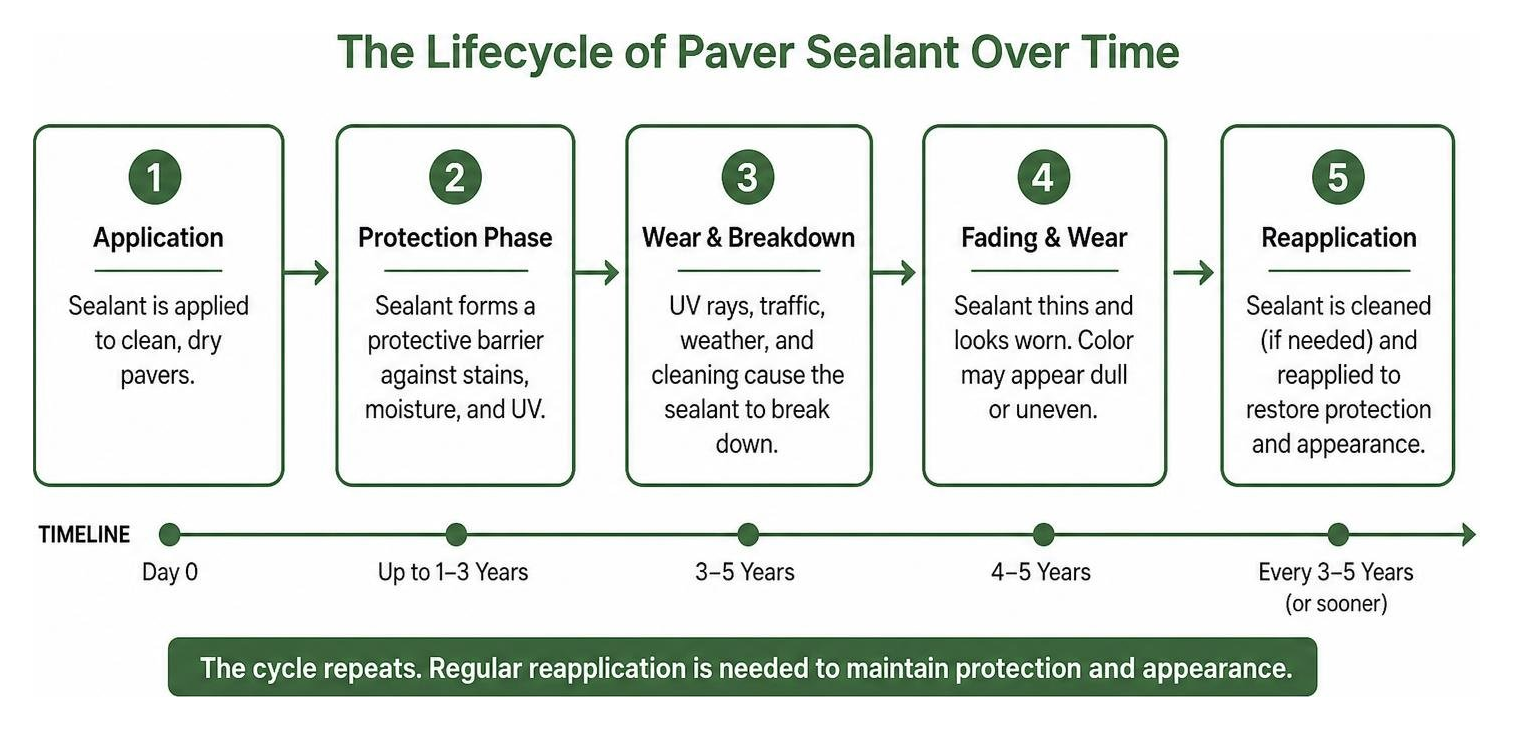
Because sealants are constantly exposed to UV rays, heavy foot traffic, and harsh New England winters, they break down. To keep up the protective barrier and prevent a splotchy, uneven look, you must reapply the sealant every 3 to 5 years. If you have a high-traffic driveway, that timeline can easily shrink to every 2 to 3 years.
Let’s talk numbers. Based on average internet data, professional paver sealing services typically range from $0.50 to $4.00 per square foot depending on the condition of your pavers, the type of sealer used, and the complexity of the layout. (Please note: these are average industry costs across the country and do not represent actual pricing for MAS Landscaping).
If you have a 1,000-square-foot patio and driveway combination, you might spend an average of $1,500 every few years just to keep the surface sealed. Over a 15-year period, this ongoing maintenance can easily cost you thousands of dollars. As of July 2026, maintaining a sealed driveway or patio can rival the long-term cost of alternative hardscape treatments.
For local homeowners in Essex and Middlesex counties, this recurring expense is a major factor to consider. You can find more detail on regional climate impacts in Why Paver Sealing Is Essential for MA & Southern NH Homes or learn about the specific needs of driveways in Seal the Deal: The Ultimate Guide to Driveway Paver Sealing.
Con #2: How the Cons of Sealing Pavers Impact Slip Resistance
Another major concern is safety. Have you ever stepped onto a wet, glossy driveway or pool deck and felt your feet slide right out from under you?
This is a common issue with film-forming sealers, especially acrylics, epoxies, and polyurethanes. These products work by building a physical, plastic-like barrier on top of the stone. While this creates a beautiful “wet look” sheen, it also fills in the natural pores and textures of the concrete or stone. When rain falls or pool water splashes onto this sealed surface, the water cannot escape. It sits on top of the non-porous film, creating a slick layer of surface water.
This is particularly dangerous for:
- Pool decks where kids run around barefoot
- Sloped walkways and driveways in winter, where even a light frost turns the sealed surface into an ice rink
- Steps and entryways
To prevent this, you have to mix special anti-slip grit additives into the sealer during application. However, these additives can wear away unevenly over time, leaving some patches slippery and others rough. If safety is your top priority, you may want to skip high-gloss options entirely. We unpack these safety issues further in Sealing Pavers Slip Risk Terms Demystified.
Con #3: Trapped Moisture and the Dreaded White Haze
Concrete pavers are naturally breathable. They allow water vapor to rise up from the soil below and evaporate into the air. When you apply a non-breathable, film-forming sealer, you block this natural pathway.
If moisture is trapped beneath the sealer, it has nowhere to go. As the sun heats the pavers, the rising moisture vapor pushes against the underside of the sealer layer. This process, combined with natural salt minerals rising from the concrete (known as efflorescence), causes the sealer to separate from the paver.
The result? A highly unsightly, milky white haze, bubbling, or peeling across your patio.
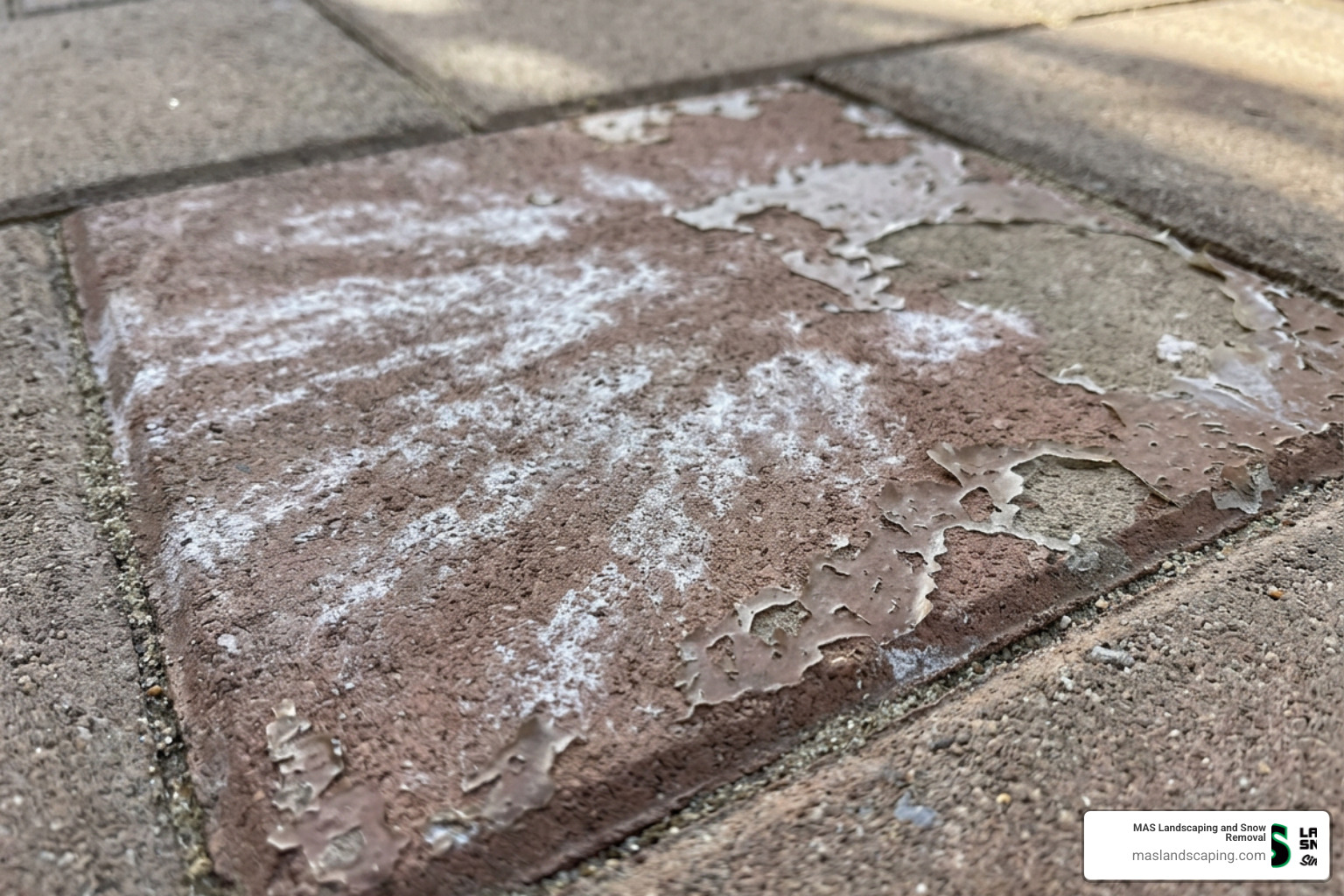
Fixing a cloudy, failed sealer is incredibly difficult and expensive. It usually requires applying harsh chemical strippers to dissolve the old sealer, pressure washing the surface, and starting completely over. To avoid these issues, proper timing and moisture testing are critical. You can learn how to prevent these issues, especially when working around joint sand, in How to Seal Pavers After Polymeric Sand Without Issues.
The Risks of Improper Application and Environmental Damage
Applying paver sealer is a highly sensitive process. Unlike painting a wall indoors, sealing outdoor pavers leaves you completely at the mercy of the elements. From humidity and temperature to wind and dust, even a tiny shift in the weather can ruin your hard work.
Con #4: Permanent Aesthetic Ruin from DIY Mistakes
Many homeowners view paver sealing as an easy weekend DIY project. In reality, it is one of the most common ways to accidentally ruin a beautiful patio.
Because sealers are designed to be permanent, any mistake made during application is locked in. Here are some of the most common DIY pitfalls:
- Over-application: Applying the sealer too thickly creates a plastic, artificial look that can turn yellow under UV exposure.
- Dry lines: If you do not maintain a “wet edge” while spraying or rolling, you will end up with dark, overlapping lines across your patio.
- Sealing in dirt: If the pavers are not spotlessly clean, the sealer will permanently lock in pollen, leaves, grass clippings, and stains.
- Weather issues: If it rains within 24 hours of application, or if the temperature drops below 50°F or rises above 90°F, the sealer will fail to cure properly, leading to bubbles and peeling.
Solvent-based sealers are especially unforgiving and require professional experience to apply correctly. While homeowners in warmer states face their own climate struggles, as discussed in Sealing Pavers Pros and Cons in Florida’s Climate: What Treasure Coast Homeowners Should Know, our local New England climate—with its sudden rainstorms and high humidity—makes DIY application highly risky.
If you are determined to try it yourself, make sure to read How to Seal Patio Pavers in 5 Easy Steps and The Ultimate Guide to Sealing Your Patio Pavers Like a Pro.
Con #5: Environmental and Health Concerns
We also must consider what these sealants are made of. Many traditional, solvent-based sealers contain high levels of Volatile Organic Compounds (VOCs). These chemicals release strong, toxic fumes during the application and curing process, which can cause headaches, dizziness, and respiratory irritation.
Beyond personal health, these chemicals pose risks to your yard:
- Overspray damage: If the wind catches the spray, it can drift onto your lawn, flowerbeds, and shrubs, instantly burning and killing the foliage.
- Runoff: Rainwater can wash uncured chemicals into your soil and local waterways.
- Coal tar concerns: Some older or lower-quality sealants contain coal tar, which is linked to environmental contamination and can release harmful chemicals into stormwater runoff.
To protect your family and your landscaping, you must take careful precautions, such as covering nearby plants with plastic sheeting and wearing appropriate protective gear. For help choosing safer products, check out Choosing the Best Paver Sealer for Your Patio: A Buyer’s Guide.
What Sealing Can and Cannot Actually Fix
There is a common myth that sealing is a magic cure-all for any paver problem. In reality, sealing is simply a thin protective layer. It cannot fix structural flaws, poor installation, or natural weathering.
Con #6: It Won’t Fix Sinking or Shifting Pavers
If your paver patio is starting to sink, shift, or develop uneven edges, applying a sealer will do absolutely nothing to help.
These issues are caused by problems beneath the surface:
- Inadequate or poorly compacted gravel bases
- Soil erosion from poor drainage
- Missing or damaged edge restraints
Sealing over shifting pavers is like putting a fresh coat of paint on a house with a crumbling foundation. Before you even think about sealing, you must address the underlying structural repairs. If you want to explore proper installation and application methods, check out How to Patio Paver Sealing: 5 Methods That Guarantee Results.
Con #7: It Doesn’t Stop Weeds or Algae Permanently
Many homeowners seal their pavers primarily to stop weeds from growing in the joints. While some joint-stabilizing sealers can help harden the sand and make it harder for seeds to take root, they are not a permanent solution.
Over time, dirt, dust, and organic matter will settle into the tiny cracks on top of the sealed sand. Seeds carried by the wind will land in this dirt and sprout anyway. Similarly, mold, mildew, and algae can still grow on top of a sealed surface if the area remains damp and shaded. Sealing makes these organic growths easier to clean, but it will not prevent them from appearing.
For a deeper dive into managing your joints, see Is Sealing Pavers Necessary or Optional? Pros, Cons &, Don’t Get Soaked: How to Properly Seal Your Concrete Paver Patio, and How to Protect Paver Sand With Sealer.
Smart Alternatives to Sealing Your Pavers
If the cons of sealing pavers have you second-guessing your plans, we have good news: you don’t have to seal your pavers to keep them looking beautiful!

Here are the best ways to protect your hardscape investment without using film-forming sealers:
- Regular Sweeping and Washing: Simply sweeping away leaves, pine needles, and dirt prevents organic stains from forming. A quick rinse with a garden hose every few weeks keeps the surface clean.
- Low-PSI Pressure Washing: Once a year, you can use a pressure washer on a low setting (under 1200 PSI) with a wide-angle nozzle to clear away stubborn dirt. Just be careful not to wash out the joint sand!
- Concrete Densifiers: If you want to strengthen concrete pavers without changing their appearance or trapping moisture, look into penetrating silicate densifiers. They work chemically within the concrete to harden the surface without forming a slippery film.
- Natural Look Sealers: If you want stain protection but want to avoid the risks of peeling, yellowing, and slipperiness, choose a fully breathable, penetrating Natural Look Paver Sealer. These sealers protect the stone from within without changing its texture or color.
To help you compare your options, here is a quick breakdown:
| Maintenance Task | Sealed Pavers (Film-Forming) | Unsealed Pavers / Penetrating Sealer |
|---|---|---|
| Initial Cost | Moderate to High | Low to None |
| Reapplication Needed | Every 3–5 Years | Never (or 5–10 years for penetrating) |
| Slip Risk | High (when wet) | Low (retains natural texture) |
| Risk of White Haze | High (if moisture is trapped) | None |
| Stain Cleanup | Very Easy (wipes off surface) | Moderate (requires prompt cleaning) |
| Weed Control | Temporary | Requires polymeric sand maintenance |
Frequently Asked Questions About Paver Sealing
How long should I wait before sealing new pavers?
You should wait at least 60 to 90 days before sealing newly installed concrete pavers. This waiting period allows the natural salts inside the concrete to rise to the surface and wash away (a process called efflorescence). If you seal too early, you will permanently trap these white minerals beneath the sealer. For more tips on timing, read Don’t Get Burned by Picking the Wrong Local Paver Sealing Pros.
Can I seal over dirty or stained pavers?
No! You should never apply sealer over dirty, dusty, or stained pavers. The sealer acts like a magnifying glass, locking in those stains and making them nearly impossible to remove. Always clean the area thoroughly and allow it to dry completely for at least 24 to 48 hours before applying any product. For more cleaning tips, check out A Practical Guide to Paving Slab Sealer.
What is the difference between penetrating and film-forming sealers?
Film-forming sealers sit on top of the paver, creating a physical barrier that often darkens the stone and adds a glossy sheen (the “wet look”). Penetrating sealers soak deep into the pores of the stone to protect it from within, leaving the surface appearance and slip resistance completely natural. Learn more about these differences in Best Wet Look Concrete Sealer.
Conclusion
Deciding whether to seal your pavers comes down to balancing your aesthetic goals with your tolerance for ongoing maintenance and costs. While sealing offers excellent stain protection and a rich, enhanced look, the cons of sealing pavers—including recurring costs, slip hazards, and the risk of trapped moisture—are significant factors that should not be ignored.
At MAS Landscaping and Snow Removal, we believe in giving our clients honest, practical advice based on local experience. Serving Saugus, Lynnfield, Everett, Malden, and surrounding Massachusetts communities, we understand how our local winters and humid summers affect hardscape materials.
If you want to ensure your patio, walkway, or driveway is built to last—or if you need professional maintenance advice—we are here to help. Schedule a professional patio installation or maintenance consultation with us today, and let’s make your outdoor space beautiful and stress-free!