



Retaining wall builders near me: Best Experts 2025
Why Finding the Right Retaining Wall Builders Near Me Matters
Retaining wall builders near me are crucial partners when your sloped yard becomes an erosion nightmare or you need to create usable outdoor space. As one homeowner found, if your hillside is creeping over the sidewalk, it’s time for a retaining wall.
Quick Guide to Finding Quality Local Retaining Wall Builders:
- Check licensing and insurance – Verify state licensing and comprehensive coverage
- Look for 4.3+ star ratings with at least 50 reviews across multiple platforms
- Ask about permits – Walls over 4 feet typically require engineering (some areas require permits at 3 feet)
- Get 3 written quotes comparing materials, timeline, and warranties
- Request local references you can visit to see past work
- Confirm drainage expertise – Poor drainage is the #1 cause of wall failure
A properly constructed retaining wall can last 50 to 200 years and add 70-80% of its installation cost to your property value. But a poorly built wall might fail within a few seasons, creating safety hazards and expensive repairs. Local contractors often provide better value and understand your area’s specific soil, weather, and permit needs, offering accountability that national chains can’t match.
Whether you’re dealing with erosion, need to level steep terrain, or want to create terraced garden spaces, the right builder makes all the difference between a functional, beautiful wall and a costly disaster.
Know your retaining wall builders near me terms:
Understanding Your Retaining Wall Project: From Need to Materials
Before you partner with retaining wall builders near me, it’s helpful to understand your property’s needs and material options. This knowledge will help you communicate effectively with your contractor and make smart decisions.
When Do You Need a Retaining Wall?
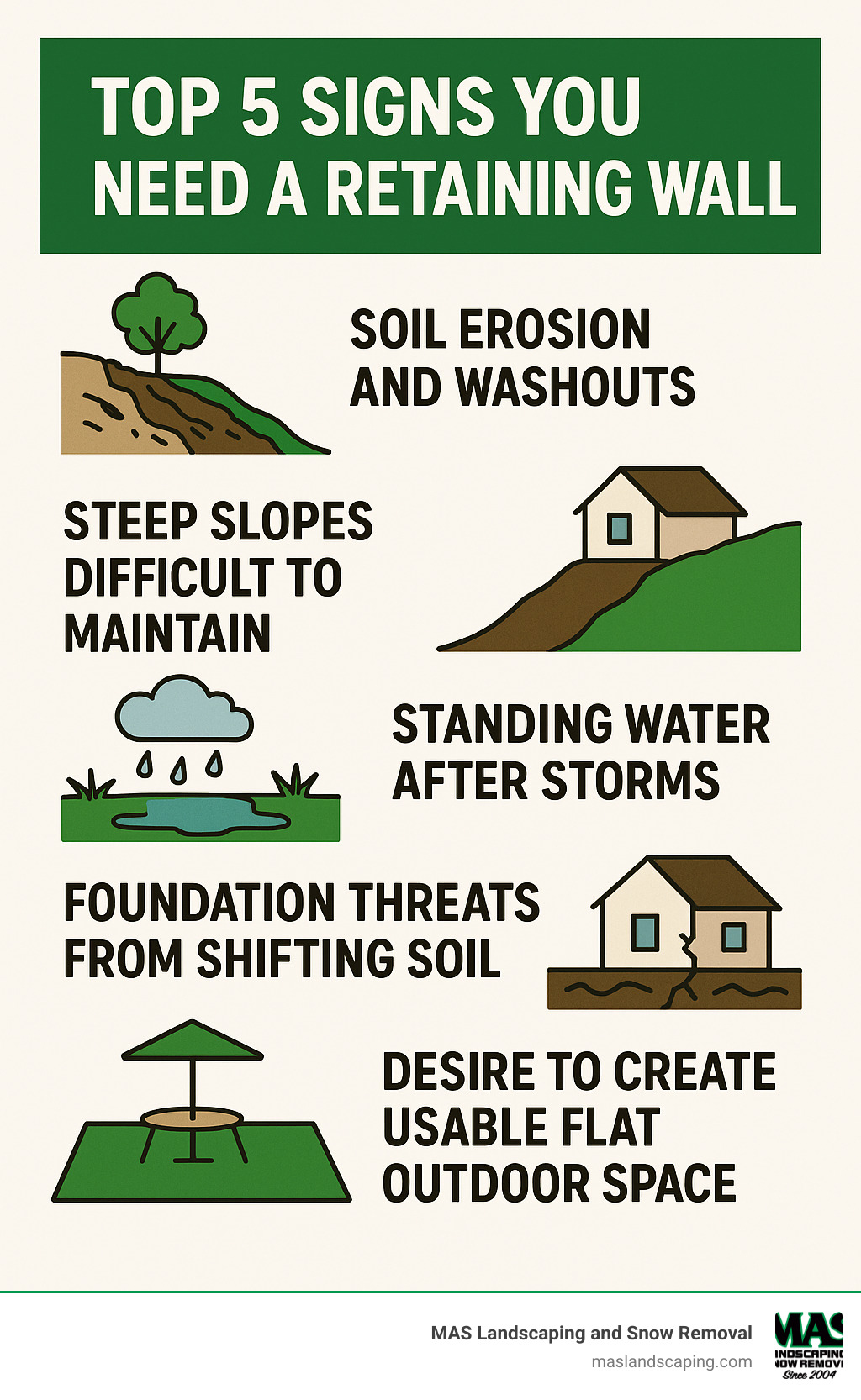
The signs your property needs a retaining wall can be subtle or obvious. Look for these common clues:
- Soil Erosion: Heavy rains leave gullies in your yard or expose tree roots.
- Downhill Creep: You notice fence posts tilting, patio stones shifting, or cracks appearing near your home’s foundation.
- Poor Drainage: Water pools at the bottom of slopes after storms, creating swampy areas.
- Creating Opportunity: You want to transform a steep, unusable slope into functional, terraced spaces for gardens or patios. We specialize in hardscaping a sloped yard to open up your property’s hidden potential.
Types of Retaining Walls Explained
Different situations call for different types of walls. Here are the most common approaches:
- Gravity Walls: Use their own mass and weight to hold back soil, ideal for heights up to 3-4 feet.
- Cantilevered Walls: Employ an L-shaped concrete footing that uses the earth’s own weight for stability, making them efficient for walls 4-10 feet high.
- Sheet Piling Walls: Interlocking sheets of steel, vinyl, or wood are driven into the ground, creating a barrier that works well in tight spaces or near shorelines.
- Anchored Walls: Use cables or rods driven deep into the earth for additional support, allowing them to handle immense soil pressure.
Our expertise in garden wall construction means we find the right structural approach for your site.
Comparing Common Retaining Wall Materials
The material you choose defines your wall’s look, durability, cost, and maintenance. This is a key part of the planning process for our clients in Saugus, Everett, Lynnfield, and surrounding areas.
| Material | Cost (Average Internet Data) | Lifespan (Average) | Maintenance |
|---|---|---|---|
| Natural Stone | $25-$75 per sq ft | 50-200 years | Minimal – occasional cleaning, checking for loose stones |
| Concrete Blocks | $15-$45 per sq ft | 50-100 years | Low – ensure drainage, clean efflorescence |
| Timber | $10-$30 per sq ft | 10-20 years | High – sealing every 2-3 years, rot/insect checks |

Natural stone is the gold standard for beauty and longevity (50-200 years). While the upfront investment is higher, its timeless look and durability often justify the cost.
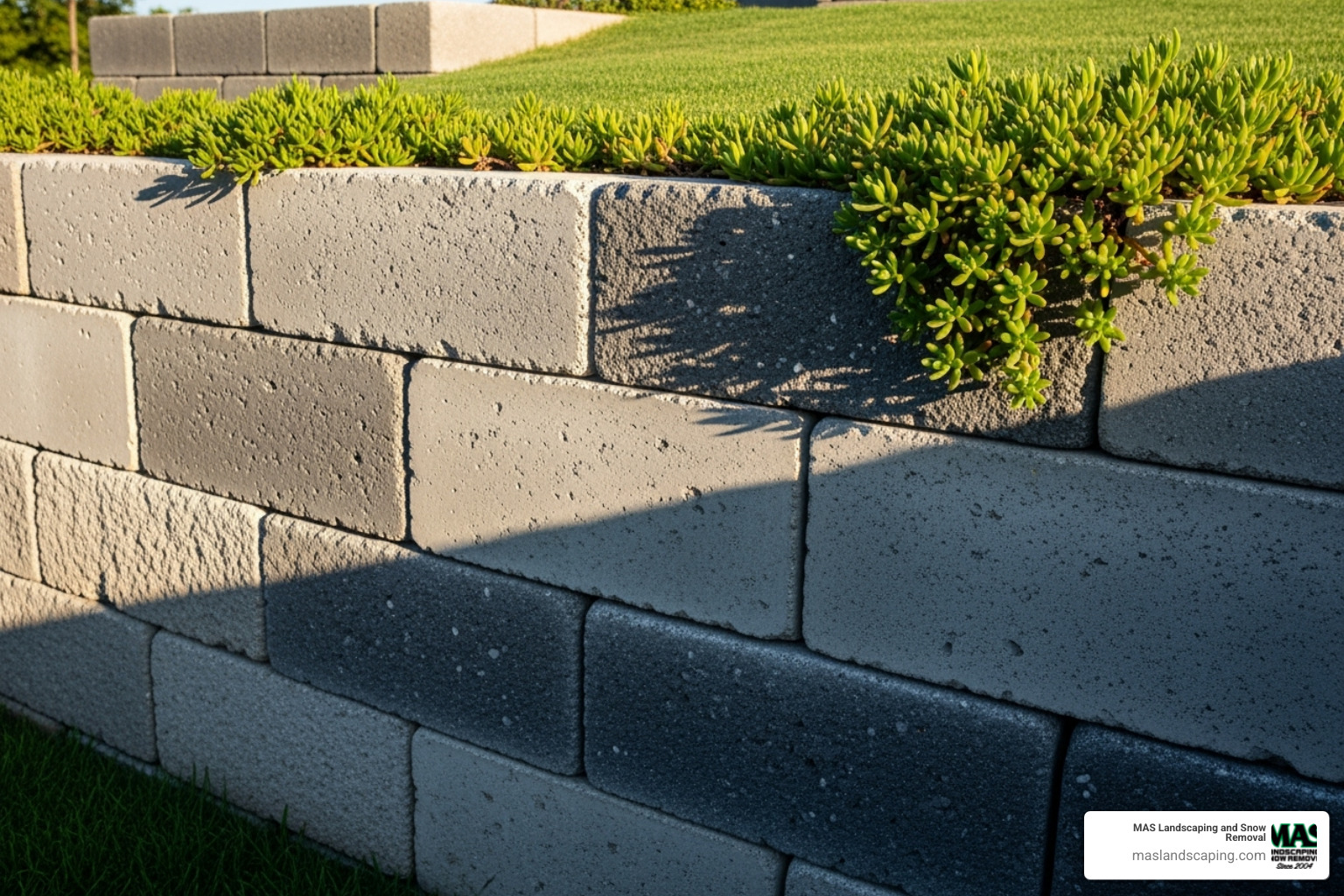
Concrete blocks offer a great balance of affordability and longevity (50-100 years). These modular systems are highly customizable and require little maintenance.
Timber walls appeal to budget-conscious homeowners with their warm aesthetic, but their shorter lifespan (10-20 years) and high maintenance needs make them a short-term solution.
Gabion walls are wire cages filled with stone, offering an industrial-natural look, excellent drainage, and a long lifespan (50-100 years) with minimal upkeep.
Poured concrete delivers clean, modern lines, while steel and metal options provide immense strength for heavy-duty, ultra-modern designs.
The key is to look beyond the initial price. We help clients consider the total cost of ownership, including maintenance, longevity, and aesthetics.
The Blueprint: Budget, Permits, and Construction Process
Proper planning is what separates a professional retaining wall installation from a DIY disaster. Understanding the costs, permits, and construction process is essential for a successful project that will stand for decades.
How Much Does a Retaining Wall Cost?
This is the first question most homeowners ask. The investment can be significant, but understanding the cost drivers puts it in perspective. The figures here are based on average internet data and are not actual quotes from MAS Landscaping; we provide detailed, personalized quotes for every project.
Most professionally installed retaining walls cost between $2,000 and $15,000, with large or complex projects exceeding $25,000. On a per-square-foot basis, you can expect to pay $20 to $50, with premium materials pushing costs toward $150.
Several factors influence your final investment:
- Material Choice: Timber is cheaper upfront, but concrete blocks offer better long-term value due to their longer lifespan.
- Site Accessibility: Difficult access for machinery and materials increases labor costs.
- Wall Dimensions: Taller, longer walls require more materials, labor, and often engineering.
- Soil Conditions: Unstable soil may require extra excavation and specialized backfill, adding $300 to $800+ to your project.
- Engineering & Permits: These necessary costs for safety and compliance typically range from $500-$1,500 for engineering and $100-$500 for permits.
- Hidden Factors: Demolition of old structures ($500-$2,000) or relocating utilities ($200-$1,500+) can add to the budget.
For more on specific material costs, see our guides on Cost for Concrete Retaining Wall and Paver Retaining Wall Cost.
The Importance of Permits and Engineering
Permit requirements vary significantly by municipality. While walls over 4 feet tall generally need a permit, some towns in our service area (Saugus, Everett, etc.) require them for walls as low as 3 feet, especially near property lines. Skipping this step can lead to fines and forced removal of the wall.
Professional engineering is essential for taller walls (typically over 6 feet). An engineer analyzes soil conditions, calculates load requirements, and specifies reinforcement, preventing the kind of catastrophic failures that turn walls into liabilities. This upfront investment ensures your wall is safe and built to last.
The Construction Sequence
Building a durable retaining wall requires a precise sequence. Shortcuts in early phases lead to major problems later.
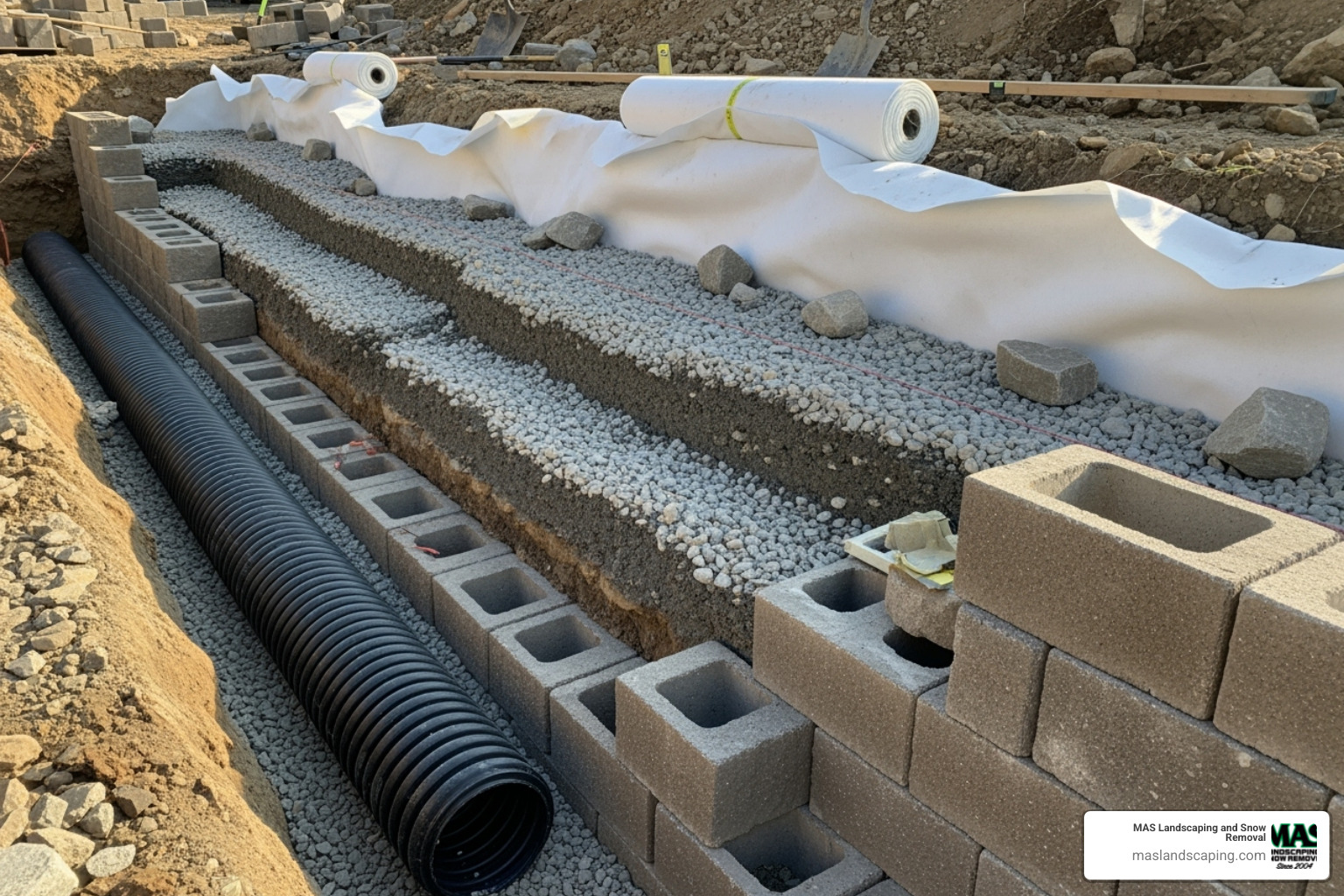
- Site Survey & Planning (1-2 days): We assess the slope, soil, drainage, and utilities to create a solid plan.
- Excavation & Foundation (1-2 days): We dig a trench and create a compacted gravel base. This level, permeable foundation is critical for stability.
- Wall Construction (2-5 days): The first course must be perfectly level. Subsequent courses are interlocked for strength, following techniques in our guide on How to Build a Landscaping Wall with Blocks.
- Drainage System Installation (1 day): This is the most critical step to prevent failure from water pressure (hydrostatic pressure). We install perforated pipe, clean gravel, and geotextile fabric.
- Geogrid Reinforcement: For taller walls, these synthetic mesh layers are placed in the backfill to reinforce the soil itself.
- Backfilling & Finishing (1-2 days): We backfill in compacted layers and add capstones for a finished look, grading the area to direct water away from the wall.
When retaining wall builders near me follow this systematic approach, you get a wall that protects your property for decades.
How to Find the Best Retaining Wall Builders Near Me
Finding the right retaining wall builders near me is the most important step in your project. As local experts serving Saugus, MA, and surrounding communities, we know what separates an excellent contractor from the rest. A skilled team transforms your vision into a durable structure, while the wrong choice can lead to costly failures.
Vetting Your Contractor: A Checklist
Approach contractor selection systematically. Start with these non-negotiables:
- Licensing and Insurance: Verify state licensing and comprehensive liability coverage. A legitimate contractor provides this readily.
- Online Reviews: Look for contractors with 4.3+ star ratings and at least 50 reviews. Pay attention to how they respond to any negative feedback.
- Project Portfolio: Ask to see photos of completed retaining walls, especially projects similar to yours.
- Local References: Request contact information for recent clients. Seeing completed work in person provides valuable insight.
- Written Estimates: Always get at least three detailed written quotes that break down materials, labor, and timelines.
Key Questions to Ask Potential Retaining Wall Builders Near Me
The right questions reveal a contractor’s expertise. Be sure to ask:
- How long have you been building retaining walls?
- How will you handle drainage for my specific property?
- What materials do you recommend for my project, and why?
- What is the projected timeline, and what factors could affect it?
- What kind of warranty do you offer on materials and workmanship?
- Do you use subcontractors, and how are they vetted? (This is relevant for related services like Hardscape Patio Contractors Near Me.)
Benefits of Hiring Local Retaining Wall Builders Near Me
Choosing local contractors like MAS Landscaping offers compelling advantages:
- Cost Savings: Lower overhead often means 25-50% savings compared to national chains.
- Local Knowledge: We understand the specific soil conditions and permit requirements in Saugus, Malden, and nearby towns.
- Community Accountability: Our reputation depends on satisfying our neighbors, not corporate metrics.
- Faster Response Times: Being local means we can address needs and concerns quickly.
- Personalized Service: You’re a valued neighbor, not a number in a database, ensuring quality Affordable Hardscaping Near Me.
Red Flags to Watch Out For
Certain warning signs should make you cautious. Be wary of:
- Vague Contracts: A lack of written, detailed estimates is a major red flag.
- High-Pressure Sales Tactics: Reputable contractors don’t need to push “today-only” deals or demand large upfront payments.
- Poor Communication: If they’re unresponsive before the project starts, it will only get worse.
- Inadequate Drainage Planning: Any contractor who downplays or suggests skipping proper drainage is setting you up for failure. Drainage is essential.
- Unrealistic Pricing or Timelines: Prices or schedules that seem too good to be true usually mean corners will be cut.
Trust your instincts. The best retaining wall builders near me earn your confidence through transparency and expertise.
Maximizing Your Investment: Aesthetics, Maintenance, and Value
A well-built retaining wall does more than solve an erosion problem—it becomes a valuable asset that improves your property’s beauty and function. When you partner with experienced retaining wall builders near me, you’re making a lasting improvement.
Enhancing Your Property’s Look and Function
The best retaining walls blend seamlessly into your landscape, turning necessary infrastructure into a highlight. Consider these improvements:
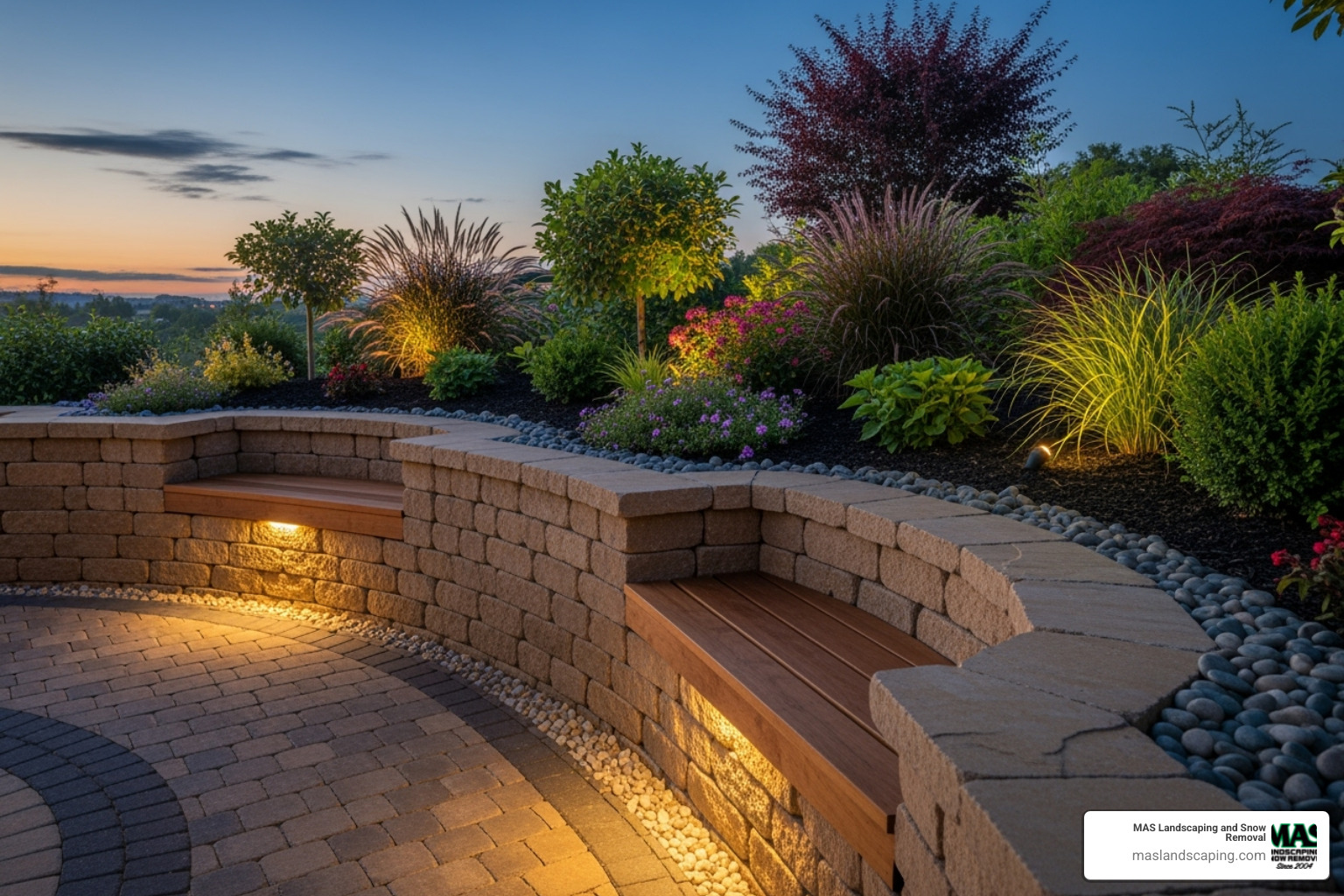
- Tiered Gardens: Transform a difficult slope into multiple, manageable terraces for planting, creating visual interest and simplifying maintenance.
- Integrated Seating: By adding wider capstones or built-in benches, your wall becomes a natural gathering spot in your outdoor living space.
- Landscape Lighting: Low-voltage LED lights tucked into the wall can create dramatic effects at night, highlighting textures and improving safety.
- Visual Cohesion: Choose materials that complement your home and existing patio or walkways for a unified Backyard Patio Design. This creates a truly Decorative Retaining Wall that lifts your entire property.
Long-Term Maintenance by Material
A professionally built wall requires little maintenance, but regular checks are wise. Seasonally, inspect for any leaning, bulging, or cracking, and ensure weep holes are clear of debris to manage water pressure.
- Concrete & Stone: These are very low-maintenance. Simply brush off any white mineral deposits (efflorescence) that may appear.
- Timber: These require more care. Seal the wood every 2-3 years and check regularly for signs of rot or insects to extend its life.
- Gabion: Check that stones haven’t shifted significantly and that the wire mesh cage remains intact.
If you spot concerning changes, contact a professional immediately. Our Landscape Maintenance Services can help with ongoing care for your entire landscape.
Return on Investment
A quality retaining wall is a smart investment that pays off in multiple ways:
- Property Value: Expect to recoup 70-80% of the installation cost. In some cases, premium walls can return 100% or more.
- Curb Appeal: A well-designed wall transforms a problem area into a sophisticated landscape feature that makes your home stand out.
- Usable Space: Gain functional, level areas for gardens, patios, or play, effectively expanding your yard’s footprint.
- Problem-Solving Value: Protect your home’s foundation from erosion and drainage issues, preventing costly future repairs.
- Lifestyle Value: Enjoy peace of mind and a beautiful, functional yard without the worry of a problem slope. This investment improves every aspect of Hardscaping Your Yard.
Frequently Asked Questions about Retaining Walls
Homeowners naturally have questions when considering a significant property investment. Here are answers to the most common questions our retaining wall builders near me team encounters in Saugus, MA, and surrounding areas.
What is the cheapest type of retaining wall to build?
Based on average internet data, timber walls often have the lowest upfront installation cost, typically $10 to $40 per square foot. However, these are average costs and not actual quotes from MAS Landscaping. The true value comes from considering the total cost of ownership. Concrete blocks (averaging $20 to $50 per square foot) last 50-100 years with minimal upkeep, while timber walls need replacement in 10-20 years and require regular maintenance. Over the long term, concrete blocks frequently prove to be the more cost-effective solution. Gabion walls offer a great alternative, with initial costs similar to timber but a lifespan comparable to concrete.
How long do different retaining walls last?
A wall’s lifespan depends heavily on the material and the quality of installation. With proper construction by experienced professionals, here’s what you can generally expect:
- Natural Stone: 50-200 years. The most durable and longest-lasting option.
- Concrete Blocks & Gabion Walls: 50-100 years. Excellent longevity and resistance to the elements.
- Timber: 10-20 years. The shortest lifespan due to susceptibility to rot and insects.
A poorly built wall can fail in just a few seasons, regardless of the material. This is why hiring experienced retaining wall builders near me is so important for a lasting investment.
What is the most critical part of retaining wall construction?
Without hesitation, proper drainage is the most critical component. Water trapped behind a wall creates immense hydrostatic pressure, which is the number one cause of retaining wall failure. A professional drainage system—including a permeable gravel base, perforated pipes (weep holes), clean gravel backfill, and geotextile fabric to prevent clogging—is not optional. It’s an essential investment that relieves this pressure and ensures the wall’s long-term stability.
The foundation is a close second in importance, as it provides the stable base for the entire structure. But even a perfect foundation cannot save a wall from the relentless force of trapped water. Investing in proper drainage is the smartest decision you can make for your wall’s longevity.
Conclusion
Building a retaining wall is a transformative project for your property. It solves erosion problems, creates beautiful, usable space, and adds significant value to your home. The key is choosing the right materials, ensuring proper construction, and finding the best retaining wall builders near me to execute your vision.
Working with local experts like our team at MAS Landscaping and Snow Removal ensures you get personalized service from a team that understands the soil, weather, and regulations in Saugus, MA, and surrounding communities like Everett, Lynnfield, and Malden. We are committed to building structures that improve your property and your daily life.
Investing in quality craftsmanship and proper drainage is a decision you’ll appreciate for decades. Don’t let a problem slope limit your property’s potential.
Ready to get started? A better yard is just a consultation away. For homeowners in the greater Saugus area, partnering with a local expert is the first step. Explore our Retaining Wall Installation services to begin your project with confidence.
