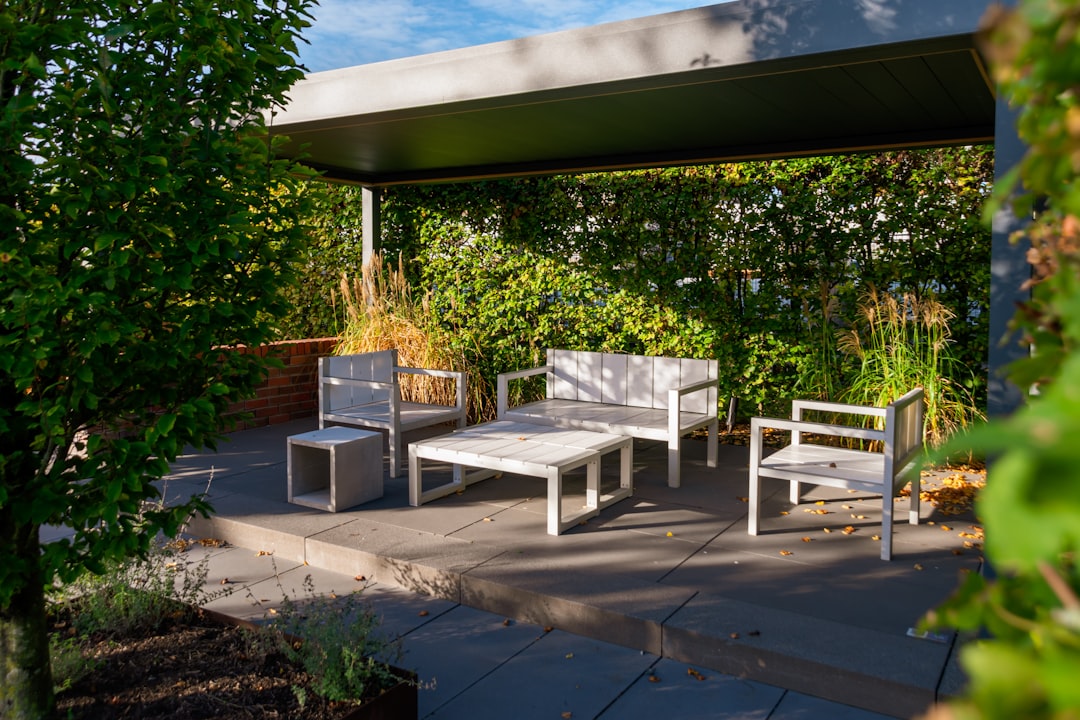



Why Landscape and Patio Design Transforms Your Outdoor Space
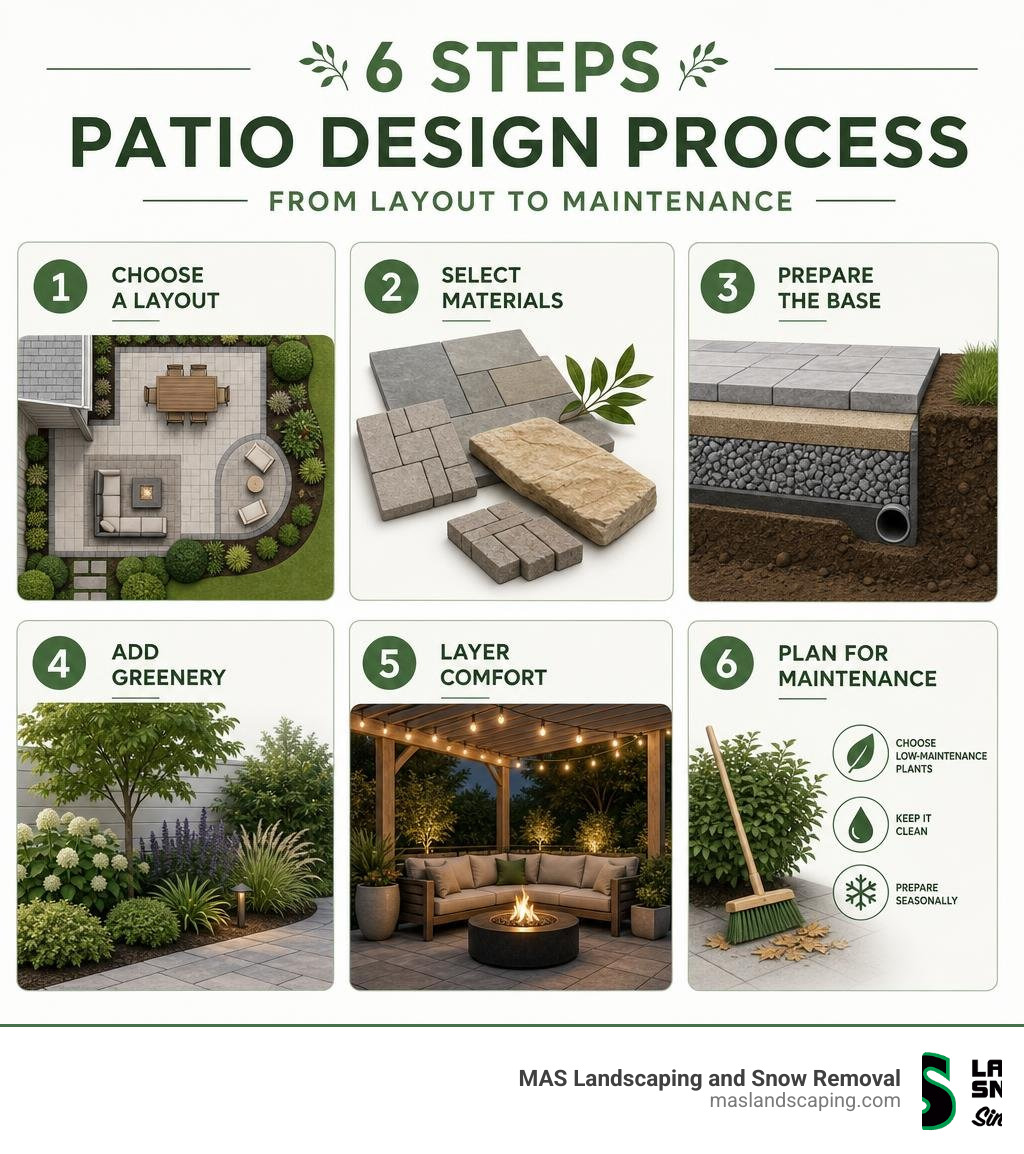
Landscape and patio design is the process of planning and building an outdoor living area that balances beauty, function, and durability. Here’s a quick overview of what great patio design involves:
- Choose a layout – Decide on zones for dining, lounging, and gathering
- Select materials – Pick pavers, natural stone, or concrete based on your climate and budget
- Prepare the base – Proper grading and drainage prevent long-term problems
- Add greenery – Plants, trees, and groundcover soften hardscaping and add privacy
- Layer comfort – Shade structures, lighting, and furniture make the space livable
- Plan for maintenance – Choose low-maintenance features that hold up year-round
Your backyard is more than just a yard. For homeowners in the Greater Boston area, it’s a place to gather, relax, and add real value to your home.
And yet, most patios fall short of their potential. They end up as a plain slab with a few chairs — no shade, no privacy, no real sense of place.
That’s the gap this guide is designed to close.
Research consistently shows that well-designed outdoor living spaces can increase a home’s resale value by 5 to 20%. Homeowners who invest in patios and landscaping report a 77% satisfaction rate with their outdoor spaces. Adding a patio ranks among the top three home improvement projects for boosting property value.
But getting there requires more than picking a material and calling a contractor. It takes thoughtful planning — from drainage and base preparation to plant selection and lighting.
This guide walks you through every step, whether you’re starting from scratch or upgrading an existing space.
Essential Elements of Landscape and Patio Design
To create a backyard that feels like a natural extension of your home rather than an afterthought, you must understand how different elements interact. A successful outdoor space relies on the careful integration of both hardscape and landscape features.
Hardscaping refers to the non-living, structural elements of your yard—such as stone walls, paver patios, walkways, and pergolas. Landscaping (or softscaping) encompasses the living elements—like grass, flowers, shrubs, and trees. When these two forces work in harmony, they balance texture, color, and structure.
If you focus solely on hardscaping, your backyard can quickly feel sterile, hot, and uninviting—like a commercial parking lot. Conversely, if you only focus on plantings without structural paths or seating areas, your yard may look overgrown and lack usability.
When you approach a project with a comprehensive Landscape Design for Your Entire Property, you ensure that the transition from your back door to the edge of your lawn feels seamless, purposeful, and visually cohesive.
Spatial Layouts for Landscape and Patio Design
The secret to a patio that works is “zoning.” Just as your house has separate rooms for cooking, sleeping, and watching television, your patio should have designated zones for different activities. Designing a proper backyard patio design requires you to map out how you will actually use the space before a single stone is laid.
- The Dining Zone: This area should be located closest to your house or outdoor kitchen to minimize the distance you have to carry heavy trays of food. Ensure there is enough clearance around the dining table so guests can pull out their chairs without stepping off the edge of the patio.
- The Lounging Zone: This is your outdoor living room. It should be positioned in a slightly quieter, more private corner of the patio, ideally oriented toward a beautiful view of your garden or yard.
- The Fire Pit Zone: Because fire pits generate heat and smoke (unless you choose a natural gas or propane option), this zone is best set slightly away from the main dining and lounging areas. A circular layout works beautifully here, encouraging natural conversation.
To define these zones structurally without building actual walls, you can use subtle design tricks. Try changing the paver pattern or color border between zones, stepping down a level for your fire pit, or using low 18-inch stone seat walls to frame a lounging area.
Material Selection in Landscape and Patio Design
Choosing the right material is one of the most important decisions you will make. In Massachusetts, our materials must be tough enough to withstand blistering summer heat and freezing winter blizzards.
Using high-quality patio designs with pavers is highly popular in our region because interlocking concrete pavers offer incredible durability and flex slightly with the ground’s natural movement.
Here is a comparison of the most popular patio materials:
| Material | Pros | Cons | Durability in Freeze-Thaw |
|---|---|---|---|
| Concrete Pavers | Endless colors and patterns, uniform thickness, easy to replace individual units | Can fade slightly over decades if unsealed | Excellent (highly flexible) |
| Natural Stone (Bluestone/Granite) | Timeless, high-end look, extremely durable, completely unique textures | Higher material cost, irregular shapes require skilled installation | Excellent (lasts for generations) |
| Poured Concrete | Budget-friendly initially, quick to install | Highly prone to cracking during New England winters, looks industrial | Poor to Moderate |
| Brick | Classic, traditional aesthetic, eco-friendly | Limited color choices, can become slippery in shade | Moderate (can flake over time) |
For Massachusetts homeowners, we strongly recommend concrete pavers or natural stone like New England bluestone and granite. Poured concrete might seem tempting for the budget, but local freeze-thaw cycles are notoriously unforgiving to solid concrete slabs, often leading to unsightly cracks that are incredibly difficult to patch cleanly.
Technical Foundations: Drainage, Grading, and Base Preparation
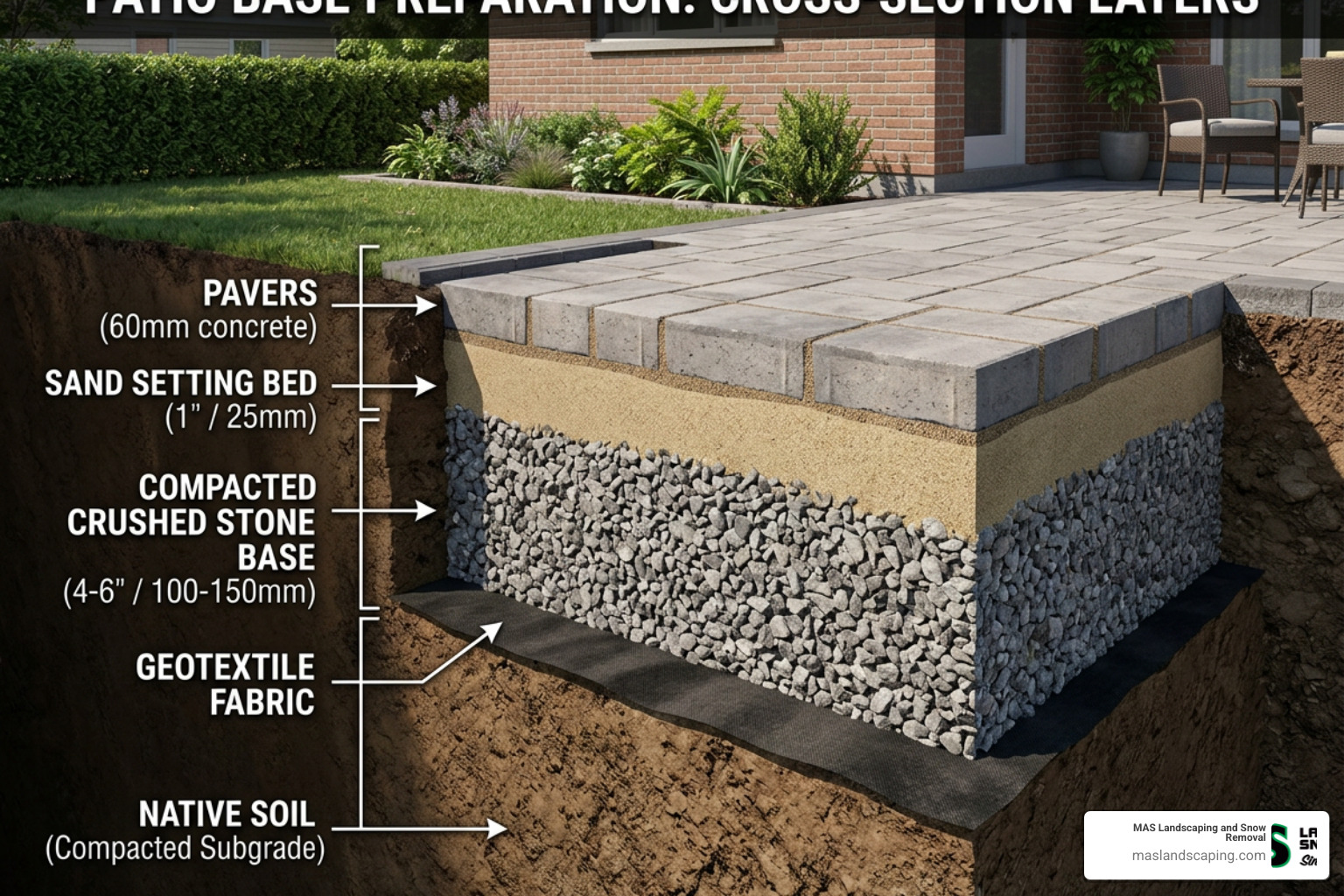
If there is one thing we cannot stress enough, it is this: what goes under your patio is far more important than what goes on top. You could buy the most beautiful, expensive imported stone in the world, but if your base preparation is poor, your patio will look like a roller coaster within two seasons.
Proper backyard paver installation requires meticulous attention to three technical steps:
- Soil Grading: The ground must be sloped away from your home’s foundation to prevent water from pooling against your basement walls. A standard slope is a drop of 1/4 inch for every foot of patio length.
- Base Preparation: We excavate the native soil and replace it with a thick layer of crushed gravel (typically 6 to 8 inches for standard patios). This gravel base must be compacted in layers using a heavy-duty plate compactor. This compacted stone base acts as a solid foundation and allows water to drain freely beneath the patio.
- Bedding Sand and Polymeric Sand: A 1-inch layer of clean concrete sand is spread over the compacted gravel to lay the pavers on. Once the pavers are set, we fill the joints with polymeric sand. This specialized sand contains chemical binders that activate when wet, locking the pavers together, resisting washouts, and preventing weeds from taking root between your stones.
Skipping these steps or rushing through excavation is the primary cause of shifting, sinking, and pooling water. In Saugus, Malden, and surrounding areas, our deep frost line means that any water trapped under your patio will freeze, expand, and push your stones upward. Over-engineering your drainage and base is the only way to guarantee a patio that stays flat for decades.
Integrating Greenery: Plants, Trees, and Groundcover

A patio without plants is like a room without curtains—it feels unfinished and exposed. Integrating soft landscaping elements is what turns a hard stone platform into a welcoming oasis.
When planning your landscape design, you want to layer your plantings to create depth, texture, and year-round interest. If you are looking for professional plant selection tailored to our local climate, exploring Landscaping Services in Lynnfield, MA can give you a great sense of what thrives locally.
- Living Screens for Privacy: Instead of building a tall, imposing wooden fence, you can use evergreens to create a natural living wall. Planting Emerald Green arborvitae 3 to 4 feet on center creates a dense, beautiful green screen that stays lush all winter long.
- Native Plants for Low Maintenance: Choose hardy perennials that love New England weather. Purple coneflower, black-eyed Susans, and catmint add vibrant summer color without requiring constant watering.
- Groundcover Between Stones: If you love the look of wide-joint natural flagstone, plant low-growing groundcovers like creeping thyme or sedum between the stones. When stepped on, creeping thyme releases a wonderful herbal aroma, and it softens the hard edges of the rock beautifully.
- Four-Season Interest: Don’t just plant for July. Incorporate ornamental grasses that look beautiful waving in the autumn wind, and red-twig dogwoods or winterberries that provide pops of bright color against the white winter snow.
A pro-tip for tree placement: Always plant larger shade trees at least 15 to 20 feet away from your patio edges. This protects your hardscaping from aggressive root systems that can push up your pavers over time.
Enhancing Comfort: Shade, Privacy, and Outdoor Decor
Once your stones are set and your gardens are planted, it’s time to focus on the elements that make your patio comfortable and usable throughout the day and into the night. This is where personalized outdoor design shines.
- Shade Structures: The afternoon sun can quickly make an open patio unbearably hot. Installing a cedar pergola adds beautiful architectural structure and filtered shade. If you want full protection from summer rain showers, a solid-roof pavilion is an excellent investment. For a more modern and budget-friendly option, high-quality shade sails can be tensioned across the space to block UV rays.
- Privacy Screens: If your neighbors’ windows look directly down onto your patio, physical privacy screens made of horizontal cedar slats or composite panels can block unwanted views while maintaining a chic, modern aesthetic.
- Landscape Lighting: To keep the party going after the sun sets, incorporate low-voltage LED landscape lighting. Path lights guide guests safely to the lawn, while subtle uplighting in the branches of nearby trees creates a magical, ambient glow. You can also integrate small “cap lights” directly under the stone lips of your seat walls.
- Furniture and Decor: Choose outdoor furniture with weather-resistant fabrics (like Sunbrella) and quick-dry foam cushions. Anchor your lounging zone with an outdoor rug to make the space feel warm and completed.
Project Planning, Maintenance, and Average Costs
Starting a patio project is exciting, but it helps to know what to expect. A typical professional installation follows a clear set of phases:
- Initial Consultation & Design: We discuss your goals, assess your yard, and create a custom 2D or 3D layout.
- Site Preparation: We mark out utility lines, excavate the soil, and establish proper grading.
- Hardscape Installation: We bring in the gravel base, compact it thoroughly, lay the pavers or stone, and lock them in with polymeric sand.
- Softscape & Finishing: We install the surrounding garden beds, trees, lighting, and clean up the entire site.
To keep your investment looking pristine, perform basic seasonal maintenance. Every spring, sweep off winter debris and give the patio a gentle wash with a garden hose or a low-pressure power washer. Check the joints—if the polymeric sand has settled or washed away in small spots over the years, sweeping in a fresh touch-up of sand will keep weeds out.
When searching for patio design and installation near me, keeping budget expectations realistic is key.
Please note: The following price ranges are average costs based on regional internet data and do not represent actual final quotes for MAS Landscaping.
- Basic Ground-Level Patio (Small/Medium): While the average pricing based on internet sources is around $4,500, a wide range of actual costs runs from $3,500 to $15,000 depending on materials and accessibility.
- Mid-Range Patio with Features: While the average pricing for this level is around $14,000, the wide range of costs spans from $12,000 to $45,000 to include features like a built-in fire pit.
- High-End Custom Outdoor Living Space: While the average pricing for a luxury installation is around $38,000, a fully custom design can range widely from $35,000 to $115,000+ depending on the complexity of integrated features.
The wide range in pricing reflects differences in site accessibility, material choices (granite and bluestone cost significantly more than standard concrete pavers), grading challenges, and the complexity of integrated features.
Frequently Asked Questions about Patio Design
What is the most low-maintenance patio material?
High-quality interlocking concrete pavers and natural granite are the most low-maintenance options. Unlike wood decks, they never require sanding, staining, or painting. Unlike poured concrete, they do not crack easily during freeze-thaw cycles, and if a single paver is ever stained or damaged, it can be popped out and replaced individually without disturbing the rest of the patio.
How do you prevent drainage issues on a new patio?
Preventing water issues requires three things: sloping the patio surface away from structures at a rate of 1/4 inch per foot, installing a thick, highly permeable crushed gravel base, and using professional drainage solutions like French drains or channel drains if your yard has a naturally high water table or steep slopes channeling water toward the patio area.
Do I need a permit for a patio installation?
In most Massachusetts municipalities—including Saugus, Everett, Malden, and Lynnfield—simple, ground-level patios do not require a building permit. However, if your design includes retaining walls over 4 feet tall, running gas or electrical lines for outdoor kitchens and lighting, or solid-roof structures like pavilions, you will likely need to secure local permits. It is always wise to check your town’s specific zoning laws and HOA guidelines before digging.
Conclusion
A beautiful, durable patio is the heart of your outdoor living space. It is a major investment in your home’s value and your family’s quality of life. By focusing on proper base preparation, smart zoning, climate-hardy materials, and lush softscaping, you can create a backyard retreat that you will love for decades.
At MAS Landscaping and Snow Removal, we pride ourselves on our professionalism, local expertise, and commitment to personalized service. From initial consultation to final cleanup, we handle every step of your Patio Installation with the care and precision your home deserves.
Whether you are in Saugus, Everett, Lynnfield, Malden, or any of our nearby service areas, we are here to bring your outdoor dreams to life. Contact us today to schedule your design consultation!