

Artificial Lawn: Ultimate Guide 2025
Why Homeowners Are Making the Switch to Artificial Lawns
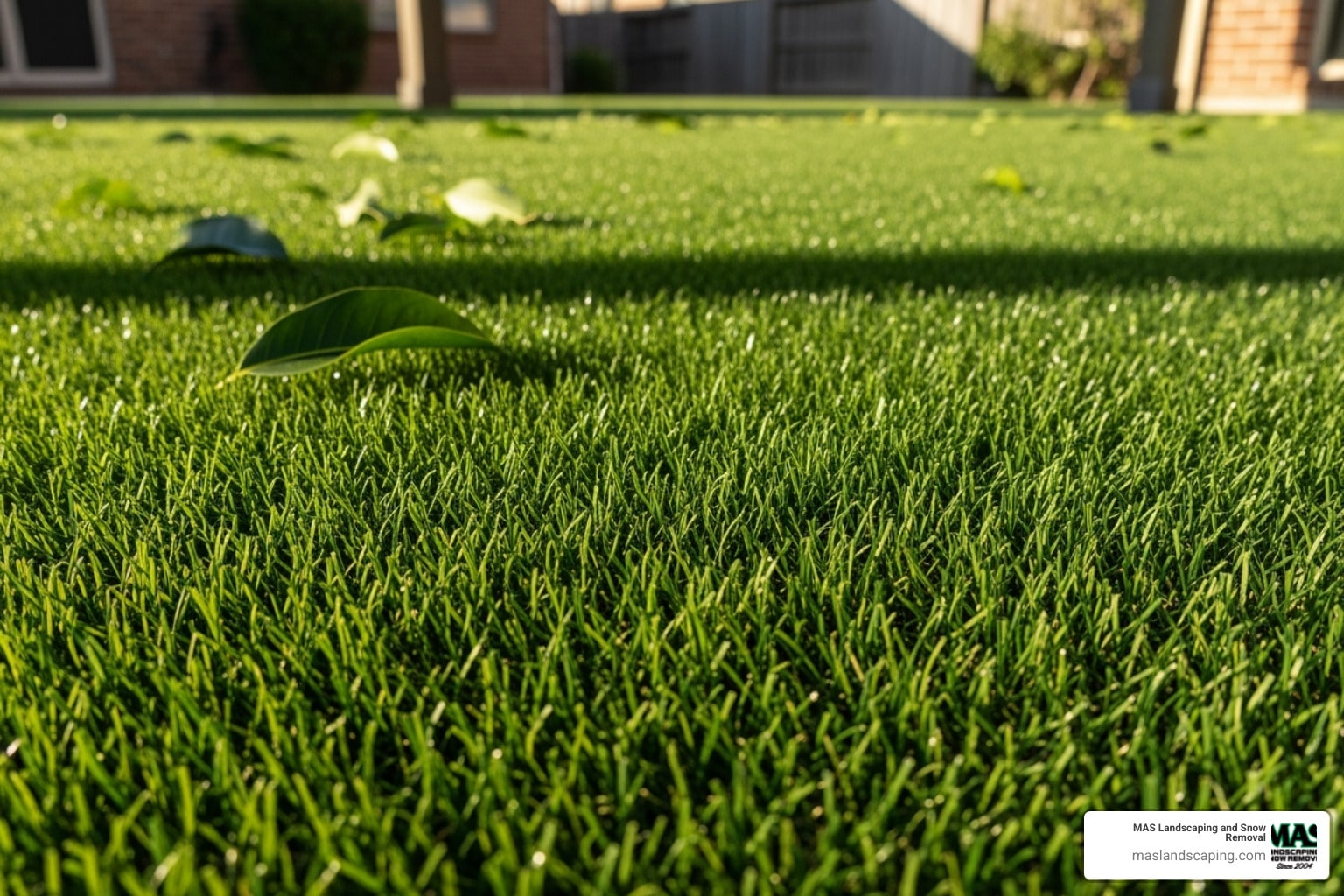
Artificial lawn technology has evolved from the fake-looking turf of the past into remarkably realistic grass that’s becoming popular across Greater Boston. Modern synthetic grass is a maintenance-free solution that stays green year-round, never needs watering, and ends the cycle of mowing, fertilizing, and weeding. For an overview of how synthetic turf is made and used, see Artificial turf.
Quick Answer: What You Need to Know About Artificial Lawns
- Materials: Choose from nylon (most durable), polyethylene (softest feel), or polypropylene (most affordable)
- Cost Range: $5-$20 per square foot including installation (based on general internet data, not a MAS Landscaping quote)
- Lifespan: 15-25 years with proper installation
- Best For: Pet owners, busy homeowners, water conservation, problem areas where grass won’t grow
- Maintenance: Occasional rinsing and brushing – no mowing, watering, or chemicals needed
For homeowners tired of New England’s harsh weather and constant lawn care, artificial grass offers a perfect green space that looks great 365 days a year.
“If youre tired of mowing, fertilizing, and using precious resources like water to keep your grass looking lush and green, artificial grass may be the right choice for you,” notes industry research on homeowner frustrations with traditional lawn maintenance.
Beyond convenience, artificial turf offers superior drainage compared to natural lawns, eliminates mud, and creates a clean play surface for kids and pets. It’s ideal for pools, rooftops, and shady areas where natural grass fails to thrive.
Artificial lawn terms to remember:
- artificial grass over pavers
- artificial outdoor putting green
- how to install artificial grass on soil
Why Go Faux? The Unbeatable Benefits of Artificial Grass
We all dream of a lush lawn that boosts curb appeal, but natural grass requires endless work. An artificial lawn offers a beautiful, low-maintenance alternative. Homeowners in Everett, Lynnfield, and Malden are changing their outdoor spaces with this innovative solution.
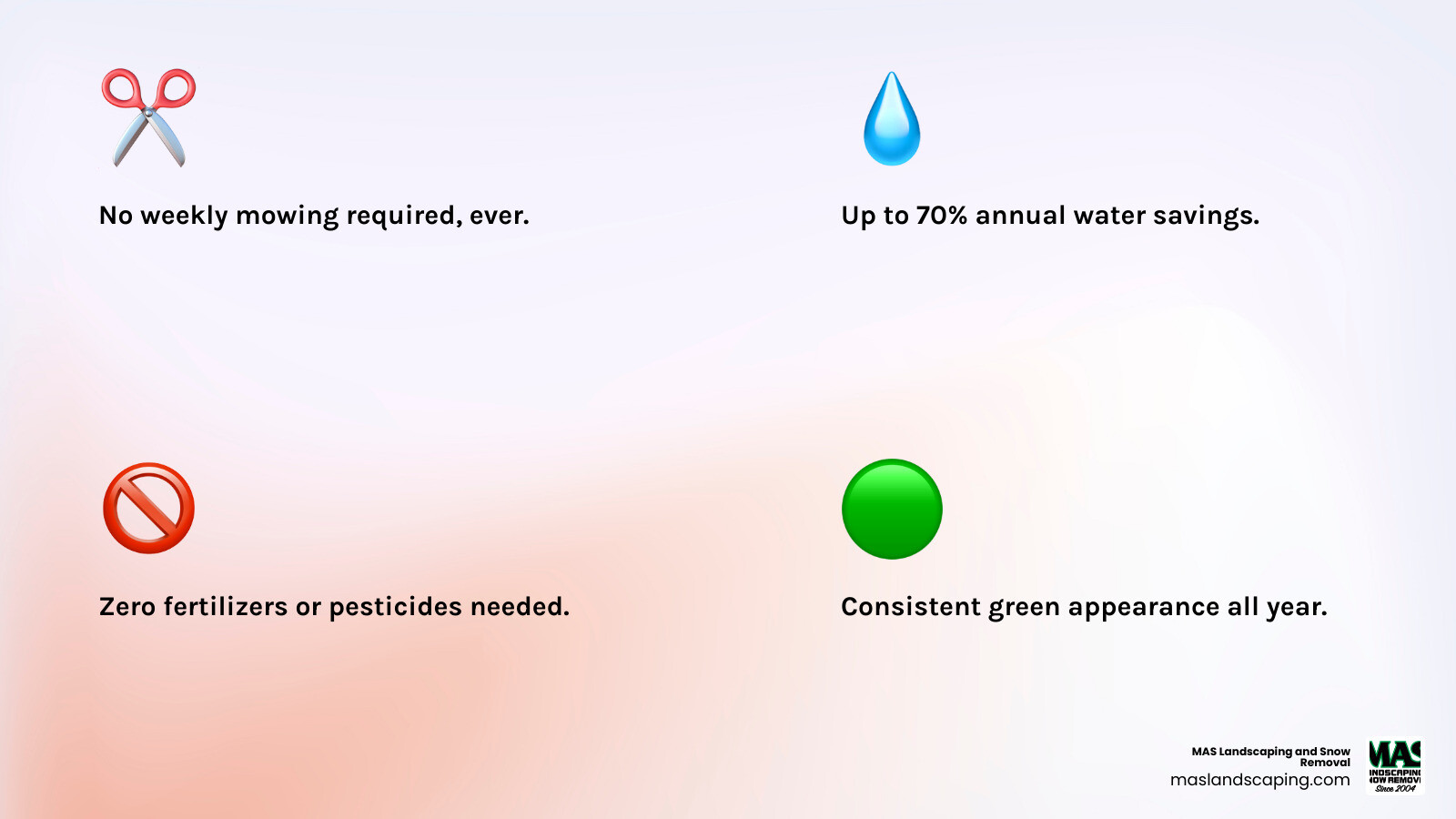
The benefits are extensive. First, no mowing means you reclaim your weekends and reduce your carbon footprint. You’ll also conserve water and eliminate high water bills. Artificial turf needs no fertilizers or pesticides, creating a safer environment for families, pets, and local ecosystems.
A key appeal is its year-round usability. Unlike natural grass that turns brown or struggles in drought, artificial grass stays vibrantly green in any weather. It’s also mud-free, which means no more muddy paw prints inside—a huge plus for pet owners.
Artificial grass also deters pests. The initial investment in an artificial lawn pays for itself over time through savings on water, lawn care products, and equipment, making it a smart financial decision that improves your lifestyle.
Pet and Family-Friendly Lawns
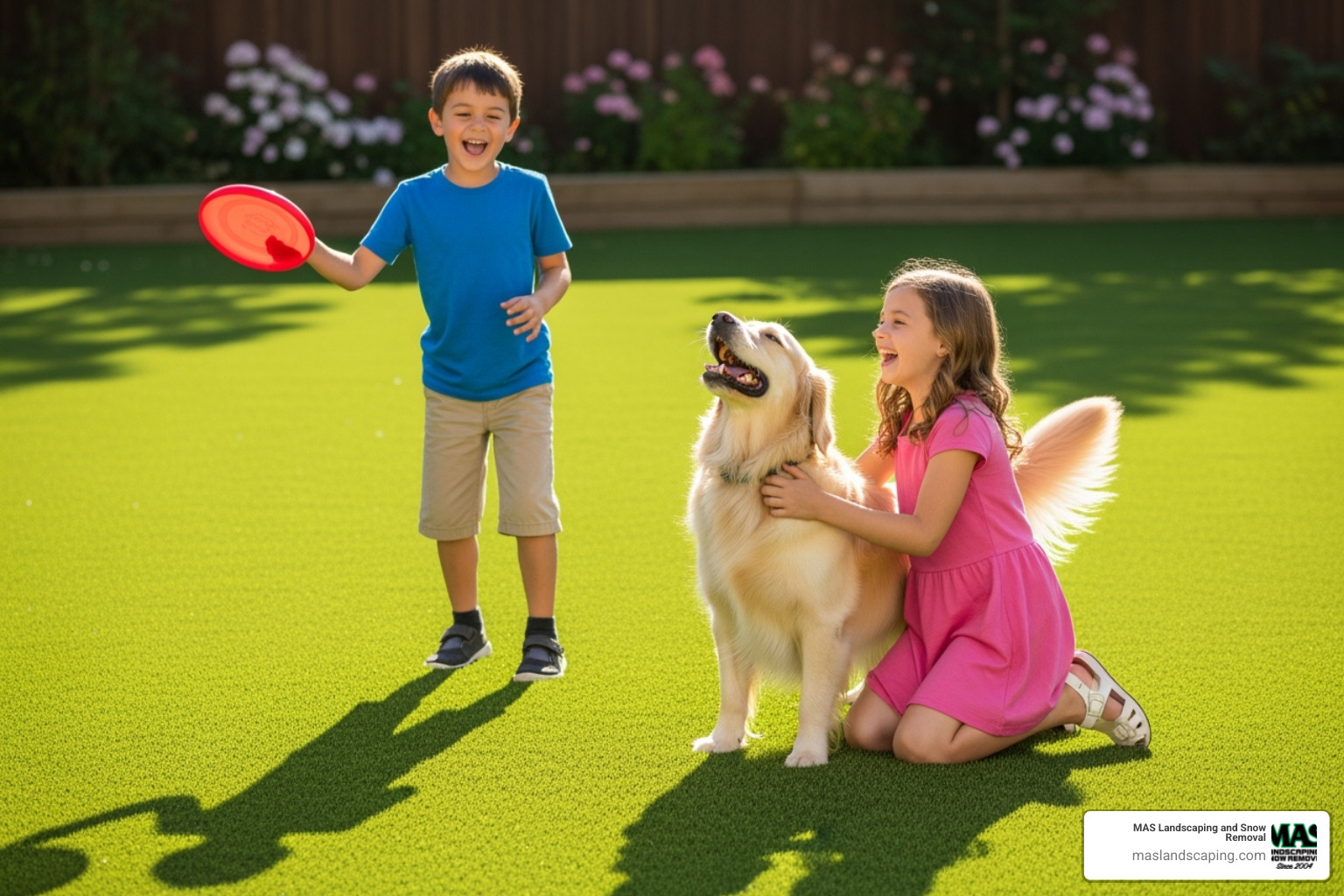
An artificial lawn is a game-changer for pet owners, providing a safe, clean, and non-toxic play surface. Modern turf has excellent drainage, allowing pet urine to pass through easily, preventing odors. We offer specialized pet turf installation options for optimal drainage and durability.
Cleanup is a breeze. Solid waste is easily removed, and the area can be rinsed. This eliminates the “urine burn” spots that plague natural lawns. With artificial grass, this is no longer a concern. It also prevents dogs from tracking mud into the house. A pet-friendly artificial lawn is key to creating a space where both pets and people can thrive.
Perfect for Any Space
The versatility of an artificial lawn is remarkable. It’s not just for front yards anymore. We install it in various settings, turning high-maintenance or unusable areas into beautiful, functional spaces.
It’s ideal for backyards, offering a tidy green space for gatherings and play. It also pairs beautifully with hardscaping, like in an outdoor living area with backyard pavers and artificial grass, creating distinct zones for different activities.
Around pools, artificial turf shines. It eliminates muddy footprints, provides a non-slip surface, and stays cooler than concrete or pavers, turning a pool area into a luxurious oasis.
Artificial grass is also perfect for rooftops, balconies, and patios, turning overlooked spaces into green retreats. Putting artificial grass in these areas can dramatically improve your outdoor living experience.
Choosing Your Perfect Patch: Types of Artificial Grass
Choosing the right artificial lawn involves considering different textures, thicknesses, and materials. Understanding the basics makes finding the perfect match easier. We guide homeowners in Everett, Lynnfield, and Malden through these choices.
Selection is about balancing three key factors: durability, feel, and budget to meet your family’s specific needs.
When evaluating options, pay attention to these characteristics:
- Pile height refers to blade length. Taller piles look luxurious but can mat down in high-traffic areas. Shorter piles are more resilient and require less maintenance.
- Face weight indicates turf density. Higher density means better durability and a fuller look, but also a higher price. A face weight of 1-1.5 kg is great for most homes.
- The backing material holds the turf together. Polyurethane backing generally performs better than latex in New England’s variable climate.
- Infill is material spread between the grass blades to help them stand upright and add cushioning. Some modern turfs are infill-free, simplifying installation.
Here’s how the three main types of artificial grass compare:
| Grass Type | Durability | Feel | Cost (per sq. ft. material only) | Best Use |
|---|---|---|---|---|
| Nylon | Excellent | Stiff | Around $3 – $16+ | High-traffic areas, putting greens, playgrounds |
| Polyethylene | Good | Soft | Up to $2 | Landscaping, pet areas, general use |
| Polypropylene | Fair | Coarse | Between $2 – $3 | Low-traffic areas, indoor use, budget-friendly |
Materials Used in an Artificial Lawn
The heart of any artificial lawn lies in its fibers. There are three main types:
Nylon is the most durable material, ideal for high-traffic areas like playgrounds or putting greens. It’s tough and resilient against heavy use and extreme temperatures. While it feels stiffer and is the most expensive, its longevity makes it a worthwhile investment for busy areas.
Polyethylene is the most popular choice for homes, offering a great balance of softness and durability. It’s comfortable for families and pets and holds its color well in New England weather. Most of our clients in Saugus and Malden choose it for their main lawn areas.
Polypropylene is the most affordable option. While less durable, it’s suitable for low-traffic, decorative areas. It provides a green look on a tighter budget.
Understanding these differences helps us recommend the perfect artificial lawn material for your specific situation.
Special Features to Look For
Modern artificial lawn technology includes features that make them more comfortable, durable, and eco-friendly.
- UV resistance is essential for New England. Quality turf has UV inhibitors to prevent fading and keep your lawn looking vibrant for years.
- Heat-reflective technology keeps turf cooler, which is great for pools and patios. Advanced blade shapes help dissipate heat, making the surface more comfortable for bare feet in summer.
- Pet-friendly drainage is essential for pet owners. Specially designed backings allow liquids to pass through quickly, controlling odors and preventing puddles.
- Eco-friendly options are available, with some turfs made from recycled or bio-based materials. This allows you to get a beautiful lawn while being environmentally conscious.
- No-infill designs are a recent innovation that simplifies installation and maintenance. They offer a natural look and feel with minimal upkeep.
The Price of Perfection: Understanding Your Artificial Lawn Investment
An artificial lawn is an upfront investment that pays off over time. You’ll save on mower fuel, expensive fertilizers, and high summer water bills.
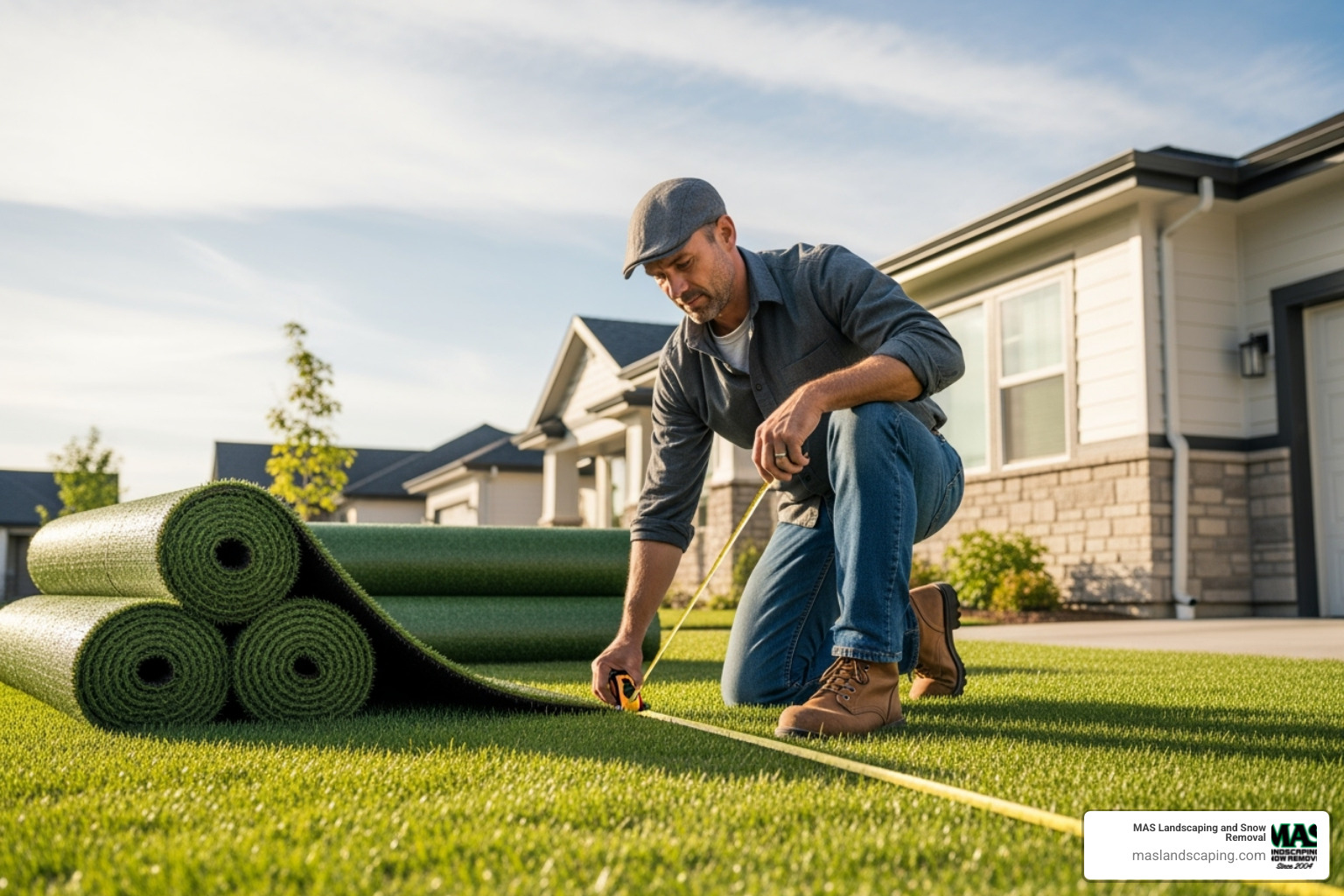
The total cost depends on several key factors. Property slope is a major one, as steep yards require more grading. Yard size also affects the total cost, though larger projects may have a lower per-square-foot rate. Material quality impacts both cost and long-term satisfaction; premium nylon costs more than basic polypropylene but lasts longer. Labor costs vary with project complexity.
Site preparation is crucial. Removing an old lawn or adding drainage increases the cost, but skipping this step is risky and not recommended. For detailed insights, you can explore more about artificial turf installation cost per square foot.
Average Costs in North America
Disclaimer: The following costs are based on general internet data and are not a quote for MAS Landscaping. Prices vary significantly by region, product, and project complexity.
Across North America, artificial lawn projects typically range from $5 to $20 per square foot, including materials and professional installation.
- Material costs alone can vary from around $2 per square foot for basic turf to $16 or more for premium options.
- Installation costs generally run between $3 to $5 per square foot for professional work, though complex or specialty installations can exceed these figures.
For a 500 square foot project, the average cost might be around $6,000, with a potential range from about $3,000 to $18,000 or more. For a larger 1,500 square foot lawn, you might look at an average of $15,000, with a potential range from roughly $9,000 to $45,000 or more. On complex projects with demolition, access constraints, drainage upgrades, or premium systems, totals can run significantly higher than “typical” per-square-foot ranges.
Getting an artificial grass estimate cost from a local professional helps you understand exactly where your project fits within these ranges.
Additional Costs for Your Artificial Lawn
Be aware of potential additional costs beyond the basic installation:
- Old lawn removal is often the first step. The cost depends on the state of your current lawn and yard accessibility.
- Base preparation materials like crushed aggregate are essential for drainage and stability. Don’t skimp on quality here.
- Edging provides a finished look and secures the turf. The material choice affects cost.
- A weed barrier is crucial, and infill material delivery can be an added expense for larger projects.
- If your yard has poor drainage, additional drainage solutions may be necessary.
We discuss all potential costs during your initial consultation for transparent, honest pricing for your artificial lawn investment.
From Dirt to Dream Lawn: The Installation & Maintenance Guide
Proper installation is the key to a long-lasting, beautiful artificial lawn. While DIY is tempting, professional installation avoids common issues like uneven surfaces, visible seams, and poor drainage, ensuring your turf looks flawless for decades.
The foundation is critical. Proper base preparation, including excavation, grading, and compaction, establishes drainage and a smooth surface, preventing future dips and issues. Seaming multiple rolls together invisibly and securing the edges properly are specialized skills that professionals have mastered. When you’re ready to move forward, learning more about artificial grass installation helps you understand the process.
The Installation Process
Installing an artificial lawn involves several key steps that build upon each other to create a lasting foundation.
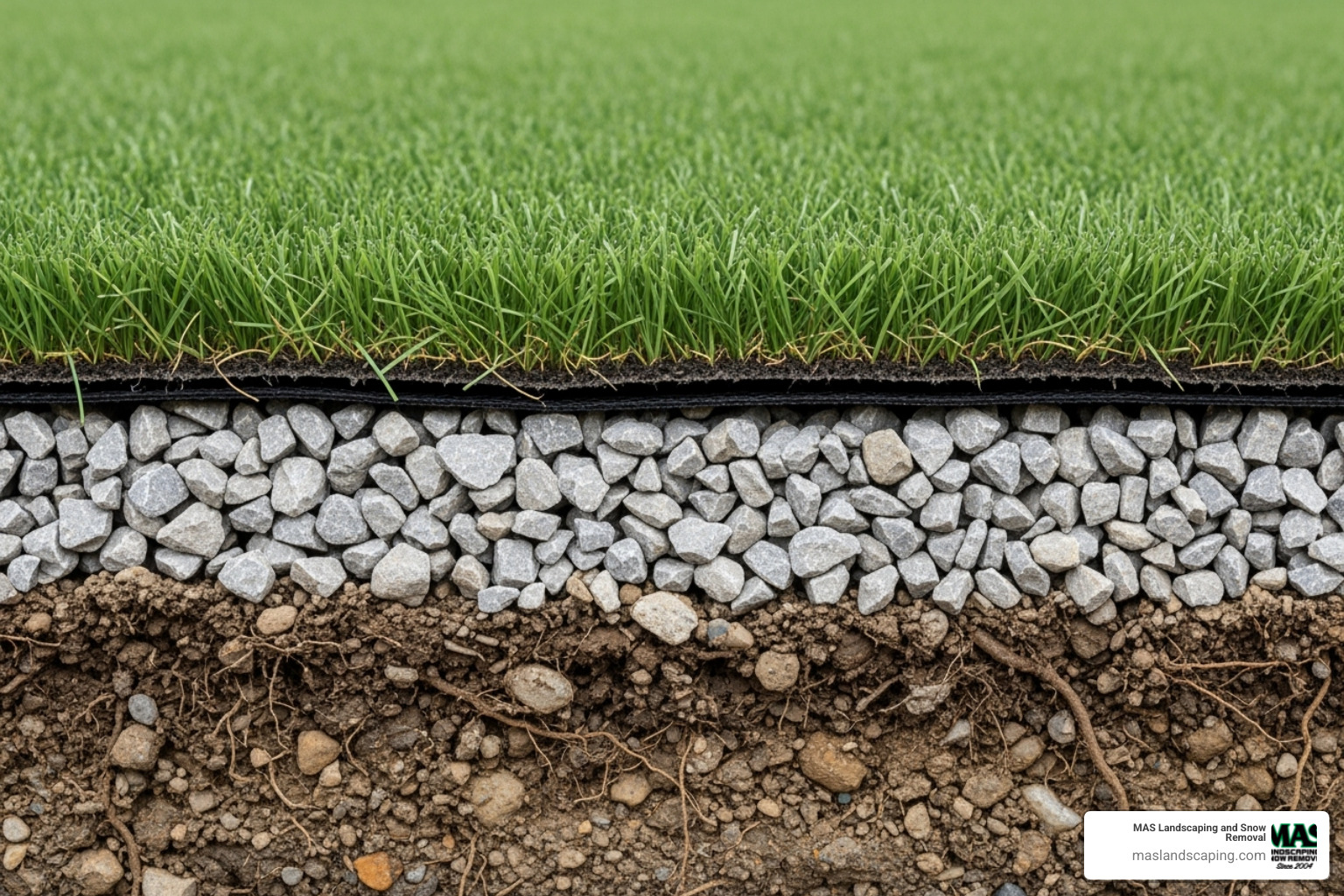
- Excavation is first, removing 3-4 inches of grass and topsoil to make space for the new base and allow for proper grading.
- An aggregate base of crushed gravel is spread and compacted until solid and level. This step is crucial for long-term performance. You can learn more about synthetic grass layers to understand the process.
- A weed barrier is laid over the base to prevent weeds.
- The turf is laid, with all blades facing the same direction for a consistent look.
- Seaming joins multiple pieces invisibly with special tape and adhesive. The turf is then trimmed to fit and secured at the edges with spikes.
- Infill, like silica sand, is applied to help blades stand up and add cushioning.
- Final grooming with a power broom gives the lawn a manicured look.
If you’re considering a small DIY project, you’ll need tools like a utility knife, tamper, shovel, rake, seaming tape, adhesive, landscape spikes, and a stiff-bristled broom.
Simple Maintenance for Lasting Beauty
The best part of an artificial lawn is the simple maintenance. A little care keeps it looking perfect year-round, with no mowing or brown spots.
- Remove debris regularly with a leaf blower or plastic rake to prevent buildup. Avoid metal tools that can damage the fibers.
- Rinse the lawn with a hose to wash away dust and dirt. Rain will also help keep it clean.
- Brush high-traffic areas occasionally with a stiff broom to lift flattened fibers and keep the lawn looking lush.
- For stains, act quickly. Use mild detergent and water for most spills, and rinse thoroughly. Avoid harsh chemicals like bleach.
- For pet waste, remove solids and rinse the area. Use an enzyme neutralizer for any persistent odors, then rinse again. When selecting cleaning products, choosing a bio-friendly cleaner protects both your family and the environment. Consider products listed under EPA Safer Choice.
- You may need to pull occasional weeds along the edges. Also, be mindful of reflected sunlight from windows, as concentrated heat can damage the turf.
Finding the Pros and Ensuring Longevity
When investing in an artificial lawn, quality installation is as important as the material itself. Finding the right professional is crucial for homeowners in Saugus, Everett, Lynnfield, and Malden who want a flawless, lasting result.
Experienced professional artificial turf contractors understand the details of proper drainage, seamless joins, and durability that DIY projects often miss. Trying to save money with DIY can lead to costly repairs later.
When searching for qualified artificial turf contractors, start by checking their portfolios and asking for references. Look for examples of clean seams and proper drainage. Verify insurance—it’s non-negotiable for your protection. A professional will also be transparent about their process, explaining their methods, materials, and timeline.
A good contractor offers a free consultation to assess your space and provide a detailed estimate. Use this meeting to gauge their professionalism and trust your instincts.
Lifespan and Warranty
An artificial lawn is a long-term investment. With proper installation and care, it can last 15 to 25 years, much longer than natural grass.
Manufacturer warranties usually last 8 to 15 years and cover key performance aspects like fading protection, ensuring your lawn stays vibrant. Wear and tear coverage protects against normal use but typically excludes damage from sharp objects, misuse, or extreme reflected heat. Normal foot traffic and pet use should be covered.
An installation warranty is just as important. It should cover issues like lifting seams or poor drainage resulting from the installation process, protecting you from workmanship errors. A combination of manufacturer and installation warranties provides a safety net for your investment, giving you confidence and peace of mind.
Conclusion
An artificial lawn offers a vibrant landscape without the relentless work of traditional lawn care. Say goodbye to weekend mowing, high water bills, and muddy paw prints.
As we’ve covered, artificial grass saves water, requires minimal maintenance, and creates a pet-friendly, mud-free space that stays green year-round, even through New England’s tough seasons. Understanding the different materials, cost factors like yard size and site preparation, and the overall investment helps you make the right choice for your home and budget.
While the installation process is detailed, professional expertise ensures lasting results. The simple maintenance routine is a welcome change from the constant upkeep of a natural lawn. With a 15-25 year lifespan and comprehensive warranties, an artificial lawn is an investment in your property and a lifestyle upgrade that gives you back your time and peace of mind.
For homeowners in Saugus, Everett, Lynnfield, Malden, Melrose, Medford, Revere, Chelsea, and other nearby areas, embracing an artificial lawn means reclaiming your time while enhancing your property’s beauty and value. At MAS Landscaping, we bring our local expertise and commitment to excellence to every project, creating outdoor spaces that reflect your vision while standing up to New England’s unique climate challenges.
If you’re ready to transform your landscape and experience the unparalleled benefits of an artificial lawn, professional installation is your next step toward that flawless, no-fuss lawn you’ve always dreamed of. Let’s turn your outdoor space into the green oasis it was meant to be.
Contact us for your landscaping project today!