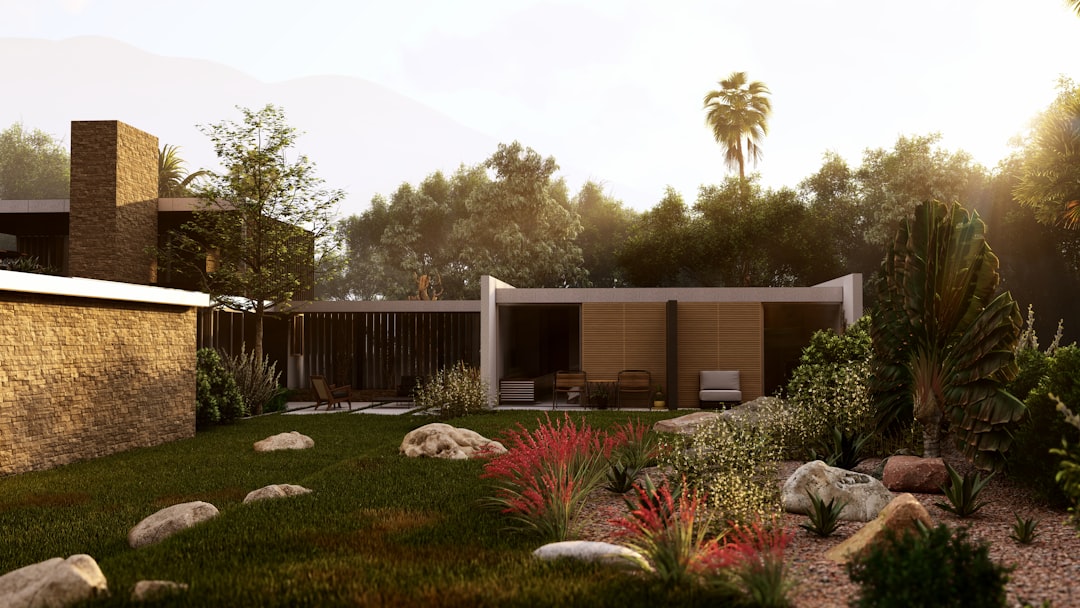



back yard landscape design: 5 Powerful Ways to Transform 2025
Changing Your Outdoor Living Space
Back yard landscape design is the process of creating a functional and attractive outdoor space that extends your living area beyond the walls of your home. Whether you’re looking to create a peaceful retreat, an entertainment hub, or a beautiful garden sanctuary, proper planning and design are essential.
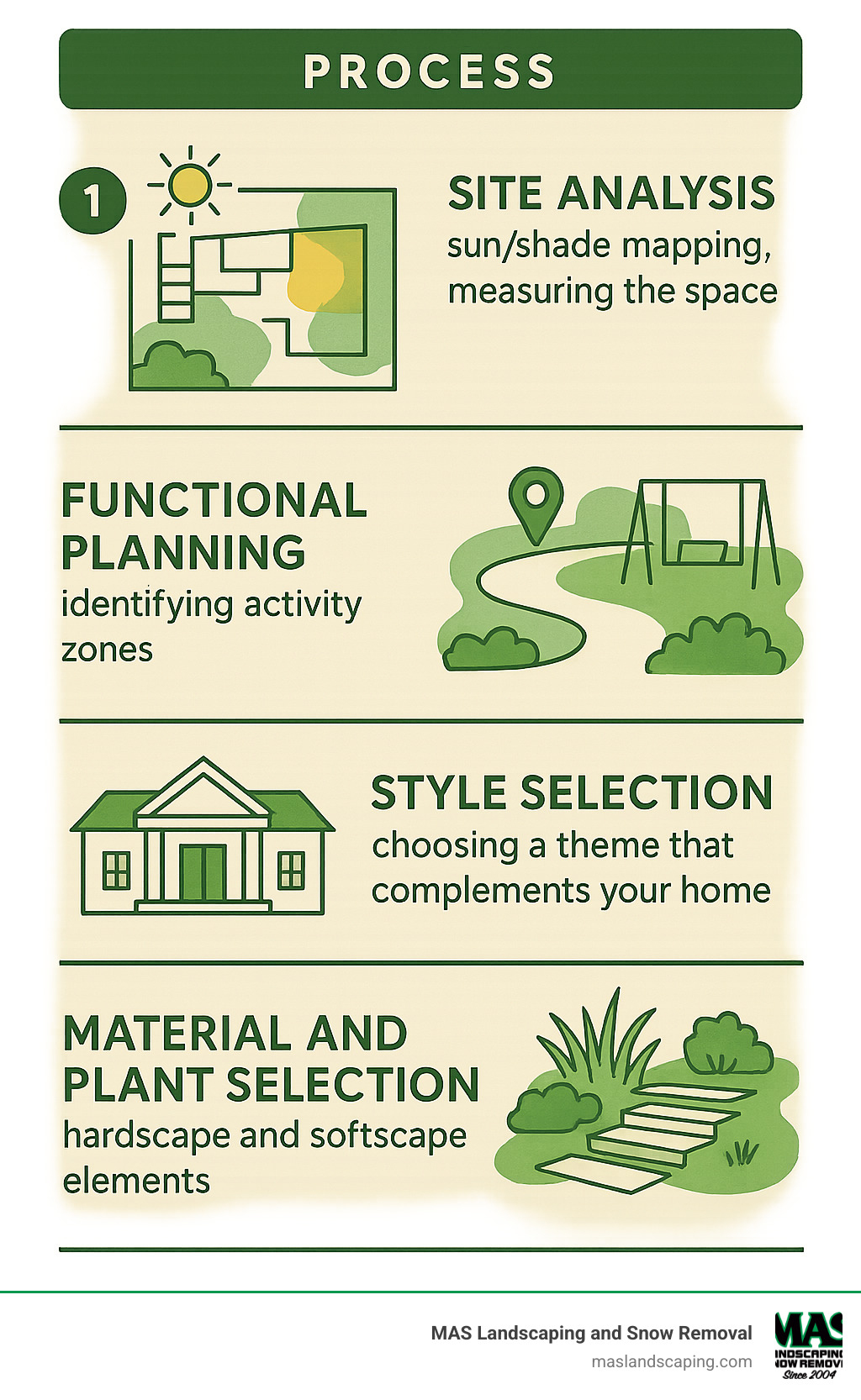
Quick Guide to Back Yard Landscape Design:
– Assess your space – Measure dimensions, note existing features, sun patterns, and drainage
– Define your needs – Entertaining, relaxation, play areas, gardening, or all of the above
– Create zones – Divide your yard into functional areas (dining, lounging, gardening)
– Select a style – Choose a design theme that complements your home’s architecture
– Choose materials & plants – Select hardscape materials and plants suited to your climate
– Consider budget & maintenance – Plan within your means and your willingness to maintain
When you step outside your home, your backyard should be an extension of your living space – a place that reflects your personality and meets your needs. A well-designed backyard not only improves your property value but also provides a sanctuary for relaxation, entertainment, and connection with nature.
The beauty of back yard landscape design lies in its blend of art and science. It’s about understanding the natural elements of your outdoor space while creating something that speaks to your aesthetic preferences and lifestyle needs.
As Andy Rooney once noted, “Time can feel like a roll of toilet paper—it unrolls faster and faster, the closer you get to the end.” Your backyard should be a place where time slows down and allows you to enjoy the present moment.
Whether you have a postage-stamp city lot or an expansive suburban yard, thoughtful design can transform any outdoor space into a personal oasis that you’ll enjoy for years to come.
Back yard landscape design terms to learn:
– landscape lighting design service
– modern landscape design
– outdoor design
What Is Back Yard Landscape Design & Why It Matters
Imagine stepping through your back door into a space that feels like it was created just for you—because it was. Back yard landscape design is the thoughtful art and science of changing your outdoor space into an extension of your home that balances beauty with practicality.
At its core, back yard landscape design goes far beyond random plantings or a simple lawn. It’s a comprehensive approach to creating an outdoor environment that improves your property while providing functional spaces for everything from quiet morning coffee to lively weekend gatherings.
The impact on property value is significant. Real estate experts consistently find that thoughtful landscaping can boost a home’s value by 5-12%. But the true value extends far beyond dollars and cents.
Recent research on outdoor wellness confirms what many of us intuitively know—spending time in green spaces significantly reduces stress hormones, improves mood, and improves overall well-being. Your backyard can essentially serve as a personal wellness retreat just steps from your kitchen—no membership fees or commute required!
“I never realized how much I needed this space until we redesigned it,” shared one Malden homeowner. “Now it’s where I decompress after work, where the kids play, and where we connect as a family.”
In our Massachusetts communities like Everett and Lynnfield, where we experience the full drama of all four seasons, a well-designed backyard extends your living space for much of the year, from spring garden enjoyment to summer dining to fall fire pit gatherings.
Your yard also serves as vital habitat for local wildlife. By incorporating native plants, you create a biodiversity hotspot that supports pollinators, birds, and beneficial insects—particularly important in our suburban areas where natural habitats are increasingly fragmented.
Thoughtful back yard landscape design also helps control your property’s microclimate. Strategic tree placement can reduce summer cooling costs by up to 30%, while windbreaks can lower winter heating costs by 15%—not insignificant in our variable New England climate.
The Heart of “back yard landscape design”
The essence of effective back yard landscape design lies in the beautiful marriage of function and beauty. A gorgeous garden that doesn’t accommodate your family’s needs will ultimately feel as frustrating as a purely utilitarian space devoid of charm or character.
We prefer to talk about “return-on-enjoyment” rather than just return-on-investment. While property value matters, the joy you experience using your outdoor space daily is immeasurable. As one Medford family told us after their redesign: “Our backyard went from a space we looked at to a place we live in.”
Think of your backyard as a collection of outdoor rooms, each with its distinct purpose but unified by a cohesive design language. Just as your home has specific areas for cooking, dining, and relaxing, your yard can offer similar functional diversity while maintaining visual harmony.
Whether you’re dreaming of a tranquil reading nook beneath a shade tree, a vibrant flower garden that changes with the seasons, or an outdoor kitchen where memories are made around sizzling grills, thoughtful back yard landscape design makes these dreams achievable. The most successful landscapes are those that reflect both the personality of the homeowners and the natural characteristics of the property itself.
Planning Your Perfect Backyard: From Sketch to Blueprint
The journey to a stunning back yard landscape design begins long before the first shovel hits the dirt. Think of this planning phase as the foundation that everything else will build upon—get it right, and you’re setting yourself up for success.
Start by creating a thorough site inventory of your yard. Walk your property with a notebook and jot down everything you see: those mature oak trees you love, the shed that needs screening, the slope that turns into a mudslide during rainstorms. Note fixed elements like buildings and utility connections that can’t be moved, and identify existing plants worth preserving.
Sun and shade mapping might sound technical, but it’s really just observing how light moves across your yard throughout the day. A homeowner from Revere shared with us, “I spent a full day just watching the sun travel across my backyard before making any decisions. Now my garden thrives because everything is in its perfect light condition.” This simple step prevents the heartbreak of watching sun-loving plants struggle in shady corners.
Grab your measuring tape and get accurate dimensions of your space. Even the best design ideas fail when they don’t fit the actual yard! Transfer these measurements to graph paper (1 inch = 4 feet works nicely for most yards) to create a scale drawing that includes your house footprint, property lines, and existing features.
Before getting too attached to your vision, check local zoning regulations. Many Massachusetts communities like Chelsea and Saugus have specific setback requirements or restrictions on structures like pergolas and sheds. A quick call to your local building department can prevent expensive mistakes.
Don’t forget to assess drainage patterns after a good rain. Those puddles that form near your foundation? They’re telling you something important about how water moves through your property—information that will prove invaluable when placing patios, plants, and other elements.
Pen, Paper, or Pixels? Choosing a Planning Method
When it comes to drawing up your back yard landscape design, you’ve got options that range from old-school to high-tech.
Hand sketching on graph paper with colored pencils gives you a tangible, intuitive way to lay out your ideas. There’s something satisfying about the physical process of drawing that helps many homeowners connect with their space. Plus, you can easily erase and redraw as your ideas evolve.
For those comfortable with technology, 2D/3D software offers precision and the ability to visualize your design from multiple angles. Programs like Planner 5D or more sophisticated options like SketchUp let you drag and drop elements into your plan and experiment with different layouts.
“I started with pencil sketches,” one Melrose homeowner told us, “but switching to a free landscape app let me play with different patio shapes without wearing holes in my paper!”
The most tech-savvy designers might even explore VR walkthroughs, which create immersive virtual experiences of your future backyard. Imagine “walking” through your garden before a single plant is purchased!
When choosing between free and paid design tools, consider your needs carefully. Free options provide basic functionality that works well for simple designs, while paid programs offer more detailed plant libraries and realistic renderings. Just be aware that some powerful programs come with significant learning curves—be realistic about how much time you’re willing to invest in mastering new software.
Hitting “Go” on your back yard landscape design
Before finalizing your back yard landscape design, create a prioritized goal list that reflects what matters most to you. Is entertaining friends your main objective? Creating a safe play space for children? Establishing a peaceful retreat for your morning coffee? When you inevitably face trade-offs (as we all do with limited space and budgets), this list will guide your decisions.
Mood boards help crystallize your aesthetic vision in ways words often can’t. Collect images from magazines, websites like Pinterest, or even photos of neighborhood yards that catch your eye. Look for patterns in what attracts you—perhaps you consistently gravitate toward Japanese-inspired gardens with their clean lines and peaceful water features, or maybe cottage gardens bursting with colorful blooms make your heart sing.
Be realistic about your budget before getting too deep into planning. The average consultation for professional landscape design ranges from $500 to $15,000*, with implementation costs varying widely based on materials, complexity, and labor. Consider phasing your project over multiple seasons if your dream design exceeds your current budget. Many of our clients start with a comprehensive plan but implement it in stages over 2-3 years.
Finally, conduct an honest assessment of your DIY skills. Some elements of back yard landscape design are within most homeowners’ capabilities—like planting beds or installing simple patios—while others benefit from professional expertise. Complex hardscaping, large tree installation, and drainage solutions often require specialized equipment and knowledge. At MAS Landscaping, we work with clients at every level, from providing complete design-build services to offering guidance for ambitious DIYers tackling projects themselves.
Ready to explore your Landscape Design options with professional guidance? We’re here to help turn your backyard dreams into reality.
Essential Elements: Softscape, Hardscape & Functional Zones
Creating a successful back yard landscape design is like composing a beautiful symphony where plants, structures, and spaces harmonize perfectly. The magic happens when you thoughtfully balance softscape elements (the living components) with hardscape features (the structural elements) to create a space that’s both beautiful and functional.
Think of your plants as performers in an orchestra, each playing a different role. Tall trees provide the bass notes with their canopy and privacy screening. Mid-height shrubs add structure and rhythm, while ground-level perennials and annuals deliver the colorful melody with their textures and blooms. This layered approach not only creates visual interest but also mimics natural ecosystems, making your yard feel more authentic.
When it comes to lawn areas, it’s worth asking yourself whether traditional turf is truly necessary. Many homeowners in our Saugus area are finding the beauty of meadow-like plantings using native grasses. “We’ve cut our mowing time in half and now have butterflies visiting daily!” shared one family from Everett who replaced half their lawn with a native meadow. These alternatives often require less maintenance, fewer resources, and provide better habitat for local wildlife.
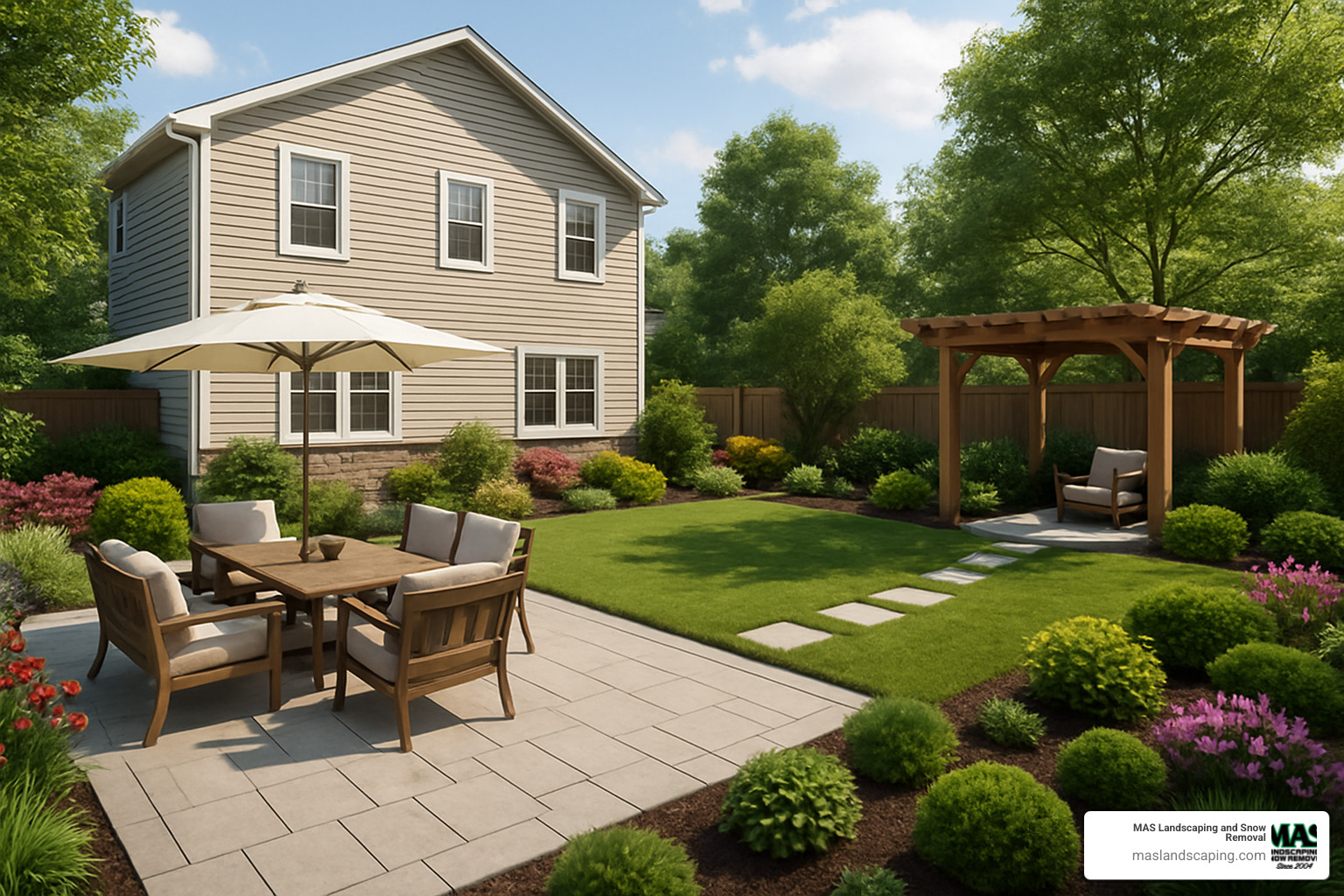
Your hardscape elements serve as the anchoring framework that makes your outdoor space truly usable. A well-designed patio of natural stone or concrete pavers creates an instant outdoor room for dining and relaxation. Decks, whether wood or low-maintenance composite, provide liftd living spaces that can overcome challenging terrain. Pergolas add architectural interest while offering that perfect dappled shade on hot summer days.
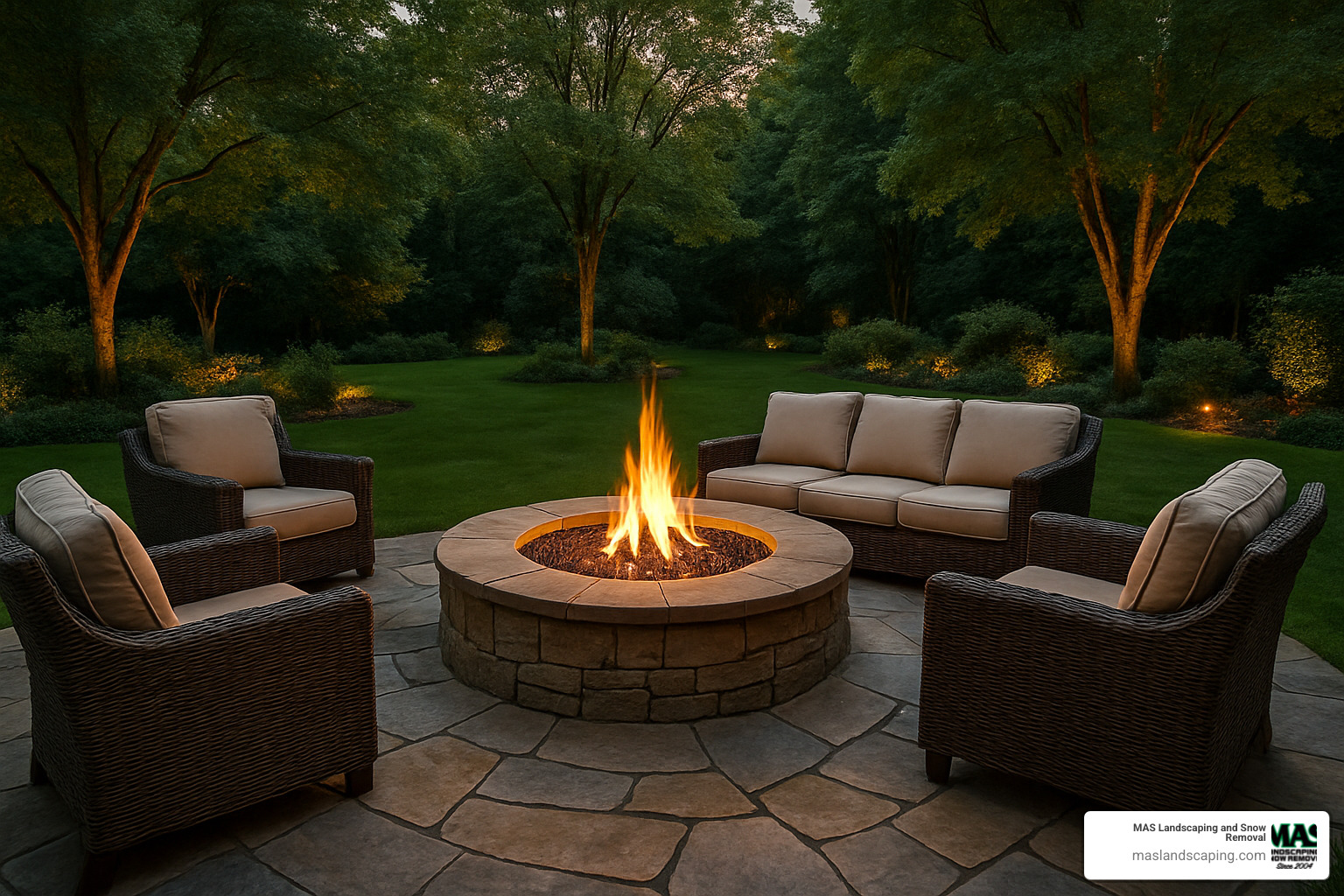
Walkways do more than just keep mud off your shoes—they guide movement through your landscape and connect different zones, inviting exploration. Water features add a sensory dimension with their soothing sounds, while fire features extend your outdoor enjoyment well into those cool New England evenings. If you’re curious about how a beautiful patio could transform your space, check out our More info about Backyard Patio Design.
Don’t overlook lighting in your back yard landscape design. Well-planned landscape lighting isn’t just about security—it transforms your yard into a magical evening retreat. Layer different types of lighting for the best effect: path lights guide safe movement, uplights on trees create dramatic shadows, and ambient string lights add a festive touch to dining areas.
For families, incorporating raised garden beds offers easier maintenance and clearly defined growing spaces. Dedicated play zones with safe surfaces ensure children have room to run and explore, while thoughtfully designed pet areas with durable materials keep four-legged family members happy too.
Softscape Strategies for Four-Season Color
Here in New England, creating a back yard landscape design with year-round interest requires some strategic planning. The goal is to have a succession of blooms from the first snowdrops of early spring through the asters of late fall, complemented by winter-interest plants that offer attractive bark, berries, or architectural structure when other plants are dormant.
Perennials form the backbone of many gardens, returning faithfully year after year with relatively little fuss. For our Massachusetts climate, consider hardy performers like vibrant Echinacea (coneflower), which provides summer color and winter seed heads that attract birds. Astilbe thrives in those shady corners with its feathery plumes, while Black-eyed Susans deliver weeks of cheerful yellow blooms in late summer. Ornamental grasses add movement during the growing season and stand tall through winter snows, adding structure when other plants have gone dormant.
Shrubs are the unsung heroes of the garden, providing structure and often multiple seasons of interest. Hydrangeas are particularly beloved in our service area, with varieties that bloom from mid-summer through fall in shades of blue, pink, white, or lime green. Winterberry holly, a native species, puts on a spectacular show with brilliant red berries that persist through winter snow, providing food for birds and bright spots of color in the winter landscape.
Native plants deserve special consideration in your garden plan. They’ve evolved to thrive in our local conditions, generally require less babysitting once established, and provide vital habitat for local wildlife. Massachusetts natives like the Eastern redbud with its early spring pink blooms, architectural switchgrass, and the pollinator-friendly New England aster offer beauty while supporting ecological health.
Creating a bloom calendar helps ensure you’ll have continuous color throughout the growing season. Map out when each plant in your design flowers and aim to have something blooming in each season—this thoughtful planning prevents those disappointing gaps when nothing seems to be happening in the garden.
Hardscape Heroes That Anchor Your Yard
The hardscape elements form the backbone of your back yard landscape design, providing structure, function, and year-round usability regardless of weather or season.
Pavers offer remarkable versatility and durability for patios and walkways. Available in concrete or natural stone, they come in countless shapes, sizes, and colors to complement any design style—from traditional to ultra-modern. Their modular nature allows for creative patterns and easy repairs if needed, which is especially valuable in our freeze-thaw New England climate. Learn more about changing your space with pavers at our More info about Backyard Paver Installation page.
Natural stone, while typically more expensive than manufactured materials, brings best character to a landscape. From bluestone patios to fieldstone walls, these elements age beautifully and connect your design to the natural geology of New England. There’s something profoundly satisfying about incorporating materials that might have been part of our local landscape for thousands of years.
For liftd spaces, composite decking has become increasingly popular due to its longevity and low maintenance requirements. Unlike wood decking, composite materials resist rot, splinters, and fading—particularly valuable in our region’s challenging weather conditions. “After 15 years of staining our wooden deck every other summer, switching to composite was life-changing,” one Saugus homeowner told us recently.
Retaining walls serve both practical and aesthetic purposes in your yard. They manage grade changes, create level spaces on sloped properties, and can double as seating when designed at the right height. In communities like Melrose and Malden, where many properties have significant grade changes, thoughtfully designed retaining walls transform challenging slopes into usable terraced spaces.
“The retaining wall we installed not only solved our erosion issues but created a beautiful backdrop for our perennial garden,” notes a client from Lynnfield whose sloped yard now features a series of planted terraces that turn a challenging site into a garden showcase.
Zoning Your Space Inside a back yard landscape design
The most successful back yard landscape design divides your outdoor area into functional zones that support different activities while maintaining visual cohesion—like rooms in a well-designed home.
A dining zone typically connects directly to the house, ideally near the kitchen for convenient food service. Consider the sun’s position during typical meal times—morning breakfast areas benefit from eastern exposure, while dinner spaces might need shade from intense western sun. “We relocated our dining area away from the western exposure,” shared one Chelsea client, “and now we can actually enjoy summer dinners without squinting into the setting sun.”
Relaxation zones might include a hammock tucked between trees, a conversation area around a fire pit, or a quiet reading nook with comfortable seating. These areas often benefit from some separation from more active spaces, creating a sense of retreat. Consider incorporating elements that engage multiple senses—the sound of rustling ornamental grasses, the fragrance of herbs or flowering shrubs, the visual beauty of colorful blooms.
Food growing areas require careful placement based on sun exposure—most edibles need at least 6 hours of direct sunlight daily. Raised beds make vegetable gardening more accessible and help define the growing zone within your overall design. Even small yards can incorporate edibles, whether in dedicated beds or mixed into ornamental plantings.
Storage considerations are often overlooked in landscape design. Incorporate spaces for garden tools, outdoor furniture cushions, toys, and other seasonal items. Attractive sheds, benches with storage, or dedicated cabinets can keep necessary items close at hand without creating visual clutter.
Circulation paths tie everything together, guiding movement through your landscape. “We used to have a straight path from the house to the garage, but adding a gently curved walkway with plantings along the edges transformed a utilitarian route into a pleasant garden stroll,” shares a homeowner from our service area. Well-designed paths invite exploration and connect different zones seamlessly, creating a cohesive overall design.
Style Inspiration & Sustainable Solutions
Your back yard landscape design should be a reflection of both your personal style and your home’s architectural character. When clients in Saugus and surrounding communities ask us about design styles, we often discuss these popular approaches:
The cottage garden style brings a charming, somewhat untamed beauty with its abundant mix of flowering perennials, herbs, and even ornamental vegetables. This romantic, seemingly casual approach (though it actually requires thoughtful planning!) harmonizes beautifully with the traditional New England architecture found throughout our service area. Many homeowners love how these gardens evolve and change throughout the seasons.
For those with more contemporary homes in Revere or Medford, modern landscape designs offer clean lines, bold geometric shapes, and a carefully curated plant selection. “I wanted my outdoor space to feel like an extension of my modern home,” one Medford client told us. “The structured plantings and simple palette create a sense of calm that contrasts with my busy life.”
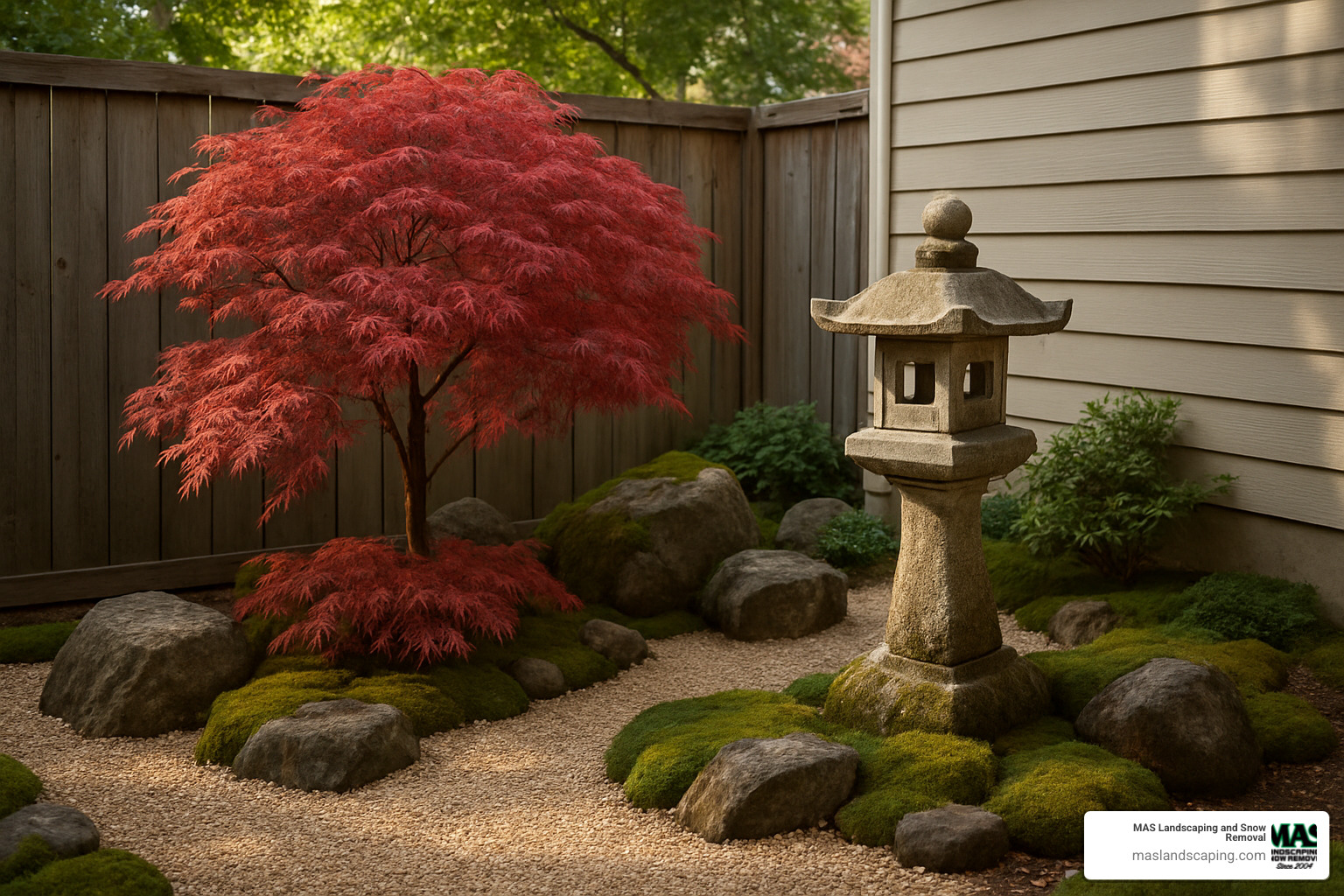
Japanese-inspired gardens focus on creating tranquility through simplicity and natural elements. Even dedicating just a small corner of your yard to a Japanese garden can provide a peaceful retreat for meditation or quiet contemplation. Think carefully placed stones, water features, and plants like Japanese maples that offer year-round interest.
The refined yet lush appearance of English gardens, with their blend of formal structure and abundant plantings, complements many colonial and Victorian homes in our older neighborhoods. These gardens often incorporate defined spaces with informal plantings that soften the edges.
Beyond just looking beautiful, today’s back yard landscape design increasingly incorporates sustainable solutions that benefit both homeowners and the environment. Consider these approaches:
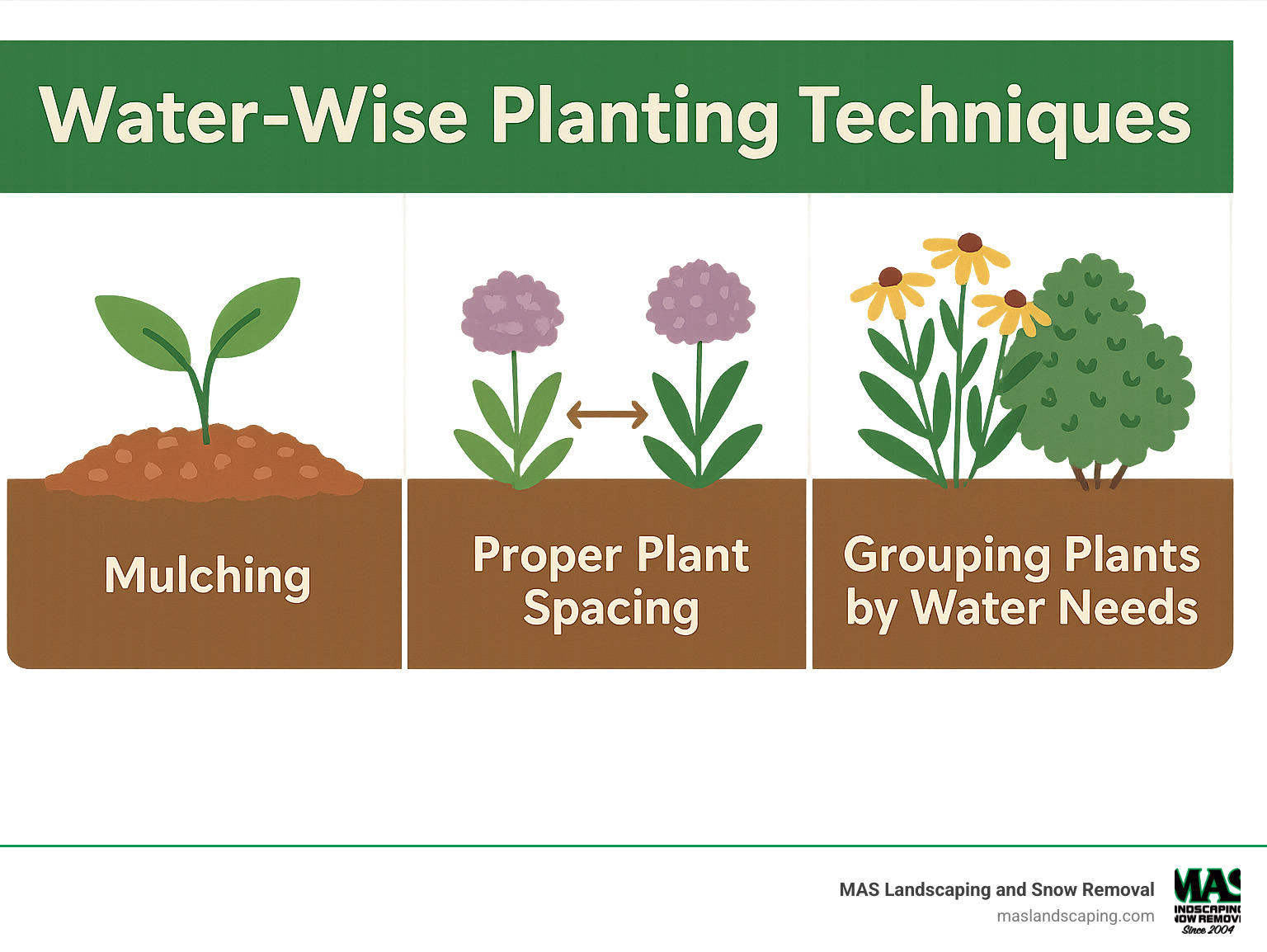
Xeriscaping might sound like something for desert climates, but its principles of using drought-tolerant plants grouped by water needs makes sense even in New England. During our increasingly common dry spells, these water-wise designs maintain their beauty while reducing irrigation needs and water bills.
Pollinator gardens have become incredibly popular among our clients who want to support declining bee and butterfly populations. “The change was amazing,” shared one Lynnfield homeowner. “Within weeks of planting native flowering species, our yard was alive with pollinators we’d never seen before.” These gardens bring movement, color, and ecological benefits to your landscape.
In urban areas like Chelsea and Everett where flooding can be an issue, permeable pavers allow rainwater to infiltrate through the surface rather than running off into already-burdened storm systems. These beautiful hardscape options come in various styles while helping recharge groundwater naturally.
Rain gardens capture runoff from roofs and hard surfaces, filtering it through specialized plantings before it enters the watershed. A Malden family recently incorporated a rain garden to address a persistently wet area of their yard, turning a problem spot into a beautiful feature that also provides ecological benefits.
Don’t forget about composting! An attractively designed composting station completes the sustainability circle by turning yard waste into valuable soil amendments. We’ve helped many clients integrate these stations discreetly into their overall back yard landscape design.
Small, Sloped, or Shady? Creative Fixes
Challenging sites actually present some of the most interesting opportunities for creative back yard landscape design. Here’s how we help transform common limitations into unique features:
For small backyards, think vertically. Trellises, wall planters, and hanging baskets bring greenery upward rather than outward. “Our tiny Malden yard felt twice as large once we added vertical elements and drew the eye upward,” one homeowner told us after we helped reimagine their compact space.
Curved pathways create a wonderful illusion of greater space by revealing the garden gradually rather than all at once. When you can’t see the entire yard from any one vantage point, the journey through the space becomes more interesting and the yard actually feels larger.
Sloped properties benefit tremendously from terracing, which creates level areas for planting and outdoor living. These “garden rooms” can each have their own distinct character while solving erosion issues. In Melrose, where many properties have significant grade changes, we’ve transformed challenging slopes into beautiful terraced gardens that offer multiple usable outdoor spaces.
For predominantly shady yards, we focus on plants with interesting foliage rather than flowers. Variegated leaves, contrasting textures, and plants with colorful stems create visual interest even without blooms. Native shade-tolerant plants like ferns, woodland phlox, and heuchera thrive in the dappled light under trees throughout Massachusetts and provide year-round structure.
Mirrored panels, strategically placed, can reflect light and views in darker corners, making shady spots feel brighter and small spaces appear larger. We always use this technique carefully to improve without creating disorienting effects.
For compact spaces, we recommend low-profile furniture with clean lines to maintain a sense of openness. Multi-functional pieces like storage benches or expandable tables maximize functionality without overwhelming the space.
Constraints often lead to the most creative and satisfying designs. As one client in Everett told us after we transformed their challenging north-facing, sloped yard: “What I once saw as problems are now my favorite features. The terraces give us so many different garden spaces, and the shade garden is beautiful even in the heat of summer.”
Budget, Tools, Maintenance & Mistakes to Avoid
Creating your dream back yard landscape design requires thoughtful budget planning. While the investment varies widely, landscape design services typically range from $500 for simple consultations to $15,000* for comprehensive outdoor living spaces with multiple features. This broad spectrum reflects just how personalized your backyard change can be.
Many homeowners are caught off guard by unexpected expenses that pop up during implementation. That’s why we always recommend building a 10-15% contingency into your budget. A client in Malden once told us, “I’m so glad you suggested that buffer—when we found those massive tree roots during excavation, I was prepared instead of panicked!”
Common budget surprises include poor soil requiring amendments, drainage issues finded during digging, stubborn tree roots, and the realization that an irrigation system would make life much easier. Being financially prepared for these possibilities keeps your project moving smoothly.
Working with a limited budget? Consider a phased approach. One of our Saugus families transformed their yard over three years—starting with the patio foundation, adding planting beds the following spring, and capping it off with a beautiful pergola and lighting system in year three. This approach not only spread the costs but allowed them to enjoy improvements along the way.
For DIY enthusiasts, tool rental can be a game-changer. Rather than purchasing expensive equipment you’ll use just once, renting specialized tools like sod cutters, augers, or compact excavators makes financial sense. Local rental centers throughout Everett, Lynnfield, and surrounding areas offer reasonable daily rates.
| Aspect | DIY Approach | Hiring a Professional |
|---|---|---|
| Cost | Lower initial expense | Higher upfront investment |
| Time | Requires personal time commitment | Faster completion |
| Expertise | Learning curve; potential mistakes | Experience and specialized knowledge |
| Equipment | Need to purchase or rent | Included in service |
| Warranty | None | Often included for workmanship |
| Design Sophistication | Limited by personal skill | Access to professional design expertise |
| Physical Effort | Significant personal labor | Minimal homeowner exertion |
Software & Online Tools to Visualize Before You Dig
Today’s technology offers remarkable ways to “see” your back yard landscape design before lifting a shovel. These visualization tools help prevent costly mistakes and disappointment.
User-friendly drag-and-drop applications like Planner 5D and iScape let you create detailed layouts using built-in libraries of plants, hardscape materials, and outdoor furniture. A skeptical homeowner from Medford later admitted, “Being able to see my backyard from different angles helped me realize my original plan would have blocked my favorite view of the sunset.”
The photorealistic rendering capabilities now available to homeowners are truly impressive. Many programs simulate seasonal changes and plant growth over time, helping you understand how your landscape will mature. This perspective is invaluable, as the difference between a newly installed garden and its appearance three years later can be dramatic.
Practical material calculators eliminate the guesswork when ordering supplies. Whether you need to determine cubic yards of soil for raised beds or the number of pavers for your new patio, these tools help prevent frustrating mid-project shortages or wasteful overages.
For those who prefer professional guidance with technological benefits, many landscape designers now offer virtual consultations and digital design services. At MAS Landscaping and Snow Removal, we can create digital mockups that allow you to virtually “walk through” your future backyard before breaking ground.
Maintenance Must-Dos for a Lasting back yard landscape design
Even the most stunning back yard landscape design requires consistent care to maintain its beauty and functionality over time. Think of maintenance not as a chore but as an investment protecting your outdoor living space.
Annual mulch renewal should be on every Massachusetts homeowner’s spring checklist. A fresh 2-3 inch layer not only gives your landscape a polished look but suppresses weeds, retains moisture, and gradually improves soil as it breaks down. In our challenging New England climate, mulch also provides critical root protection during those notorious freeze-thaw cycles.
Soil testing every 2-3 years helps identify nutrient deficiencies or pH imbalances before they cause visible plant stress. Local extension services offer affordable testing, and results come with specific amendment recommendations custom to your soil conditions. As one Revere client finded, “My hydrangeas never bloomed until a soil test revealed they needed more acidity—such a simple fix for years of frustration!”
Winter preparation is non-negotiable in our region. Late fall is the time to cut back perennials (leaving some seed heads for birds), wrap young trees to prevent bark damage, apply anti-desiccant spray to broadleaf evergreens, and properly disconnect and drain irrigation systems before freezing temperatures arrive.
Don’t forget about your lighting system! Periodic checks to replace bulbs, adjust fixtures that may have shifted during frost heave, and clean solar panels if you’re using solar-powered options will keep your nighttime landscape looking magical year-round.
As our team leader who has maintained properties in Everett and Lynnfield for over a decade observes, “The difference between a landscape that looks tired after three years and one that matures beautifully over a decade is simply consistent maintenance.”
Avoid These 5 Rookie Errors
When implementing your back yard landscape design, watching out for these common pitfalls can save you time, money, and disappointment:
Overplanting is perhaps the most frequent mistake we see. It’s tempting to fill spaces for immediate impact, but plants need room to reach their mature size. Our planting specialist often reminds clients, “That cute little shrub might be only two feet tall now, but in three years, it could reach six feet in height and width!” Always check mature sizes and space accordingly.
Ignoring drainage can undermine even the most beautiful design. Water issues lead to failing hardscapes, dying plants, and even structural damage to your home. Always grade away from buildings, install proper drainage under patios, and address wet areas with appropriate solutions before planting. A Malden homeowner learned this lesson the hard way: “We skipped the drainage recommendations to save money, only to spend twice as much fixing water damage the following spring.”
Clashing styles create visual discord rather than harmony. A cohesive design language—whether modern, traditional, cottage, or another style—creates a restful outdoor retreat. Limit your material palette and maintain consistent design elements throughout your space for a professional-looking result.
Wrong plant zones lead to unnecessary frustration and replacement costs. Massachusetts spans USDA hardiness zones 5-7, with microclimates within your yard varying significantly. That gorgeous plant that thrived in your friend’s southern-facing, protected city garden might struggle in your windy, northern exposure. Always select plants suited to your specific conditions.
Neglecting lighting is a missed opportunity to dramatically extend the enjoyment of your outdoor space. Even a modest lighting plan transforms how you experience your yard after sunset. A client in Revere admitted, “We originally skipped lighting to save money, but adding it a year later made such a difference that we wished we’d included it from the start.”
More info about Backyard Clean Up
*Average costs based on publicly available internet data; actual project pricing varies widely by scope, materials, and site conditions.
Frequently Asked Questions About Back Yard Landscape Design
How can I add privacy and shade quickly?
Creating privacy in your back yard landscape design doesn’t have to take years. Many homeowners in Saugus and surrounding areas ask us about quick solutions that don’t sacrifice style.
For immediate privacy, consider a strategic mix of structures and fast-growing plantings. Prefabricated fence panels can transform your yard’s privacy level in a single weekend project. If you’re looking for something less permanent, bamboo screens can attach to existing structures, creating instant visual barriers with a natural feel.
“We installed a pergola with a retractable canopy for our Chelsea clients,” shares our design team. “It provided immediate shade for their patio while the climbing vines we planted will eventually create a more natural, living canopy as they mature.”
Large container plants offer flexibility—position them exactly where you need screening and rearrange as needed. For longer-term but still relatively quick solutions, fast-growing shrubs like arborvitae can create substantial privacy screens within 2-3 growing seasons.
Don’t forget to think vertically! Shade sails have become increasingly popular throughout Everett and Melrose, offering immediate overhead protection from both sun and overlooking neighbors while adding a contemporary design element to your outdoor space.
For the most natural-looking privacy, we recommend layered plantings with various heights and textures rather than a single row of identical plants. This approach not only creates more interesting views from within your yard but also provides better habitat for local wildlife and brings multi-season interest to your landscape.
What are budget-friendly ideas that still look professional?
Creating a polished back yard landscape design on a budget is absolutely possible with some strategic choices. Many of our clients in Malden and Lynnfield are surprised by how far their landscape dollars can stretch with the right approach.
Start with excellent edge definition between your lawn and planting beds—those crisp, clean lines instantly signal a professional touch. A simple manual edger or even a flat-blade shovel can create this high-impact detail at minimal cost.
“Simplicity is often more neat than complexity,” explains our designer who specializes in budget-conscious projects. “A limited palette of plants repeated throughout the landscape creates a more cohesive, designed look than a collection of one-of-everything.”
Rather than filling your yard with many small plants, invest in a few larger specimen plants as focal points. This approach creates immediate impact while allowing you to gradually fill in with smaller plants as your budget permits.
Mulch is your budget’s best friend—it suppresses weeds (reducing maintenance), retains moisture (reducing watering needs), and creates a unified, finished look across planting beds. In our New England climate, it also provides crucial root protection during freeze-thaw cycles.
Consider incorporating large drifts of affordable perennials like daylilies, hostas, or native grasses. These workhorses of the garden provide substantial coverage at reasonable prices and multiply over time, giving you more plants for free.
Don’t overlook repurposed materials, which add character while reducing costs. Reclaimed brick, salvaged stone, and repurposed architectural elements bring history and interest to new landscapes throughout our service area.
Phased implementation is perhaps the smartest approach for budget-conscious homeowners. Start with a comprehensive master plan but install elements over time as funds allow. This methodical approach ensures a cohesive final result without the upfront financial pressure.
Is it worth hiring a designer for a small yard?
Small spaces often benefit most from professional back yard landscape design guidance. When every square foot counts, expert space planning becomes invaluable—sometimes even more so than for larger properties where there’s room for error.
“Our tiny Melrose backyard seemed impossible to work with,” shares a recent client. “But the designer saw possibilities we never imagined and created distinct zones that made our small space feel like it had room for everything we wanted.”
Professional designers bring several advantages to small yard projects that DIY approaches often miss. We understand the optical illusions that can make spaces feel larger—like diagonal pathways that draw the eye across the space or carefully placed mirrors that reflect light and views.
Knowledge of space-appropriate plants is particularly crucial in small yards. The wrong plant that outgrows its space can quickly dominate and require costly removal, while properly scaled varieties maintain harmony for years.
Space-efficient furniture and features—like built-in seating that doubles as storage or tables that expand only when needed—maximize functionality without creating visual clutter. These thoughtful details make small yards feel surprisingly spacious and usable.
At MAS Landscaping and Snow Removal, we’ve transformed countless compact backyards throughout Everett, Chelsea, and surrounding communities into jewel-box gardens that feel remarkably spacious and functional. Our designers understand that in small spaces, every decision carries more weight—which is precisely why professional guidance often provides the greatest return on investment for modest-sized properties.
For many homeowners, the investment in professional design pays for itself by preventing costly mistakes and revealing potential you might never have imagined in your limited outdoor space.
Conclusion
Creating your ideal back yard landscape design is more than just a project—it’s a journey that transforms not just your property, but how you experience daily life. When you step outside your back door, your redesigned space becomes a natural extension of your home where memories are made, stress melts away, and connections with family and nature deepen.
The beauty of landscape design is that it’s never truly “finished.” Like a living artwork, your backyard will continue to evolve, with plants maturing and spaces adapting to your changing needs over the years. This organic evolution is part of the joy of outdoor living—watching your vision grow more beautiful with each passing season.
Here in Massachusetts, our distinctive four-season climate presents both challenges and opportunities. The perfect backyard needs to shine during our glorious summers while offering interest during our snowy winters. At MAS Landscaping and Snow Removal, we’ve spent years developing solutions specifically custom to properties in Saugus, Everett, Lynnfield, Malden, and surrounding communities. We understand how to create outdoor spaces that not only look stunning but also function beautifully within our New England environment.
Our approach blends artistic vision with practical know-how. We believe that truly successful back yard landscape design must reflect your personal style while addressing the unique characteristics of your property. Whether you’re dreaming of a tranquil garden retreat, an entertainment hub for gathering friends, or a family-friendly space where children can play safely, we bring both creativity and technical expertise to your project.
From that first conversation where we explore your wishes, through the detailed design process, and into the careful installation phase, our team remains focused on translating your vision into reality. And our relationship doesn’t end when the last plant goes into the ground—we’re here to provide ongoing maintenance and support to ensure your landscape thrives for years to come.
Ready to transform your outdoor space? Let’s dig into your back yard landscape design dreams together—without breaking your back or your budget. Your personal paradise is closer than you think.
*Average costs based on publicly available internet data; actual project pricing varies widely by scope, materials, and site conditions.