


Concrete Landscape Blocks: Expert Tips 2025
Showing the Power of Concrete Landscape Blocks
Concrete landscape blocks offer a powerful and versatile solution for improving your outdoor living space. These robust materials are a cornerstone for changing ordinary yards into functional, beautiful landscapes.
For a quick overview:
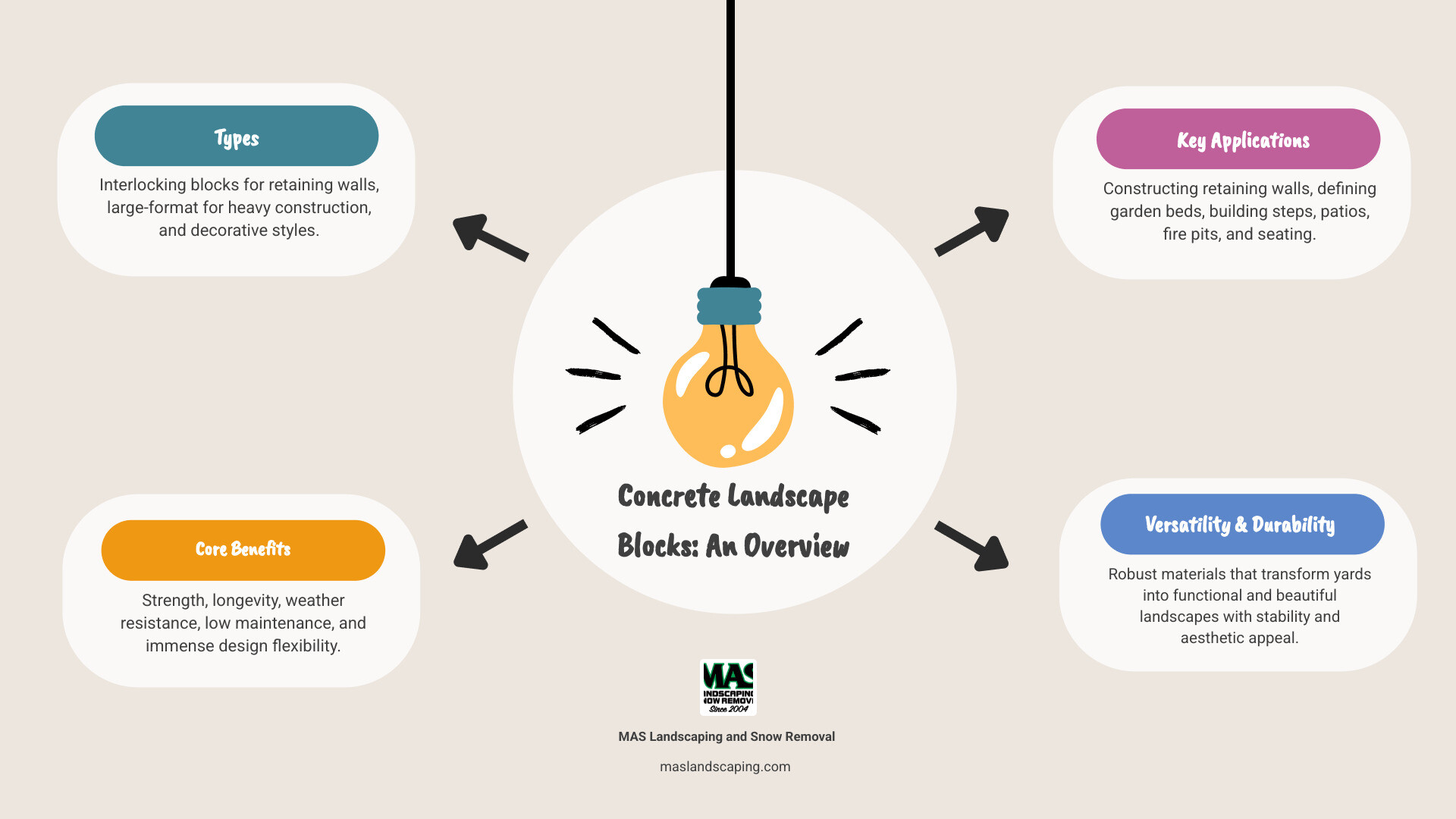
- Types: They come in various forms, including interlocking blocks for retaining walls, large-format blocks for heavy construction, and decorative blocks like breeze blocks.
- Benefits: These blocks offer strength, longevity, weather resistance, and require minimal maintenance. They also provide immense design flexibility.
- Applications: Common uses include constructing retaining walls, defining garden beds, building steps, creating patios, and forming outdoor features like fire pits and seating.
Whether tackling soil erosion, creating new garden spaces, or adding stylish features, concrete blocks provide the needed stability and aesthetic appeal.
Concrete landscape blocks further reading:
Why Choose Concrete Blocks for Your Landscape?
Concrete landscape blocks deserve serious consideration for your outdoor space. They’re no longer just grey rectangles; they are a professional’s secret weapon for creating stunning, long-lasting features that improve property value.
You want something that looks great, works hard, and requires little attention. Concrete landscape blocks deliver just that. They are incredibly durable, standing strong against New England weather—rain, snow, ice, and summer heat.
Unlike wood, which rots or warps, concrete blocks maintain their strength and appearance for years. This means low maintenance for you. Once installed, you can enjoy your space instead of constantly making repairs.
From a budget perspective, concrete landscape blocks are remarkably cost-effective. The upfront investment is offset by their longevity and low maintenance, saving money long-term. Plus, well-designed hardscaping boosts your property value, making it an investment that pays you back.
The design versatility is surprising. From cottage gardens to modern entertainment areas, there are blocks to fit any style. We use them in Hardscape Retaining Wall projects for their excellent erosion control, which protects your landscape investment.
The Strength and Longevity Factor
Concrete landscape blocks are built to last, easily withstanding harsh Massachusetts winters. They completely resist rot, unlike wood, and handle challenging freeze-thaw cycles without cracking or shifting.
As a result, concrete landscape blocks consistently outlast wood and other materials by years, even decades. Minimal upkeep is required—just occasional cleaning. No staining, replacing boards, or pest treatments are necessary.
This incredible durability makes them perfect for important structural features like a Decorative Retaining Wall, where you need both beauty and reliability for the long haul.
Aesthetic Versatility and Design
Concrete landscape blocks are more stylish than ever. Today’s blocks come in a variety of colors to complement any home, from natural earth tones to bold statement colors.
The different textures are also impressive. Many blocks mimic natural stone with realistic surfaces, while others offer smooth finishes for modern homes or weathered textures for a rustic feel.
Multiple shapes and sizes offer endless design possibilities. Small blocks are great for edging, while larger ones are for retaining walls. Interlocking systems allow for curves, angles, or tiered designs. We can combine colors and textures to create modern geometric patterns or natural-looking walls. The flexibility means your landscape can truly reflect your personal style.
Check out our Garden Wall Designs to see how creative you can get with these versatile building blocks.
A Guide to the Different Types of Concrete Landscape Blocks
Choosing the right materials is key to creating an amazing outdoor space. There’s a specific type of concrete landscape block for every job and look, and understanding the options helps you pick the perfect one for your project.
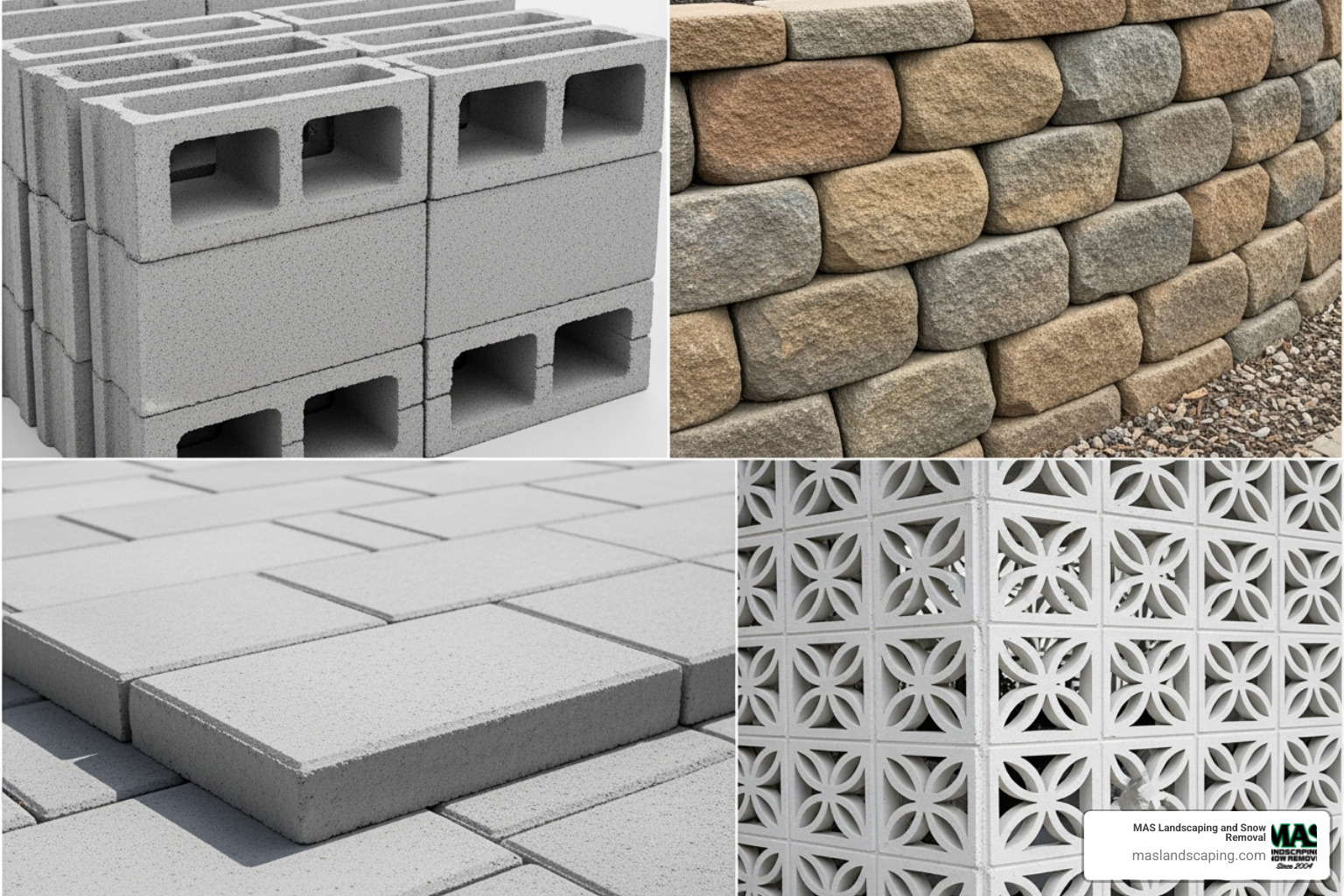
Most concrete landscape blocks are modular systems, fitting together like giant building blocks. This simplifies installation and allows for design flexibility. Many have clever interlocking features like pins, lips, or V-shapes that connect blocks securely without mortar, relying on weight and friction for stability.
You’ll find blocks that are either solid or hollow core. Hollow blocks are lighter and can be filled with gravel for stability or soil for planting. Solid blocks are heavier but offer maximum strength. Many manufacturers now use recycled materials like concrete and clay bricks, which helps reduce waste.
Interlocking Retaining Wall Blocks
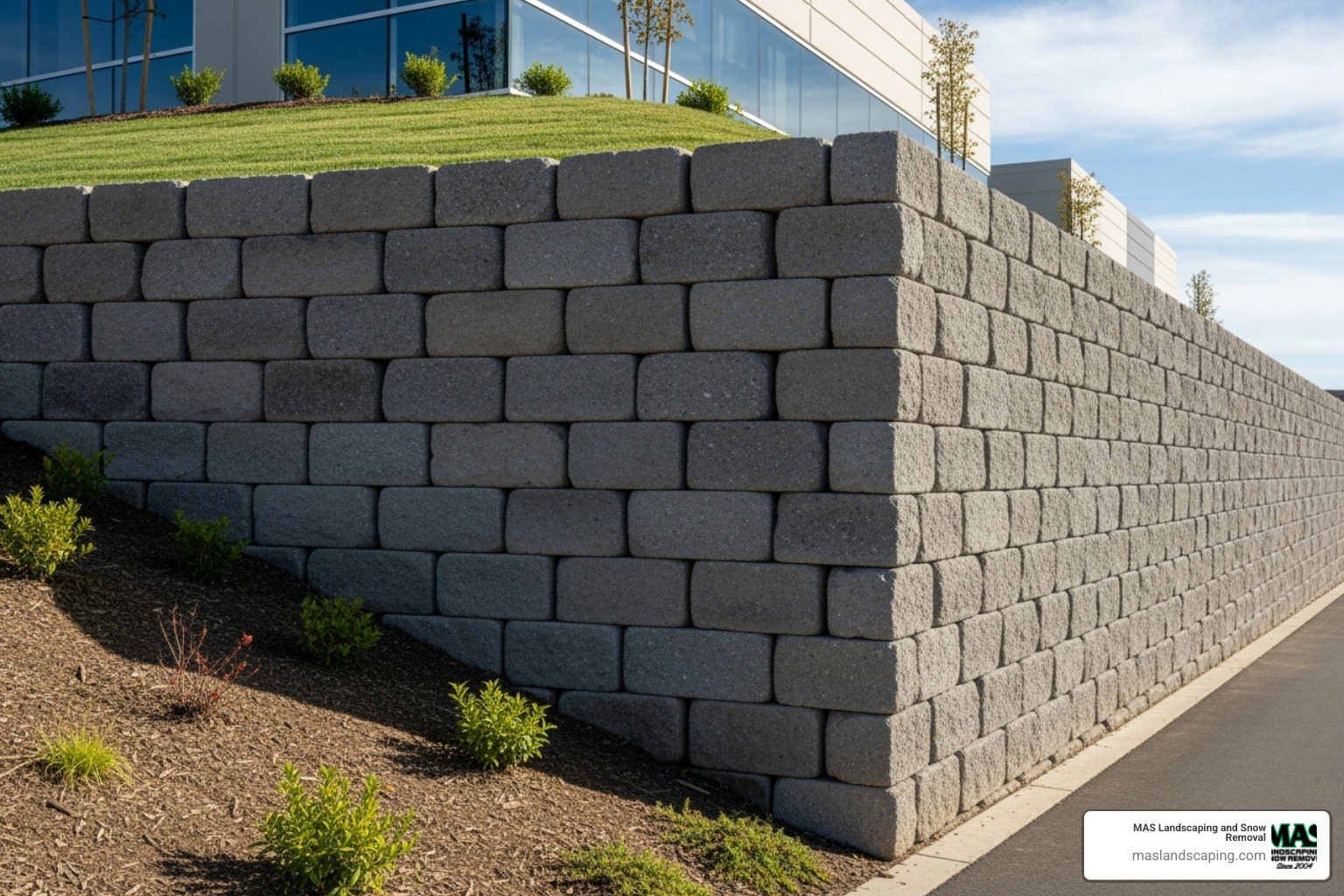
These are popular for homes and smaller commercial projects. Interlocking retaining wall blocks build strong, stable walls to hold back soil and stop erosion on sloped land.
Their main advantage is easy, mortar-free installation. They are often gravity walls, where the blocks’ weight provides stability. Some use pinned systems or rear-lip locators that automatically set the block angle, making stacking simple and strong.
These systems are fantastic for creating terraces, leveling planting areas, or stabilizing a hillside. When we need a beautiful yet strong Retaining Wall Stone, these interlocking blocks are often our first choice.
Standard & Large-Format Blocks
For robust projects needing serious strength, there are standard and large-format blocks, also known as “monster blocks.” Large-format blocks are massive pre-cast concrete units, often weighing thousands of pounds (e.g., a 2’x2’x4′ block can be 2,000 lbs). They use V-interlocks or large knobs to stack securely without mortar.
These powerful blocks are perfect for heavy-duty applications like material containment bins, huge retaining walls, or security barriers. Their size makes them excellent for flood control walls or providing support near railroad tracks.
Installing these big blocks usually needs heavy machinery, but they bring speed and incredible strength to large projects. For jobs that demand serious structural power, like Bulk Retaining Wall Blocks, these large-format units are essential.
Key Factors in Choosing Concrete Landscape Blocks
Picking the right concrete landscape blocks means matching them to your project’s needs and style. Here are the main things to consider:
- Project Scale: Are you building a small garden border or a massive retaining wall? The block size and type must match the project’s scope.
- Color Palette: Match your home’s exterior and landscape. Do you want blocks to blend in or be a statement?
- Desired Texture: Choose between rustic, stone-like finishes or clean, modern surfaces.
- Load-Bearing Needs: For retaining walls, ensure blocks can handle soil pressure. This is less critical for decorative borders.
- Interlocking Features: Consider the system (pins, rear-lip, V-interlock) for ease of installation and stability.
- DIY-friendliness vs. Professional Installation: Some systems are DIY-friendly, but larger walls need professional expertise. We at MAS Landscaping are always here to help with projects of any size, ensuring a beautiful and long-lasting result for your Garden Wall Construction.
Creative Applications: From Retaining Walls to Garden Features
Beyond their strength, the true power of concrete landscape blocks is their versatility. They are a blank canvas for creating something special in your yard.
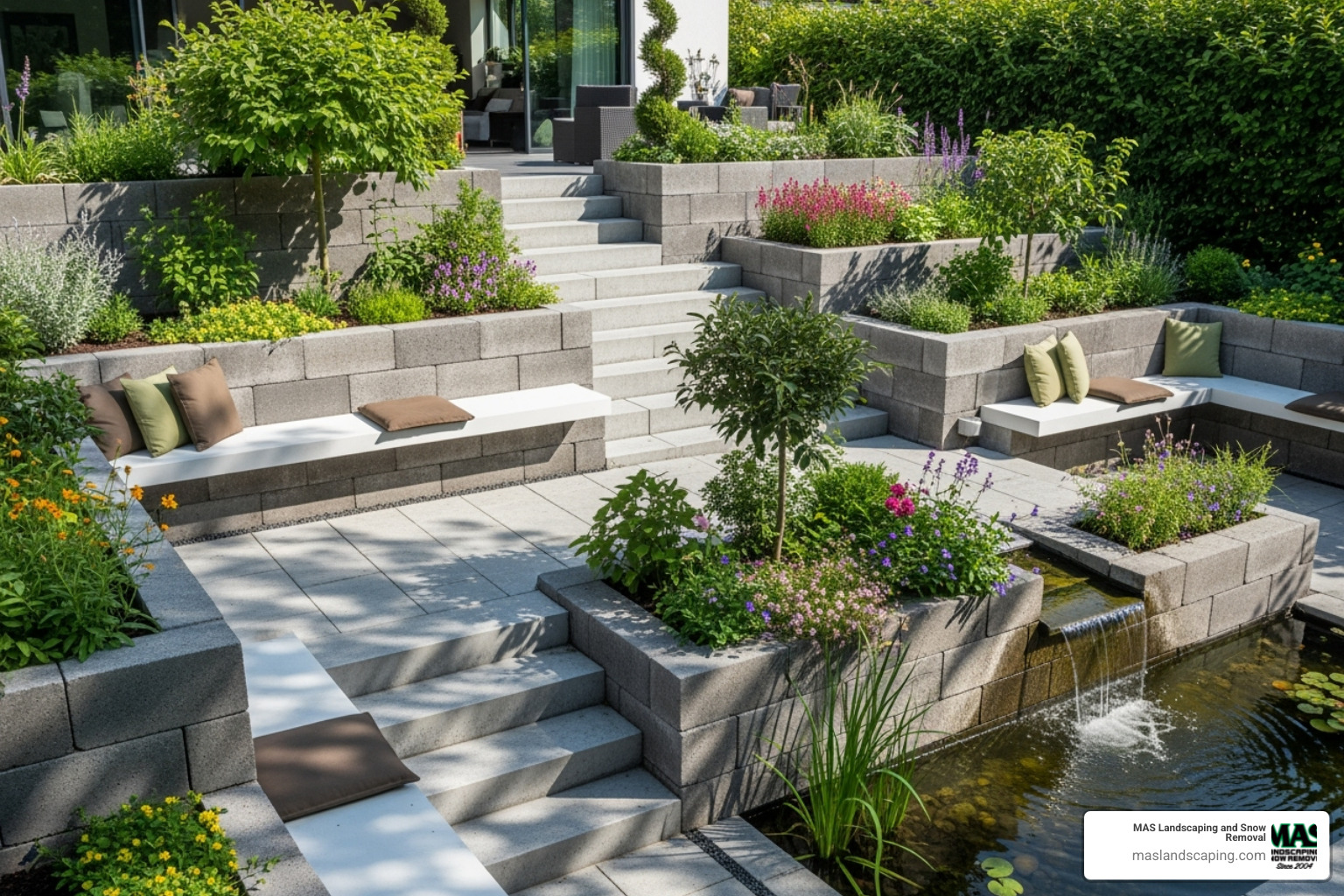
These blocks are tools for crafting “functional art.” They can tame a tricky slope or add flair to a flat area, providing structural support for outdoor living spaces like patios, kitchens, and fire pits. Combining their strength with creativity offers endless change possibilities.
Functional Retaining and Garden Walls
One of the most important jobs for concrete landscape blocks is building strong retaining walls, which are essential for managing sloped land.
Turn a steep hill into stunning terraced gardens. These blocks create beautiful, multi-level planting areas that make gardening on a slope much easier.
Retaining walls are essential for preventing soil erosion, stopping topsoil from washing away. They are also perfect for creating level areas on sloped land, providing flat spots for patios, play areas, or outdoor dining. They also help with slope stabilization, keeping hillsides safe. For a grand Paver Patio with Retaining Wall or neat steps, concrete landscape blocks provide the necessary structural strength. They are the solid backbone behind many successful landscape changes, and we often use them for our Block Walls for Landscaping projects for clients in Everett, Lynnfield, and Malden.
Decorative Features and Edging
Beyond retaining walls, concrete landscape blocks add charming and useful touches throughout your yard.
You can build lovely raised garden beds for better drainage and easier gardening, or a cozy fire pit for cool Massachusetts evenings. Low walls can become built-in seating around a patio, offering permanent, low-maintenance places to relax. They’re also perfect for neat tree rings or crisp walkway edging.
You can also stack blocks to create columns and pillars for outdoor lighting, form a sturdy base for an outdoor kitchen island, or frame water features like small ponds. Decorative breeze blocks are making a comeback, creating stylish privacy screens or artistic backdrops that allow light and air to flow through.
The wide range of styles means concrete landscape blocks can either blend in with your home’s look or become a beautiful focal point. They’re a fantastic choice for neat Landscape Paver Walls and other accents that will make your outdoor space shine.
Installation and Cost Considerations
Starting a project with concrete landscape blocks is exciting, but it’s wise to consider the installation and cost. While small projects can be DIY, larger structures benefit from professional expertise. The goal is to balance your budget with the long-term value these durable materials provide.
To help you see why concrete landscape blocks are such a smart choice, let’s briefly compare them to some other popular landscaping materials you might be considering.
| Feature | Concrete Landscape Blocks | Natural Stone | Wood (Treated Lumber, Timbers) |
|---|---|---|---|
| Cost (Material) | Generally mid-range, very cost-effective long-term. | High, highly variable based on stone type. | Low to mid-range. |
| Durability | Excellent; weather, rot, pest, freeze-thaw resistant. | Excellent; very long-lasting, natural weathering. | Good initially, but prone to rot, warp, pests over time. |
| Installation | Moderate; modular, interlocking systems simplify. | High; irregular shapes, heavy, often requires mortar. | Moderate; cutting, fastening, can be labor-intensive. |
| Maintenance | Low; occasional cleaning, inspection. | Low to moderate; occasional cleaning, potential mortar re-pointing. | Moderate to high; sealing, staining, pest control, replacement. |
| Aesthetic | Highly versatile; mimics stone, brick, wood; modern finishes. | Unique, classic, organic; variations in color/texture. | Rustic, warm; limited design flexibility; fades over time. |
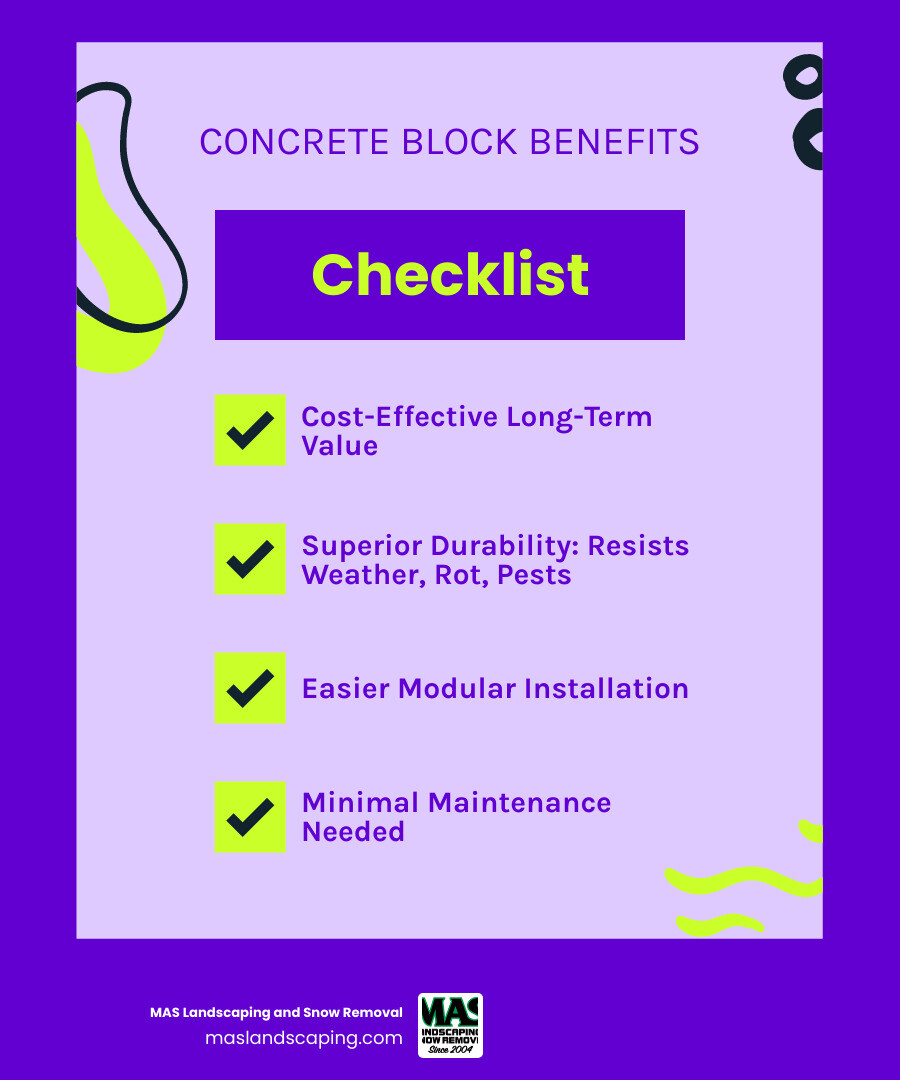
As you can see, concrete landscape blocks often hit that sweet spot for homeowners in and around Everett, Lynnfield, and Malden. They offer a fantastic blend of durability, a wide range of aesthetic options, and manageable installation, all wrapped up in a material that provides great long-term value.
The Installation Process Explained
While concrete landscape blocks are user-friendly, proper installation is key to ensuring a stable, long-lasting, and beautiful project. A sturdy structure always starts with careful preparation.
Here’s a simplified look at the process:
- Excavation: A trench is dug for the wall’s base. Its depth and width depend on the wall’s size, and in Massachusetts, it must extend below the frost line to prevent shifting from freeze-thaw cycles. A perfectly level trench is crucial.
- Gravel Base: The trench is filled with a layer of compacted gravel. This provides drainage to prevent water buildup and creates a stable, level foundation for the blocks.
- Leveling the First Course: This is the most critical step. The first row of blocks is laid on the gravel base and must be perfectly level. Any error here will be magnified in subsequent rows, leading to an unstable wall.
- Stacking and Alignment: Subsequent rows are stacked in a staggered pattern for strength. The blocks’ interlocking features ensure proper alignment. For taller walls, geogrid fabric may be added behind the wall to reinforce the soil and add stability.
- Backfilling: The area behind the wall is filled with drainage gravel and then compacted soil as it’s built. This prevents water pressure buildup and ensures proper runoff.
While smaller projects can be a rewarding DIY experience, professional installation is best for larger retaining walls over a few feet high. Our team at MAS Landscaping has the experience and tools to ensure your How to Build a Landscaping Wall with Blocks project is built to last. A common question is whether it’s necessary to level the ground first. As this Quora discussion highlights, the answer is yes. A level base is non-negotiable for stability and longevity.
Understanding the Cost of Concrete Landscape Blocks
When budgeting, the cost of concrete landscape blocks is a key factor. Pricing varies based on the block’s size, style, texture, color, and quantity.
Please keep in mind: the cost information we’re sharing here is based on average estimates from general internet data and does not represent the actual costs for MAS Landscaping. For a precise quote custom to your specific project needs in Everett, Lynnfield, Malden, or any of our other service areas, please don’t hesitate to reach out to us directly!
Generally, you’ll find pricing for concrete landscape blocks presented in a few ways:
- Price per block: Common for smaller quantities or specific block types.
- Price per square foot (of wall face): Often used for larger projects for a clearer material cost.
- Price per pallet: Buying in bulk often reduces the cost per block.
The cost per block varies widely. A basic, small unit is less expensive than a large-format or decorative block. Special pieces like caps or corner blocks also have different price points.
Beyond material cost, remember to factor in:
- DIY vs. Professional Installation Costs: DIY saves on labor but requires budgeting for tool rentals, delivery, and your time. Professional installation is a significant cost but ensures proper execution and structural integrity.
- Delivery Fees: These can be significant due to the weight of the blocks.
- Base Materials: Budget for gravel and other foundation materials.
- Accessories: Factor in costs for geogrid, drainage pipes, or capstones.
While concrete landscape blocks are often more budget-friendly than natural stone, professional installation ensures durability and helps avoid costly mistakes. For a clearer picture of what a project might entail, especially when considering a Paver Retaining Wall Cost, we’re here to provide a detailed, personalized estimate.
Conclusion
Concrete landscape blocks are the unsung heroes of outdoor changes. Offering an unbeatable combination of strength and beauty, they are a top choice for any landscaping project. They provide a sturdy foundation for your backyard oasis, ready to tackle slopes, define garden beds, and create inviting spaces.
With incredible durability and a vast array of colors, textures, and shapes, these blocks offer endless design possibilities. They create stunning, low-maintenance landscapes built to last. Whether you’re fighting erosion, dreaming of a terraced garden, or adding elegance, concrete landscape blocks are a reliable and beautiful solution.
At MAS Landscaping, we pride ourselves on professionalism, personalized service, and deep local expertise. We help clients in Everett, Lynnfield, Malden, Melrose, Medford, Revere, Saugus, Chelsea, and surrounding areas create functional and gorgeous outdoor spaces. We understand concrete landscape blocks and know how to open up their potential to match your vision.
If you’re ready to turn your yard into that outdoor haven you’ve always imagined, we’d be thrilled to chat. Let’s connect and discuss how concrete landscape blocks can become the cornerstone of your next incredible landscape project. Don’t wait! Get a project estimate today, and let us bring your vision to life with our expert Retaining Wall Installation and comprehensive hardscaping services. We’re truly here to help you throw the best block party your landscape has ever seen!