

Cost of Turf Per Square Metre: Top 10 Shocking Truths
When considering the cost of turf per square metre, several factors come into play that can significantly influence your investment. Understanding these elements is crucial for homeowners and business owners in the Greater Boston area who seek a harmonious blend of aesthetics and functionality in their outdoor spaces.
- Variable Costs: The price you pay for turf will vary based on the type of turf material, installation complexity, and any additional features you might require.
- Location-Specific Factors: Regional considerations, such as climate and local demand, can also impact the overall expense.
- Project Size and Labor: The scale of your project and whether you opt for professional installation or a DIY approach dictate labor costs and potential discounts.
The significance of installing high-quality turf goes beyond mere appearance. It lifts the property’s curb appeal, creates an inviting outdoor environment, and can even increase property value. Choosing the right turf can transform an underused space into a lush and functional area that withstands weather changes and extensive use.
Basic cost of turf per square metre vocab:
– artificial turf installation cost per square foot
– synthetic grass price per square foot
– outdoor turf cost
Factors Influencing Turf Costs Per Square Metre
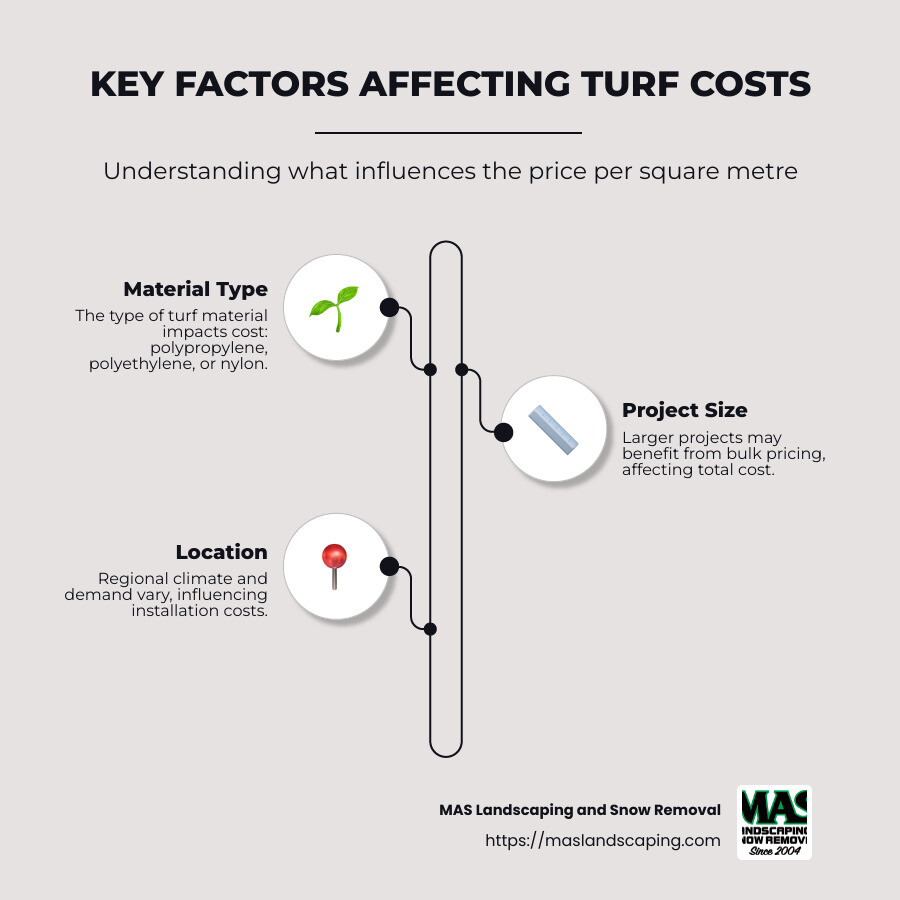
When it comes to the cost of turf per square metre, several key factors can greatly affect your overall investment. These factors include the type of material, project size, additional features, location, and labor costs. Let’s break these down:
Material Types
The type of turf material you choose is one of the most significant factors in determining cost. There are three main types:
- Polypropylene: This is often the most affordable option but less durable. It is ideal for indoor or shady areas with minimal foot traffic.
- Polyethylene: A mid-range option that offers a soft touch and natural look. It is more durable than polypropylene and suitable for areas with moderate foot traffic.
- Nylon: The premium choice, known for its high durability and realistic appearance. It’s perfect for high-traffic areas like sports fields.
Project Size
The size of your project can influence costs through bulk pricing. Larger projects may benefit from discounts, while smaller projects might not. However, smaller projects can be more manageable and might not require as much labor or materials.
Additional Features
Improvements can also impact the cost:
- Infill: Helps support the turf blades and improve drainage.
- Drainage Systems: Essential for preventing water accumulation.
- Blade Shape: Different shapes can affect the feel and look.
- Shock Pads: Provide extra cushioning, ideal for play areas.
- UV Protection: Extends the life of the turf in sunny areas.
- Edging and Weed Barriers: Helps maintain a clean, defined look and prevents weed growth.
Location
Where you live can affect the cost of turf. In the Northeast U.S., for example, regional cost variations and local demand can impact prices. Accessibility to your site and the complexity of the area (like slopes or irregular shapes) can also increase costs.
Labor Costs
Labor costs are another important consideration:
- Professional Installation: Offers expertise and often includes a warranty, but comes at a higher cost.
- DIY Installation: More affordable and can save you between $1,000 to $3,250. However, it requires time and effort.
- Warranty Coverage: Some companies offer warranties that can protect your investment over time.
Understanding these factors will help you make informed decisions about your turf installation, ensuring you get the best value for your money. Whether you’re looking for a budget-friendly option or a high-end solution, knowing what influences the cost of turf per square metre is key to planning your project effectively.
Cost Breakdown by Turf Type
When considering the cost of turf per square metre, it’s crucial to understand how different materials can impact both the price and performance of your artificial grass. Let’s explore the three main types: polypropylene, polyethylene, and nylon.
Polypropylene Turf
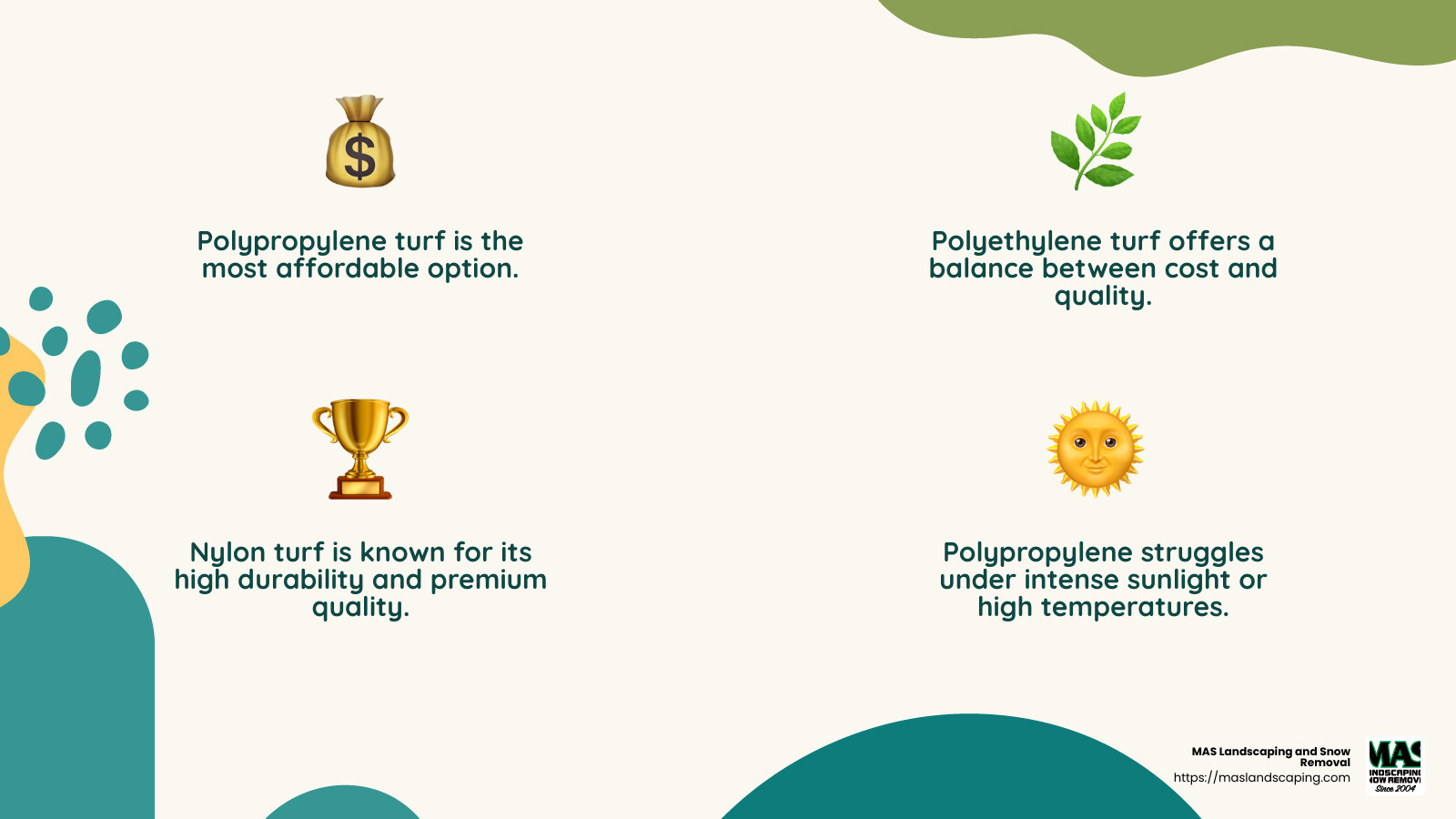
Polypropylene is often the go-to choice for those on a budget. It’s the most affordable option, making it ideal for projects where cost savings are a priority. However, affordability comes with trade-offs. Polypropylene turf is less durable compared to other types, which means it’s best suited for indoor or shaded areas with minimal foot traffic. Its soft texture is pleasant to the touch, but it can struggle under intense sunlight or high temperatures, as noted in regions like Texas.
Polyethylene Turf
Polyethylene offers a middle ground between cost and quality. It’s a cost-effective choice that balances affordability with moderate durability. This type of turf provides a soft, natural look, making it suitable for a variety of applications, including playgrounds and putting greens. It’s more resilient than polypropylene, capable of withstanding moderate foot traffic and weather conditions, making it a popular option for homeowners looking to improve their outdoor spaces without breaking the bank.
Nylon Turf
For those seeking the best in durability and appearance, nylon turf is the premium choice. Known for its high durability, nylon can handle heavy use and extreme weather conditions, making it perfect for high-traffic areas like sports fields. While it comes with a higher price tag, its premium quality ensures a long-lasting and realistic appearance that closely mimics natural grass. If longevity and aesthetics are top priorities, nylon turf provides an best outdoor experience.
Choosing the right type of turf depends on your specific needs and budget. By understanding the characteristics and best uses of each material, you can make an informed decision that ensures your investment in artificial grass is both practical and satisfying.
Cost of Turf Per Square Metre in Different Regions
When it comes to the cost of turf per square metre, the region you live in plays a significant role. Costs can vary widely across the United States due to differences in climate, cost of living, and local demand. Let’s break down how these factors affect turf costs in various regions.
Northeast U.S.
In areas like New York and Boston, the cost of living is relatively high, which often translates to higher turf prices. The demand for artificial turf in these urban areas is driven by the need for low-maintenance solutions in smaller spaces. However, the harsh winters require turf with freeze-resistant backing, adding to the cost.
Southeast U.S.
Cities like Atlanta and Knoxville experience milder winters and hot, humid summers. Here, the demand for UV-resistant turf is high to withstand the strong sunlight. The cost of living is generally lower than in the Northeast, which can make turf installations slightly more affordable. However, the need for specialized features like drainage systems for heavy rainfall can influence prices.
Midwest U.S.
In the Midwest, including Chicago and South Bend, the cost of turf is impacted by the region’s extreme weather fluctuations. The harsh winters and hot summers require durable turf that can handle both freezing temperatures and intense sunlight. The local demand for turf is moderate, driven by homeowners seeking low-maintenance alternatives to natural grass.
Northwest U.S.
Seattle and Beaverton are known for their wet climates. Turf installations in this region often include improved drainage systems to manage the frequent rainfall, which can increase costs. The demand for turf is growing as residents look for sustainable landscaping options that require less water.
Southwest U.S.
In San Diego and Gilbert, the dry, sunny climate creates a high demand for drought-resistant turf solutions. The cost of living in these areas is relatively high, which can affect turf prices. However, the long-term savings on water bills make artificial turf an attractive option for many homeowners. The need for UV protection to prevent fading in the strong sun is also a common requirement.
In each of these regions, local demand and specific climate challenges shape the cost of turf per square metre. Whether it’s dealing with harsh winters or intense sunlight, choosing the right turf for your area can ensure both a beautiful and practical outdoor space.
Additional Costs to Consider
When planning for artificial turf installation, it’s crucial to think about the additional costs that may arise. These can significantly affect your budget and the overall success of your project. Let’s explore the details of grass removal, landscape edging, and maintenance equipment.
Grass Removal
Before laying down artificial turf, removing existing grass is a must. This step ensures a smooth and clean base, preventing weed growth and enhancing the longevity of your new turf.
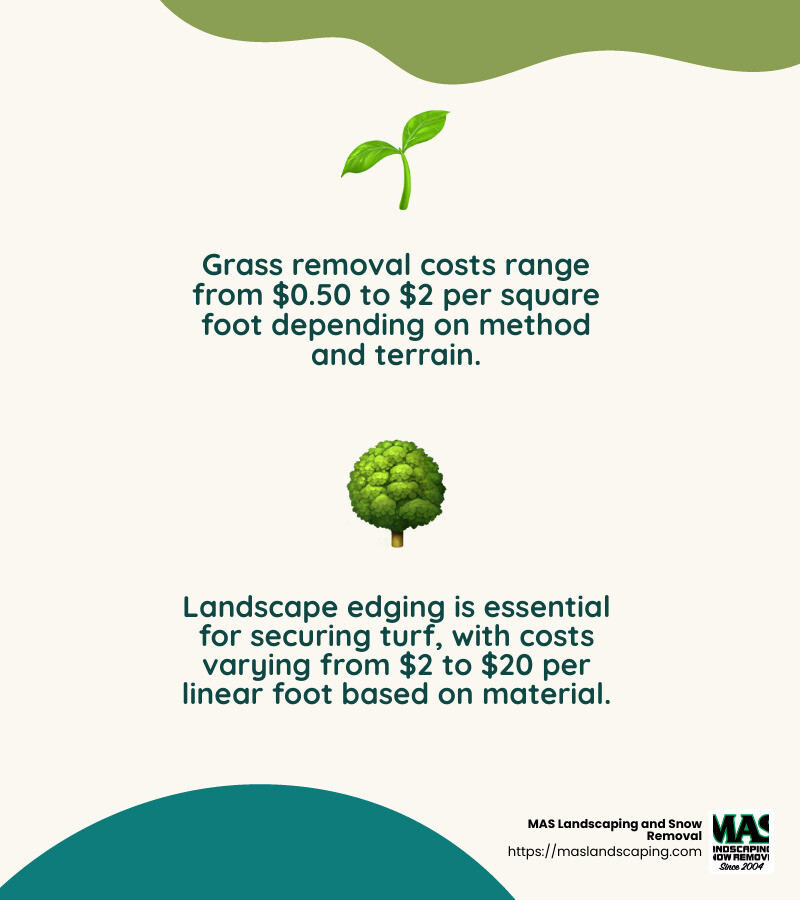
The cost for grass removal can vary widely, typically ranging from $0.50 to $2 per square foot. Factors that influence this cost include the size of your area, the method used (manual removal, sod cutter, or herbicide), and the complexity of the terrain. Larger lawns or those with challenging landscapes may require professional help, which can add to the expense.
Landscape Edging
Landscape edging is essential for defining the boundaries of your turf and securing it in place. It also provides a polished, clean look to your lawn. The cost of edging depends on the material and design complexity.
- Plastic edging: $2 to $10 per linear foot
- Metal edging: $5 to $20 per linear foot
The choice between plastic and metal often depends on your aesthetic preference and budget. While plastic is more affordable, metal offers more durability and a sleek finish.
Maintenance Equipment
Once your turf is installed, keeping it in top condition requires the right tools. Maintenance equipment like rakes, brushes, blowers, and vacuums are essential for grooming your turf.
- Rakes and brushes help keep the turf blades upright and prevent matting.
- Blowers are useful for removing debris without disturbing the infill.
- Vacuums can be used for more thorough cleaning, though care must be taken not to suck up the infill sand.
Investing in these tools might involve significant upfront costs, but they are crucial for maintaining the aesthetic and functional quality of your artificial lawn.
By considering these additional costs, you can better plan your budget and ensure a successful turf installation. Proper preparation and maintenance will not only improve the look of your lawn but also prolong its lifespan, offering long-term savings.
Next, we’ll address some frequently asked questions about turf costs per square metre, providing more insights into installation and maintenance.
Frequently Asked Questions about Turf Costs Per Square Metre
How much does it cost to install 400 square feet of turf?
Installing 400 square feet of artificial turf can seem like a daunting task, but understanding the costs involved can make it easier to plan. On average, the cost per square foot for artificial turf ranges from $6 to $18, depending on the material and installation specifics. This means for 400 square feet, you could be looking at a total cost anywhere from $2,400 to $7,200.
Factors that influence this cost include the type of turf, the complexity of the installation, and whether you opt for professional installation or decide to tackle it as a DIY project.
Is it cheaper to lay turf or artificial grass?
When comparing the costs of laying natural turf versus artificial grass, it’s important to consider both the initial and long-term expenses. While natural turf has a lower upfront cost, usually ranging from $0.90 to $2 per square foot, it requires ongoing maintenance. This includes watering, mowing, fertilizing, and pest control, which can add up to $1,000 or more annually.
On the other hand, artificial grass has a higher initial cost but offers significant long-term savings. With minimal maintenance requirements, such as occasional brushing and infill replenishment, artificial turf can pay for itself in three to five years. Over a 15-year period, you could save thousands of dollars on maintenance costs, making it a cost-effective choice in the long run.
How much does it cost to maintain artificial grass?
Maintaining artificial grass is relatively simple and cost-effective compared to natural lawns. Annual maintenance primarily involves brushing the turf to keep the blades upright and replenishing the infill to ensure proper drainage and stability.
- Brushing: Regularly brushing the turf helps maintain its appearance and prevents matting. This can be done with a stiff broom or a specialized turf brush.
- Minimal Watering: While artificial grass doesn’t need watering for growth, an occasional rinse can help remove dust and debris, keeping it clean and fresh.
- Infill Replenishment: Over time, the infill material may settle or be displaced, requiring periodic topping up to maintain the turf’s performance.
Overall, the annual cost of maintaining artificial grass is significantly lower than that of a natural lawn, making it a smart investment for those looking to save on water and maintenance expenses.
Conclusion
As we wrap up our discussion on the cost of turf per square metre, it’s clear that investing in artificial turf is a decision that offers both immediate and long-term benefits. While the initial installation costs might seem high, the savings on maintenance and water usage over the years make artificial grass a cost-effective and sustainable choice.
Choosing the right type of turf—be it polypropylene, polyethylene, or nylon—depends on your specific needs and budget. Each option has its advantages, from affordability and moderate durability to premium quality and high resilience. Understanding these differences helps you make an informed decision that aligns with your goals and financial plans.
Long-term Investment Benefits
Artificial turf is not just a purchase; it’s a long-term investment in your property’s beauty and functionality. With a lifespan that can extend beyond 15 years and minimal maintenance requirements, artificial grass can significantly reduce your annual landscaping expenses. This makes it a smart choice for homeowners and businesses alike, especially in regions where water conservation is crucial.
Why Choose MAS Landscaping and Snow Removal?
At MAS Landscaping and Snow Removal, we pride ourselves on our commitment to changing outdoor spaces into beautiful, functional areas that clients can enjoy year-round. Our expertise in artificial turf installation ensures that you receive the highest quality service custom to your specific needs. Whether you’re considering artificial grass for its aesthetic appeal, low maintenance, or environmental benefits, our team is here to guide you every step of the way.
If you’re ready to take the next step in enhancing your outdoor space, contact us today for a consultation. Let us help you make the most of your investment with our professional, personalized service.
By understanding the various factors that influence turf costs and considering the long-term savings, you’re well-equipped to make a decision that not only meets your immediate needs but also benefits you in the years to come.