

Fake grass for parks: 3 Crucial Advantages
Why Fake Grass for Parks is Reshaping Community Spaces
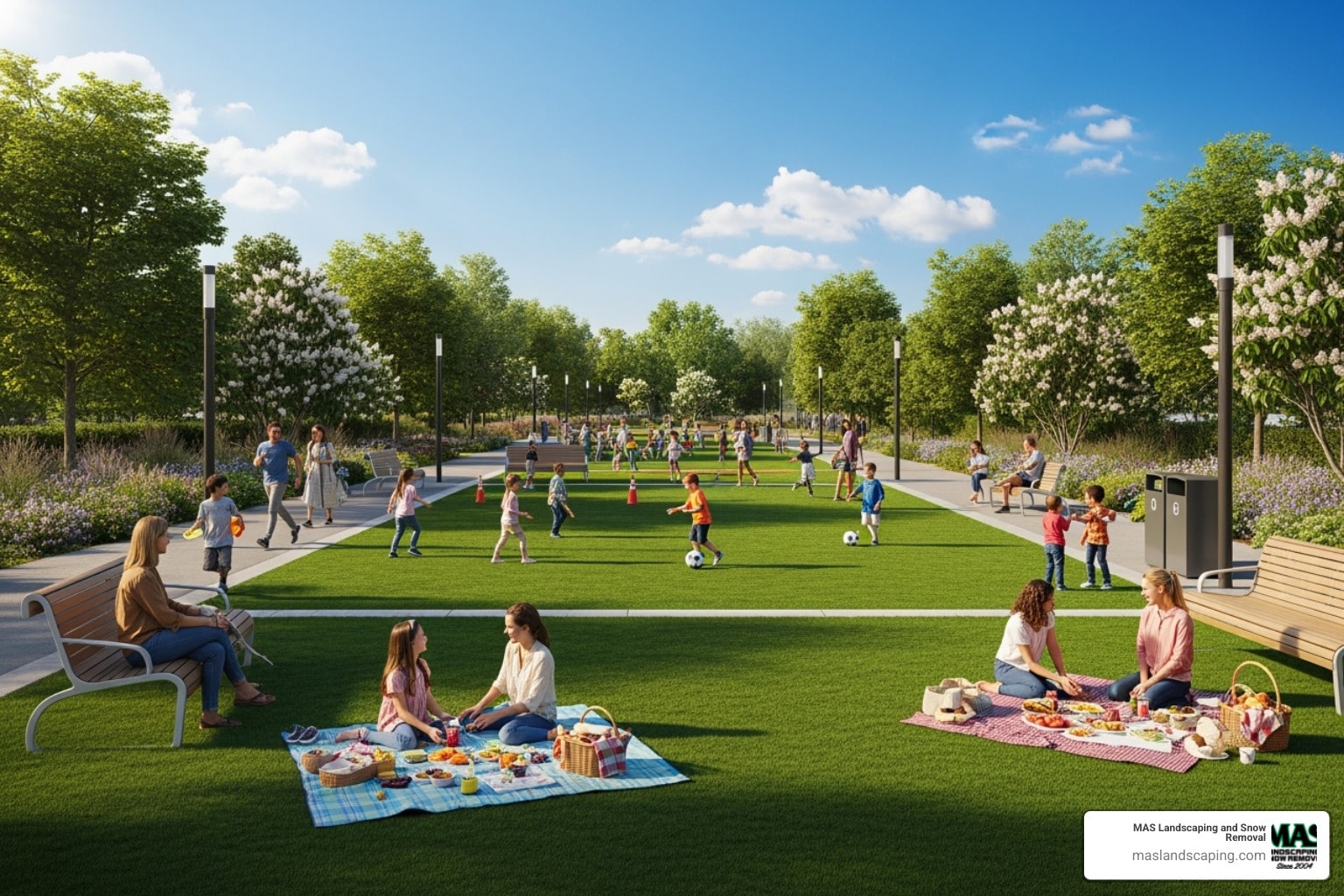
Fake grass for parks has become more than just a landscaping trend – it’s a fundamental shift in how municipalities think about public spaces. As communities across Greater Boston grapple with budget constraints, water restrictions, and the need for year-round usable recreational areas, artificial turf is emerging as a practical solution that demands serious consideration.
Key Benefits of Fake Grass in Parks:
- Safety: Fall protection up to 10-12 feet with proper underlayment systems
- Maintenance: 65% reduction in maintenance costs compared to natural grass
- Usability: 80% increase in usability during wet conditions
- Durability: Designed to withstand heavy foot traffic and harsh weather
- Water Conservation: Eliminates need for irrigation systems
- All-Season Access: Remains functional year-round regardless of weather
The conversation around artificial turf in parks isn’t just about aesthetics anymore. Modern synthetic grass systems offer fall height ratings certified by ASTM standards, with some products protecting children from falls as high as 12 feet. These aren’t the plastic-looking surfaces of decades past – today’s artificial turf uses advanced technologies, such as specially shaped fibers that can stay up to 10 degrees cooler than other turf products and superior drainage systems providing drainage up to 1,200 inches per hour.
But this shift raises important questions. How do we balance the immediate benefits of reduced maintenance and increased safety with long-term environmental considerations? What does this mean for the character of our community spaces?
As industry experts have noted, modern playground turf is changing play spaces into vibrant, safer, and more engaging environments for kids and families alike.
Quick look at Fake grass for parks:
The Safety and Accessibility Equation in Playgrounds
When we talk about public parks, especially those with playgrounds, safety is paramount. We want our children to run, jump, and play freely, and we want to ensure their environment supports that without unnecessary risks. This is where modern artificial grass truly shines, offering significant improvements in safety and accessibility compared to traditional surfaces.
How does artificial grass improve safety in play areas compared to traditional surfaces?
Traditional playground surfaces like wood chips, sand, or even natural grass can present various hazards. Wood chips can scatter, exposing hard ground, and harbor insects. Sand can hide sharp objects and become incredibly hot. Natural grass, while soft, can quickly turn to mud, create divots, and offer little to no impact absorption for higher falls.
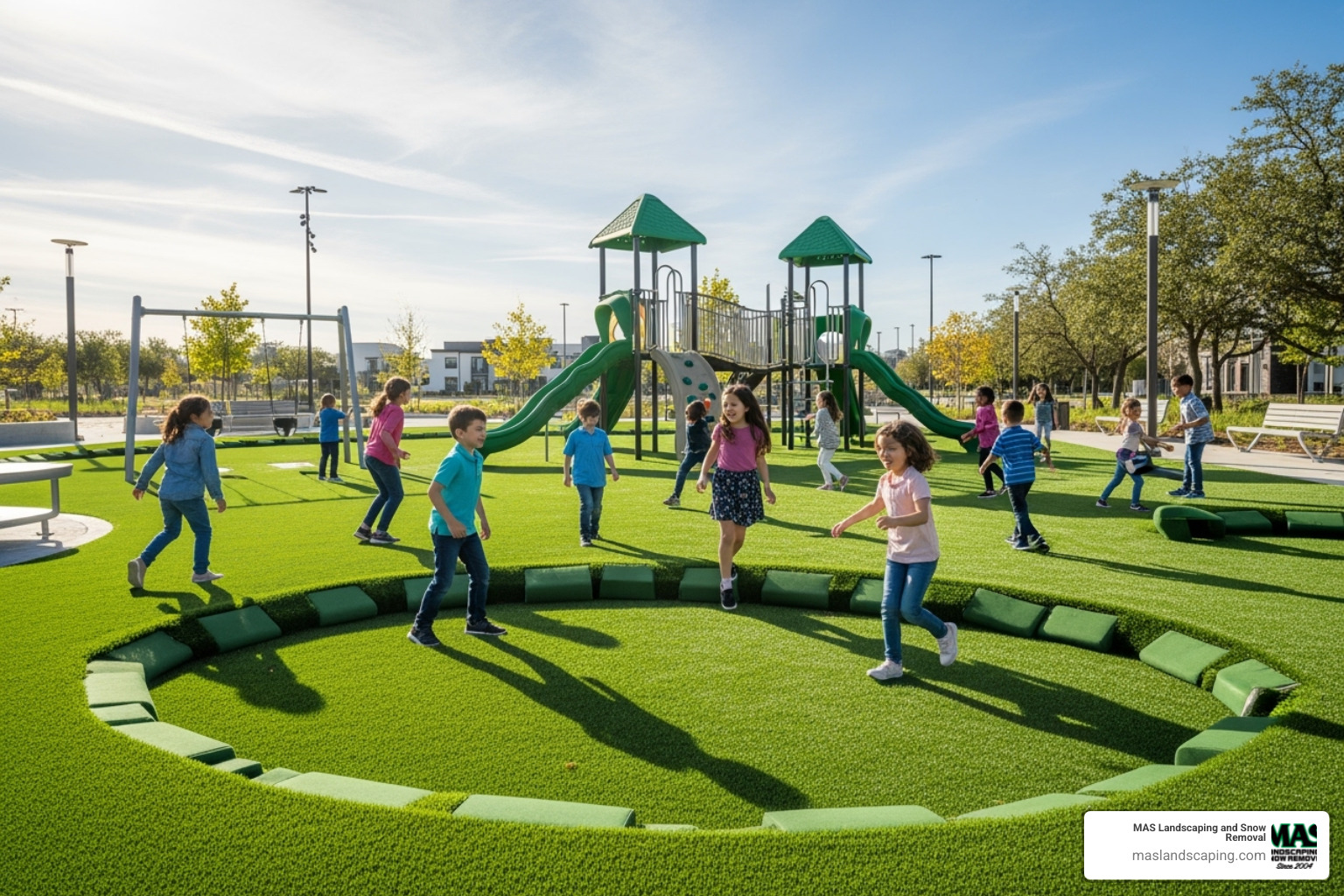
Artificial grass, when installed correctly, provides a consistent, cushioned surface that dramatically reduces the risk of injury from falls. Many modern playground turf systems are designed to protect children from falls as high as 10 feet, adhering to stringent IPEMA standards. Some systems can achieve fall height ratings certified by ASTM up to 12 feet when combined with appropriate shock pads. This superior shock absorption is achieved through a multi-layered system that often includes foam underlayment or recycled rubber tires beneath the turf. This means that whether a child tumbles off a swing or slips from a climbing structure, the landing is significantly softer and safer.
Beyond impact absorption, artificial turf also eliminates common playground nuisances. There are no more grass stains on clothes, and the non-abrasive nature of quality turf materials prevents scrapes and bruises often associated with rougher surfaces. We’re talking about a surface that keeps kids cleaner and healthier, reducing exposure to dirt, mud, and the bacteria that can thrive in organic materials.
Key Features of Fake Grass for Parks Designed for Safety
Selecting the right artificial grass for a playground isn’t a one-size-fits-all decision. Several key factors must be considered to ensure maximum safety and longevity.
Fall height ratings are crucial. Public playgrounds and commercial areas with equipment often have specific fall height requirements. This is why we rely on systems that are validated by IPEMA for conformance to ASTM F1292 safety standards. This means their products, when installed as prescribed, meet rigorous testing for impact attenuation.
Cushioning layers are essential. Simply laying turf on hard ground won’t provide adequate protection. We often recommend incorporating specialized shock absorption pads, like foam underlayment or recycled rubber infill, beneath the artificial grass. These layers are designed to absorb energy from impacts, significantly increasing the safety rating of the surface.
The choice of materials for the turf fibers themselves also plays a role. For playgrounds, polyethylene is generally considered the best option. It strikes a perfect balance between durability and softness, preventing the “turf burns” that can occur with tougher materials like nylon. We also look for non-toxic materials, ensuring that children aren’t exposed to harmful chemicals while they play. Many modern systems also boast antimicrobial properties, which help maintain a hygienic play surface by inhibiting bacteria growth.
IPEMA has validated conformance to ASTM F1292 safety standard
Enhancing Park Accessibility for All
Accessibility in public spaces means ensuring everyone, regardless of physical ability, can enjoy and use our parks. Artificial grass contributes significantly to creating more inclusive play environments.
One of the primary benefits for accessibility is the creation of consistently even surfaces. Unlike natural grass, which can develop uneven patches, ruts, or muddy spots, artificial turf provides a smooth, uniform plane. This is incredibly beneficial for wheelchair users, making navigation much easier and safer.
Shorter pile height is another important consideration for playgrounds. A pile height of around one inch is often recommended. This not only reduces tripping hazards for young children but also allows for smoother movement of wheelchairs and other mobility devices. It prevents wheels from getting bogged down or caught in longer fibers.
By eliminating mud and maintaining a firm, stable surface, artificial grass ensures year-round usability. This means children with mobility challenges aren’t restricted by weather conditions that might render natural grass areas impassable. Our goal is to create spaces where every child feels welcome and able to participate fully in the joy of play. This commitment to inclusivity is why we at MAS Landscaping, serving communities like Everett, Lynnfield, and Malden, consider these factors carefully in our artificial grass installations.
The Economic Equation: Long-Term Costs and Maintenance of Fake Grass for Parks
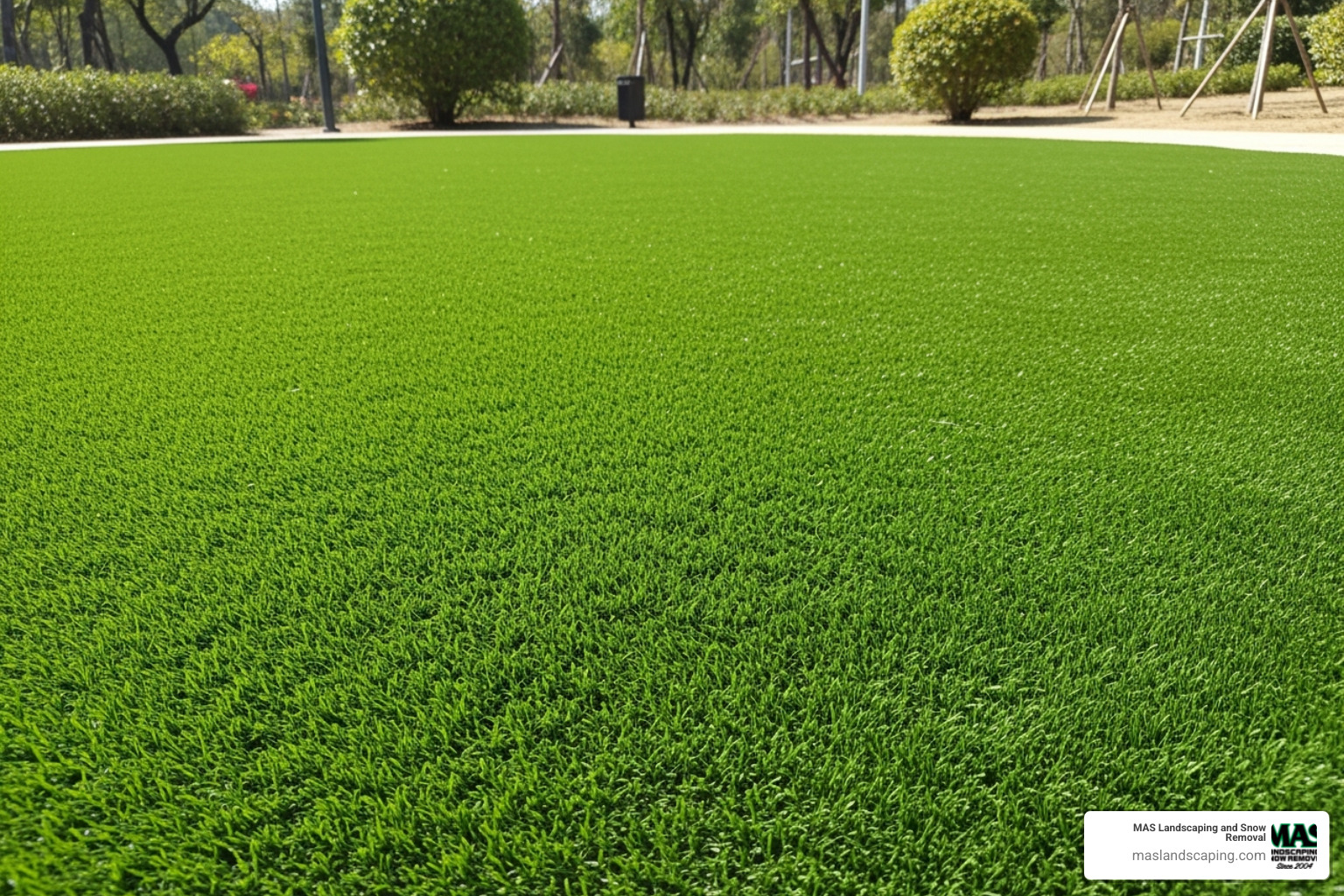
When park managers and municipal planners consider upgrades, the initial price tag often dominates the conversation. However, with fake grass for parks, the true economic benefit lies in the long-term savings and reduced maintenance burden. It’s an investment that pays dividends over many years, freeing up valuable resources for other community needs.
Calculating the True Cost Over Time
Let’s be honest, the upfront cost of installing artificial turf can be higher than seeding or sodding a natural lawn. Based on average internet data, synthetic turf can cost anywhere from $6-$20 per square foot for materials plus installation, with specialized systems and complex installations potentially pushing that higher. It’s important to note that these are industry averages and not a quote for services from MAS Landscaping. However, this initial investment is often recouped in just three to five years when you factor in the extensive savings on maintenance.
Consider the ongoing expenses of natural grass in a park setting:
- Mowing: Weekly or bi-weekly mowing, fuel, equipment maintenance, and labor costs.
- Watering: Significant water usage, especially in dry seasons or drought-prone areas, leading to high utility bills.
- Fertilization: Regular application of fertilizers to keep the grass lush, adding material and labor costs.
- Pesticides/Herbicides: Chemicals to control weeds and pests, posing environmental concerns and additional costs.
- Reseeding/Repairs: Fixing bare spots, repairing damage from heavy foot traffic, or addressing disease.
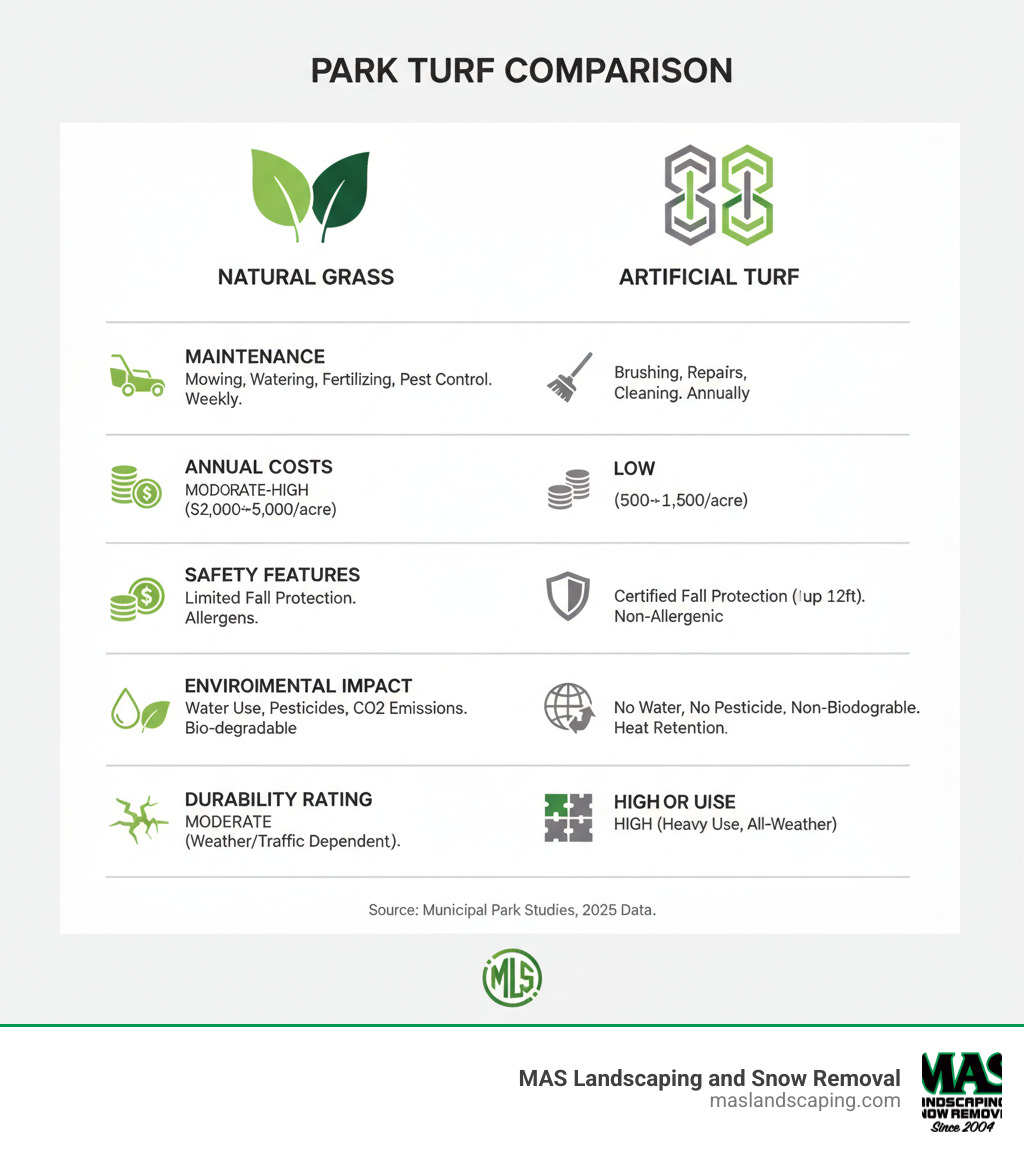
Artificial grass eliminates nearly all of these recurring costs. Over a 10-year period, the cumulative savings from not having to mow, water, fertilize, or apply pesticides to a large park area are substantial. In fact, many sources suggest a 65% reduction in maintenance costs for artificial turf compared to natural grass. This makes it a smart long-term financial decision for any municipality.
Here’s a simplified comparison of costs over a 10-year period. These figures are based on average internet data and are for illustrative purposes only; they do not represent actual costs from MAS Landscaping and may vary significantly:
| Expense Category | Natural Grass (per sq ft) | Artificial Turf (per sq ft) |
|---|---|---|
| Initial Installation | $1.00 – $3.00 | $6.00 – $20.00+ |
| Water (10 years) | $0.50 – $1.50 | $0.00 |
| Mowing (10 years) | $0.75 – $2.25 | $0.00 |
| Fertilization (10 years) | $0.25 – $0.75 | $0.00 |
| Pest/Weed Control (10 years) | $0.10 – $0.30 | $0.00 |
| Reseeding/Repairs (10 years) | $0.20 – $0.60 | $0.10 – $0.20 (occasional repair) |
| Total (Estimated 10 years) | $2.75 – $8.40 | $6.10 – $20.20+ |
As you can see, while the initial cost of artificial turf is higher, the ongoing expenses for natural grass quickly add up, often surpassing the cost of artificial turf within a few years. This makes artificial turf a wise investment for park budgets over the long haul.
Get an Artificial Grass Estimate Cost
The Advantage of Low-Maintenance Surfaces
The phrase “low-maintenance” is music to the ears of any park manager. Artificial grass delivers on this promise in spades, offering a host of advantages that simplify park management and improve usability.
First and foremost, it means eliminating mowing. Imagine a park where no lawnmowers roar on Saturday mornings, no fuel costs are incurred, and no labor is spent on endless cutting. This frees up staff for other vital tasks, like maintaining flower beds or repairing equipment.
Next, there’s no watering. In an era of increasing water scarcity and conservation efforts, this is a huge benefit. Our artificial grass installations in communities like Medford and Revere dramatically reduce water consumption, contributing to environmental sustainability and lowering utility bills.
Say goodbye to fertilizing and pesticides. Artificial turf doesn’t need nutrients to grow, nor is it susceptible to the pests and weeds that plague natural lawns. This not only saves money but also creates a healthier environment for children, pets, and local wildlife by removing harmful chemicals from the ecosystem.
The durability of artificial grass also means it can withstand high-traffic areas without showing wear and tear. Unlike natural grass, which quickly succumbs to heavy foot traffic, turning into muddy patches or bare spots, artificial turf maintains its lush appearance year-round. This is particularly beneficial for playgrounds, event spaces, or popular walking paths within a park.
Finally, the reduced maintenance translates to year-round usability. Parks with natural grass often become unusable after heavy rain, turning into muddy swamps. Artificial turf, with its superior drainage, is ready for play almost immediately after rainfall, increasing park access and enjoyment for the community. This 80% increase in usability during wet conditions is a game-changer for active parks.
Our team at MAS Landscaping understands the value of efficient park management. We provide solutions that not only look great but also contribute to the economic health and operational efficiency of public spaces.
Learn about our Landscape Maintenance services
Environmental and Practical Considerations
While the benefits of fake grass for parks are compelling, we also believe in a balanced perspective. It’s important to address potential drawbacks and understand the broader environmental and practical implications of artificial turf. Like any material, it has its considerations, and knowing them helps us make the best choices for our communities.
Addressing Heat and Drainage Concerns
Two common concerns with artificial turf are heat retention and drainage. We’ve all heard stories about artificial fields getting incredibly hot on sunny days. However, modern technology is actively addressing these issues.
Heat retention is a valid concern, particularly in direct sunlight. Older generations of artificial turf could absorb and retain significant heat, making surfaces uncomfortably warm. Today, manufacturers are innovating with advanced fiber technologies. For instance, some advanced fiber technologies can keep grass up to 10° cooler than other products by deflecting UV rays. Other technologies include IR reflective properties designed to reduce surface temperatures. The choice of infill material also plays a crucial role; specific infills can help absorb less heat and dissipate it more effectively. While artificial turf will generally be warmer than natural grass in direct sun, these advancements are making it a more comfortable surface for park-goers.
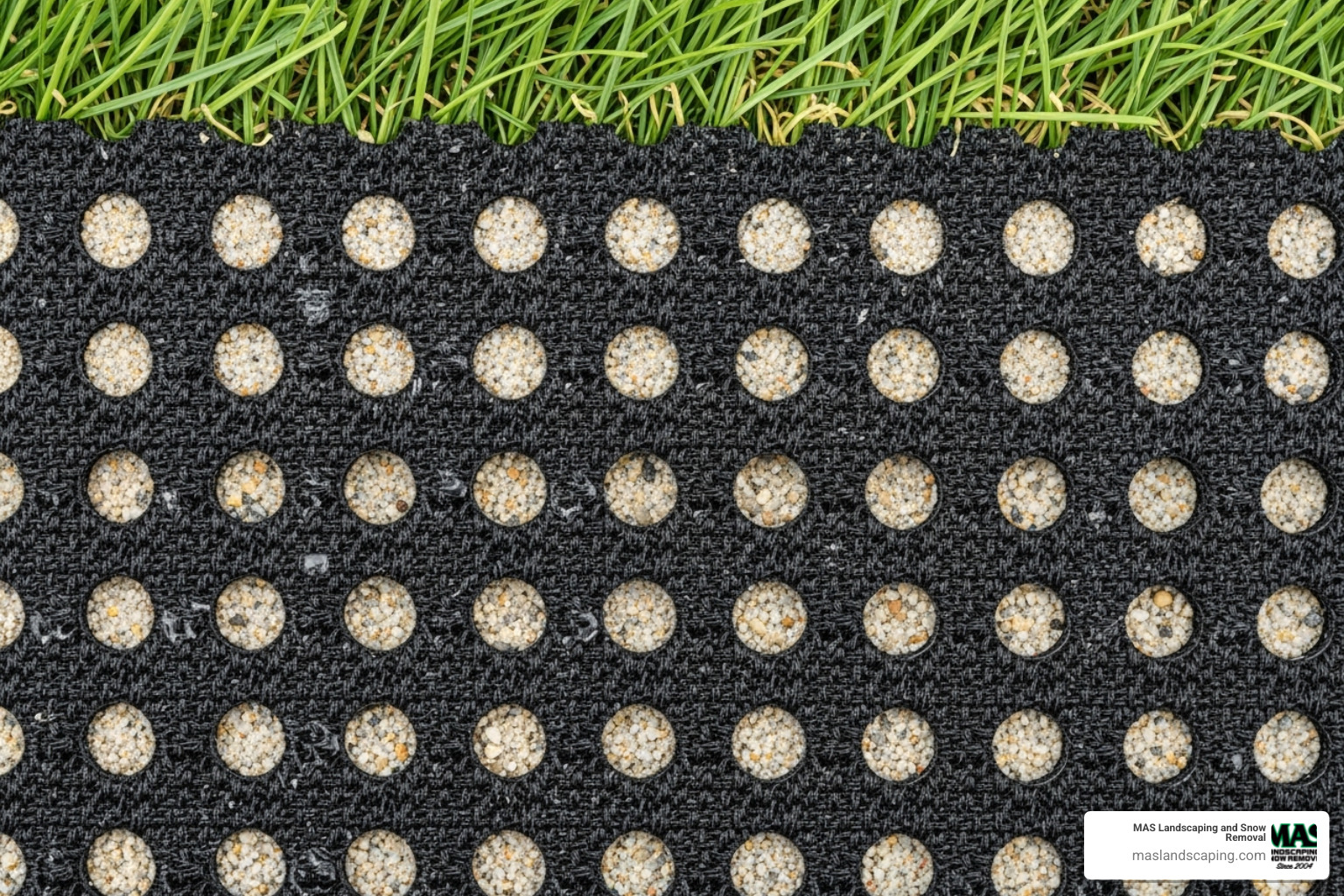
Drainage systems in modern artificial turf are remarkably efficient. Unlike natural grass that can become waterlogged and muddy, artificial turf features perforated backing that allows water to pass through quickly and effectively. Some advanced drainage systems, for example, boast drainage rates of up to 1200 inches per hour! This rapid drainage prevents mud, puddles, and standing water, ensuring the park remains clean and usable almost immediately after rain. This all-weather play capability is a huge advantage, especially in our climate where sudden downpours are common. It means fewer canceled events and more opportunities for outdoor recreation.
The Sustainability Debate
The environmental impact of artificial grass is a topic we approach with careful consideration. On one hand, it offers significant environmental benefits; on the other, there are concerns regarding its manufacturing and end-of-life.
The most undeniable water conservation benefit is the complete elimination of irrigation. In areas facing drought or water restrictions, this is a massive advantage, preserving a precious resource. Furthermore, artificial turf entirely removes the need for chemical fertilizers and pesticides, which can contaminate groundwater and harm local ecosystems. This creates a safer, healthier environment for children, pets, and wildlife within our parks.
Many modern artificial turf systems are also incorporating more sustainable materials. For example, some modern backing systems are made from renewable resources and recyclable materials, reducing the product’s overall environmental footprint.
However, we also acknowledge the manufacturing footprint and end-of-life disposal concerns. The production of artificial turf requires energy and resources, and while some products are recyclable, the recycling infrastructure is still developing. We work with suppliers who are committed to sustainable practices and continually seek out products with the highest environmental standards. Our aim is to provide solutions that offer the best balance of immediate environmental benefits (like water and chemical savings) with long-term sustainability considerations. For homeowners and park managers looking for durable, low-maintenance solutions, artificial turf remains a compelling option.
Find the right Artificial Turf For your Yards
Frequently Asked Questions about Artificial Turf in Parks
We often get asked a lot of great questions about artificial grass in public spaces. Here are some of the most common inquiries we address for our clients in and around Saugus, MA.
How is artificial turf kept clean in a public park setting?
Keeping artificial turf clean in a public park is surprisingly straightforward and much less labor-intensive than maintaining natural grass. Regular maintenance primarily involves removing debris like leaves, twigs, and litter. This can be done with simple tools like blowers, rakes, or stiff-bristled brushes. For spills or pet waste, the turf can be easily hosed down with water. The excellent drainage systems ensure that any liquids quickly pass through, preventing odors and keeping the surface dry. Many modern turf systems also come with advanced features, such as antimicrobial properties, which inhibit the growth of bacteria and microbes, ensuring a hygienic surface for public use. This means less worry about germs and more time for fun!
What makes artificial turf suitable for high-traffic park areas?
Parks are meant to be used, and high-traffic areas like pathways, areas under playground equipment, and popular gathering spots can quickly decimate natural grass. Artificial turf is specifically engineered to withstand this kind of heavy use. It’s designed with resilient fibers that resist matting and wear, maintaining their upright position even after constant foot traffic. Many products feature advanced blade shapes, such as C-shaped or W-shaped fibers, which are designed to bounce back and maintain their appearance.
A dense construction and proper infill provide crucial support to the blades, ensuring stability and longevity. Furthermore, some systems offer “TrampleZone™ Packages” which allow for targeted replacement of only the most worn areas, rather than the entire surface, making maintenance even more efficient. This resilience is why we see artificial turf as an ideal solution for creating durable, beautiful green spaces that can handle the busiest of park days.
Is artificial turf safe for pets in designated dog park areas?
Absolutely! We understand that our furry friends are an important part of the family, and many parks are now including dedicated dog areas. Artificial turf is an excellent choice for these spaces, offering significant advantages over natural grass. Specific pet-friendly turf systems are designed with both durability and hygiene in mind. They feature highly efficient drainage to handle liquid waste, which helps prevent odors and keeps the area dry.
Often, these systems are paired with specialized pet-friendly infills, which are non-toxic solutions that help neutralize odors by preventing the breakdown of ammonia in urine. The turf material itself is non-toxic and robust enough to withstand digging, running, and heavy play without turning into a muddy mess. Plus, because artificial turf is a non-organic material and has no soil, it’s very difficult for fleas, ticks, and other pests to survive in it, creating a healthier environment for our beloved pets.
Find the Best Artificial Grass For Dogs
Conclusion: A Balanced View for Our Community Spaces
The decision to incorporate fake grass for parks is a multifaceted one, requiring careful consideration of safety, economics, environmental impact, and aesthetics. As we’ve explored, modern artificial turf offers compelling benefits, particularly in creating safer, more accessible play areas, reducing long-term maintenance costs, and conserving precious water resources. The advancements in technology—from cooling fibers to superior drainage and antimicrobial properties—are continually addressing past concerns, making artificial grass an increasingly viable and attractive option for our public spaces.
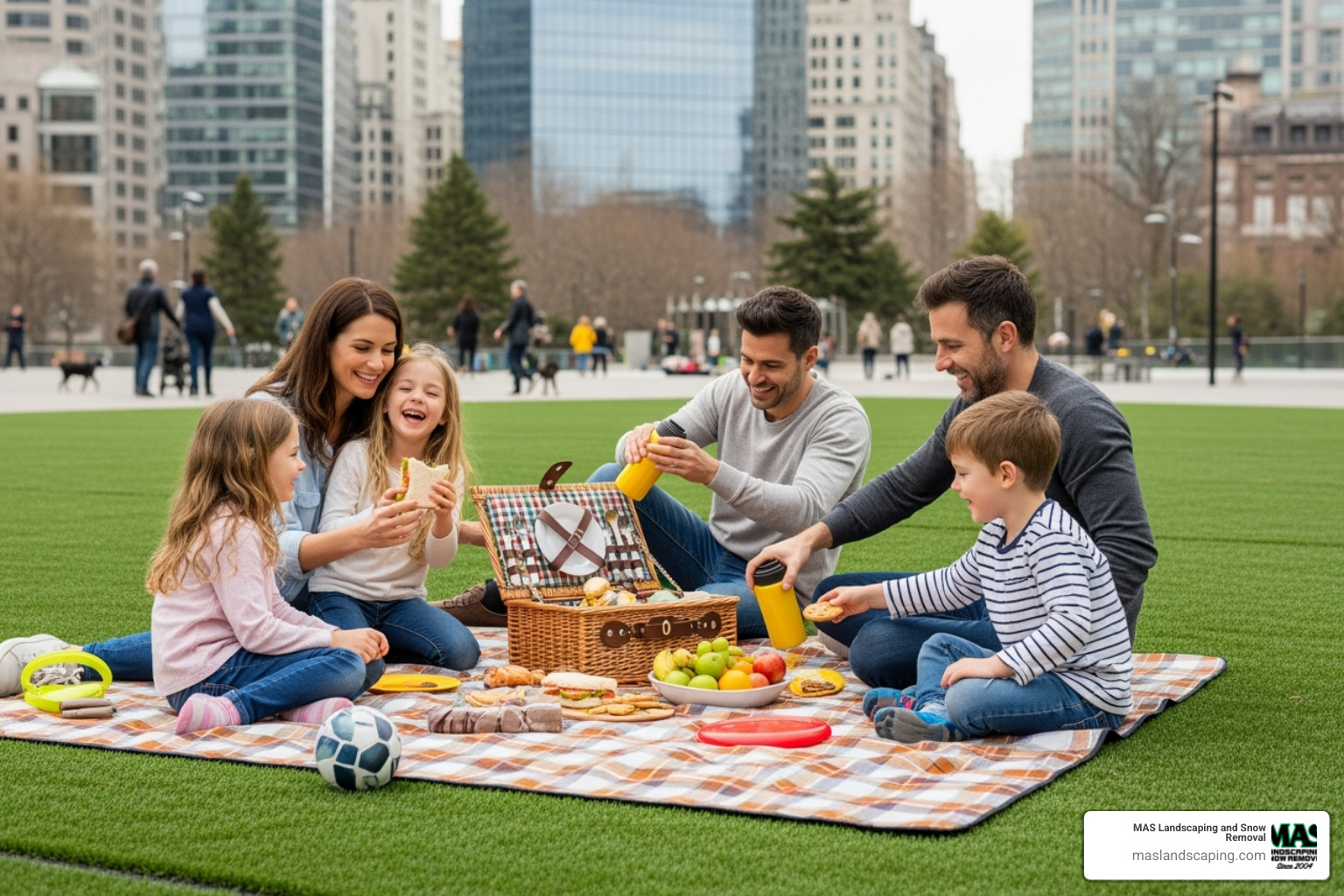
While we acknowledge the ongoing discussions around manufacturing processes and end-of-life solutions, the immediate and tangible advantages for park users and municipal budgets are significant. It allows us to create vibrant, consistently green spaces that can be enjoyed year-round, regardless of weather or heavy foot traffic. It’s about building parks that are not just beautiful, but also highly functional, sustainable, and inclusive for every member of our community.
For communities in the Saugus, MA area, including Everett, Lynnfield, Malden, and Melrose, a professional consultation can help weigh these factors for your specific public space. Our team at MAS Landscaping brings local expertise and a commitment to personalized service, guiding you through the options to create functional, beautiful outdoor environments that truly serve your community’s needs. We believe in making informed decisions that improve the quality of life for everyone.
Explore our full-service landscape installation options