




Hardscaping with River Rock: 5 Stunning Benefits 2025
Why Hardscaping with River Rock is Worth Considering
Hardscaping with river rock can dramatically improve your outdoor space’s beauty and functionality. River rocks, naturally smoothed and rounded by flowing water, offer great versatility and curb appeal, delivering a clean, organic look to gardens, walkways, and drainage areas.
To quickly decide if river rock hardscaping fits your needs, here’s what you need to know right away:
- Appearance: Smooth, natural aesthetic; various colors and sizes available.
- Durability: Lasts longer than organic mulch or wood; resists erosion effectively.
- Maintenance: Lower maintenance compared to traditional landscaping; still requires periodic weed control.
- Application: Ideal for pathways, dry river beds, retaining walls, and gardens.
- Water Management: Exceptional at improving drainage and reducing erosion.
If you’re looking for a low-maintenance yet visually appealing hardscape material—that also helps with drainage and erosion control—river rock is an excellent choice.
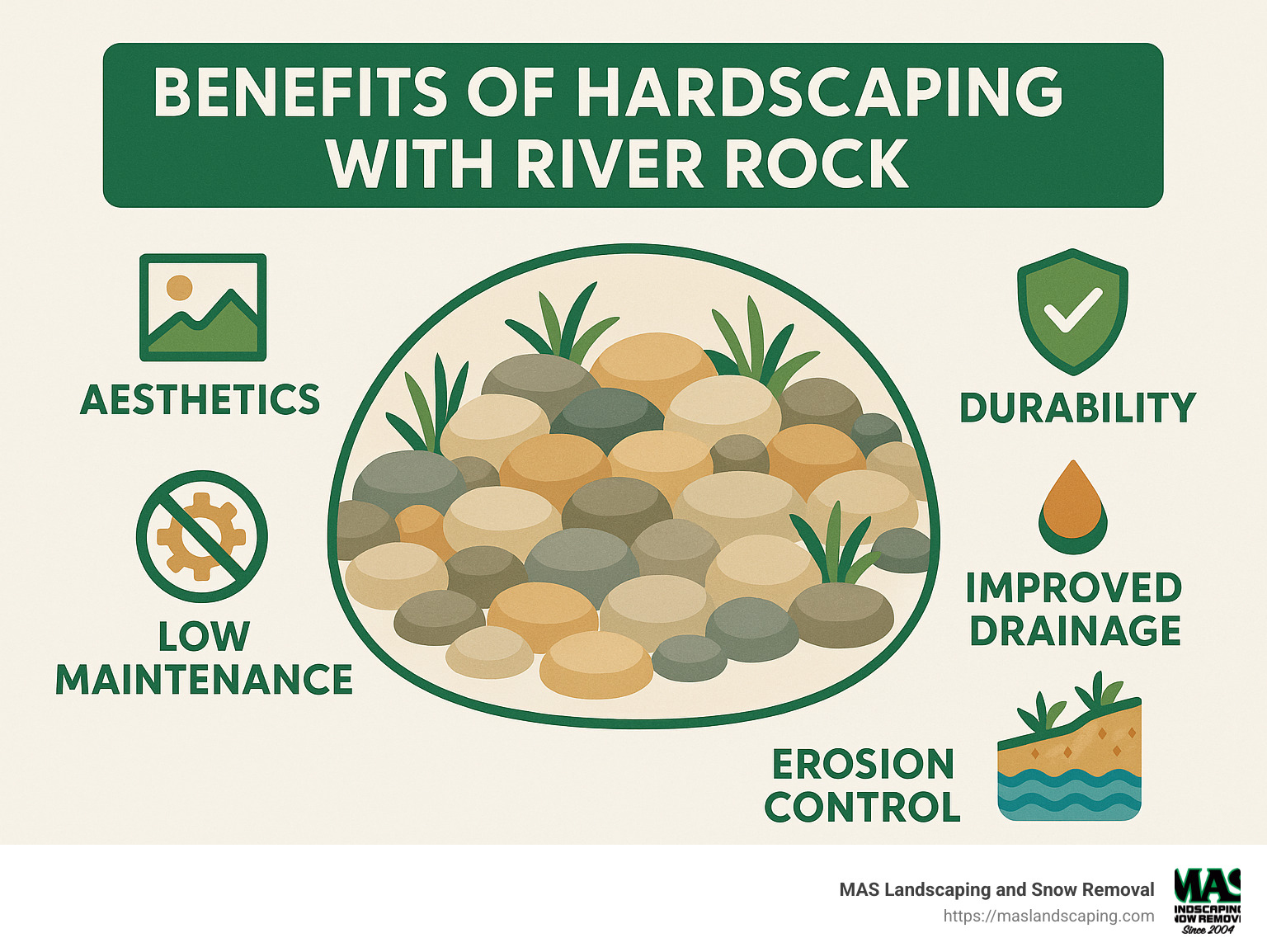
Basic hardscaping with river rock terms:
Understanding River Rock
River rock has been a favorite choice in landscaping for generations, and it’s easy to see why. Its natural charm, coupled with practical benefits, makes it ideal for many different outdoor projects. Before we jump into all the wonderful ways you can start hardscaping with river rock, let’s first take a moment to understand just what river rock is and why homeowners love it.
What is River Rock?
River rock is exactly what it sounds like—stones smoothed and shaped naturally by flowing water in rivers, streams, and along beaches. Over time, as water rushes and swirls around these stones, their edges become rounded and the surfaces smooth, giving river rock that warm, natural appearance homeowners appreciate.
These naturally polished stones come in many sizes, from tiny pea gravel (around 3/8-inch diameter) that’s perfect for pathways, to larger stones and even boulders (over 5 inches across) that work beautifully in retaining walls or water features. Which size you pick depends entirely on the project you have in mind and the visual style you’re aiming for.
For more information on the geological process that shapes river rock, check out River Rock on Wikipedia.
One of the great things about river rock is the variety of colors it offers. You’ll find shades ranging from soft grays, warm beiges, earthy browns, and crisp whites to dramatic blacks, reds, and even multi-colored combinations. These colors depend on the minerals within the original rock—iron oxide gives a warm reddish-brown hue, while manganese oxide can add subtle blues or purples.
River rocks typically come from three main rock types: sedimentary rocks (like sandstone and limestone), which erode more quickly in flowing water; metamorphic rocks (such as marble and schist), which often have a more angular or rectangular shape; and igneous rocks (like basalt and granite), which resist erosion and are the most common river stones you’ll find in landscaping supplies. The longer the rocks remain in fast-flowing water, the smoother and rounder they become.
Benefits of Hardscaping with River Rock
Beyond their natural beauty, there are plenty of practical reasons homeowners in Massachusetts love hardscaping with river rock. Here in our area—Everett, Lynnfield, Malden, and beyond—we’ve seen just how transformative river rock can be:
River rock’s natural, soft-edged shapes and soothing color tones provide wonderful aesthetic appeal. Whether you’re highlighting flowering plants in your garden beds, lining pathways, or edging water features, river rocks add subtle contrast that really makes your outdoor spaces pop. (Imagine your bright green succulents standing out beautifully against a backdrop of smooth, multicolored stones—lovely, right?)
If you’re tired of constant yard maintenance, river rock is definitely your friend. While it’s not maintenance-free—”River rock is for NO WATER, NOT for NO MAINTENANCE,” as landscape expert Lisa LaPaso humorously notes—it’s still incredibly low maintenance compared to organic mulch or grass. It doesn’t decompose, doesn’t need replacing every year, and rarely attracts pests or insects.
Another major advantage of river rock is its amazing longevity. Unlike bark mulch or wood chips that need refreshing annually, river rock stays attractive and sturdy year after year. In fact, with minimal care, a properly installed river rock feature can easily last decades.
For yards that suffer from water runoff or pooling, river rock can be a lifesaver (or rather, a yard saver!). Its natural drainage properties help direct water flow, drastically improving drainage in problematic areas. This makes it perfect for dry creek beds, French drains, and other water management features.
Additionally, river rocks are fantastic for controlling erosion, particularly on slopes or in high-traffic drainage areas. Their weight and stability anchor down soil, preventing it from washing away during heavy rains.
The beauty of river rock is also in its incredible versatility. From tiny pea gravel paths that crunch satisfyingly underfoot, to large, natural-stone retaining walls that beautifully terrace your landscape, there’s virtually no outdoor project these rocks can’t improve.
An often-overlooked benefit is river rock’s excellent heat and cold retention—ideal for our New England weather. Stones naturally hold warmth from the sun or coolness from the shade, which can help stabilize soil temperatures around plants. (Just remember, rocks can also heat up quite a bit, so carefully select your plants to match.)
Lastly, river rock offers great pest resistance. Unlike organic materials, stones do not attract insects or critters. This makes them perfect for placing close to your home or outdoor living areas.
At MAS Landscaping and Snow Removal, we’ve seen countless properties transformed through thoughtful hardscaping with river rock. Whether you’re hoping to tackle drainage issues, create attractive garden paths, or simply add natural beauty to your landscape, river rock is a practical, charming solution that’s hard to beat.
Hardscaping with River Rock: Applications and Ideas
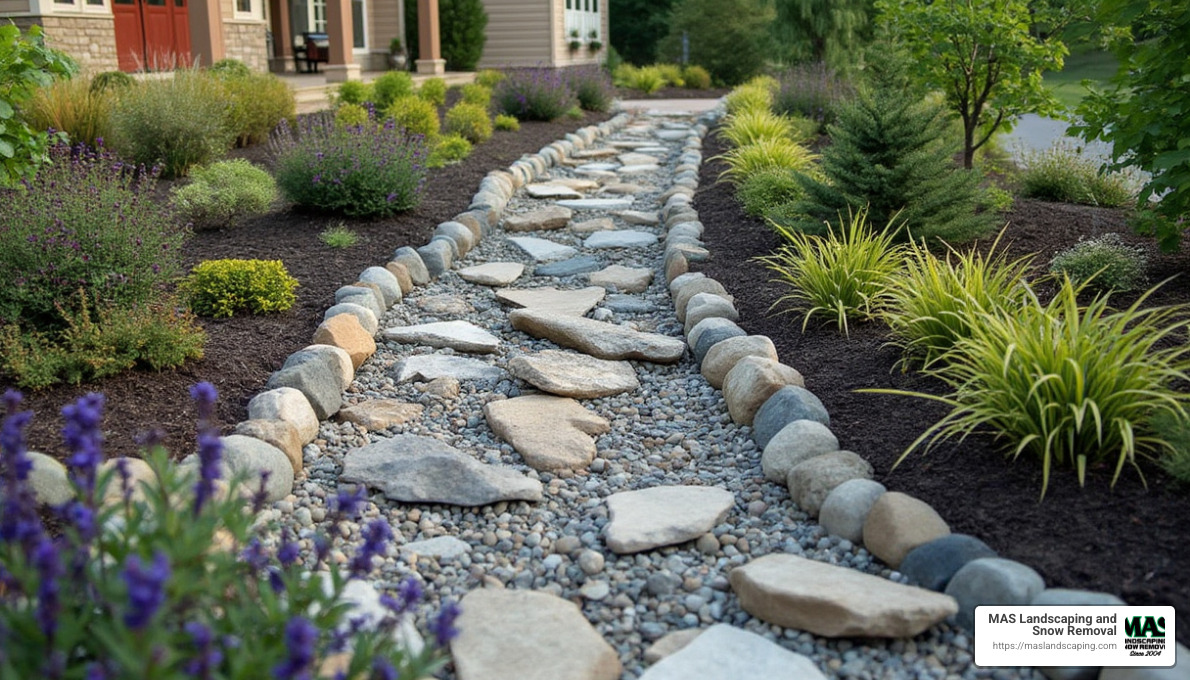
You now know what makes river rock such a fantastic choice for landscaping—its natural beauty, versatility, and practical benefits. But how exactly can you make river rock work in your outdoor space? Let’s explore some creative and functional ways you can improve your landscape by hardscaping with river rock.
Creating River Rock Pathways and Walkways
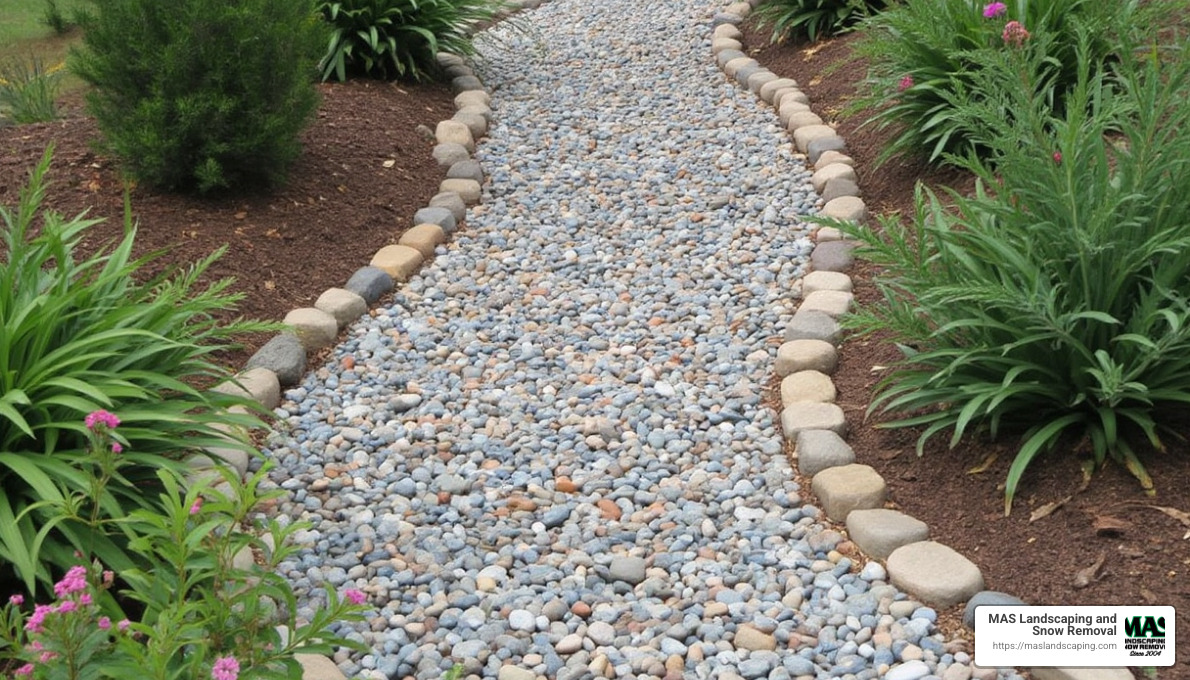
River rock pathways bring a charming, natural feel to your yard. They connect different sections of your landscape while offering you and your visitors a pleasant walking surface. Smaller river rocks (around ¾ inch to 1 inch) are surprisingly comfortable underfoot, and you’ll quickly fall in love with the quiet and relaxing “crunch” they make as you walk.
When installing your pathway, choose sturdy edging made from metal, stone, or concrete. This will neatly contain your river rock and prevent stray stones from wandering into your lawn. Proper installation also means preparing the ground correctly: clear away grass and weeds, lay down a durable landscape fabric to stop weeds from popping through, and add a layer of sand or crushed stone beneath your river rock for better drainage.
Feel free to mix and match different colors and sizes of river rocks to create visual interest. Larger stones along the border with smaller stones in the center can give your path a more natural, inviting appearance. Here in Massachusetts, river rock walkways are also a smart choice because they handle our freezing winters and thawing springs better than concrete or pavers (no cracks to worry about!).
Designing Dry Creek Beds for Drainage and Erosion Control
If you have drainage issues, especially on sloped properties found in areas like Everett, Lynnfield, and Malden, a dry creek bed can work wonders. These beautiful landscape features guide water away from problem areas, preventing erosion and water pooling while adding a gorgeous visual element to your yard.
A natural-looking dry creek bed typically follows the path water naturally takes during heavy rainstorms. Make sure you use a variety of rock sizes—larger river rocks on the edges with smaller ones in the center—to mimic the look of an actual stream. Gentle curves also add authenticity since nature rarely creates perfectly straight lines.
To improve your dry creek bed even further, consider planting moisture-tolerant shrubs or perennials along its banks. These plants stabilize the soil, prevent erosion, and make the feature look lush and inviting. One local homeowner we worked with shared their success story: “Installing a dry creek bed solved our yard’s drainage problems completely—and it looks amazing!”
Using River Rock as Mulch in Gardens and Flower Beds
River rock makes a fantastic inorganic mulch. Unlike wood mulch, river rocks don’t decompose or need annual replacement, which means less work for you and more time enjoying your garden.
When using river rock mulch, smaller stones (between ⅜ inch and 1 inch) are ideal. They’re easier to handle and won’t overwhelm your plants. Place a sturdy layer of landscape fabric beneath the rocks to stop weeds and make future landscape adjustments easier.
One important tip: river rock doesn’t add nutrients back into your soil like organic mulches do. For this reason, choose plants that thrive without nutrient-rich soil, like succulents, drought-tolerant perennial flowers, or native species. And for maximum visual impact, match or contrast your plants with the colorful tones found in your river rock selection. Your flowers or succulents will literally “pop” from the bed—visually speaking, anyway!
Building Retaining Walls and Borders with River Rock
Medium to larger-sized river rocks (3 inches or larger) are perfect for creating retaining walls and borders that look natural and appealing. These stone structures neatly define gardens, pathways, or terraces, especially on slopes where erosion can threaten your landscape’s health and beauty.
While smaller borders can be DIY-friendly, taller river rock walls often require professional installation—something MAS Landscaping and Snow Removal has plenty of experience with! These larger walls typically use mortar to hold stones securely in place, ensuring stability and safety.
For steeper slopes, you might consider building multiple smaller terraces instead of one tall wall. This method creates a stunning visual effect while providing safe and usable gardening areas. It’s also smart to add gravel behind your retaining walls to improve drainage and reduce water pressure. Clients throughout Saugus, Melrose, Medford, and nearby areas have loved the natural, inviting look of their river rock retaining walls—and the practical benefits they deliver.
Enhancing Water Features with River Rock
River rocks and water naturally complement each other, making them a great match for water elements like fountains, ponds, and waterfalls. Their smooth surfaces catch and reflect sunlight beautifully, adding sparkle and life to your outdoor spaces.
When designing your water features, try using larger river rocks around pond edges to conceal liners and create an inviting, natural transition to the landscape. River rock can also soften the splash at the base of waterfalls, reduce erosion around streams, and even improve the underwater landscape of ponds.
You can pair river rock with aquatic plants to create a balanced, natural ecosystem—one that looks like it’s always belonged in your yard. One drainage expert recommends placing river rock beneath downspouts or along natural water flow areas to manage rainwater runoff while maintaining your landscape’s beauty. Here in the New England climate—with heavy spring rains and snowy melt-offs—this solution is especially beneficial.
Whatever your landscaping goals, hardscaping with river rock offers endless opportunities to add beauty, character, and practical benefits to your outdoor spaces. If you’re curious about how river rock could transform your Massachusetts yard, MAS Landscaping and Snow Removal is here to help.
Best Practices for Hardscaping with River Rock
At MAS Landscaping and Snow Removal, we’ve completed countless hardscaping with river rock projects throughout Everett, Lynnfield, Malden, and surrounding areas. Over the years, we’ve learned what works best (and what doesn’t!) to make sure your river rock installation looks amazing and stands the test of time. Let’s walk through these best practices together.
Preparing the Ground and Installation Techniques
Proper preparation makes all the difference in your project’s success. Trust us—in our experience, skipping these crucial steps can lead to pesky weeds, shifting rocks, and frustration down the road!
First things first: clear out existing vegetation. Pull up grass, weeds, and roots completely. This ensures they won’t sneak back up later between the rocks.
Next, dig out the area to about 3-4 inches plus the depth of your river rock. This extra depth gives you room for a proper base layer and keeps the final surface level with your surrounding landscaping.
Once excavated, it’s time to make the surface nice and even. Level the ground carefully and slope it slightly away from structures. This gentle slope helps rainwater naturally drain away from your home’s foundation.
Now the fun part begins! Install edging—metal, stone, or concrete—to neatly contain the river rock area. This simple step keeps things tidy and prevents your rocks from scattering into your lawn or flower beds.
Before placing the river rock, lay down durable, permeable landscape fabric. This weed barrier is essential—it prevents weeds from creeping up and keeps the rock from sinking into the soil.
Next, add a base layer of small gravel or sand, around an inch or two thick. This layer boosts drainage and helps your river rock stay stable.
Finally, spread your river rock evenly, typically about 2-3 inches deep. A rake can be your best friend here to keep things consistent. Don’t worry if your river rocks look dusty or dull at first—a gentle rinse with a garden hose will make the beautiful natural colors pop right out.
For larger or more complex installations—such as significant grading or excavation—consider professional help. At MAS Landscaping and Snow Removal, we’re always here to lend our expertise (and equipment!) to give you peace of mind and beautiful results.
Preventing Weed Growth in River Rock Areas
Let’s be honest—nobody enjoys pulling weeds. While river rock itself doesn’t actively encourage weeds, seeds can still find their way into your rock beds. Thankfully, with a little planning, weeds can be kept at bay so you spend more time enjoying your outdoor space and less time maintaining it.
The most effective step is using a professional-grade landscape fabric. This barrier stops weeds from growing up through the rocks while still allowing water to drain properly. For extra weed prevention, we’ve seen great results using a double-layer approach with landscape fabric and a thin sand layer beneath the rocks.
Make sure your river rock depth is sufficient—usually 2-3 inches. Thinner layers can let weeds poke through more easily, leading to headaches down the line.
Of course, even with the best preparations, a weed or two might occasionally make an appearance (they’re persistent little things!). The trick is regular, quick maintenance. Pull weeds weekly so they don’t establish deep roots. Environmentally-friendly weed control—like a homemade blend of vinegar, Epsom salt, and dish soap—can also be very effective for smaller weeds.
And here’s a word of caution: if your river rock is near ponds or water features, avoid chemical herbicides that could harm aquatic life. Keeping your outdoor space environmentally safe is always a top priority—especially in our beautiful Massachusetts communities.
Considering the Downsides of River Rock
As much as we love river rock, it isn’t perfect for every situation. Knowing a few potential downsides upfront ensures you’re making the best choice for your landscape.
One common issue we’ve encountered is heat absorption. River rocks can get pretty warm under the summer sun, stressing nearby heat-sensitive plants. Keep this in mind when choosing plantings around your rock areas.
Another consideration is removal difficulty. River rock can be tough to remove if you ever change your mind. That’s why landscape fabric underneath is so helpful—it makes removal far easier if you decide to update your landscape down the road.
River rock can also collect organic debris over time—especially near trees that drop leaves or fruit. While leaf blowers help, some manual cleanup will likely still be needed seasonally. If that sounds like too much work, you might reconsider river rock placement near these trees.
If your yard is especially steep, river rock may not be your best choice. It tends to slide or shift on inclines, potentially creating maintenance headaches. And since river rock doesn’t decompose, it won’t enrich the soil beneath, limiting your plant options to species that don’t require nutrient-rich soil.
Finally, if improperly installed, river rocks can gradually sink into the soil. Proper base layering and fabric barriers significantly reduce this risk, ensuring your river rock stays exactly where you want it.
At MAS Landscaping, we’ll happily talk through these considerations with you—our goal is always to help you create a landscape you’ll love for years to come!
Choosing the Right Size and Type of River Rock
Selecting the perfect size and color of river rock can dramatically improve your landscape’s look and functionality. Here’s our simplified guide:
- Very small river rocks (under 3/8 inch): Excellent for filling small gaps between flagstones or for detailed textural contrast.
- Small rocks (3/4 to 1.5 inches): Ideal for pathways, garden mulch, and versatile ground cover. Easy to walk on and maintain.
- Medium-sized rocks (1.5 to 2.5 inches): Perfect choice for dry creek beds, garden edges, and general decorative purposes.
- Large rocks (2.5 to 5 inches): Great for water features, erosion control areas, and creating bold visual statements.
- Extra-large rocks (6+ inches): Best suited for retaining walls, heavy-duty erosion control, and impactful landscape features.
Color selections matter too! River rock comes in lovely natural shades of gray, tan, red, white, and brown. Consider your home’s colors, existing landscape, and whether you prefer your rocks to blend subtly or boldly stand out. Quick tip: darker rocks retain more heat than lighter ones.
We recommend choosing locally-sourced river rock when possible. Here in New England, granite-based stones with specks of quartz offer gorgeous, region-specific charm while supporting local businesses.
Not sure how much river rock you’ll need? For general planning, every 5kg of rock covers approximately 25 liters of space. Suppliers typically sell river rock by the ton or bag, depending on how much you require. Don’t worry—we’re happy to help you calculate exactly what’s needed, saving you hassle and reducing waste.
At MAS Landscaping and Snow Removal, we know that hardscaping with river rock adds beauty, functionality, and that special natural appeal to your outdoor spaces. With a bit of careful planning and thoughtful installation, your river rock project can bring years of enjoyment—and compliments from friends and neighbors!—to your Massachusetts home.
River Rock vs. Other Hardscaping Materials
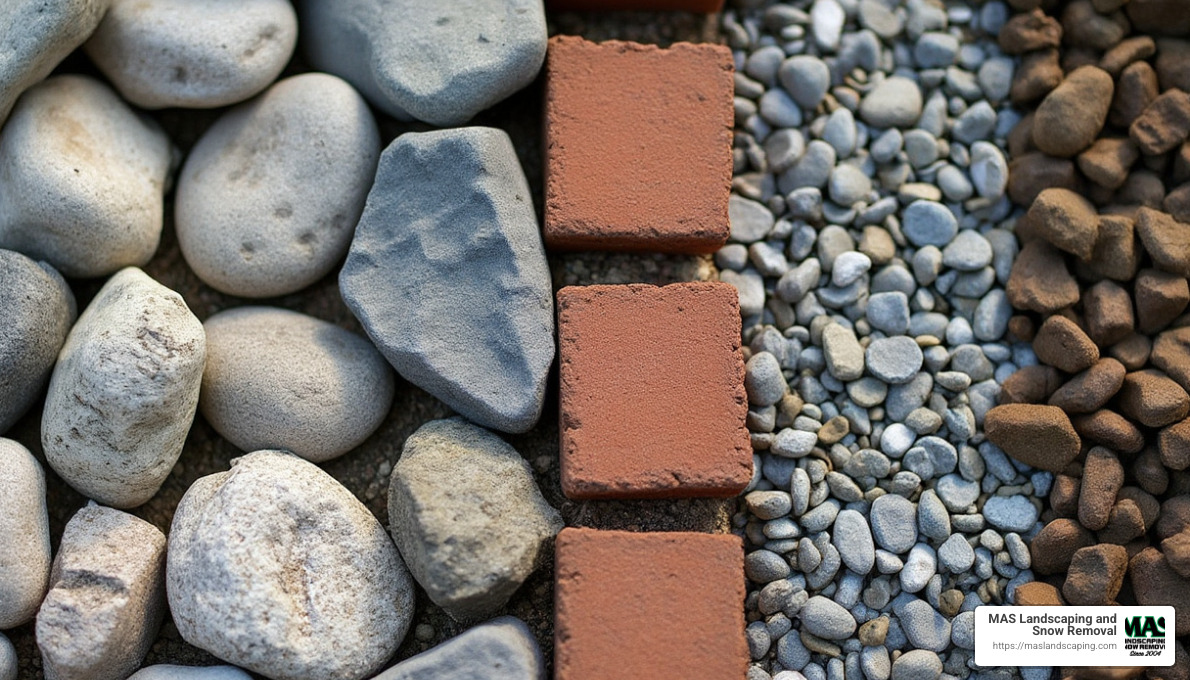
When you’re planning a new outdoor space for your home, it’s helpful to understand how hardscaping with river rock compares to other common landscaping materials. Each material has its own set of pros and cons, and choosing the right option depends on your unique preferences, budget, and maintenance expectations.
Cost and Maintenance Comparison
Let’s start by looking at river rock. Based on average internet data, river rock usually costs between $100 and $300 per ton. However, if you’re eyeing specialty varieties like Mexican Beach Pebbles, you could be looking at prices as high as $800 per ton. While this may seem steep initially, consider its impressive durability—river rock can last indefinitely with proper installation and care. Plus, unlike organic mulch, it won’t break down or fade over time. The main maintenance tasks include periodically removing weeds and debris and giving the rocks a gentle rinse every now and then to refresh their natural colors.
Now, how does river rock stack up against other popular materials?
Wood mulch is a common and budget-friendly solution, typically costing about $30–$100 per cubic yard. While appealing for its affordability and natural appearance, wood mulch requires annual or biannual replacement as it decomposes. You’ll need to set aside time each year for topping it up and managing weeds.
Gravel is another affordable option, averaging around $30–$100 per ton according to online data. Gravel, much like river rock, provides good drainage and a natural aesthetic. However, due to its smaller size, gravel tends to shift and scatter more easily, making maintenance slightly more frequent. You’ll likely need to rake it back into place regularly and occasionally top it off to maintain depth and appearance.
Concrete pavers are a step up price-wise, commonly ranging from $8–$25 per square foot when professionally installed. They offer a solid, neat look that lasts more than 25 years with proper care. Maintenance involves occasional cleaning, joint sanding, and leveling if any settling occurs.
Natural stone pavers are a premium choice, with costs usually hovering between $15–$50 or more per square foot, installed. Their luxurious look and impressive longevity (often lasting a lifetime when properly installed) make them a great investment, though their initial cost is significantly higher than river rock or gravel. Fortunately, maintenance is minimal—mostly limited to occasional cleaning and minor joint maintenance.
Brick is another popular hardscaping material, typically ranging from $10–$30 per square foot, installed. Brick provides a traditional, timeless charm that appeals to many Massachusetts homeowners. While brick surfaces generally have a long lifespan (25+ years), you’ll occasionally need to repair cracked or loose bricks and keep surfaces clean.

Several factors will affect river rock costs for your specific project:
- The size and type of river rock you choose (larger stones and specialty varieties typically cost more).
- The total quantity needed—buying in bulk can offer better value.
- Delivery fees, which can vary significantly depending on your location and the quantity ordered.
- Whether you’re installing the river rock yourself or hiring a professional (which will add to the overall cost).
While river rock may seem pricier upfront compared to mulch or gravel, keep in mind the long-term savings. As one satisfied homeowner humorously shared, “With river rock, I spent more upfront—but now I don’t have an annual mulch bill every spring. My wallet thanks me!”
At MAS Landscaping and Snow Removal, we’ve helped homeowners throughout Everett, Lynnfield, Malden, and nearby areas weigh these factors carefully. Our clients often find that, when considering longevity and maintenance, river rock is a smart investment that pays off beautifully over time.
Maintenance Considerations
It’s important to clarify one common misconception: river rock isn’t entirely maintenance-free—it’s better described as “low-maintenance.” As a local landscape professional playfully puts it, “River rock means NO water, not NO maintenance.”
Regular upkeep tasks you can expect with river rock include occasional weeding (though landscape fabric will greatly reduce this), removing any leaves or twigs using a leaf blower or by hand, and periodically rinsing the rocks with a hose to restore their vibrant colors. You’ll also want to maintain clear edging between river rock and lawn areas to prevent grass from creeping in.
Compared to more demanding materials like wood mulch—which needs annual refreshing—or gravel—which can often scatter—river rock is an easier choice for busy people who want a beautiful landscape without constant work.
At MAS Landscaping and Snow Removal, we understand that your time is valuable. That’s why we often recommend hardscaping with river rock to clients looking to balance aesthetic appeal, functionality, and ease of maintenance. If you’re considering a project in the Saugus, Everett, Lynnfield, or Malden areas, we’re here to help you make the ideal choice for your property.
Conclusion
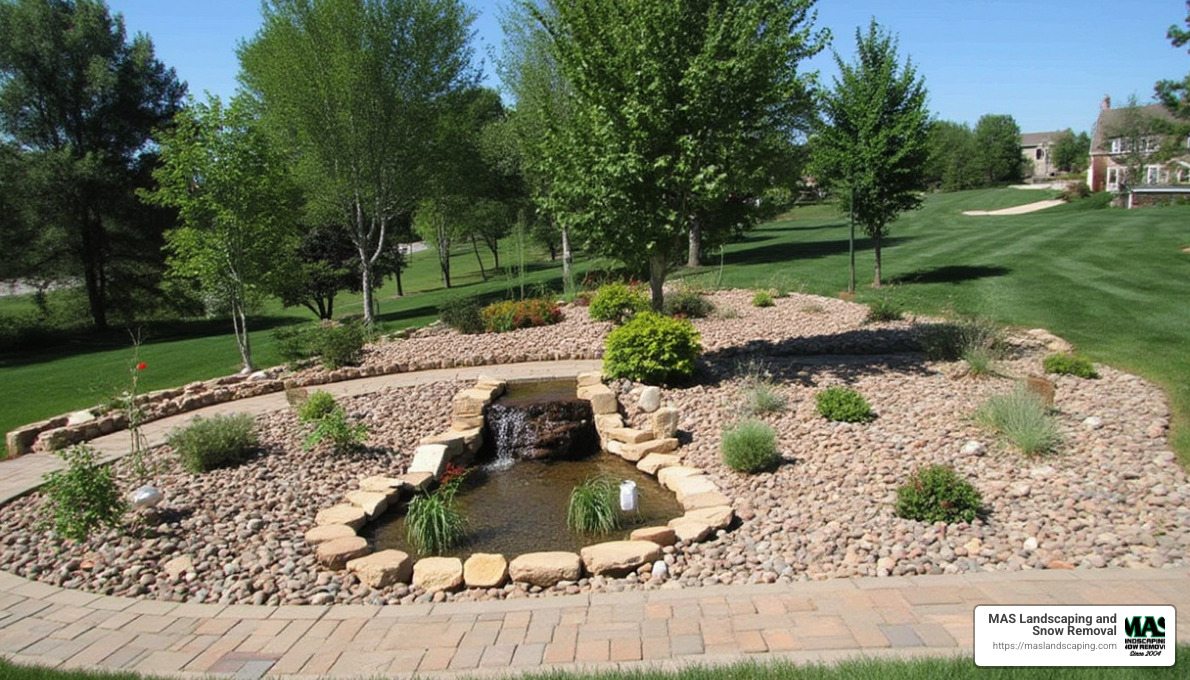
If you’re looking to transform your outdoor space with something versatile, beautiful, and practical, hardscaping with river rock might be exactly what your landscape needs. Throughout this guide, we’ve explored the many reasons homeowners around Everett, Lynnfield, Malden, and throughout the Massachusetts area are turning to river rock for their landscaping projects.
River rock gives landscapes a warm, natural charm. It fits perfectly in traditional gardens, modern yards, and everything in between. Whether it’s a charming walkway, a striking retaining wall, or an attractive dry creek bed to solve drainage issues—the possibilities with river rock are almost endless (and always beautiful).
Beyond its stunning looks, river rock offers impressive durability. Unlike organic mulches that break down quickly, river rock stays put and stays strong through our New England winters and hot summers. Its natural drainage properties help redirect water flow, preventing erosion and protecting your yard from damage year-round.
Of course, hardscaping with river rock isn’t totally maintenance-free (no landscaping option truly is!). Yes, you’ll occasionally need to tackle weeds or remove debris—but compared to grass, mulch, or delicate flower beds, it’s refreshingly low-maintenance. Spend less time working in your yard, and more time actually enjoying it.
One thing we’ve learned from years of river rock installations at MAS Landscaping and Snow Removal: proper planning and installation make all the difference. Choosing the right rock size, color, and placement—and preparing the ground properly with weed barriers and edging—ensures your river rock project stays neat, functional, and beautiful for years to come.
It’s also helpful to consider potential downsides. River rocks do absorb heat, which can affect plants close by, and they’re trickier to remove if you change your mind down the line. But with some thoughtful planning, these issues rarely cause major headaches.
Compared to other hardscaping options like wood mulch, gravel, or pavers, river rock often provides better long-term value. While average internet-sourced pricing varies widely—from about $100 to $300 per ton for typical river rock (and up to $800 per ton for premium varieties)—the investment pays off over time. You won’t find yourself replacing river rock as frequently as mulch, or dealing with cracks and shifting that can affect concrete or brick.
At MAS Landscaping and Snow Removal, we’ve helped countless homeowners create beautiful outdoor spaces through carefully planned river rock projects. From Everett and Lynnfield to Malden and Saugus, clients choose us because we combine professional skill, local expertise, and personalized attention to detail. We understand the unique challenges and opportunities our New England climate presents—and we’re ready to create a custom river rock hardscape that matches your goals and budget.
Ready to find how river rock could bring a fresh look and lasting functionality to your yard? We’d love to help you get started. Learn more about our hardscape design services or contact us to schedule your personal consultation.
Together, we can transform your landscape into something you’ll love for years to come.
