




How Much Does Commercial Snow Plowing Cost: 2025 Guide
How much does commercial snow plowing cost is a question often asked by businesses aiming to keep their properties safe during winter. The cost varies due to several factors, but understanding these can help you manage expenses and plan effectively.
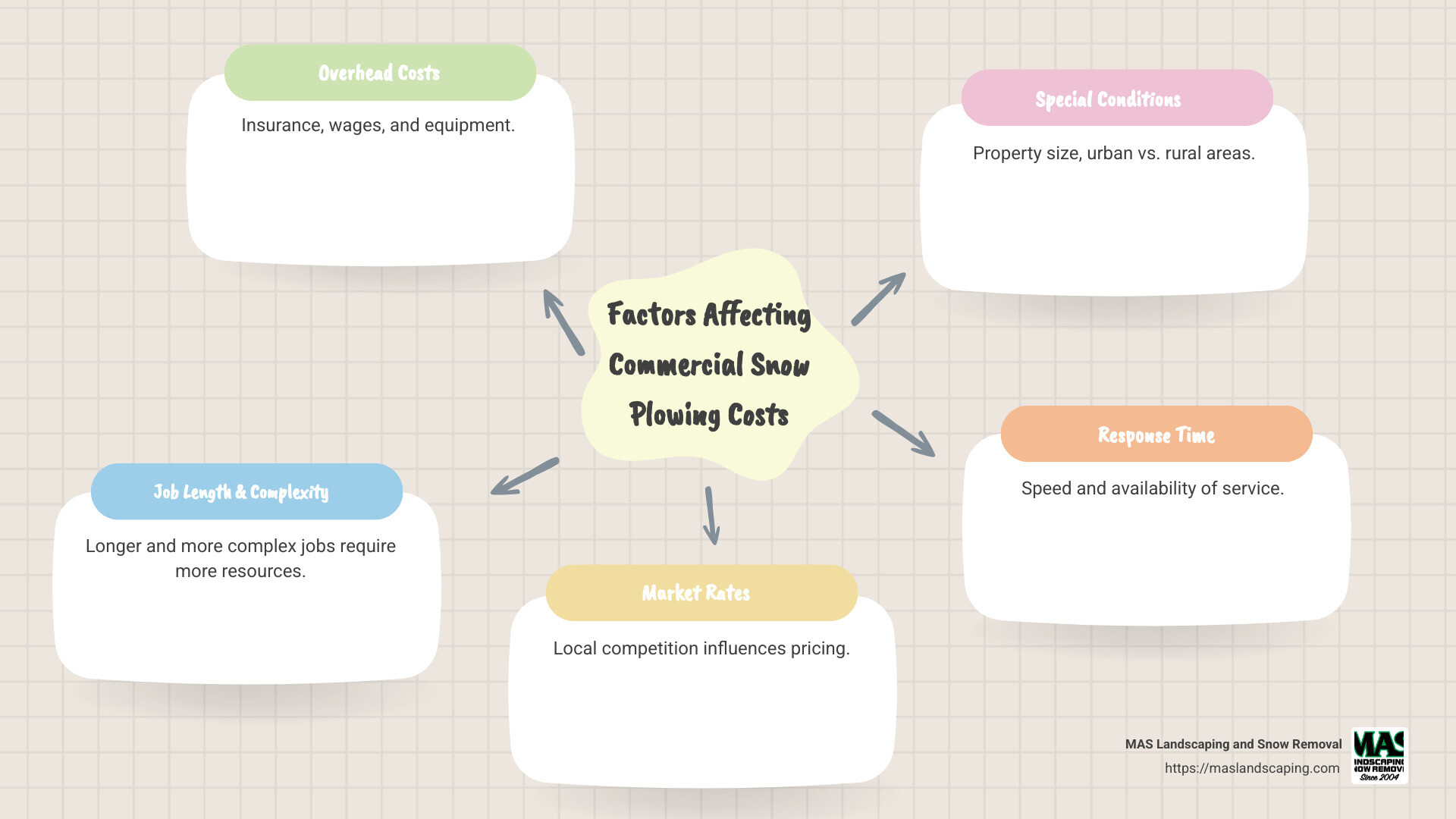
Key Factors:
– Overhead Costs: Insurance, wages, and equipment.
– Job Length & Complexity: Longer and more complex jobs require more resources.
– Market Rates: Local competition and pricing.
– Special Conditions: Property size and urban or rural location.
– Response Time: Speed and availability of service.
With these in mind, commercial snow plowing becomes not just a necessity, but an investment in the safety and accessibility of your business. By planning and understanding what affects pricing, businesses in the Greater Boston area can ensure not only effective service but also cost-efficiency.
Quick how much does commercial snow plowing cost definitions:
– commercial snow plow cost
– commercial snow plow insurance
– commercial snow removal contracts
Factors Influencing Commercial Snow Plowing Costs
When it comes to how much does commercial snow plowing cost, several factors come into play. Understanding these can help businesses plan their budgets effectively and ensure they get the best value for their money.
Overhead Costs
One of the primary elements affecting snow plowing costs is overhead. This includes:
- Insurance: Coverage for vehicles and equipment is essential, as it protects against accidents and damage.
- Employee Wages: Competent workers ensure quality service, but their wages must be factored into the price.
- Fuel: Operating snow plows and other machinery requires significant fuel, adding to costs.
- Equipment: Maintenance and depreciation of snow plows and other tools also contribute to overhead.
These overhead costs are non-negotiable for any snow removal business, as they ensure the company can operate safely and efficiently.
Job Length and Complexity
The length and complexity of a snow plowing job can significantly impact its cost. Here’s why:
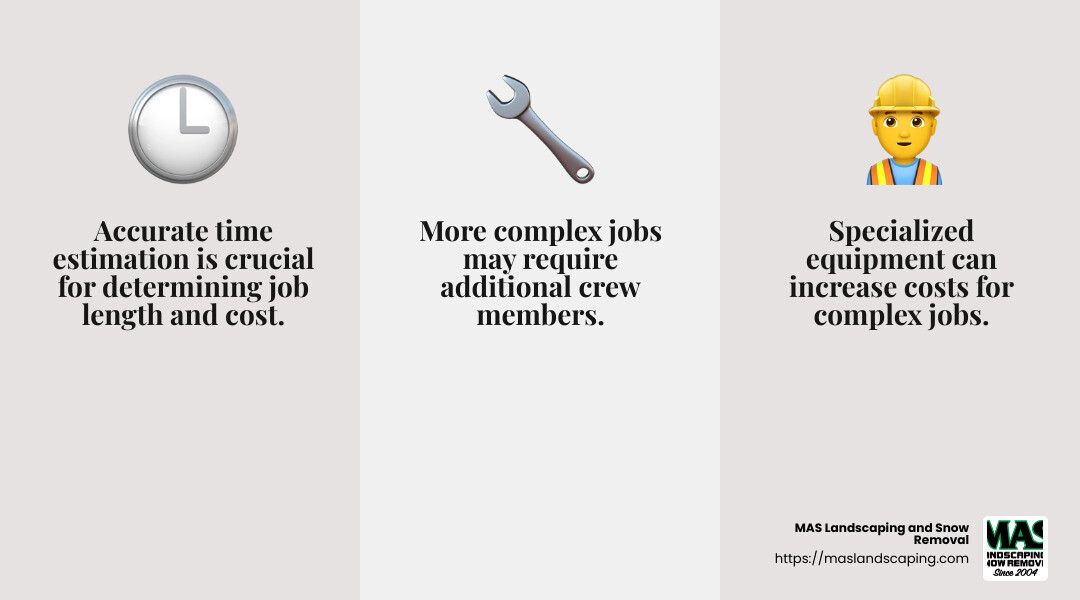
- Time Estimation: Accurate estimation of how long a job will take is crucial. Longer jobs naturally cost more.
- Equipment Needed: Certain jobs may require specialized equipment, which can increase costs.
- Labor Required: More complex jobs may need additional crew members, further driving up expenses.
Market Rates
Market rates are influenced by several factors, including:
- Local Competition: In areas with many snow removal companies, prices might be more competitive.
- Regional Pricing Variations: Different regions have different pricing norms based on demand and supply.
- Customer Demographics: Wealthier areas might be willing to pay more for premium services.
Understanding these market dynamics is essential for businesses to set competitive yet profitable pricing.
Special Conditions
Special conditions of a property can also affect snow plowing costs:
- Property Size: Larger properties require more time and resources, increasing costs.
- Obstacles: Plowing around obstacles like curbs or landscaping features can add complexity.
- Rural vs Urban Areas: Rural areas might incur higher costs due to travel time and lower density of clients.
Response Time
Finally, the response time required by a client can influence pricing:
- Trigger Amounts: Some contracts specify a certain snow depth before action is taken, affecting how often services are required.
- Emergency Services: Faster response times or emergency services typically command a premium.
- Seasonal Contracts: These offer a flat rate for the season, which can be cost-effective for areas with heavy snowfall.
Understanding these factors is crucial for businesses in Everett, Lynnfield, Malden, and other Greater Boston areas when considering how much does commercial snow plowing cost. With the right planning and knowledge, companies can ensure they receive reliable and cost-effective snow removal services.
Pricing Models for Commercial Snow Plowing
When it comes to structuring pricing for commercial snow plowing, businesses have several models to choose from. Each has its pros and cons, and understanding them can help you decide which suits your needs best.
Per Hour
Charging per hour is a straightforward method. It involves billing based on the time spent on the job. The total cost considers:
- Hourly Rate: Typically ranges from $50 to $150, depending on location and service complexity.
- Number of Workers: More workers mean higher costs, but also faster completion.
- Equipment Costs: Includes fuel and maintenance for the machinery used.
This model is ideal for jobs where the time required is uncertain or varies significantly.
Per Event
The per event model charges a flat rate for each snowstorm or significant snowfall. This method simplifies budgeting because you know exactly what each event will cost.
- Flat Rate: A predetermined cost for a 24-hour period, covering all snow removal activities.
- Snowstorm Definition: Clearly defining what constitutes a “snow event” is crucial to avoid disputes.
This approach is beneficial in areas where snowstorms are infrequent but can be intense.
Per Visit
Charging per visit means a set fee every time the service is rendered. This model is popular with clients who prefer predictable costs.
- Flat Rate Per Visit: A fixed amount charged each time snow is cleared.
- Average Snow Events: Understanding the average number of snow events per season helps clients budget effectively.
This model works well for properties that require regular maintenance throughout the winter.
Per Inch
The per inch pricing model charges based on the depth of snow. It’s a simple and transparent way to bill for snow removal.
- Simple Pricing: Costs vary depending on how many inches of snow are cleared.
- Flat Rate Breakdowns: Typically, rates are set for 1-3 inches, 3-6 inches, and then hourly for anything beyond.
This method ensures clients only pay for the actual amount of work needed.
Seasonal Contracts
Seasonal contracts offer a subscription-like model, providing a flat fee for the entire snow season.
- Subscription Model: Clients pay a one-time fee covering all snow removal services for the season.
- Flat Fee: Simplifies budgeting and ensures service availability regardless of snowfall frequency.
- Contract Duration: Clearly defined start and end dates for the service period.
This model is ideal for areas with consistent snowfall, offering peace of mind and potential savings over paying per event or visit.
Understanding these pricing models can help businesses in Everett, Lynnfield, and surrounding areas select the most suitable option for their snow removal needs. By choosing the right model, companies can manage costs effectively while ensuring their properties remain safe and accessible during winter.
How Much Does Commercial Snow Plowing Cost?
Determining how much commercial snow plowing costs can be tricky, as prices vary based on several factors. Let’s break it down to understand the average costs, regional examples, and cost breakdowns.
Average Costs
Commercial snow plowing services often charge $50 to $160 per hour. For parking lots, the rates can range from $50 to $150 per hour. Some companies might offer a flat rate, like $900 per snowfall for larger areas with complex terrains. These costs cover labor, equipment, and materials needed for the job.
Regional Examples
Prices can differ significantly depending on the region. For instance:
- Minneapolis: Known for heavy snowfall, the demand for snow removal services is high. Rates here might be on the higher end due to frequent and intense snowstorms.
- Chicago: Similar to Minneapolis, Chicago experiences harsh winters. The competition among snow removal services can lead to competitive pricing.
- Ontario: In Canada, snow removal services are essential, and pricing might reflect the extensive snowfall experienced during the winter months.
- Calgary: Known for its varying winter weather, Calgary’s snow removal costs can fluctuate based on the unpredictability of snow events.
Cost Breakdowns
Understanding how costs are broken down can help businesses budget more effectively:
- Per Square Foot: Some companies charge based on the area that needs to be cleared. This method is common for large commercial properties.
- Per Ton: When dealing with heavy snowfalls, charging per ton of snow removed might be more practical. It accounts for the volume and weight of snow.
- Per Mile: For properties with extensive roadways or paths, charging per mile might be the most efficient way to cover the costs involved in snow plowing.
By understanding these pricing structures and regional variations, businesses can better plan their snow removal budgets. This ensures their properties remain accessible and safe throughout the winter season.
Tips for Getting the Best Rates
Securing the best rates for commercial snow plowing involves understanding several key areas. Let’s explore how you can optimize costs and ensure value for money.
Understanding Overhead
Overhead costs are the backbone of pricing in snow removal services. They include insurance, which covers both vehicle and liability aspects. Driving and setup time are also crucial as they are billable hours that add to your total costs. Don’t forget employee wages and supply costs like deicer and fuel. Knowing these expenses helps in setting a fair price that covers costs while remaining competitive.
Accurate Job Estimation
Accurate job estimation is vital to avoid undercharging or overcharging. Start by calculating labor requirements. Estimate how long a job will take by considering the equipment needs and the scope of work. A simple formula is to calculate how many hours one person would need, then divide by the number of workers assigned. This ensures you only charge for the actual time and resources used.
Knowing Your Market
Understanding your market is about recognizing client expectations and aligning your services accordingly. Regional pricing varies, so conduct a competitive analysis to see where your pricing stands. Wealthier areas may support higher rates, while less affluent locations might require more competitive pricing.
Hiring a Salesperson
A skilled salesperson can significantly boost client acquisition and drive business growth. If you’re not a natural in sales, consider hiring someone who is. Look for someone with strong sales skills who thrives on human connection. This person can help expand your client base and ensure your business keeps growing.
Digital Marketing
A strong online presence is crucial. Start by setting up a Google Business page with clear photos and contact details. A simple, user-friendly website can also make a big difference. Encourage clients to leave online reviews, as positive feedback can boost your reputation and attract new customers.
By focusing on these areas, you can ensure you’re getting the best rates while maintaining a competitive edge in the snow removal industry. Next, we’ll explore some frequently asked questions about commercial snow plowing costs.
Frequently Asked Questions about Commercial Snow Plowing Costs
How do you calculate commercial snow plowing?
Calculating commercial snow plowing costs involves a few key factors. First, consider the hourly rate. This usually ranges from $50 to $160 per hour, depending on the region and the complexity of the job.
Next, estimate the job length. How long will it take to clear the snow? This depends on factors like the size of the area and the amount of snow. More complex areas or heavier snowfalls will naturally require more time.
Finally, don’t forget overhead costs. These include insurance, employee wages, fuel, and equipment maintenance. All these costs need to be factored into your pricing to ensure profitability.
Does snow plowing make money?
Yes, snow plowing can be profitable, but manage it as a seasonal business. The key is to optimize your operations during the winter months. This means accurately estimating jobs, managing overhead, and setting competitive rates.
Growth potential is also significant. By expanding your client base and possibly offering additional services like de-icing, you can increase your revenue streams. Moreover, establishing long-term contracts with commercial clients can provide a steady income throughout the season.
How much does snow removal cost in different regions?
Snow removal costs can vary significantly based on location. Let’s look at a few examples:
- Minneapolis: Known for its harsh winters, the demand for snow removal is high. Costs here can be on the higher end, reflecting the need for quick and efficient services.
- Chicago: Similar to Minneapolis, Chicago experiences heavy snowfall. The competitive market means prices can vary, but expect to pay a premium for reliable services.
- Ontario: In Canada, regions like Ontario also face significant winter weather. Costs might be influenced by the availability of services and the regional economic conditions.
Understanding these regional differences can help businesses and property owners budget more effectively for snow removal services. By considering local market rates, you can ensure you’re paying a fair price for the service you receive.
Conclusion
Commercial snow plowing is an essential service that helps maintain safety and accessibility during harsh winter months. Understanding how much does commercial snow plowing cost is crucial for businesses planning their budgets. Factors like overhead costs, job length, and local market conditions all play a role in determining the final price.
At MAS Landscaping and Snow Removal, we pride ourselves on delivering top-notch professional services. Our team is committed to ensuring that your commercial property remains clear and safe, regardless of the weather conditions. With our local expertise in areas like Everett, Lynnfield, and Malden, we understand the unique challenges posed by Massachusetts winters and tailor our services to meet these needs.
We offer comprehensive snow management solutions that are both efficient and reliable. Our dedication to professionalism means we are fully licensed and insured, providing you peace of mind with every service we deliver. Our experienced team is always ready to tackle any snow-related challenges, ensuring your business operations continue smoothly.
By choosing MAS Landscaping and Snow Removal, you’re partnering with a team that values quality and customer satisfaction. We invite you to learn more about our services and how we can assist your business by visiting our Snow Management page. Let us handle the winter weather, so you can focus on what you do best.
