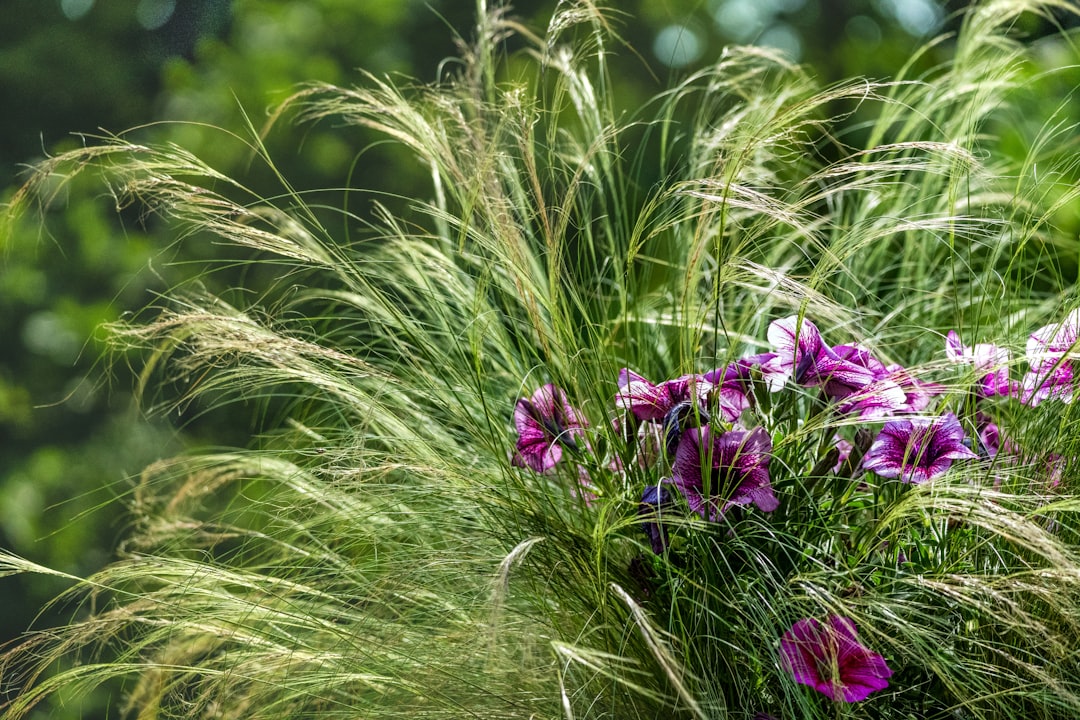



Why Ornamental Grass Care Makes a Big Difference in Your Landscape
Ornamental grass care is simpler than most people think — but doing it right makes the difference between a landscape that looks polished year-round and one that looks tired and overgrown.
Here’s a quick overview of what good ornamental grass care involves:
| Task | When to Do It | How Often |
|---|---|---|
| Cut back warm-season grasses | Late winter to mid-spring | Once a year |
| Cut back cool-season grasses | Very early spring | Every 2-3 years |
| Comb evergreen grasses | After growing season | Once a year |
| Divide overgrown clumps | Early spring | Every 2-5 years |
| Water new plantings | Weekly (1 inch) | First 4-6 weeks |
| Apply mulch | Spring or after first frost | Once or twice a year |
| Fertilize | Rarely — only if soil test shows need | As needed |
Ornamental grasses are one of the best plants you can add to a New England garden. They bring movement, texture, and visual interest across all four seasons — including winter, when most other plants have nothing to offer.
But there’s a catch. Different grass types need different care. Cut back the wrong grass at the wrong time, and you can set it back by a full season. Leave the wrong grass standing too long, and you’ll be fighting a tangled mess in spring.
This guide walks you through everything you need to know — from identifying your grass type, to pruning, dividing, watering, and winterizing — so your ornamental grasses stay healthy and sharp-looking all year long.
Ornamental Grass Care Starts With Knowing Your Grass Type
The biggest mistake we see is treating every ornamental grass the same. In Massachusetts landscapes, that usually leads to one of two problems: cutting too hard or cutting at the wrong time.
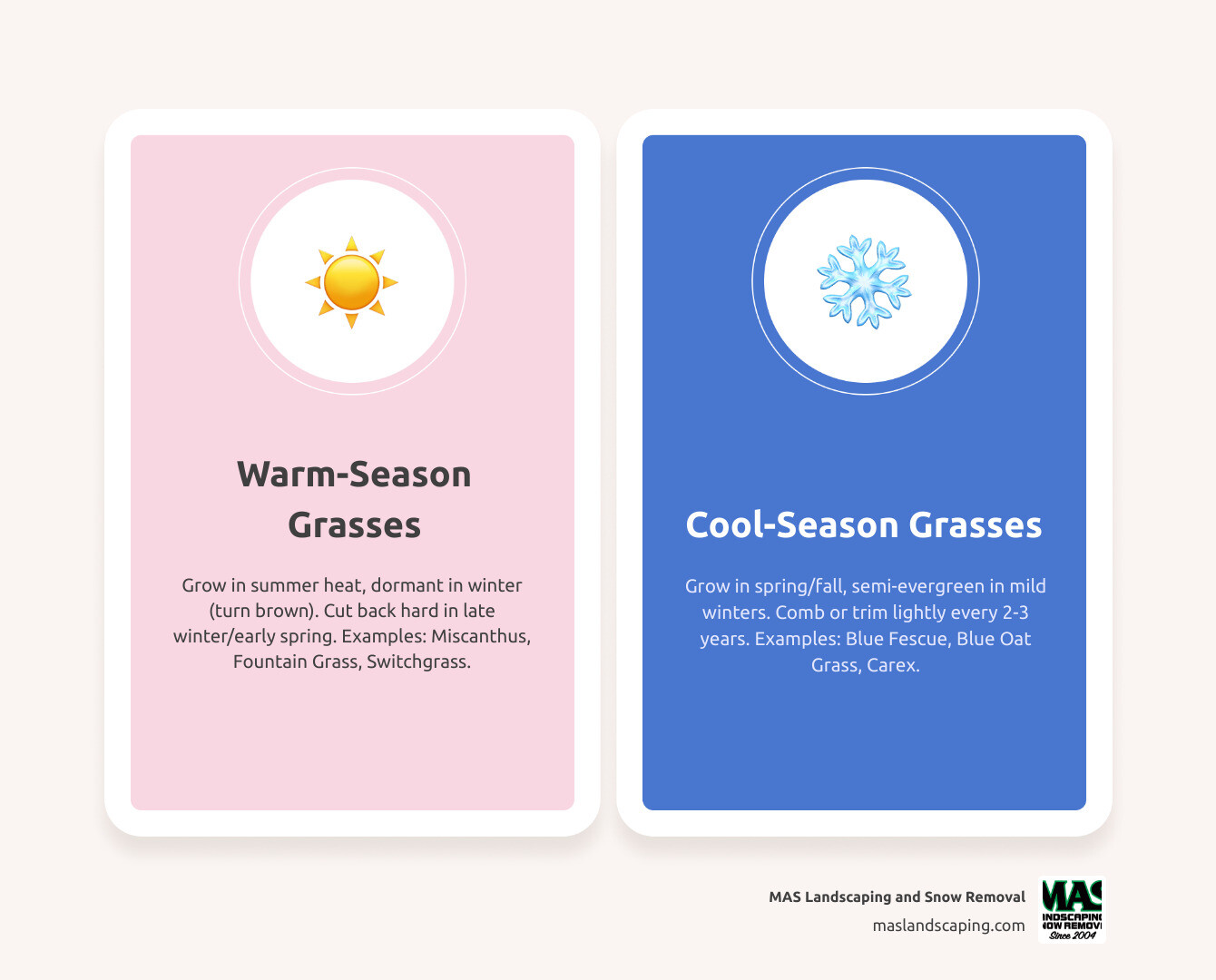
Most ornamental grasses fall into three practical care groups:
| Grass type | Growth pattern | Winter look | Best pruning approach |
|---|---|---|---|
| Warm-season | Wakes up later, grows strongest in summer | Often brown and dormant | Cut back hard before new spring growth |
| Cool-season | Grows most in spring and fall | Often partly green | Light cut, leave about one-third |
| Evergreen or semi-evergreen | Stays present year-round | Usually green or partly green | Comb and selectively trim, do not shear |
Most also prefer:
- Well-drained soil
- At least 6 hours of sun
- Lean to average soil rather than rich, heavily fertilized beds
How to Identify Warm-Season vs. Cool-Season Grasses
A simple way to identify them is to watch when they actually grow.
Warm-season grasses stay quiet in early spring, then take off when weather turns consistently warm. These include many popular landscape choices such as fountain grass, switchgrass, and miscanthus. In winter, they usually turn tan or brown and look dormant.
Cool-season grasses start earlier. They often green up in spring before warm-season grasses even wake up, and many keep some color well into fall or winter. Blue fescue is a classic example.
A quick cheat sheet:
- If it looks dead in winter and doesn’t start growing until late spring, it’s probably warm-season.
- If it greens up early and stays somewhat tidy through cool weather, it’s probably cool-season.
- If it stays mostly green year-round, it may be evergreen or semi-evergreen.
Evergreen and Semi-Evergreen Grasses Need Different Ornamental Grass Care
Evergreen grasses and grass-like plants need the gentlest touch. This group includes many sedges, carex, and some blue oat grass types.
Instead of cutting them down to the ground, we usually:
- Put on gloves
- Finger-comb through the clump to pull out dead blades
- Trim only damaged tips if needed
If trimming is necessary, do not remove more than about two-thirds of the foliage. In many cases, much less is better. Shearing evergreen grasses into a tight haircut may feel satisfying for five minutes, but the plant usually disagrees.
Planting and Watering Ornamental Grasses the Right Way
Good care starts before the plant even goes in the ground. If the site is soggy, overly shaded, or packed with heavy mulch at the crown, even “low-maintenance” grasses can struggle.
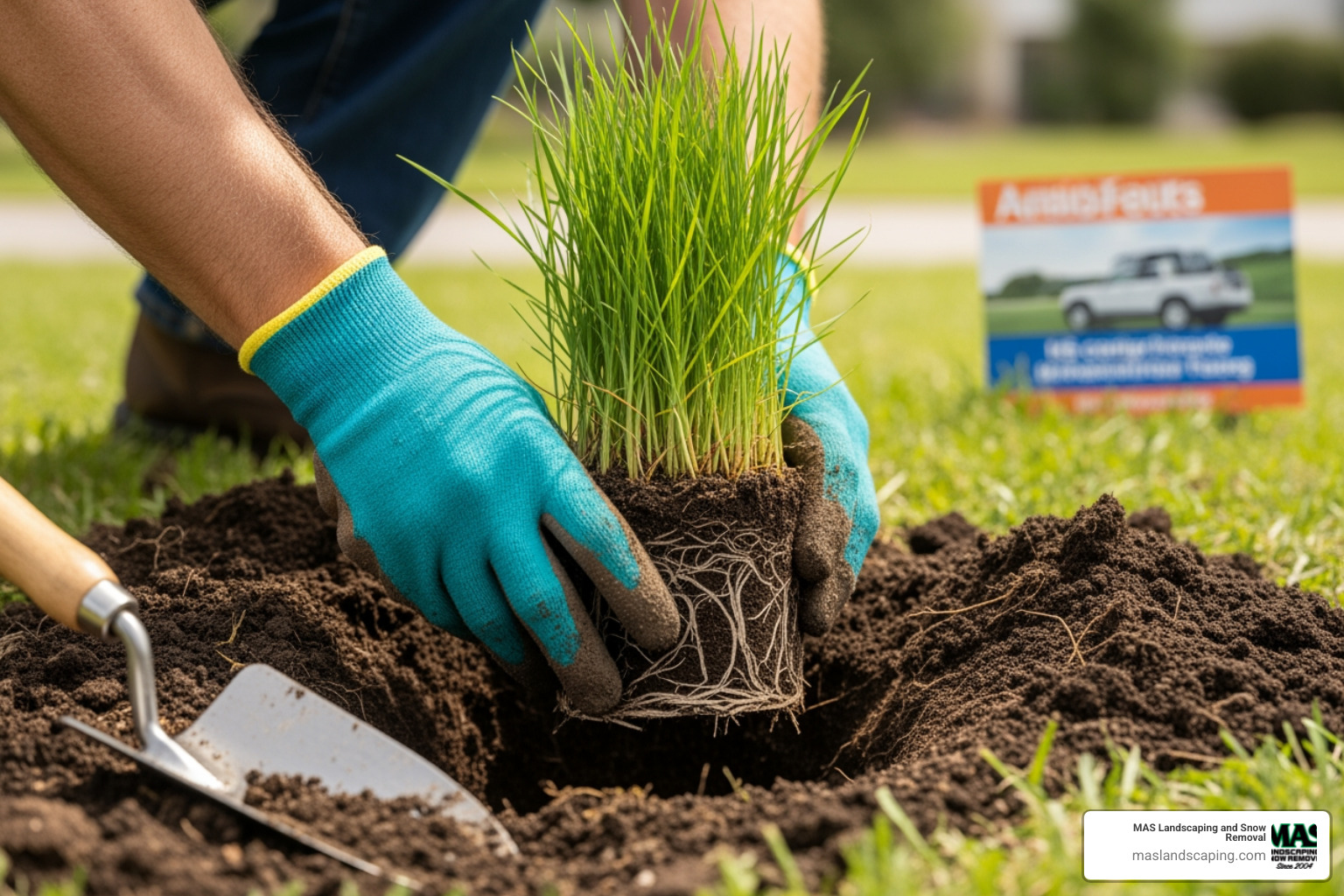
When Is the Best Time to Plant Ornamental Grasses?
For our service area around Saugus, Everett, Malden, Lynnfield, and nearby communities, the best planting windows are:
- Spring
- Early fall, at least 6 to 8 weeks before the first frost
Those timeframes give roots time to establish before summer heat or winter cold becomes stressful. Summer planting is possible, but it usually means more watering and more babysitting.
In general:
- Choose a spot with well-drained soil
- Aim for full sun for most varieties
- Avoid crowding them too close to foundations or walkways
- Match mature size to the space so they do not outgrow the bed in two seasons
For more on basic planting guidance, see How to Plant, Grow, and Maintain Ornamental Grasses.
Watering New and Established Plants Without Overdoing It
Newly planted ornamental grasses need regular water while roots establish. A solid target is about 1 inch of water per week for the first 4 to 6 weeks, adjusting for rain and soil type.
A practical watering rhythm:
- First week: keep the root zone consistently moist, not soggy
- First month to month and a half: aim for roughly 1 inch per week
- After establishment: water deeply but less often
Some grasses become quite drought tolerant once established, especially prairie-type selections. Others, including some fountain grasses, may show stress sooner in dry spells. Brown leaf tips can be a clue that the soil is getting too dry, but constant wetness is worse because it can lead to root rot.
Best watering habits:
- Water at the base, not overhead
- Water deeply so roots grow down
- Use drip irrigation if possible
- Reduce frequency once the plant is established
If soil stays wet for long periods, the issue may not be watering amount alone. It may be drainage.
Soil, Mulch, and Fertilizer Basics
Most ornamental grasses do not want pampering. Rich soil and heavy feeding can make them soft, floppy, and more likely to split open.
What works best:
- Average to lean soil
- Compost worked in at planting if soil is poor
- A 2 to 3 inch mulch layer around the plant
- Keep mulch a few inches away from the crown
Fertilizer is rarely needed every year. In fact, too much nitrogen often causes the exact problem homeowners hate most: grass that grows tall, weak, and messy instead of upright and graceful.
Our rule of thumb:
- Skip fertilizer unless a soil test shows a real need
- Avoid high-nitrogen feeding
- Use shredded leaves or natural organic matter as gentle topdressing if needed
For broader property upkeep tips, see More info about lawn care and maintenance.
How and When to Cut Back Ornamental Grasses
Cutback timing is where ornamental grass care really matters. Done right, spring cleanup is quick. Done wrong, it turns into a flying bundle of sharp blades and regret.
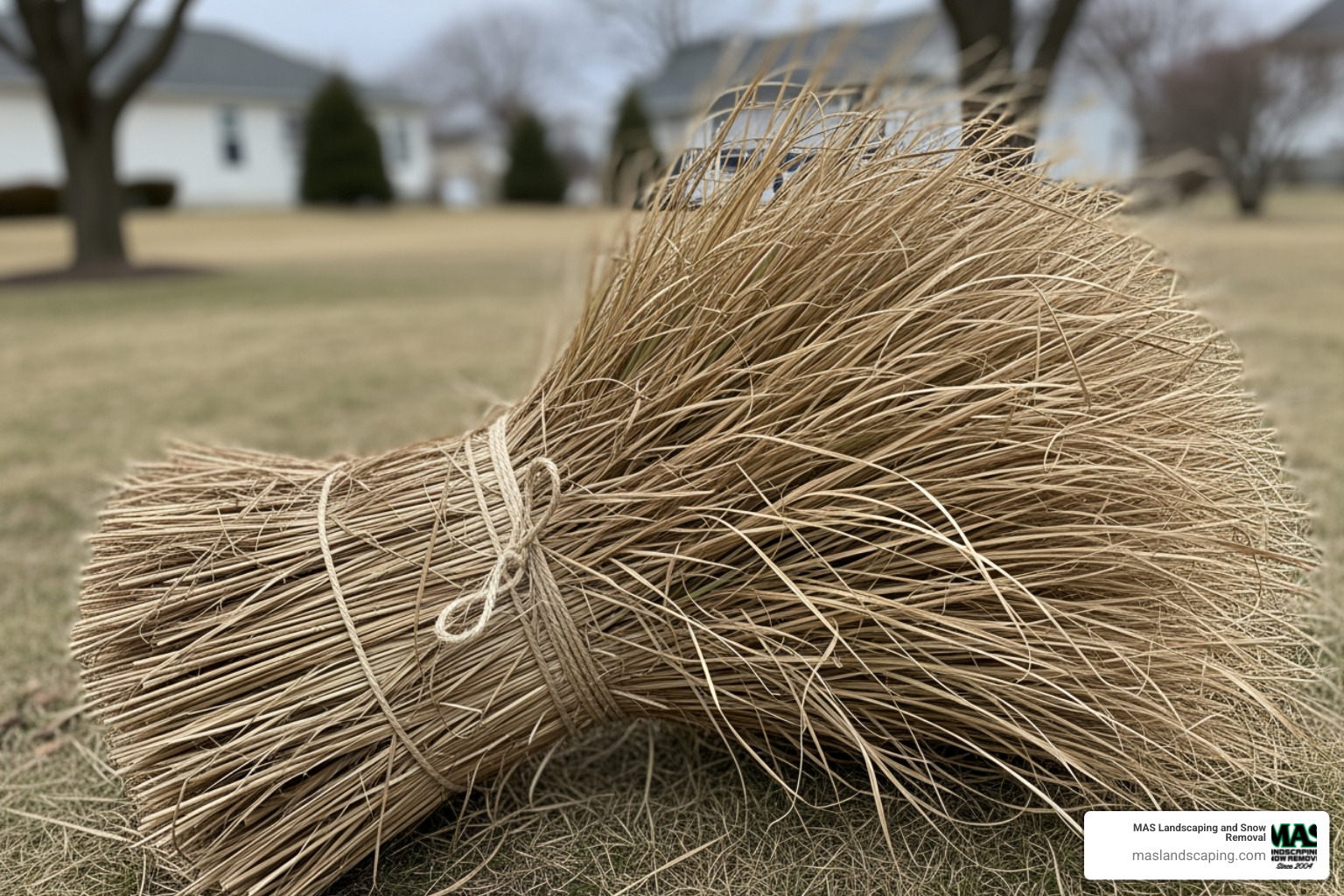
Before cutting, we recommend bundling larger clumps with rope or twine. It keeps debris contained and makes cleanup much easier.
Ornamental Grass Care for Pruning Warm-Season Varieties
Warm-season grasses are the easiest to cut back because they usually go fully dormant. Leave them standing through winter if you can. They add texture, hold seed heads for birds, and help protect the crown.
Then cut them back in late winter to mid-spring, before significant new growth begins.
Typical cutback heights:
- Small warm-season grasses: leave 2 to 3 inches
- Medium to large grasses: leave about 4 to 5 inches
- Very large types: 6 to 10 inches is often appropriate
For many common warm-season grasses like maiden grass, fountain grass, and miscanthus, a hard spring cut works well. Just do not wait so long that you are chopping into fresh new shoots.
Ornamental Grass Care for Cool-Season and Evergreen Varieties
Cool-season grasses need a lighter hand. Instead of cutting them nearly to the ground, trim only the top two-thirds and leave about one-third of the plant in place. Many only need this every 2 to 3 years, not annually.
For grasses like blue fescue:
- Rake or comb out brown blades first
- Lightly trim the top if needed
- Avoid cutting into the dense lower crown
Evergreen types need even less:
- Remove dead flower stalks
- Finger-comb out old foliage
- Spot-trim ragged leaves only
If you shear a sedge or carex like a hedge, it usually answers by looking offended for months.
Tools and Safety Tips for Cutting Back
Ornamental grass blades can be surprisingly sharp. Think paper cut, but ruder.
Use:
- Thick leather or heavy-duty gloves
- Long sleeves
- Eye protection
- Hand pruners for small clumps
- Hedge trimmers for medium and large clumps
- Pruning saw or heavy tools for old woody crowns
- Tarp or wheelbarrow for cleanup
- Rope, bungee, or twine for bundling
Safety tips:
- Bundle first, cut second
- Keep hands clear of the cutting line
- Use sharp blades for cleaner cuts
- Work on a dry day if possible
- For huge clumps, cut in sections instead of wrestling the whole plant at once
Dividing Overgrown Clumps and Fixing Common Problems
Even healthy grasses get too big eventually. One of the most common signs is a dead or thinning center. That usually means the outer ring is still alive, but the clump is asking for division.
When and How to Divide Ornamental Grasses
Most ornamental grasses benefit from division every 2 to 5 years, depending on the variety and how fast it grows.
Best timing:
- Early spring for most grasses
- Divide when growth is starting, not while flowering
- Evergreen and semi-evergreen types should generally be divided in spring only
Basic method:
- Cut back top growth first if needed.
- Dig around the clump with a sharp shovel.
- Lift the root ball out.
- Split it into sections, making sure each section has healthy roots attached.
- Discard the dead center if present.
- Replant divisions right away.
- Water frequently until established.
Small clumps may divide with a shovel. Large old clumps can be surprisingly tough and may need more force than expected. For more general background, see Ornamental Grasses for the Home Landscape | Yard and Garden.
Variety-Specific Tips for Fountain Grass, Miscanthus, and Similar Favorites
Fountain grass:
- Usually treated as a warm-season grass
- Cut back hard before spring growth
- Watch for brown tips in dry soil
- Give enough room for mature arching shape
Miscanthus:
- Also warm-season
- Can become very large and dense
- Often needs division when center dies out or the clump flops open
- Tie tightly before pruning to make cleanup easier
Switchgrass:
- Upright and useful in naturalistic plantings
- Usually holds winter form well
- Benefits from leaner soil and not too much fertilizer
Blue fescue:
- Cool-season
- Better with grooming than hard cutbacks
- Divide when clumps thin out or lose their neat form
Common Pests, Diseases, and Other Ornamental Grass Problems
Ornamental grasses are generally low-maintenance, but not problem-proof.
Common issues include:
- Rust
- Anthracnose
- Root rot
- Aphids
- Mites
- Flopping
- Crown die-out
- Invasive spread in certain species
Prevention is usually better than treatment:
- Plant in the right sun conditions
- Space for airflow
- Avoid overhead watering
- Do not overfertilize
- Keep mulch off the crown
- Remove diseased foliage when needed
If a grass flops:
- It may be too shaded
- It may be getting too much nitrogen
- It may simply be overgrown and due for division
If the plant is brown in the middle:
- That often signals age and overcrowding, not immediate death
If the base stays wet and mushy:
- Suspect drainage or overwatering first
Seasonal Ornamental Grass Care Through Spring, Summer, Fall, and Winter
A seasonal routine makes ornamental grasses much easier to manage.
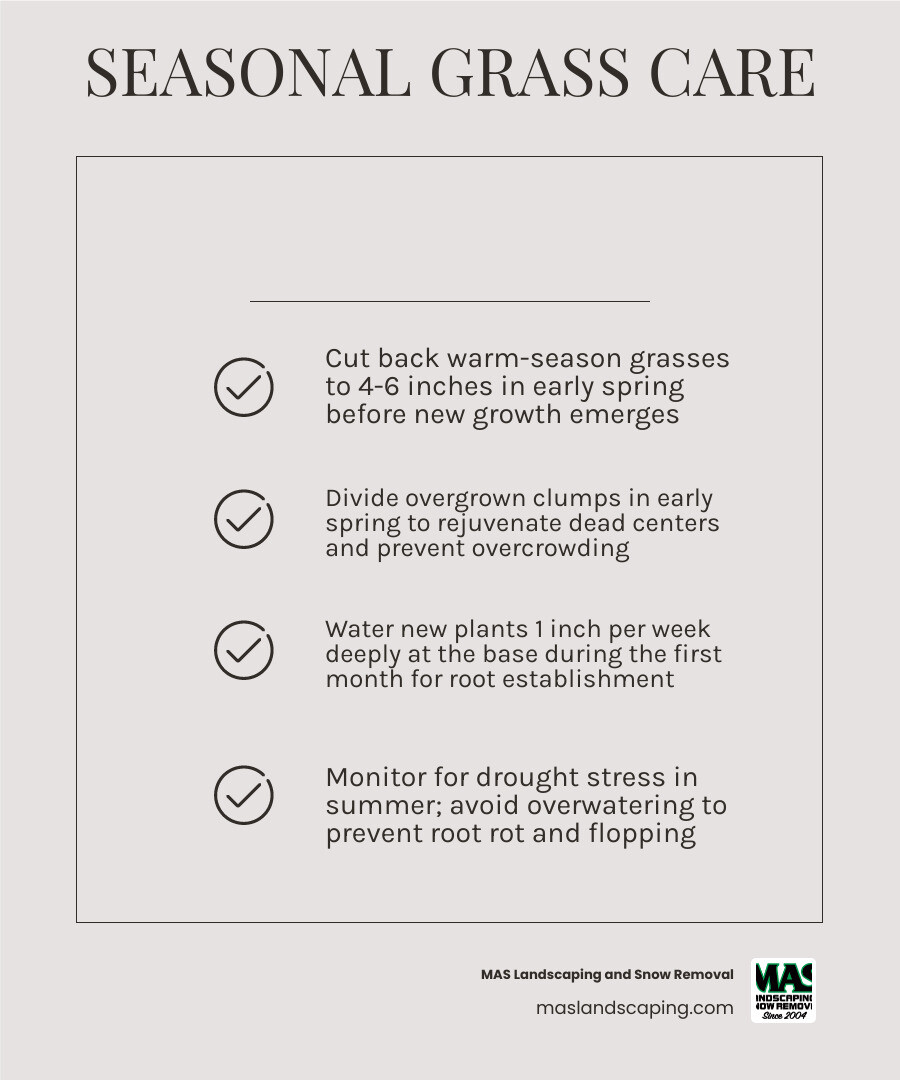
Spring and Summer Care
Spring is the main work season.
Spring checklist:
- Cut back warm-season grasses before new growth
- Lightly trim cool-season grasses if needed
- Comb evergreen grasses
- Divide crowded clumps
- Refresh mulch
- Replant divisions and water well
- Pull weeds before grasses fill out
Summer is mostly about observation:
- Watch new plantings for drought stress
- Water during extended dry periods
- Avoid heavy feeding
- Check for disease if weather is hot and humid
- Let the plant grow naturally instead of shaping it constantly
Fall and Winter Care: Should Ornamental Grasses Be Left Standing?
Usually, yes. We recommend leaving most ornamental grasses standing through fall and winter.
Why leave them up:
- They add winter texture and movement
- Seed heads feed birds
- Foliage helps insulate the crown
- Snow and frost make them look great in the landscape
This matters in New England, where winter gardens can otherwise go flat fast.
The main exceptions:
- Fire-prone sites
- Plants that have collapsed into paths or driveways
- Heavily diseased foliage
- Extremely messy annual types you do not want to reseed
For most local landscapes, standing grass is both useful and attractive until spring cleanup.
Growing Ornamental Grasses in Containers and Pairing Them With Other Plants
Container growing works well with compact grasses, especially near patios, entryways, and hardscape features.
Container tips:
- Use a pot with strong drainage
- Choose a variety that stays proportional to the container
- Water more often than in-ground plantings
- Protect roots in winter, since containers freeze faster than garden soil
- Divide or repot when the clump fills the pot
Ornamental grasses also pair beautifully with long-blooming perennials. Good companions include:
- Coneflower
- Black-eyed Susan
- Salvia
- Sedum
- Nepeta
- Asters
Use grasses as:
- Thriller plants in containers
- Repeating accents in foundation beds
- Softening elements near patios and walkways
- Backdrops for flowering perennials
If you are planning a new planting layout, see More info about planting services.
Frequently Asked Questions About Ornamental Grass Care
Is fountain grass invasive, and what are non-invasive alternatives?
Some fountain grass types can be invasive, and this depends on the exact species and cultivar. In our region, it is smart to check whether the variety is sterile or known to reseed aggressively.
Safer alternatives often include:
- Switchgrass
- Little bluestem
- Other non-invasive, region-appropriate grasses
When in doubt, choose native or well-behaved selections over anything with a reputation for spreading where it should not.
Do ornamental grasses need fertilizer every year?
No. Most do not.
In fact, annual fertilizing is often unnecessary and sometimes harmful. Too much fertilizer, especially nitrogen, can cause floppy growth and weaker stems. A soil test is the best way to know if feeding is actually needed. Otherwise, light organic matter such as shredded leaves is usually enough.
Why is my ornamental grass brown in the middle?
That usually means the clump is aging and overcrowded. The outer edges stay healthy while the center declines. It is one of the clearest signs that the plant should be divided in early spring.
Conclusion
Good ornamental grass care comes down to a few simple habits: know your grass type, plant it in the right place, avoid overwatering and overfeeding, cut it back at the right time, and divide it when the clump starts to decline in the center.
When we follow those basics, ornamental grasses reward us with movement, texture, winter interest, and a landscape that looks more polished in every season.
At MAS Landscaping and Snow Removal, we help homeowners across Saugus, Everett, Malden, Lynnfield, and nearby communities build and maintain outdoor spaces that actually work for New England conditions. If your grasses are overgrown, poorly placed, or just not performing the way they should, we can help with planning, planting, and ongoing care.
For related upkeep ideas, visit More info about landscape maintenance.